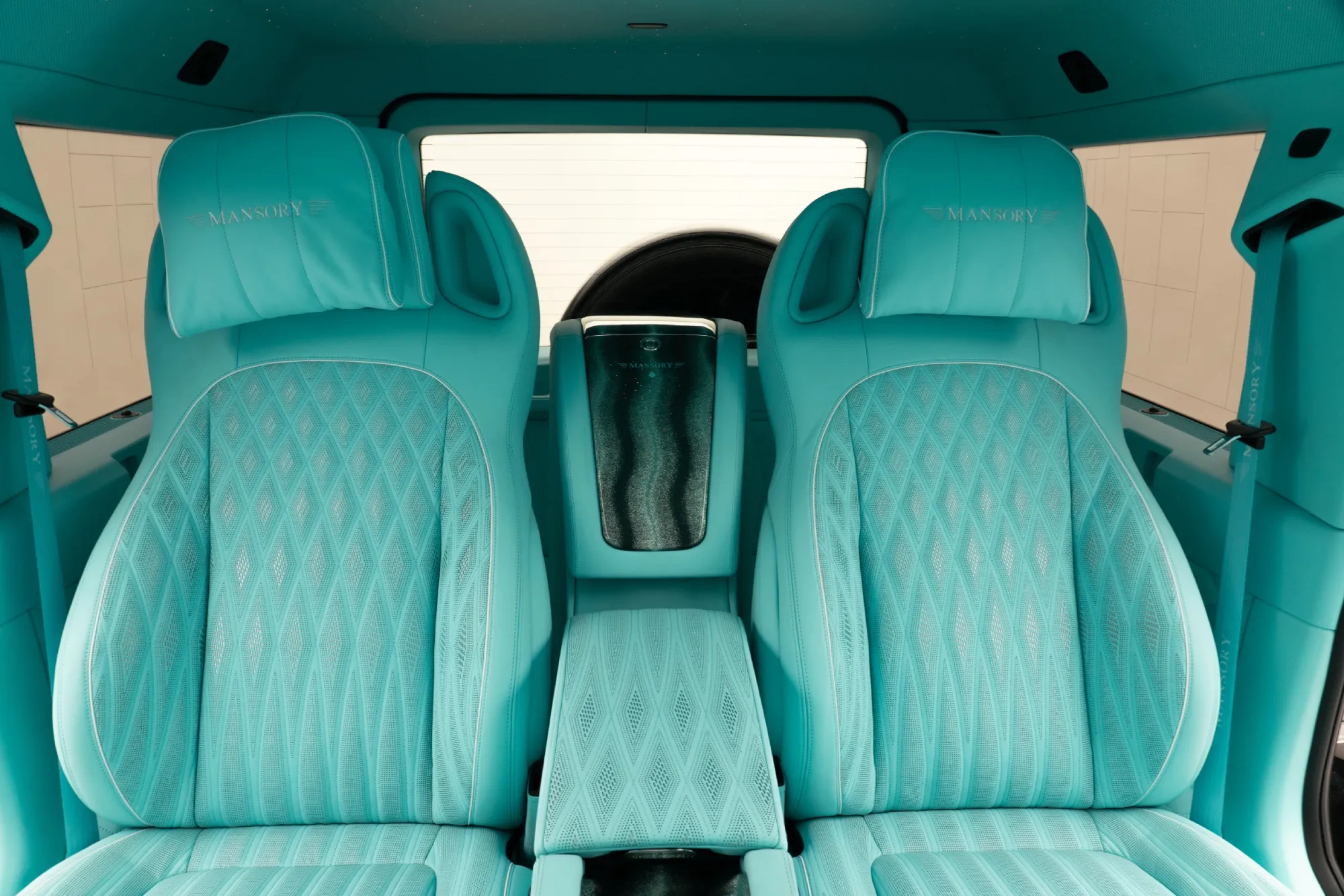
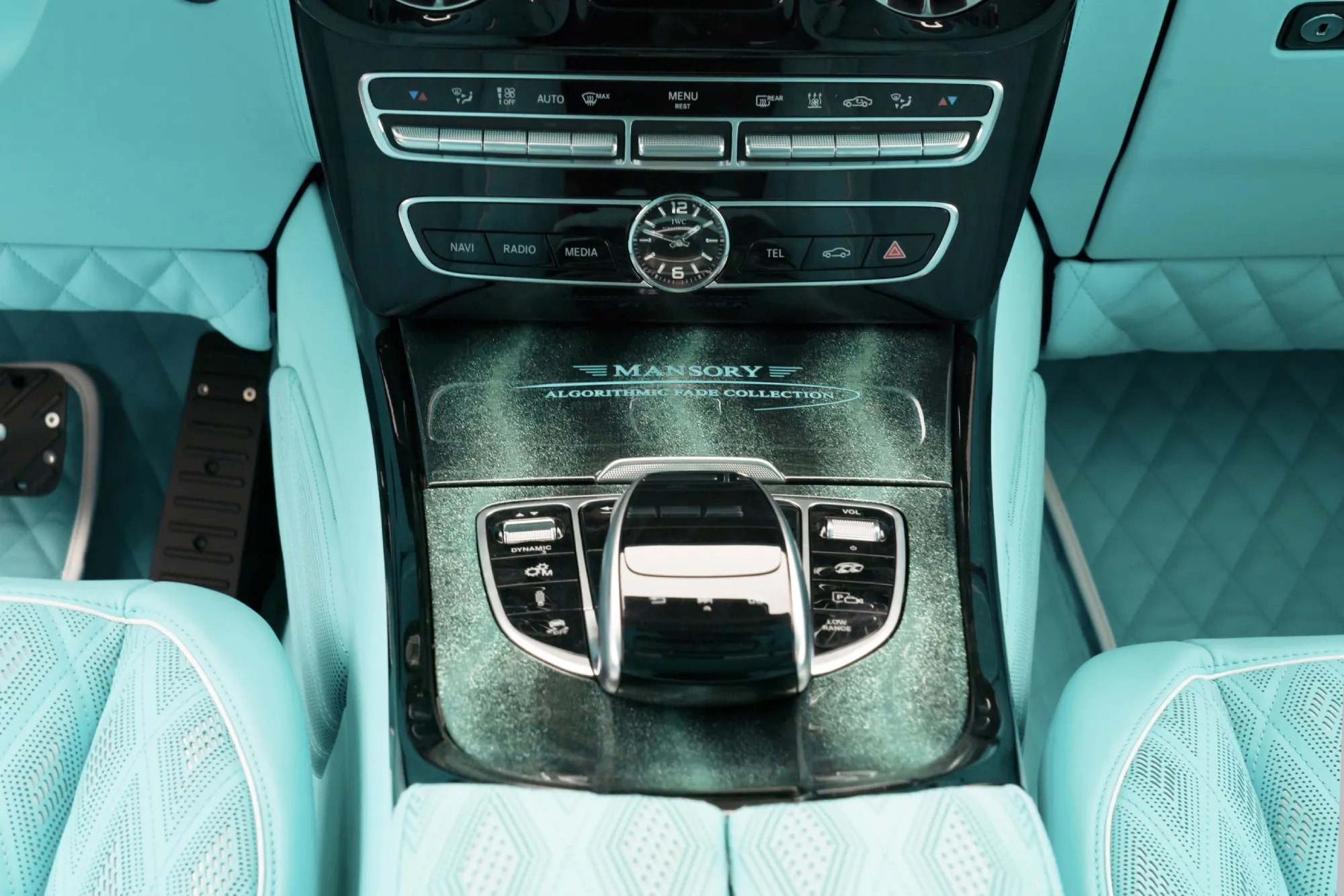
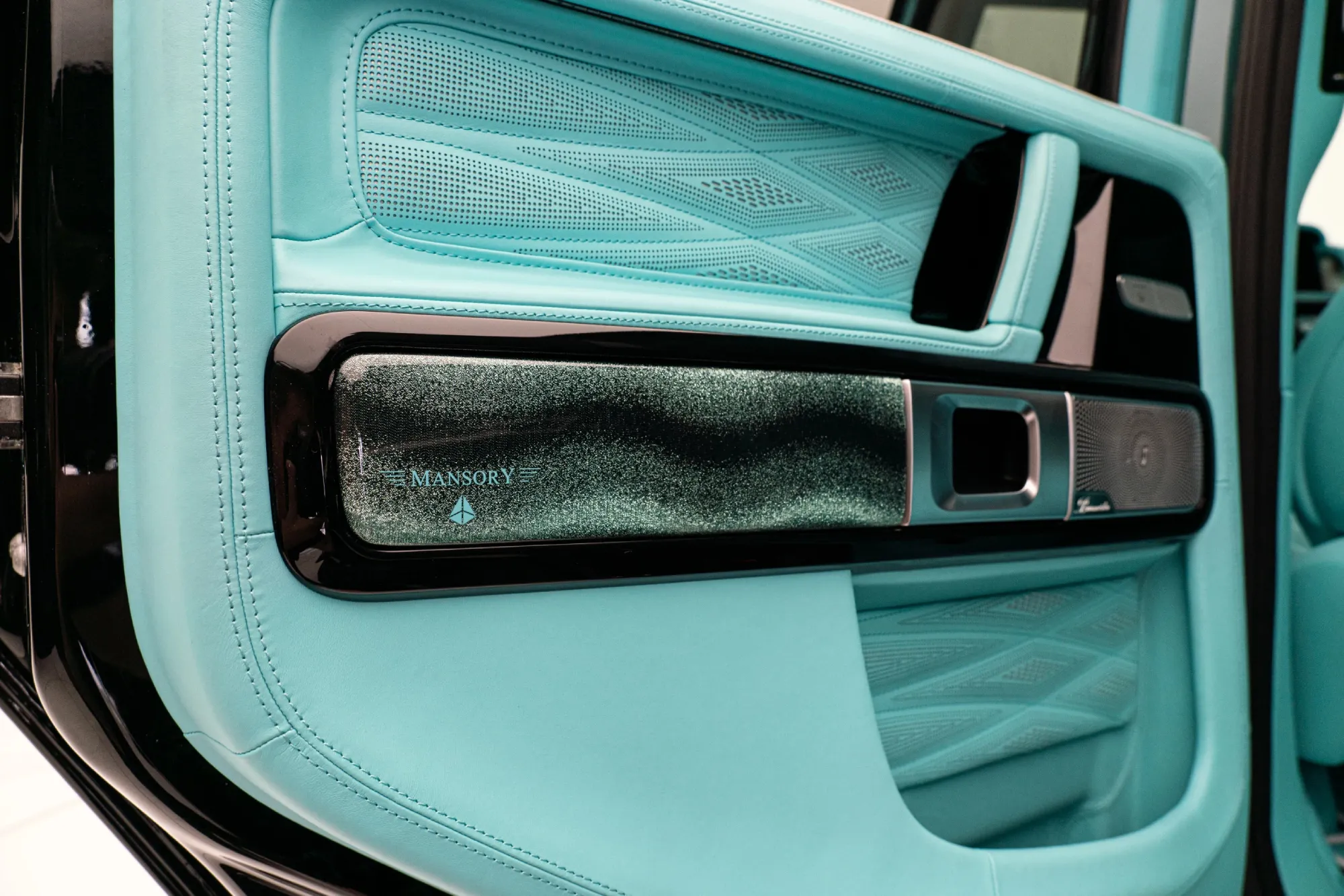
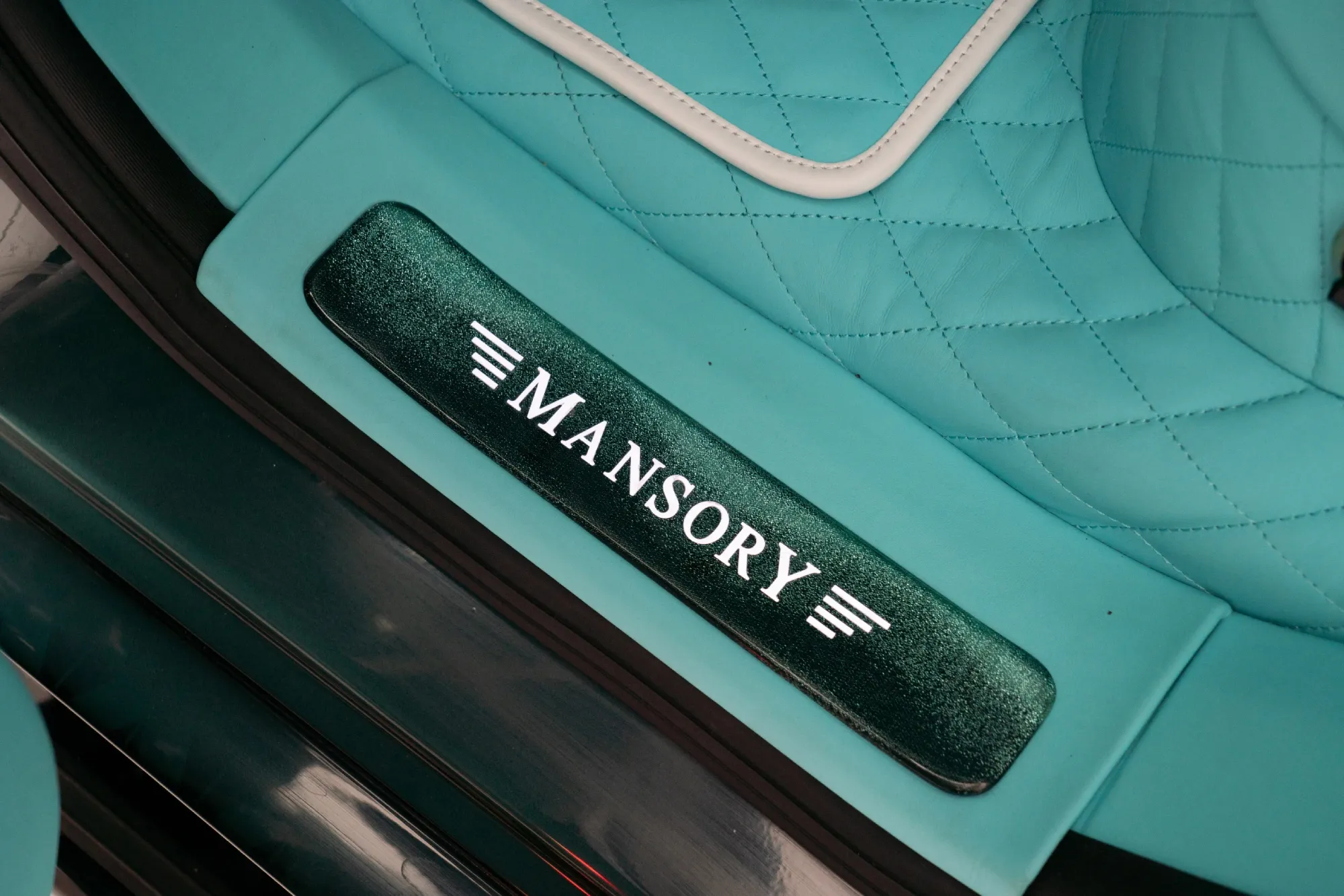
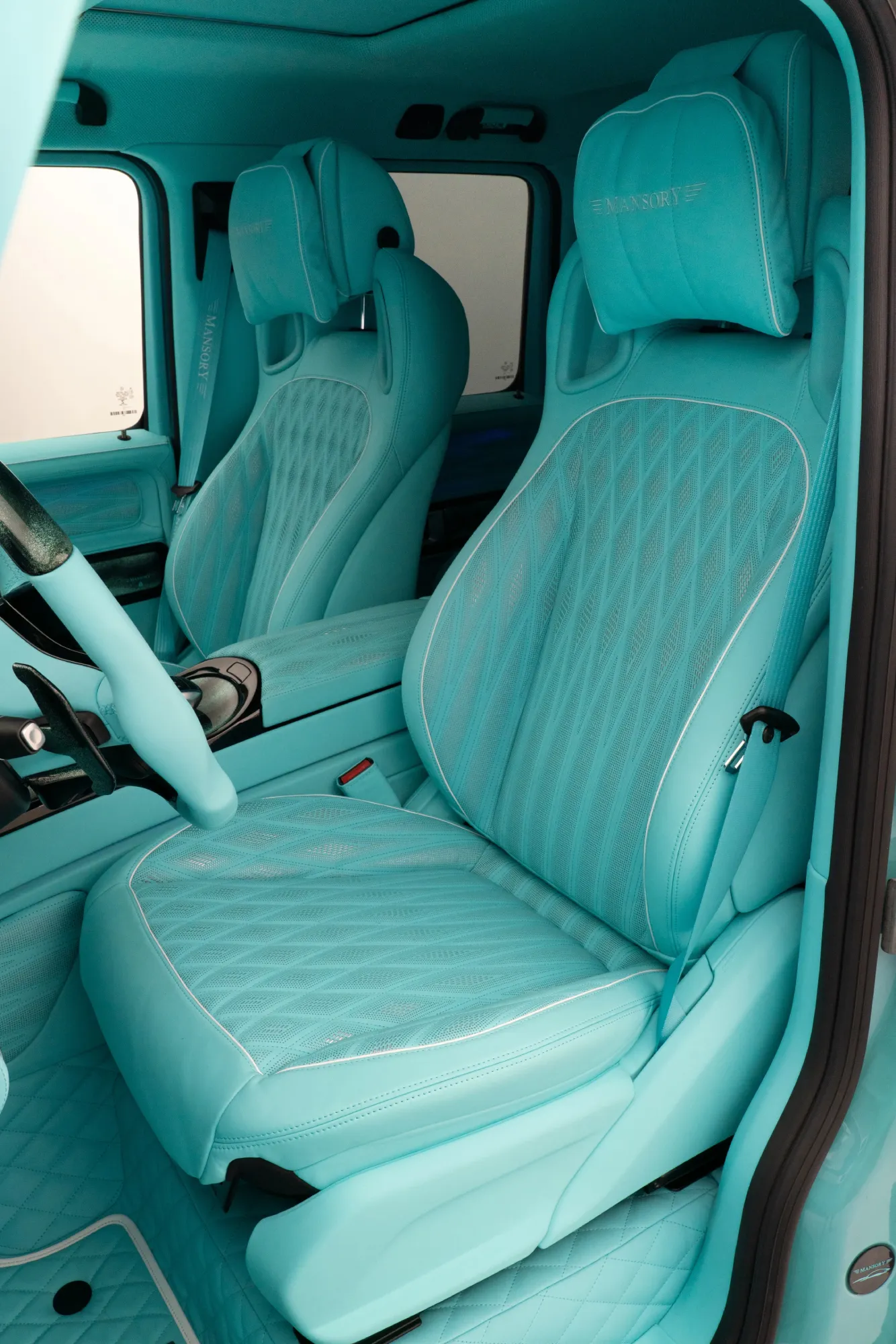
Mansory Gronos Algorithmic Fade Kit — Mercedes G-class W463A


MANSORY Gronos Algorithmic Fade for the Mercedes G-Class W463A — the 2024-2025 evolution
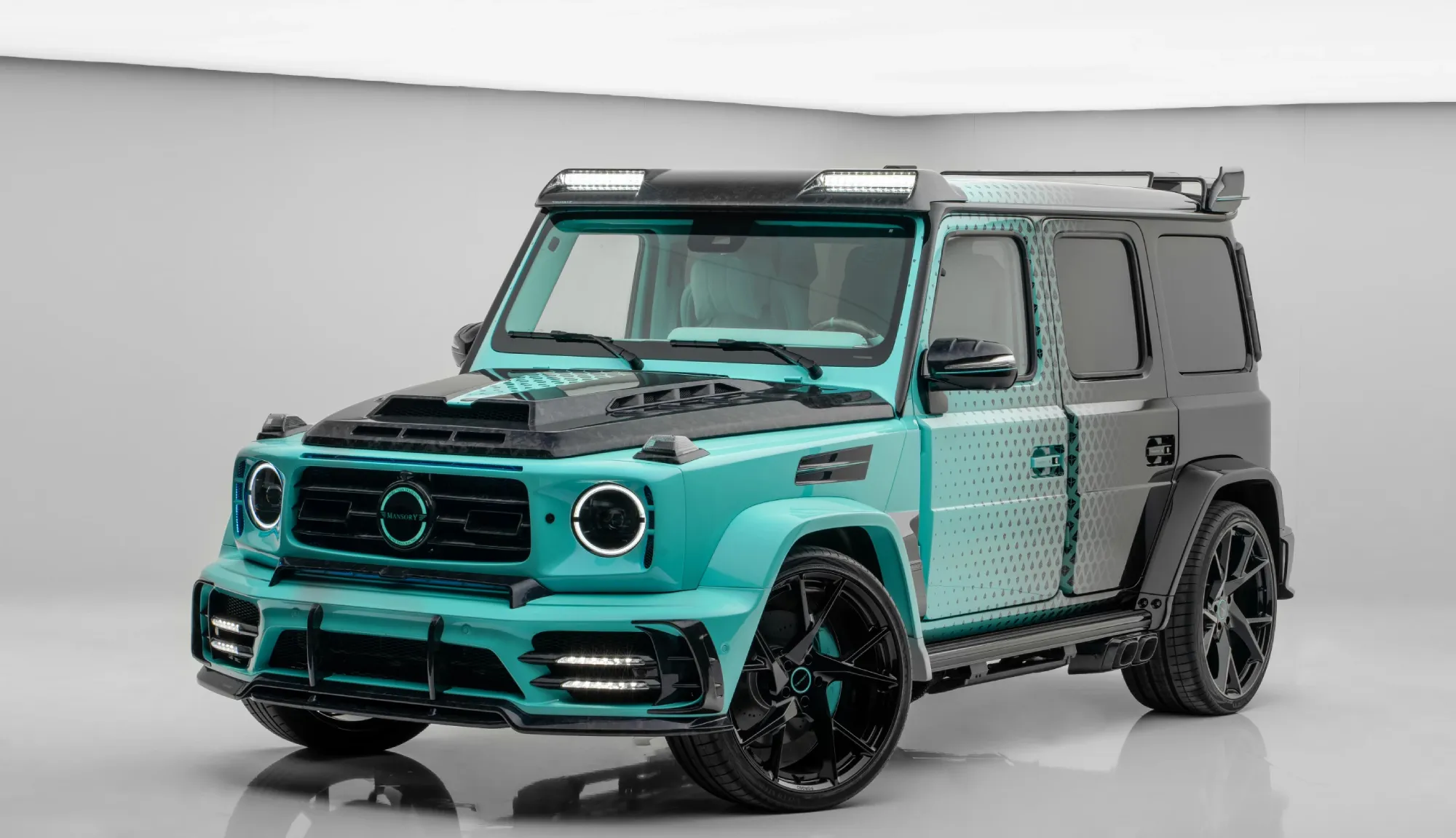
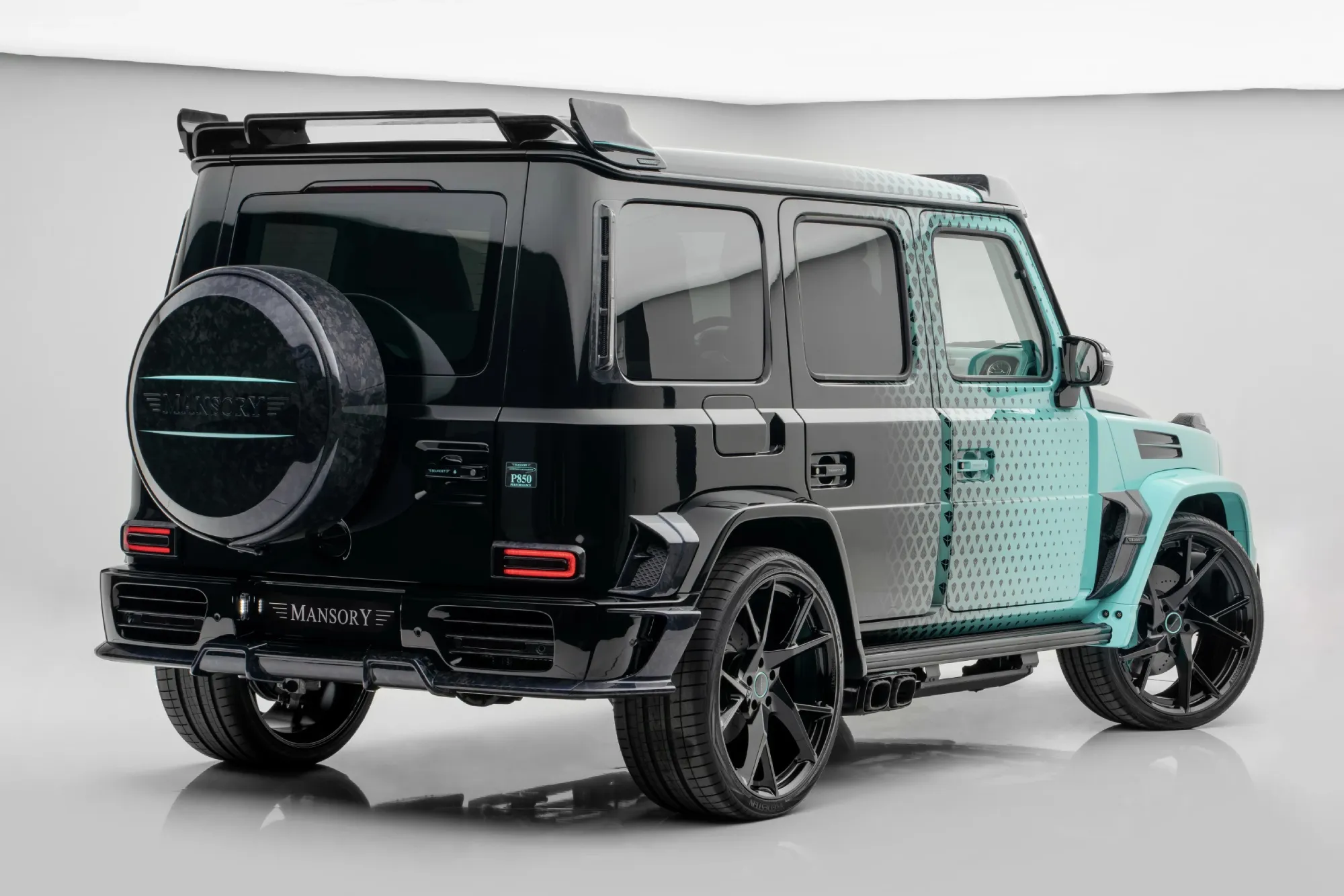
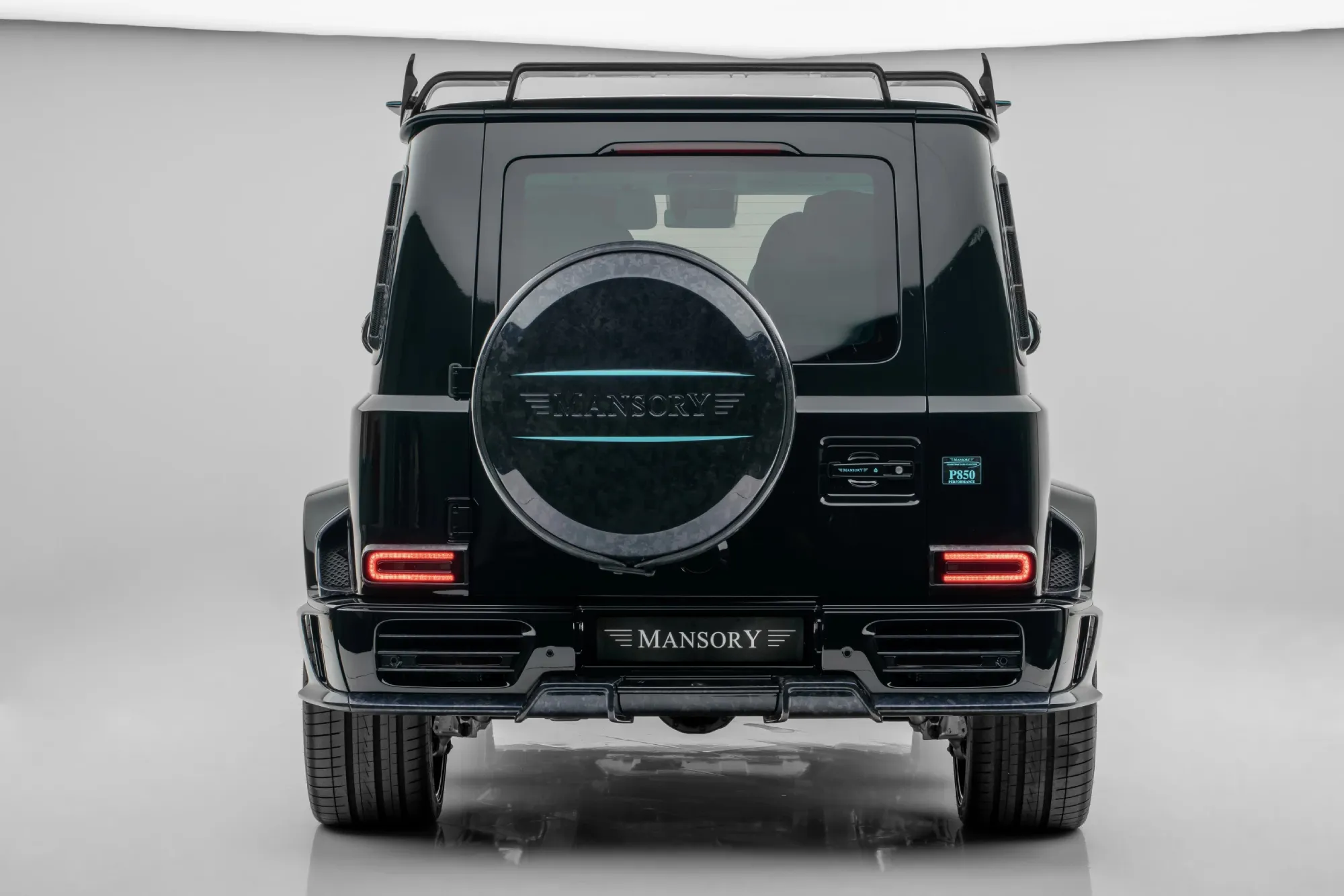
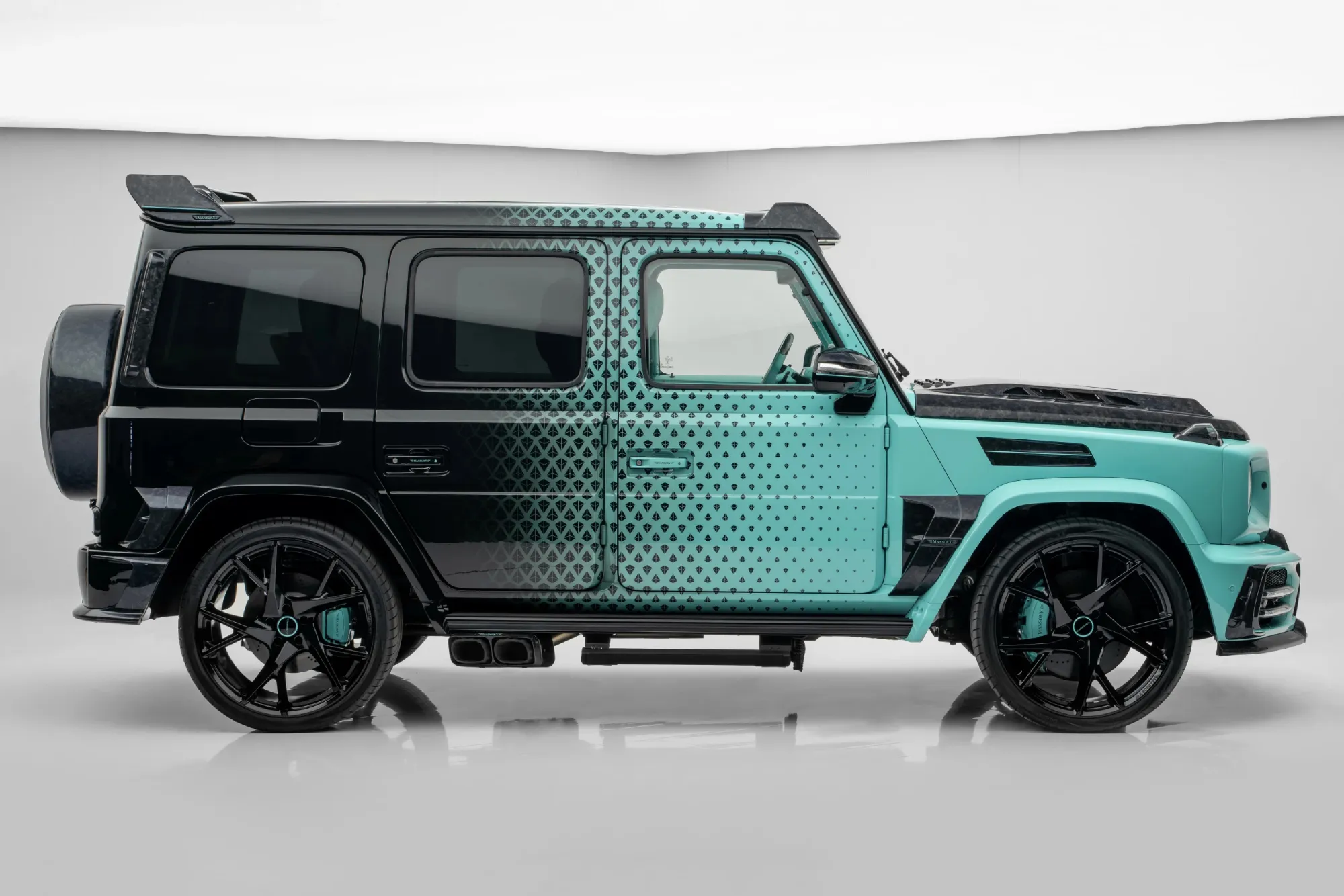
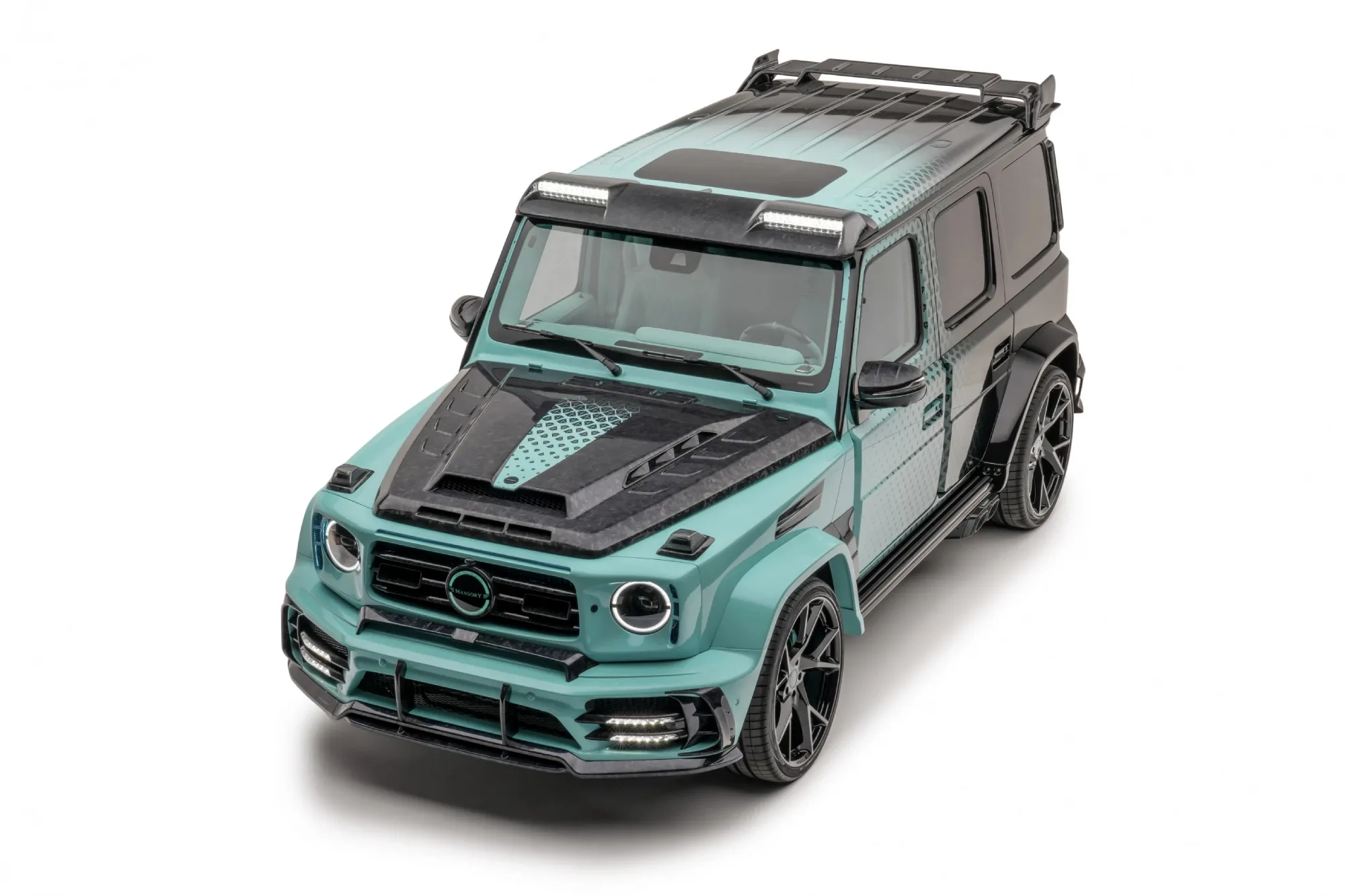
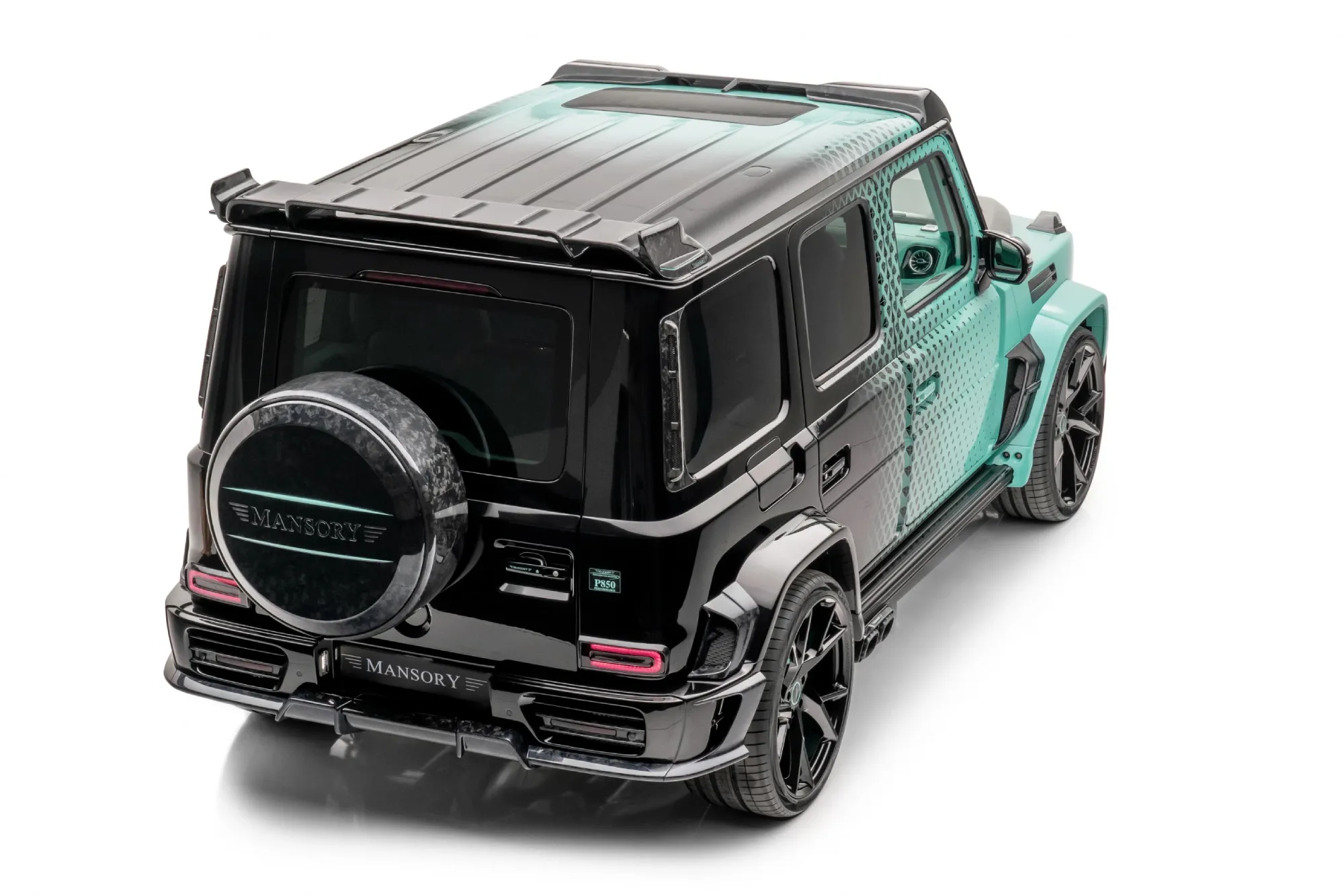
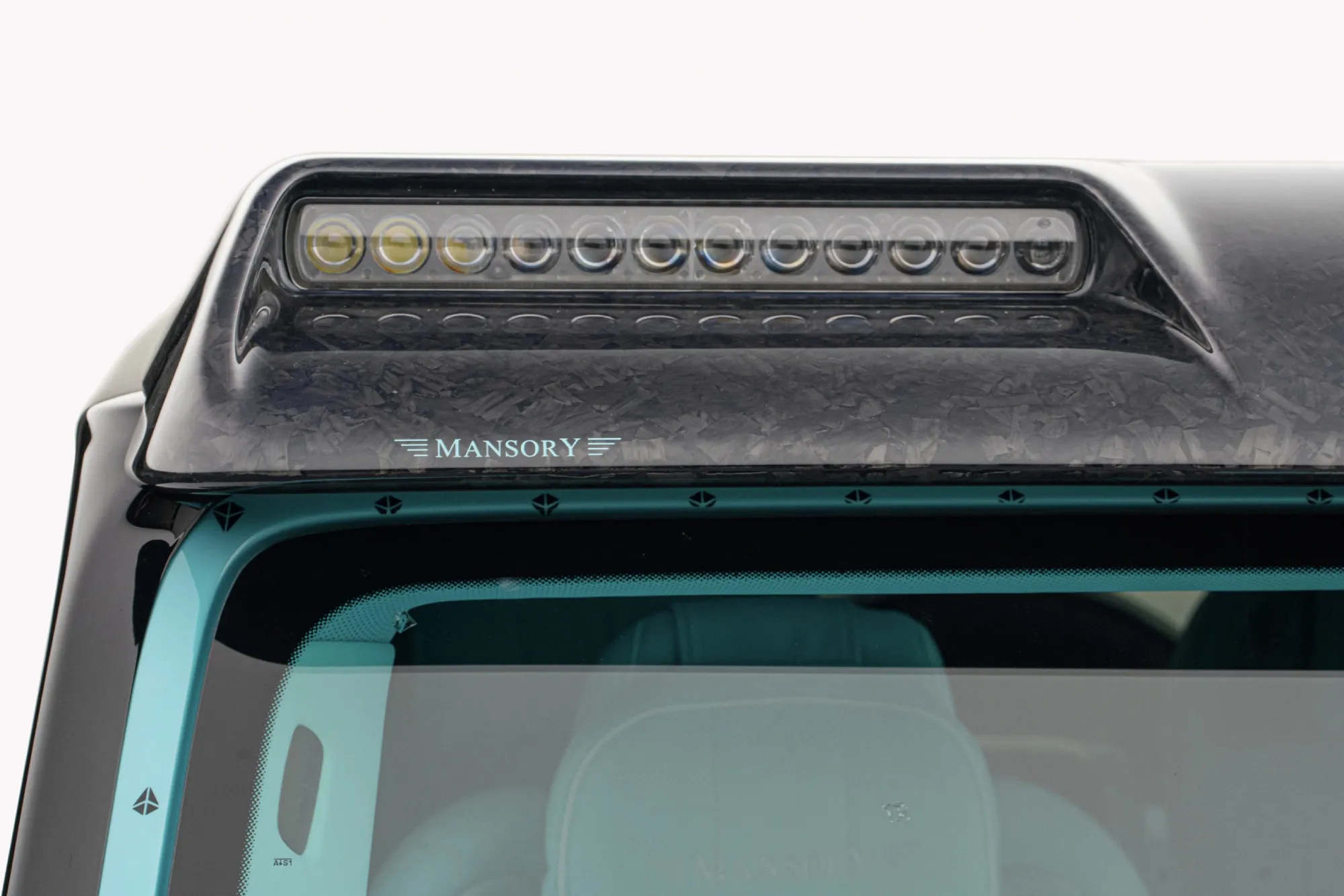
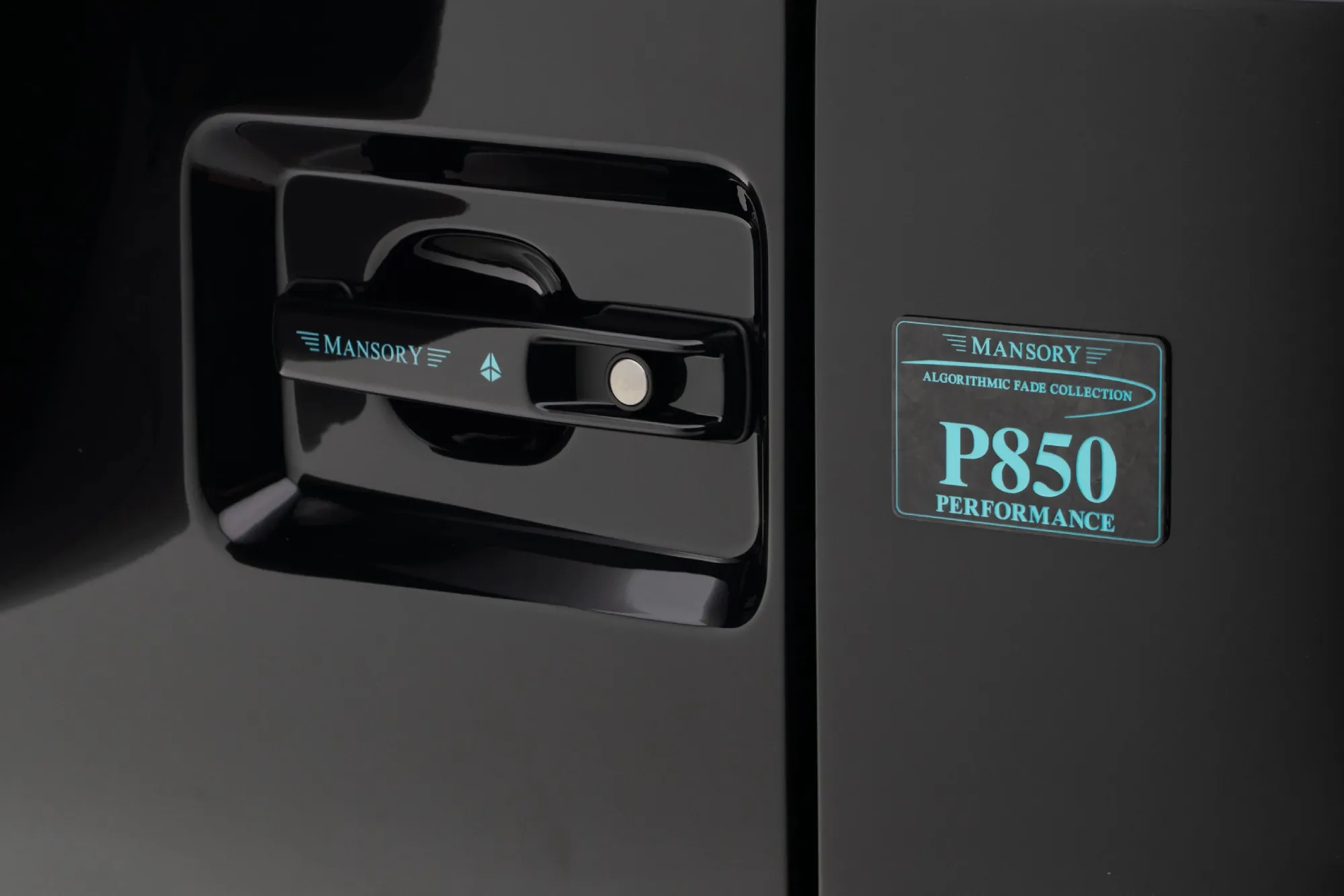
The Algorithmic Fade is the newest cosmetic chapter of the Mansory Gronos programme on the W463A G-Class, debuted at Geneva 2024 for delivery from late 2024 onwards. Dimensionally it is the established Gronos kit for the post-2018 facelift G — same +60 mm widebody envelope, same independent-front-suspension chassis. What changes is the visible carbon surface: an algorithmic weave grading process where the 2x2 twill orientation rotates across each panel in machine-determined increments, producing a pixel-to-pixel transition between zones of compressed dense weave and zones of open visible-flake weave. From two metres the panel reads as a digital fade; up close every cell is geometrically unique.
The Algorithmic Fade is one of three current W463A Gronos finishes in Hodoor's catalogue — the others being the original Gronos visible weave and the related Star Trooper desert specification. The next-generation W465 Gronos sits on the just-launched 2024 Geländewagen successor; the Algorithmic Fade panel set does not transfer between W463A and W465 — the two cars share badging only.
The W463A platform — what makes the post-2018 G different from every G that came before
Mercedes redrew the G in 2018 around an entirely new chassis the factory still calls W463A to preserve the heritage code, but which shares effectively zero carry-over hardware with the 1979-2018 ladder-frame original. Dual-A-arm independent front suspension replaces the solid axle of every previous Geländewagen. The body is 53 mm wider and 53 mm longer overall yet visually retains the original silhouette to a granular degree. Wheelbase: 2 890 mm (against 2 850 mm for the outgoing W463). Length: 4 817 mm. Front track: 1 627 mm. Kerb weight: 2 560 kg G500, 2 560 kg G63 AMG, 2 670 kg with the AMG carbon-roof pack. Wheelarch geometry, inner-fender liner and front bumper assembly are all clean-sheet designs.
Algorithmic Fade — what the surface actually does
Each carbon panel in the Algorithmic Fade catalogue is laid by hand from a series of pre-cut twill cells whose orientation is determined by a generative pattern algorithm Mansory commissioned in 2023. The algorithm assigns each cell a rotation angle in 5-degree increments, with denser orientation clustering at the leading-edge of every panel and progressively more open weave-flake orientation toward the trailing edge. The transitional zone in the middle of each panel reads as a digital fade. Because the pattern is generated for every commission against the panel's actual edge geometry, no two Algorithmic Fade kits carry an identical weave — each is a unique surface signature. Lacquer is high-build clear with optional matte and satin finishes; the algorithm's resolution is preserved under any of the three lacquer options.
Components shipping in the Gronos Algorithmic Fade catalogue
Hand-laid 2x2 twill weave on visible aerodynamic pieces, PU-RIM composite on the bumper substrate and the bonded fender extensions. Standard-spec dry-carbon for the bonnet and roof-edge spoiler. The full schedule:
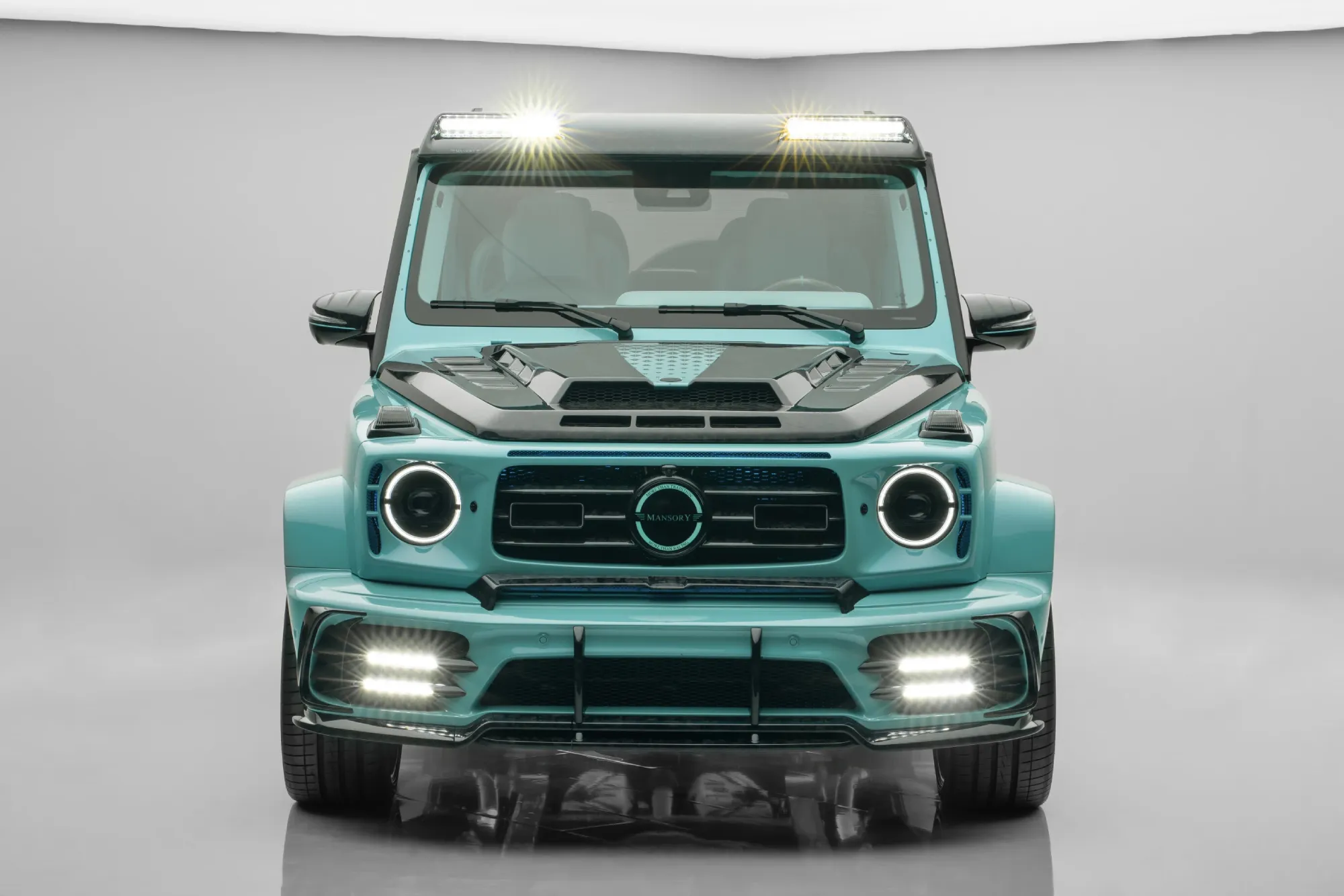
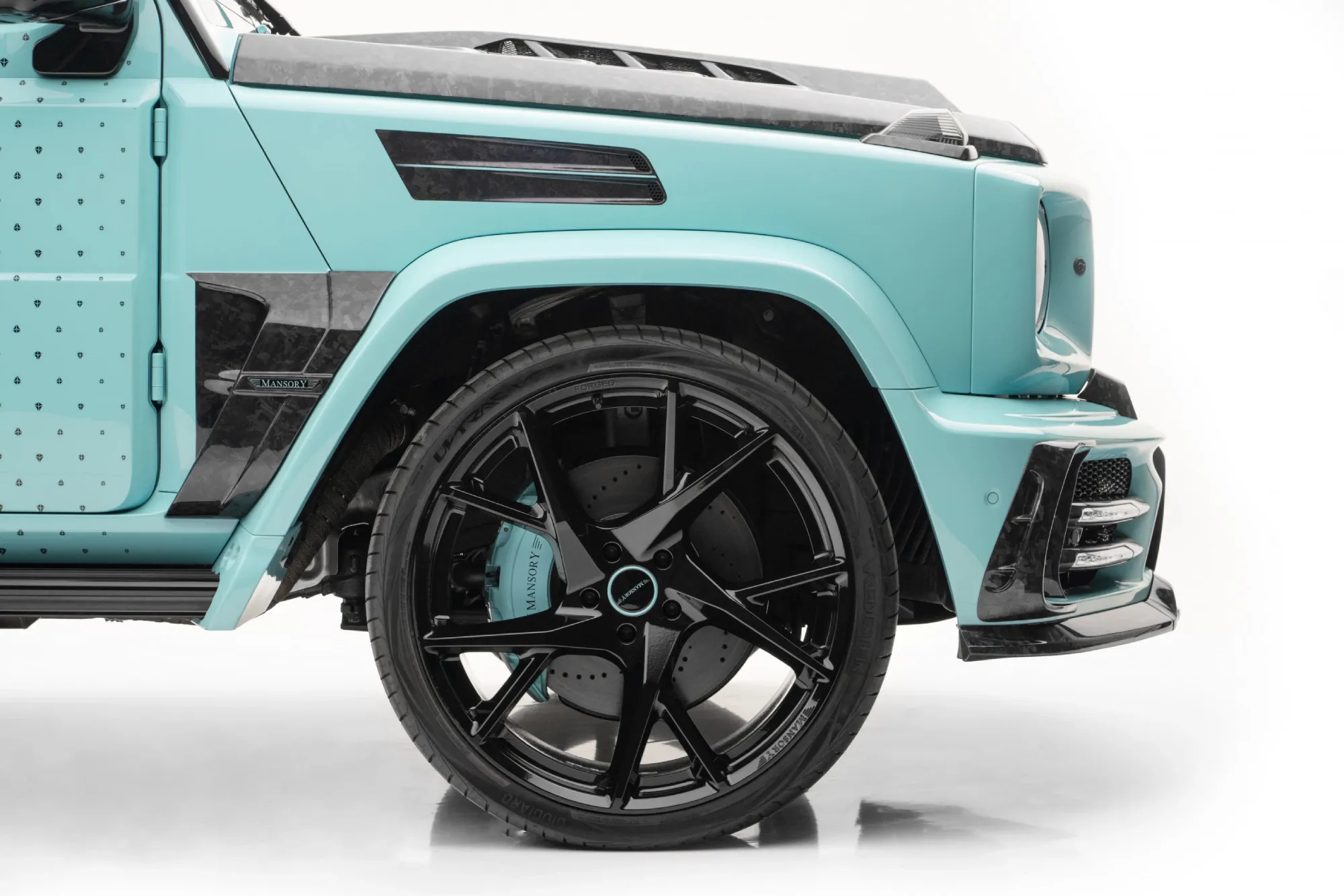
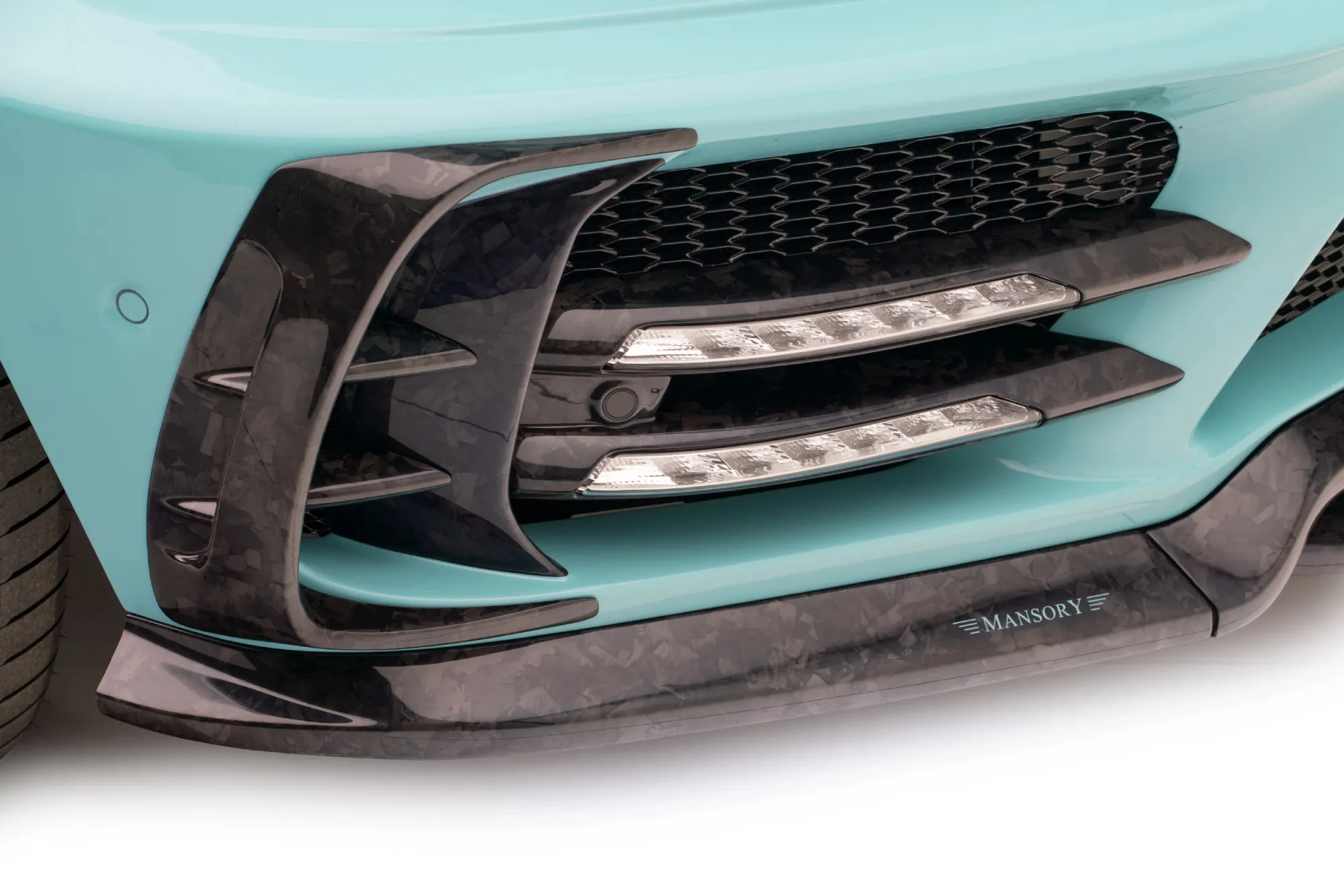
- Replacement front bumper with revised lower intake, central radiator-cooling duct, and integrated front splitter blade. Front canard pair on the lower outer corners.
- Vented widebody front fenders (+30 mm per side) with louvre cutout aft of the wheelarch.
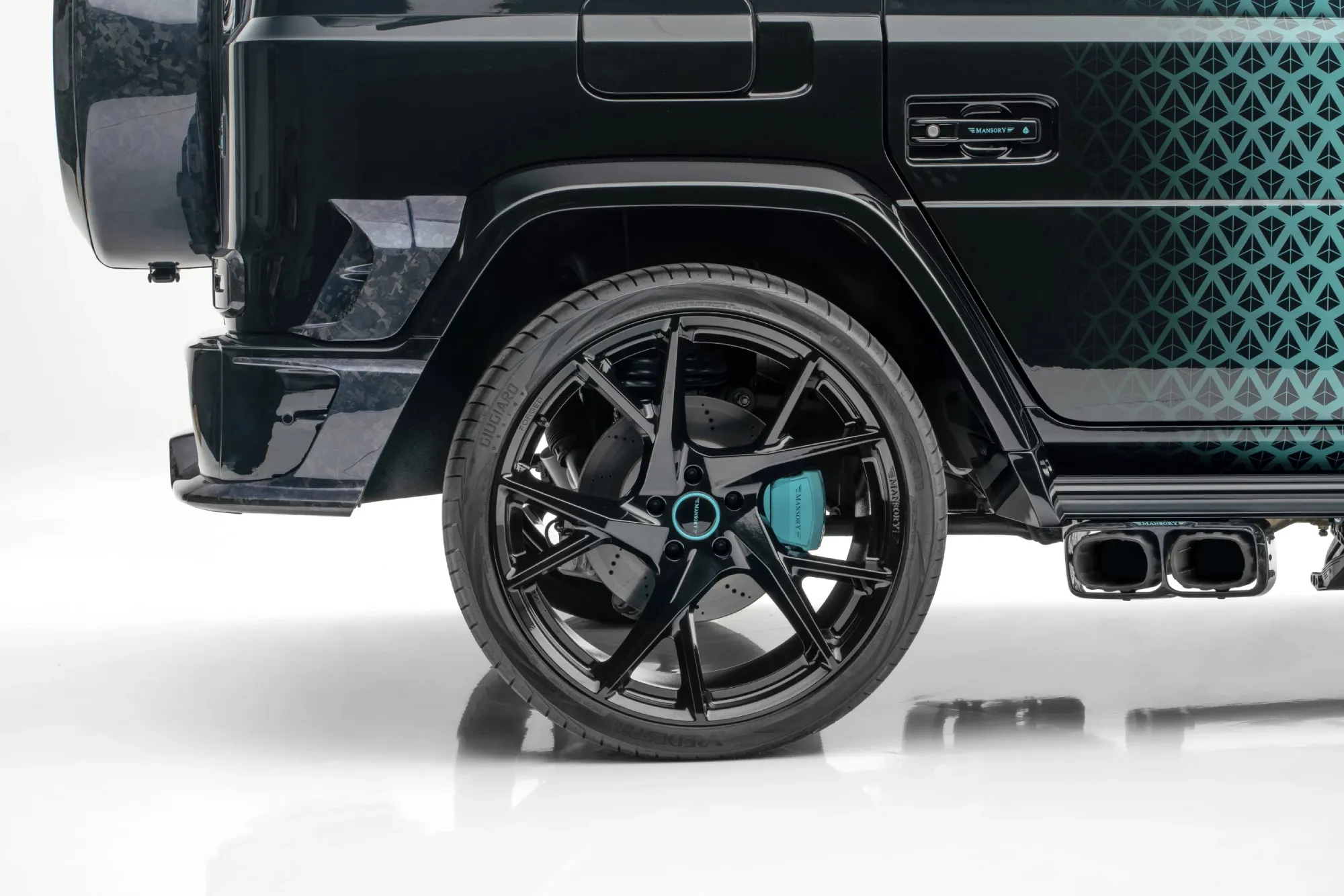
- Bonded rear-fender flares (+30 mm per side) running into the OEM door shut-line.
- Replacement rear bumper with full-width carbon diffuser, vertical fence elements, integrated quad oval exhaust bezels.
- Roof spoiler tuned to the W463A rear-tailgate geometry; sits ahead of the OEM tailgate hinge line.
- Carbon vented bonnet with twin functional louvres above the M177 intake plenum.
- Carbon side steps replacing the OEM running boards, dimensioned to clear the +30 mm fender flare.
- Spare-wheel cover in matched Algorithmic Fade weave, replacing the OEM stamped-steel cover.
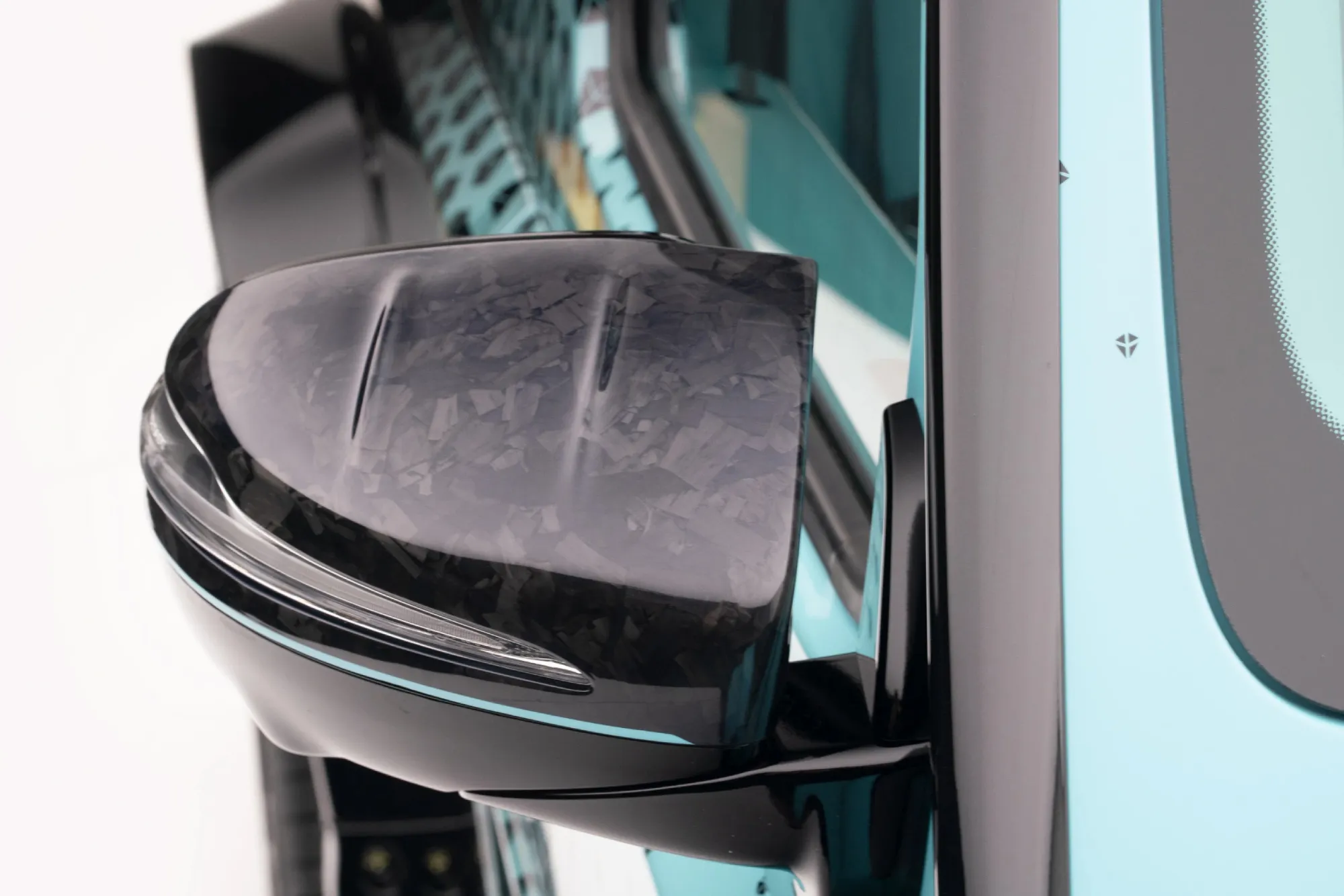
- D-pillar covers, mirror caps, kidney-grille frame and fender-vent inserts as the trim pack.
M177 V8 — the engine the Algorithmic Fade dresses
The dominant donor for an Algorithmic Fade commission is the G63 AMG W463A running the AMG-developed M177 DE40 AL 4.0-litre twin-turbo V8: 585 hp at 6 000 rpm, 850 Nm from 2 500 rpm, 9-speed AMG Speedshift TCT-9G transmission, full-time 4MATIC permanent four-wheel drive with three differential locks. Factory 0-100 km/h: 4.5 seconds. Top speed: 220 km/h with the AMG Driver's Package. Mansory's calibration module, quoted as a separate SKU against the Algorithmic Fade body programme, raises output to approximately 720 hp / 950 Nm with the matching sport-exhaust commission and an upsized intercooler. The G500 W463A donor (M177 DE40 LA at 422 hp) accepts the same body programme but a different calibration module with a softer remap target of 510 hp / 700 Nm. The Algorithmic Fade panel set is dimensioned identically across G500 and G63 donors — the front bumper intake apertures and rear apron exhaust footprint are common.
Wheels — 24" forged with 295/35 R24 fitment
OEM W463A G63 wheels run at 22" with optional 23". The Algorithmic Fade catalogue is dimensioned around 24" front and rear staggered forged wheels: 295/35 R24 across both axles in the standard fitment, with optional 305/35 R24 rear shoulder for owners specifying the maximum bonded flare with a wider wheel-cap offset. PCD 5x130, centre bore 84.1 mm, ET range matched to the +30 mm flare. Wheel patterns: YN.5 double-Y multi-spoke, FD.16 dual-spoke concave, M.7 classic multi-spoke, FV.5 with the engraved Mansory monogram centre cap. Surface options: matched Algorithmic Fade weave on the wheel face (a separate atelier process from the bodywork), satin black with diamond-cut spoke contrast, paint-to-sample matched to the G's body colour. Forged catalogue: hodoor.world/collection/forgedwheels. The wheel set carries TÜV documentation against the W463A G63 kerb weight including the AMG carbon-roof option mass at 2 670 kg.
Where the Algorithmic Fade ships
The Algorithmic Fade is the most expensive of the three current W463A Gronos finishes and the order book correlates with that — heavier concentration in the high-spend Gulf cluster, lighter share in mid-tier European markets. Principal corridors:
- UAE sits at the top of the Algorithmic Fade order book by a clear margin. Dubai and Abu Dhabi commissions cluster around G63 donors with the algorithm's gradient running in shades of dark anthracite to silver — the dust-pattern aesthetic reads against the Gulf garage palette.
- Saudi Arabia and Qatar follow on similar volume curves, with Riyadh commissions trending toward gold-fade gradients on the bodywork only and OEM-paint matching on the wheels.
- Hong Kong and Singapore ship a smaller share but at a high pull-through rate of the matched-pair Mansory commission with a sister Maybach GLS X167 in the same garage.
- Monaco orders the Algorithmic Fade in the most discreet variants — a fine dense-to-dense gradient that reads as a single solid carbon at street distance and only resolves into the algorithmic pattern up close. Switzerland's Alpine corridor follows on a similar discretion-led specification.
- Tsar lane serves the Russian and CIS book through closed-network freight; the Algorithmic Fade is ordered alongside a sister Cullinan on a meaningful share of those commissions.
- Turkey closes the principal European corridor with Istanbul taking a steady share of G63 algorithmic commissions in copper and bronze gradient palettes.
Lead time & commission process
Algorithmic Fade carbon body kit (full): seven to nine weeks from the workshop — the algorithmic weave generation step adds two weeks against the original Gronos timeline. ECU + sport-exhaust commission (where ordered): four to five weeks parallel. 24" forged wheel set: four to five weeks. Email [email protected] with the W463A VIN, donor variant (G500 or G63 AMG), the OEM body colour code, the destination country, and an indication of the algorithm gradient direction (dense-to-open or open-to-dense across the panel) and base weave-flake colour preference. WhatsApp +44 7488 818747 for fastest landed-quote channels.
FAQ
Will the Algorithmic Fade panel set fit a pre-2018 W463 G-Class?
No. The bumper apertures, fender geometry and rear-quarter line are dimensioned to the W463A facelift bodyshell only. The pre-2018 W463 cars are served by separate Mansory programmes — the G-Couture set for cars to mid-2012, the soft-kit overlay, and the dedicated full pre-facelift W463 programme. None of those kits transfer panels with the Algorithmic Fade.
Does the algorithmic weave repair like a standard carbon panel?
Yes — but the matching is a workshop-only process. Because each cell's orientation is generative, repairing a stone-chip or kerb-strike requires shipping the panel back to the Mansory atelier for the algorithm-driven re-laminate. We hold the donor's algorithm seed on file against VIN so any future repair regenerates the same pattern across the affected zone.
Matte, satin or gloss lacquer — does the algorithm read differently across finishes?
The algorithm's pattern is preserved across all three lacquer choices. Matte clear softens the dense-to-open contrast — the gradient reads as a smoother continuous transition. Satin sits in the middle. Gloss clear sharpens every cell boundary and gives the strongest digital-pixel read up close. UAE and Saudi commissions favour gloss; Monaco and Switzerland favour satin or matte.
Does the AMG-G63 carbon-roof option (factory ordered) coexist with the Algorithmic Fade kit?
Yes. The AMG carbon roof and carbon bonnet pack ship in OEM weave; the Mansory carbon programme replaces the bonnet with the Algorithmic Fade weave and leaves the OEM AMG carbon roof in place by default. Owners who want the algorithm to extend across the roof commission a Mansory replacement roof panel as a separate SKU.
Will the kit affect ABS, ESP or the differential-lock controls?
The body-and-wheels programme is mechanically transparent to the powertrain electronics. ABS sensors, ESP module, the three locking-differential controls and the AMG drive-mode menu all run on the OEM calibration. Front and rear PDC sensors transfer from the OEM bumper into the Mansory bumper at install. The AMG distance-pilot radar module retains its OEM mounting.