Roof Panel "Gronos" With 2 Lights


Roof Panel "Gronos" With 2 Lights - The Signature Mansory Statement
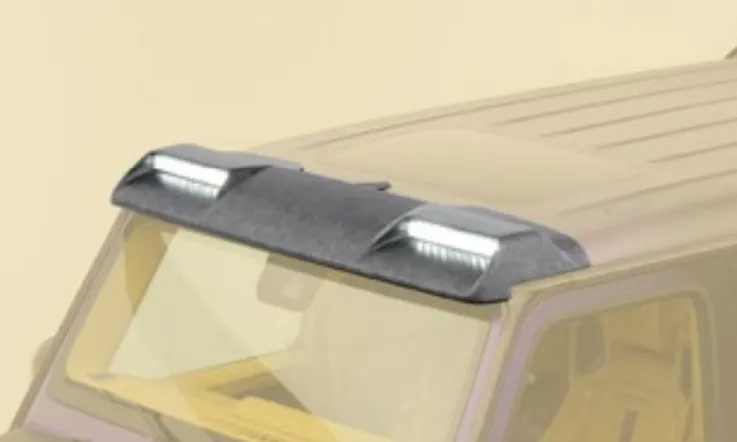
Within the W465 Gronos lineup, the Roof Panel "Gronos" With 2 Lights stands apart as the branded, identity-driven variant of the roof module. Where the plain two-lamp panel reads as understated competence and the six-lamp version maximises forward output, the "Gronos" panel does something the others cannot - it places the Mansory wordmark directly into the silhouette of your G-Class, turning the roof line into a deliberate signature. The functional layout still revolves around two structured lamp openings, but the panel itself is finished as a showpiece: visible carbon weave, gloss-clear depth, and the GRONOS lettering integrated into the panel body rather than applied as a sticker. This is the choice owners make when they have committed fully to the Gronos build aesthetic and want every angle of the vehicle to confirm it.
This product page covers the Gronos-branded roof panel as a standalone purchase against the wider Mansory Body Kit for Mercedes Benz G-class W465 Gronos programme. If you are still mapping the full Gronos kit, the Mansory collection at hodoor.world shows where the roof module sits inside the broader exterior, interior, wheel, and lowering portfolio for W465.
The Gronos Identity Statement
Mansory's design language for the W465 Gronos is intentionally architectural. The fenders, the hood, the wide front mask, the side steps - everything builds toward a posture that is clearly distinct from a standard AMG G-Class. The roof, however, is the silhouette people read first when the car is approaching or pulling away. By placing the GRONOS wordmark into the roof panel itself, the branded variant ensures that the most photographed angles - three-quarter front, profile, rear walkaway - all carry the build's name without resorting to bumper stickers or window decals. It is the difference between owning a tuned G-Class and owning a Gronos.
For collectors who already possess or specify a full Gronos kit, the branded panel is rarely treated as optional. It functions in the same way that a coachbuilt nameplate functions on a limited series: as the visual seal that confirms the rest of the build is real. For owners who are layering Gronos parts gradually, the branded roof is a high-impact early purchase precisely because it is so visible.
Branding Integration Techniques
The "GRONOS" wordmark on this panel is not a flat decal. Mansory's preferred execution combines geometry built into the panel mould with a carbon overlay that respects that geometry, so the lettering reads as part of the structure rather than as surface decoration. There are three broad approaches you may encounter, depending on production batch and finish specification:
- Cast-in lettering - the wordmark is shaped into the panel substrate during layup, then carbon is laid over the relief so the weave continues across the letter forms. The result is dimensional and tactile.
- CNC recess plus carbon insert - a precision pocket is machined into a primed substrate and a separate carbon insert carrying the wordmark is bonded in, giving a crisp tonal contrast between letter zone and background.
- Surface-applied wordmark under clear - a high-quality wordmark is applied to a finished carbon panel and sealed under multiple coats of clear, producing a flush optical effect that still photographs as integrated.
All three approaches, when executed at Mansory standard, look "cast in" from a normal viewing distance. The differences only emerge in close-range inspection and in how the surface ages over years of UV exposure. For owners who plan to keep the vehicle long-term and detail it regularly, the cast-in or recess-plus-insert routes are the more durable specifications.
Visible Carbon Versus Primed Finish
The plain two-light roof panel in the same kit is most often supplied primed - ready for the body shop to colour-match it to the vehicle so the roof reads as a single painted surface. The "Gronos" branded variant inverts that priority. Its purpose is to be seen as carbon, with the wordmark visible against the weave. Specifying it in primed-and-painted form would defeat the design intent.
The standard finish therefore is visible carbon under high-build clear, and the more interesting specification choices are about which carbon: classic 2x2 twill for a familiar luxury read, fine 3K plain weave for a tighter optical pattern, or forged carbon for a fragmented organic look that contrasts dramatically with the wordmark relief. Each specification interacts with the GRONOS lettering differently, and Mansory will advise based on the rest of the build - particularly whether the engine bonnet, mirror housings, and D-pillar covers are also ordered in visible carbon.
Premium Positioning Versus Plain Two-Lights
It is worth being explicit about how the branded panel sits commercially against its plain sibling. The Roof panel with 2 lights covers the same functional brief - two forward lamp openings, ECE-friendly geometry, a bolt-on swap for the OEM roof line. It is also typically a meaningful step less expensive, because it is delivered as a primed substrate without the wordmark integration and without the visible-carbon finishing labour.
The Gronos-branded panel sits in a higher price tier for a clear reason: the carbon layup, the wordmark integration, and the finishing pass are all additional craft hours over the plain version. Owners choosing it are not paying a premium for a sticker - they are paying for the fact that the panel has been built specifically to remain a visible carbon surface for the life of the vehicle, with branding that is part of the structure rather than applied to it. For full Gronos builds aiming at concours-grade presentation, that craft is the point.
Lamp Selection And Integration
Although the panel itself is the headline, the lamp choice inside it determines a lot of the practical experience. The standard layout accepts two front-facing modules, and Mansory typically pairs the panel with high-output LED forward lamps from a known European supplier, with an option to upgrade to Hella position-light modules if you want a marker-style night signature rather than a full driving beam. Beam pattern, colour temperature, and homologation marking all matter and should be confirmed in writing on the order acknowledgement, especially if the vehicle will be registered in markets with strict roof-light regulation.
The lamp openings themselves are CNC-finished, gasket-rebated, and dimensioned to the lamp body so that the optical face sits flush with the panel surface. This is what protects the GRONOS branding from being visually crowded by the lamps - the lamps recede into the panel rather than projecting from it, leaving the wordmark as the dominant element when the lights are off.
Wiring, Switching, And Roof Control
Wiring is supplied as a sealed pre-loom that exits via a grommeted feed at the rear of the panel and routes through the headliner toward a switching point. Mansory's preferred control architecture for the W465 Gronos uses a roof-mounted control unit with start button and dedicated lamp toggles, which can be ordered as a matching cabin part. With that unit fitted, the two roof lamps come up under their own switch independently of the OEM auxiliary lighting circuits, with appropriate fusing and a relay tap to the main vehicle bus.
Connectors are colour-keyed and labelled, but the integration step still demands a workshop that has done at least one Gronos build before. Trim removal on the latest G-Class is unforgiving of improvisation, and the difference between a clean install and a noisy one is measured in headliner crease patterns that owners will notice every time they get into the car.
ECE Compliance And Homologation Notes
The lamp openings are dimensioned around modules carrying ECE approval marks, and Mansory supplies homologation documentation on request for the roof lamp bundle. The roof panel itself is a body part, not a regulated lighting item, so the panel ships freely; the regulatory question is purely about which lamps you fit and how they are wired. For markets where forward-facing roof lamps are restricted to off-road use, the standard practice is to keep the lamps electrically separate from the road-driving circuits and to operate them only off-highway. A clear conversation with your registration body before fitment is, as always, cheaper than retrofitting later.
Comparison With Sibling Roof Variants
Inside the W465 Gronos roof family, there are several adjacent products to consider as you settle on a specification:
- Roof panel with 2 lights - the plain functional sibling, primed, lower in cost, ideal if you want body-coloured continuity and minimal visual drama.
- Roof panel with 6 lights - maximum forward lighting capability, dense lamp grid, expedition-leaning posture.
- Roof panel with 2 position lights Hella - a marker-light specification using Hella position-light modules, a softer night signature.
- Roof wing - the rear-edge aerodynamic element rather than a front-facing roof panel, frequently ordered alongside any of the panels above.
Most full-Gronos builds end up combining the Gronos-branded front roof panel with a roof wing at the trailing edge, so that both ends of the roof line carry deliberate Mansory geometry. The branded panel is, however, designed to look complete on its own and does not require the rear wing to read correctly.
Materials, Build Tolerance, And Finish
The substrate is a multi-layer composite engineered for stiffness in the lamp aperture zone, with the carbon visible-finish skin laminated over it. Tolerances are held tight enough to allow direct mounting against the OEM roof rail interface without panel-beating; small shimming may still be required depending on individual vehicle build variance, which is normal for any aftermarket roof part on the latest G-Class.
Finishing is sequential: layup, demould, surface preparation, branding integration, carbon overlay where applicable, multi-coat clear, machine cut, hand polish. Each panel is inspected against a master reference for wordmark geometry and weave alignment before being released to packing. This sequence is the reason lead times are quoted in weeks rather than days.
Ordering Path And Lead Time
The Gronos-branded roof panel is built to order. Standard lead time runs ten to fourteen weeks from confirmed order and deposit, with longer windows possible during Mansory's busiest production months or if a non-standard carbon weave is specified. Worldwide shipping is arranged on insured freight with crated protection appropriate to the panel's value. Customs and import handling at the destination remain the buyer's responsibility, and we will provide all documentation needed to clear smoothly.
To start a build, send the chassis VIN, the production year of your W465, your preferred carbon weave, the lamp specification you want fitted, and any wider Gronos parts you intend to order alongside. We will return a written quote, a lead-time confirmation, and an installation note for your workshop.
Reach the team on WhatsApp at https://wa.me/447488818747 for fastest response, or by email at [email protected] if you prefer written correspondence with attachments.
Frequently Asked Questions
Q: Is the GRONOS lettering raised, recessed, or flush?
A: It depends on the production specification. Cast-in lettering reads as a subtle raised relief; CNC-recess-plus-carbon-insert reads as a flush tonal contrast; surface-applied-under-clear reads as fully flush optically. All three are factory-correct executions and Mansory will confirm which method applies to your specific panel before finishing.
Q: Can I order the Gronos-branded panel in primed finish to paint body colour?
A: Technically possible on request, but it is strongly discouraged. The entire purpose of the branded variant is to be seen as carbon. If you want a painted body-colour roof, the plain two-light panel is the correct part to order.
Q: How does it compare to the six-light variant cosmetically?
A: The six-light panel is denser visually because of the lamp count and is typically chosen for its functional output. The Gronos-branded two-light panel is quieter in lamp geometry but louder in identity, because the wordmark dominates the empty-lamp areas.
Q: Will fitting the panel affect roof rails, antennas, or sunroof functionality?
A: The panel is engineered to integrate with the OEM roof structure. Antennas are preserved; sunroof is unaffected when the panel is fitted to a sunroof-equipped W465 to its design specification. Roof rails are typically retained and re-fitted over the new panel during installation.
Q: What is the realistic delivery window from order to fitted?
A: Plan for ten to fourteen weeks of production plus one to three weeks of shipping and customs depending on destination, plus a workshop slot for fitment. Realistically, owners who order early in a quarter receive panels mid-quarter to early next quarter; orders placed against Mansory's peak production windows can run longer.
Final Note On Choice
Choosing the Gronos-branded roof panel over the plain two-light version is a statement about how you intend the vehicle to be read. If the rest of your W465 build is moving toward a full Gronos identity - bonnet, front mask, side steps, wheels, interior carbon - the branded roof panel is the part that ties the silhouette together when the car is in motion. If you are building a more restrained tuned G-Class and want the roof to disappear into the body, the plain panel is the smarter choice. We are happy to talk through both options before you commit. Reach us on WhatsApp at https://wa.me/447488818747 or by email at [email protected].