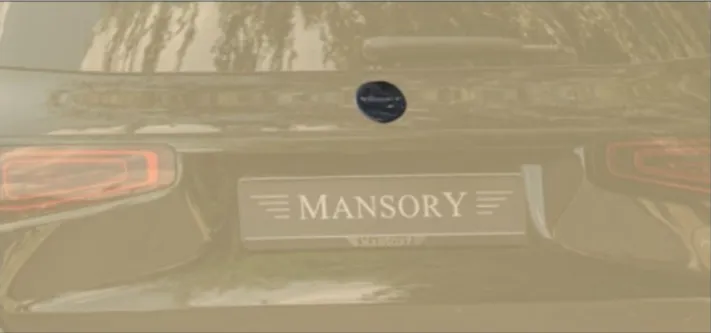
Rear hatch emblem Mansory for Mercedes GLS X167


Rear Hatch Emblem Mansory Carbon for Mercedes-Benz GLS X167
The rear hatch emblem is the closing chapter of the Mansory branding story on the Mercedes-Benz GLS X167. Within the wider Mansory Body Kit for Mercedes GLS X167 programme, three small carbon plaques carry the wordmark across the silhouette: the grille mask in front, the engine bonnet emblem at eye level, and this rear hatch piece at the back. It is the part the world reads when your GLS pulls away in traffic. On a 5.21-metre, 2.49-tonne luxury SUV, the rear face is wide, vertical and unmistakable; the Mansory script set against deep-lacquered 3K twill turns that flat plane into a coachbuilt signature, framed by the horizontal chrome trim, the rear lights and, on AMG GLS 63, the four central exhausts that define the lower stage.
Construction & Materials
The rear hatch emblem is a small, resin-rich carbon plaque that has to live on a wet, hot, frequently washed panel. Mansory builds it as a one-piece moulding with embedded mounting hardware and a UV-stable lacquer system, sized to read clearly from a following car at urban distance without crowding the OEM star.
- 3K twill carbon weave, longitudinal grain aligned with the horizontal hatch chrome strip so the emblem reads dead-level when the tailgate is closed
- Vacuum-bagged prepreg lay-up with autoclave cure for void-free density on a high-thermal-cycle panel
- Wall thickness ~3.0-3.5 mm with a precision-machined back face that follows the tailgate's gentle outward curvature
- Plaque mass ~30-60 g — the tailgate's gas-strut balance is unaffected and the kick-sensor calibration window is preserved
- Mounting: dual 3M VHB foam pads pre-applied at the factory, plus an OEM stud cone where the original Mercedes badge mount allows a threaded location
- Finish: Mansory deep-gloss lacquer with UV inhibitor — matched to the engine bonnet emblem and the grille-mask logo for triplet coherence
- Optional satin or raw-weave finish on bespoke order; matt clear is recommended on Obsidian Black or Selenite Grey body colours
- Edges chamfered and sealed so the lacquer wraps the perimeter — no exposed weave where high-pressure wash spray hits
Design & Visual Function
The rear of the X167 is OEM Mercedes territory. Stock cars wear the three-pointed star centred high on the tailgate above the licence plate, with the Mercedes-Benz wordmark and trim badging beneath. Mansory's rear hatch emblem can either replace the star outright on bespoke commissions or sit alongside it, offset toward the leading edge of the hatch where it interacts with the horizontal chrome strip that runs between the rear lamp clusters. Either choice is deliberate: the customer is making a public statement that this GLS has been worked by an external coachbuilder, and the wordmark is the legible signature.
The visual function is rear-aspect, follow-traffic. Most onlookers meet a GLS for the first time from behind, in queue traffic, at school-run pickup, in the lane next to them on a slow motorway crawl. From that vantage the emblem competes with very little — the tailgate is a wide, calm panel, and a small lacquered plaque registers cleanly against it. The carbon weave catches sodium lighting at night and reads as texture rather than colour, which is exactly the bespoke effect Mansory designs around. On AMG GLS 63, the four central-mounted exhausts and aggressive AMG diffuser establish the lower band of the rear face; the hatch emblem then sits as the calm graphic crown above that mechanical theatre.
Geometry matters too. The tailgate sweeps upward through a tall arc when opened — a conventional Mercedes habit on a tall SUV. The emblem's position is chosen to clear that arc cleanly: the plaque follows the tailgate up and over the roof line, never collides with the rear roof spoiler when fully raised, and never fouls the panoramic glass roof drainage channels. The emblem's chamfered edges and shallow profile mean it reads as a flush graphic rather than a protruding ornament.
Compatibility & Fitment
This emblem fits the Mercedes-Benz GLS X167 generation (production from 2019, sold MY2020 onwards), including the MY2024 facelift refresh. All powertrains are covered: the inline-6 GLS 450 with EQ Boost mild-hybrid, the V8 BiTurbo GLS 580 4MATIC, and the AMG GLS 63 4MATIC+ with its 4.0-litre V8 BiTurbo making roughly 603 hp. Body-side fitment is identical across trims because the rear hatch sheet metal is shared; AMG GLS 63 differs at the diffuser and the four central exhausts, neither of which the emblem interacts with.
The rear-camera cluster sits high on the hatch garnish near the OEM star — Mansory engineers the emblem placement offset from that camera so the lens, washer aperture and heating element remain exposed and unaffected. The kick-sensor under the rear bumper that opens the tailgate hands-free is on a different panel entirely; the emblem has no influence on that calibration. Tailgate hinges, pull-down latch and gas struts continue to operate within OEM specification because the added mass of the plaque is negligible (~30-60 g) compared to the panel's working envelope.
Installation & Reversibility
Installation is the simplest job in the entire Mansory GLS X167 programme. Total time on the bench: roughly 30 minutes including degrease, dry-fit and final cure. Tools needed: isopropyl alcohol or panel wipe, lint-free cloth, masking tape for alignment, plastic trim wedge if removing the OEM badge first, and a heat gun or hairdryer to bring the bonding surface to ~20 °C if you are working in a cold garage. The procedure: remove the OEM Mercedes badge if the customer has chosen full replacement (otherwise simply align next to it), degrease the bond zone twice, mask reference lines so the emblem reads parallel to the hatch chrome strip, peel the 3M VHB liners, press firmly for 30 seconds and allow 24 hours of undisturbed cure before the first wash.
Reversibility is preserved on both pathways. If the OEM star was removed, its threaded studs remain in the panel and a fresh original badge can be reinstated. The emblem itself releases with monofilament line and gentle heat without leaving residue beyond the standard VHB transfer film, which lifts with citrus adhesive remover and a soft cloth. We recommend a Mercedes-certified body shop for first-time owners; experienced enthusiasts handle the job at home without difficulty.
Pairing within the Mansory GLS X167 programme
The rear hatch emblem is the third corner of the Mansory branding triplet, and it is normally specified as part of that set rather than alone. The two siblings that complete the trio are engine bonnet emblem with logo at the front of the silhouette and logo for grill mask sitting inside the upright grille louvres or the AMG GLS 63 Panamericana bars. Specifying all three at once keeps weave grain, lacquer depth and font geometry coherent — the emblems leave the same Mansory production batch and read as one identity statement.
Owners building toward a fuller rear-aspect picture pair the hatch emblem with the roof spoiler overhead and the diffuser with integrated brake light below. That stack — spoiler, emblem, diffuser — converts the rear face into a vertically composed Mansory column and is the most-quoted bespoke combination in our GLS commissions. AMG GLS 63 owners often add it on top of the four-exhaust signature for maximum theatre in following traffic.
Maintenance & Durability
The rear hatch is one of the most chemically abused panels on a GLS. It catches highway road film, sees the high-pressure lance head-on at every wash, and on long hauls it picks up insect strike and rear-tyre rooster spray. Lacquered carbon copes with this beautifully if you respect a few rules. Use pH-neutral shampoo only. Avoid alkaline traffic-film removers and ammonia glass cleaners on the emblem itself — they soften the lacquer over time. Do not lean a foam pad on the emblem at the wash bay; let the snow-foam sit and rinse. Avoid abrasive sponges and microfibre with grit embedded — always use a dedicated, clean rear-panel mitt.
A ceramic coating dedicated to lacquered carbon adds five to seven years of UV protection and prevents lacquer crazing where the emblem sees direct overhead sun on a parked car. PPF is overkill on a small plaque, but if the customer is wrapping the hatch garnish strip itself for stone-chip protection, the installer should mask the emblem cleanly so the PPF perimeter does not telegraph through the carbon edge. SUV usage profile means the emblem will outlast a coupé's panel-life simply because the rear hatch never sees the underbody wash; expect a decade-plus of service if the wash routine is disciplined.
Lead Time & Warranty
Lead time is 4-8 weeks for production at Mansory's atelier. Each emblem is moulded, cured and lacquered to commission, with a final QC pass on weave alignment and mounting hardware. Warranty is 12 months against manufacturing defects: lacquer adhesion, weave delamination, mounting hardware separation. Cosmetic damage from impact, alkaline cleaners or aftermarket polishing compounds is excluded. Shipping is in dedicated foam moulding within a hard outer carton because the emblem travels alongside the larger Mansory carbon parts on most orders.
FAQ
Q: Does the Mansory emblem replace the Mercedes star on the tailgate?
A: It can do either. On bespoke commissions Mansory removes the OEM star and the emblem occupies that position centrally; on more reserved builds it sits offset toward the chrome strip and co-exists with the Mercedes-Benz wordmark and star. We discuss the choice with the customer before production.
Q: Will it fit the AMG GLS 63 the same way it fits the GLS 580 or 450?
A: Yes. The rear tailgate sheet metal is shared across all GLS X167 trims, so the emblem mounts identically on AMG GLS 63, GLS 580 4MATIC and GLS 450. AMG-only differences (four central exhausts, AMG diffuser, Panamericana grille) sit elsewhere on the car.
Q: Does it interfere with the rear-view camera or the kick-sensor that opens the tailgate hands-free?
A: No. The camera lens, washer and heating element are placed offset from the emblem zone, and the kick-sensor lives under the rear bumper on a separate panel. Both functions stay fully calibrated and operational.
Q: Can it survive a high-pressure wash and a dirty motorway?
A: Yes — that is the design brief. The plaque is autoclave-cured prepreg with sealed edges and UV-stable lacquer. Routine pressure-wash use, rain, rear-tyre spray and bug strike are all within service envelope. The only thing to avoid is alkaline traffic-film remover applied directly to the emblem.
Q: What is the lead time and is there a finish other than gloss lacquer?
A: 4-8 weeks. Standard finish is deep-gloss Mansory lacquer; satin and raw-weave UV-clear are available on bespoke commission and pair well with Obsidian Black or Selenite Grey body colours. Matched finish across the branding triplet is recommended.
The rear hatch emblem closes the loop — front grille, bonnet, tailgate — and is best specified as a triplet so the GLS reads coherently from every angle. Ready to brief your build? Reach the bespoke desk on WhatsApp +44 7488 818 747 or write to [email protected] with your VIN, trim and chosen finish.