Diffuser with brake light Mansory Carbon for Mercedes GLS X167


Diffuser with Brake Light — Mansory Carbon for GLS X167
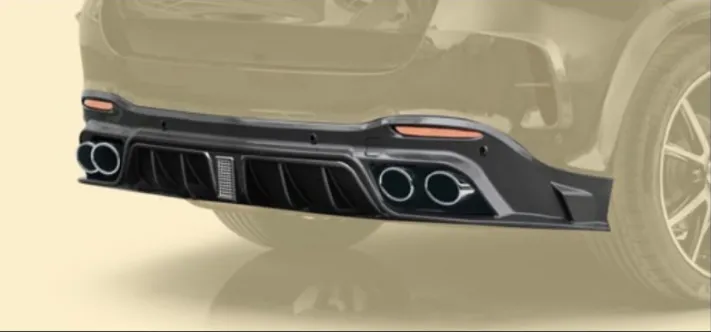
The Diffuser with Brake Light is the flagship rear-valance statement of the Mansory Body Kit for Mercedes GLS X167 programme. Where the plain diffuser is a pure aero piece, this variant fuses coachbuilt carbon geometry with an integrated LED brake-light strip, giving the X167 a bespoke rear-light signature you simply cannot specify from the factory. It sits below the rear bumper, framing either the four central-mounted exhausts of the AMG GLS 63 4.0 V8 BiTurbo or the dual outlets of the GLS 580, and turns the tailgate sequence into a piece of theatre every time the driver lifts off. Mansory's intent is unmistakable — Mercedes refinement underneath, full coachbuilder swagger on top.
Construction & Materials
The body of the diffuser is laid as a multi-layer pre-preg carbon shell, autoclave-cured to a tight resin window so the strakes hold their edges under thermal loading from the V8 BiTurbo's exhaust plume. The brake-light channel is a separately moulded carbon trough with a polycarbonate light blade bonded in, sealed against water ingress and finished flush with the surrounding weave. The whole piece is colour-matched to the rest of the Mansory carbon programme — the same 3K twill alignment, the same depth of lacquer, the same shadow play across the strakes.
- Weave: 3K twill, 2x2 pattern aligned vertically along the strakes for a tall-rear-end visual
- Cure: autoclave pre-preg, ~120 °C dwell for void-free laminate around the LED housing
- Wall thickness: 2.4–2.8 mm in the structural blade, 3.2 mm where the LED carrier is bonded
- Weight: ~3.6 kg (LED carrier and harness add ~0.4 kg vs the plain diffuser)
- Mounting hardware: factory-pattern bumper carrier brackets in stainless, plus dedicated LED ground point
- LED strip: long-life automotive-grade, sealed to IP67, OEM-equivalent brake-feed voltage
- Finish options: deep-gloss UV lacquer (default) or satin clear; raw weave on request
- Wiring tail: short loom with weather-pack connector, designed for tap-in to the OEM brake-pedal feed
Design & Visual Function
Visually this is the most theatrical valance Mansory has drawn for the X167. The strakes step down from the bumper line in a measured cadence, drawing the eye toward the centre, where the LED ribbon ignites under braking. On the AMG GLS 63 the brake-light bar sits above the four central exhausts and ties the rear cluster into a single coherent graphic; on the GLS 580 with its dual outlets, the same bar reframes the more restrained exhaust set as a deliberate, jewellery-like detail rather than an afterthought. Either way the overall mass of the SUV is preserved — Mansory has resisted the temptation to over-sculpt and instead let the brake-light blade do the talking.
Aerodynamically the part behaves like the plain diffuser sibling: it cleans up the wake under the rear axle, reduces pressure recovery losses below the load floor, and lets the airflow exit predictably around the exhaust outlets. Brake heat soak from the rear discs — a real concern on a 2.49 t SUV with seven occupants and luggage — is not constrained by the diffuser geometry; the strake spacing keeps a clear path around the rear-axle steering hardware and the AIRMATIC self-levelling sensors. The LED carrier is positioned so it does not block the rear-camera washer aperture or the parking-sensor cones.
At rest the part is, frankly, jewellery — the lacquered weave catches courtyard light and the integrated brake-light bar is a clear visual upgrade over the OEM rear-cluster signature. Under braking it is theatre — a long ribbon of red across the rear, set against deep-gloss carbon, the kind of detail you specify because you know the people behind you are going to notice.
Compatibility & Fitment
Engineered for the Mercedes-Benz GLS X167 (2019–onward, including the post-MY2024 facelift), across all variants — GLS 450 (3.0 inline-6 EQ Boost mild-hybrid), GLS 580 (4.0 V8 BiTurbo), and AMG GLS 63 (4.0 V8 BiTurbo, ~603 hp). Two exhaust-cluster cut-outs are stocked: a dual-outlet pattern for GLS 450 / 580 and a four-exhaust cluster for the AMG GLS 63, so the diffuser must be specified to the variant's exhaust layout — please confirm trim at order so the correct shell is built. OEM parking sensors, AIRMATIC ride-height sensors, rear-axle steering linkage, panoramic-roof rear drainage, and the rear-camera washer aperture are all retained. The LED brake-light strip is wired into the existing rear-light circuit; it complements rather than replaces the OEM third stop or main brake-light feed.
Installation & Reversibility
Body-side installation is effectively the same as the plain diffuser variant — bumper-off, factory carrier brackets, fasteners torqued to spec, gap and flush adjustment with the rear-bumper skin and exhaust trims — about 4–5 hours of bench-and-fit time at a Mercedes-certified body shop. The delta is electrical: roughly 1 additional hour on top of the body work to tap the OEM brake-pedal feed, route the harness up behind the rear bumper carrier, splice with weather-pack connectors, and verify the LED strip illuminates only when the brake pedal is depressed (and, where specified, holds steady with hazards / brake-hold). The installer can choose to take the feed from the third-stop circuit (cleanest, lowest current draw) or from the main brake-light feed (more robust, slightly more wiring). This is the one part in the GLS programme where DIY is firmly not recommended — the body-shop hours are routine, but the splice should be done by an installer who understands Mercedes' rear-light bus and is willing to sign off on the work for the local lighting authority.
Compared with the plain diffuser, also note: brake-light approval considerations. In some jurisdictions an additional rear lighting element added to the vehicle requires an installer note or workshop sign-off; the Mansory carbon shell itself is purely cosmetic, but the LED ribbon is a lighting device and falls under those rules. The car can be returned to OEM by removing the diffuser and capping the splice — fully reversible at the body level, and electrically reversible with no permanent cuts when the splice is done with weather-pack tap-ins rather than soldered joins.
Pairing within the Mansory GLS X167 programme
This part is positioned as the brake-light upgrade of its plain twin — the natural sibling matrix is below. Specify the variant that matches the rear-light theatre you want: pure aero, or aero with a signature light bar.
- Diffuser Mansory Carbon for Mercedes GLS X167 — the plain sibling, identical aero geometry without the LED carrier; choose this when local lighting rules or owner preference favour a purely cosmetic carbon valance with no electrical work.
- Rear Protective Frame Mansory for Mercedes GLS X167 — pairs above the diffuser to add bumper-bar style underrun protection while preserving the carbon valance graphic.
- Rear Hatch Emblem Mansory Carbon for Mercedes GLS X167 — completes the rear face: lacquered carbon emblem above, LED brake-light blade below, Mansory wordmark unifying the tailgate.
Maintenance & Durability
The lacquered weave is robust but not invincible. Hand-wash with a pH-neutral shampoo and a plush mitt; alkaline traffic-film removers, ammonia-based glass cleaners, and any abrasive sponge will dull the lacquer and, over months, etch a haze into the surface. A ceramic coating layered over the lacquer is the recommended long-term protection — it stiffens the surface against fine swirl marks, makes brake-dust rinse off cleanly, and gives the integrated LED window a self-cleaning shed. Carnauba is the warmer, more nostalgic alternative for an owner who prefers the look of soft wax; expect to top it up every few wash cycles.
The SUV usage profile is what tells against carbon parts on a GLS — school runs in the morning, motorway miles in the afternoon, the occasional gravel forecourt at the country house. The diffuser sits low on the rear, in the rooster-tail zone behind the rear axle, so chip exposure from kicked stones is real. Paint Protection Film (PPF) over the leading strake faces is highly recommended, especially on a daily-driven car. Should a panel chip, the workflow is straightforward: wet-sand the immediate area, re-lacquer, polish back to a uniform gloss; deeper damage is a panel swap. The LED strip is rated for tens of thousands of hours of brake-cycle operation; standstill power draw with the brake held is negligible and well within the body computer's tolerance.
Lead Time & Warranty
Bespoke Mansory production: typically 4–8 weeks from order confirmation to dispatch, depending on the queue and the chosen finish. Twelve-month manufacturing warranty against laminate defects, lacquer failure, and LED carrier electrical defects under normal operating conditions; cosmetic damage from road debris, alkaline cleaners, or non-OEM installation is outside the warranty envelope.
FAQ
Q: How is the brake-light variant different from the plain diffuser at the install level?
A: The carbon shell is the same. The delta is one extra hour of electrical work — tapping the OEM brake-pedal feed, routing the harness, weather-pack splice, and bench-test under brake. Body-side time is identical.
Q: Which feed does the LED strip use — third-stop or main brake?
A: Either. We recommend third-stop for the cleanest current draw and the simplest splice; main brake feed is the alternative if your installer prefers a more robust circuit. The harness is built to suit either choice.
Q: AMG GLS 63 with four exhausts vs GLS 580 with dual outlets — same diffuser?
A: Different shell. The four-exhaust cluster on the AMG GLS 63 needs a wider central cut-out; the dual-outlet variant uses a tighter pattern. Confirm exhaust layout at order so the correct shell is built — the LED carrier is identical across both.
Q: Is the LED brake-light strip street-legal everywhere?
A: The strip is automotive-grade and designed to act in concert with the OEM brake circuit, not in place of it. Local lighting rules vary — some jurisdictions need an installer note or workshop sign-off for an added rear lighting element. Your installer should confirm local rules before final wiring.
Q: AIRMATIC self-levelling and rear-axle steering — any clearance concerns?
A: None. The diffuser is shaped around the AIRMATIC sensors and the rear-axle steering hardware; AIRMATIC lift mode preserves the underbody geometry. Departure-angle behaviour is unchanged versus the plain diffuser.
Q: Can I revert to the OEM rear bumper without permanent damage?
A: Yes. The carbon shell unbolts from the factory carrier brackets; the LED splice, when done with weather-pack tap-ins rather than soldered joins, comes out cleanly and the OEM brake circuit is unchanged.
Pair the brake-light diffuser with the rear protective frame and the rear hatch emblem for the full coachbuilt tailgate. Order, finish options, exhaust-variant confirmation and lead-time updates: WhatsApp +44 7488 818 747 or [email protected].