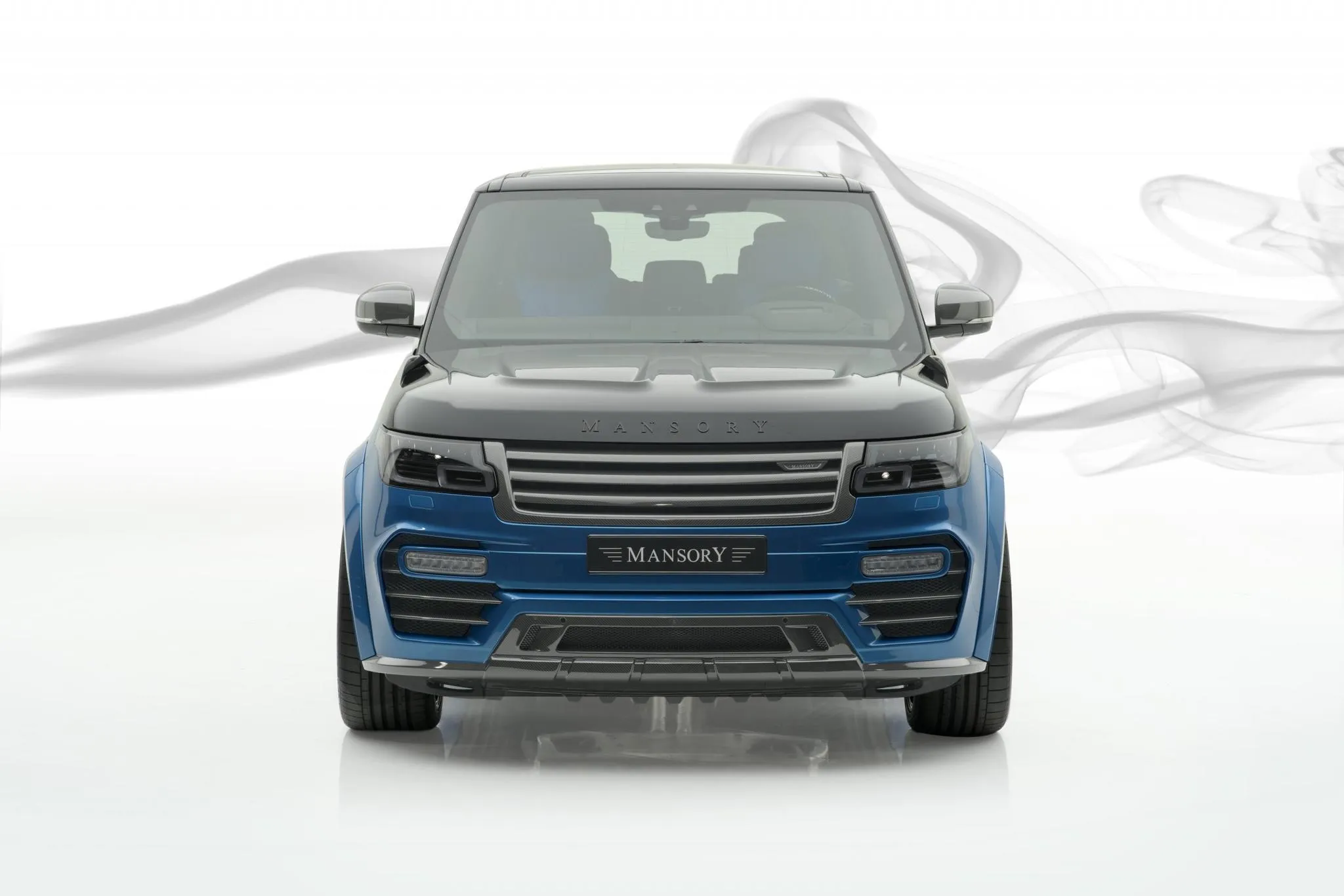
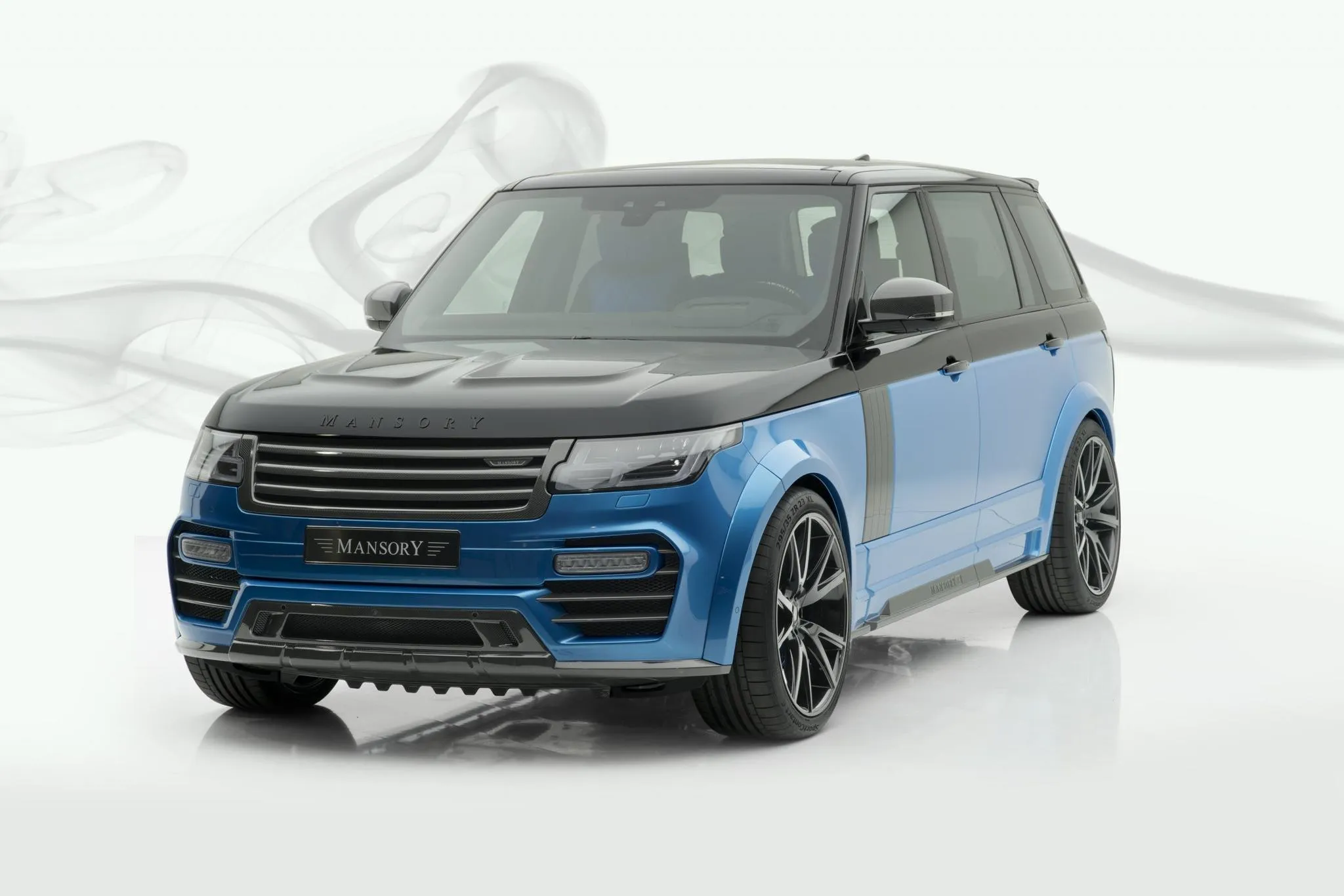
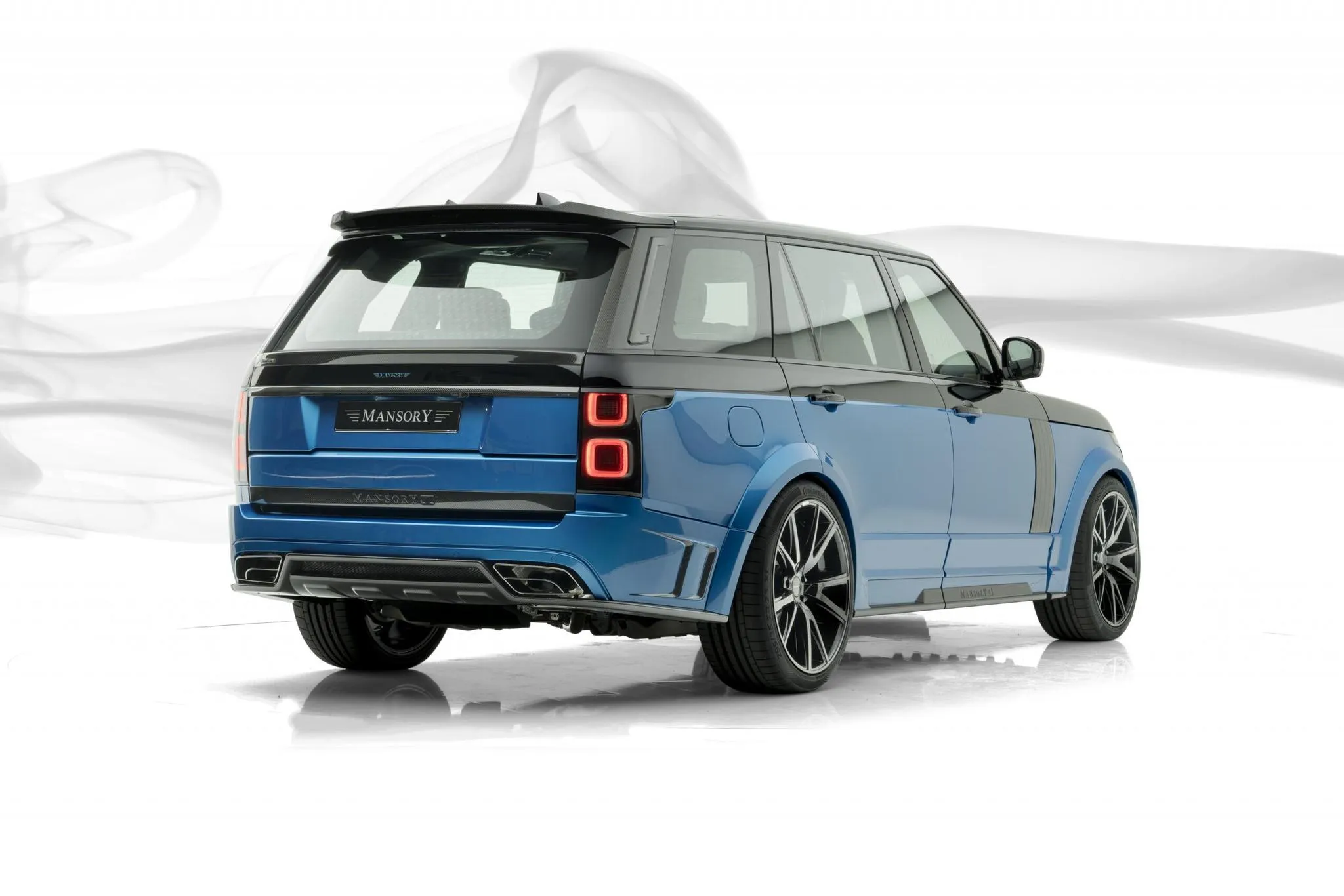
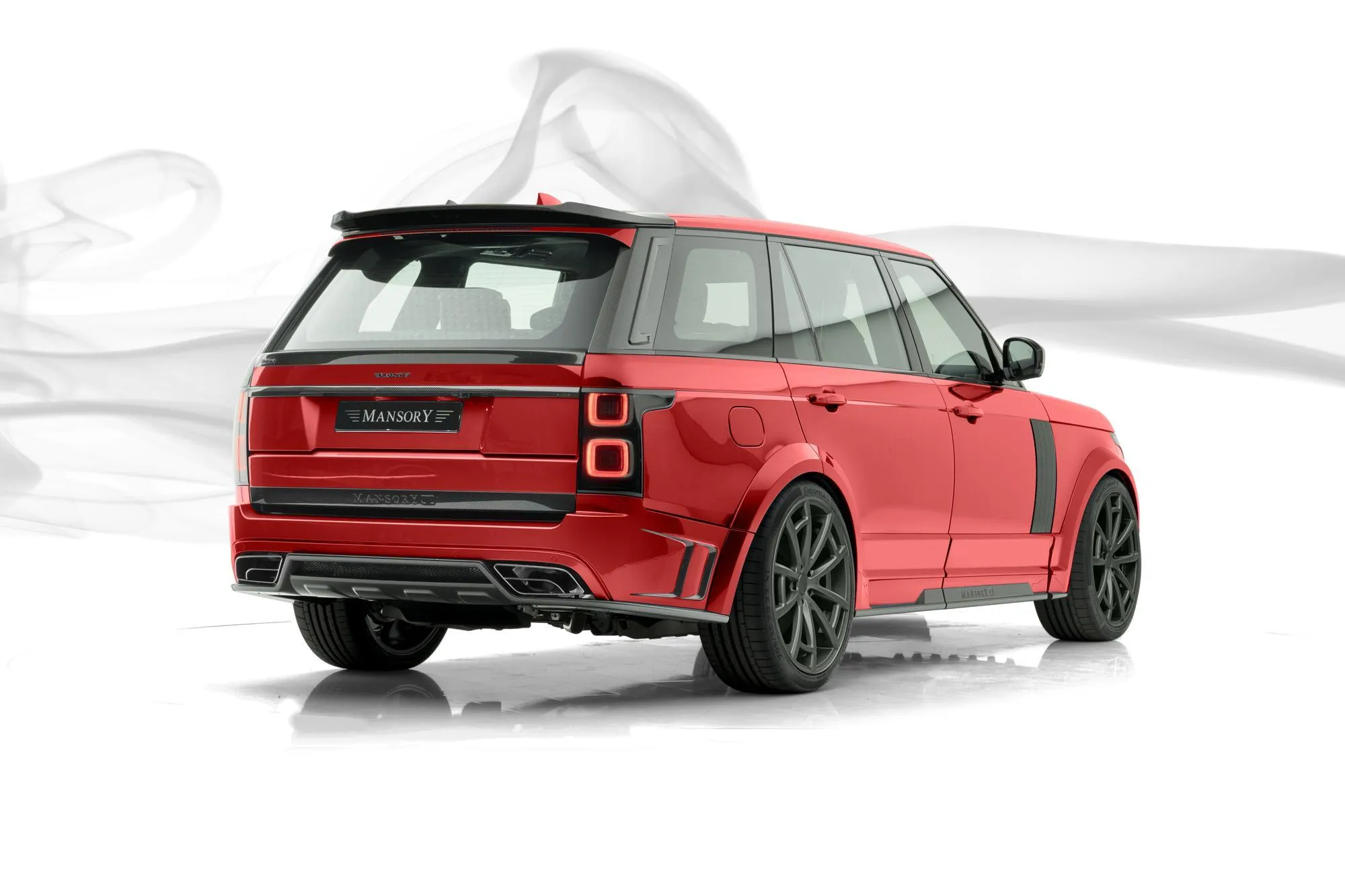
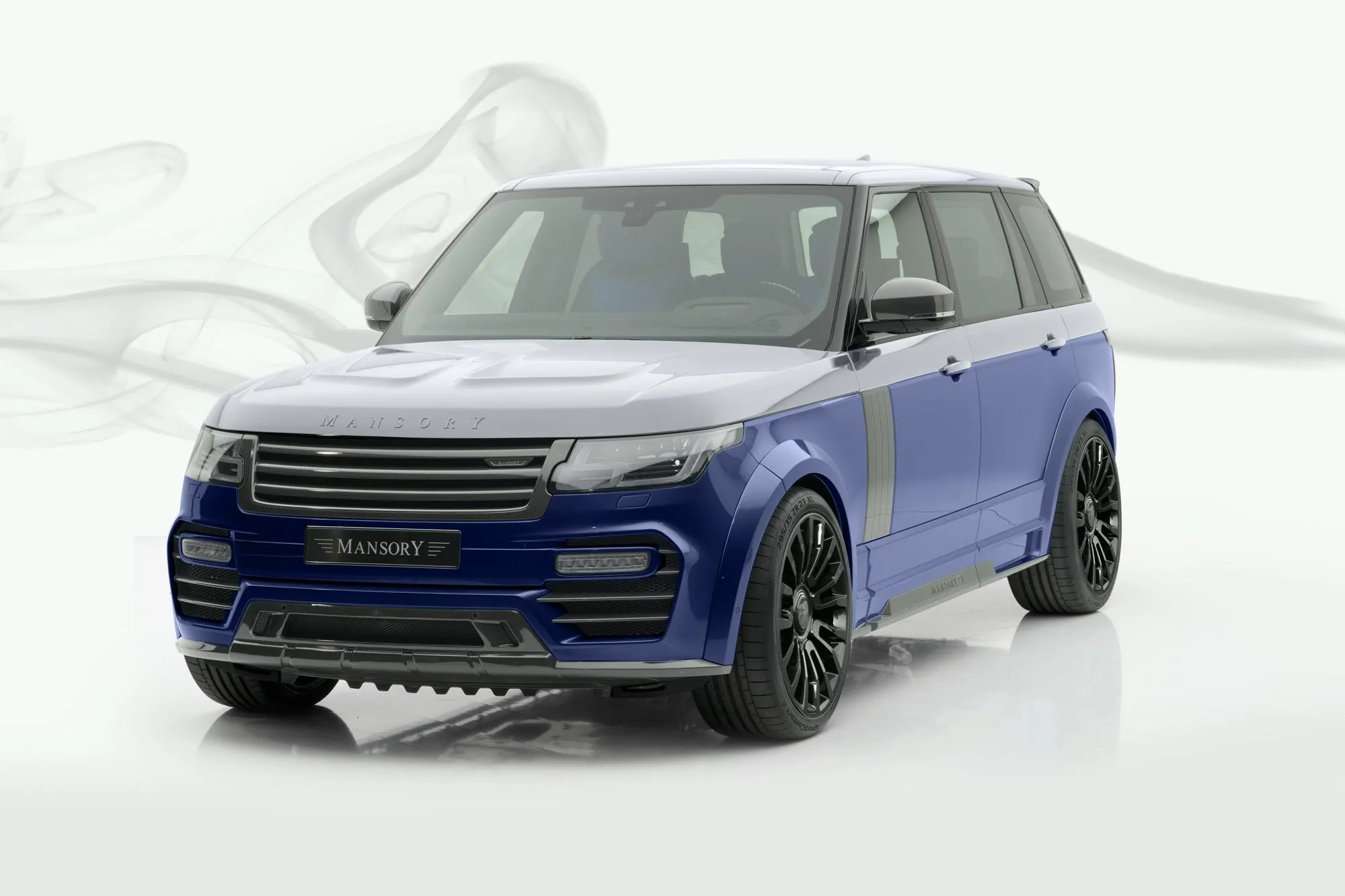
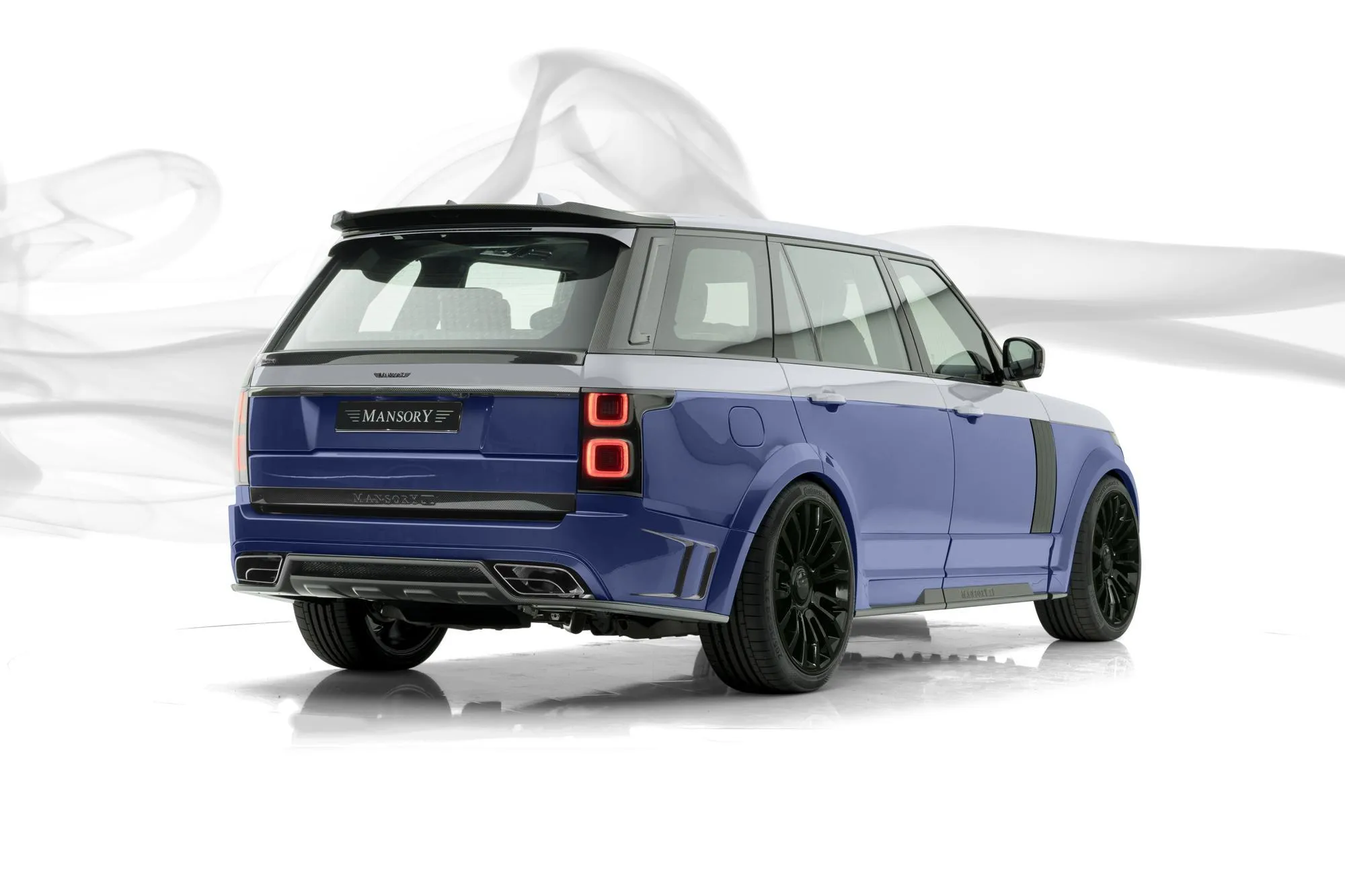
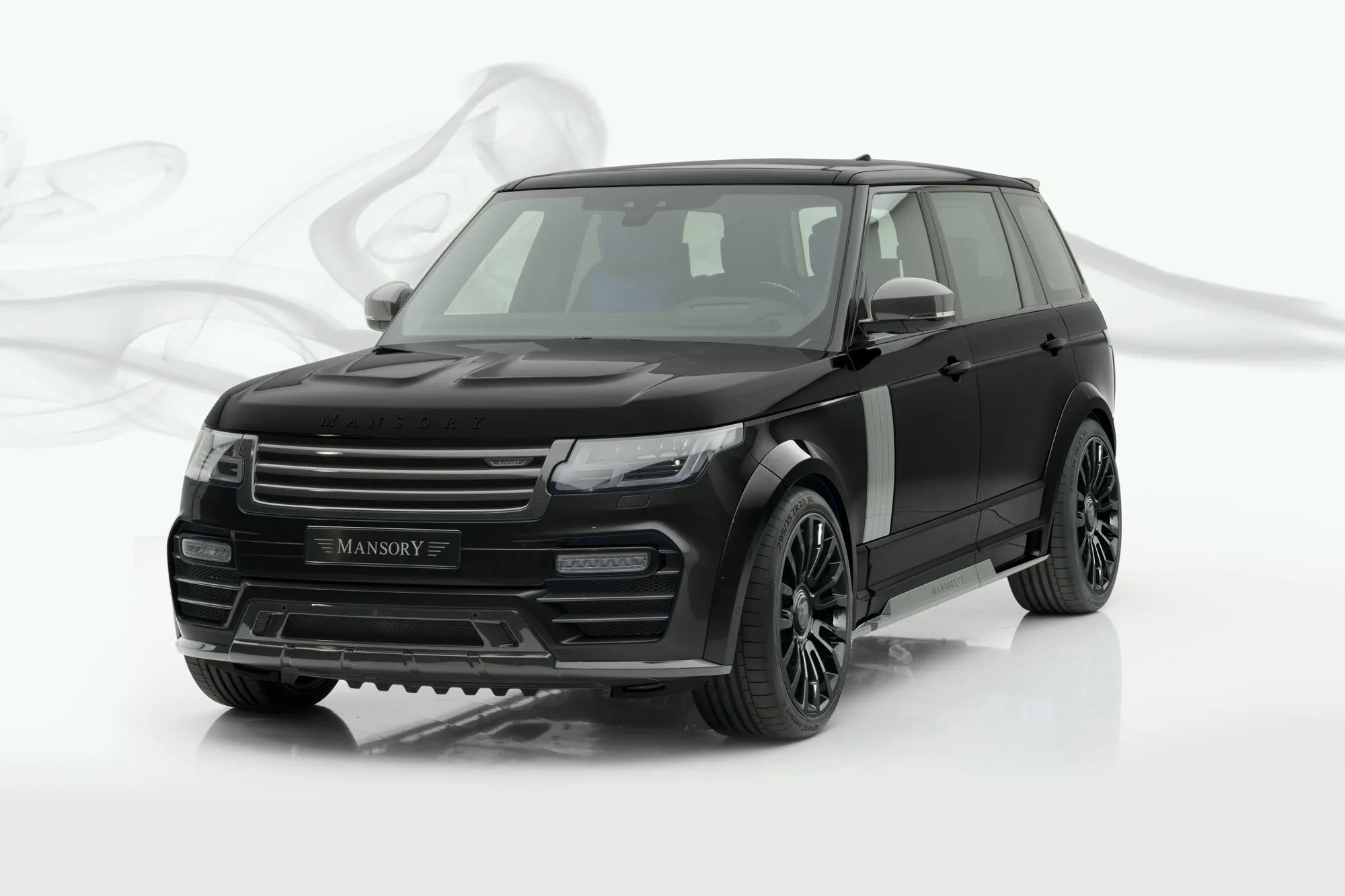
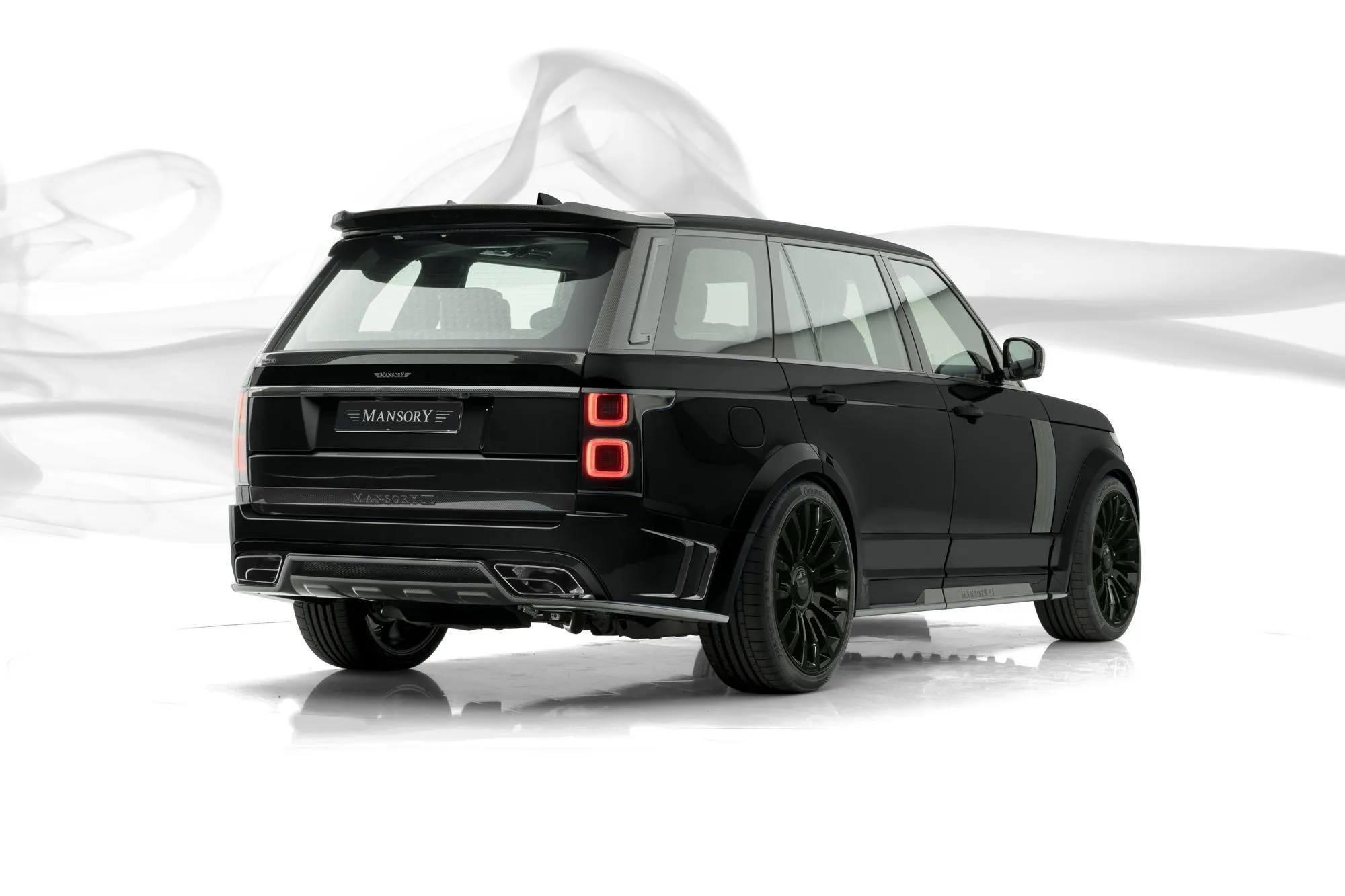
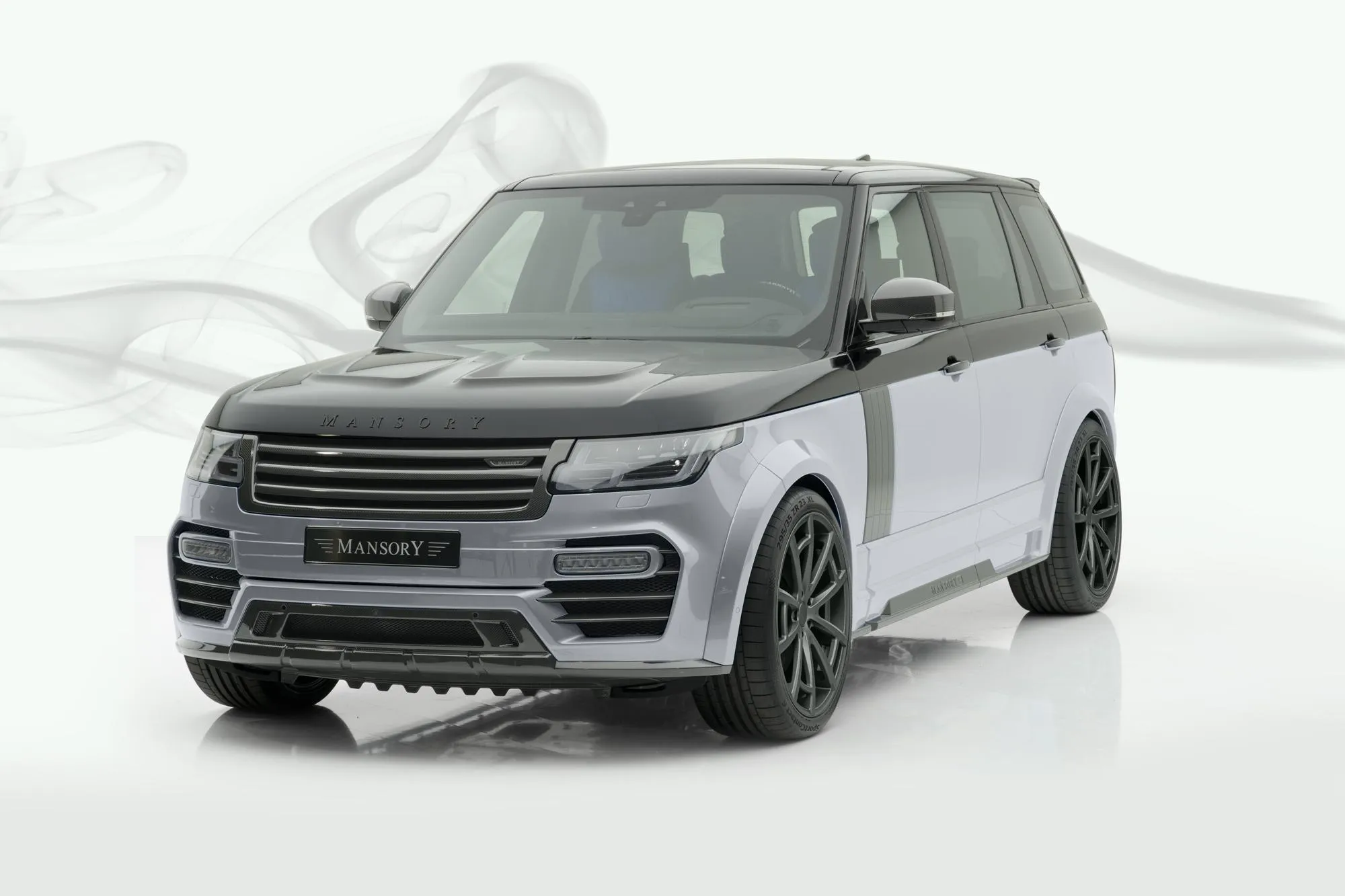

Mansory Carbon Fiber Body kit set for Land Rover Range Rover V


MANSORY Carbon Fiber Body-Kit for the LAND ROVER RANGE ROVER V (L460) — the First Proper Reset of the Flagship Since the L405, and the First Range Rover Designed Around MLA-Flex
The Range Rover V, chassis code L460, arrived in late 2021 as a model-year 2023 car and is — by a comfortable margin — the most significant Range Rover generation change in a decade. The outgoing L405 had been on sale since 2012, a ten-year run stretched through a mid-cycle refresh and a handful of special editions. What replaced it is not an L405 facelift. The L460 is a clean-sheet platform: MLA-Flex, JLR's new mixed-material architecture built to carry a single body over four fundamentally different powertrain universes — mild-hybrid straight-sixes, plug-in hybrids with 100 km of pure-electric range, the BMW-sourced 4.4 L twin-turbo V8, and a full battery-electric Range Rover announced for launch in 2025. That matters for aftermarket carbon because it means the Mansory L460 programme, launched in 2023, is not a port of anything that existed before. Mansory didn't adapt an L405 kit; they started from zero, because MLA-Flex is not a facelift of LR-MS — it is a different car underneath.
L460 — the first proper reset since L405
For context: the L405 Range Rover launched in 2012 on JLR's aluminium D7u architecture, was facelifted in 2017 and ran with that body until the L460 replaced it in September 2021. Ten years is a long time for a flagship SUV, and by the end the L405's styling and packaging had been reinterpreted by the entire luxury-SUV category. The L460 was JLR's chance to redefine the shape — and they did, radically. The visual grammar is reductive: a nearly-flat flank, hidden door handles, a frameless rear light signature, and almost no extraneous trim. Underneath, MLA-Flex is 50% stiffer in torsion than the D7u platform it replaces, uses more steel and structural composite than any previous Range Rover, and was engineered from the first sketch to accept a full BEV drivetrain. The L460 is also, significantly for us, the first Range Rover designed with aftermarket aero in its DNA — MLA-Flex's modular front-end architecture makes bumper replacement significantly cleaner than it was on L405, where structural front-end crash members sat partly inside the bumper cover.
Mansory's MLA-Flex brief
Mansory approached the L460 programme with three constraints imposed by the platform itself. First, sensor density: the L460 carries a denser ADAS sensor array than L405 — front radar, corner radars, multiple ultrasonic arrays, an in-grille camera and a forward stereo camera stack — all of which have to be packaged into replacement carbon bumpers without recalibration drift. Second, air-suspension geometry: L460 runs full Electronic Air Suspension with Dynamic Response Pro active anti-roll and rear-wheel steering as standard on LWB and optional on SWB; any side-skirt or fender geometry has to respect the articulation envelope at full lift (wading-mode 900 mm ride height) and at access-mode drop. Third, thermal: the P530 V8 sits under a bonnet with factory-ducted heat extraction that the carbon bonnet must replicate. The programme was engineered around all three. The visual brief was deliberately restrained — this is a Range Rover, not an Urus — so carbon surfaces are flatter, wider, and closer to the factory design language than Mansory's typical supercar work. The aim is presence without cartoon proportions.
Carbon kit components
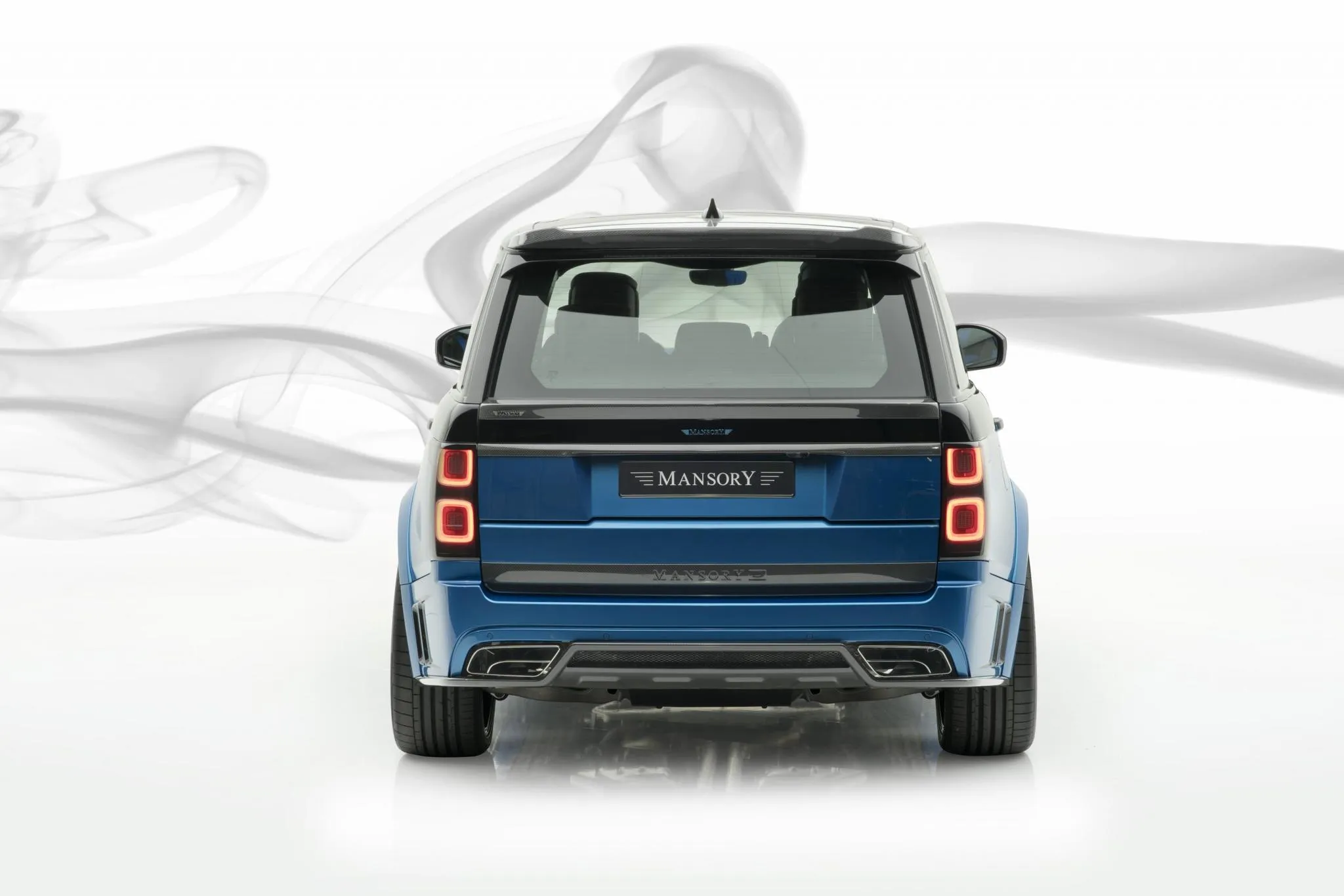
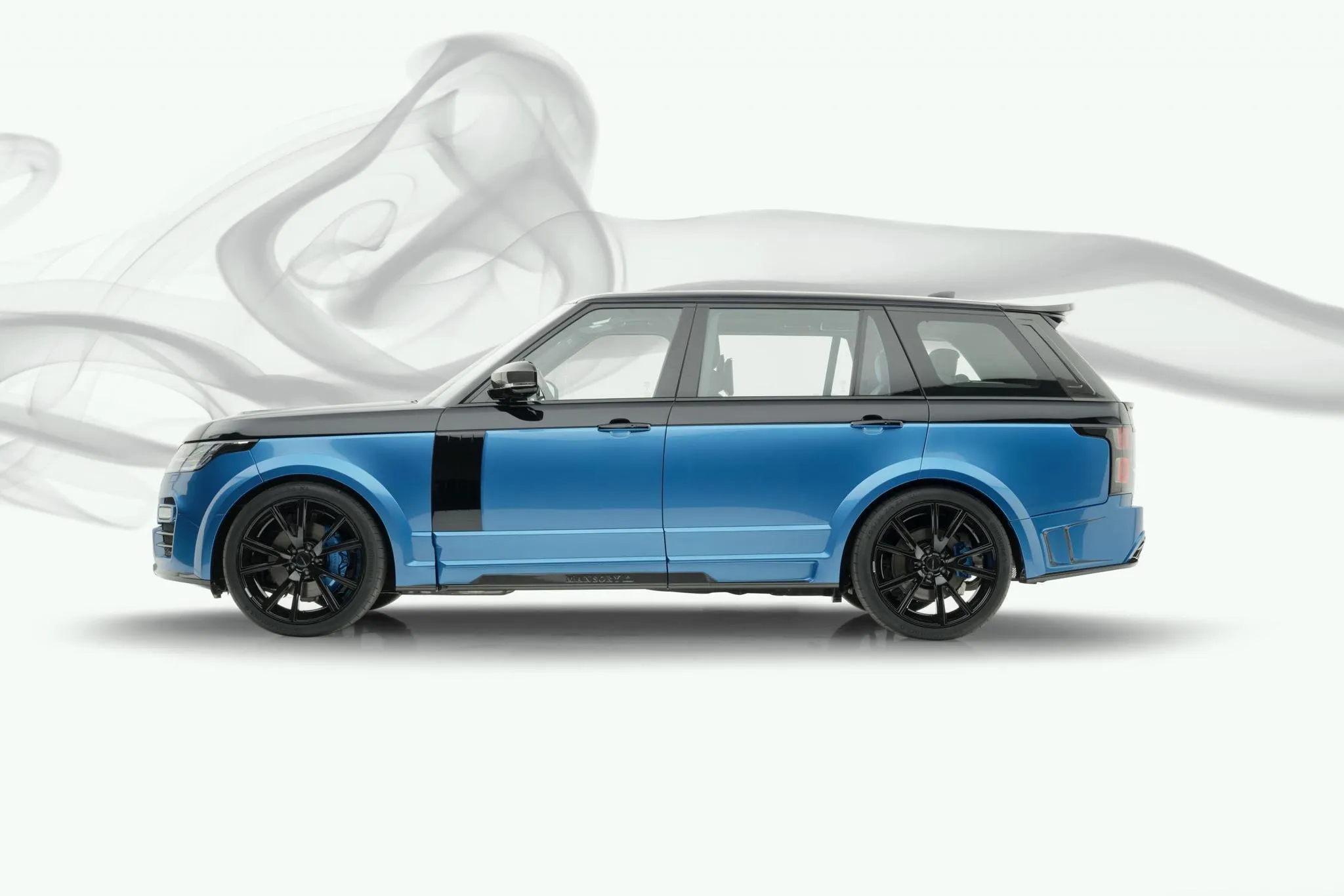
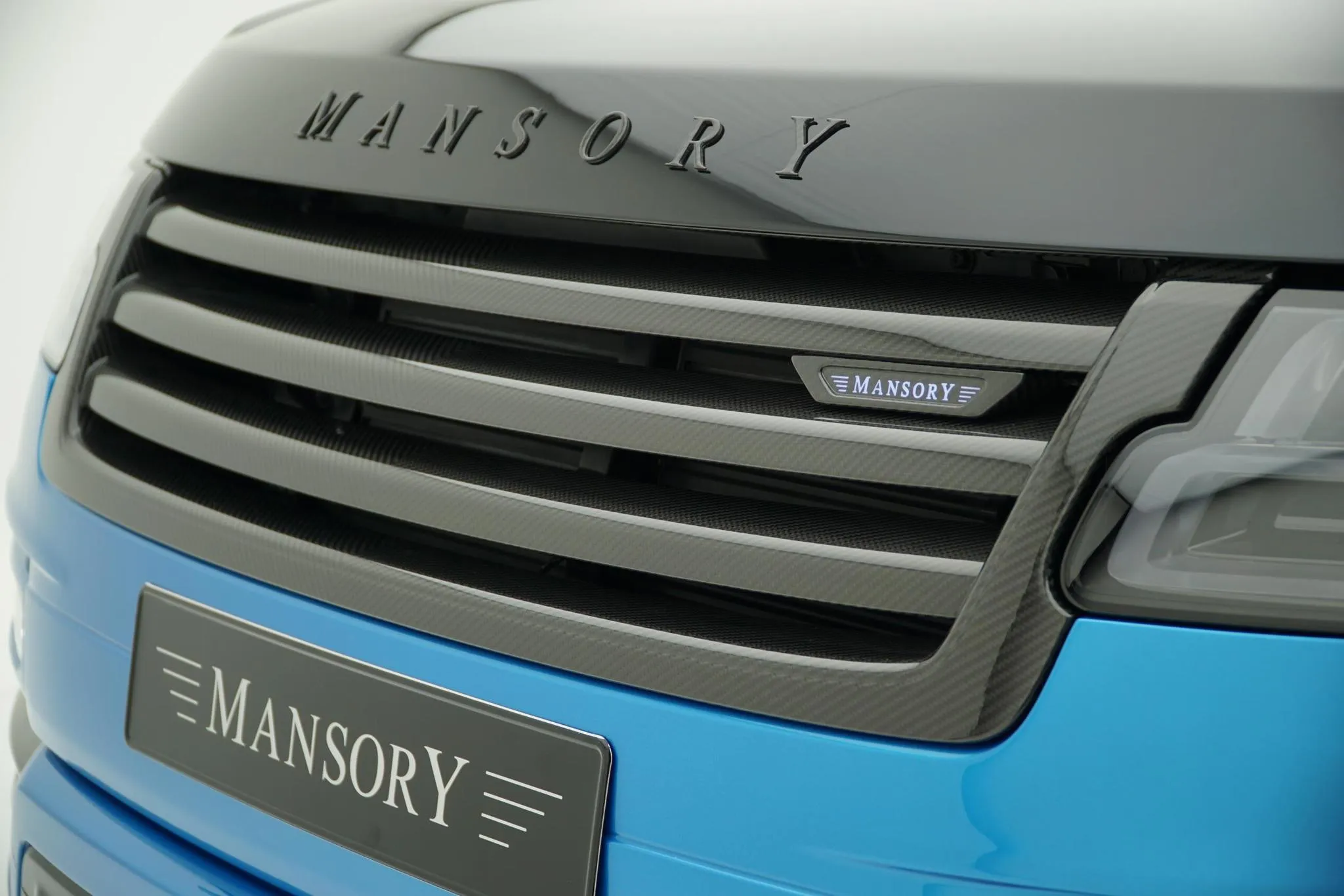
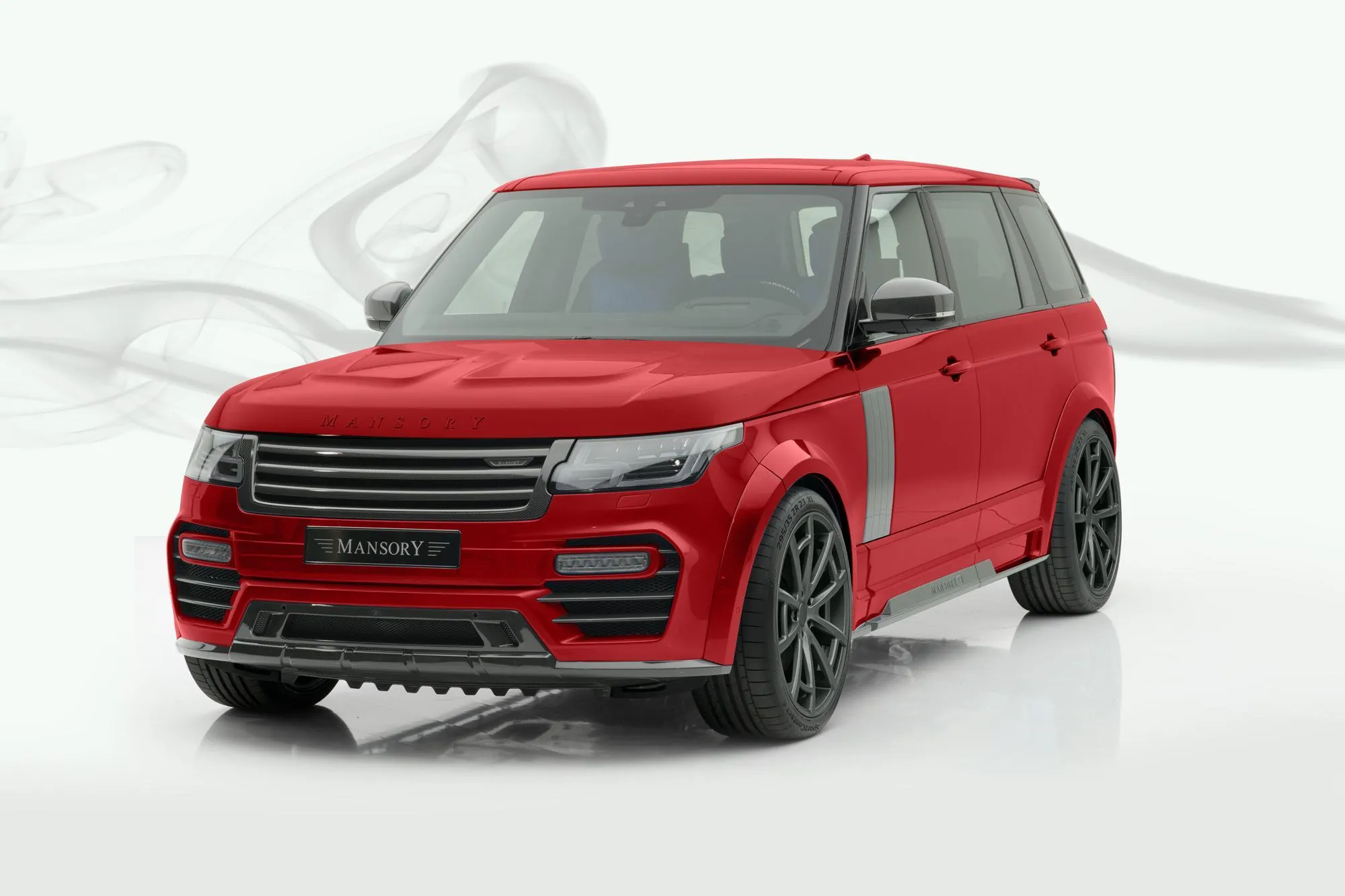
L460 catalogue: replacement carbon front bumper with enlarged lateral intakes, integrated brake-cooling ducts, and full ADAS-sensor cutouts (front radar, camera, corner radars) positioned to the factory calibration tolerances; carbon engine bonnet with functional heat-extraction louvres matched to P530 V8 thermal routing and ducted for MHEV / PHEV variants alike; carbon front grille mask; carbon mirror-housing covers; carbon side skirts dimensioned to clear air-suspension access-mode drop; carbon D-pillar cover trim respecting the L460's frameless-glass signature; carbon roof lip spoiler; carbon rear decklid spoiler matched to the rear-tailgate split-line and the power tailgate motion envelope; replacement carbon rear bumper with full ADAS and park-assist sensor cutouts; carbon rear panel and rear hatch panel; carbon side body panels; carbon front panel; carbon air-intake inserts for clients who keep the factory bumper and want grille-level carbon only. The kit is available as a full set or as individually commissionable pieces.
MLA-Flex architecture — what's new
MLA-Flex is the reason the L460 exists and the reason the Mansory programme had to be a clean-sheet design. Where the L405's D7u platform was aluminium-intensive but engineered primarily around internal-combustion driveline routing, MLA-Flex is explicitly multi-energy. It carries: P360 MHEV (3.0 L Ingenium I6 turbo, 360 hp, 48 V mild-hybrid); P400 MHEV (3.0 L Ingenium I6 turbo, 400 hp); P440e PHEV and P510e PHEV (3.0 L Ingenium I6 + 105 kW electric motor, ~38.2 kWh battery, up to 100 km WLTP EV range, DC fast-charge capable); P530 (4.4 L BMW-sourced N63 twin-turbo V8, 530 hp — replacing the old 5.0 L supercharged AJ-V8); and SV derivatives running the same V8 to 620 hp. A full Range Rover Electric (BEV) is confirmed for 2025 launch on this same platform. That matters because the bonnet, front-end crash structure and battery-floor mounts all have to serve ICE, PHEV and BEV — and the Mansory carbon front-end was engineered knowing the BEV variant is coming. No recut required when a client commissions on the electric car.
Wheels — 23" / 24" forged for L460
Factory L460 wheels: 21" standard, up to 23" on SV. Mansory L460 fitment: 24" forged, with 23" as winter / off-road alternative. Patterns: FD.16 deep-concave multi-spoke, FM.8 multi-spoke concave, Y.7 forked-Y architecture. Finishes: matte-black, gunmetal, satin-bronze, silver-diamond-cut, or paint-to-sample to match the client's body colour. Typical tyre fitment on 24": 295/35 R24 or 305/30 R24, both all-season and summer options, load-rated to the L460 2 560 kg kerb weight (SV spec). TPMS sensors factory-cloned so the L460 dash reads pressures correctly. Catalogue: hodoor.world/collection/forgedwheels.
Six Range Rover V corridors
The L460 sells disproportionately well in six markets with very distinct taste profiles. Mansory ships to all six with country-specific technical and customs documentation.
UAE — Dubai and Abu Dhabi are the single largest concentration of L460 SV orders outside the UK; 24" forged and full carbon is the default spec. See UAE body kits & wheels.
Saudi Arabia — Riyadh and Jeddah clientele favour LWB seven-seat L460 with full carbon and matte finishes. See Saudi Arabia upgrades.
Qatar — Doha skews P530 V8 and SV, delivered with full kits and paint-to-sample carbon. See Qatar custom wide body kits.
Russia / CIS — Moscow remains one of the strongest historical Range Rover markets; L460 demand concentrates on LWB P530 and SV with winter-tyre 23" fitment. See Tsar body kits & wheels.
China — Beijing and Shanghai increasingly order the P510e PHEV (green plate eligibility) with full carbon and 24" forged. See wide body kits & forged wheels in China.
Singapore — COE-constrained market, so the installed base is small but high-spec; most L460 commissions are SV with full carbon and bespoke paint. See Singapore custom wide body kits.
Commission
To commission: we need the L460 VIN, wheelbase (SWB / LWB), powertrain variant (P360, P400, P440e, P510e, P530, SV), trim level (SE, HSE, Autobiography, SV Lansdowne / SV Serenity), current exterior paint code and interior colourway, rear-wheel-steering fitment confirmation (affects skirt geometry at lock), and destination market. Typical timelines: 12-16 weeks for carbon manufacture, 10-12 weeks for forged wheels (parallel), 2 weeks installation at a JLR-familiar workshop. Full programme budget on request. Contact: [email protected] or +44 7488 818747 (WhatsApp).
Pair this build with
Hodoor.World runs the Body Kit for Range Rover (2023) alongside the Land Rover Range Rover III on the same Mansory factory routing, with Body Kit for Land Rover Range Rover MK IV sharing the same component-sourcing channel.
FAQ — L460 programme
Is the kit compatible with the SV Lansdowne and SV Serenity spec cars? Yes. SV trim ships with unique OEM-carbon roof and rear-skirt elements from JLR; Mansory carbon layers over / replaces those components with full compatibility, and the SV-specific Meridian rear-decklid speaker routing is preserved.
Does the kit fit both SWB (2 997 mm wheelbase) and LWB (3 197 mm) variants, including seven-seat configurations? Yes — SWB and LWB share the same front-end, bonnet, front fenders and front bumper. Side skirts, rear panels and D-pillar covers are wheelbase-specific. Seven-seat LWB configurations are fully supported; the rear-row HVAC outlets and third-row glass geometry are untouched.
What are the implications for Electronic Air Suspension and rear-wheel steering? None functionally. Side-skirt geometry is designed to clear the access-mode suspension drop (30 mm below standard) and the wading-mode full lift. Rear-wheel steering (standard on LWB, up to ±7° at low speed) was in-scope during side-skirt and rear-fender-extension design; full-lock articulation does not contact carbon.
Is Autobiography and SV OEM badge retention respected? Yes. The Range Rover wordmark on the bonnet leading edge, the Autobiography / SV boot badges, and the side-fender nameplates are all retained — the carbon bonnet and rear hatch panel include the factory badge apertures so the original nameplates are transferred during installation rather than replaced with Mansory branding. Clients wanting a Mansory-only rear badge can specify that at commission.