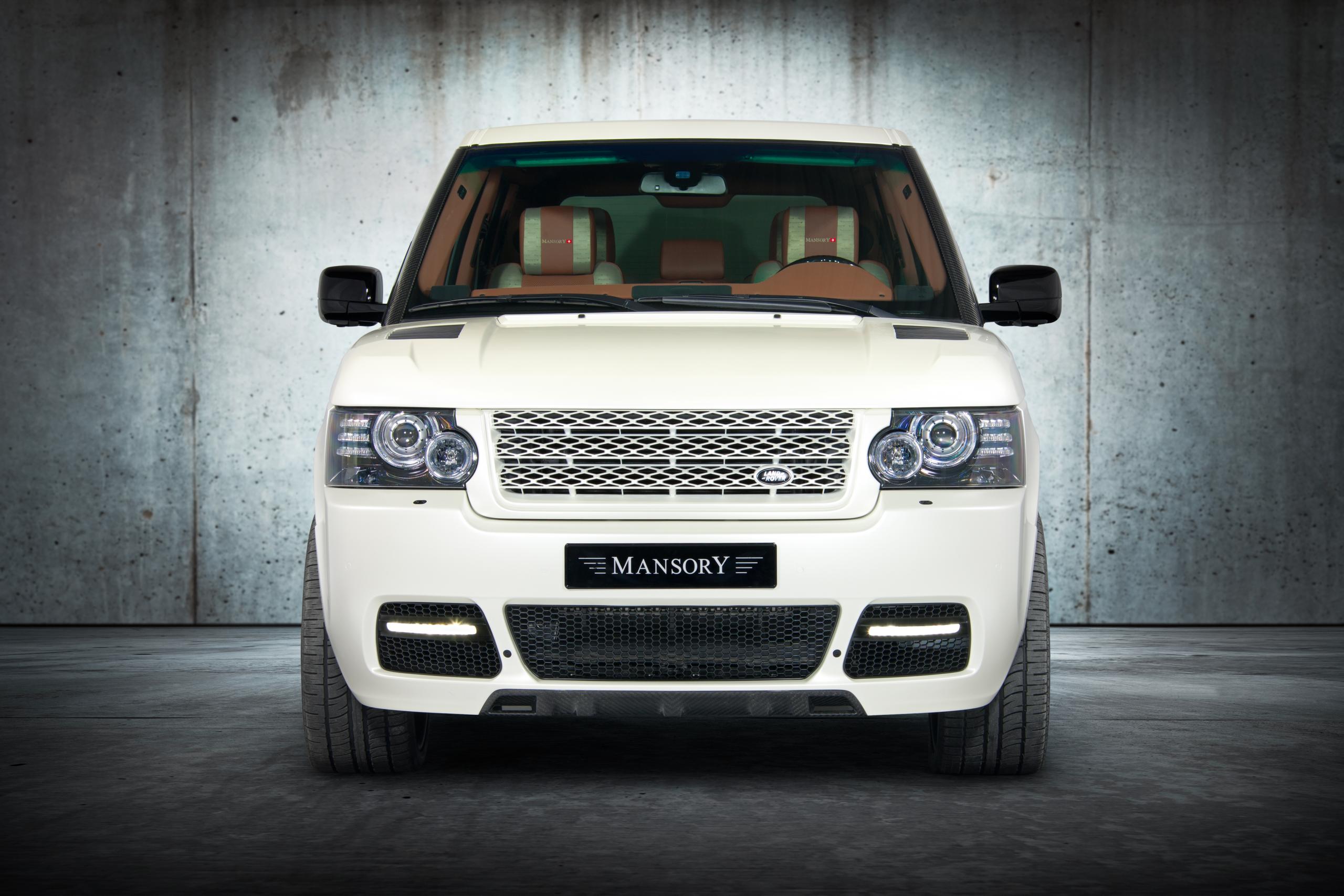
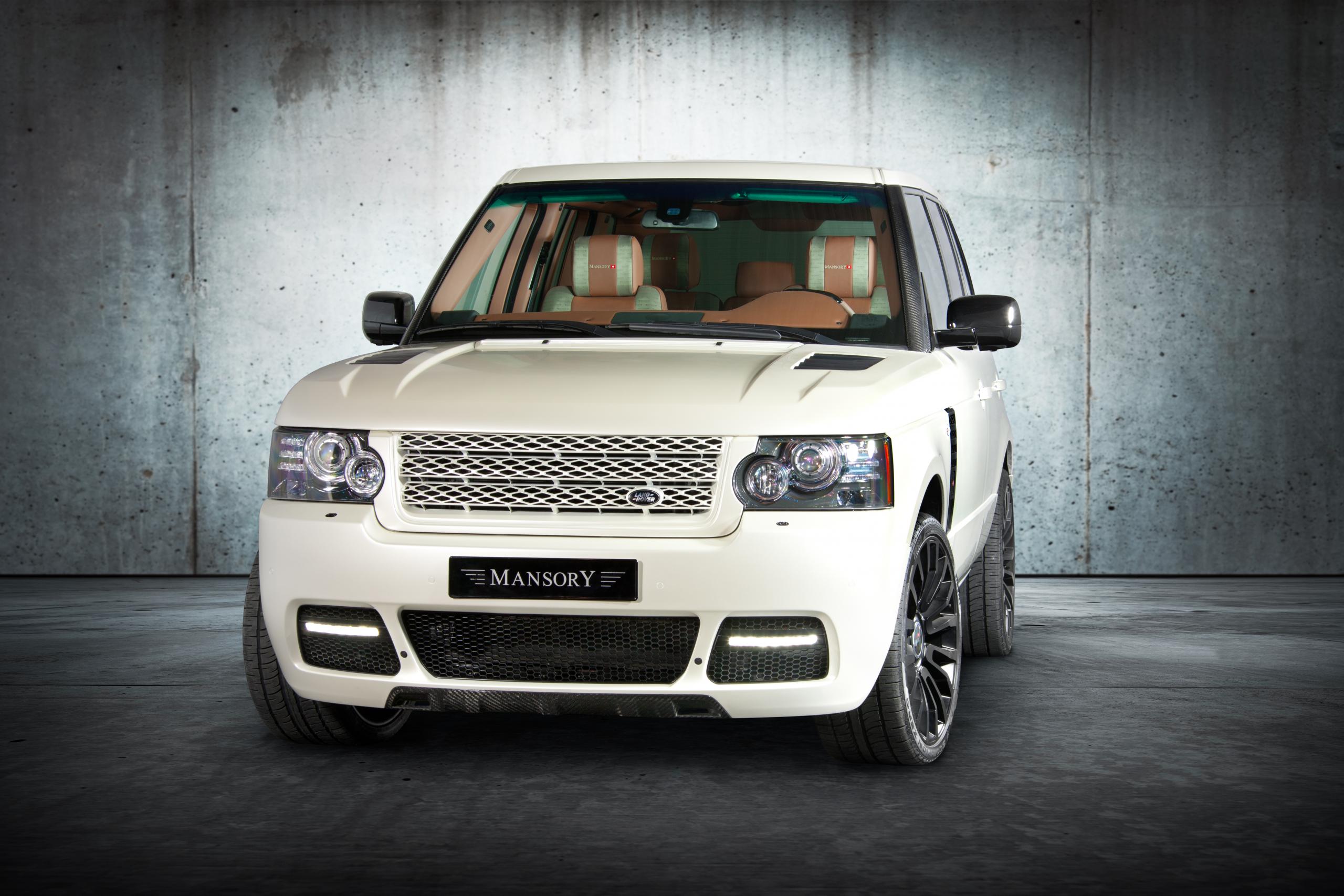
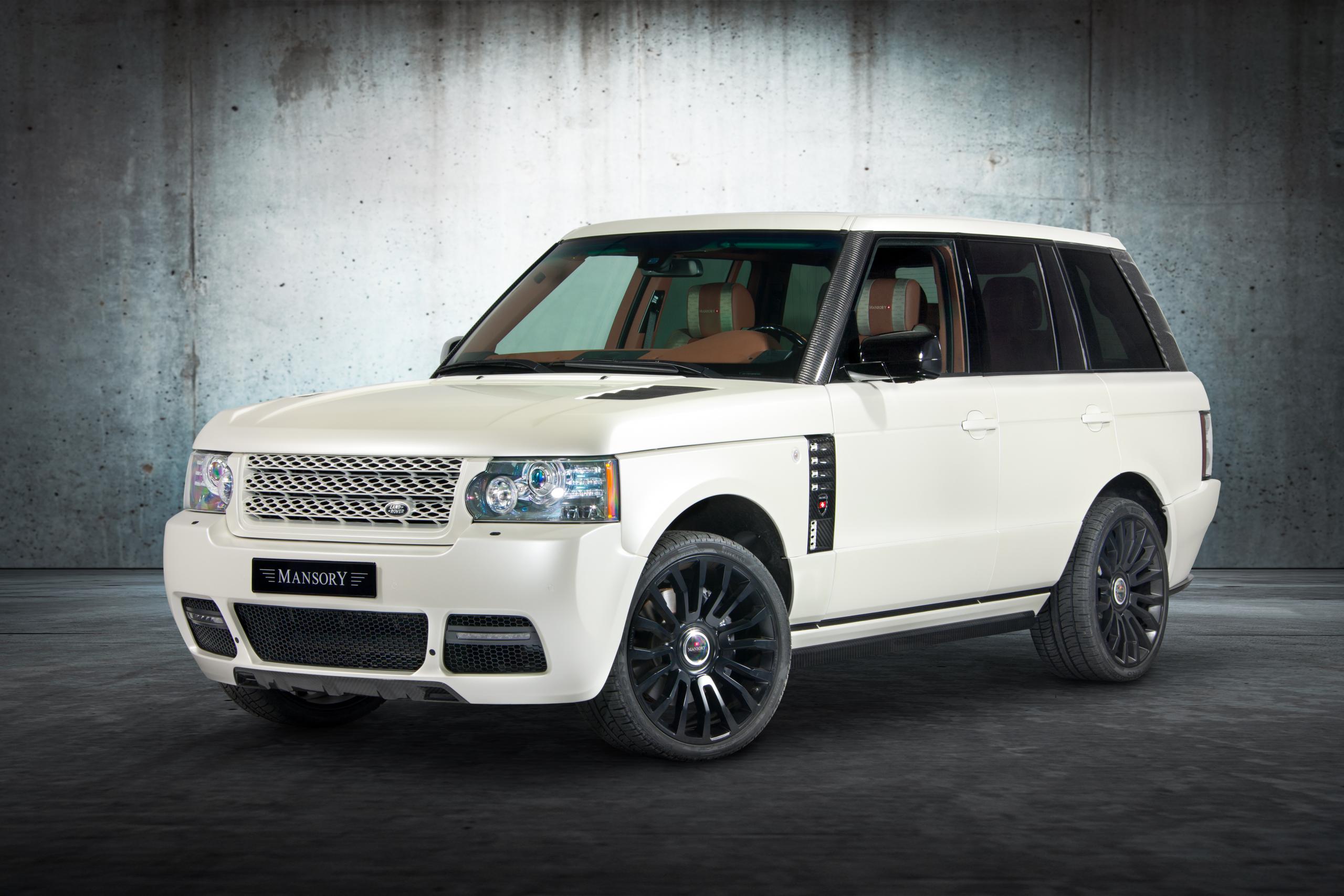
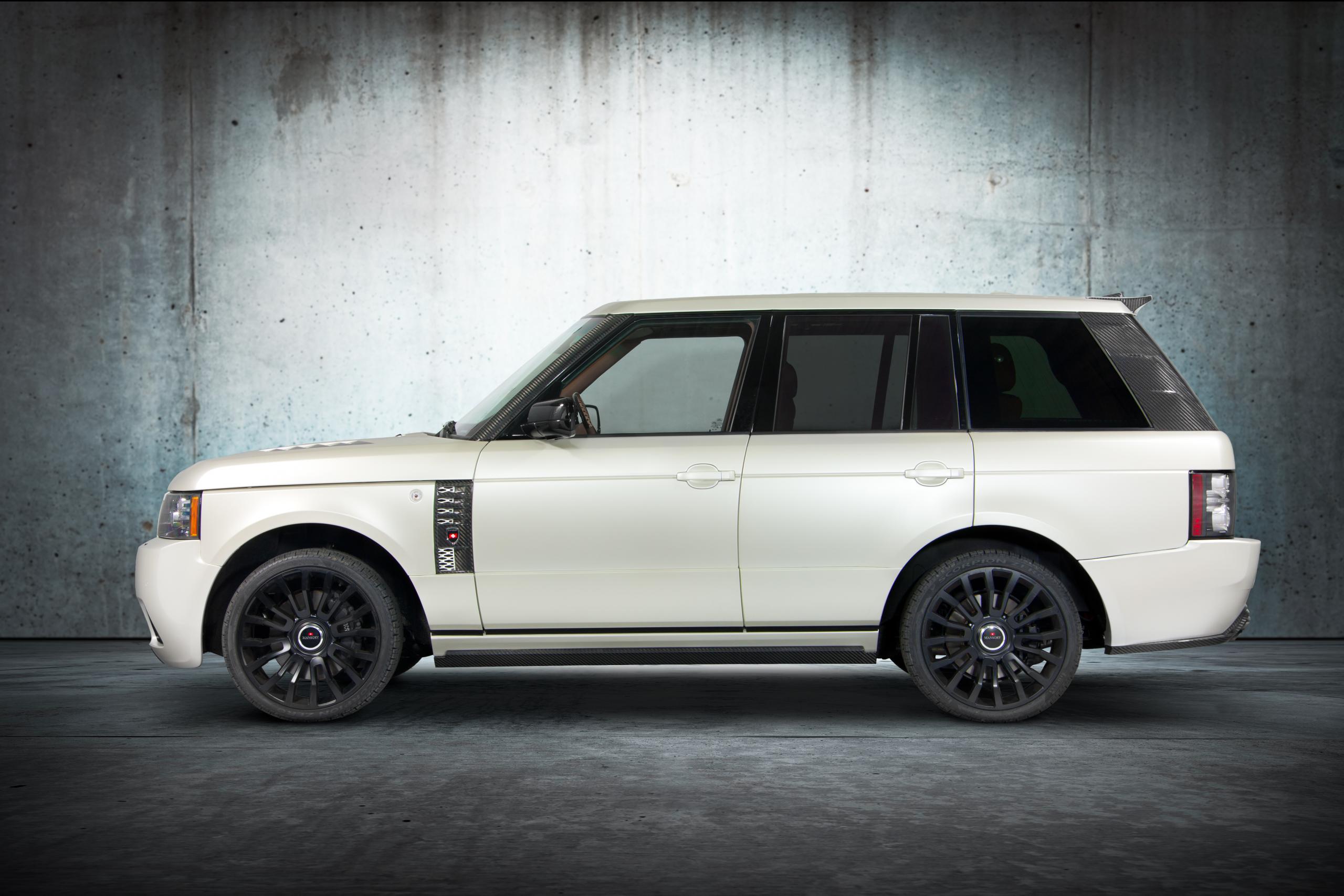
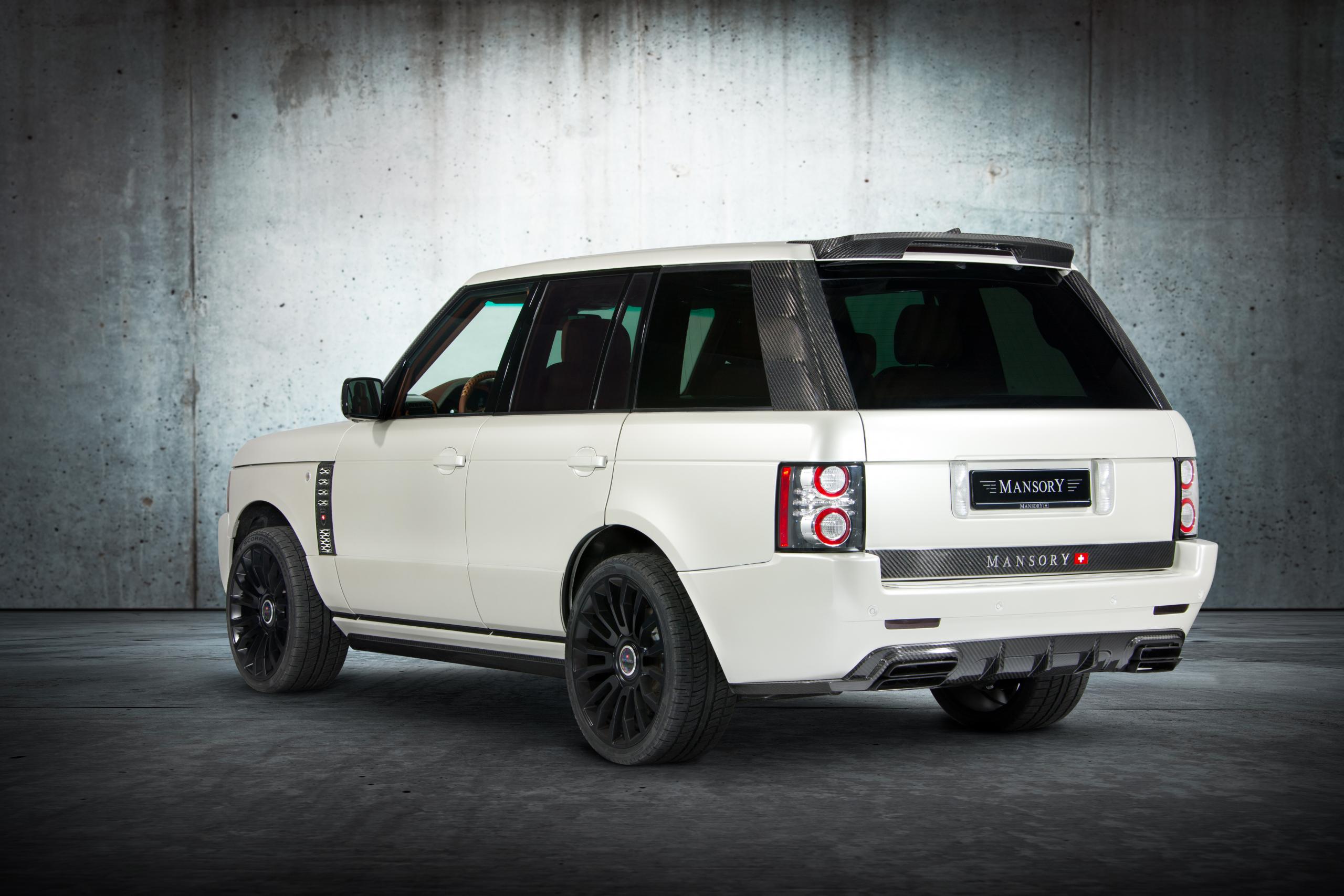
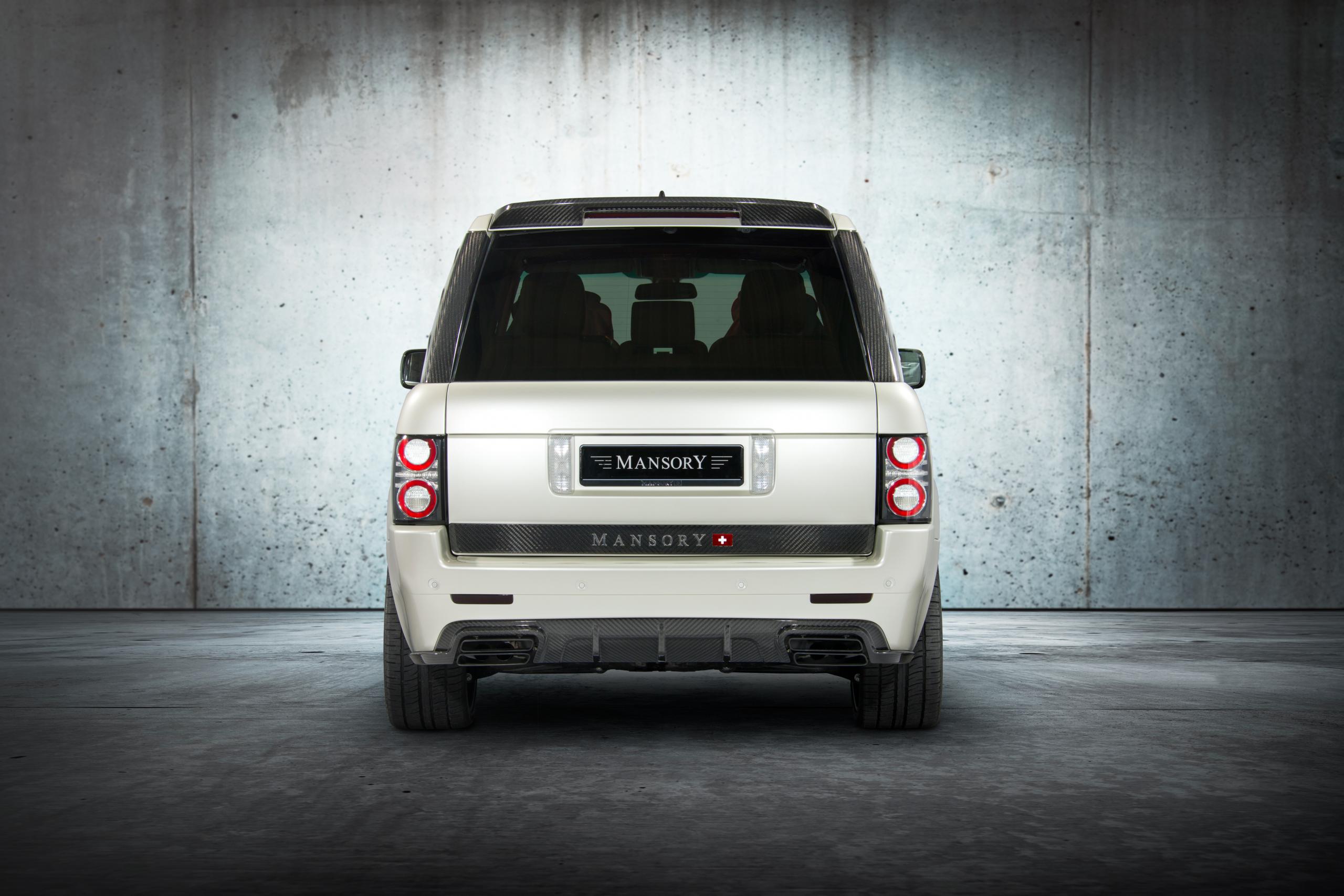
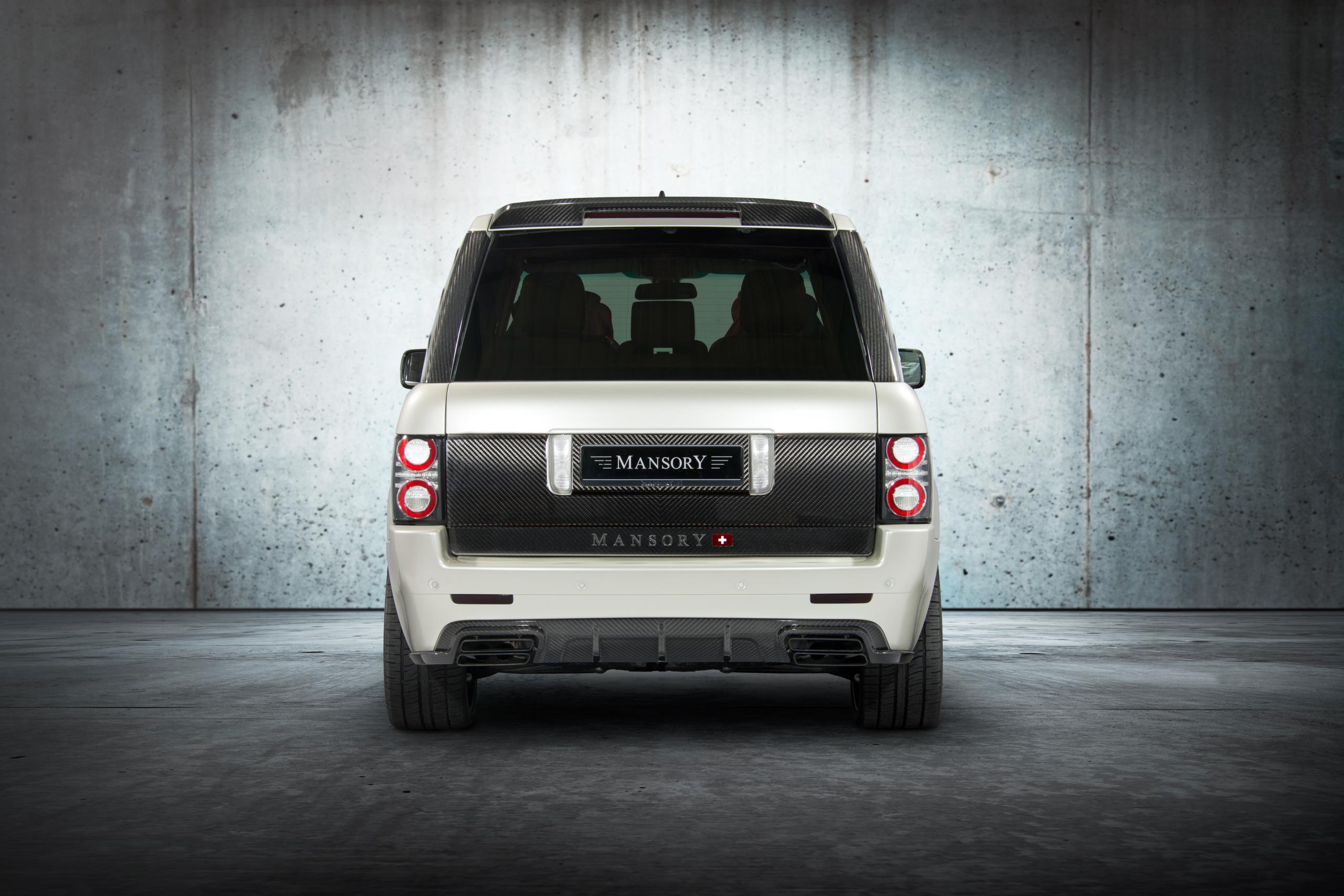
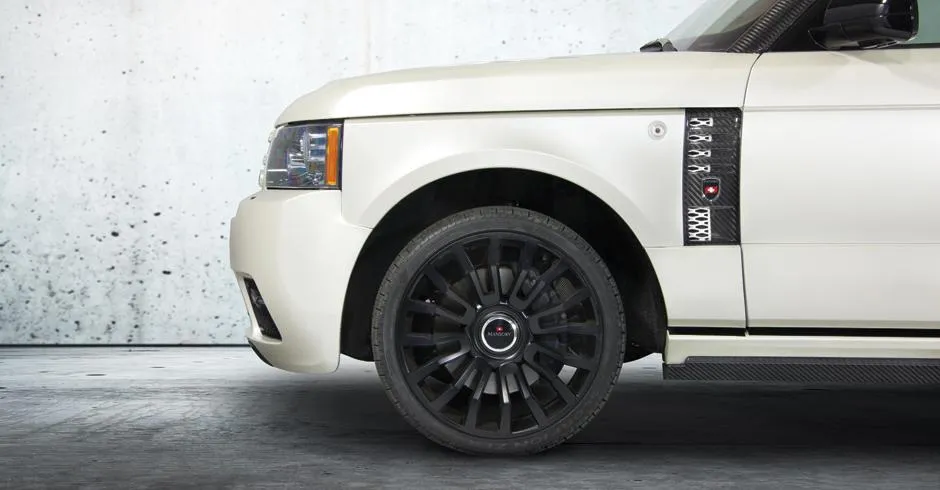
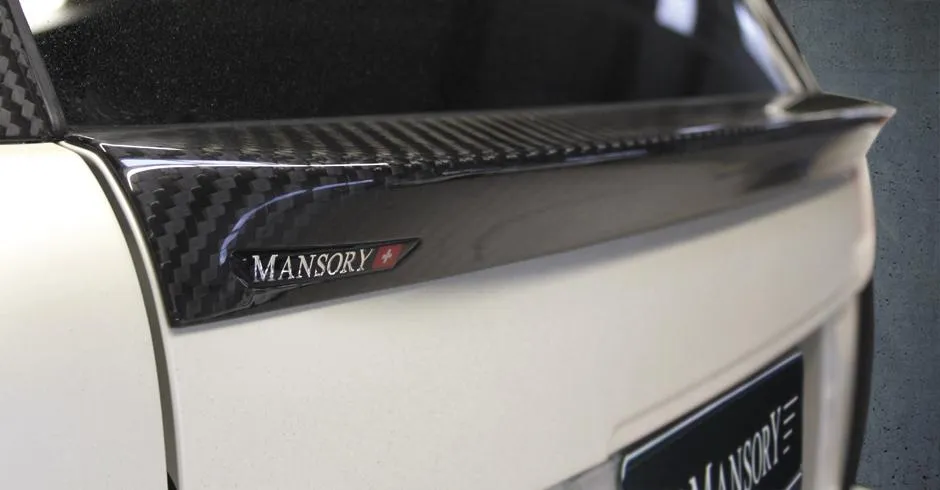
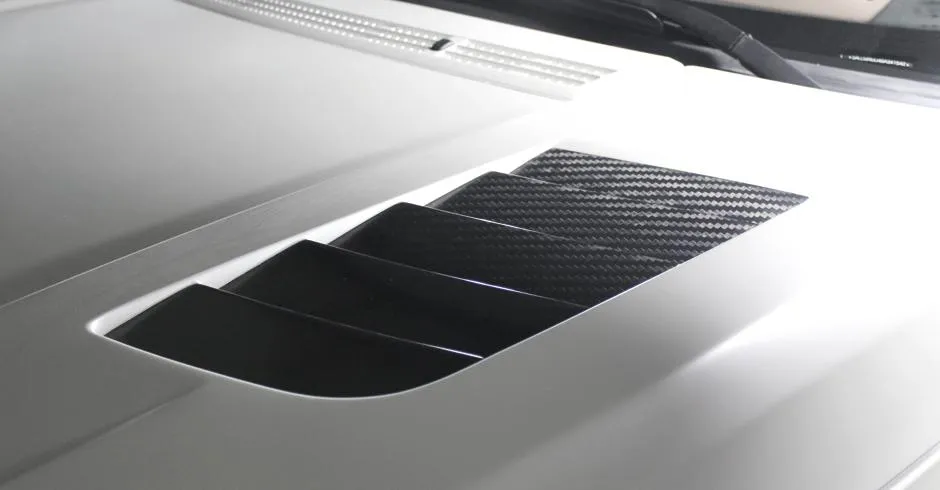
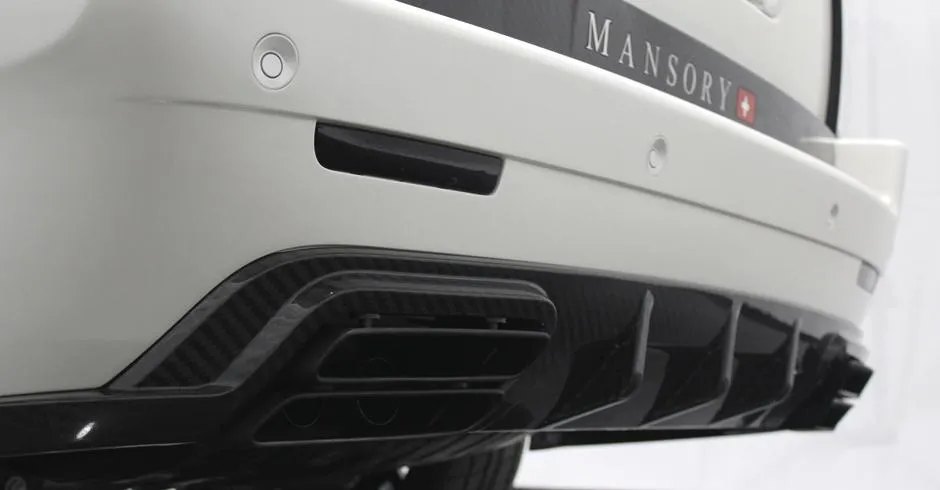
Mansory Carbon Fiber Body kit set for Land Rover Range Rover III


Mansory programme — Land Rover Range Rover MK III (L322, 2002–2012)
This is the Mansory carbon programme for the third-generation Land Rover Range Rover — the L322 chassis Land Rover built from 2002 to 2012, between the L322 launch under Ford stewardship and the L405 replacement under Tata. The L322 is one of the more cross-engineered cars in modern luxury-SUV history: a chassis designed under BMW (which owned Land Rover until March 2000), launched after Ford bought the brand, run for ten years across three facelifts, and finally retired when Tata's L405 took over. The Mansory programme accommodates the whole run, but the front-clip parts ship in two variants — one for the 2002–2009 pre-facelift body, one for the 2010–2012 final facelift — because the bumper geometry changed in the 2010 update.
This page is the technical brief for the L322 build. The L405 (the 2013–2021 successor) is a different chassis with a different fender geometry and a separate Mansory programme — that build is documented on the Range Rover L405 page.
Why the L322 ended up cross-engineered
The L322 chassis was developed inside BMW between 1996 and 2000, with the original brief calling for BMW M62 4.4 V8 power and BMW M57 3.0 diesel as the diesel option. When Ford acquired Land Rover from BMW in 2000, the chassis was already too far along to redesign — the engine bays, the cooling architecture and the electrical platform were BMW-pattern. Ford launched the L322 in 2002 with the BMW engines and ran them through 2005, then swapped to Jaguar AJ-V8 powertrains during the 2006 model-year update. Tata bought Land Rover from Ford in 2008 but the L322 carried Jaguar engines forward to its retirement in 2012. That is a chassis that wore three corporate badges in ten years without ever changing its fundamental BMW DNA. The Mansory kit was developed to fit the bodywork — which barely changed across that history — but the powertrain options affect which exhaust system Mansory supplies, because the Jaguar 5.0 V8 supercharged exhaust port spacing differs from the BMW M62 layout.
Generation map — three facelifts in ten years
| Years | Body | Engines (petrol) | Engines (diesel) |
|---|---|---|---|
| 2002–2005 | Pre-facelift | BMW M62 4.4 V8 (282 PS) | BMW M57 3.0 TD6 (177 PS) |
| 2006–2009 | 2005 interior facelift | Jaguar AJ-V8 4.4 (305 PS), AJ-V8 4.2 supercharged (396 PS) | TDV6 2.7 (190 PS), TDV8 3.6 (272 PS) |
| 2010–2012 | 2010 final facelift (new front clip) | Jaguar AJ-V8 5.0 (375 PS), AJ-V8 5.0 supercharged (510 PS) | TDV8 4.4 (313 PS) |
The 2010 facelift is the one Mansory treats as a separate kit revision — the front bumper, headlights and bonnet line were redrawn in that update, so the Mansory front lip and bonnet pad ship in two part-number sets. Side sills, rear bumper geometry and fender geometry stayed consistent across the run, so those parts are common.
Carbon parts — every Mansory piece on the bodywork
This is a full programme rather than a soft overlay. Mansory replaces the OEM bumpers and bonds carbon flares onto the OEM steel fenders — this is a one-way conversion at the body, not a peel-back kit.
- Front bumper assembly — full carbon replacement, integrated splitter and brake-cooling cutouts, version-specific (pre-2010 / post-2010)
- Vented bonnet — carbon overlay with two functional NACA cuts, painted body colour by default; pre-2010 and post-2010 variants share the same vent pattern but differ at the front edge
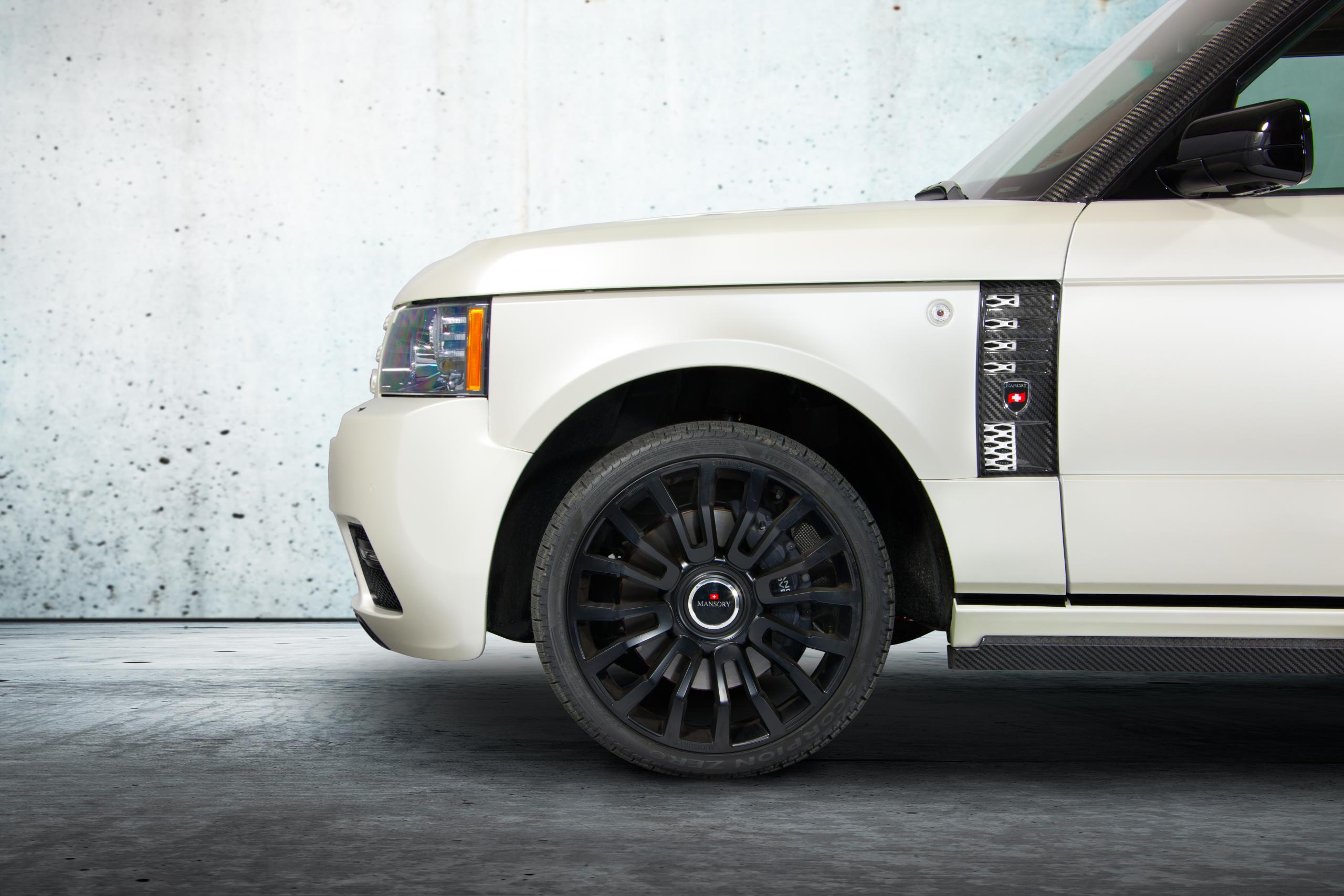
- Bonded fender flares — front and rear, +25 mm per side at the front axle and +30 mm per side at the rear, glued to cut-back OEM steel fenders
- Side sills — full-length carbon, common across both facelifts
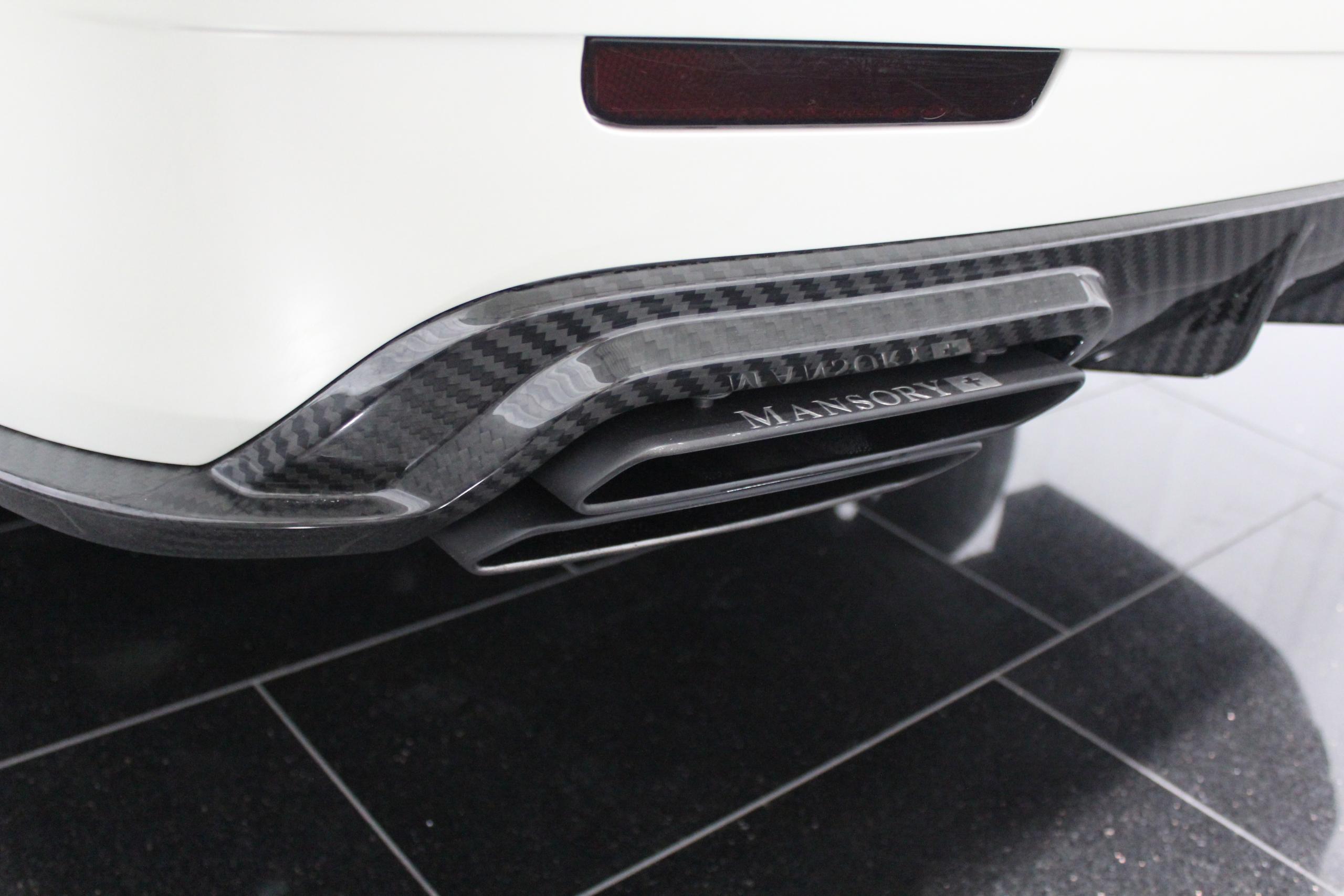
- Rear bumper assembly — full carbon replacement with integrated diffuser language and twin-tip exhaust cutouts
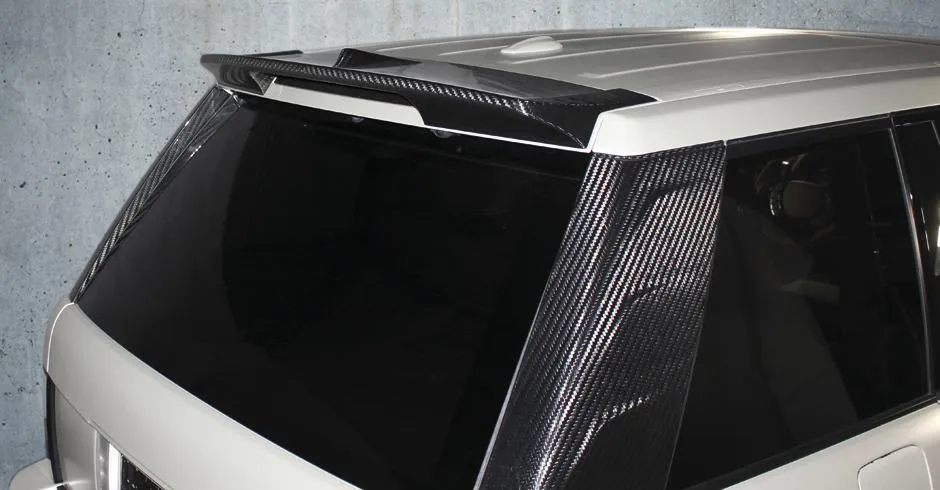
- Roof spoiler — discreet carbon kick on the trailing edge of the roof, common across both facelifts
Bonded flares mean body-shop work — strip, prep, paint, fit. The build runs 10 to 14 days at a Mansory-experienced shop, with carbon panels primed and shot to body colour at the same shop. Most owners spec the bonnet and roof spoiler in lacquered visible weave and paint everything else, which keeps the carbon language readable on a colour car without burying the build in clear-coat workload.
Wheels — 22" period-correct fitment
Mansory specifies the M-series fully forged 22" wheel as the matched fitment. The OEM 20" Range Rover Sport / 22" Autobiography wheel was a cast unit; the Mansory forging trims roughly 5 kg per corner of unsprung mass and clears the wider front and rear track that the bonded flares introduce. Diamond black, gloss black and matte chrome are the matched finishes; the wheel range lives at the forged wheel collection. TPMS-ready hubs use the OEM Land Rover sensors transferred from the factory wheel.
Powertrain — what Mansory does per engine
The Mansory exhaust system is the only powertrain change offered as a stock catalogue item, and it ships in three variants — one for the BMW M62 4.4 V8 (2002–2005), one for the Jaguar AJ-V8 4.4 / 4.2 supercharged (2006–2009), and one for the AJ-V8 5.0 / 5.0 supercharged (2010–2012). The AJ-V8 5.0 supercharged variant ships with a four-tip carbon-trimmed exhaust — the others ship with twin-tip layouts to match the OEM exit geometry. Diesel cars (TDV6, TDV8) are eligible for the bodywork and wheels but Mansory does not offer a Powerbox or sport exhaust on the diesel powertrain — the OEM tuning headroom on those engines is too narrow to justify a piggyback module.
Interior — what is in scope
The Mansory interior programme on the L322 is narrow by design — owners who want a full retrimmed cabin run that conversation through Land Rover Special Vehicle Operations or an aftermarket trim shop, not Mansory. The Mansory parts are: a sport steering wheel with carbon spoke-back inlay (with version-specific airbag and cruise-control wiring for pre-2010 and post-2010 cars), metal pedals, carbon inlays for the centre console and door pulls. The cabin itself — seats, headlining, door cards — stays OEM Land Rover.
Donor scope — what fits and what does not
The kit is dimensioned for the 2002–2012 L322 Range Rover. It does not fit:
- The first-generation Range Rover Classic (1970–1996, two-door and four-door) — different chassis, different fender geometry
- The second-generation Range Rover P38A (1994–2002) — different bumper architecture
- The fourth-generation Range Rover L405 (2013–2021) — different chassis, separate Mansory programme
- The Range Rover Sport L320 (2005–2013, BMW-derived) or L494 (2014–2022) — these are different model lines, not the long-wheelbase Range Rover
The Vogue / Vogue SE / Autobiography / Autobiography Black trim-edition cars are all eligible for the same kit; trim-edition badging does not change the body shell. Material and care notes for the lacquered carbon parts are collected in the carbon fibre care guide.
Worldwide shipping & quoting
L322 owners cluster in markets where the third-generation Range Rover had its strongest run — the UK as the home market, the Gulf, Russia and Hong Kong. Hodoor World routes pre-assembled crates to the United Kingdom, the UAE, Saudi Arabia, Hong Kong and Monaco via DHL or DSV freight forwarding. Pricing on request via [email protected] or WhatsApp +44 7488 818747 — the quote names the donor model year so the right front-clip parts get crated.
Other Mansory programmes worth comparing
If this programme is the front-runner on your list, the parallel Mansory builds to study are Body Kit for Range Rover (2023), and Body Kit for Land Rover Range Rover MK IV. Each is sourced through the same Hodoor channel — pricing logic, shipping windows and warranty terms align.
FAQ
Does the kit fit a 2005 BMW-engined Range Rover?
Yes — but the front-clip parts ship in the pre-2010 variant. The Mansory exhaust system also ships in the BMW M62-specific tip layout. The bodywork programme is identical between BMW-engined and Jaguar-engined L322s.
Will the bonded flares affect resale or insurance category?
Bonded flares are a permanent body modification — most insurers in the UK and EU treat the L322 as a modified vehicle once flares are bonded, which usually shifts the policy to a specialist modified-vehicle insurer rather than a high-street one. The car retains its OEM VIN and chassis registration; UK MoT testing on a Mansory L322 has been carried out without issue at multiple specialist shops.
Can I run the build with the OEM 20" wheels instead of the 22" Mansory forging?
Yes, but the bonded flares were dimensioned around a 22" rim — running OEM 20" wheels under flared arches leaves a visual void. Most owners who keep OEM wheels also skip the flares and run the soft-overlay version of the kit (front lip, bonnet pad, side sills only).
Does Mansory offer a Powerbox for the supercharged 5.0 V8?
The supercharged AJ-V8 5.0 has factory headroom — the same engine ran at 550 PS in the Range Rover Sport SVR — and a Mansory Powerbox lifts the L322 supercharged from 510 PS to roughly 590 PS. Naturally aspirated AJ-V8 4.4 / 5.0 cars are not Powerbox candidates; the gain on a non-supercharged engine is too small to justify the module.
Is the L322 too old for a worthwhile build in 2026?
The L322 hit its first-owner depreciation floor years ago — the cars trading hands now are second- or third-owner vehicles bought for the BMW chassis or the supercharged AJ-V8 sound. The Mansory programme suits a car that the owner intends to keep, not flip; the build adds no resale premium proportional to the spend, but it produces a body the L405 successor never had.