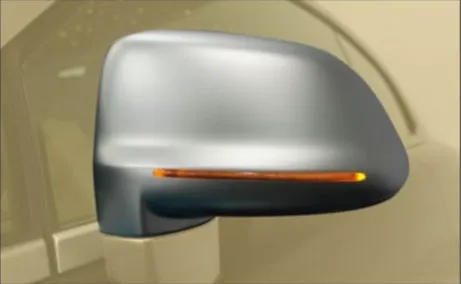
Mirror housing with flasher Mansory Carbon for Rolls-Royce Dawn


Mirror Housing with Flasher — Mansory Carbon for Rolls-Royce Dawn
The Mansory carbon mirror housing with integrated flasher is one of the smaller, most influential pieces in the Mansory Dawn carbon programme — a bespoke replacement for the Rolls-Royce Dawn's body-coloured door-mirror caps that adds a sliver of glossy 3K twill to each side of the cabin and re-routes the OEM repeater feed into a sculpted LED indicator strip. Specified as part of the Mansory Body Kit for Rolls-Royce Dawn, the caps reframe the side profile of the drophead, complementing the A-pillar carbon, the Pantheon grille surround and the exposed-weave engine bonnet without disturbing the coachbuilt grace that Rolls-Royce engineered into the Dawn's twin-turbo V12, soft-top, coach-door silhouette.
Construction & Materials
Each housing is laid up by hand from aerospace-grade prepreg carbon, cured in autoclave at controlled pressure and temperature, then finished to Mansory's bespoke lacquer standard. The lower shell carries the OEM mirror skeleton — heated glass actuator, blind-spot warning emitter, auto-fold motor, puddle-lamp aperture — while the upper shell hosts the integrated LED flasher channel. The two shells bond at the chrome-belt parting line so the carbon reads as a single fluid surface, with the indicator slot machined to a 0.4 mm radius for a clean light edge.
- Weave: 3K twill upper / 2K plain on the lower belt where the housing meets the door skin, for tighter pattern alignment with the chrome surround
- Cure: autoclave prepreg, deep-gloss UV-stable lacquer matched to RR coachwork colour or specified raw with anti-yellowing topcoat
- Wall thickness: 1.6–2.0 mm shell, 2.4 mm at the housing collar where the bracket meets the mirror arm
- Weight: ~0.36 kg per side, against ~0.62 kg for the OEM painted unit — modest but tactile
- Mounting: re-uses the OEM Rolls-Royce three-point housing-to-arm interface, no drilling, no door-card disassembly required
- LED flasher: amber high-luminance LED strip, 12 V, integrated driver, OEM repeater feed splice via a sealed 2-pin connector
- Optical: clear acrylic light-pipe diffuser sits flush with the carbon surface, no protruding lens
- Finish options: deep-gloss lacquer (default), satin, or exposed weave with anti-UV topcoat for owners specifying the raw bonnet
Design & Visual Function
On a Dawn the side profile is dominated by length — almost 5.3 metres of waftable drophead — and Rolls-Royce relies on chrome belt-line, painted door panels and the rear-hinged coach door geometry to keep the eye moving from Spirit of Ecstasy down to the rear haunch. The Mansory mirror caps insert a deliberate carbon accent at exactly the height where the driver's eye sits and where onlookers first register the car's stance. The 3K twill weave is rotated to align with the door's belt-line, so when the door opens through its full coach-door arc the carbon pattern continues uninterrupted across the parting shut-line.
The LED flasher is the detail that earns the part its name. Rather than re-using the small amber repeater dot that sits in the OEM cap, Mansory routes the indicator feed into a slim light-pipe that traces the trailing edge of the housing for roughly 110 mm. At rest the channel reads as a thin glassy seam in the carbon; at indicator pulse it lights cleanly with no hot-spotting, giving the Dawn an unmistakable side-on signature when pulling out of a hotel forecourt at twilight. This is theatre-of-arrival in miniature — the same intent that drives the ambiente grille illumination at the front of the car.
Visually the caps pair best with two adjacent Mansory parts: the A-pillar cover (continues the carbon line up to the windscreen header) and the engine-bonnet exposed-weave option (which carries the same 3K twill across the long bonnet expanse). When all three are specified the side view of the Dawn gains a calligraphic stroke of carbon from grille to door, while the soft-top, doors and rear deck remain in the owner's chosen coachbuilt paint — which is exactly the proportion Mansory's design language calls for on a Rolls-Royce.
Compatibility & Fitment
Engineered for the Rolls-Royce Dawn (2015–2023), all variants including the Black Badge with its 601 hp 6.6L twin-turbocharged V12. Drophead convertible only — the housings ride on the door, not the roof, so the soft-top stowage path is unaffected and the fabric hood folds normally with the caps fitted. All OEM electronic functions are preserved: heated mirror, power-fold, blind-spot warning, puddle-lamp projection, auto-dimming on the driver's side. The shell geometry is Dawn-specific; despite shared underpinnings with the Wraith, the mirror arm cross-section differs and these caps are not a fit for the coupé. Parking sensors, courtesy-light geometry and the chrome belt-line trim around the door all retain their factory positions.
Installation & Reversibility
This is one of the more DIY-friendly pieces in the Dawn programme. A trim tech or a confident owner working on a Rolls-Royce-trained bench can complete the swap in 45–75 minutes per side. The OEM cap is released by a single retaining clip behind the housing collar; the mirror glass is gently unclipped to expose the inner shell; the OEM amber repeater connector is unplugged; the new Mansory housing is offered up, the integrated LED's 2-pin sealed connector is mated to the OEM repeater feed (a small electrical splice, factory-style butt-connector supplied), and the cap clips back home. No drilling, no bonding, no door-card removal. Reversibility is total — the OEM caps and harness can be reinstated without leaving any trace.
Recommended installer: a Rolls-Royce-certified body shop or Mansory-trained installer if the owner wants the splice loomed into the inner door-card harness for invisible service routing. For owners specifying the part alongside the front fenders, the front-bumper LED fog-light or the engine bonnet, it is sensible to plan the mirror-cap fitment for the same studio visit, even though the housings themselves do not require panel-level prep.
Pairing within the Mansory Dawn programme
The mirror housing sits at the visual mid-point of the carbon programme and is most often specified alongside two or three siblings that carry the carbon line forward and rearward across the body. Three pairings work especially well on a Dawn:
- A-pillar cover — the natural upward continuation of the mirror cap's carbon, framing the windscreen header and meeting the soft-top's leading rail. Specifying both creates a single carbon stroke from door belt to header rail.
- Front fenders — extend the side-profile carbon forward to the wheelarch, balancing the visual mass of the long bonnet and pulling the eye down to the wheels.
- Engine bonnet with bar (exposed weave) — the most theatrical pairing. The exposed-weave bonnet shares the 3K twill of the mirror caps, so when the eye travels from Spirit of Ecstasy down the bonnet and across to the side mirror the weave reads continuously.
Owners chasing a quieter, paint-led aesthetic can pair the caps with the lacquered (non-exposed) engine bonnet instead, keeping the carbon as accent rather than statement.
Maintenance & Durability
The Dawn is a drophead — the lacquered carbon will see direct, prolonged sun exposure with the soft-top down, which is the harshest UV environment in the Rolls-Royce range. Mansory's anti-UV topcoat is engineered for this, but owner care extends life considerably. Use pH-neutral shampoo only; avoid alkaline traffic-film removers, ammonia-based glass cleaners that can mist onto the housing, and abrasive sponges that will craze the lacquer over a season. A 9H ceramic coating applied over the factory lacquer is the recommended long-term protection on lacquered weave; carnauba wax also performs well and is easier to refresh seasonally. For owners with the exposed-weave option, periodic inspection of the topcoat for micro-cracking around the housing collar is worth scheduling at annual service.
The integrated LED flasher draws minimally — well below 0.5 A on a single-side pulse — and the driver IC is rated for the Dawn's typical idle / standstill profile with no measurable parasitic load. LED life is rated beyond 50,000 hours of pulsed operation, so functional replacement during ownership is unlikely. If a stone chip lifts a fragment of lacquer near the housing edge, the standard Mansory carbon repair workflow applies: localised flat-back, weave fill if needed, lacquer respray and polish. The chrome belt-line on the lower shell is plated rather than painted and tolerates polish without lacquer-edge softening.
Lead Time & Warranty
Lead time is typically 4–8 weeks, reflecting Mansory's bespoke production cadence — each pair is laid up to order with the owner's chosen lacquer specification, weave rotation and finish level. A 12-month manufacturing-defect warranty covers lay-up, lamination, lacquer adhesion and the integrated LED driver. Expedited builds can sometimes be accommodated when the caps are specified alongside a larger Mansory Dawn carbon order — discuss timing at the moment of bespoke configuration.
FAQ
Q: Will fitment differ between standard Dawn and Black Badge?
A: No. The mirror arm interface is identical across all Dawn trims (2015–2023, including Black Badge). The caps fit both without mechanical or electrical change.
Q: Does the LED flasher require coding to the Dawn's body-control module?
A: No. The integrated LED uses the OEM amber repeater feed via a passive splice. Indicator timing, hazard pulse and one-touch lane-change behaviour all stay native to the Rolls-Royce ECU.
Q: Will heated mirror, power-fold and blind-spot warning still function?
A: Yes — all three are preserved. The Mansory shell is a cap-only swap; the OEM mirror skeleton, glass actuator and BSW emitter are not touched.
Q: Can these be retrofitted to a Wraith?
A: No. The Dawn shares much with Wraith but the mirror arm geometry differs subtly; the housings are Dawn-specific. Wraith owners should specify the Wraith equivalent in the Mansory programme for that model.
Q: Raw exposed weave or lacquered — which is better on a drophead?
A: Lacquered is the safer long-term specification on a Dawn given prolonged UV exposure with the soft-top down. Exposed weave is visually stronger when paired with the exposed-weave engine bonnet, but expect closer attention to topcoat care.
Q: How much weight does the swap save?
A: Roughly 0.5 kg total across both sides. Useful, but the spec is chosen for visual integration and theatre rather than mass reduction.
Pair the mirror housings with the A-pillar cover and the exposed-weave engine bonnet to draw a single carbon line across the Dawn's flanks. To configure your bespoke pair: WhatsApp +44 7488 818 747 or [email protected].