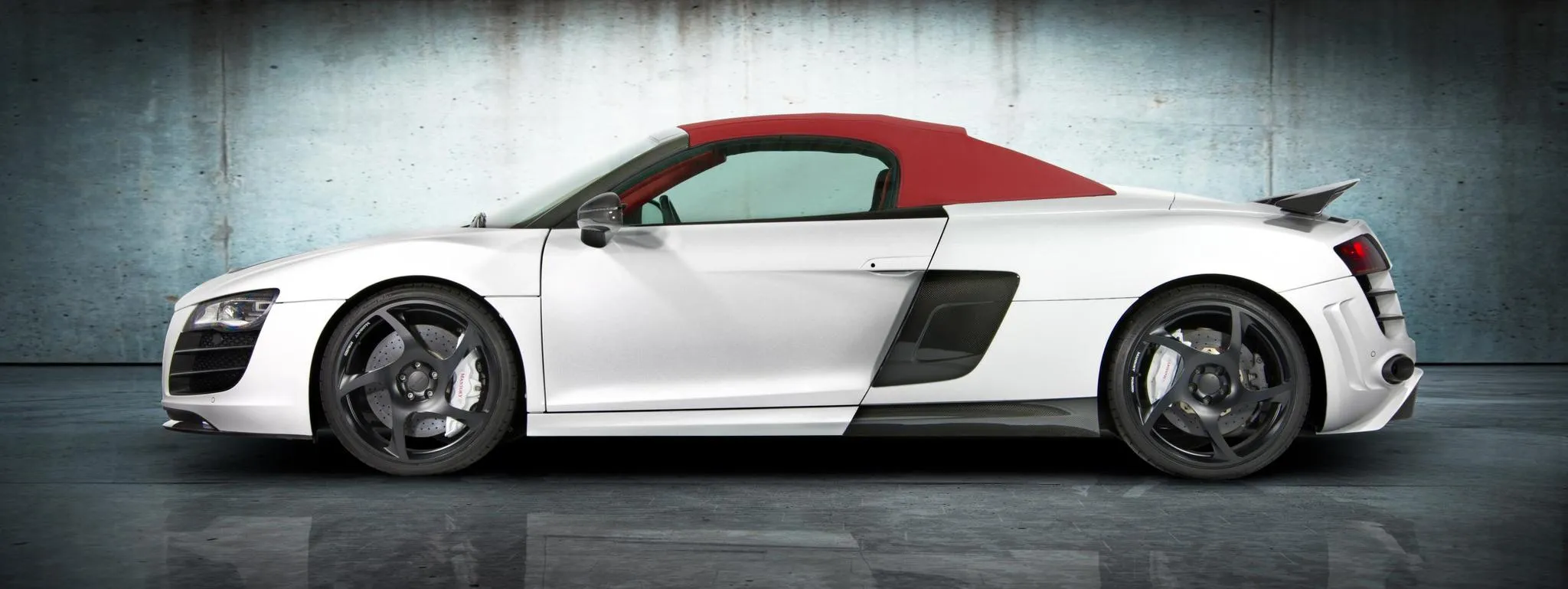
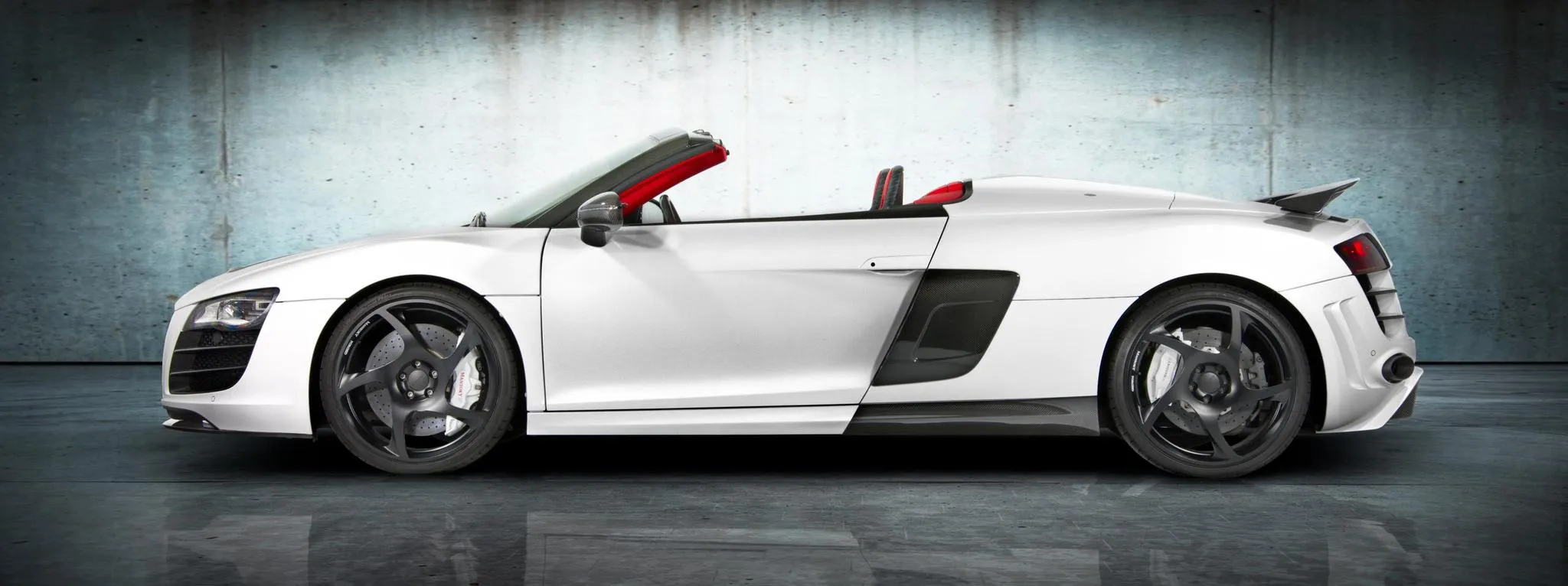
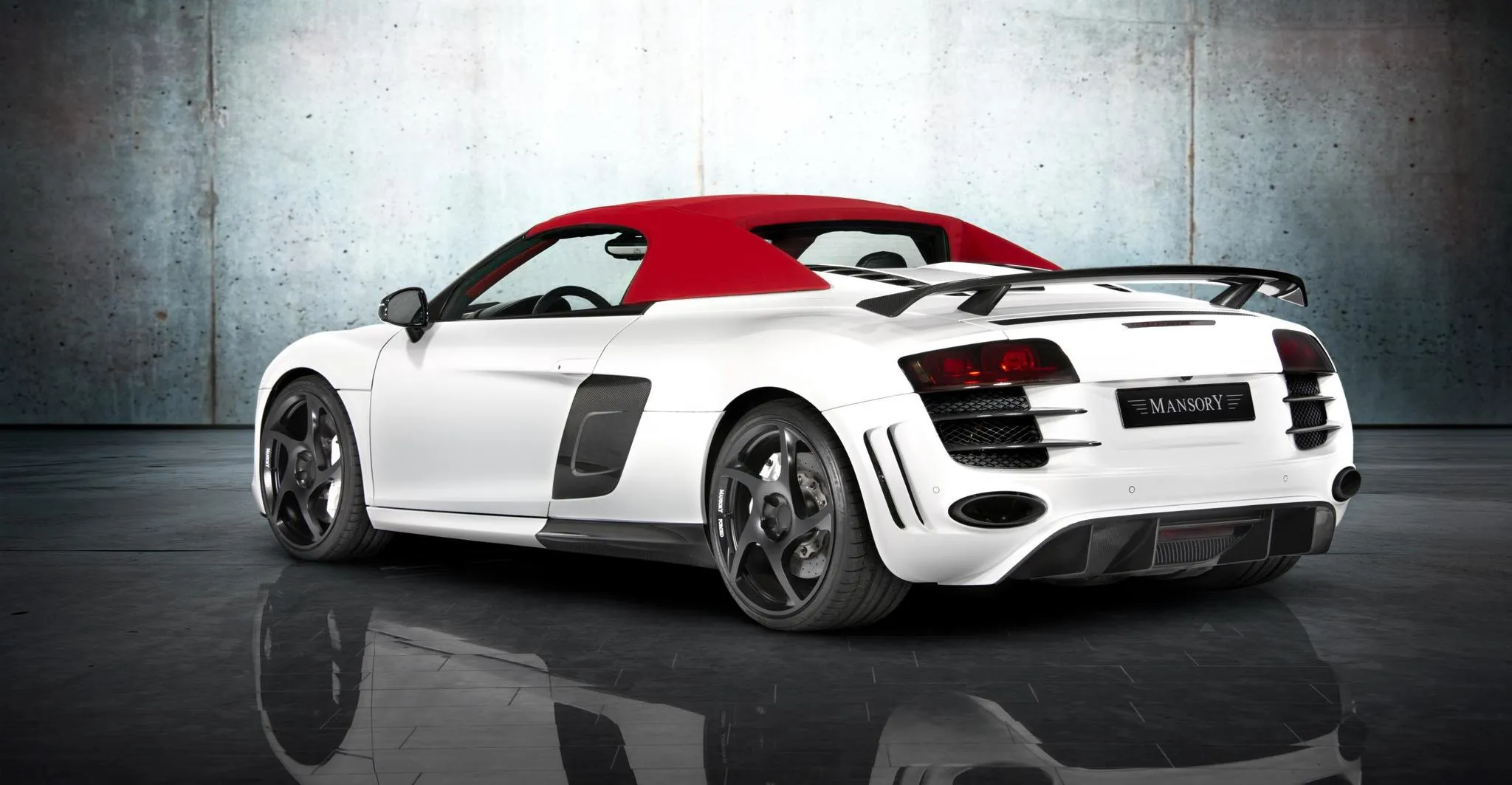
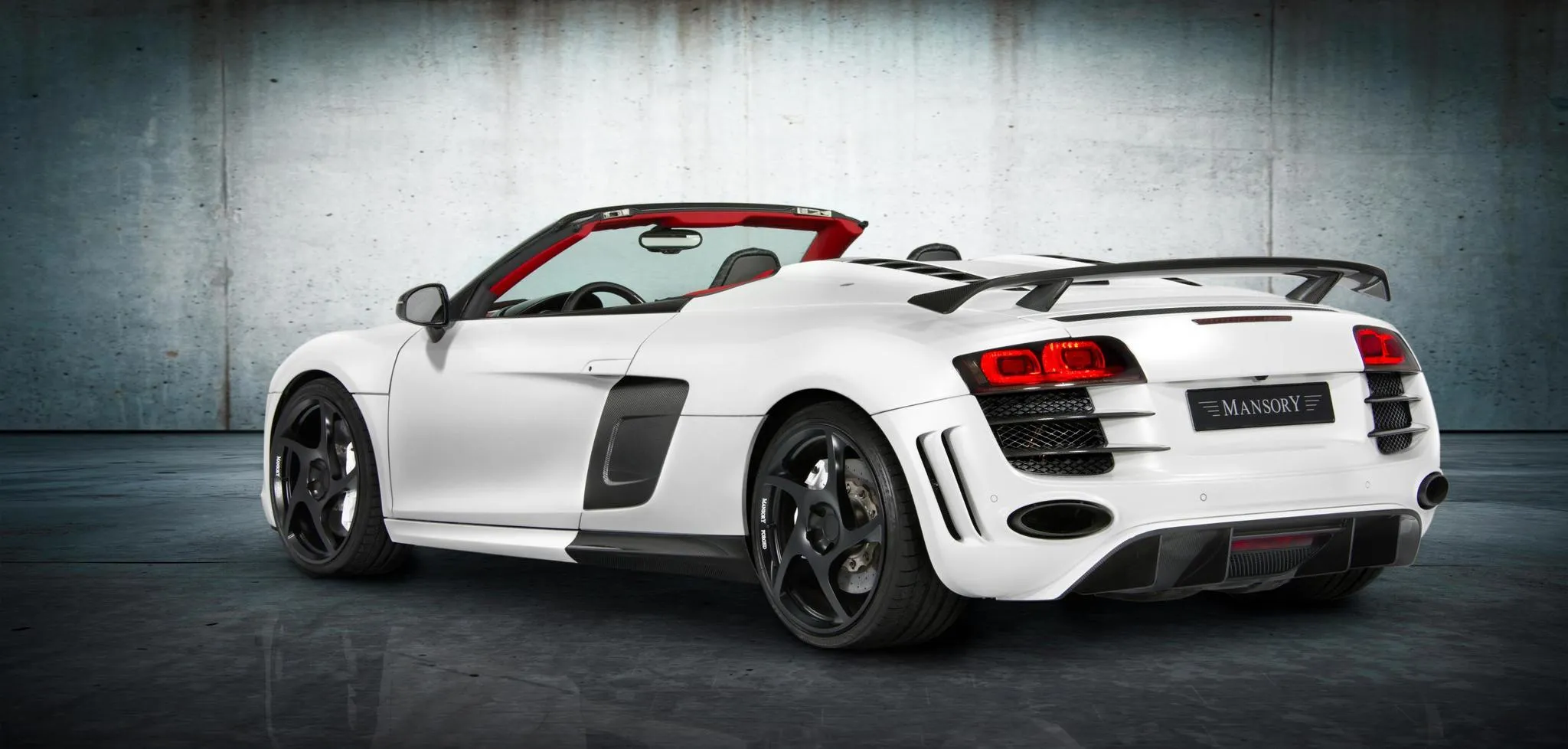
Mansory Carbon Fiber Body kit set for Audi R8 Spyder


MANSORY Carbon Fiber Body-Kit Set for the AUDI R8 SPYDER — the Open-Top V10 5.2 NA Mid-Engined Audi That Retired in 2024 with No Direct ICE Successor
The Audi R8 Spyder is the convertible derivative of the R8 mid-engined two-seater — Audi's only true mid-engined road car across both generations (Type 42, 2006-2015; Type 4S, 2015-2024). The R8 line ended in March 2024: no direct ICE successor was announced, the R8 e-tron of the previous decade was a compromise rather than a continuation, and the planned full-electric R8 was cancelled. Mansory's R8 Spyder programme is therefore the carbon overlay on a car that has already retired. The R8 Spyder Mansory kit was the kit for owners who understood that the V10 5.2 NA was finished. Now in 2026, with the R8 fully out of production, this kit is a way of marking a final-generation car for posterity — a documentation of an engineering era when Audi shared a naturally aspirated ten-cylinder with Lamborghini and put it under a fabric roof.
R8 in Mansory's catalogue — the only Audi mid-engined entry
Mansory's Audi catalogue covers the brand's full-size SUV and saloon families — Q7, Q8, RS Q8, A8 — and the RS6 Avant performance estate. Within all of that, the R8 holds a unique structural slot: it is the only mid-engined Audi Mansory has ever built a programme around, because Audi itself only ever built one mid-engined road car. Every other Audi in the Mansory catalogue is a front-engined longitudinal layout with quattro AWD; the R8 is the outlier that shares a platform with Sant'Agata Bolognese rather than with Ingolstadt. The Spyder programme adds open-top considerations on top of that platform: Mansory must respect the fabric-roof folding kinematics, the rear tonneau geometry, and the bracing that Audi added to compensate for the loss of fixed-roof torsional stiffness.
V10 5.2 NA (FSI) — the engine that Audi shared with Lamborghini
The R8 Spyder donor engine is the 5.2 L naturally aspirated 90° V10 that Audi calls FSI and Lamborghini calls Aspirated 10R — the same engine, designed jointly between Audi Hungaria (Győr) and Automobili Lamborghini, used in the Audi R8 V10 and the Lamborghini Gallardo / Huracán. R8 V10: 540 hp at 8 250 rpm. R8 V10 plus: 610 hp. R8 V10 Performance (post-2019 facelift): 620 hp / 580 Nm at 6 600 rpm, 8 700 rpm redline. Specific output around 119 hp per litre — extraordinary for a non-turbocharged engine, achieved with dual fuel injection (FSI port + direct), variable intake manifold geometry, and an exhaust note that became the engine's marketing identity. Transmission: 7-speed dual-clutch S tronic. Drivetrain: quattro AWD with mechanical limited-slip differential on the rear axle (R8) and magnetic ride. The combination of 5.2 NA V10 + S tronic + quattro defined the R8 throughout its 2006-2024 run; the convertible Spyder added open-top operation to the same powertrain envelope.
Carbon kit components
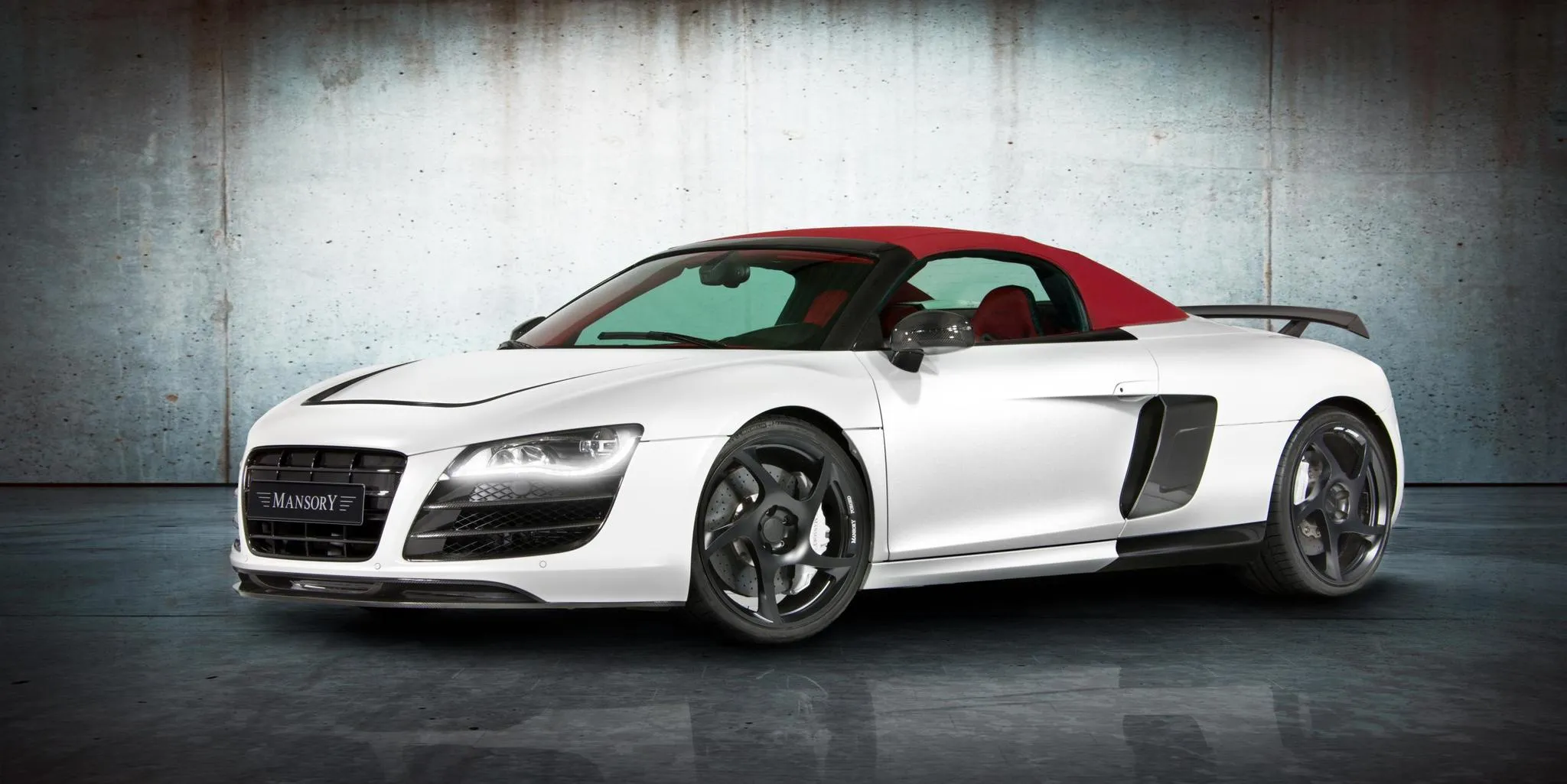
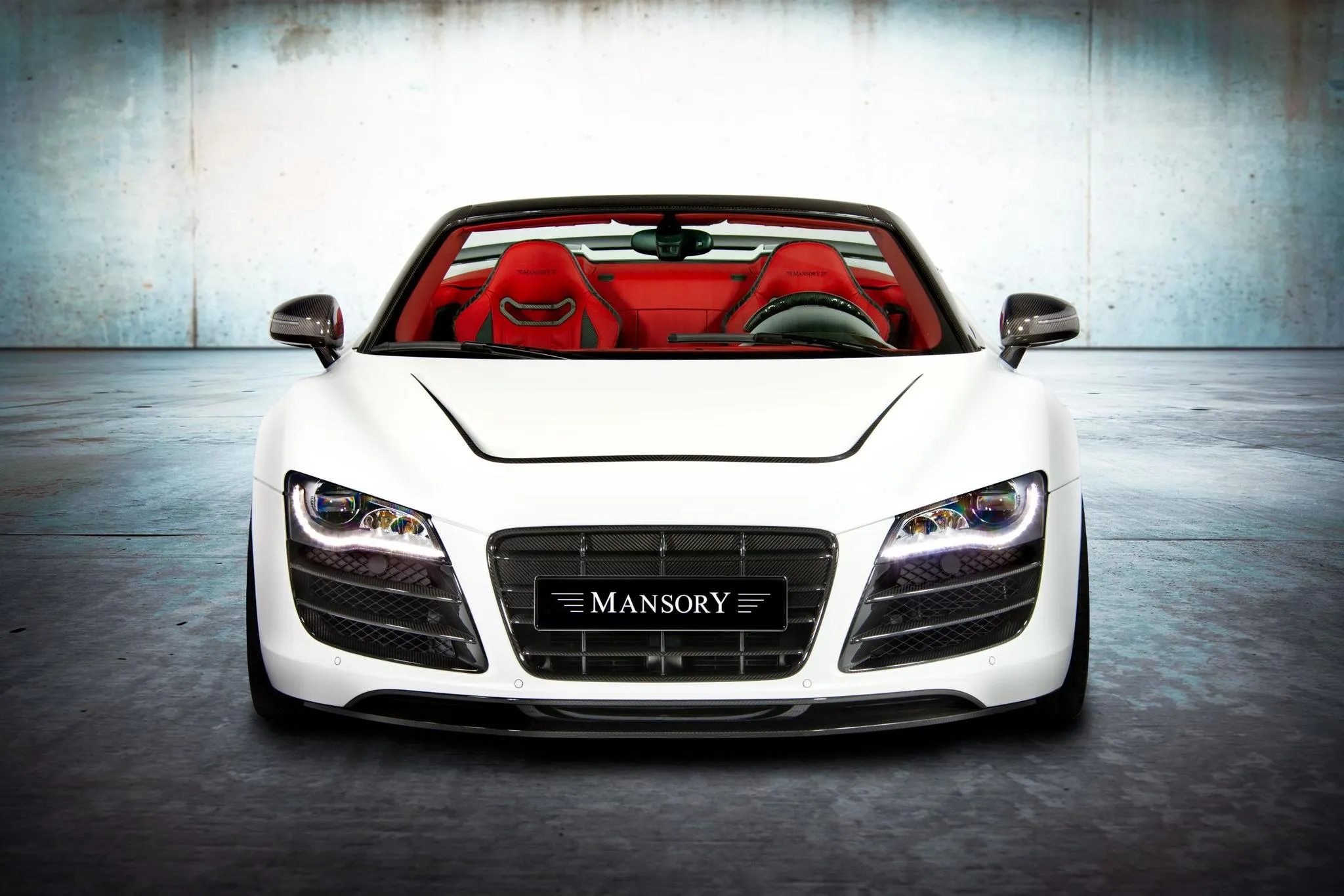
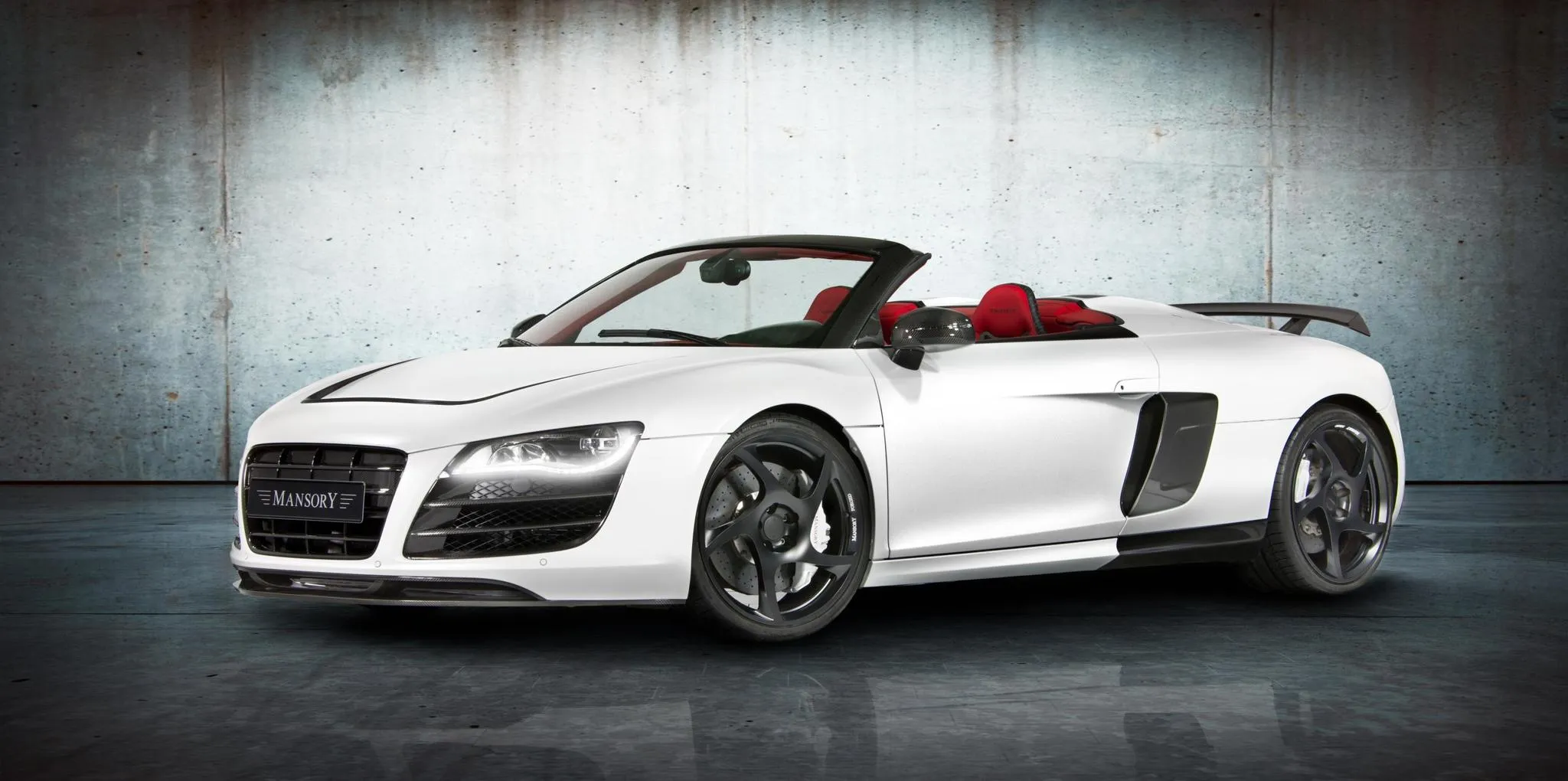
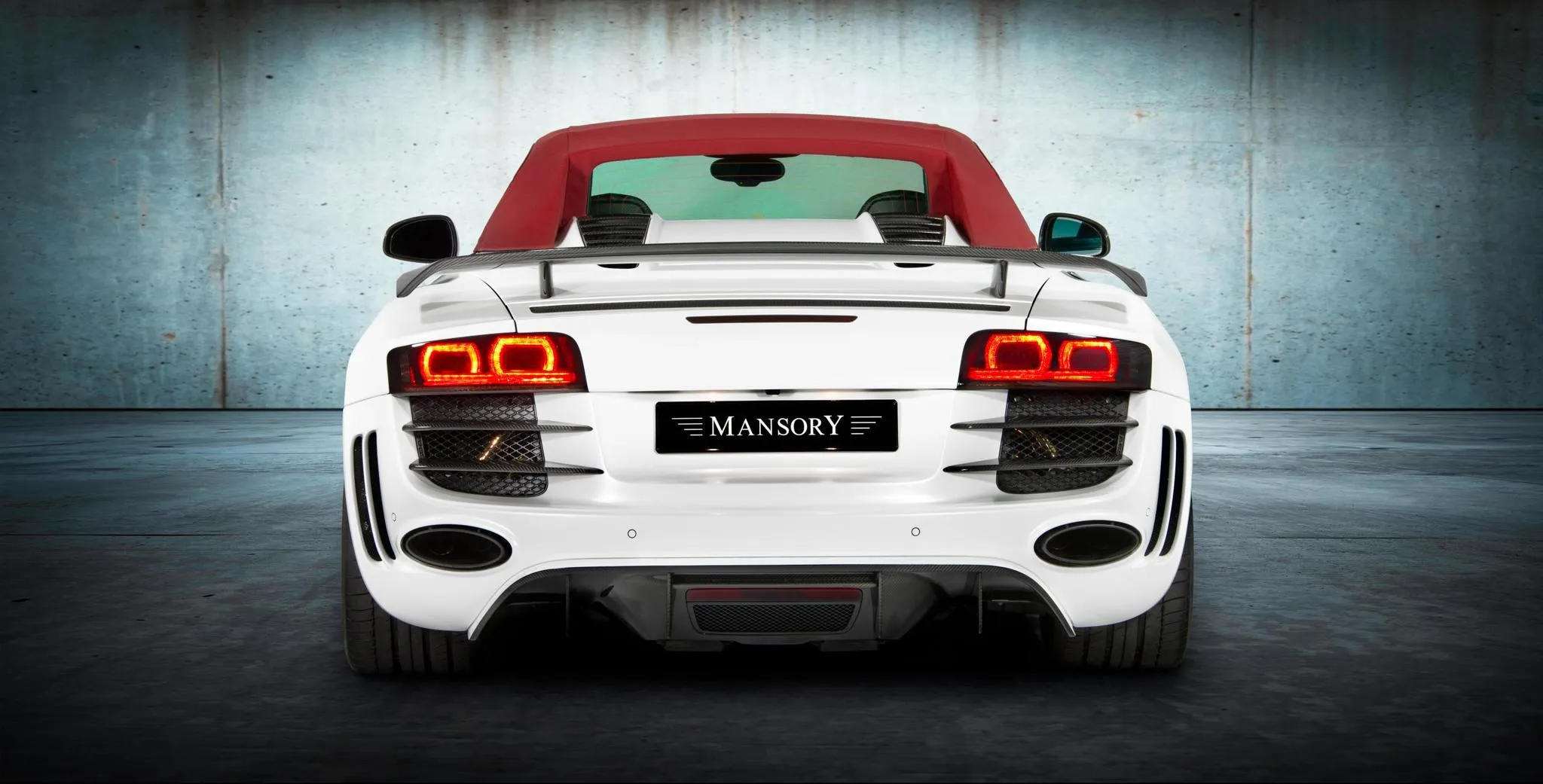
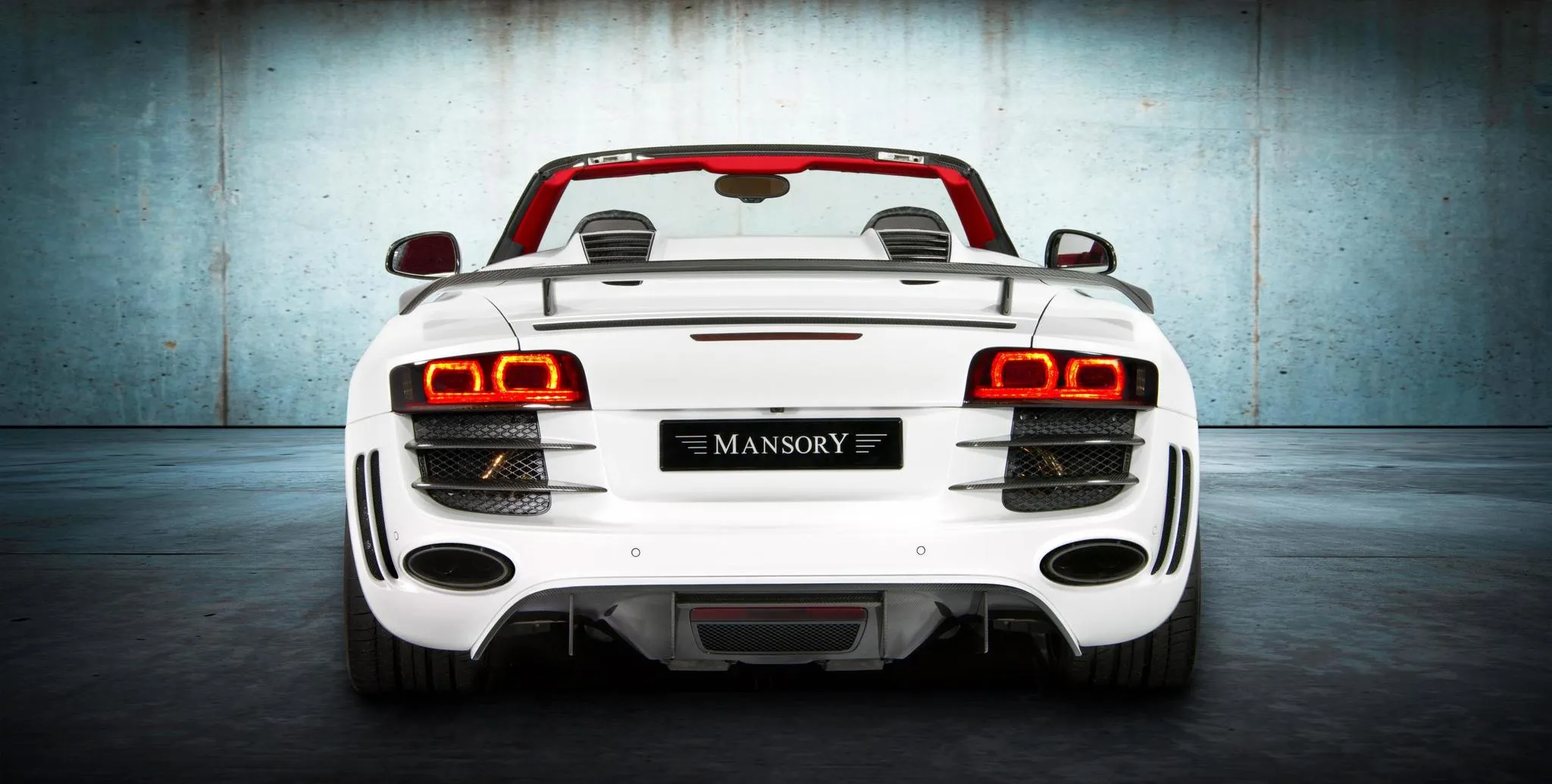
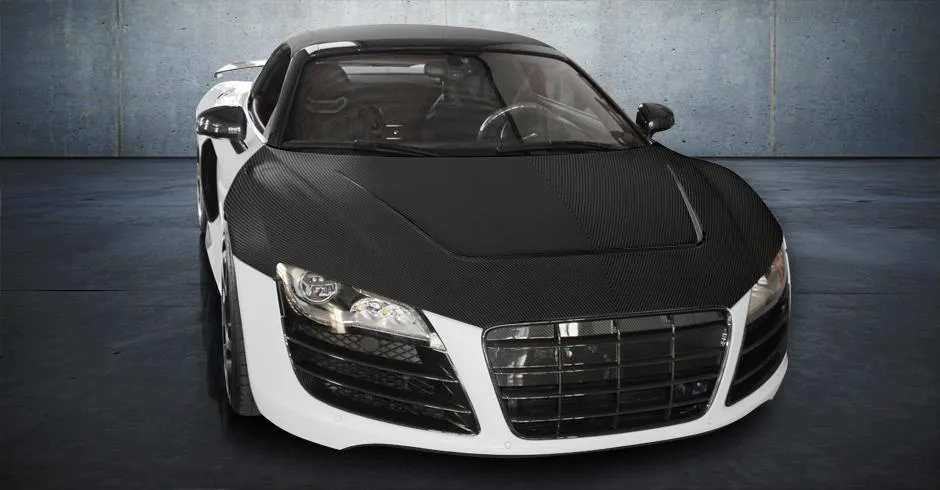
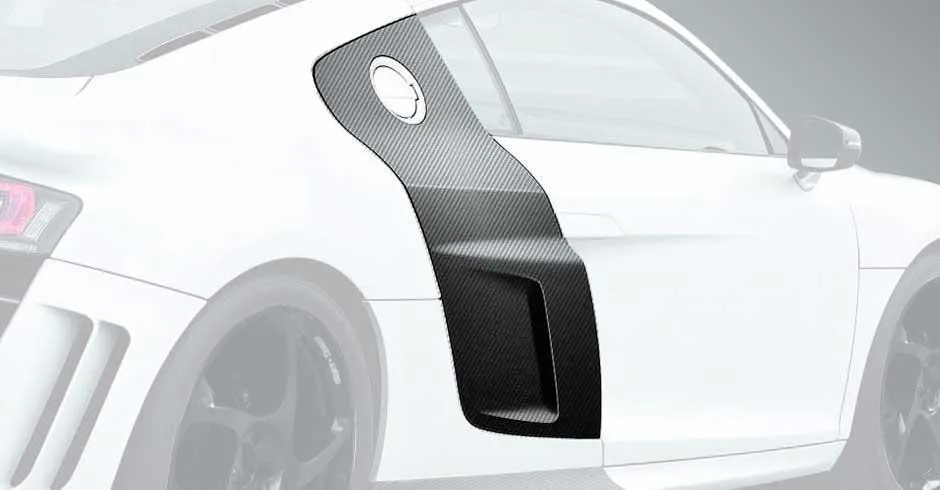
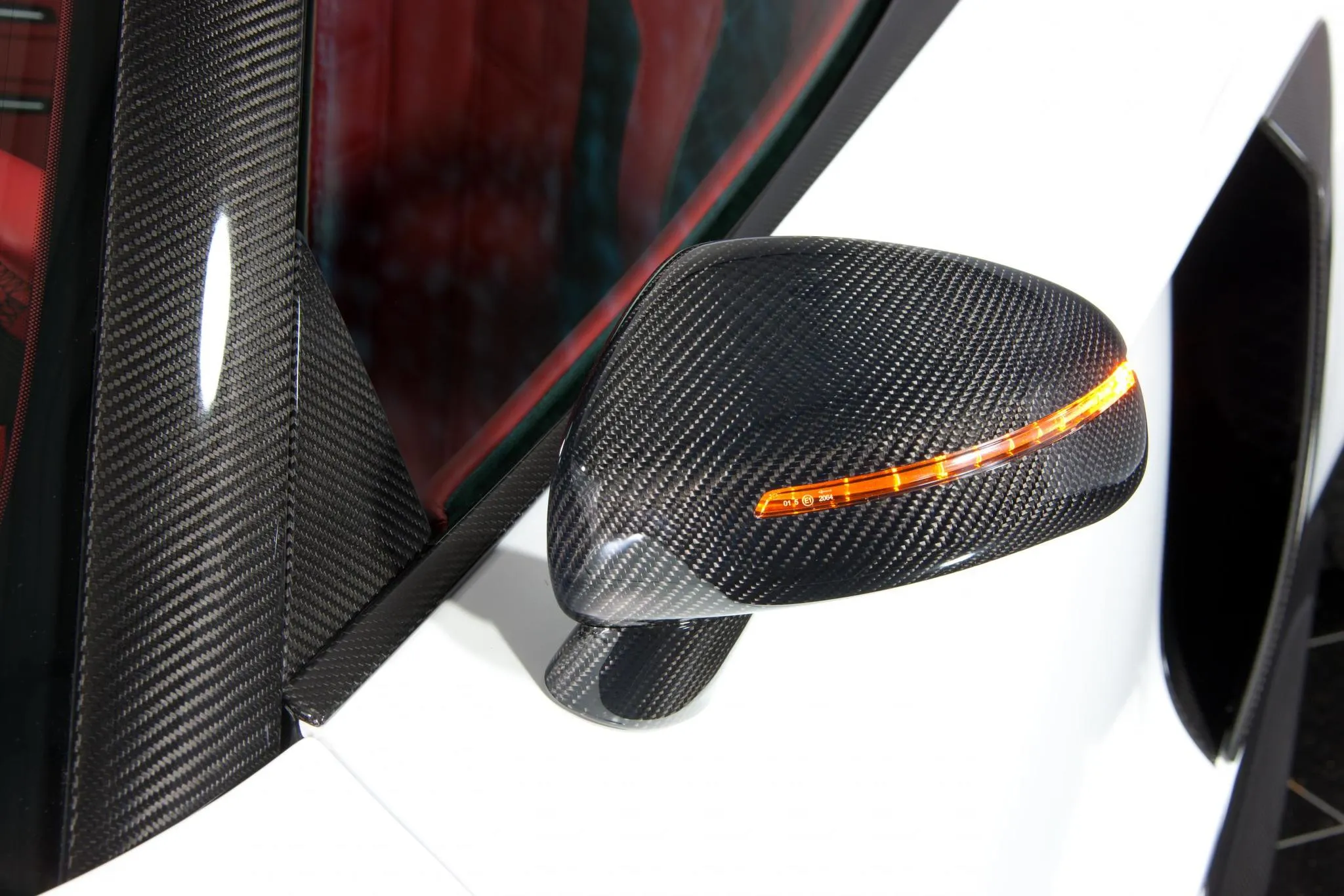
R8 Spyder kit schedule: front grill mask in carbon; front air-intake panel with enlarged ducting; front lip spoiler; replacement carbon front bonnet; carbon side-blade panel (the R8's signature side-blade element re-rendered in twill); carbon side skirt covers; carbon mirror housings and mirror feet; door outer trim in carbon; fuel-filler cover; carbon windscreen-frame trim (Spyder-specific, framing the open cabin); rear bumper in carbon with integrated diffuser elements; carbon rear spoiler tuned for the open-top body; rear grid cover over the engine bay (R8 Coupé equivalent is glazed; Spyder has a different decklid arrangement); rear air-outtake vents in carbon. The component set respects Audi's electric soft-top mechanism, the Spyder-specific rollover bracing behind the seats, and the rear-deck airflow over the V10. All panels are autoclaved twill carbon; raw-weave or painted finishes available.
Audi Space Frame Gen 2 — and the convertible-specific bracing
The Type 4S R8 (gen 2, launched 2015) is built on Audi Space Frame Gen 2 — a carbon-aluminium hybrid structure shared with the Lamborghini Huracán. Aluminium extrusions and castings form the front and rear sub-structures; a CFRP centre tunnel and rear bulkhead provide torsional rigidity around the cabin. For the Spyder, Audi reinforced the sills, A-pillars and rear bulkhead to compensate for the missing fixed roof, added discreet rollover protection behind the seats, and packaged the power-folding fabric roof with a 20-second cycle into a tonneau forward of the engine bay. Mansory's bonded carbon panels (fender extensions where applicable, bumpers, side blades) attach onto this hybrid structure without modifying the load-bearing space-frame elements. Dimensions: 4 426 × 1 940 × 1 244 mm, 2 650 mm wheelbase. Across the Type 4S production run (2015-2024) approximately 9 000 units left Neckarsulm.
Wheels — 19" / 20" forged for the R8
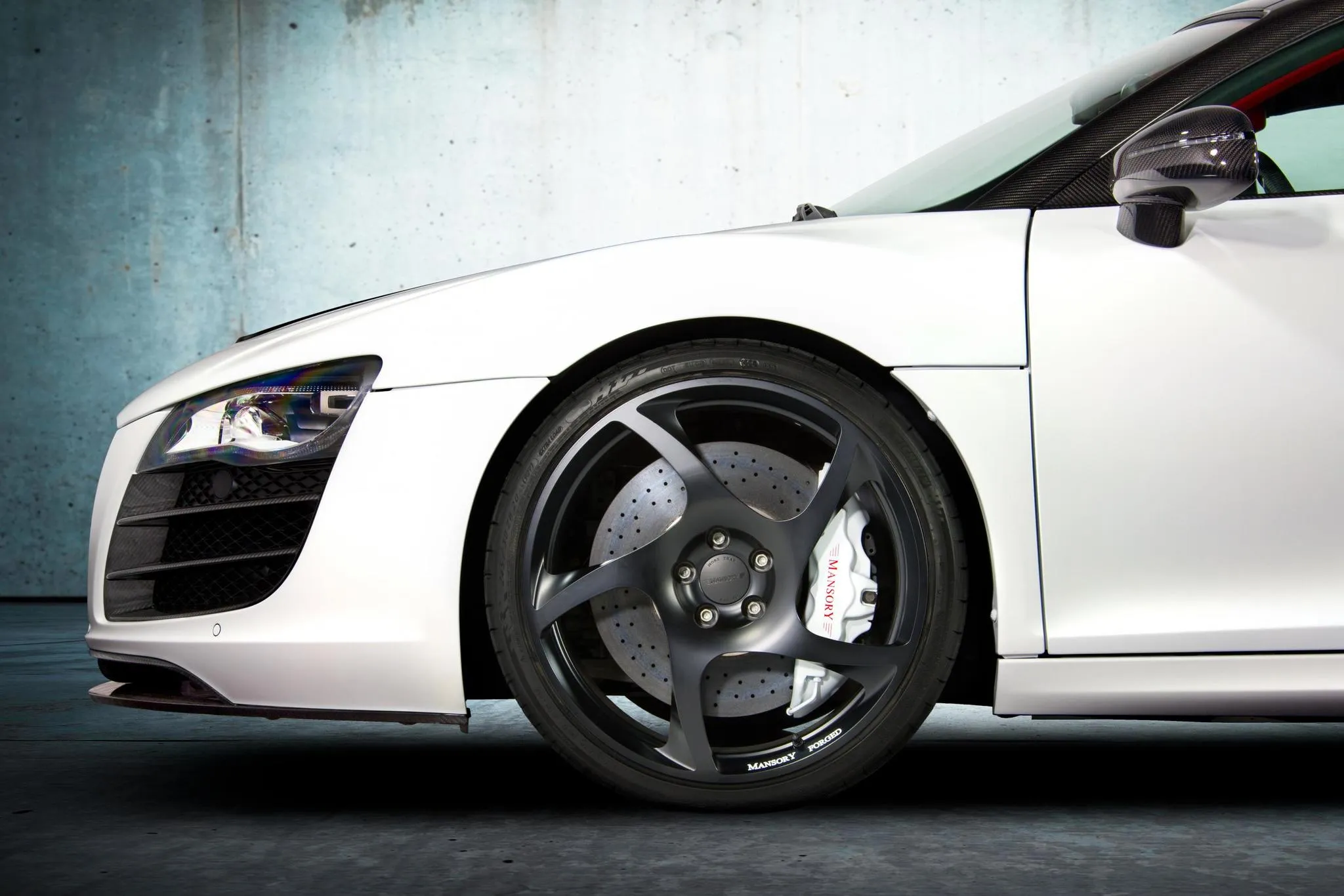
Factory R8 V10 Spyder fitment: 19" or 20" cast or forged. Mansory R8 Spyder fitment: 19" front / 20" rear staggered forged. Patterns: M.7 multi-spoke and FM-series concave forged. Tyre fitment: 245/30 R19 front / 295/30 R20 rear. Finishes: matte-black, satin-gunmetal, glossy-bronze, two-tone diamond-cut, paint-to-sample (Audi exclusive Sepang Blue and Suzuka Grey on request). The fitment has been TÜV-documented for R8 Spyder kerb weight and the V10 Performance lateral-load envelope. Catalogue: hodoor.world/collection/forgedwheels.
Open-V10 markets
R8 Spyder owners cluster in Switzerland, Singapore and Japan, with smaller pockets in Italy and the United States. Switzerland and Italy are the European homes of the V10 mid-engined open-top owner — climate, alpine roads and tax structures around naturally aspirated supercars favour the segment. Singapore is a tight enclave of late-build R8 V10 Performance Spyders preserved as appreciating documents of the NA era. Japan retains a long-standing affinity for the R8 line, often pairing the Spyder with garage-queen status. The US pocket is thin but exists in California and Florida. Mansory ships globally with country-specific technical and customs documentation.
Commission
Commission requires: R8 Spyder VIN, body type confirmation (Spyder Type 4S, gen 1 or gen 2), V10 vs V10 plus vs V10 Performance specification, current paint code, carbon scope (full kit vs selected components), wheel choice and finish, destination country. Typical timelines: 12-14 weeks carbon and wheels production; +3 weeks if interior retrim is added; installation 2 weeks at a workshop with R8 / Huracán experience (the Audi Space Frame Gen 2 requires familiarity). Total: approximately 4 months commission to road. Contact: [email protected] or WhatsApp +44 7488 818747.
Adjacent Mansory builds
Closest in DNA — the configurator analogues to this programme are Carbon Fiber Body kit set for Audi RS7 and Carbon Fiber Body kit set for Audi RS6 Avant C8.
Slightly broader cross-shop targets include Facelift Body Kit for Audi RSQ8.
FAQ — R8 Spyder programme
Does the kit interfere with the power-folding fabric roof or its 20-second cycle? No. The rear-deck panels, tonneau-area trim and rear spoiler are engineered around the electric soft-top mechanism and its tonneau kinematics; the factory cycle and roof-stowage geometry are preserved.
Will the kit fit my V10 vs V10 Performance — does the post-2019 facelift change the panels? The 2019 facelift revised front fascia detailing and exhaust outlets between V10 and V10 Performance trims. Mansory's component set is supplied to match the donor model year and trim; please specify both at order.
Is the kit reversible to factory Audi specification? Bumpers, side blades, mirror caps, skirts, spoiler, decklid trim and windscreen-frame trim are bolt-on / clip-on components and are reversible. Any bonded fender-extension elements where used are considered permanent.
The R8 is out of production — does Mansory still build kits for it? Yes. The R8 production line closed in March 2024, but Mansory's R8 Spyder programme remains active for the existing parc — across both Type 42 (2010-2015) and Type 4S (2015-2024) Spyder generations — as a documentation-of-an-era specification.
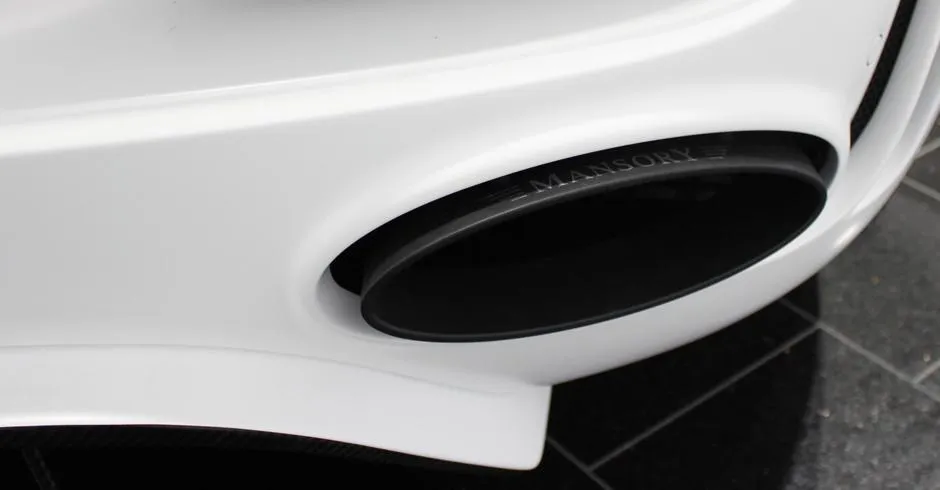
What about the V10 acoustic character — does the rear-end carbon work alter the exhaust note? The carbon rear bumper, diffuser surround and rear air-outtake vents are visual and aerodynamic; they do not change the factory exhaust system or the V10's tailpipe geometry. A separate Mansory exhaust commission can be specified if the owner wants to revise the tone, but it is not part of this body-kit programme — the V10 5.2 NA's natural voice is preserved by default.