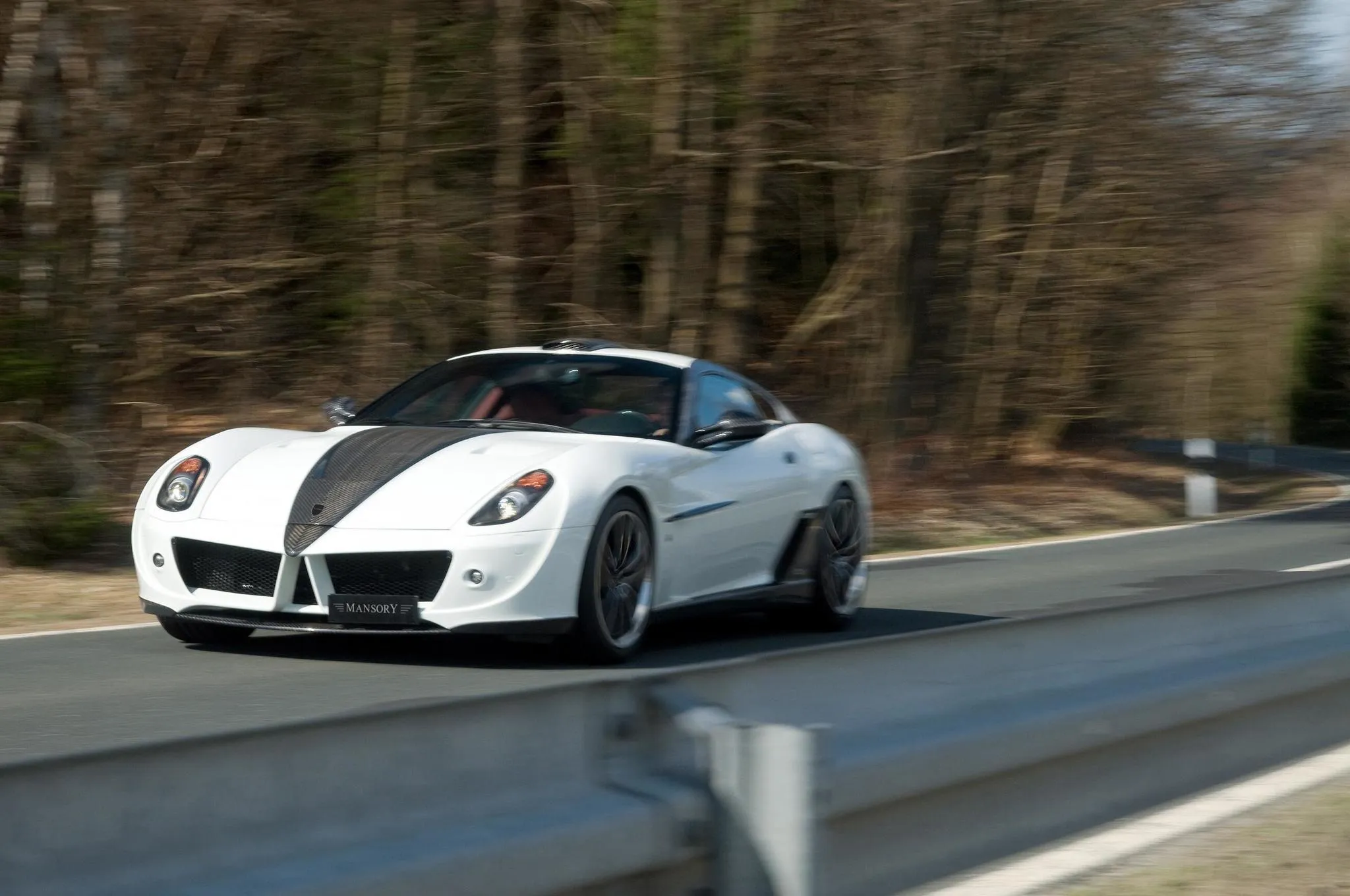
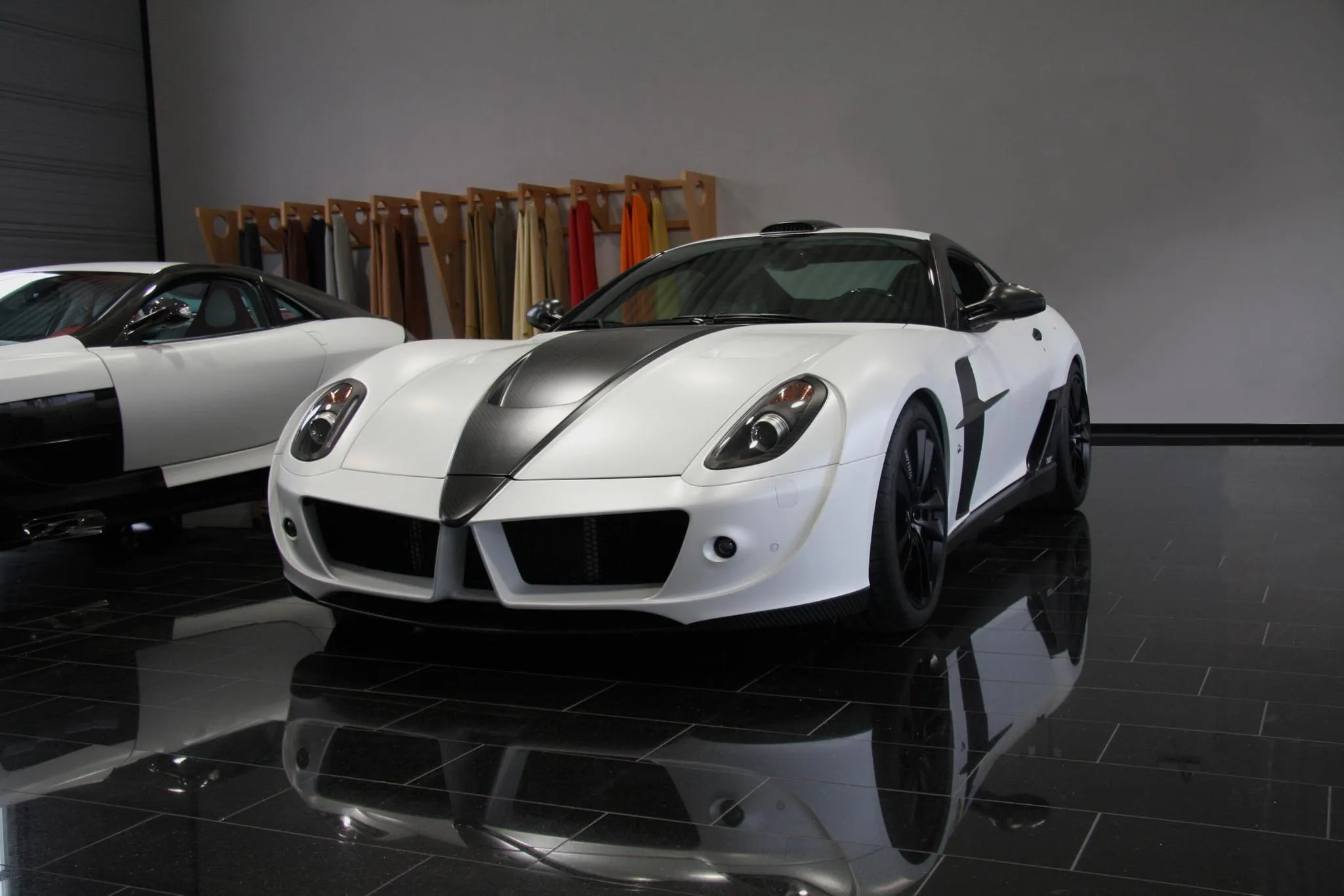
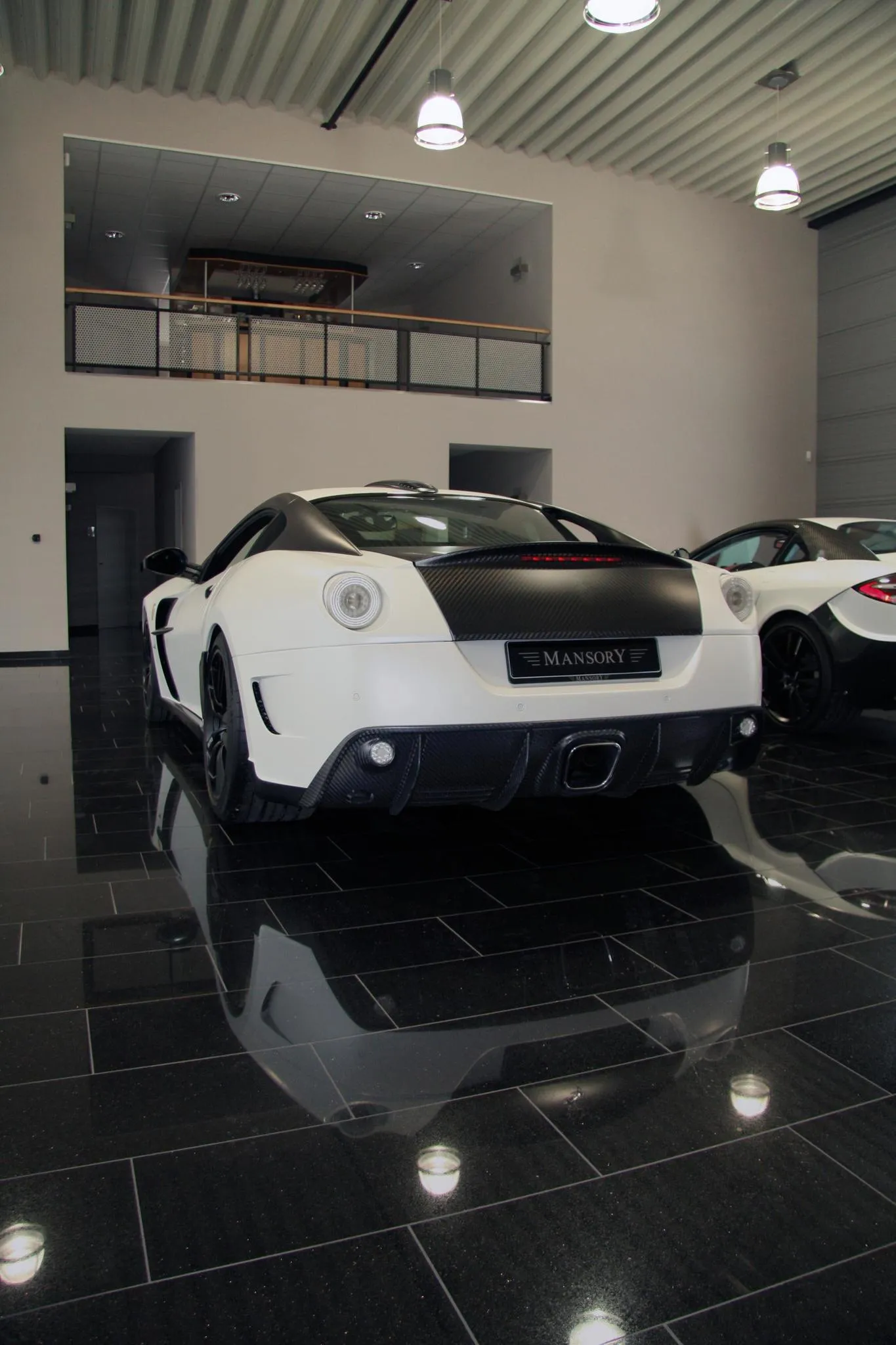
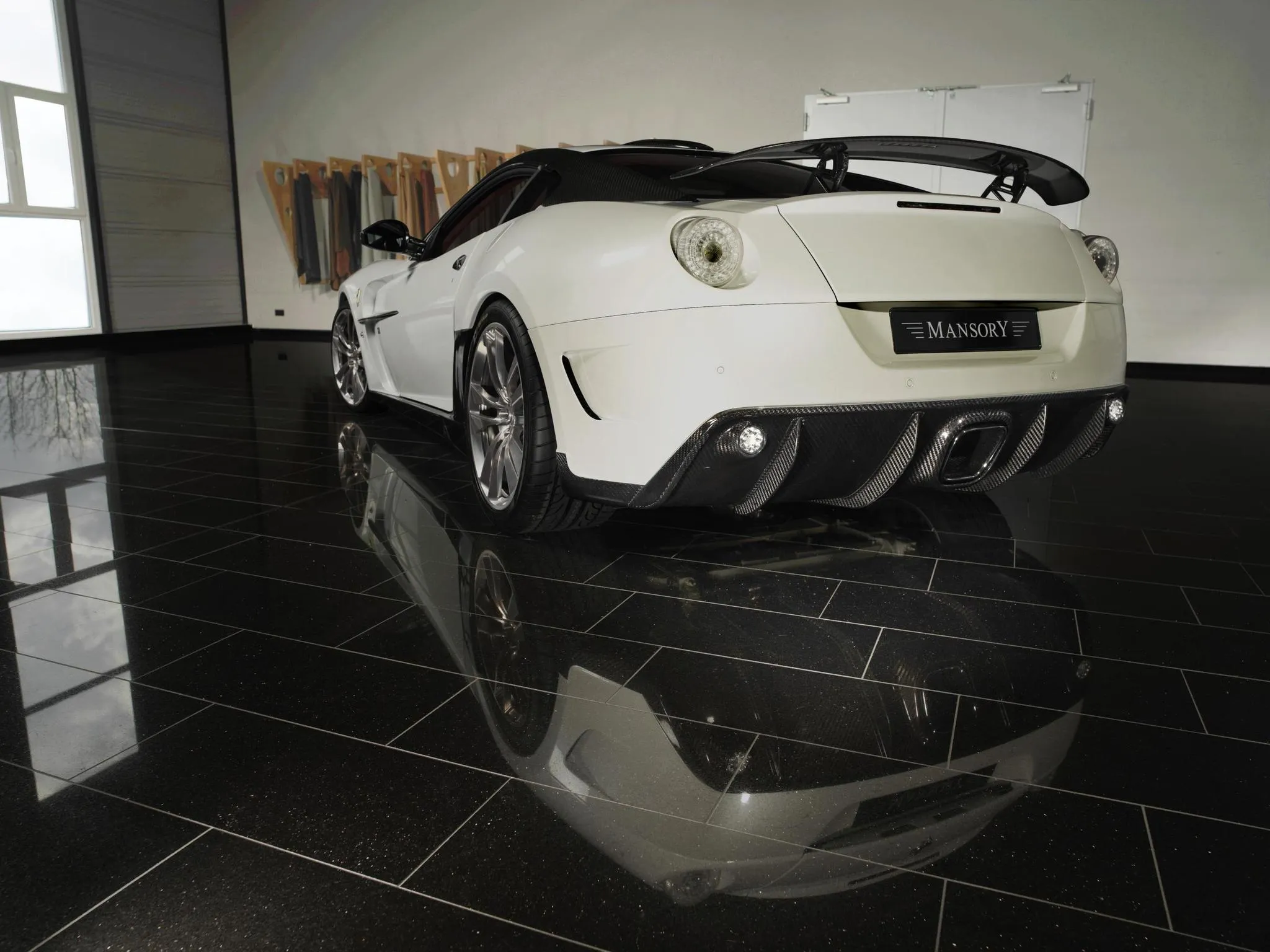
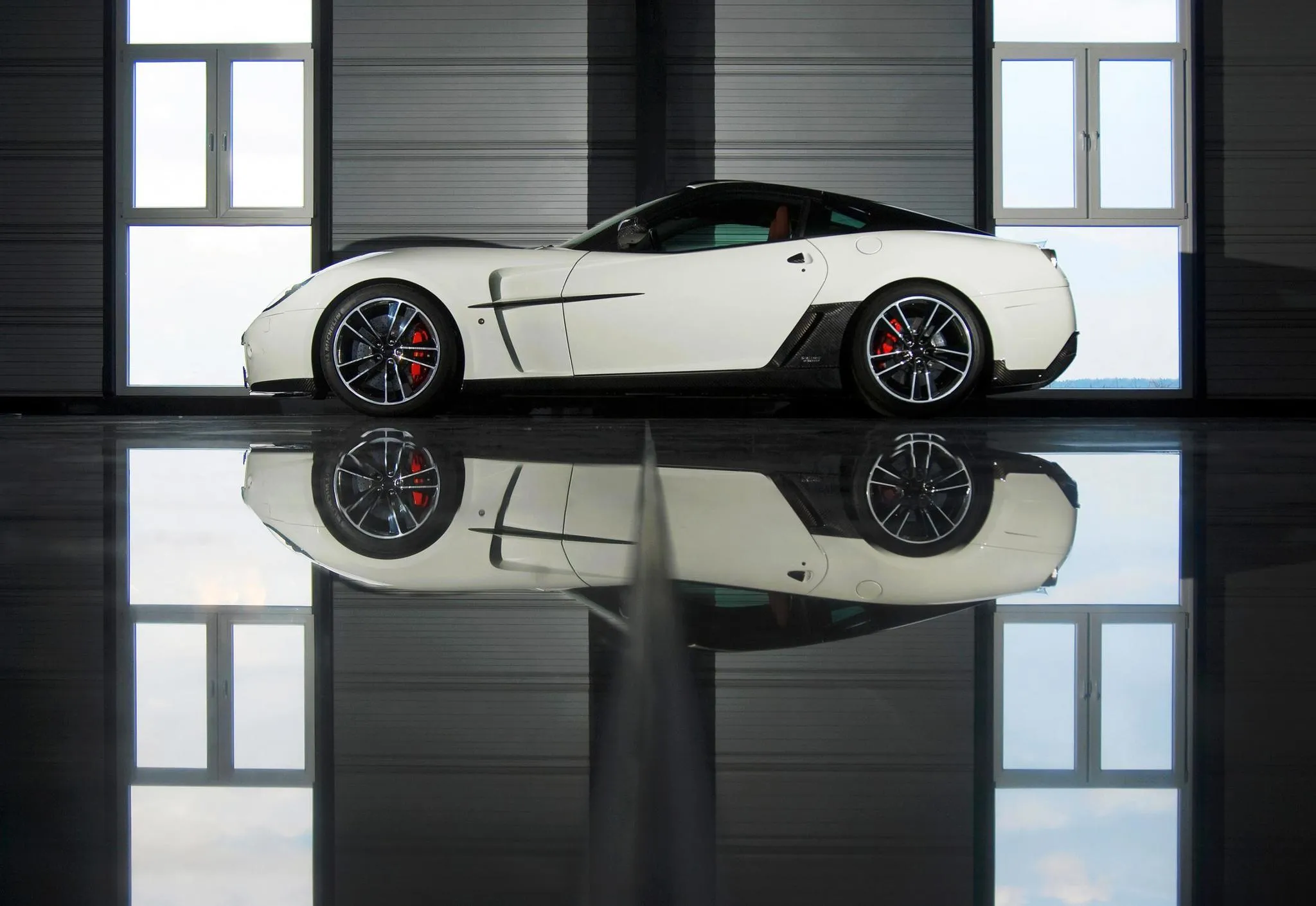
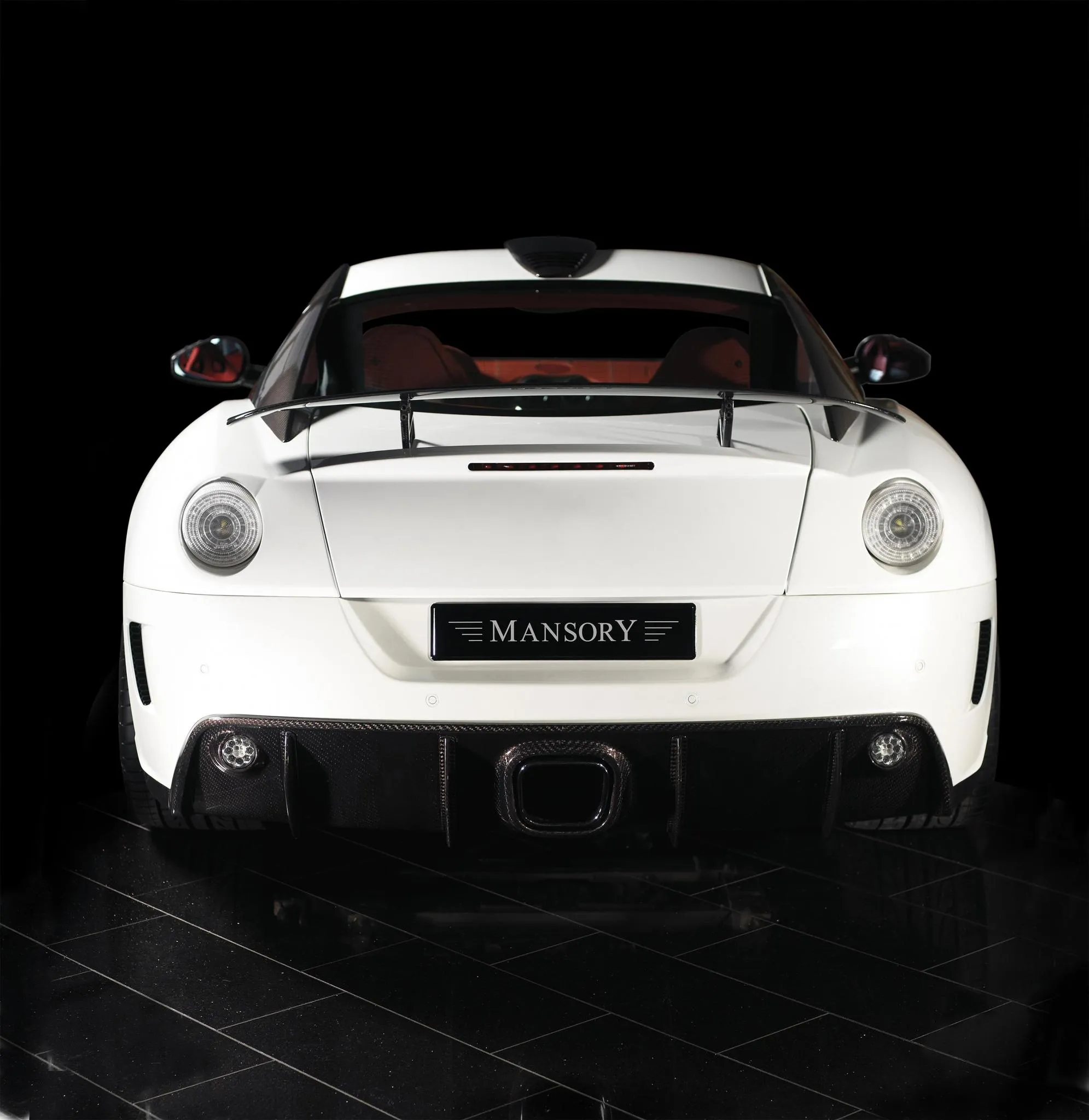
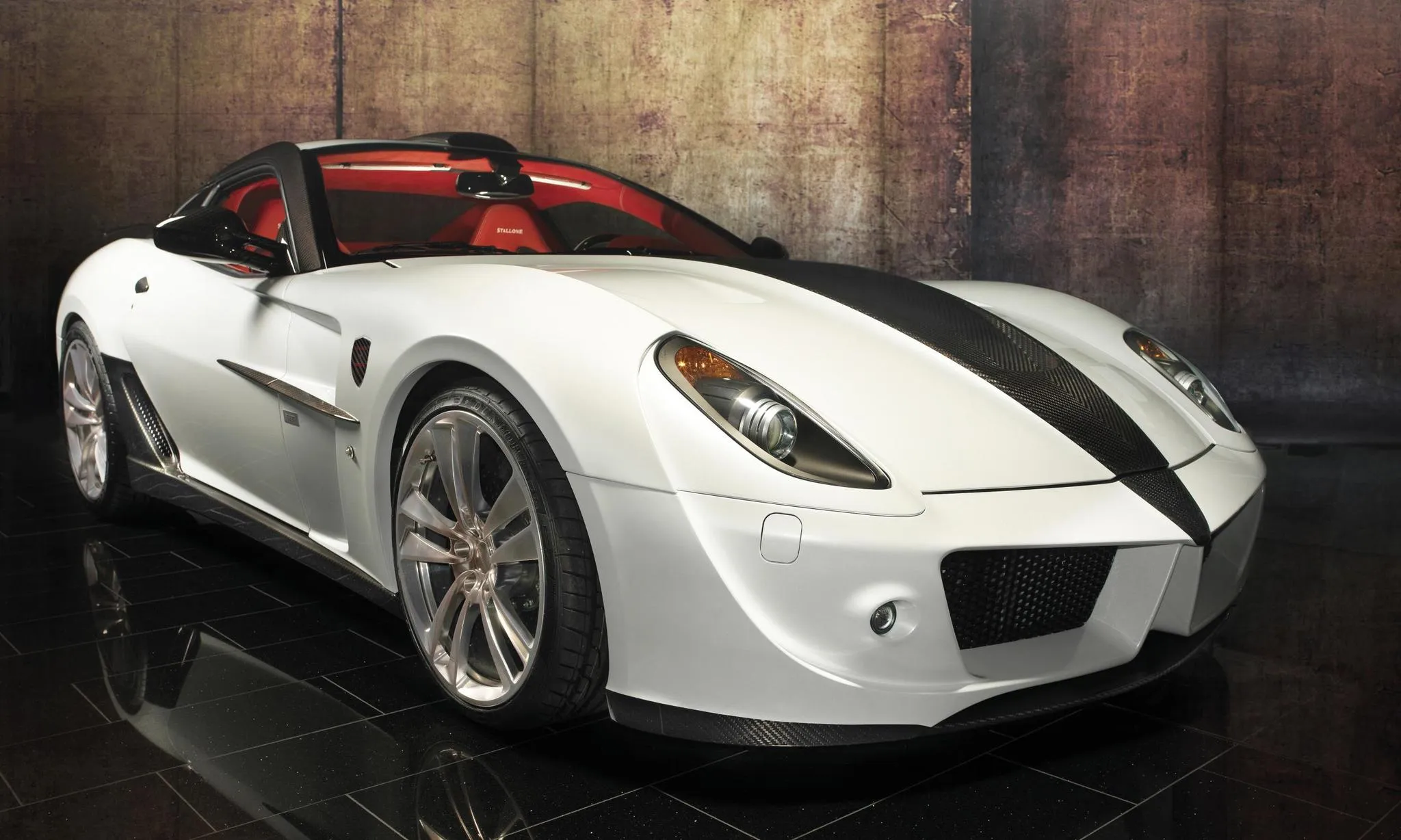
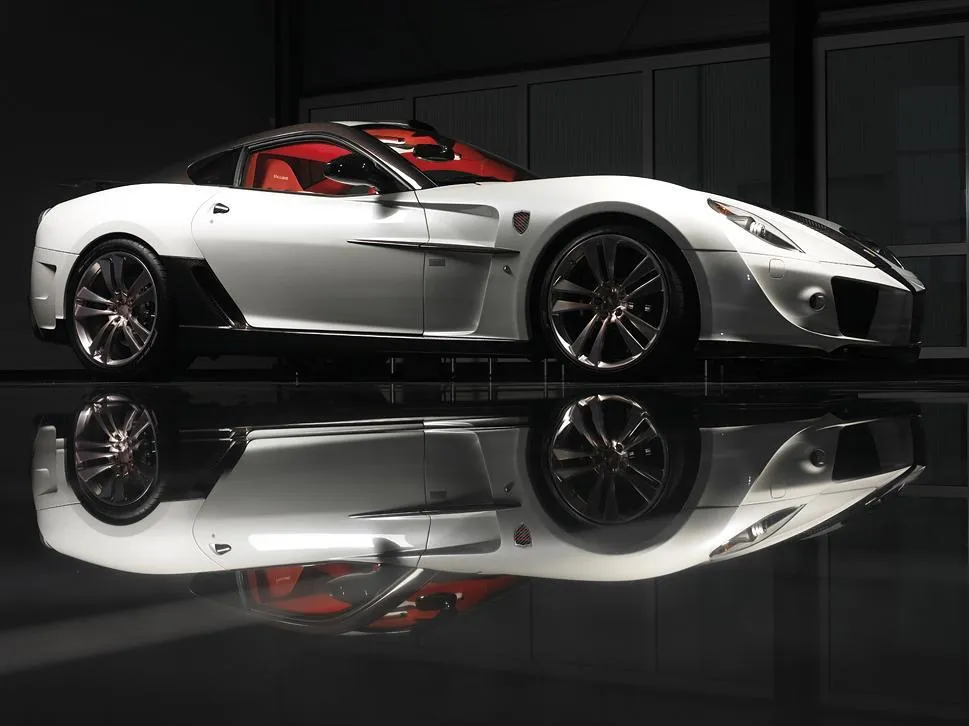
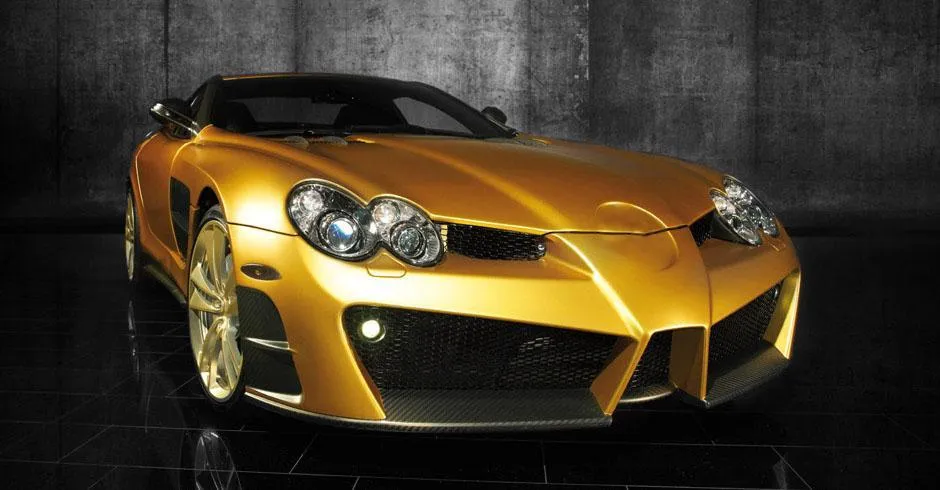
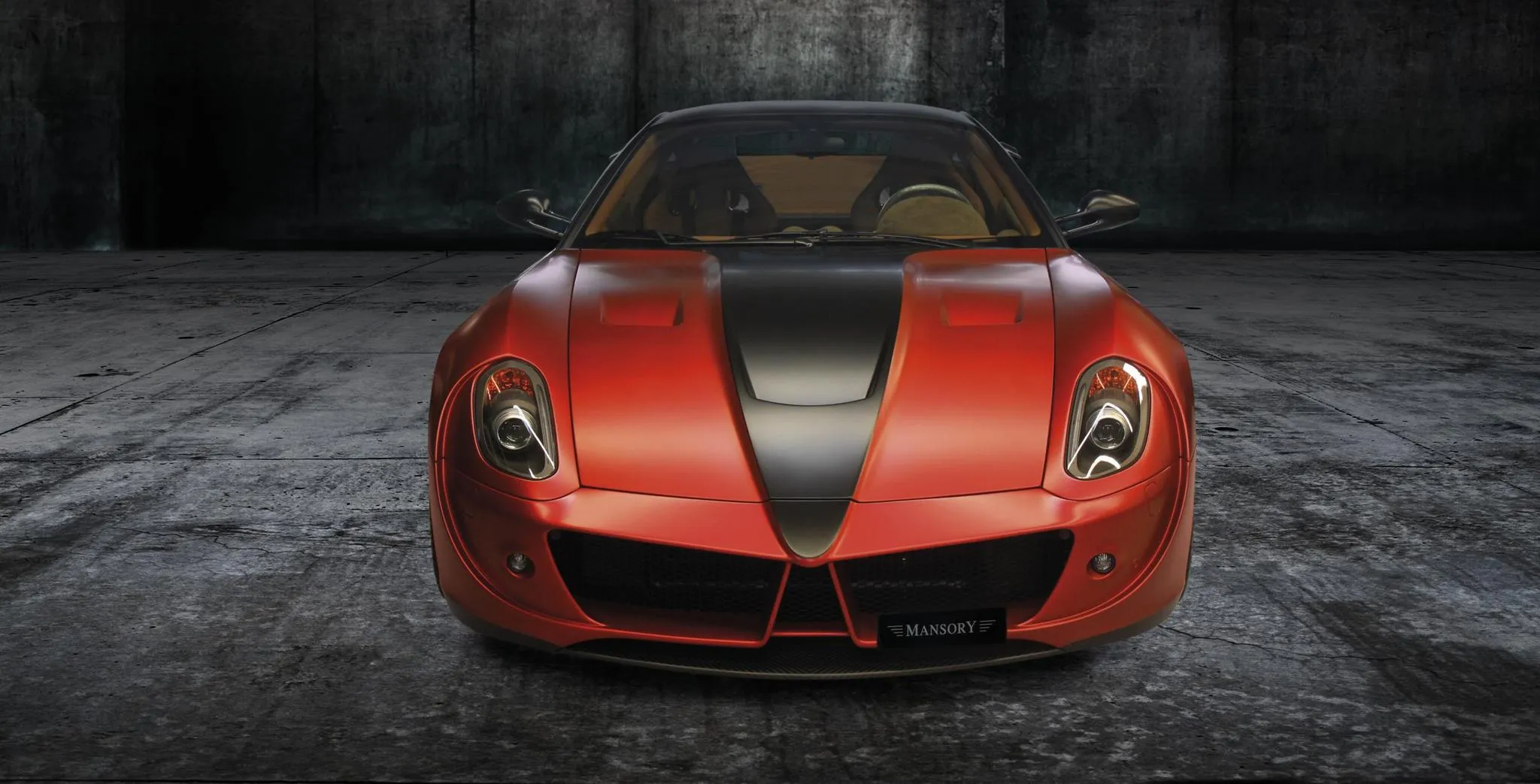
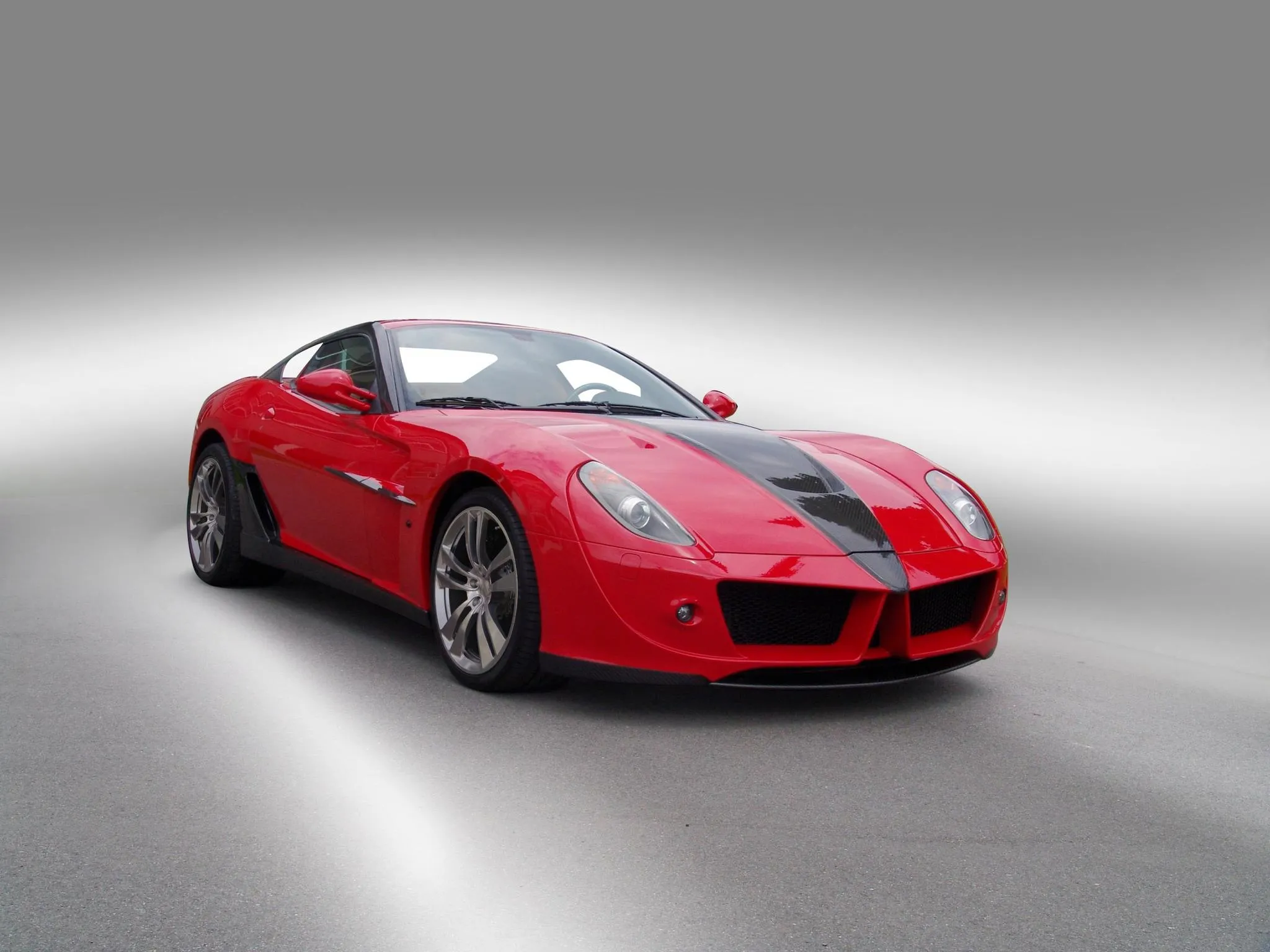
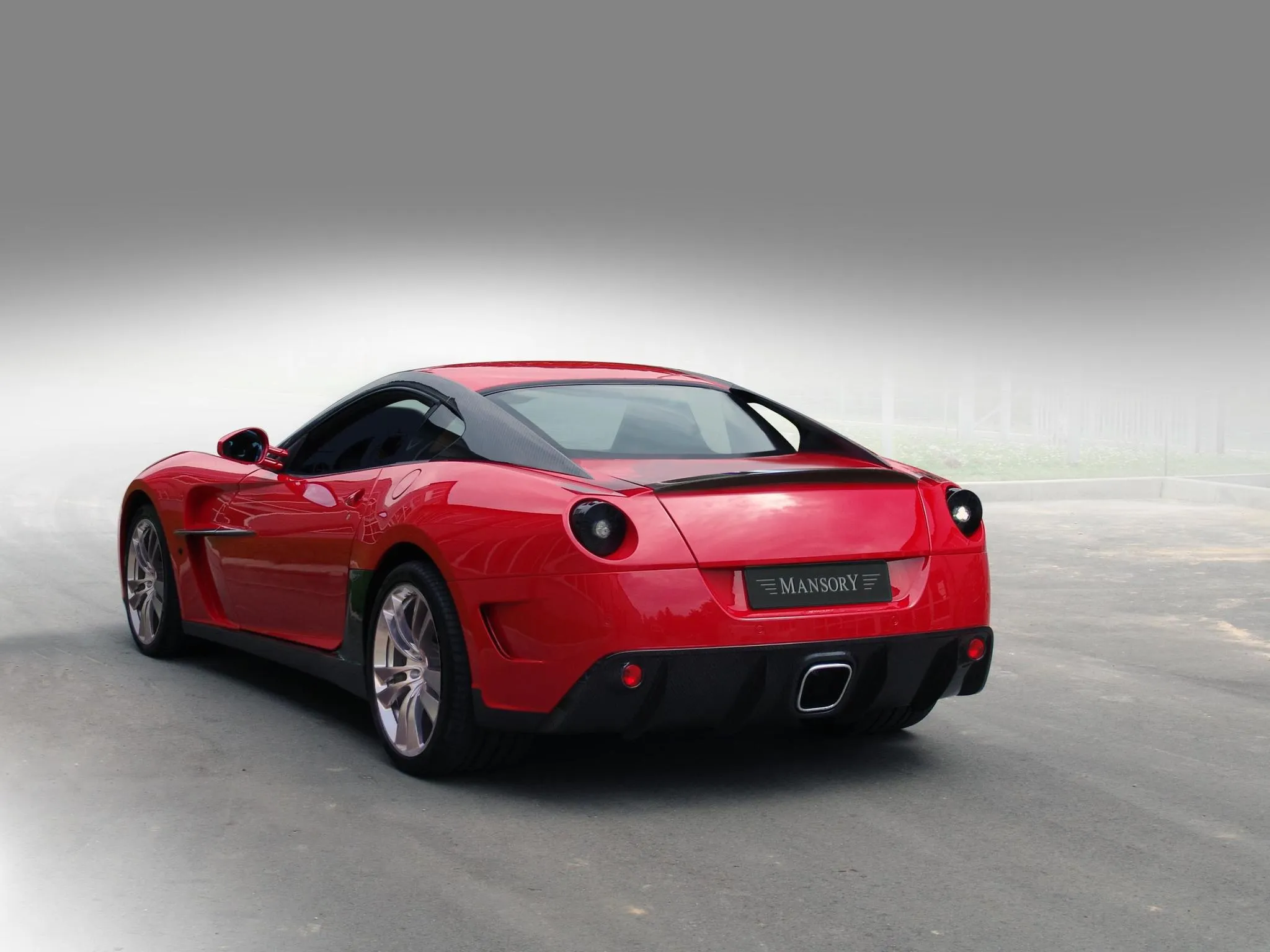
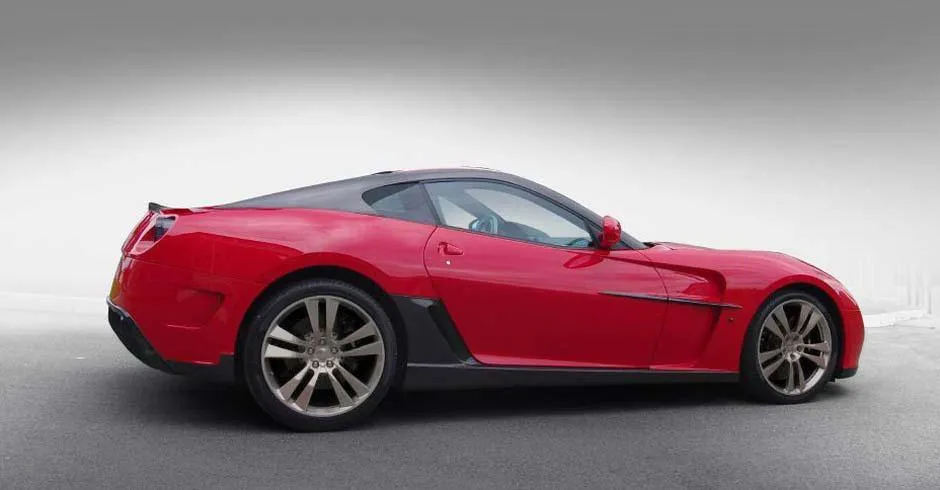
Mansory Carbon Fiber Body kit set for Ferrari 599 GTB Stallone


MANSORY STALLONE — Carbon-Fibre Body-Kit Programme for the FERRARI 599 GTB FIORANO, the Bridge Between the 575M Maranello and the F12 Berlinetta and the Last NA V12 Front-Engined Ferrari GT of Its Kind
The Ferrari 599 GTB Fiorano is a car caught in a peculiar historical moment. When it launched in 2006 it replaced the 575M Maranello as Ferrari's two-seat front-engined V12 flagship GT; when it was retired in 2012 it handed that same role to the F12 Berlinetta. Between those two sits a car the collector market has never quite decided what to do with — too modern for the Daytona-era analogue faithful, too old for the F12 generation that expects dual-clutch gearboxes and cylinder deactivation. Mansory launched the Stallone programme in 2007 and has maintained it as an active commission line ever since. Our reading, after fifteen years of watching the 599 market settle, is that Stallone was the kit for owners who decided early that the 599 was its own thing, not a transitional car, and who wanted to claim that in-between era as territory rather than apologise for it.
Stallone — what Mansory built on the 599
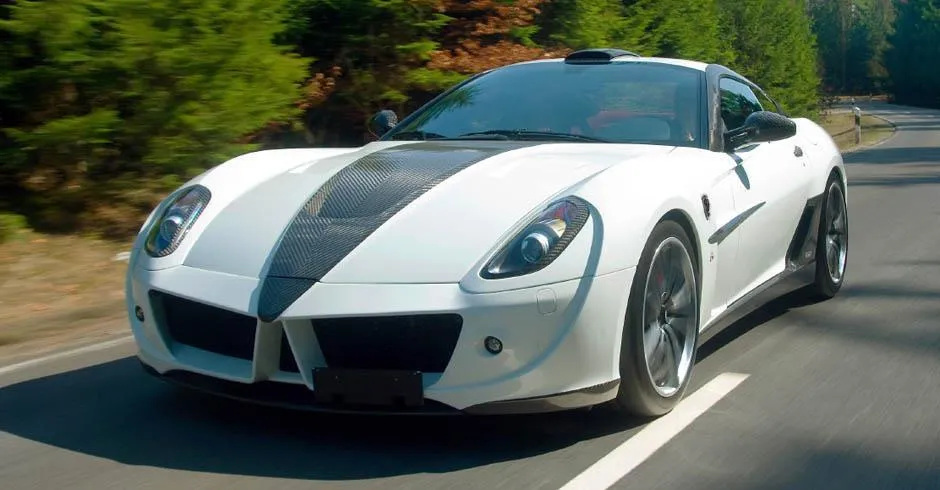
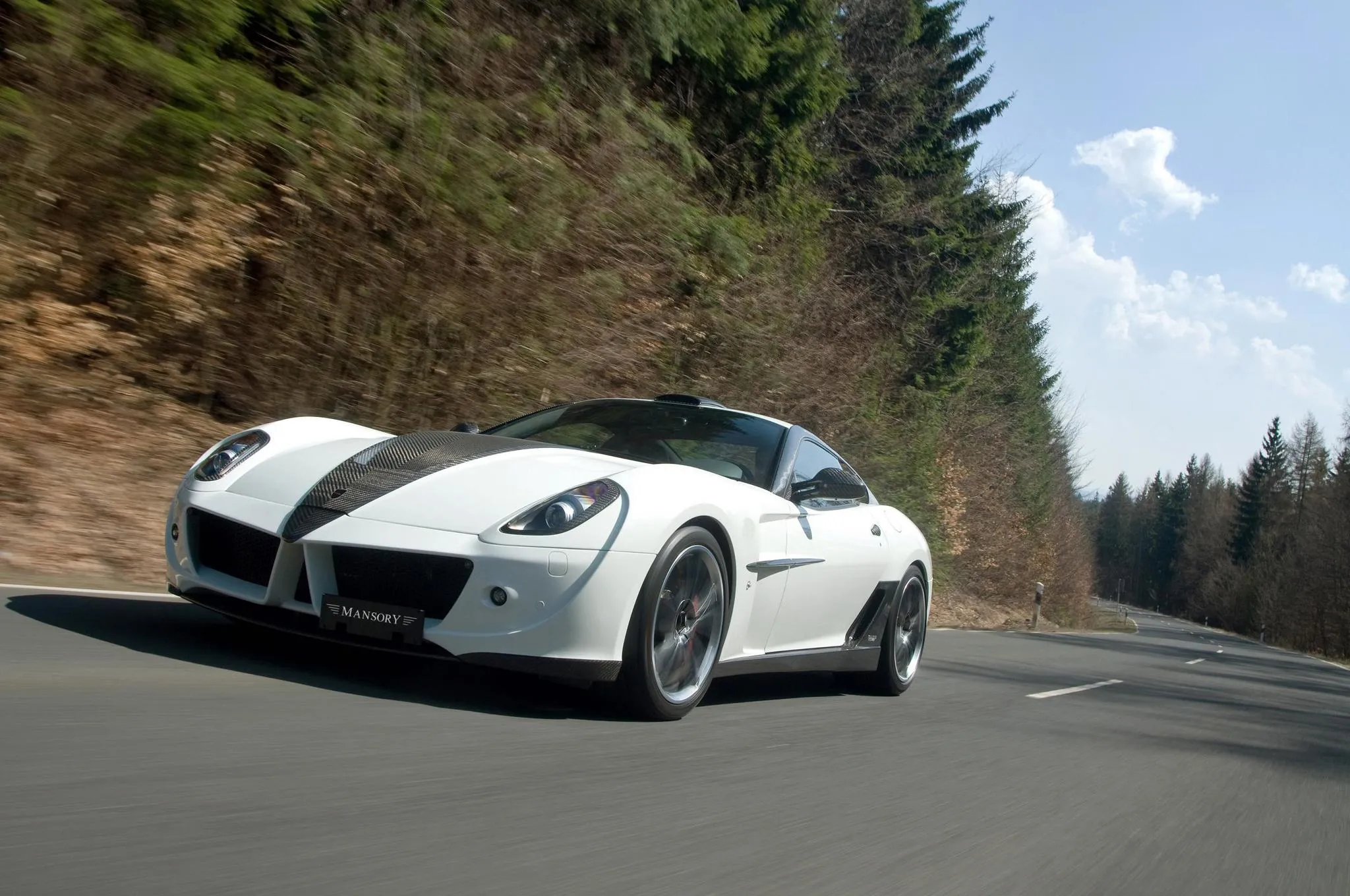
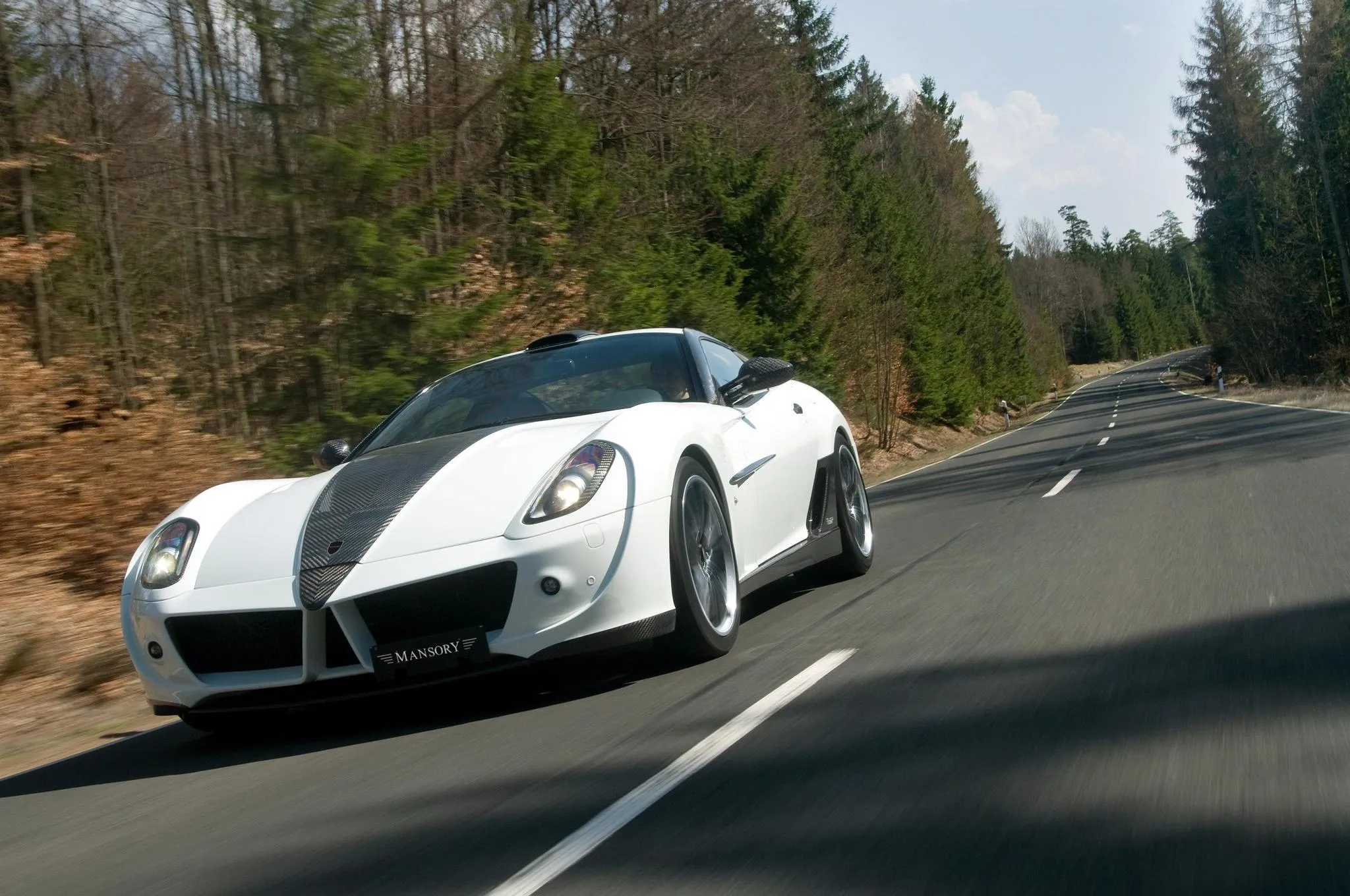
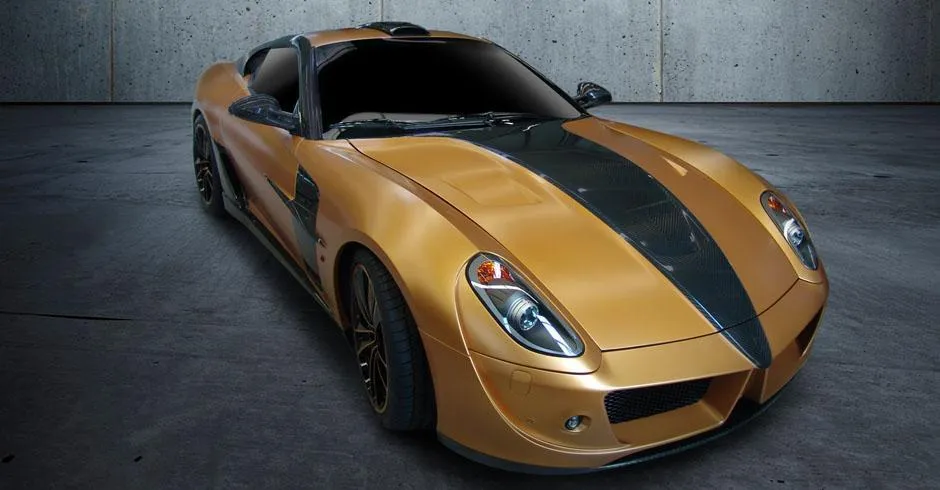
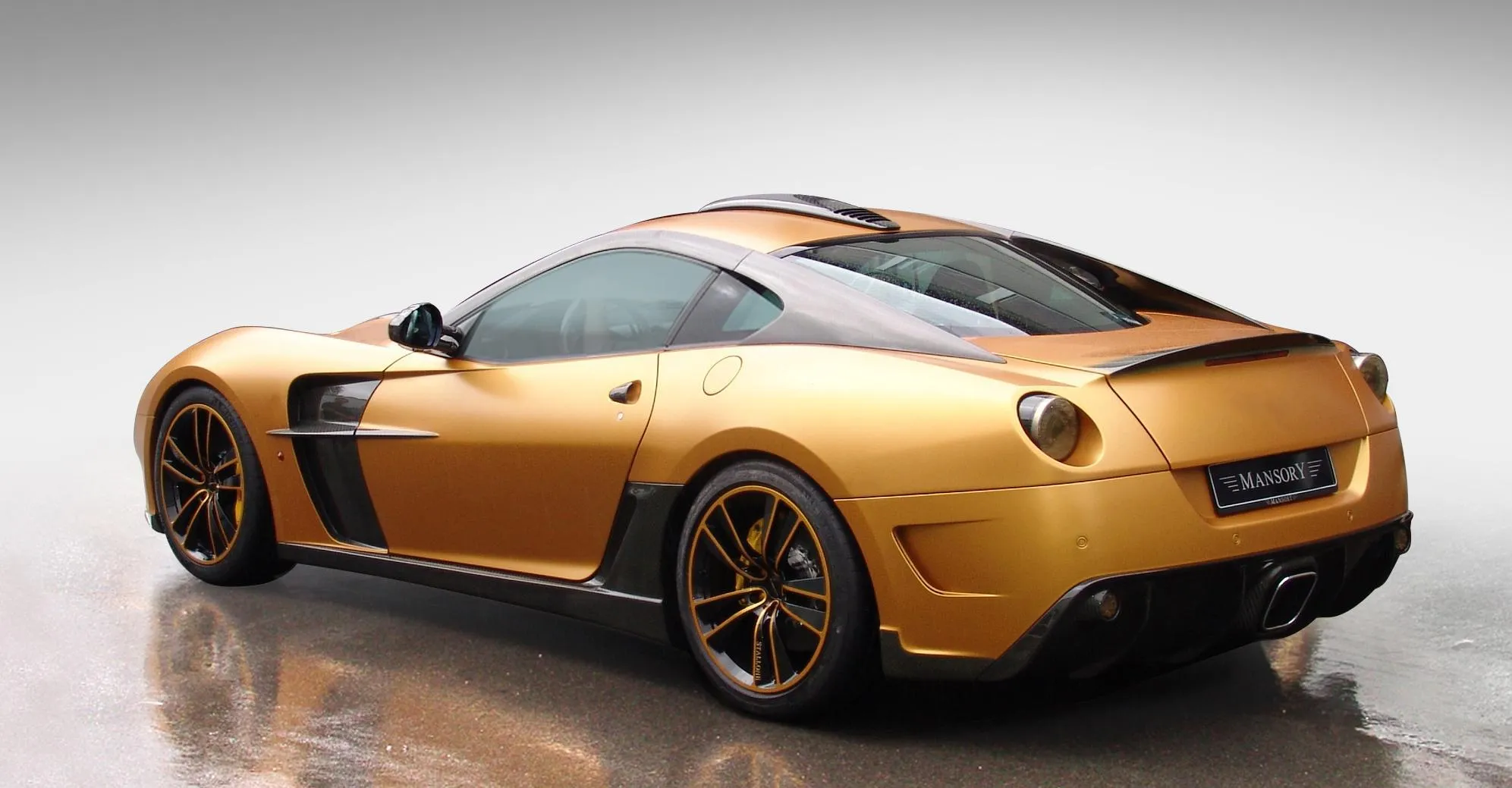
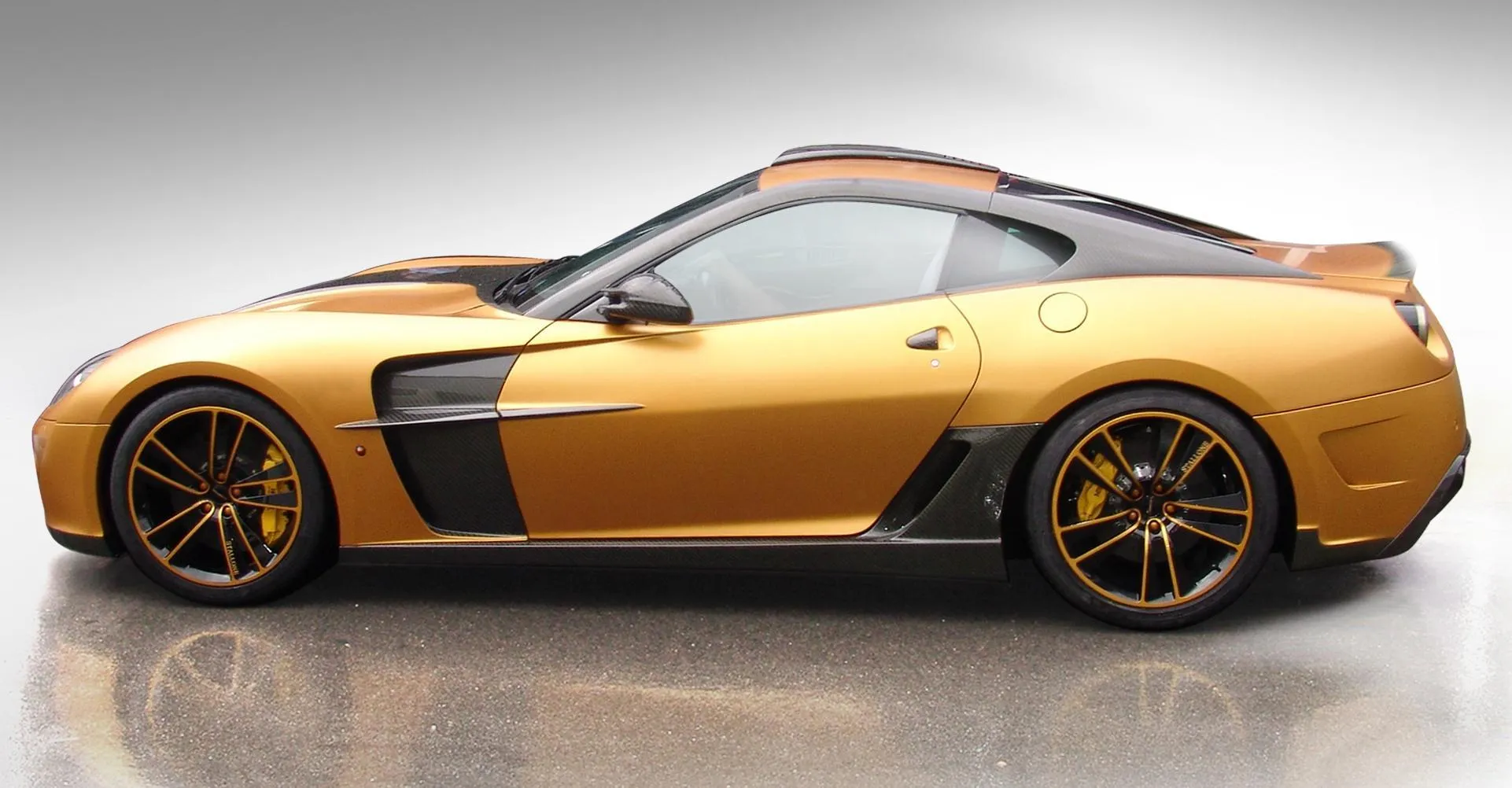
Stallone takes the 599 GTB's long-bonnet front-mid-engined proportions — 4 665 mm length, 2 750 mm wheelbase, 1 336 mm height — and widens them without losing the Pininfarina GT silhouette. The carbon replaces the aluminium superformed body panels in the visible skin positions; the Aluminium Spaceframe chassis shared with the 612 Scaglietti is left untouched, as is the transaxle layout. The result reads as more aggressive from three-quarter-rear (where the 599 is arguably at its most elegant) but keeps the softer GT-biased nose Pininfarina drew for Luca di Montezemolo's brief. Stallone is not the 599 reinterpreted as a track car — it is the 599 turned up one notch, with the F140 V12 left to sing.
F140 6.0 V12 NA — the engine that demands respect
The 599's drivetrain is the whole argument for the car, and it is what makes the Stallone programme feel different in character to every other Mansory front-engined Ferrari commission. The F140 6.0 L naturally aspirated 65° V12, derived directly from the Enzo's F140B, produces 620 hp at 7 600 rpm and 608 Nm at 5 600 rpm — this is the same engine family that went on to power the LaFerrari and the F12, and in the 599 it runs an extraordinarily long intake manifold tuned for the long-bonnet packaging. 0-100 km/h is 3.7 s, top speed 330 km/h. What is not in the numbers is the linearity: the 599 F140 pulls without any turbo inflection point, without any cylinder-deactivation seam, without any electric-motor top-up. It is the last Ferrari V12 GT before the F12 Berlinetta (which kept the NA V12 but in a substantially different character) and the direct ancestor of the 812 Superfast. Mansory's carbon programme is sized specifically around the cooling and intake demands of this engine — the front bumper and bonnet louvres feed the V12's twin radiators, not a turbo intercooler, and the proportions respect that.
Carbon kit composition
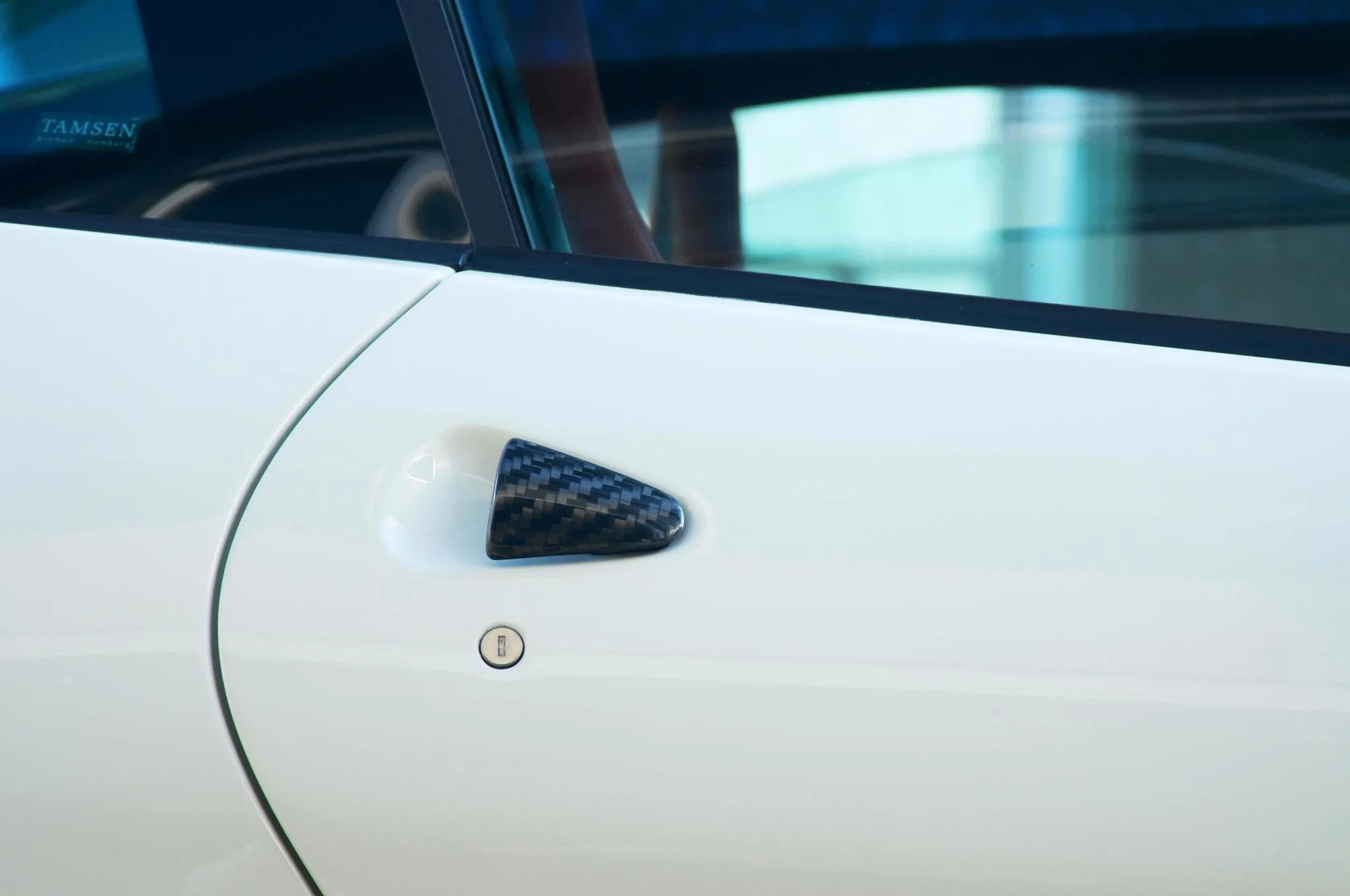
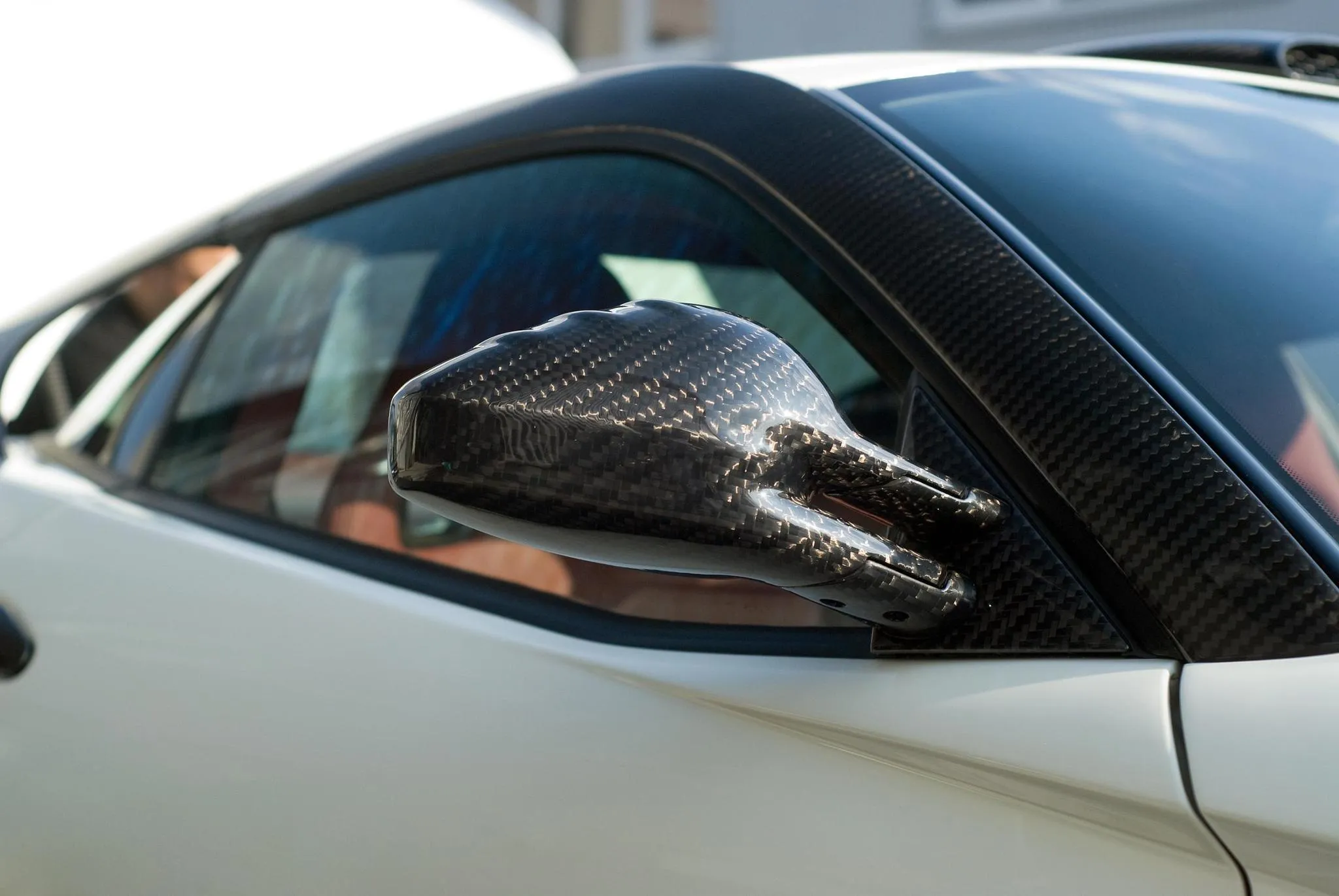
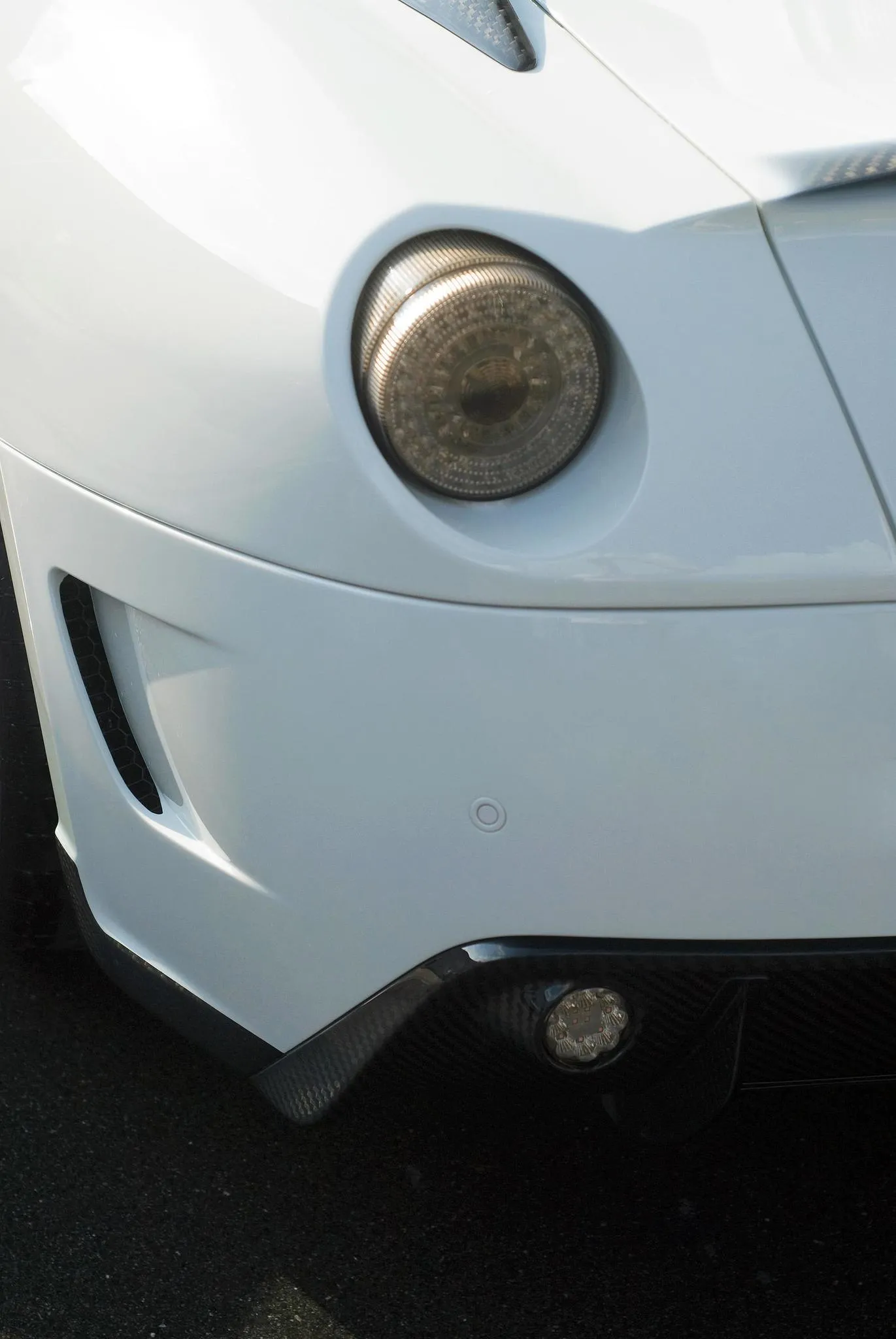
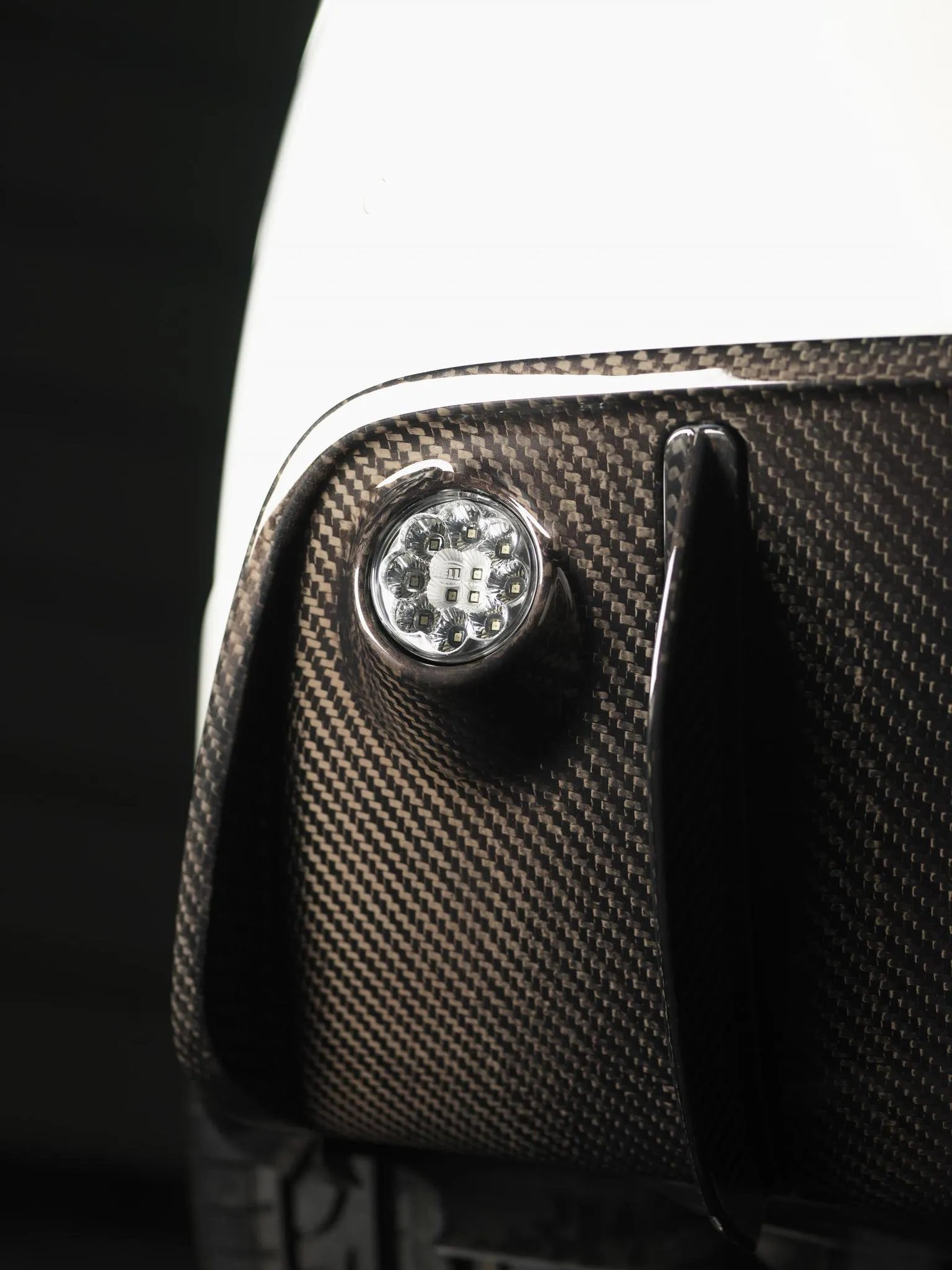
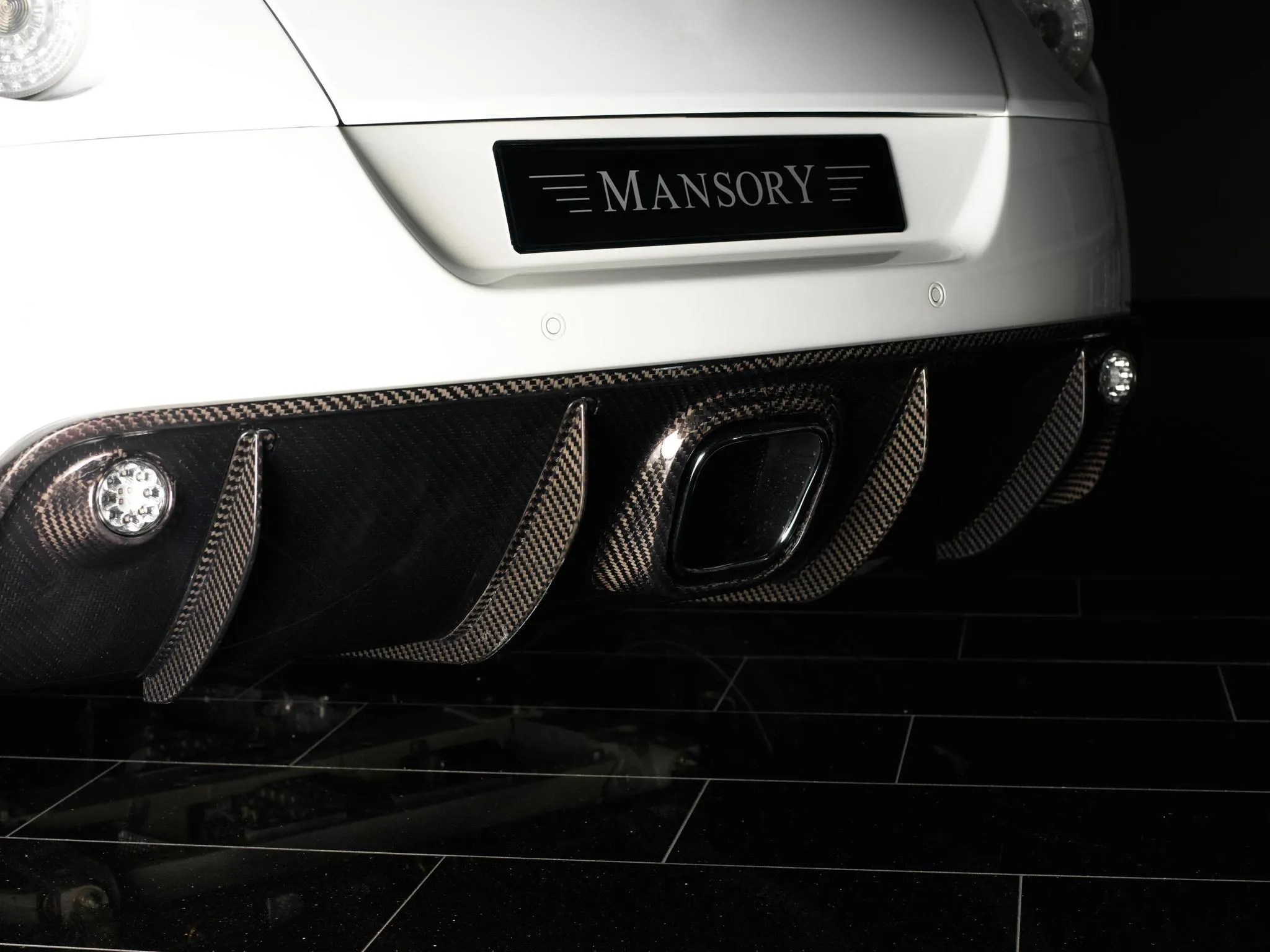
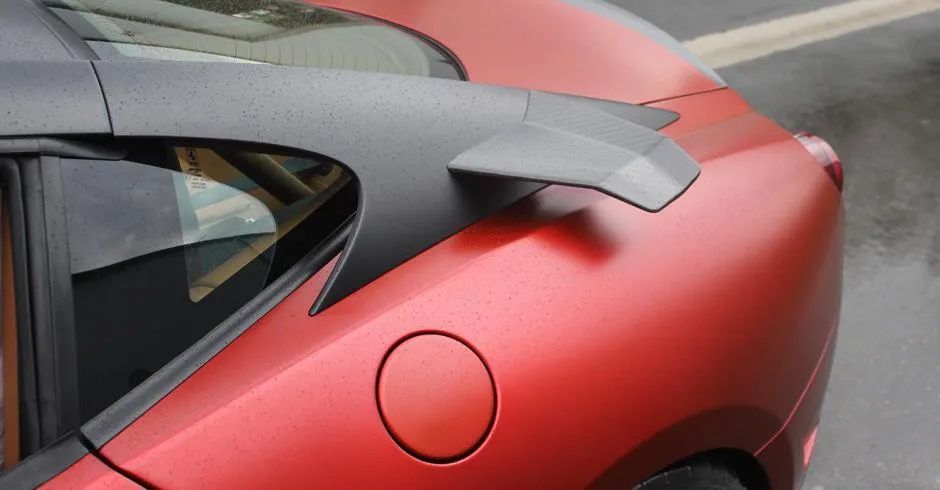
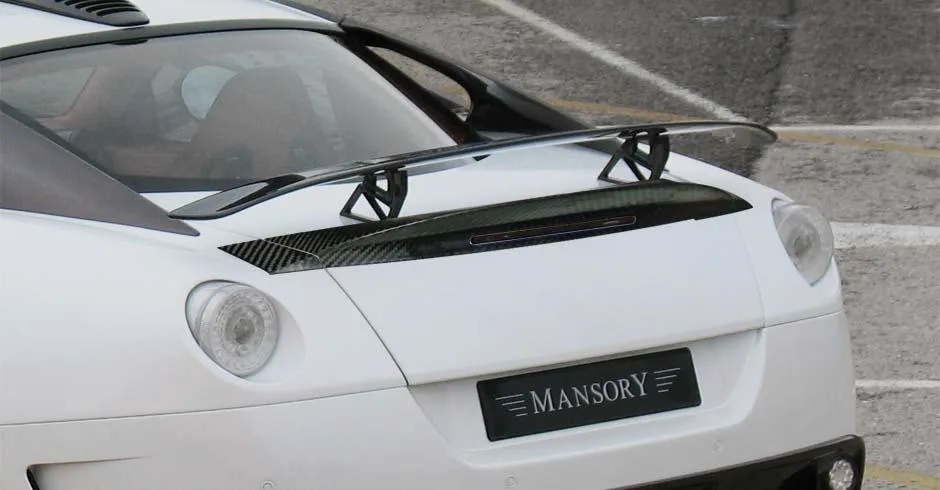
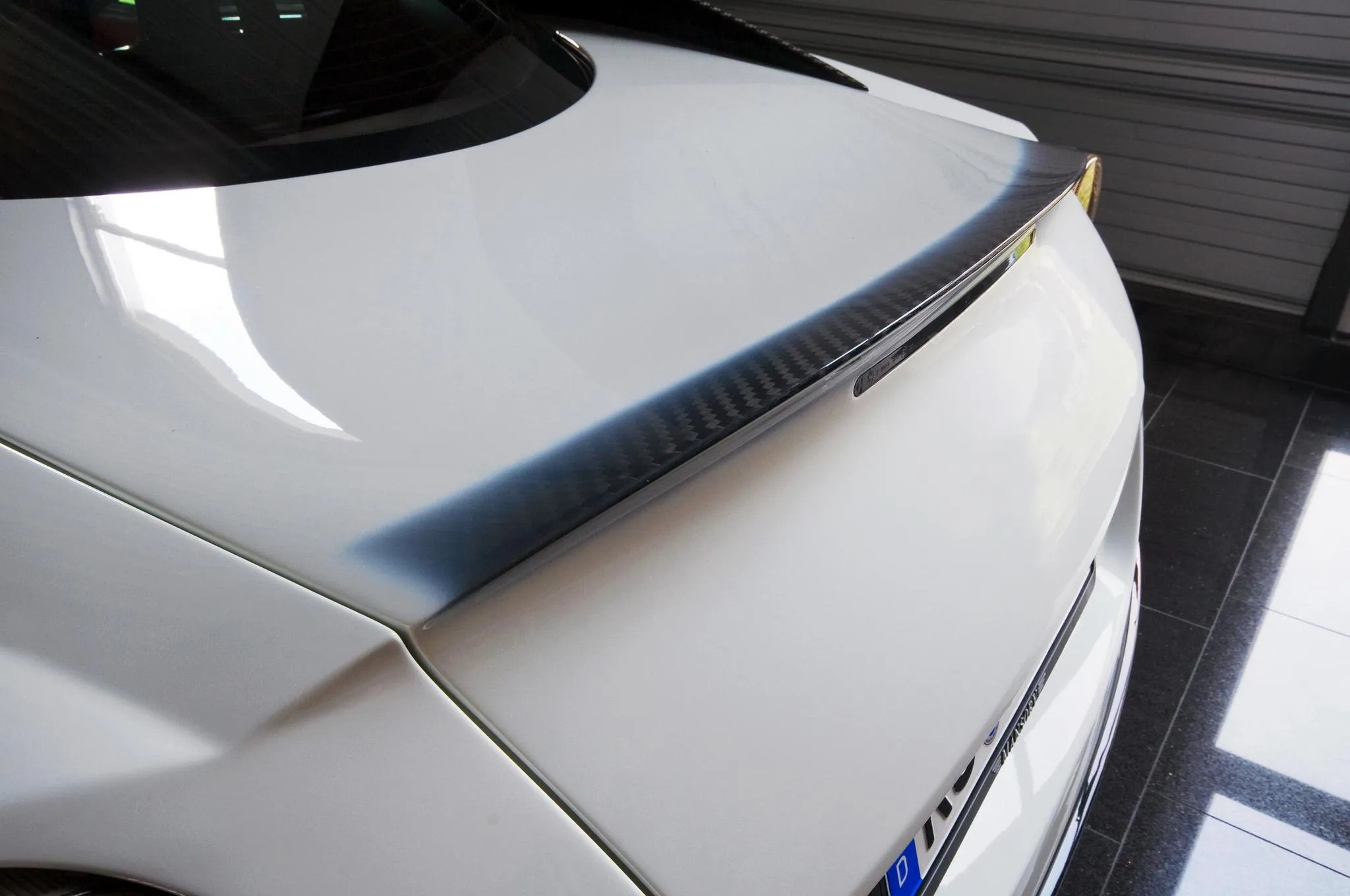
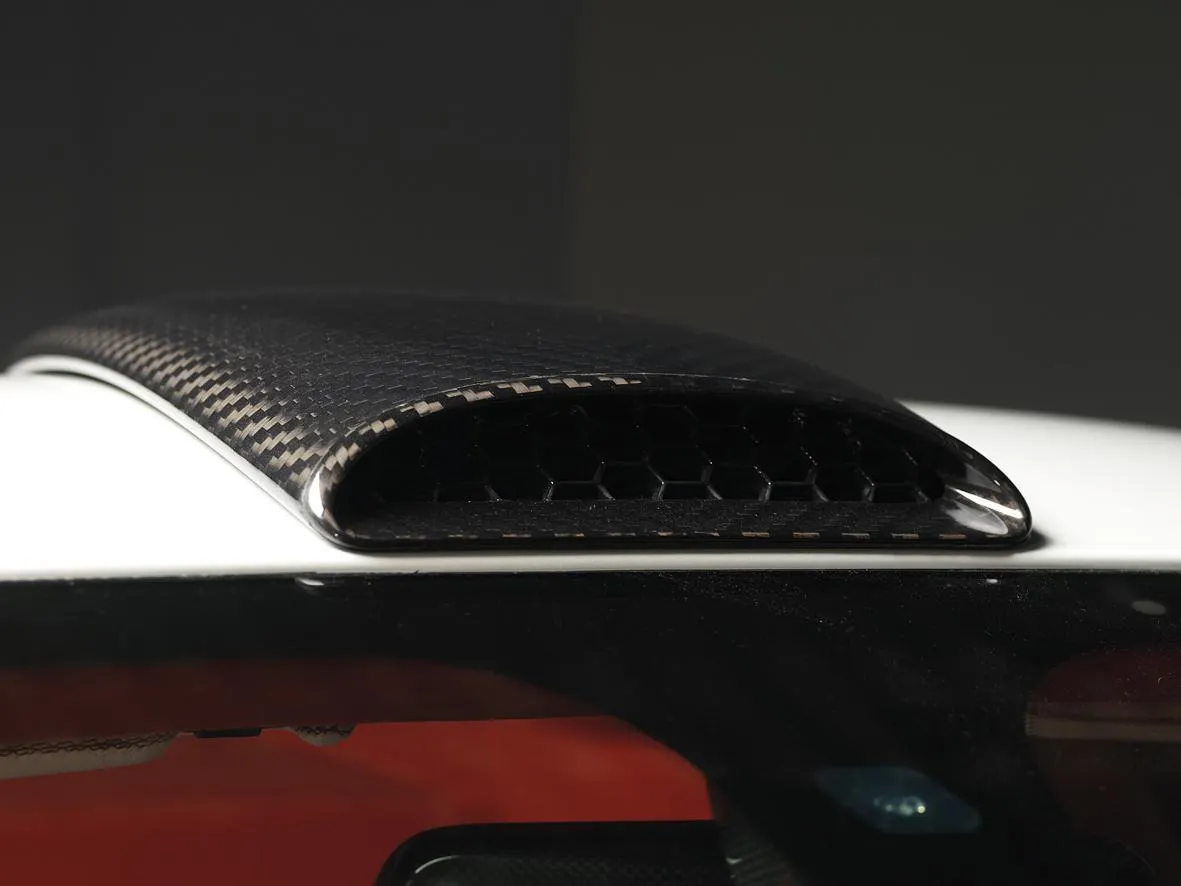
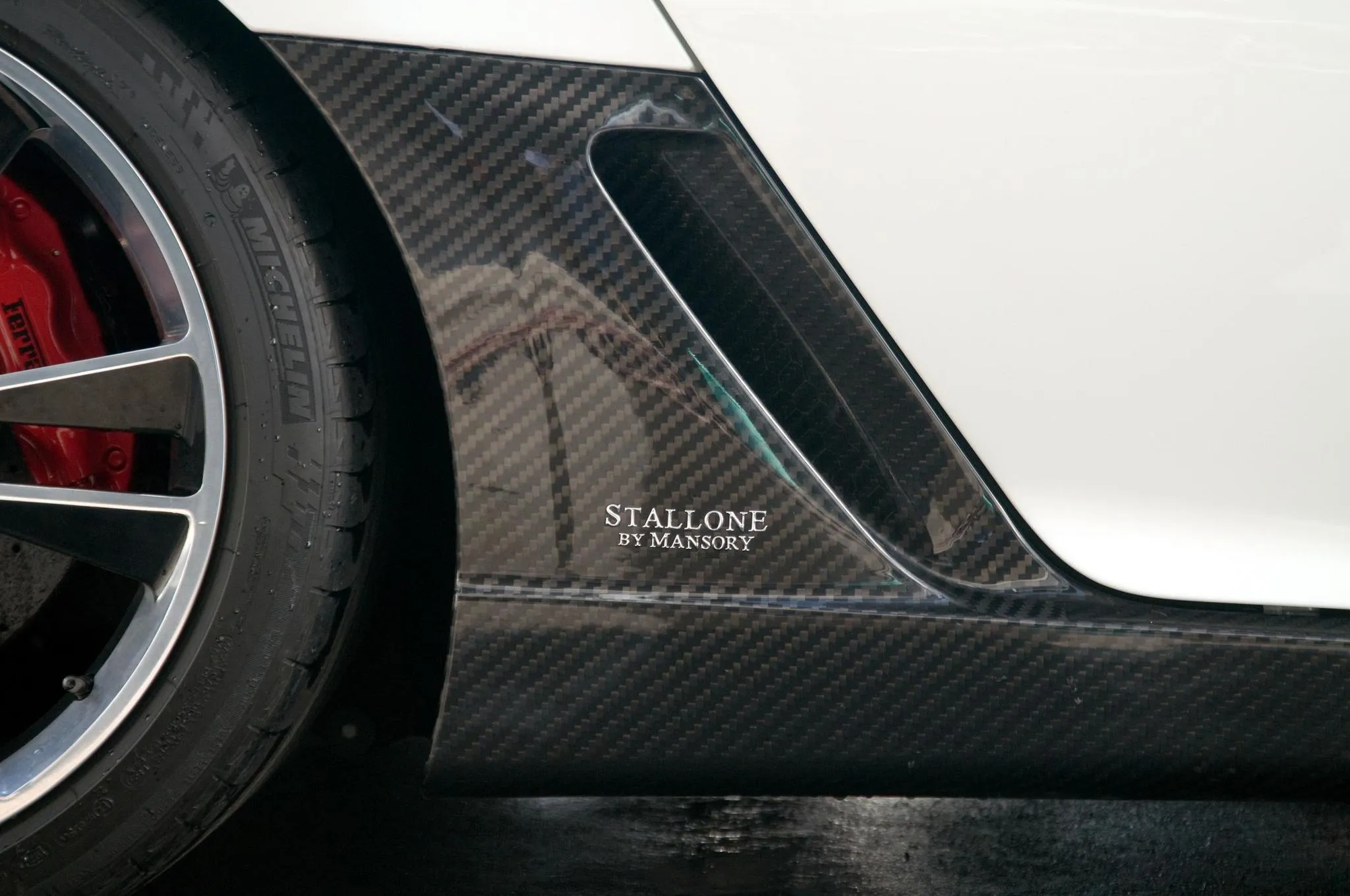
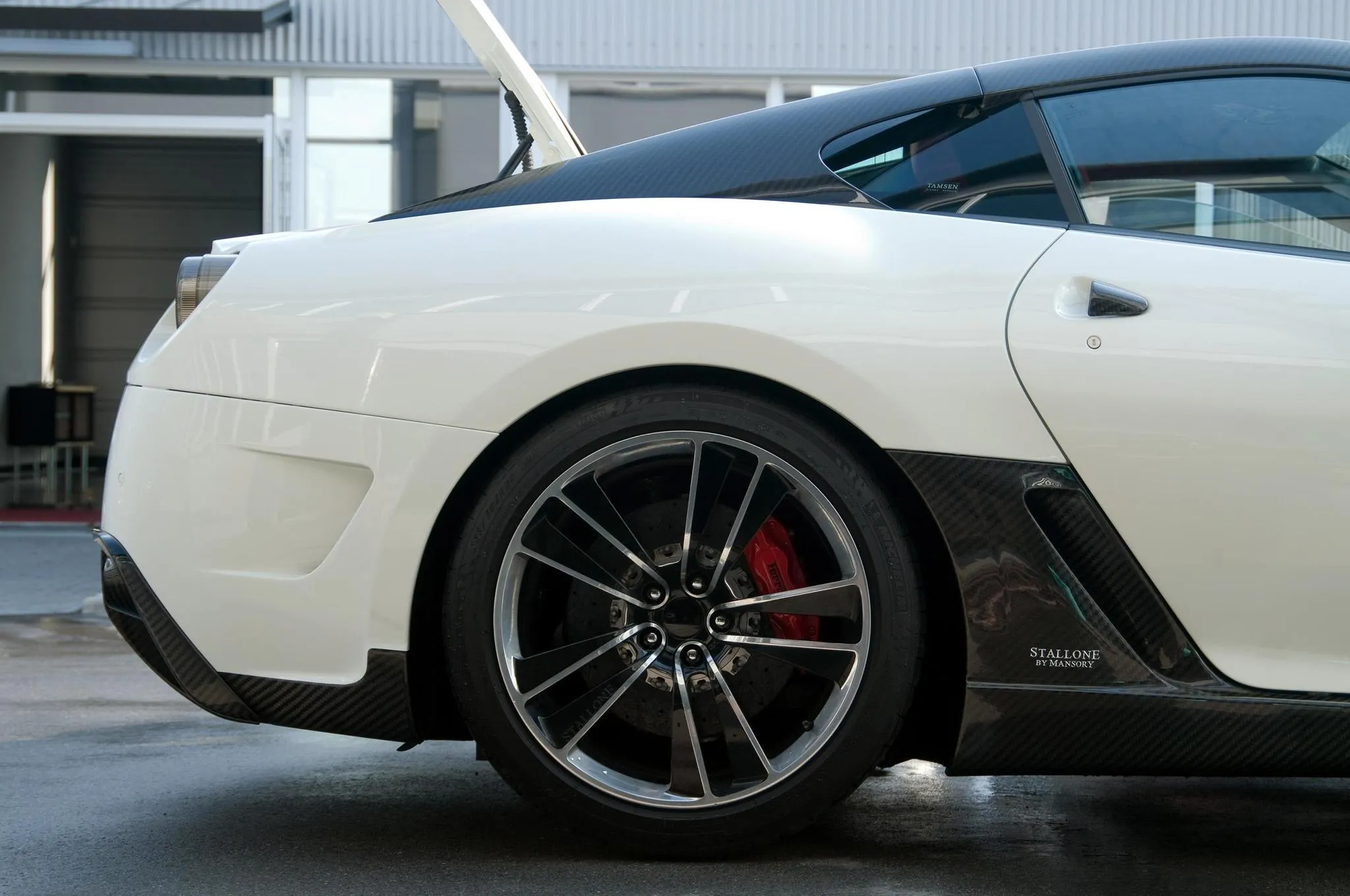
Stallone kit schedule: carbon front spoiler with deeper chin splitter and reshaped lower intakes feeding the F140's front-mounted cooling pack; carbon engine bonnet with central heat-extractor louvres sized for NA V12 under-bonnet temperatures; carbon front fender set widening the track and adding functional hot-air outlets behind the front wheel arches; carbon side skirts shaped to the 599's low door-sill line; carbon rear fender set matched to the 21" rear wheel fitment; carbon rear apron with integrated diffuser opening up the under-floor airflow and re-routing the exhaust bezels; carbon rear spoiler; complete carbon trunk lid; carbon A-pillar, C-pillar and S-pillar trims (the 599 uses a three-pillar greenhouse that Mansory treats as a continuous carbon spine); carbon mirror housings; carbon air scoop for the bonnet intake; carbon headlight surrounds, windscreen cover trim, rear-light surrounds and indicator-light bezels; carbon door handles. This is one of the more complete Mansory Ferrari front-engined programmes — the 599's long body simply has more surface area to treat than a mid-engined 458 or 488.
Wheels — split-rim FM forged for the 599
Factory 599 GTB fitment: 19" front / 20" rear. Mansory Stallone fitment: FM split-rim five-spoke forged, 20" front / 21" rear staggered. Tyre fitment: 255/30 R20 front + 315/25 R21 rear. The FM pattern is Mansory's classical split-rim design with a visible centre-bolted outer rim — chosen because the 599's long-bonnet GT proportions pair better with a traditional split-rim than with a modern monoblock deep-concave wheel, and a five-spoke with a visible outer ring echoes the front-engined V12 Ferrari wheel language that runs from the Daytona through the 550 Maranello. Finishes: polished outer with painted centre (body-colour, matte-black, gunmetal or Rosso Corsa), full matte-black, or full polished. Prancing Horse caps available as a separate commission. Catalogue: hodoor.world/collection/forgedwheels.
F1 SuperFast vs HGTE Handling Pack — which donor for the kit
The 599 was offered in three meaningful configurations for the purposes of kit fitment. The base 599 GTB with the 6-speed F1 SuperFast single-clutch automated manual is the most common donor and the configuration Mansory originally engineered Stallone around. The HGTE Handling Pack, introduced for the 2008 model year, lowered the car by 10 mm, stiffened the dampers and anti-roll bars, added a sports exhaust and revised the steering rack — Stallone fits HGTE-pack cars without modification; the front spoiler clears the HGTE-lowered ride height because Mansory sized it to that geometry from the second year of the programme. The 6-speed manual (offered briefly on approximately 30 cars and one of the rarest modern Ferraris) is drivetrain-transparent to the kit; the gearbox change does not affect body fitment. Our recommendation for commission: an HGTE-pack GTB is the sweet spot — it has the revised dampers and the sports exhaust that Stallone's rear diffuser was shaped around, without the 599 GTO's lightweight body components that complicate fender bonding.
Stallone clientele today
Switzerland — Swiss 599 owners tend to be second-owner collectors who bought their cars in the 2015-2019 depreciation window and now commission Stallone as a deliberate step away from the factory-stock collector orthodoxy. Our Swiss programme notes cover TÜV-equivalent documentation and local registration.
Hong Kong — Hong Kong is a mature Stallone market where the 599 has been consistently visible at weekend gatherings in the New Territories since the late 2000s; the kit reads as established rather than disruptive there. Our Hong Kong programme notes cover Transport Department type-approval and RHD fitment details.
United Arab Emirates — UAE commissions are typically run on cars that have already passed through a first-owner phase, often with the Stallone kit specified as part of a wider re-commissioning that includes full repaint and interior retrim. The 599's NA V12 and the UAE's fuel economics get on particularly well, and Stallone remains a live commission line for Emirati clients.
United States — US clients commission Stallone primarily on cars that are already in US federalised condition — the kit is not itself an FMVSS/EPA concern, but the 599 as a platform requires the underlying car to be US-spec or show-or-display registered. We do not currently publish a United States country-specific slug on hodoor.world (most US logistics is handled through individual commission correspondence rather than a page-level landing route), and we expect to add one as the US Stallone commission base grows.
Commission
Commission requires: 599 GTB VIN (pre-2008 / 2008+ / GTO / SA Aperta clearly specified), HGTE Handling Pack confirmation, gearbox variant (F1 SuperFast vs 6-speed manual), current paint and interior trim codes, carbon scope, FM wheel colour specification, optional interior retrim, destination country. Typical lead times: 12-14 weeks carbon, 8-10 weeks wheels, 2 weeks installation at a Ferrari-experienced workshop, +3 weeks interior retrim. Full Stallone commission typically lands in the four-month window. Contact: [email protected] or +44 7488 818747 (WhatsApp).
Ferrari 599 Gtb kit — where it actually lands
Most Mansory Ferrari 599 Gtb commissions in 2026 originate from the same set of markets. In the Mediterranean, Turkey, Greece and Cyprus are recurring destinations for this Ferrari 599 Gtb programme. In Asia, the kit is most often commissioned by collectors based in Japan and mainland China. Western European commissions concentrate in Luxembourg and the Netherlands, with periodic single-build orders out of Monaco. Whichever route applies to your build, transit is insured and customs paperwork is shipped with the crate.
Sibling Mansory builds
Sister builds that share component DNA, fitment philosophy or the same Mansory language are Carbon Fiber Body kit set for Ferrari 296 GTB, Carbon Fiber Body kit set for Ferrari GTC4Lusso / T and Carbon Fiber Body kit set for Ferrari F8 Soft kit. Each is sourced through the same Hodoor channel — pricing logic, shipping windows and warranty terms align.
FAQ — Stallone programme, 599-specific
Will Stallone fit the 599 GTO? Partially. The 599 GTO (2010, 670 hp, ~100 kg lighter than the GTB) uses carbon body panels in some positions from the factory — specifically the bonnet and parts of the rear. Stallone fender extensions, side skirts, front spoiler and rear apron interchange onto a GTO donor, but the Stallone carbon bonnet and trunk lid need to be specified against the GTO-factory carbon geometry rather than the GTB aluminium geometry; this is a separate sub-commission and not a simple swap.
Is the F1 SuperFast single-clutch transaxle longevity a concern for a tuned 599? The F1 SuperFast transaxle clutch is a known wear item on the 599 and is typically service-replaced somewhere between 25 000-40 000 km depending on driving style. Stallone does not increase engine output and therefore does not accelerate clutch wear; however, our recommendation is to have the clutch condition checked before any new commission begins, because a clutch service immediately after a new-paint carbon programme is inconvenient and avoidable.
Does Stallone work with the HGTE Handling Pack? Yes. The Stallone front spoiler and side-skirt geometry were revised for the 2008 model year specifically to clear the HGTE-lowered ride height, and HGTE-pack cars are among the more popular donors for the programme today. The HGTE revised anti-roll bars and dampers remain unchanged by the kit.
US-spec import and registration — is the 599 Stallone a problem? Stallone itself is a cosmetic carbon programme and does not alter any FMVSS or EPA-relevant component on the 599. The underlying 599 must be US-federalised (i.e. originally sold in the US market, or show-or-display registered for non-US examples); the Stallone kit does not change that status in either direction. US clients should expect their local registration office to treat a Stallone-equipped 599 as a modified but compliant vehicle.
What about the 599 SA Aperta or the Alonso Edition? The SA Aperta (2010, limited to 80 units as an open-top 599 GTO homage) is a possible donor but a rare one — the open-top rear deck geometry means the Stallone rear spoiler and trunk lid have to be re-engineered to Aperta geometry as a bespoke sub-commission rather than a catalogue fit. The 599 Alonso Edition (2012 final-run series) interchanges with a standard 2012 GTB for kit purposes.
Does Mansory restore the original front grille or replace it? The Stallone front spoiler is a replacement rather than a supplementary lip — the factory 599 front bumper lower section is unbolted and the Stallone carbon piece takes its place, with the factory grille mesh and Prancing Horse badge migrating across. Upper grille, Ferrari script and badge position are preserved; the lower intake below is Mansory-reshaped. The original bumper is retained.