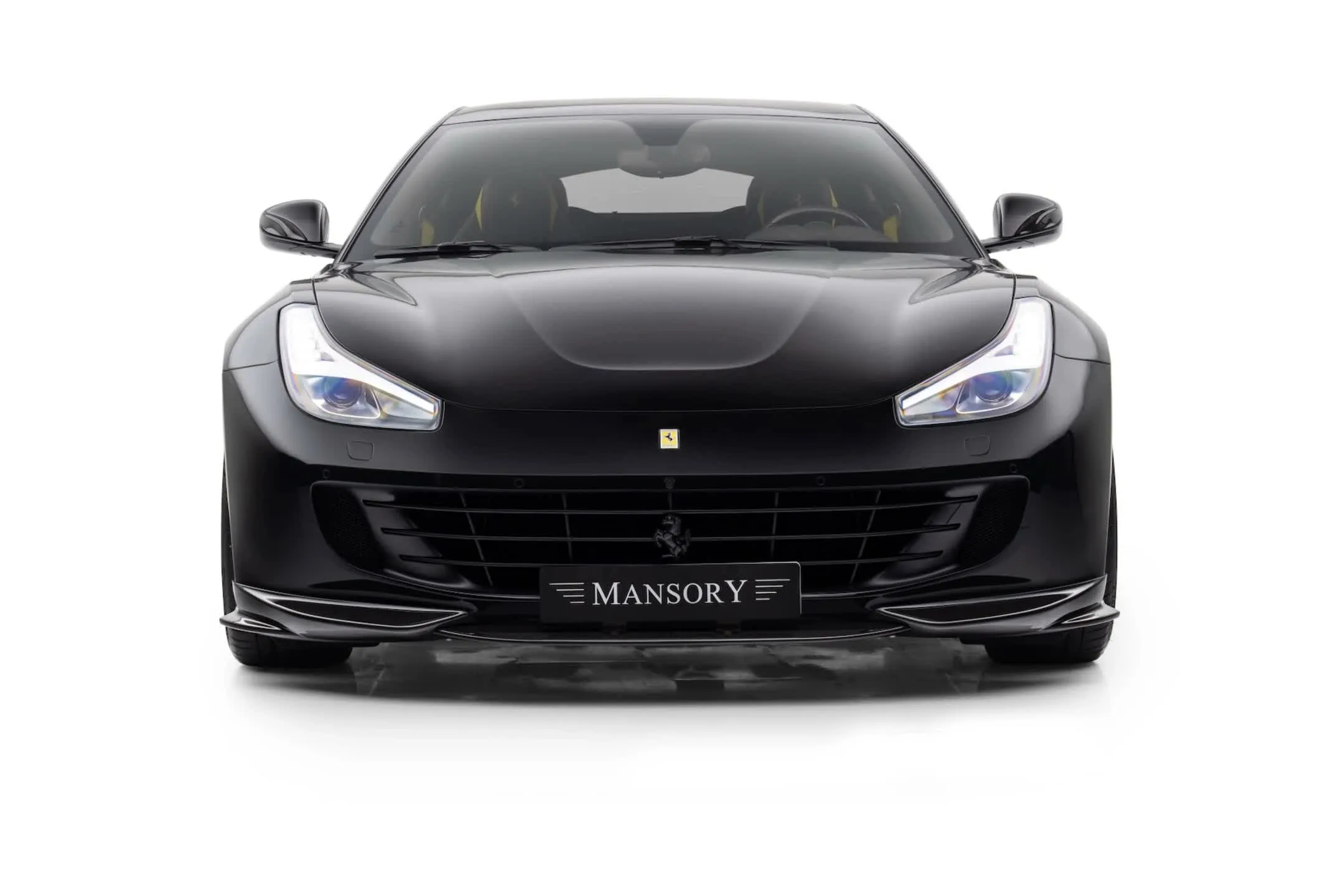
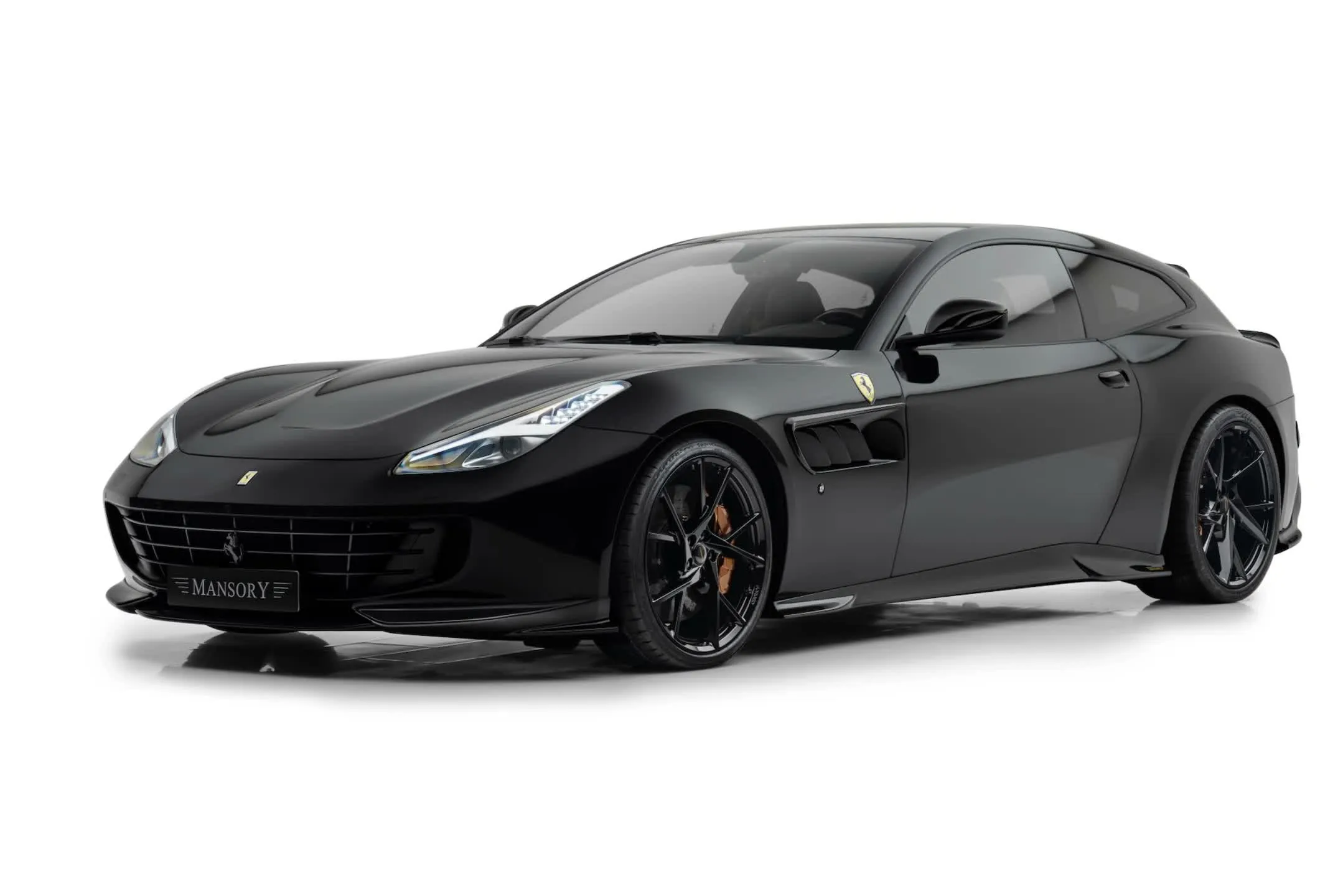
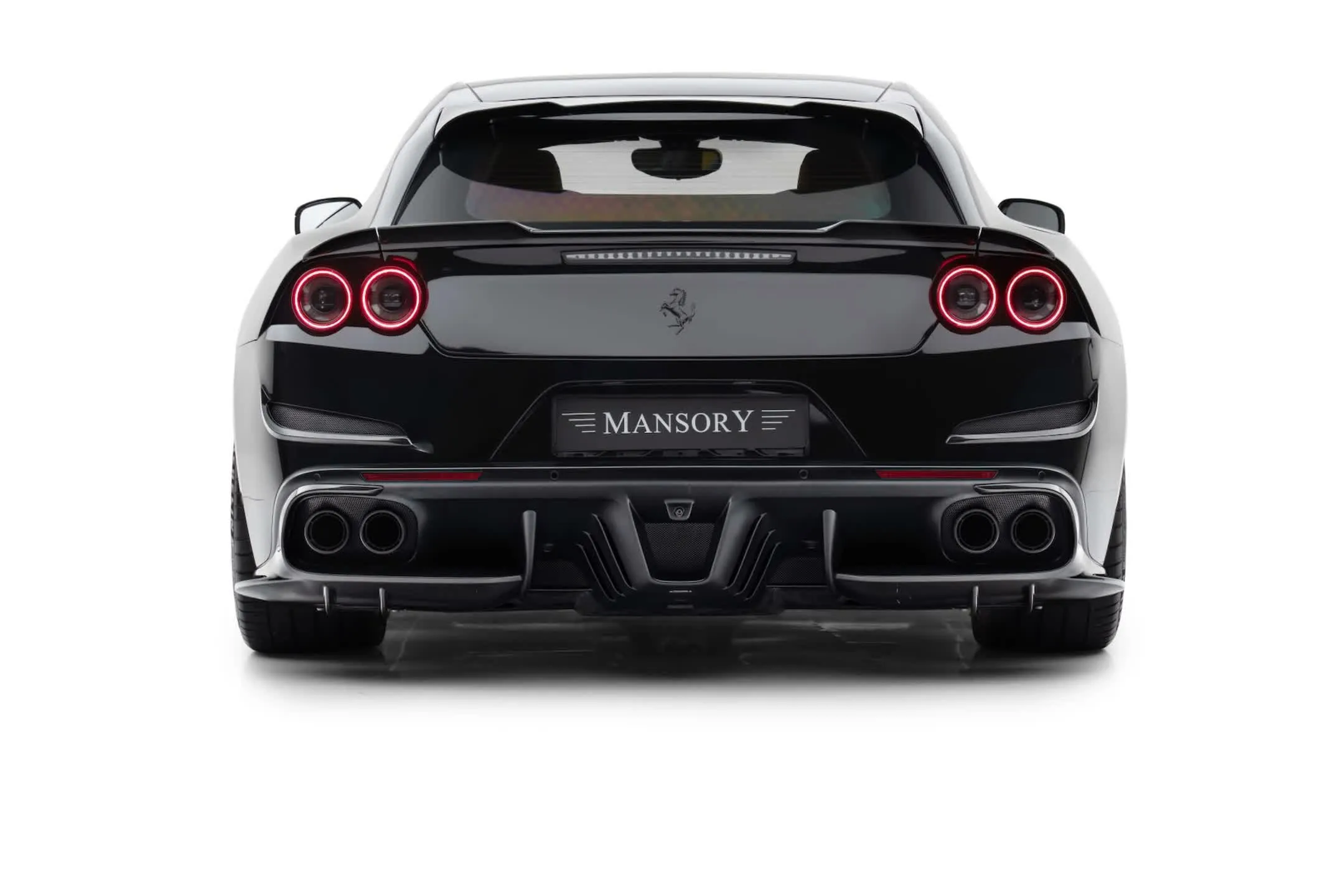
Mansory Carbon Fiber Body kit set for Ferrari GTC4Lusso / T


MANSORY for the Ferrari GTC4Lusso & Lusso T — the F151M shooting-brake in widebody carbon
The Ferrari GTC4Lusso is Maranello's 2+2 four-seat shooting-brake successor to the FF, internally chassis F151M, in production between 2016 and 2020. The car is unusual in the Ferrari catalogue on three counts: a four-seat hatchback bodyshell, the only Ferrari road car ever offered with a normally-aspirated V12 driving all four wheels through the proprietary 4RM Evo system, and one of just two Ferraris (alongside the F12tdf) to ship with four-wheel steering. The GTC4Lusso T followed in 2017 as the rear-wheel-drive twin-turbo V8 variant — same shooting-brake body, different engine bay, no AWD hardware, no 4WS module. Mansory's catalogue answer covers both donors with shared body panels above the bonnet line and powertrain-specific bumper hardpoints below it.
Sister Ferrari programmes in Hodoor's Mansory roster: Portofino M, Roma, 488 Siracusa, F8 Tributo, Purosangue Pugnator, SF90 Stradale.
Why the GTC4Lusso is a structurally unusual donor
The GTC4Lusso shares its bodyshell architecture with the FF (the original F151), but the front-end was meaningfully redrawn for 2016 with new headlights, a wider lower intake and a redesigned bonnet. The V12 variant carries 4RM Evo all-wheel drive — a unique Ferrari implementation that places a small two-speed transfer case in front of the engine to drive the front wheels without a conventional centre differential — alongside the 4WS rear-axle steering module. The V8 T deletes both 4RM Evo and 4WS, runs rear-wheel drive only, and lands 50 kg lighter in dry trim. Mansory's body kit fits both variants identically above the bonnet line; below it, the front bumper hardpoint set differs slightly because the V12's 4RM front transfer case requires deeper lower-intake clearance. The kit ships with both bumper variants and the correct one is selected at quote time against the chassis VIN.
Spec triangle — V12 vs V8 T vs V12 + Powerbox
| Spec | GTC4Lusso V12 | GTC4Lusso T | V12 + Powerbox |
|---|---|---|---|
| Engine | F140 6.3 V12 NA | F154 3.9 V8 turbo | F140 + Powerbox |
| Power | 690 PS / 697 Nm | 610 PS / 760 Nm | ~720 PS |
| 0-100 km/h | 3.4 s | 3.5 s | ~3.3 s |
| Drive | 4RM Evo AWD + 4WS | RWD only | 4RM Evo AWD + 4WS |
| Curb (dry) | 1 790 kg | 1 740 kg | ~1 760 kg |
Carbon panels on the GTC4Lusso body
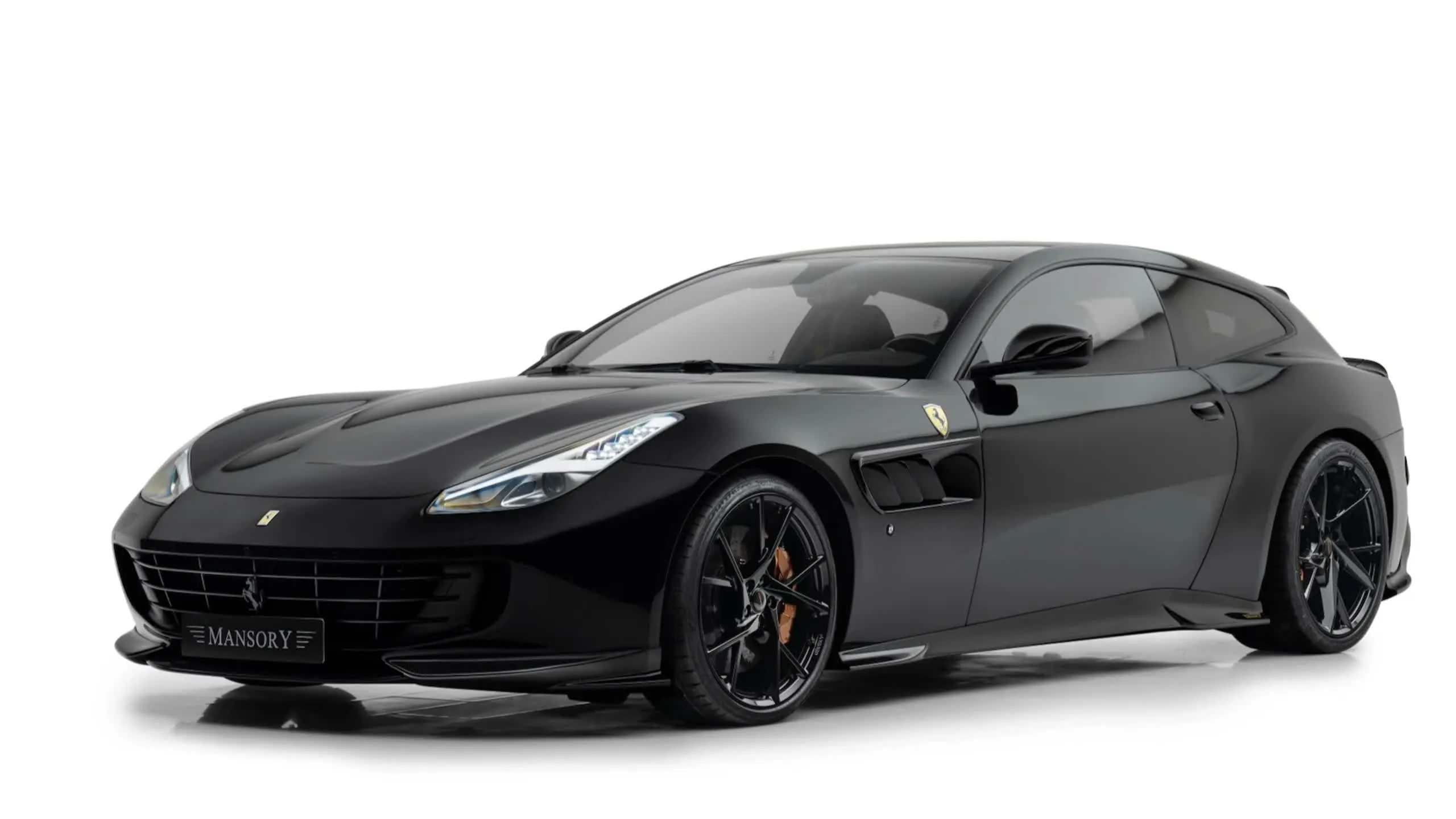
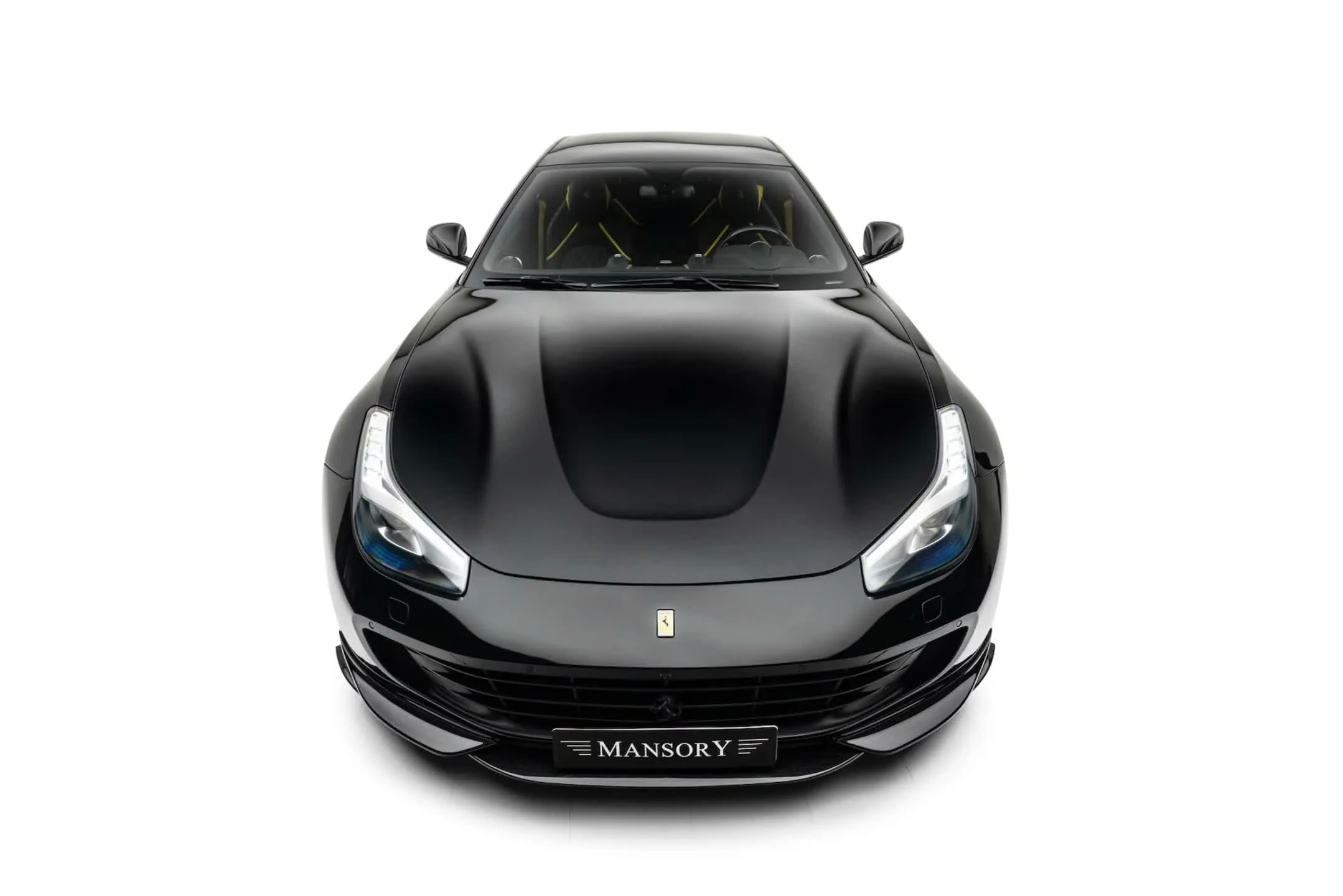
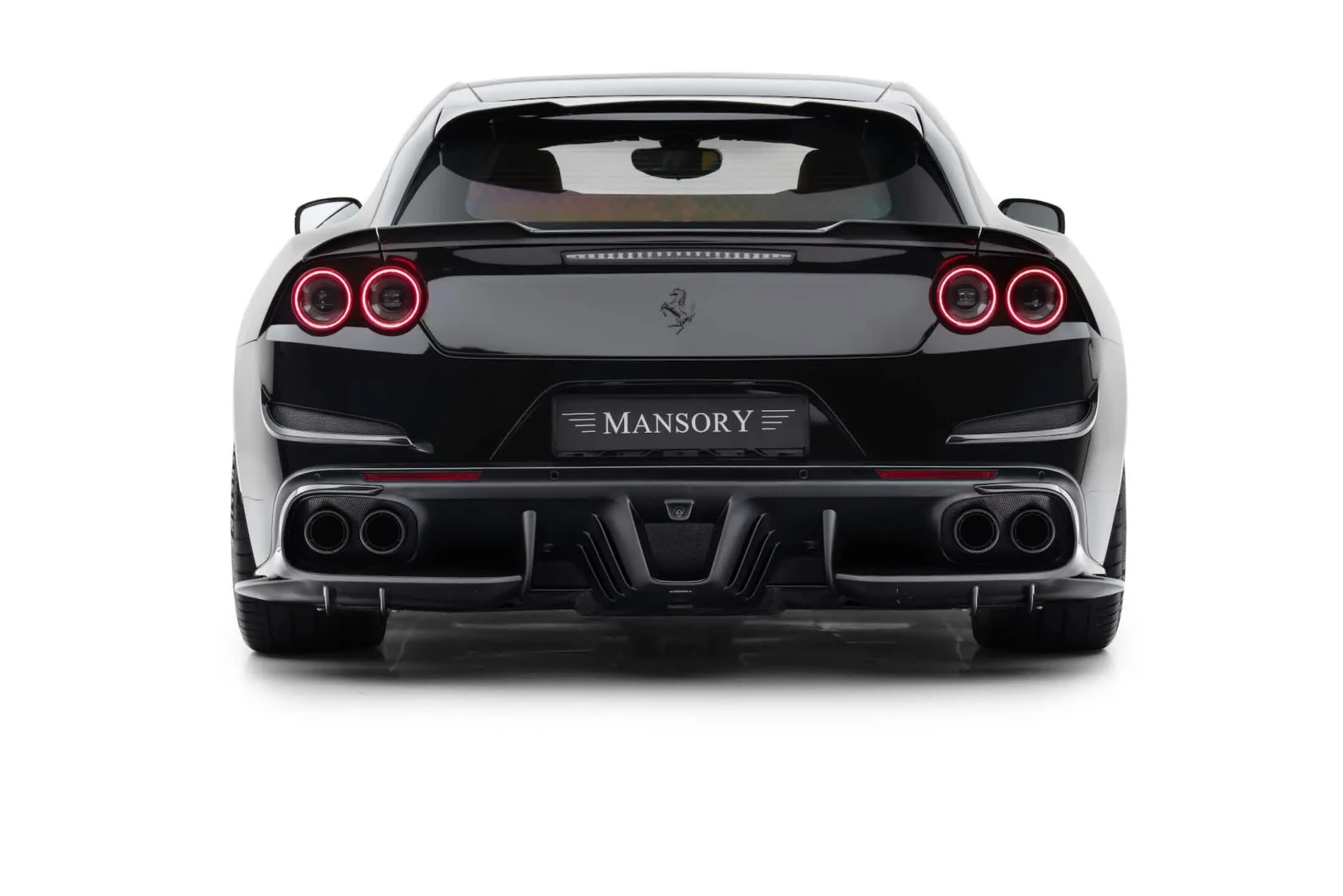
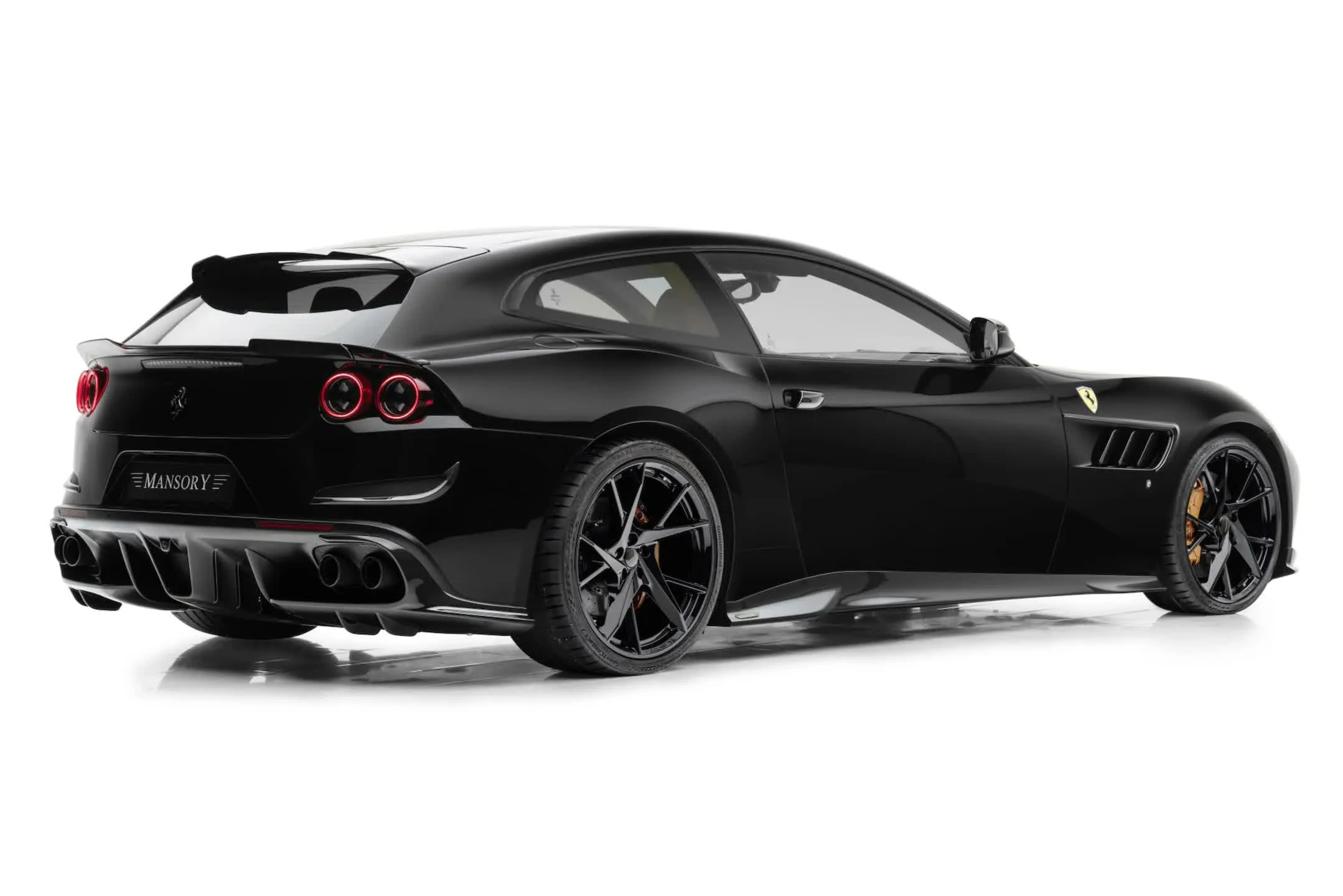
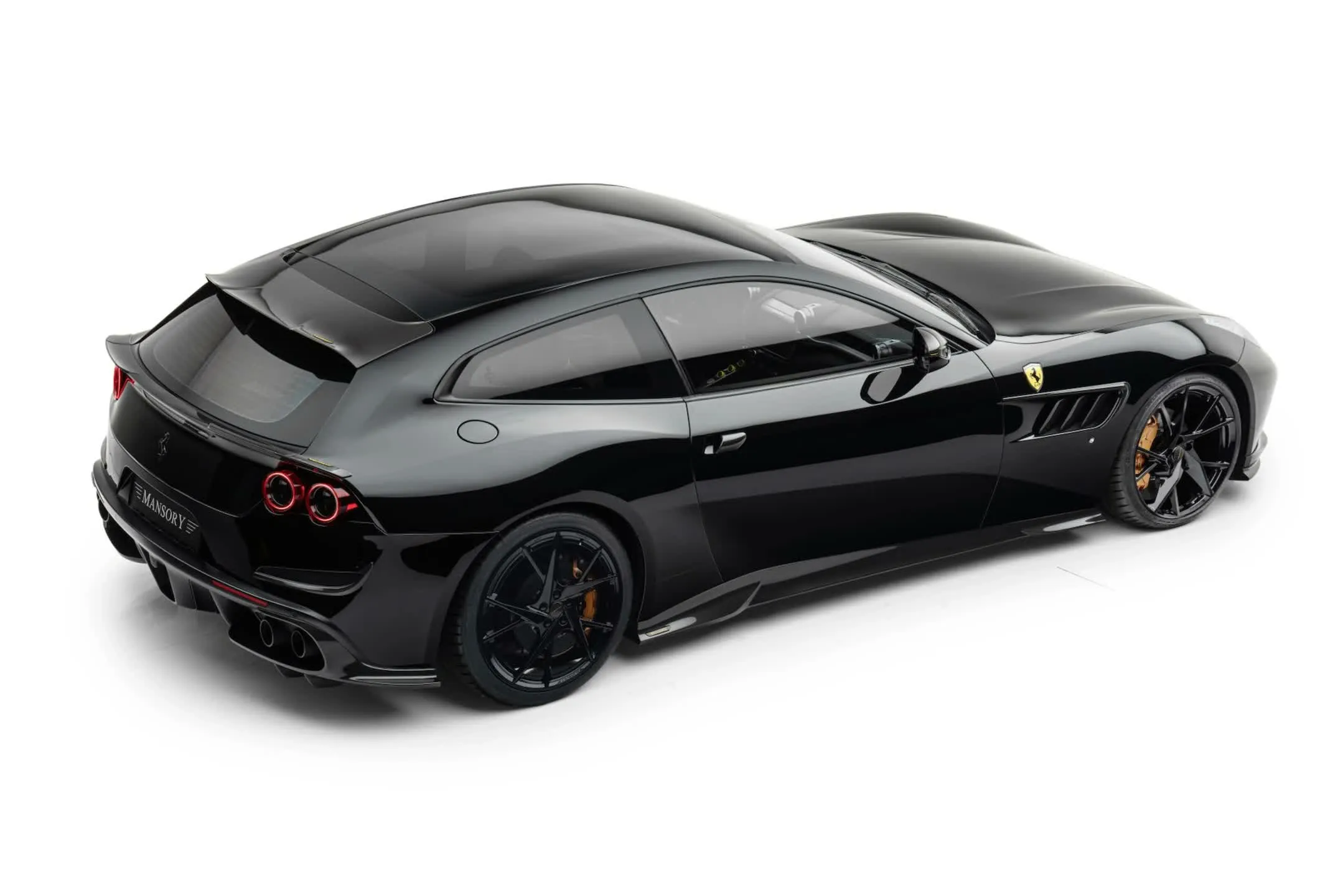
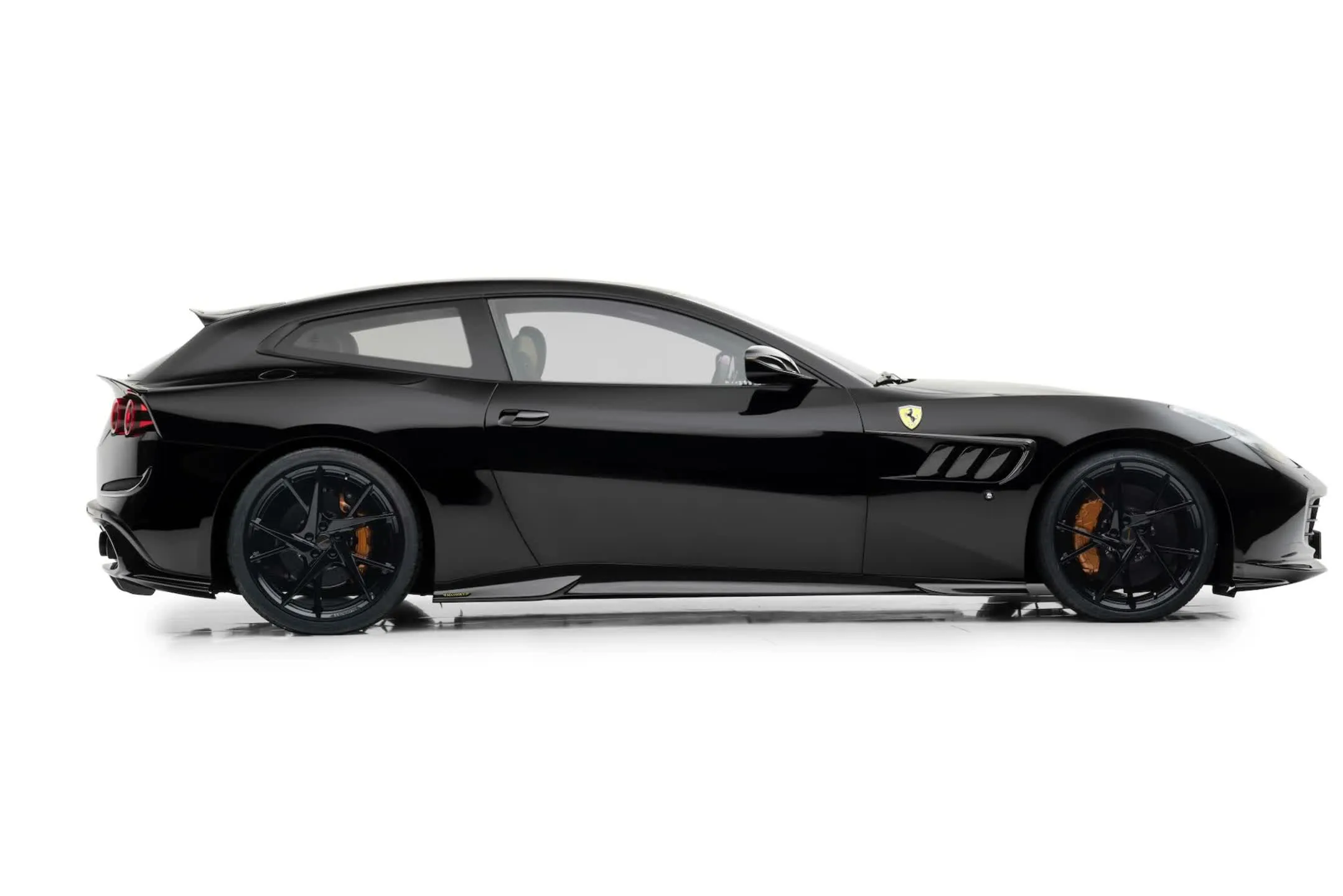
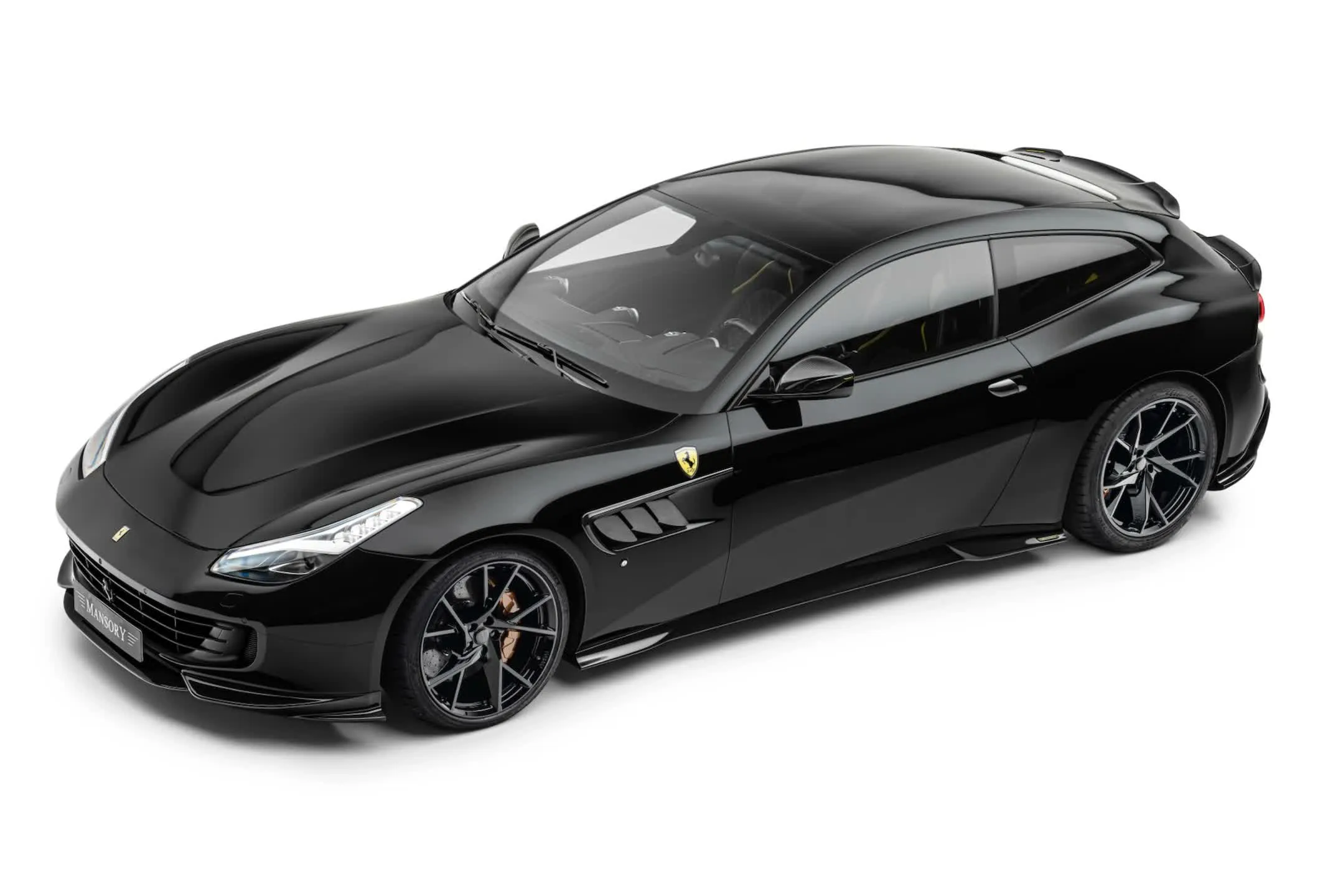
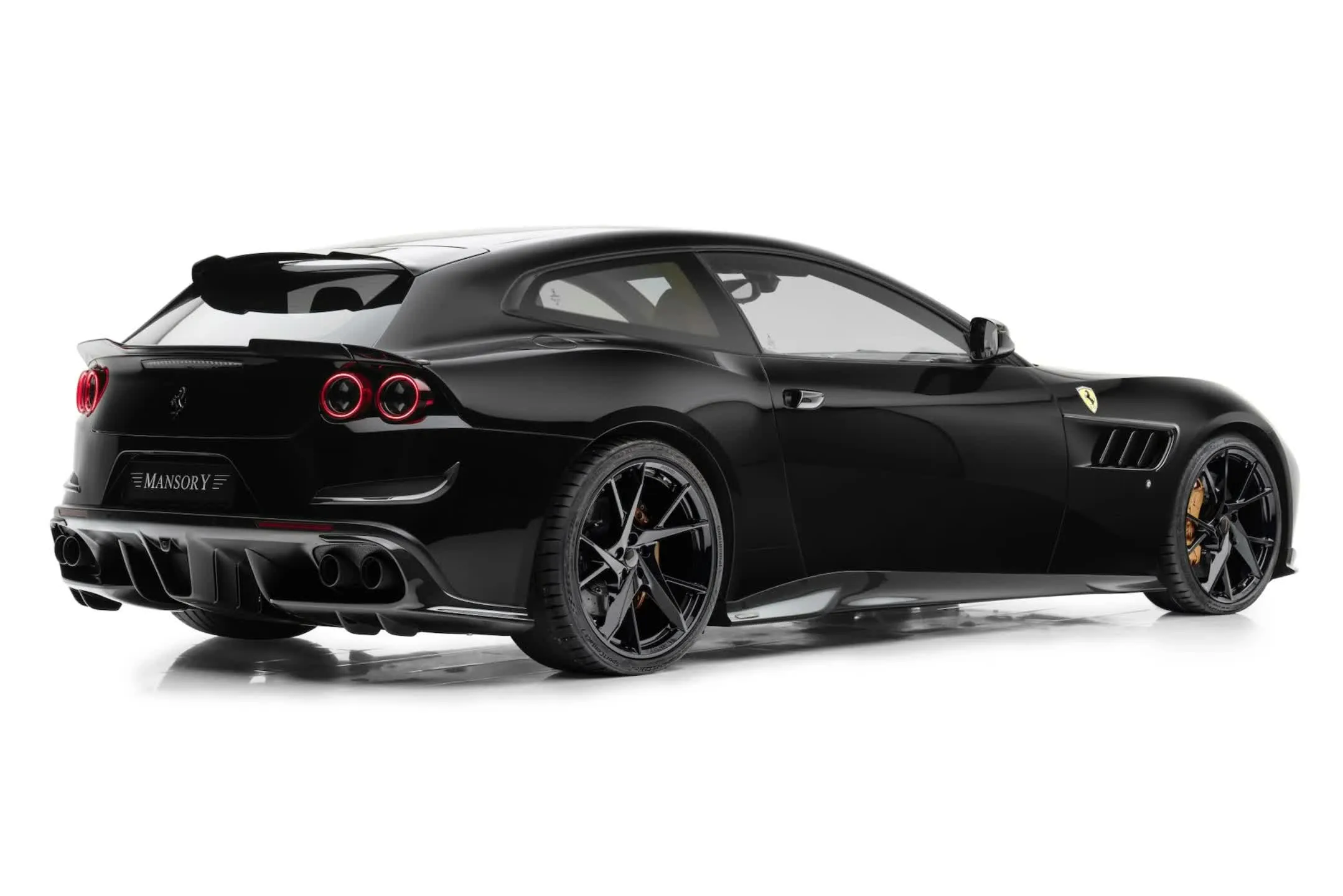
Comprehensive carbon body conversion: OEM bumpers replace, fenders are cut back and flared, doors and roof retain factory aluminium. The shooting-brake hatch is preserved — Mansory does not modify the lift-gate hinges and the carbon rear wing sits forward of the hatch leading edge.
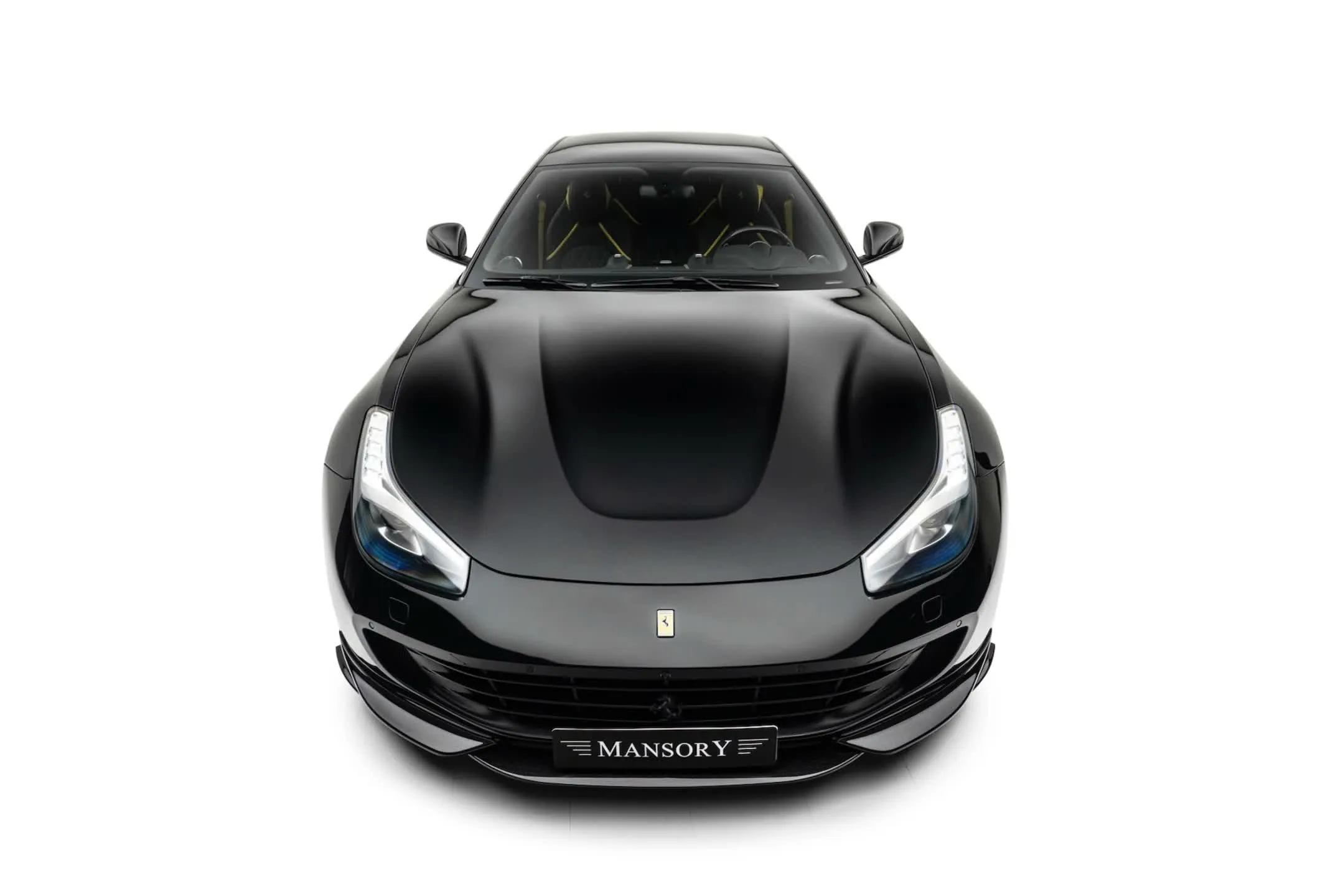
- Front bumper — full carbon, two SKU variants (V12 4RM Evo deeper lower intake / V8 T shallower); integrated splitter; OEM LED headlight pass-through retained
- Vented carbon bonnet — three NACA cuts route engine-bay heat over the cabin; Ferrari shield-emblem mounting preserved
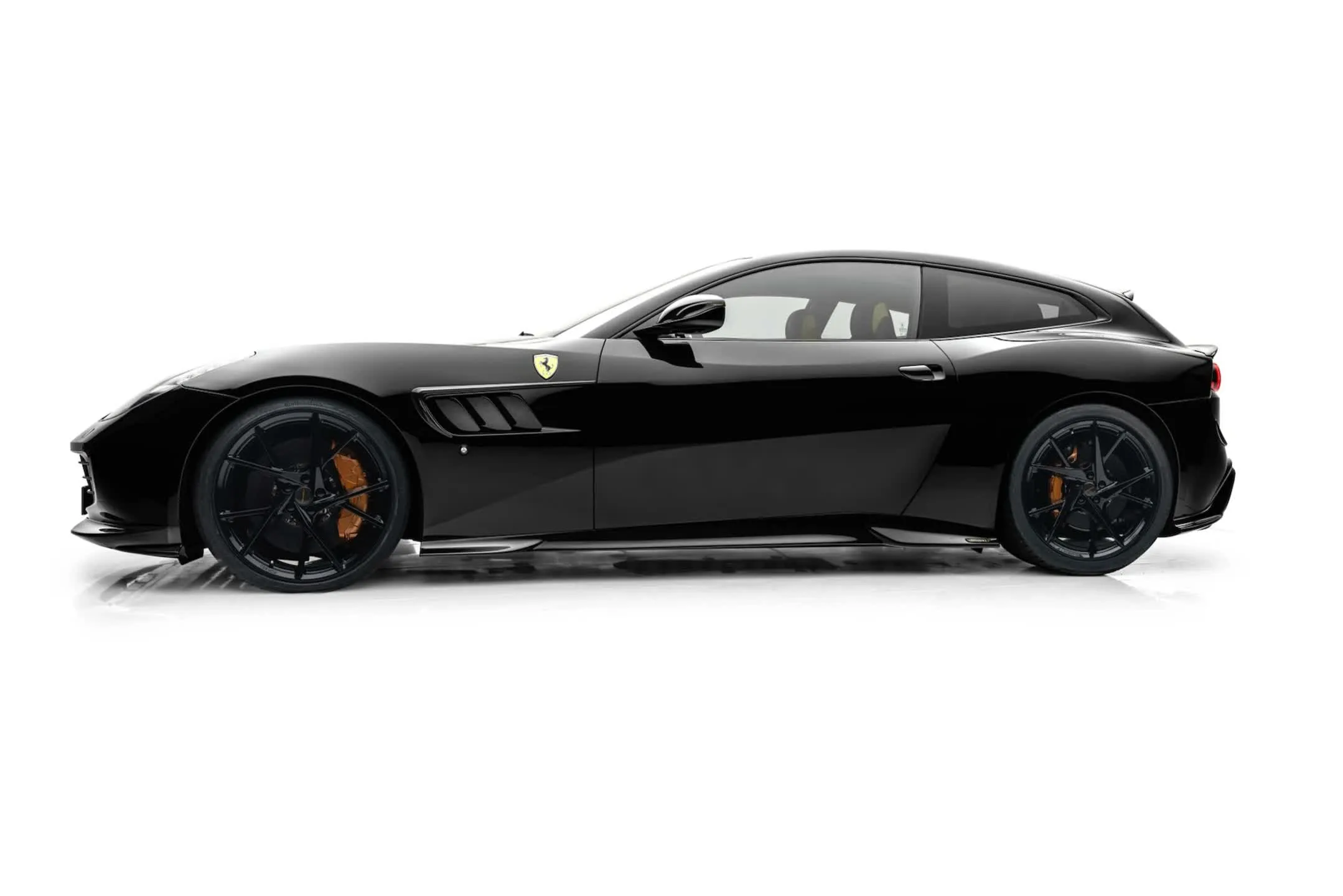
- Bonded carbon fender flares — aluminium-grade structural bonding (the GTC4Lusso ships with aluminium fender stamping); +25 mm per side at the front, +35 mm per side at the rear, dimensioned for the matched 22" forged stagger
- Carbon side skirts — full shoulder pieces with reframed sill cuts
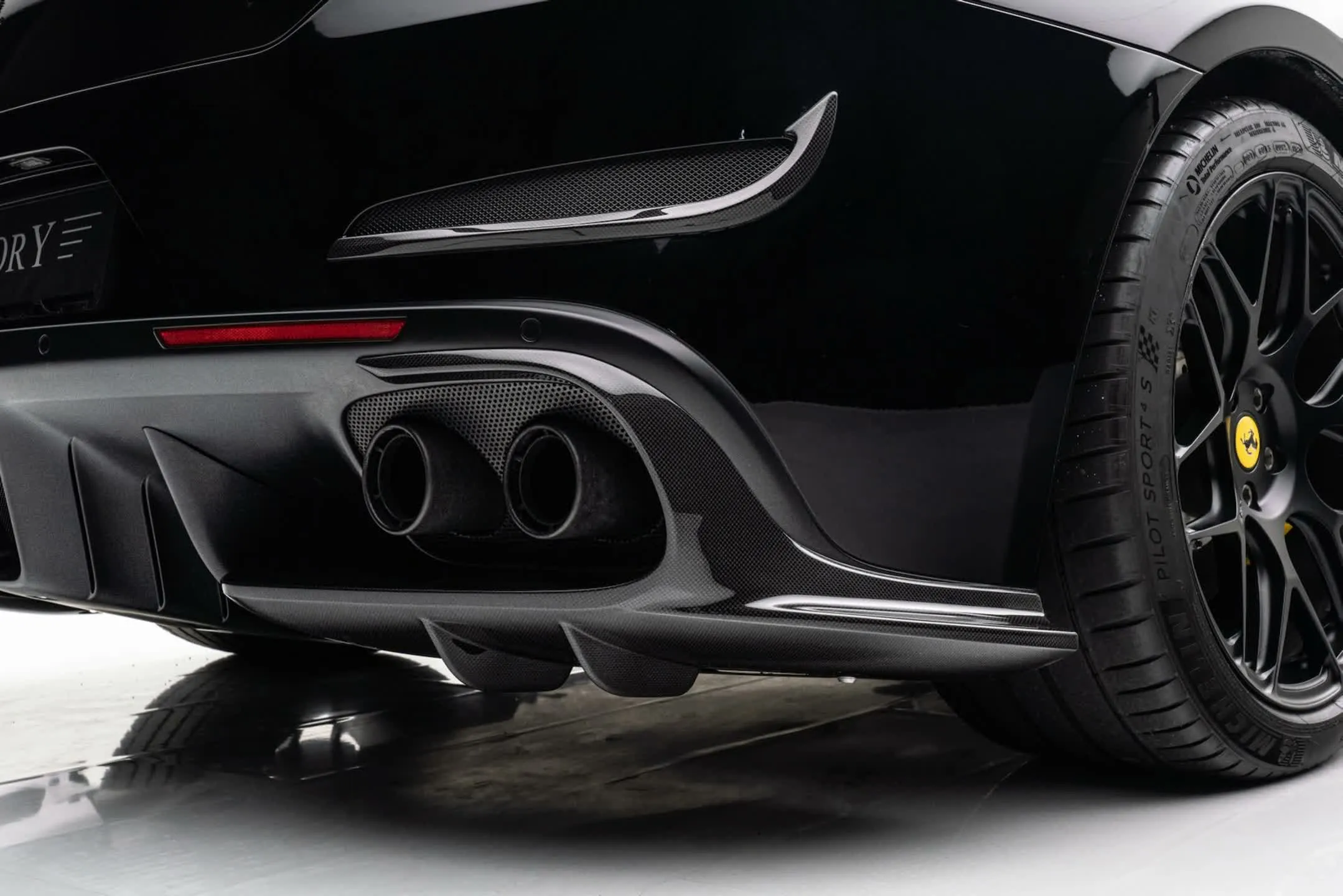
- Rear bumper — full carbon with integrated diffuser; quad-tip exhaust cutout matched to OEM Lusso geometry across both V12 and V8 T donors
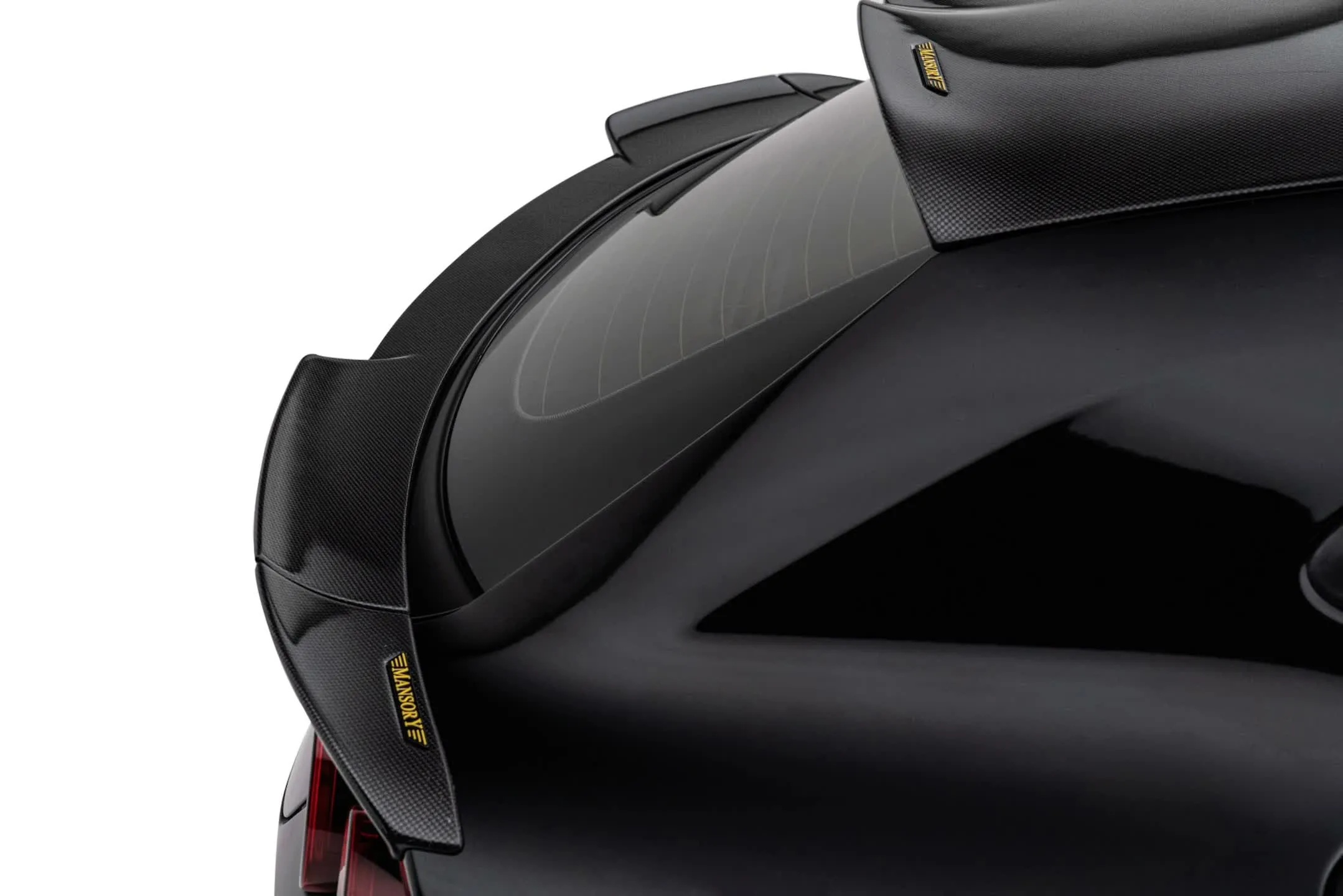
- Fixed carbon rear wing — sits forward of the rear-hatch leading edge; the lift-gate retains its full operating range
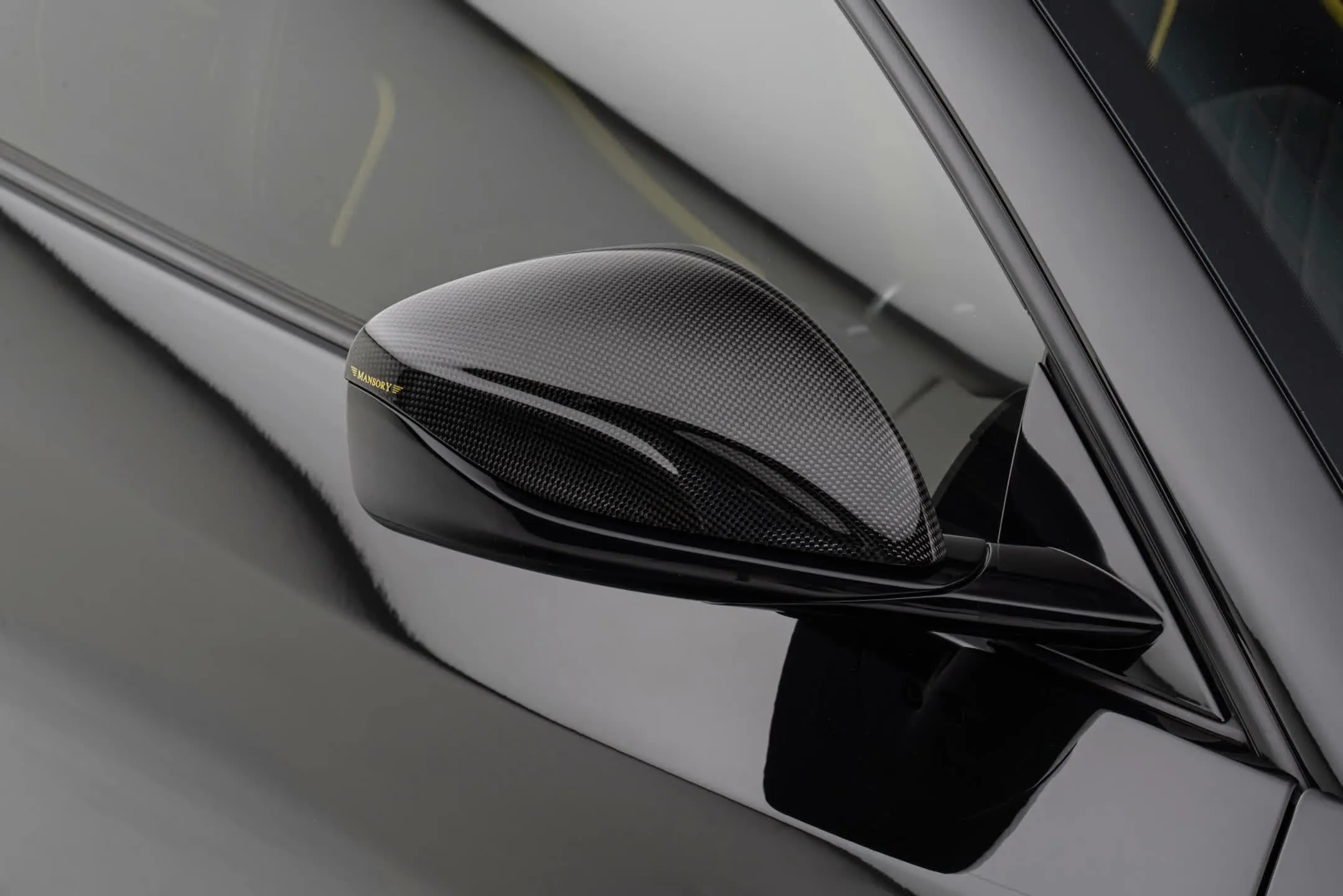
- Mirror caps, side-vent fairings, roof-rail overlay — visible weave with subtle gloss-lacquer finish
Build time at a Mansory-experienced body shop runs 15 to 18 days. The fender bonding lands on aluminium fender stamping, so the adhesive specification is aluminium-grade structural bonder — body shops with prior F12berlinetta or 488 experience handle the work routinely. Lusso-specific fitment notes are issued by Mansory at order confirmation.
Powerbox philosophy across the two engines
The naturally-aspirated F140 V12 has no boost map to remap; the V12 Powerbox is a sport-exhaust plus ECU recalibration package targeting a modest +30 PS (to ~720 PS) and improved throttle response in the upper rev band. The F154 V8 T shares its architecture with the Roma; Powerbox on the V8 T targets roughly 720 PS / 880 Nm, comparable to the Roma gain.
M-series forged 22" stagger
Matched fitment is the Mansory M-series fully forged 22" wheel in stagger sizing optimised for the Lusso's long wheelbase and 50:50 weight distribution. The OEM Lusso wheel is 20" forged (volume) or 21" forged (Tailor Made); the 22" forging adds inches and trims approximately 4 kg of unsprung mass per corner against OEM 21". Catalogue finishes: diamond black, polished silver, gun metal and Mansory bronze. The forging clears the OEM Brembo Extreme carbon-ceramic brake package without spacers. Wheel range and matching torque-spec wheel nuts ship through the Hodoor forged wheels collection.
Donor scope — F151M chassis, both powertrains
The kit fits the 2016-2020 Ferrari GTC4Lusso across both powertrain variants. It does not transfer to the Ferrari FF (2011-2016 — same chassis code F151 but different front fascia and bonnet stamping; the 2016 redesign changed all front-end body lines), the Ferrari Roma (entirely different two-door coupé body), the Ferrari Portofino M (convertible front-engined coupé) or the Ferrari Purosangue (V12 successor in a four-door SUV bodyshell).
Background on the platform sits at the Wikipedia GTC4Lusso entry; Mansory's official portfolio is at the Mansory GTC4Lusso portfolio. Care notes for lacquered carbon parts live in the carbon fibre care guide.
Geographic order pattern — AWD V12 markets
The Lusso is a low-volume Ferrari (~2 000 units across both powertrains) and demand sits in dry-climate four-season-driving markets where the AWD V12 makes operational sense. The current order book in 2026 reflects that:
- Monaco — the Mediterranean cluster's primary garage; commissions usually pair the wide kit with the M-series 22" forging in a single dispatch
- UAE — Dubai and Abu Dhabi V12 commissions, often Tailor Made bodies in colours that benefit from the visible-weave overlay
- Isle of Man and United Kingdom — British-domicile flag clients; UK volume splits roughly 60/40 V12 to V8 T
- Hong Kong — Repulse Bay and Mid-Levels; the V8 T donor's RWD layout is the dominant Hong Kong specification
- Switzerland — Lausanne and Zurich AWD V12 commissions for owners who use the donor as a four-season Alpine GT
Frequently asked questions
Does the same kit fit the V12 and the V8 T?
Yes for fenders, side skirts, rear bumper, wing, bonnet and overlays. The front bumper differs — the V12 4RM Evo requires deeper lower-intake clearance for the front transfer case, while V8 T runs a shallower front bumper. The kit ships with both variants; the correct one is selected against chassis VIN at quote time.
Will the kit fit my Ferrari FF?
No. The FF (2011-2016) shares the F151 chassis code but a different front fascia and bonnet stamping. FF owners specify a separate Mansory FF programme.
Does the kit interfere with the four-wheel steering on the V12?
No. The kit is body-only and does not modify rear-axle 4WS hardware. Rear-track changes are within the OEM 4WS calibration envelope.
Will the 22" wheel fit under the OEM rear flare without lift?
Yes with the Mansory rear flare (+35 mm per side) installed. Post-flare-bond fitment clears OEM ride-height on the M-series 22" forging.
Commission channel
Carbon panel manufacture: 4 to 5 weeks. Body-shop install at a Ferrari-experienced workshop: 15 to 18 working days. Powerbox + sport-exhaust install: 1 week. M-series 22" forged stagger: 4 weeks (separate freight booking available). Open a commission via [email protected] with the Lusso chassis VIN, the powertrain variant (V12 or V8 T), the OEM Ferrari paint code and the destination country. WhatsApp +44 7488 818747 for fastest landed-quote channels. Right-hand-drive UK and Hong Kong donors ship on the same SKU set.