Illuminated entrance panels for Mercedes G-class W463A Gronos


Illuminated Entrance Panels for Mercedes G-Class W463A Gronos
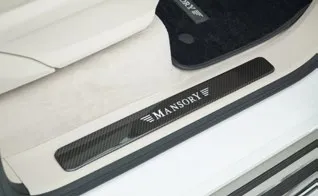
The illuminated entrance panel takes the Gronos sill panel programme's material specification and adds a dimensional lighting element: the GRONOS identification text is backlit from within the panel body, illuminating the lettering when the door opens and the sill is exposed to the boarding occupant. At night and in low-light conditions, the illuminated lettering creates a signature boarding experience that the non-illuminated entrance panel cannot replicate — the GRONOS identification glows against the carbon face, identifying the programme with a precision light source at the precise surface where the occupant's eyes are directed during entry. The Illuminated Entrance Panels from the Mansory Body Kit for Mercedes G-Class W463A Gronos provide this illuminated specification at all four door positions, with LED lighting integrated into the panel body and connected to the W463A's door-open switching circuit for automatic activation on entry.
Construction & Materials
The Illuminated Entrance Panels use the same carbon-fibre primary laminate and stainless-steel anti-scuff strip as the standard Entrance Panels, with the addition of an LED backlight unit within the panel body beneath the GRONOS lettering zone. The lettering apertures in the carbon face are fitted with diffuser elements that distribute the LED light evenly across the letter profiles — preventing hot-spots at the LED positions from being visible through the lettering. The LED unit connects to the W463A's door-courtesy-light circuit via a dedicated harness, activating automatically when the door is opened and deactivating when the door closes. LED colour matches the W463A's factory ambient lighting programme on vehicles so equipped — confirming the specific LED colour specification at order is recommended for ambient-programme-matched builds.
- Carbon face: 3K twill prepreg, horizontal weave — as per standard Entrance Panels
- Stainless anti-scuff strip: leading edge, direct foot-contact protection
- LED backlight: integrated within panel body beneath GRONOS lettering zone
- Lettering diffuser: even light distribution across letter profiles — no hot-spots
- Control: W463A door-courtesy-light circuit — automatic activation on door open
- LED colour: specify at order — available in white, warm-white, and ambient-match RGB
- Mounting: OEM sill screw positions — direct exchange
- Supplied: full four-panel set with LED harnesses and all mounting hardware
Design & Visual Function
The illuminated lettering effect at the sill face is most striking in the low-light conditions that characterise valet, hotel arrival, and evening urban-kerb events where the W463A is most frequently presented to observers who are not the primary occupant. A guest being escorted to the vehicle at night sees the illuminated GRONOS lettering at the sill face the moment the door opens — a programme identification signal that reads at night from 3–5 m distance, which the non-illuminated carbon panel cannot provide at the same conditions. During daylight, the LED backlight is dim relative to the ambient light level and the lettering reads primarily by the carbon face's material contrast, as on the non-illuminated panel. The illuminated panel therefore provides a consistent programme identification across all light conditions, supplementing the material-contrast identification with the light-contrast identification when conditions demand it.
The illuminated lettering's brightness balance is calibrated for the low-light and night conditions where it provides the greatest visibility — at the 20–50% ambient-light level of underground car parks, evening valet arrivals, and night-time urban boarding events. In these conditions the LED backlight operates at a brightness level that is clearly legible from 2–4 m without being distractingly bright at close range. The diffuser behind the lettering apertures is matched to the LED intensity to prevent the visible LED point sources from showing through the letter profiles at the viewing distances most common for entrance panel observation. If the LED intensity seems too bright or too dim relative to your W463A's ambient lighting programme, the LED control module typically allows brightness adjustment via the installer's configuration — confirm at installation.
The panel's automatic door-trigger activation ensures the illumination is always present when the door is open and the sill is visible, without requiring any occupant action. This reliability is a key design feature of the illuminated entrance panel: the boarding experience is consistent regardless of whether the occupant remembers to activate the sill lighting — the programme identifies itself automatically at every boarding event.
Compatibility & Fitment
Illuminated Entrance Panels fit Mercedes-Benz G-Class W463A 2018 to present. Door-courtesy-light circuit connection: the W463A's door-open lamp circuit is the signal source for the LED activation. Confirm circuit tap availability with your installer before ordering. LHD/RHD: confirm at order. Post-2024 facelift W463A: confirm door circuit specification.
Installation & Reversibility
Installation requires the standard sill panel swap plus LED harness routing to the door-courtesy-light circuit tap point. The harness typically routes through the door sill cavity to the B-pillar interior lining where the courtesy-light circuit is accessible. Professional automotive electrical installation recommended. Installation time: 30–45 minutes per door panel including harness routing. The OEM sill plates are retained for reversibility — LED harness removal is also straightforward at the courtesy-light tap point.
Pairing within the Mansory Gronos programme
The illuminated entrance panels are the primary interior ambient-lighting programme element at the boarding zone. The Turbine Air Vents with Ambient Light continue the Gronos ambient-light programme at the dashboard zone above. The non-illuminated Entrance Panels are the standard carbon-only alternative. The Electrical Auto Side Steps Long deploy from the zone below the illuminated sill panel, creating a full boarding-zone specification when combined with the illuminated panels and the power steps.
Maintenance & Durability
The illuminated panels require the same carbon face maintenance as the standard entrance panels — ceramic sealant every 4 weeks in winter, regular post-boarding-event wipe-down. The additional LED system maintenance is minimal: check LED function at each seasonal service by opening each door in a dim environment and verifying the lettering illuminates. Dim or patchy illumination typically indicates a single LED within the backlight unit has failed — the LED units are serviceable at the panel level; confirm replacement procedure with Mansory if LED failure occurs within the warranty period. After the warranty period, the full backlight unit replacement procedure is documented with the panel.
The backlight panel's internal LED array can develop thermal hotspot degradation at specific LED positions after 4–6 years of sustained use in hot-climate markets where the W463A is regularly parked in direct sun. LED junction temperature at a sun-parked sill surface can approach 75–80 °C — within the LED's rated range but at the upper end of long-term rated life. UV-blocking tint on the rear side glass reduces the direct solar heat loading at the rear sill panels; for the front panels, the cabin climate control system cooling the forward floor zone during parking will not reach the sill cavity temperatures. At the annual inspection, check all four illuminated panel LED arrays for any individual LED positions that illuminate at noticeably lower intensity than adjacent LEDs — reduced intensity is the first indicator of thermal-degradation onset, allowing replacement before full LED failure darkens a letter profile.
The LED harness routing through the door sill cavity is exposed to the same moisture ingress pathway as the door loom — in vehicles where the door seal allows moisture into the sill cavity during extreme weather events, the harness insulation can degrade at the cavity over a 3–5 year period if the insulation is not rated for the sill cavity's moisture exposure. Specify a water-resistant harness sleeve at the sill cavity routing during installation to protect the harness insulation against this moisture pathway.
Lead Time & Warranty
Lead time for Illuminated Entrance Panels is 3–4 weeks from order including LED system integration. 12-month warranty against carbon face delamination, LED backlight failures, harness connection failures, and lettering diffuser failures.
FAQ
Q: Can the LED colour be changed after installation if the ambient programme colour is updated?
A: On panels with RGB LED units, the colour can be adjusted via the control module programming without removing the panel. On single-colour panels, a full backlight unit replacement is required. Specify RGB at order if ambient programme colour consistency is required for future updates.
Q: Is the LED illumination visible in direct sunlight during daytime boarding?
A: The LED backlight is designed for low-light and night conditions. In direct sunlight, the lettering reads by carbon face material contrast, as on the non-illuminated panel. The LED contribution to daytime readability is minimal but not harmful.
Confirm LHD/RHD, LED colour preference, and ambient system specification with the Hodoor Mansory team: Contact us via WhatsApp +44 7488 818 747 or [email protected].