Carbon windshield wipers cover Mansory for Lamborghini Aventador Competition


Mansory Carbon Windshield Wipers Cover for Lamborghini Aventador Competition
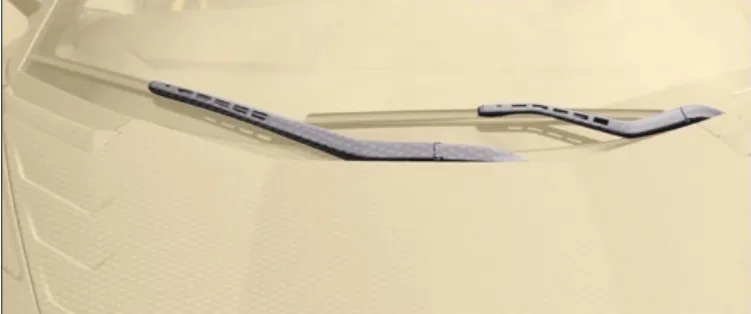
The wiper cowl is the slim trim panel at the base of the windshield that hides the wiper-arm storage well, the windscreen-washer plumbing and the air-channel that bleeds rainwater off the glass. On a stock Aventador it is matte black thermoplastic, and once you start dressing the surrounding area in carbon (A-pillars, front bonnet, scuttle panel) the OEM piece becomes the one dull stripe that cuts the carbon flow in half. This Mansory dry-carbon replacement is built for that exact upgrade path inside the Mansory Carbon Body Kit for Lamborghini Aventador Competition programme, the SVJ-derived high-spec dressing for the LP and Ultimae generations of the naturally aspirated V12, scissor-door, rear-wheel-steered Aventador. The panel is shaped to swallow the wiper arms on park, leave room for the heated jets and bridge the windshield-to-bonnet step without disturbing the aluminium-CFRP monocoque underneath.
Construction & Materials
The cowl is laid as a sandwich of woven prepreg over a closed-cell core, then cured in a low-pressure autoclave cycle so the surface telegraphs the weave perfectly along the long, narrow shape. Because the part runs the full width of the windshield base and sits in a heat-soaked zone above the front compartment, the resin system is chosen for UV stability and long-term dimensional behaviour rather than raw stiffness — this is a trim panel, not a structural one, and warping along its length would ruin the shut-line against the windshield rubber.
- Outer skin: 3K twill 2x2, 200 g/m squared, weave aligned 0/90 along the cowl axis
- Optional finishes: 2K plain, forged-look chop, or coloured-tracer twill on request
- Lay-up: woven prepreg over PMI foam core, vacuum-bagged then autoclave-cured at roughly 120 C
- Wall thickness: 1.6–2.0 mm at the visible deck, 3.5 mm at the core sandwich
- Dry weight: about 0.55–0.7 kg depending on finish — net saving over OEM trim is small but the visual return is large
- Mounting: re-uses the OEM clip pattern with stainless push-pin clips and two M5 captive nuts at the cowl ends
- Hardware bag: clips, foam gasket strip, butyl bead for the windshield-rubber lap, plus an alignment shim set
- Finish: high-build polyurethane lacquer with anti-yellow UV inhibitor; satin or gloss; matte ceramic option
Design & Visual Function
Visually, the cowl is the bridge between the carbon front bonnet and the carbon A-pillar covers. When all three pieces are dressed, the eye reads one continuous carbon plane from the headlight crease, up the bonnet shut-line, across the wiper well and into the roof rail. With the OEM black plastic in place, the same view breaks at the windshield base — the carbon stops, then resumes. This Mansory panel closes that gap and lets the weave run cleanly along the whole upper plane of the car.
Weave orientation is decided on the bench. Mansory aligns the twill cells along the windshield-to-bonnet axis so the diagonals catch reflections in step with the bonnet bonnet-vent louvres and the A-pillar grain. The result is a single visual rhythm under sunlight rather than three pieces of carbon shouting in different directions. Surface curvature is gentle but compound — the panel rises slightly toward the centre to follow the wiper-arm pivots, then falls toward the side gutters where rainwater drains off the glass. That subtle crown is what stops the cowl looking flat and dead under top-down studio light.
For owners who run a body-coloured upper deck and a raw-weave lower kit, the cowl can be specified body-painted with a clear ceramic top so the windshield base reads body, while the side mirrors and front bonnet remain raw weave. For a fully carbon car, the standard satin-lacquered weave is the catalogue default. The wiper-arm clearance pocket is moulded with enough volume to swallow the OEM Aventador wiper geometry on park without the blades resting against the panel lip — a detail that matters more than it sounds, because contact wear at park is what eats wiper rubbers on cars driven hard in rain.
Compatibility & Fitment
Fits Lamborghini Aventador LP700-4, LP750-4 SuperVeloce, Aventador S, SVJ, SVJ Roadster and Ultimae, in both coupe and Roadster bodies. The cowl geometry is shared across the LP and SVJ generations because the windshield base, the wiper-arm pivots and the cowl gutter were carried over unchanged from the LP introduction in 2011 through to the Ultimae run-out. Heated-washer-jet provision is included; the panel does not interfere with the rain sensor mount on cars that have it. ALA 2.0 active aero on SVJ is untouched — the cowl is forward of the front-aero ducting and has no effect on ALA. Scissor-door hinge geometry is upstream and unaffected. Front parking sensors, if fitted, are in the front bumper not in the cowl, so they remain OEM. The Roadster soft-top stowage clears the panel because cabrio top stowage is rearward of the windshield header.
Installation & Reversibility
This is one of the genuine DIY parts in the programme. Estimated time is 30–50 minutes with hand tools, no body-shop visit required. Workflow: park on a flat surface, lift the wiper arms off the glass and pin them in service position, pop off the OEM cowl by releasing the row of push-pin clips along its leading edge, disconnect the washer-jet hoses at their quick-release fittings, lift the OEM panel out, transfer the heated-jet harness if your trim level has it, dry-fit the Mansory cowl, set the foam gasket and butyl bead per the included diagram, snap the new clip set home, reconnect the washer hoses, drop the wiper arms and run a fluid test. Reversibility is full — the OEM panel slots back at any time with the original clips and no adhesive residue if installation followed the bagged hardware. Methacrylate adhesives used elsewhere on Aventador CFRP body bonds are not in play for this trim; the cowl is purely mechanical.
Pairing within the Mansory Aventador Competition programme
The cowl is the natural third piece in an upper-deck carbon trio. It pairs first with the A-pillar cover, because once the cowl is in carbon the OEM black A-pillar trim becomes the next visual interrupt, and the two pieces share weave-orientation logic. It pairs second with the carbon windshield panel, which finishes the inboard side of the same windshield-base zone and lets the weave run from the wiper cowl up to the inner glass surround. For owners going further forward, the front bonnet closes the loop — bonnet, cowl, A-pillars and windshield panel together rebuild the entire upper-front plane in matched-orientation weave. Pick at least the cowl plus A-pillar pair if you want the upgrade to read; add the windshield panel and front bonnet for the full carbon nose deck.
Maintenance & Durability
The cowl lives in one of the harshest UV positions on the car — flat or near-flat, full sun, no shading from bodywork. UV stability is therefore the headline durability concern. Protect the lacquer with a ceramic coat at delivery and refresh it on the same cycle as the rest of the carbon dress kit, twice a year on a regularly driven car. Avoid alkaline degreasers, ammonia-based glass cleaners that overspray onto the cowl, and abrasive sponges — these are the three things that eat lacquered weave the fastest. Bug residue at the leading edge is the everyday enemy: lift it with a pH-neutral remover, never scrape. Wiper-blade rubber slap on park leaves a small wear band over time; a thin strip of clear paint-protection film at the park line solves it for the life of the part. Chips along the windshield-rubber edge can be touched in with the matching lacquer pen included in the install kit. Lifespan with a ceramic coat and reasonable care is the same as any other UV-exposed lacquered carbon panel on the car — measured in years, not seasons.
Lead Time & Warranty
Lead time is 4–8 weeks from order, made on Mansory's bespoke production line in twill, plain or forged-look weave to match the rest of the build. Warranty runs 12 months against manufacturing defects: delamination, lacquer failure under normal UV, clip-pocket cracks, gasket bond failure. Shipping and handling damage are claimed against the carrier. Consumables — the foam gasket and butyl bead — are owner-replaceable on the second installation if the cowl is ever pulled for a windshield-rubber service.
FAQ
Q: Can I really fit this myself?
A: Yes. It is one of the few panels in the Mansory Aventador programme that is a clean DIY job. Half an hour, hand tools, a clip-pin tool and patience with the washer-hose fittings.
Q: Does it fit my Aventador S, or only the SVJ?
A: Both. The cowl geometry is shared across LP, S, SV, SVJ and Ultimae. The naturally aspirated V12 and scissor-door layout do not change anything in this zone.
Q: Will the wiper arms still park properly?
A: Yes. The pocket depth is moulded to accept the OEM Aventador wiper park position with clearance for the blade rubber, so no contact at rest.
Q: Do I have to repaint anything?
A: No. The cowl ships finished — satin or gloss lacquer, body-paint optional. There is no body-side prep or primer step on this panel.
Q: Is it compatible with the heated washer jets and rain sensor?
A: Yes. The heated-jet harness transfers across, the jet apertures are pre-cut, and the rain-sensor mount on the inner glass is not touched by this panel.
Q: Can I keep it raw weave on a body-painted car?
A: Yes. Default is satin-lacquered raw weave. Body-paint over the carbon with a clear ceramic top is offered when the rest of the upper deck is body-coloured.
Pair this cowl with the A-pillar cover and carbon windshield panel for a clean upper-deck weave run, then bridge into the front bonnet to finish the nose. To configure finish, check stock or order: WhatsApp +44 7488 818 747 or [email protected].