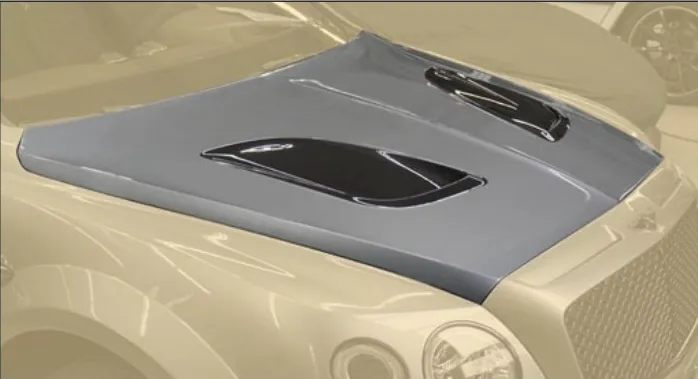
Primed engine bonnet Mansory for Bentley Bentayga


Mansory Primed Engine Bonnet — Bentley Bentayga
The Primed Engine Bonnet is the structural twin of the visible-carbon variant, but finished in factory-applied epoxy primer (raw, matte-white finish) rather than glossy carbon-weave lacquer. This variant is ideal for owners who prefer to paint the bonnet in body color (e.g., Burnt Orange, Peacock Green, or other Bentley bespoke hues) or apply a custom finish (matte wrap, satin clearcoat, metallic accent stripe). The dual NACA air intakes remain identical—no functional difference from the visible-carbon variant. The bonnet integrates with the Mansory Carbon Fiber Widebody kit set for Bentley Bentayga styling programme, allowing you to customize the hood finish independently of the carbon fiber widebody parts.
Epoxy Primer & Paint-Ready Substrate
The bonnet is supplied with a factory-applied epoxy primer layer (approximately 100–150 microns thick). This primer is self-leveling and provides excellent adhesion for automotive topcoat paints. Unlike bare carbon (which requires extensive surface preparation before painting), the primed bonnet is ready to receive paint after a light scuff-sand (120–150 grit) and cleaning. Most professional shops can lay down a single-stage or base/clear automotive paint in 1–2 days. The epoxy primer is not UV-stable (it will chalk and degrade in sunlight if left unpainted), so the bonnet must be painted or clear-coated within 2–4 weeks of delivery. If you delay painting beyond this window, rinse and dry the bonnet monthly to prevent primer degradation.
Paint Integration & Color Matching
Owners typically paint the primed bonnet to match their vehicle's body color, creating visual continuity across the front end. Common choices include Bentley's factory colors (Granite, Pearl White, Midnight Sapphire, Beluga Black, etc.) or bespoke custom hues (Porsche Gentian Blue, Ferrari Rosso Corsa, etc.). The epoxy primer provides a uniform base for color matching; paint shops report excellent color-match accuracy compared to painting over bare carbon. If you choose a non-standard finish (e.g., matte, satin, or metallic), the painter applies the appropriate topcoat (single-stage enamel for matte, base+clear for metallics, or satin clearcoat for semi-gloss finishes). Total paint cost (including labor) is typically £1,200–£2,000 depending on complexity and finishing options.
NACA Duct Functionality & Thermal Integration
The primed bonnet retains both NACA air intakes from the visible-carbon variant. Thermal cooling performance is identical: under-hood air temperature reduction of 4–6°C highway / 8–12°C track-use. The dual NACA ducts draw cool ambient air into the engine bay, improving radiator core temperature and turbocharger intake-air temperature (IAT). For the W12 engine (608 hp, prone to under-hood heat buildup in spirited driving), the primed bonnet is just as effective thermally as the carbon variant—only the finish differs.
Installation & Mounting
Installation is identical to the visible-carbon bonnet: 4 bolts to OEM hinge points, gas-strut adapters, rubber perimeter seal. The primed finish does not affect fitment or installation complexity. After painting, the bonnet is mounted onto your vehicle exactly as a painted OEM hood would be installed.
Compatibility & Model Variants
Compatible with all Bentley Bentayga first-generation (2015–2019) and facelift (2020+) models. Two variants available: B15-19 (early models) and B20+ (facelift 2020 onwards). Confirm your model year before ordering; fitment varies by generation.
Pairing with Mansory Components
The primed bonnet pairs naturally with Mansory's visible-carbon widebody kit (side skirts, rear diffuser, front-bumper extensions remain glossy carbon). The contrast between matte-painted hood and carbon-fiber bodywork is intentional and visually cohesive—it highlights the carbon while allowing the hood to integrate with your vehicle's body color. Some owners paint both the bonnet and select bodywork elements (e.g., door mirror covers) to your bespoke color, creating a truly custom aesthetic.
Weight & Performance
The primed bonnet is structurally identical to the visible-carbon variant: 8–10 kg lighter than OEM aluminum. Weight reduction benefit is the same—measurable impact on center of gravity, imperceptible to modest on acceleration (depending on other modifications).
Durability & Maintenance
Once painted, the bonnet's durability depends on the paint quality and topcoat UV protection. A professional base/clear paint system provides 5–10 years of fade resistance. Maintenance is standard automotive care: rinse with deionized water, apply wax every 3 months, avoid harsh chemicals. The underlying carbon-epoxy matrix is inert and will outlast the paint; if paint fails (fading, peeling), repainting is straightforward and does not require bonnet replacement.
Lead Time & Delivery
Lead time is 2–3 weeks (same as visible-carbon variant). The bonnet is supplied unpainted, ready for your choice of finishing service. If you wish, Mansory can recommend local paint shops in your region; coordinate with them for delivery timing and paint specifications.
FAQ
Q: How much does it cost to paint the primed bonnet?
A: Professional paint shops in the EU typically charge £1,200–£2,000 for a single-stage or base/clear paint system, including labor. Metallic or bespoke finishes may cost more. Request quotes from local automotive paint specialists.
Q: Can I paint the bonnet myself?
A: Yes, if you have spray-painting experience and proper equipment (compressor, spray gun, dust booth). For a first-time project, professional painting is recommended; automotive paint requires specific technique, temperature control, and curing conditions for durability.
Q: What if I change my mind and want the visible-carbon finish instead?
A: If the primed bonnet is unpainted, stripping the primer and applying the carbon-weave topcoat is possible but costly (nearly equivalent to repurchasing a new bonnet). Once painted, reversing to visible carbon requires sanding away the paint and bonnet replacement. Plan your finish carefully before ordering.
Q: Is the epoxy primer waterproof?
A: Epoxy primer is water-resistant but not fully waterproof. If left unpainted and exposed to rain for extended periods (weeks), water may penetrate the primer layer. Always plan to paint or clear-coat the bonnet within 2–4 weeks of delivery.
Q: Can I apply a carbon-fiber wrap or vinyl decal over the primer?
A: Carbon-fiber wraps adhere well to epoxy primer and can be applied as a temporary or semi-permanent finish. Vinyl decals also adhere well. These are lower-cost alternatives to paint, though less durable (wraps last 3–5 years; paint lasts 5–10 years).