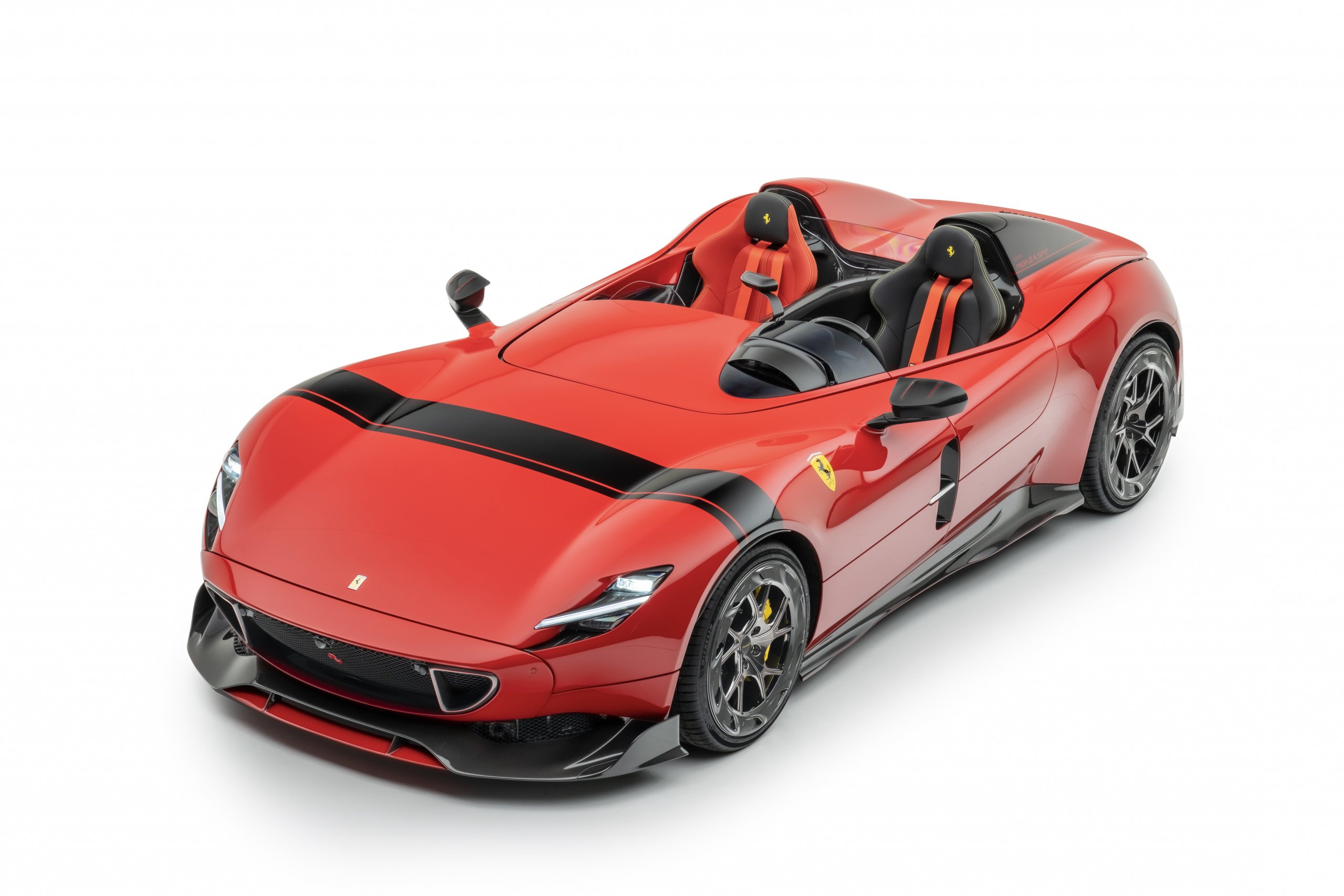
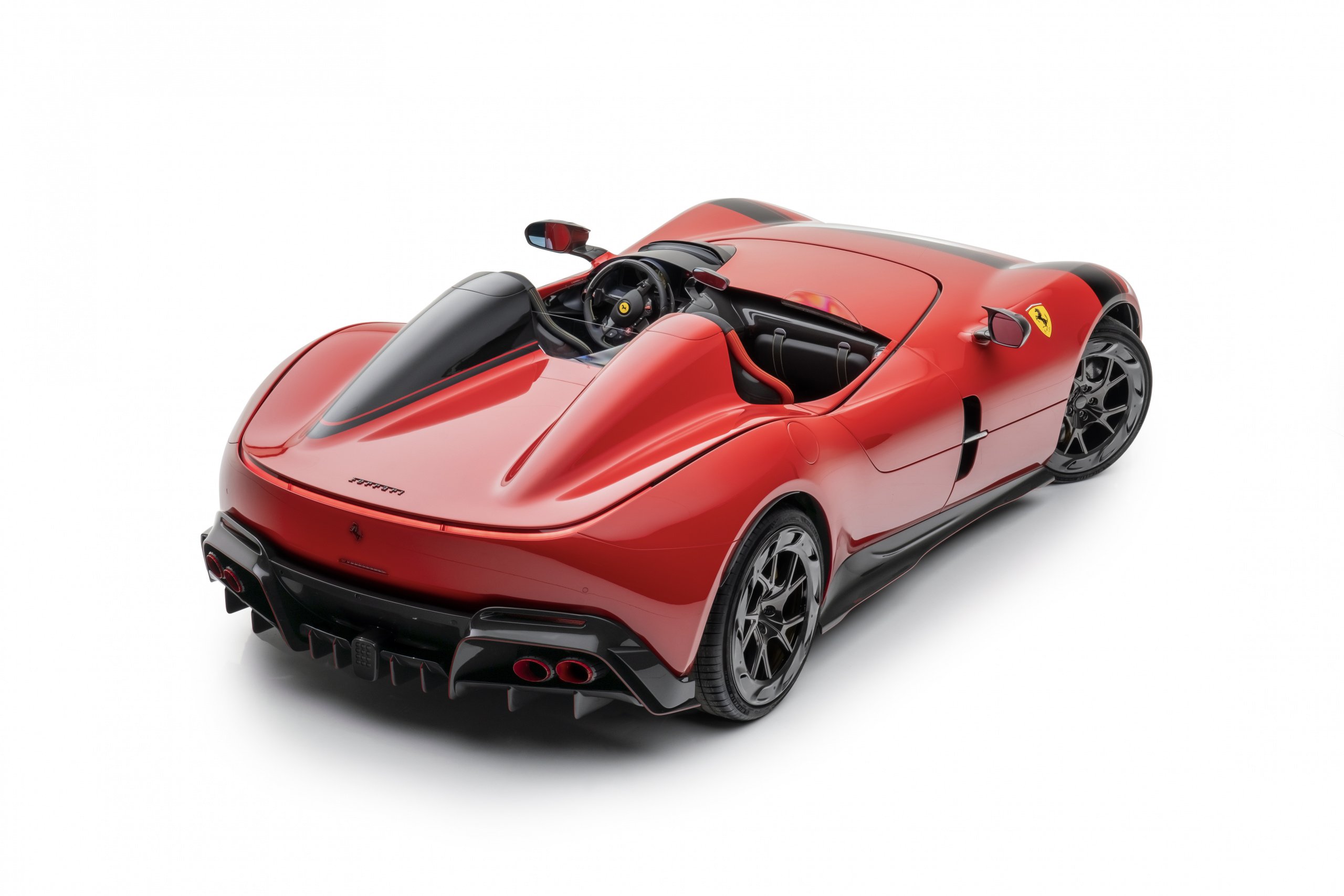
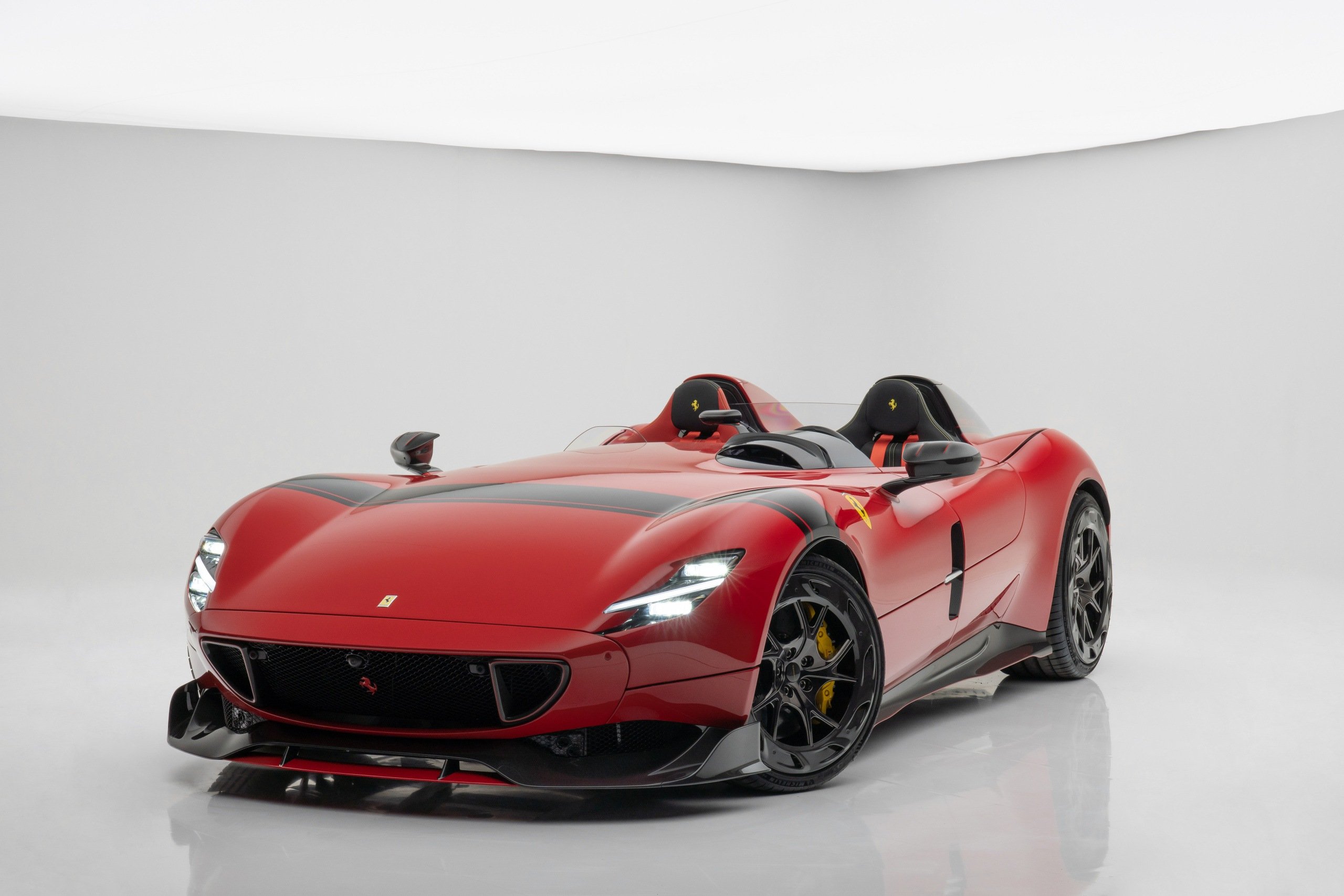
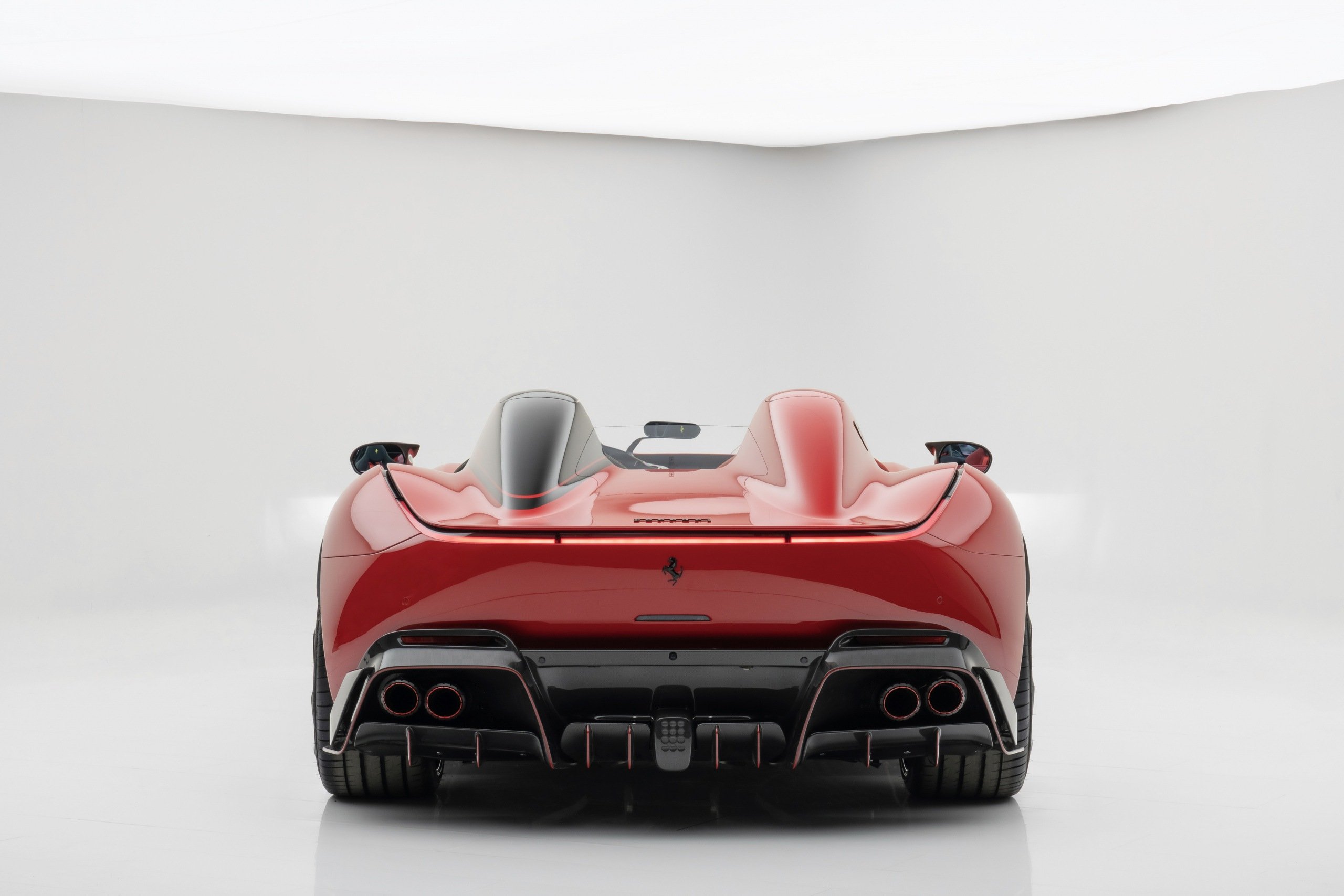
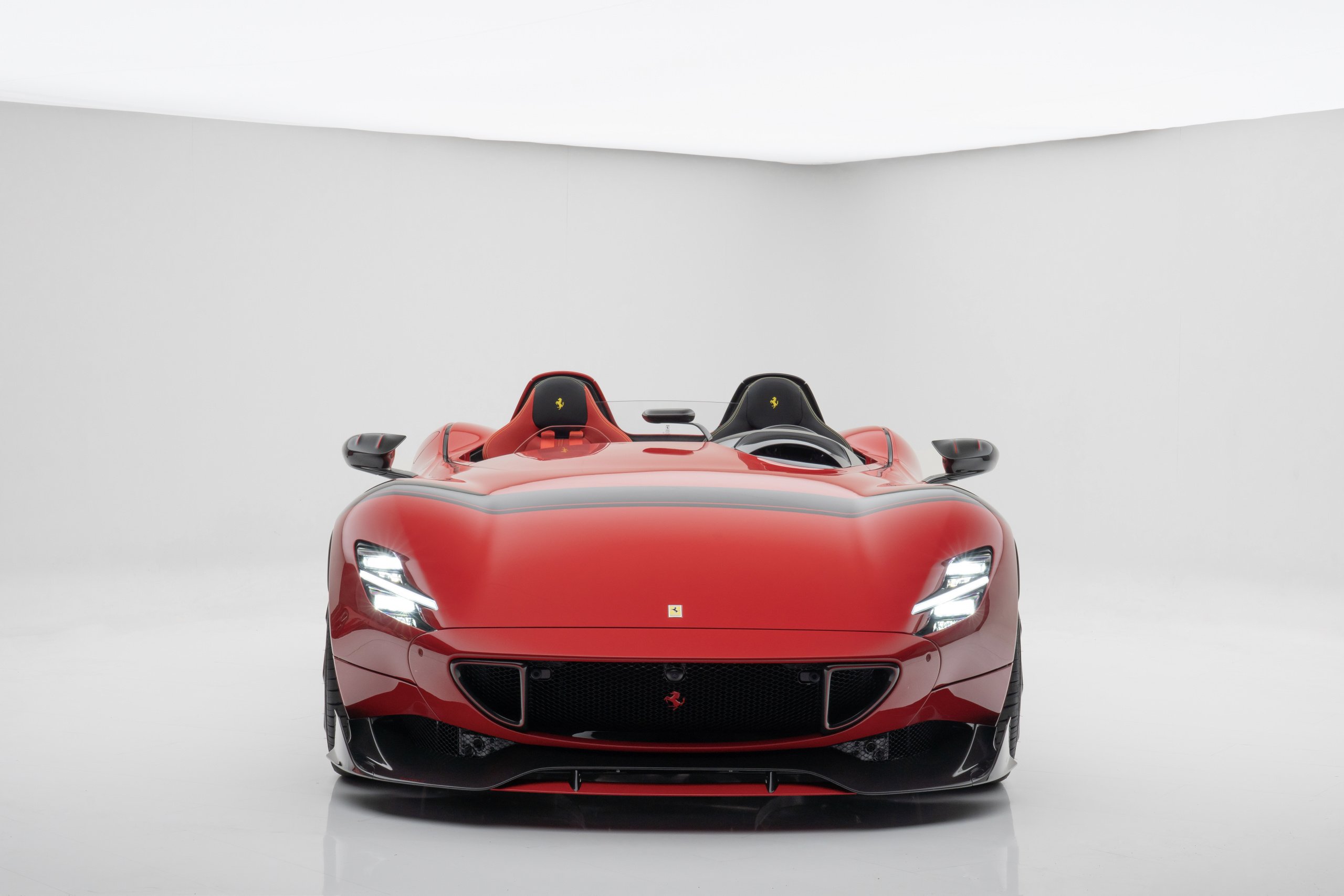
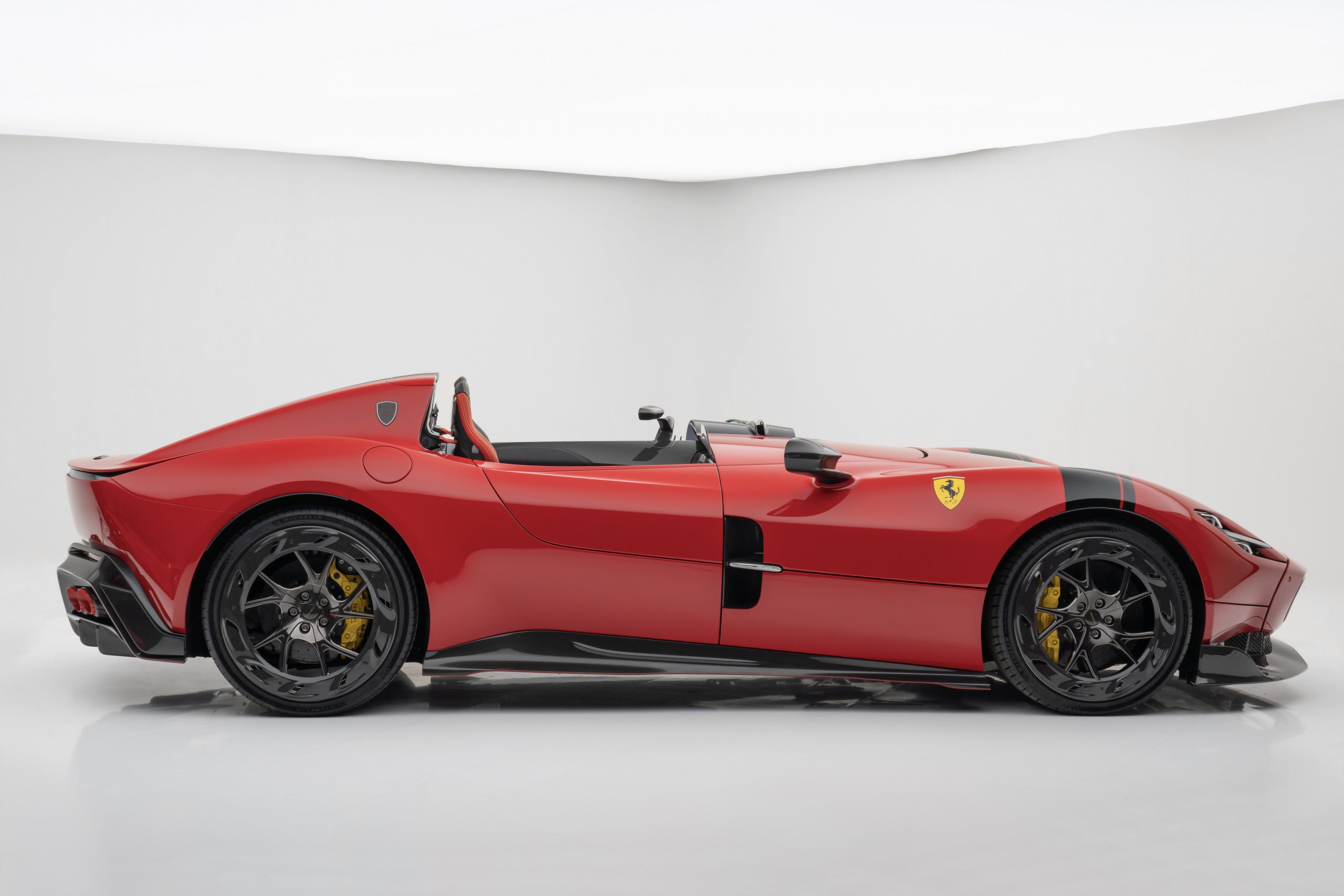
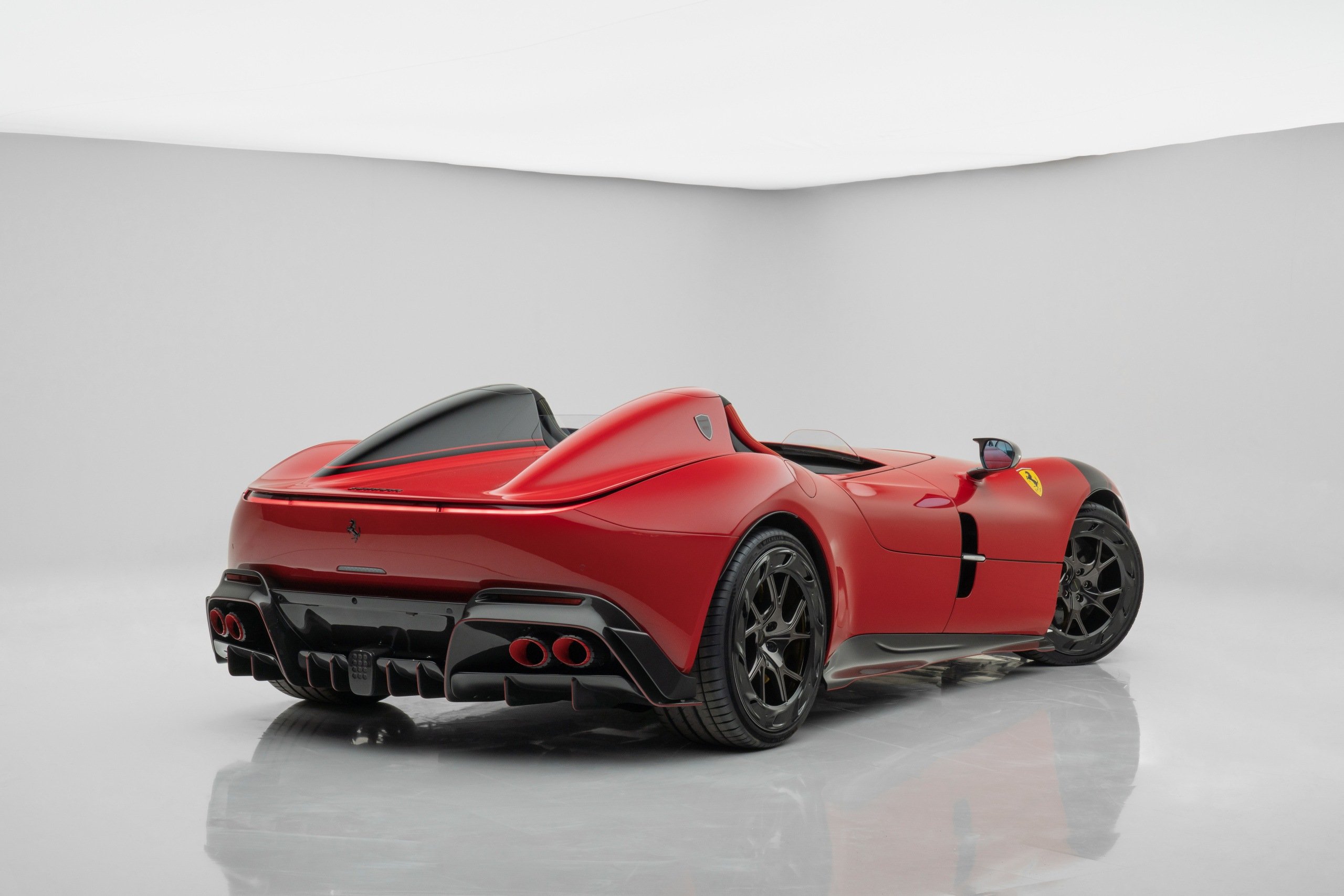
Mansory Carbon Fiber Body kit set for Ferrari Monza SP1/SP2


MANSORY Carbon Fiber Body-Kit Set for the FERRARI MONZA SP1 / SP2 — Carbon on an Icona-Series 499-Unit Roofless Speedster, Engineered Around the Aero Helmet-Flow Virtual Windshield
The Ferrari Monza SP1 and Ferrari Monza SP2 are the inaugural pair of Ferrari's Icona series, a bespoke collector programme announced at Ferrari's 2018 Capital Markets Day in Maranello and delivered to clients across 2019-2020. The two speedsters — SP1 in single-seat configuration, SP2 in two-seat tandem — share a roofless, windscreenless, doorless silhouette, an aluminium spaceframe lifted from the 812 Superfast, and the F140 6.5 L naturally-aspirated V12 uprated to the highest output Ferrari has ever extracted from that architecture. Total production across both bodystyles is capped at 499 units combined. A carbon overlay on a car this rare is not a styling exercise — it is a provenance event. Mansory's Monza programme is engineered as such.
The Icona series and what "collector programme" means at Ferrari
The Icona series is Ferrari's post-2018 bespoke collector track — parallel to the mainstream range, reserved for existing multi-car Ferrari clients invited by Maranello. The brief is explicit: retro-futurist bodywork drawing on a specific historical Ferrari reference, an allocation capped at a round collector-legible number, and an engineering baseline borrowed from a current flagship. The Monza reference is the barchetta era — the 1948 Ferrari 166 MM and the 1954-1955 Ferrari 750 Monza, single- and two-seat sports-racers driven by Ascari, Fangio and Moss. "Collector programme" at Ferrari is not marketing: delivery slots are allocated by invitation, the car is tracked through Ferrari Classiche from first registration, resale values are referenced against other Icona-series hypercars. The second Icona, the Daytona SP3, followed in 2021. At 499 Monzas global, every commission is tracked, and a carbon overlay on an Icona reshapes the collector conversation in a way no 296 GTB or Portofino M programme ever does.
Monza SP1 vs SP2 — single-seat vs tandem architecture
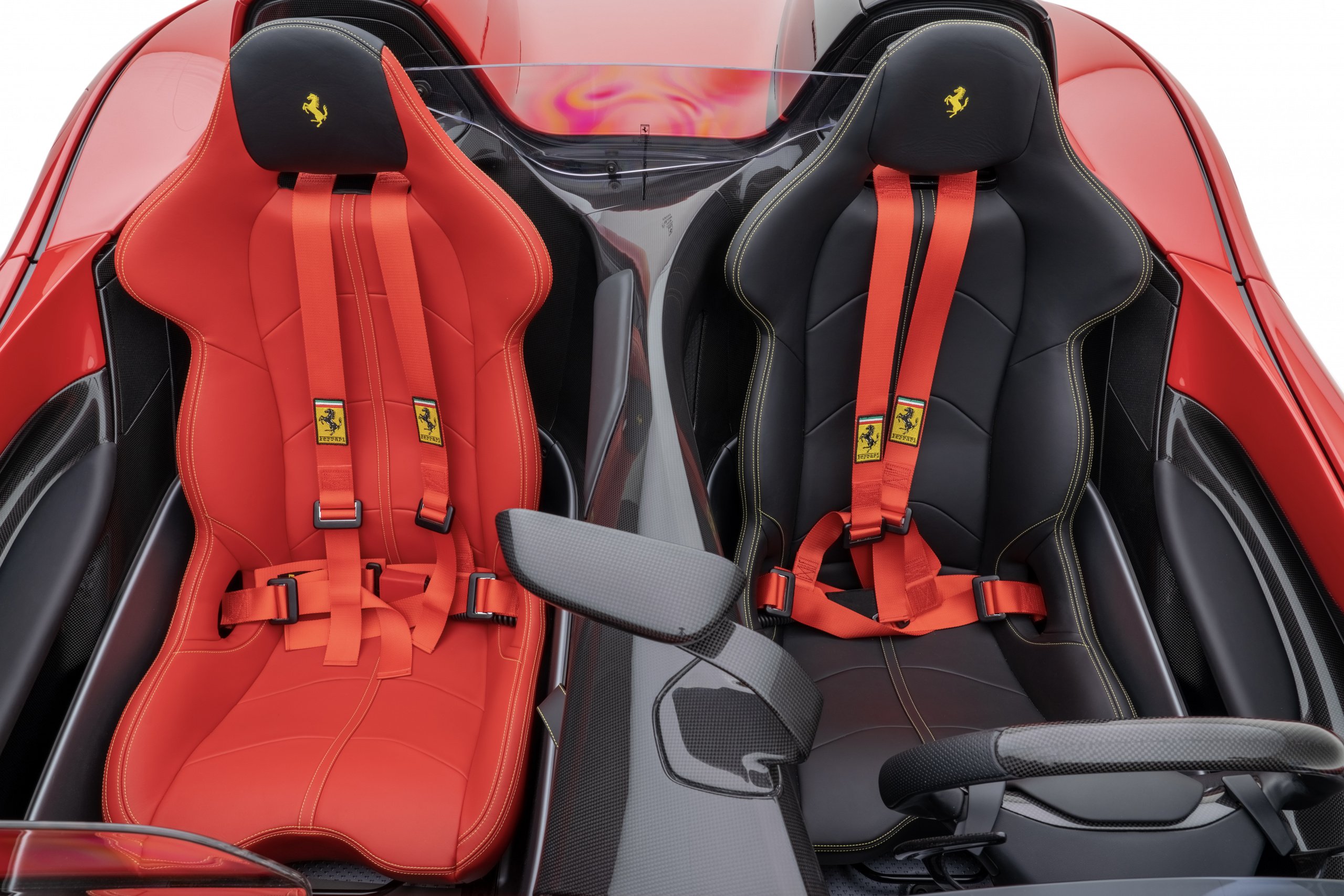
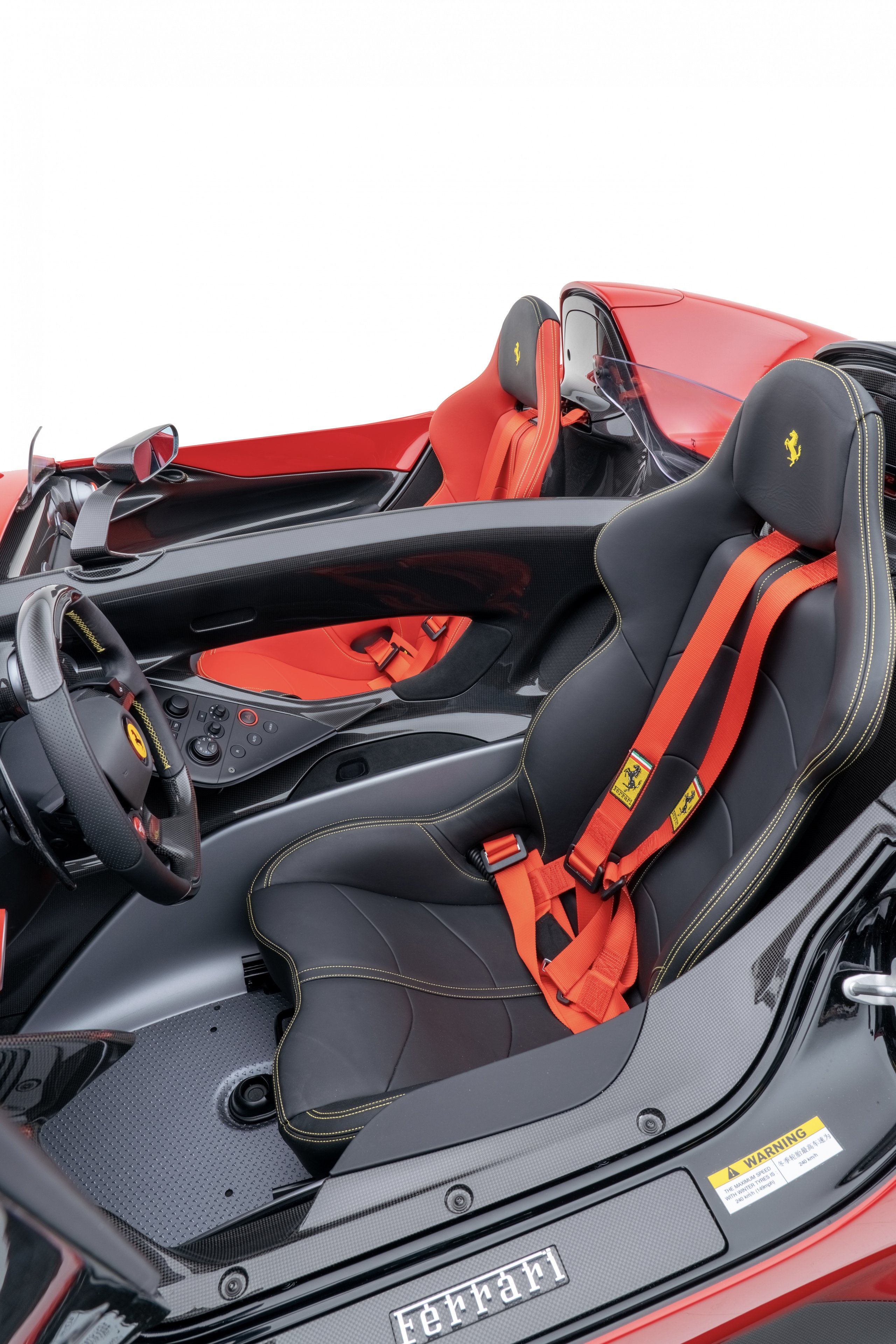
The SP1 is the single-seat speedster — a solitary driver's cockpit with a carbon tonneau covering the passenger-side bodywork. The SP2 is the two-seat tandem: the tonneau is replaced by a carbon headrest fairing and a full second seat, offset in line with the driver's — not side by side. Both cars sit on the same 812 Superfast aluminium spaceframe, wear an Icona-specific single-shell carbon-fibre upper body, and share the same wheelbase, track, engine, transmission and aero. The two bodystyles split the 499-unit allocation, SP2 accounting for the larger share. For Mansory's programme this matters: SP1 clients tend to be ultra-single-seat collectors protecting cockpit purity; SP2 clients treat the car as a weekend touring tool. Spec requests skew accordingly — SP1 leans toward weave-matched subtle overlays, SP2 toward fuller fender-and-diffuser programmes.
Carbon kit components — what's even changeable on a roofless speedster
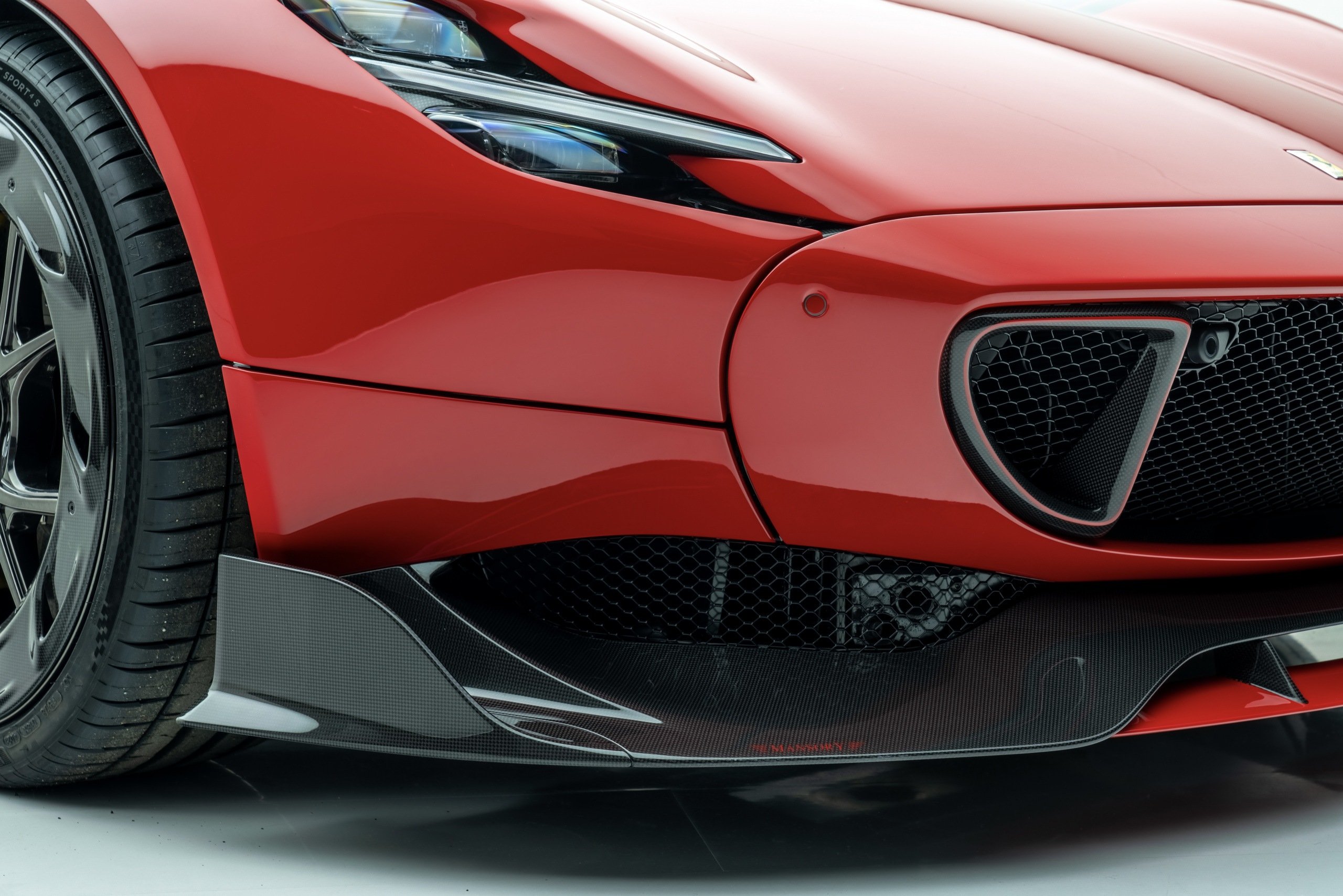
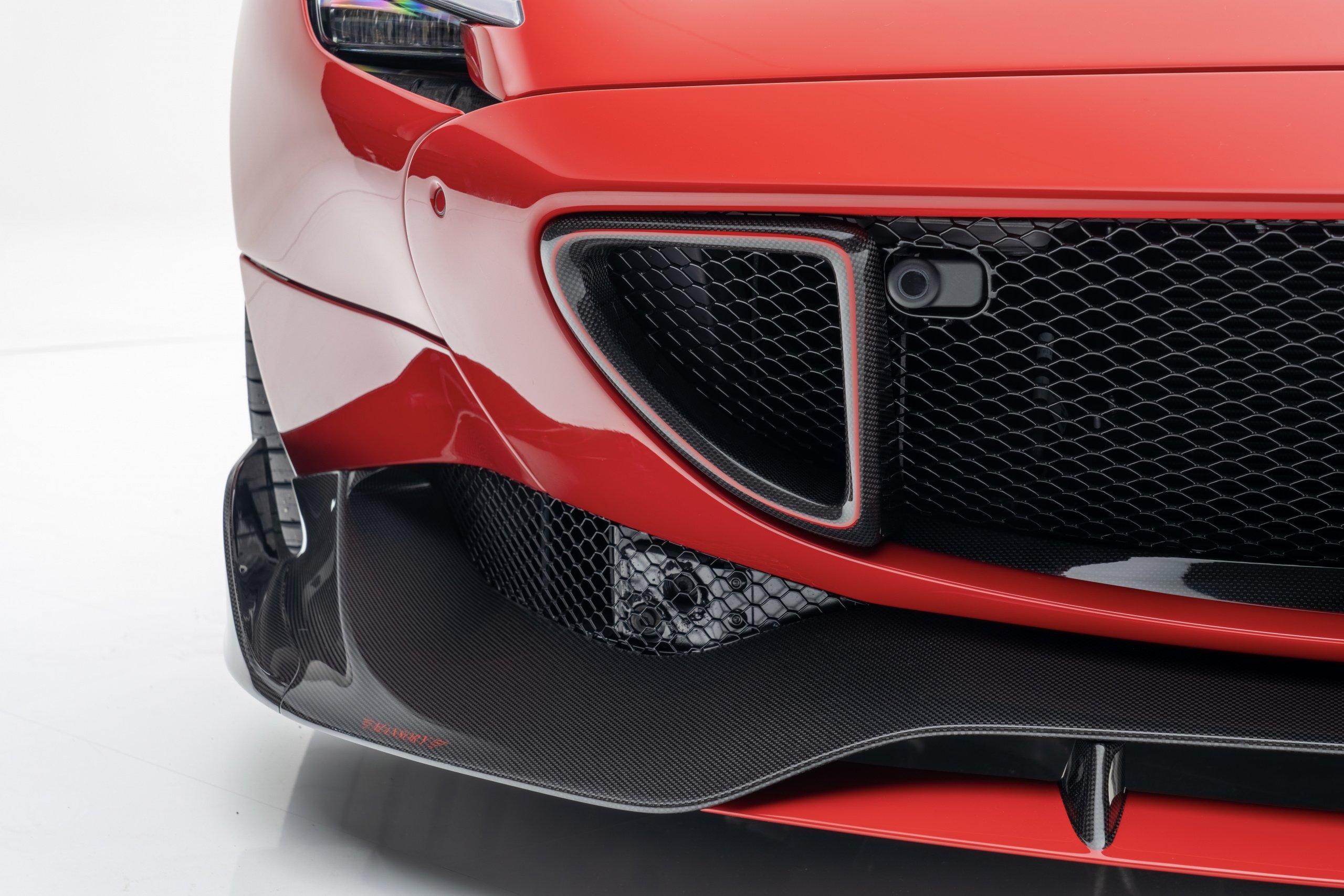
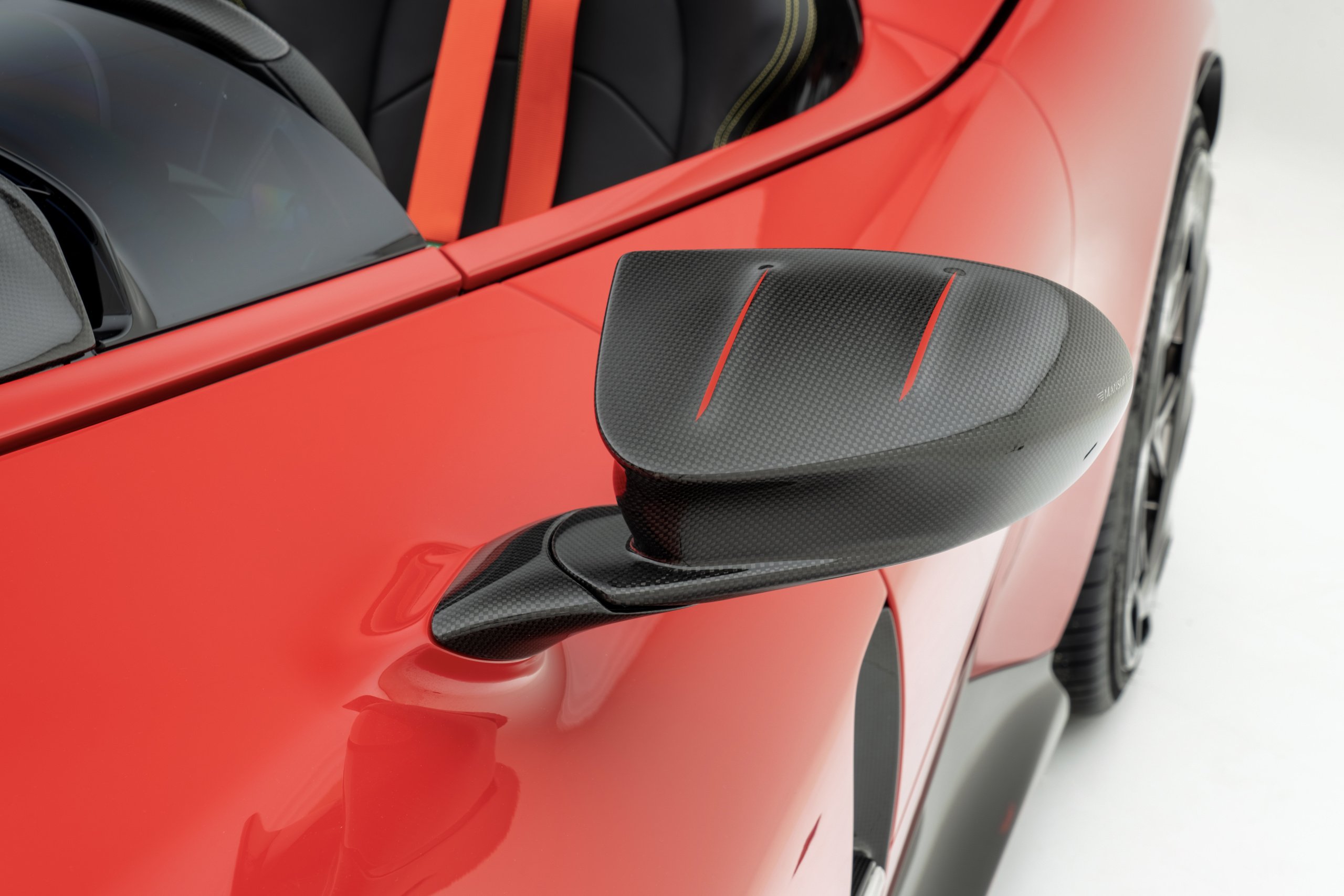
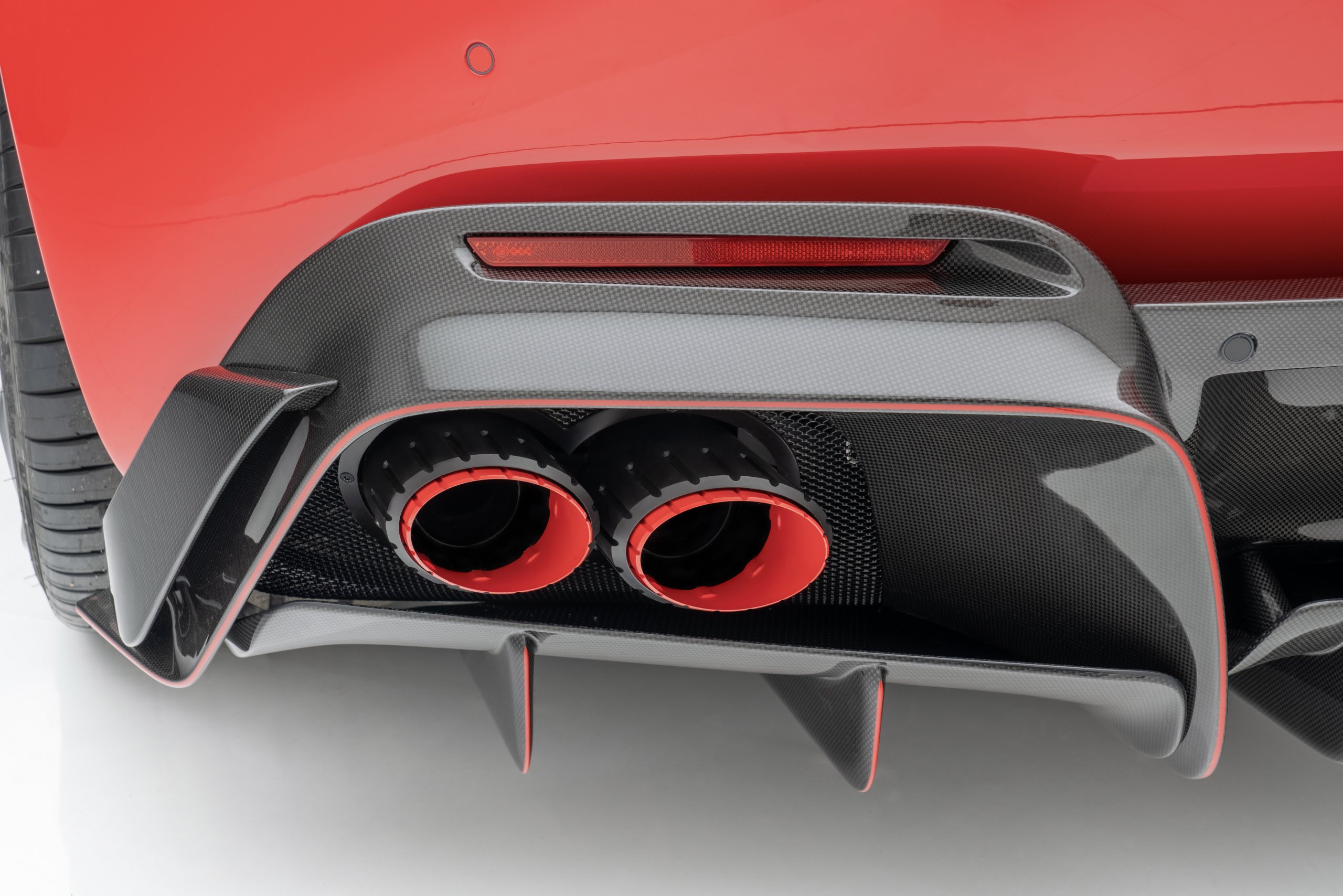
The Monza has no doors, no roof, no windscreen, no B-pillars and no conventional boot. Kit inventory is therefore tighter than on a conventional coupé — every component is an exterior aerodynamic or ornamental surface. Kit schedule: replacement carbon front splitter assembly, three-piece, with deeper chin profile and enlarged brake-cooling intakes; carbon bonnet overlay weave-matched to the factory F140 induction louvres; carbon front-fender crown strakes (non-structural overlay, preserves factory fender panel); carbon side-skirt extensions; carbon rear-fender crown strakes; replacement carbon rear diffuser with exposed central fin and twin Mansory exhaust bezels routed around the factory quad-exit exhaust; carbon tonneau panel (SP1 only — the blanking cover over the passenger cockpit area); carbon tandem headrest fairing (SP2 only — the twin-bump fairing sweeping back from the second seat); carbon cockpit-surround trim matching the factory Icona cockpit-lip carbon; carbon wing-mirror stalk fairings. No A-pillar, no greenhouse trim to touch. Interior carbon is available as a separate commission. Every surface is paint-through-clearcoat or raw-weave lacquer to client specification.
Aero helmet-flow virtual windshield — Mansory's retention brief
The defining aero feature of the Monza is the virtual windshield — a bonnet-mounted air deflector that redirects the airstream up and over the driver's helmet without a physical glass screen. The result is a calibrated helmet-flow pattern that keeps turbulence off the driver's upper body at cruising speeds, the reason both cars are classified as roadable speedsters rather than track-only devices. Ferrari's CFD and wind-tunnel work on this deflector is the core aero IP of the Monza. Mansory's retention brief is non-negotiable: the replacement splitter, bonnet overlay and fender strakes are developed so the air path into the base of the deflector is unchanged in mass-flow and angle, and the pressure distribution across the deflector lip is preserved. The SP2 tandem headrest fairing follows the same logic at the rear of the helmet-flow corridor. Not all Monzas are registered road-legal in every market: Germany issued a special dispensation around the absent windscreen, and US-market cars were fitted with a retrospective small windscreen for 50-state legality. Kit fitment respects both variants.
Wheels — 21" forged for the Monza
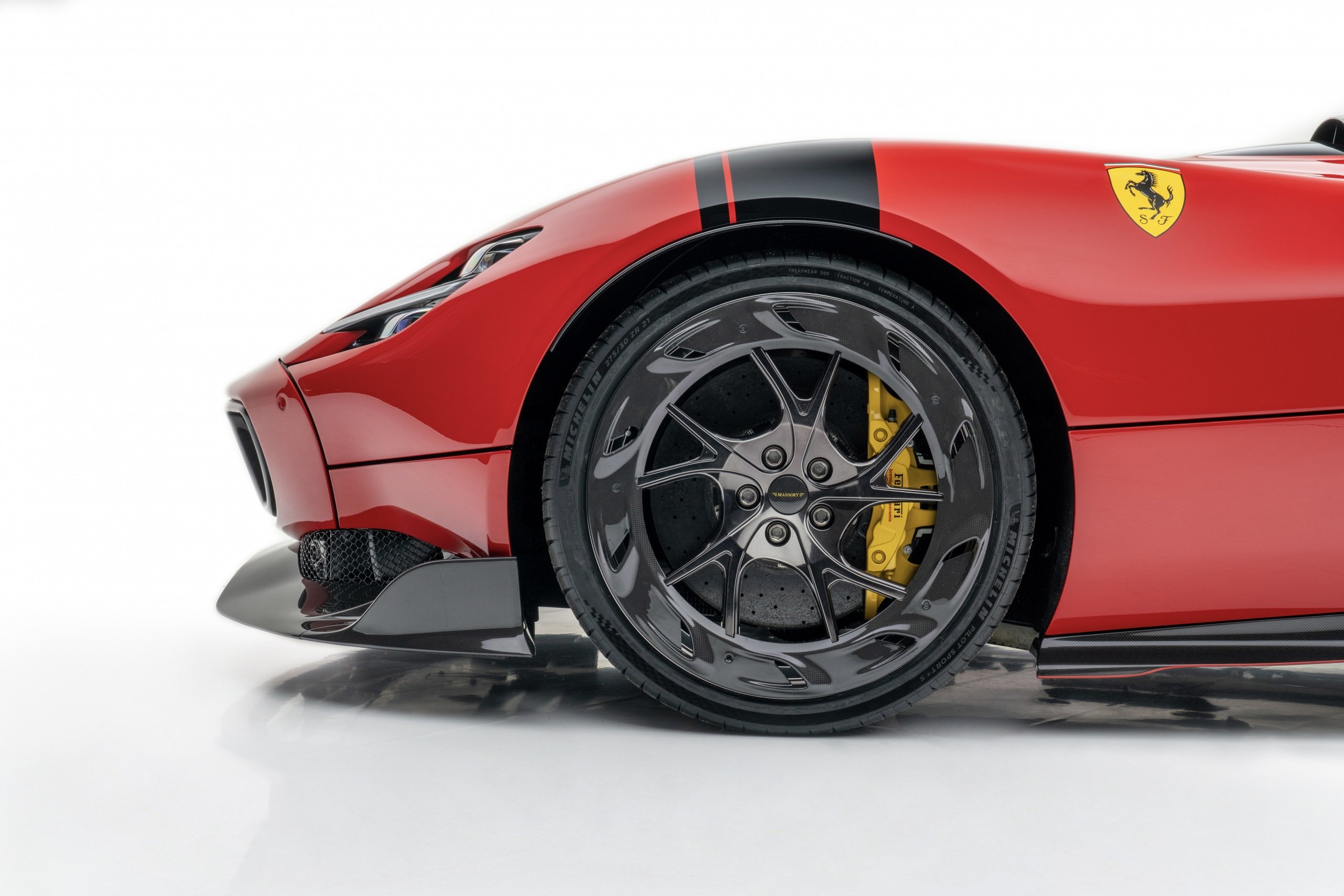
Factory Monza wheels: 21" front and 21" rear, forged, center-lock (shared with 812 Superfast fitment). Mansory Monza fitment: Mansory FM.8 21" deep-concave multi-spoke and Mansory Y.7 21" forked-Y, forged, center-lock. Staggered tyre spec: 275/35 R21 front / 315/30 R21 rear — factory-matching section widths to protect kerb weight and aero balance. Finishes: matte-black, satin-gunmetal, glossy-bronze, tri-coat pearlescent, Ferrari paint-to-sample to Rosso Corsa or Tailor Made code. The 21" constraint is deliberate — the Monza chassis was not engineered around a 22" rear step, and Mansory's aero-retention brief rules out diameter increases that would disturb the helmet-flow pressure field. Center-lock hardware is Ferrari-coded and torque-documented. Catalogue: hodoor.world/collection/forgedwheels.
Three collector regions
The 499-unit allocation concentrates in a handful of wealth centres. Three regions stand out for Monza density and for the kind of conversations Mansory has on this programme.
Switzerland
Swiss-registered Monzas sit in private collector garages around Zürich, Genève and Zug. Climate-controlled storage, historic-plate registration and Classiche-traceable paper trails are the norm. Swiss commissions tend toward weave-matched overlays rather than fuller programmes — carbon that reads as factory-adjacent rather than aftermarket. Documentation is prepared to Swiss technical standards for customs and registration. Regional detail: Switzerland wide-body kits and forged wheels.
Hong Kong
Hong Kong Monzas sit in the top tier of a compact but fiercely focused collector community. Road-use is rare — the cars appear at concours lawns and private drives on the Peak. Hong Kong commissions lean toward paint-to-sample finishes matching collection-wide themes. Kit fitment is carried out by Ferrari-experienced workshops in Kowloon and the New Territories. Regional detail: Hong Kong wide-body kits and forged wheels.
United States
US-market Monzas are the subset fitted with the retrospective small windscreen for 50-state legality. American commissions are concentrated in Florida, California and the North-East, and tend toward fuller programmes — tandem headrest fairings on SP2s, carbon diffuser work, forged wheels in gunmetal or bronze. US clients pair the Monza with other Icona-series cars and Ferrari Classiche-tracked historics. Note: the United States does not yet have a dedicated country slug in the hodoor.world worldwide-blog series — documentation is prepared bilaterally by email for US commissions until that landing page ships.
Commission
Commission requires: Monza VIN, SP1 vs SP2 confirmation, market (EU / UK / Swiss / US / HK / GCC), current Tailor Made paint and interior specification, carbon scope (overlay-only vs full programme), wheel choice (FM.8 vs Y.7, finish), weave-exposure preference (clearcoat raw or paint-through), installation location. Typical timelines: 14-16 weeks carbon and wheels on an Icona programme; installation 2 weeks at a Ferrari-experienced workshop familiar with Icona-series bodywork. Total: approximately 4.5 months from order to delivery. Contact: +44 7488 818747 (WhatsApp) or [email protected].
Geographic spread of Ferrari Monza Sp1 Sp2 commissions
Order traffic for the Mansory Ferrari Monza Sp1 Sp2 clusters around a handful of markets in 2026. Gulf demand routes through Dubai and Riyadh, with secondary volume across Oman. Western European commissions concentrate in the United Kingdom and the Netherlands, with periodic single-build orders out of Monaco. CIS owners route their commissions through the CIS market via the Tsar programme, with installation handled by partner workshops. Insured shipping with full customs paperwork is included on every Ferrari Monza Sp1 Sp2 order, regardless of destination.
Sibling Mansory builds
- Carbon Fiber Body kit set for Ferrari Portofino M
- shares the Mansory factory routing and warranty terms.
- Carbon Fiber Body kit set for Ferrari 458 Speciale
- uses the same component sourcing channel through Hodoor.World.
- Carbon Fiber Body kit set for Ferrari F8 Soft kit
- sits in the same Mansory programme tier on Hodoor.World.
FAQ — Monza SP1 / SP2 programme
Can the kit be applied to an SP1 (single-seat) or only SP2? Both. The component set splits into a shared core (splitter, bonnet overlay, fender strakes, skirts, diffuser, mirror stalks) and a bodystyle-specific element — the carbon tonneau panel for SP1, the carbon tandem headrest fairing for SP2. Commissions are priced accordingly.
Does the kit preserve the aero helmet-flow airflow pattern? Yes. The replacement splitter, bonnet overlay and fender crown strakes are engineered so that mass-flow and incident angle into the base of the virtual-windshield deflector remain within the factory-tolerance band. The helmet-flow corridor over the driver — and over the second seat on the SP2 — is preserved.
Effect on 499-unit collector value retention? A carbon overlay on an Icona is a provenance event. Reversible components (bolted bumpers, bolted diffusers, bolted mirror fairings, headrest fairing, tonneau panel) can be removed for concours presentation without trace; bonded fender strakes are documented at commission as a fitted modification and recorded in the car's history file. Collector-value outcome depends on presentation path chosen at resale.
Ferrari Classiche certification impact? Classiche for Iconas is Maranello's call at application. Reversible components are normally uncontroversial; bonded strakes require declaration. Mansory provides documentation at commission for clients intending a later Classiche submission.
Customer-commission lead time for a Ferrari Icona? Approximately 14-16 weeks carbon and wheels, plus 2 weeks installation — 4.5 months total. Icona programmes move slower than mainstream Ferrari programmes because weave-match, paint-to-sample and aero-retention verification each add discrete steps to the production schedule.
Interchange parts with 812 Superfast donor? Chassis and powertrain interchange is factual — spaceframe, F140 V12, 7-speed DCT and center-lock wheel hardware are shared. Bodywork interchange is nil: the Icona-specific single-shell upper body shares no external panels with the 812. Monza carbon components are not compatible with the 812 programme, which is catalogued separately.
Is the kit reversible? Fender crown strakes are bonded overlays and treated as permanent. Splitter, bonnet overlay, side skirts, diffuser, SP1 tonneau panel, SP2 headrest fairing and mirror stalk fairings are bolt-on / clip-on and can be reversed to factory specification at any time.