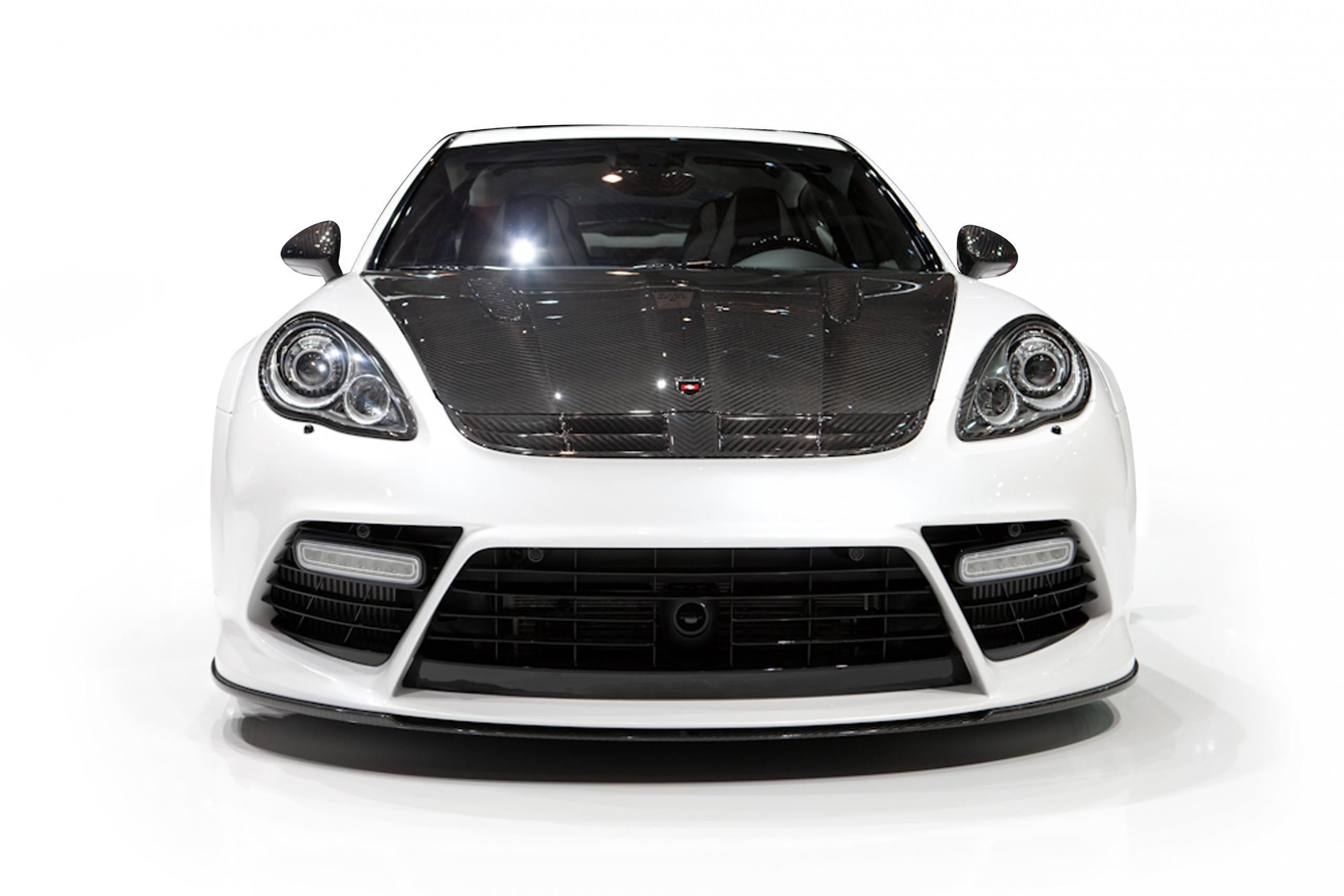
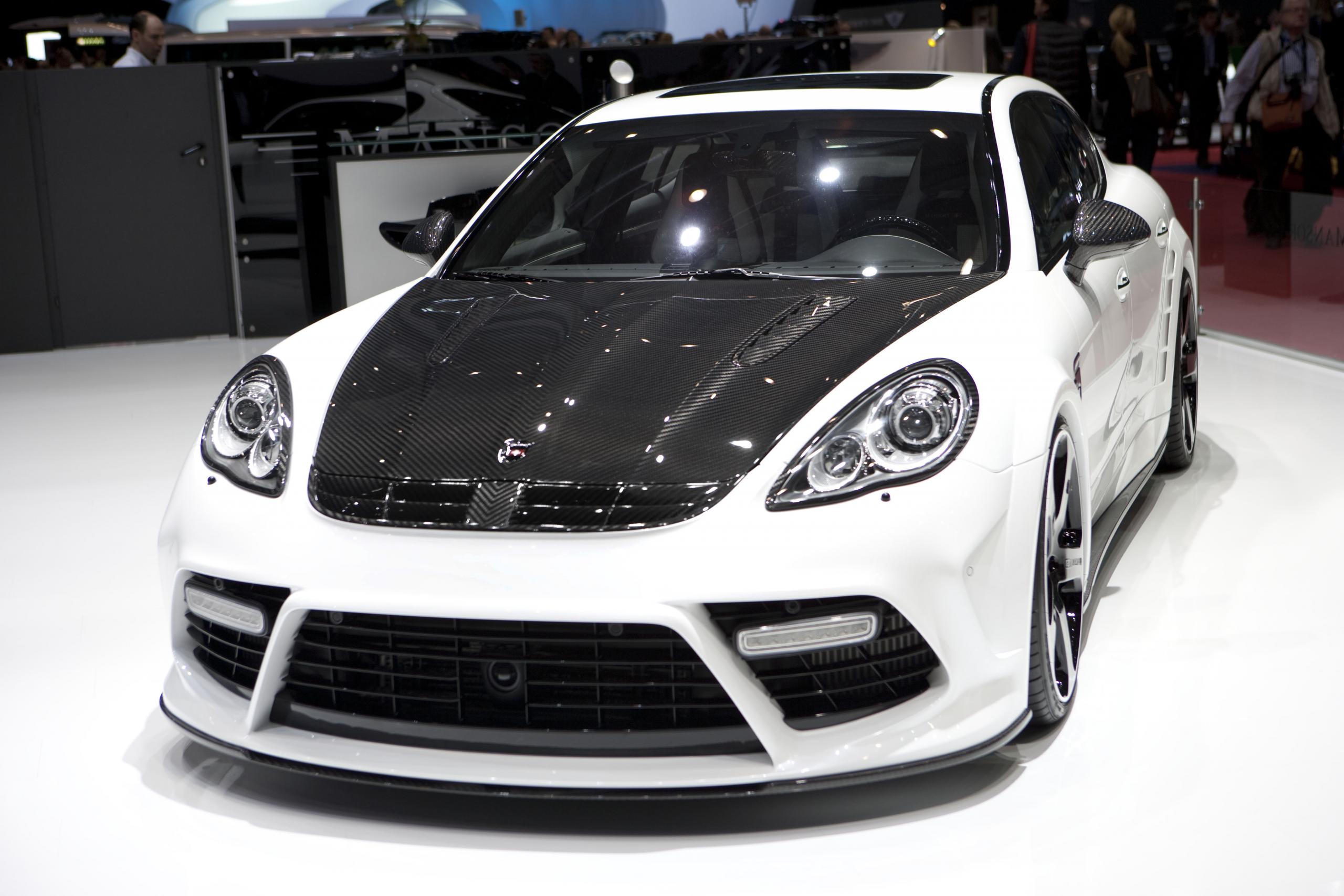
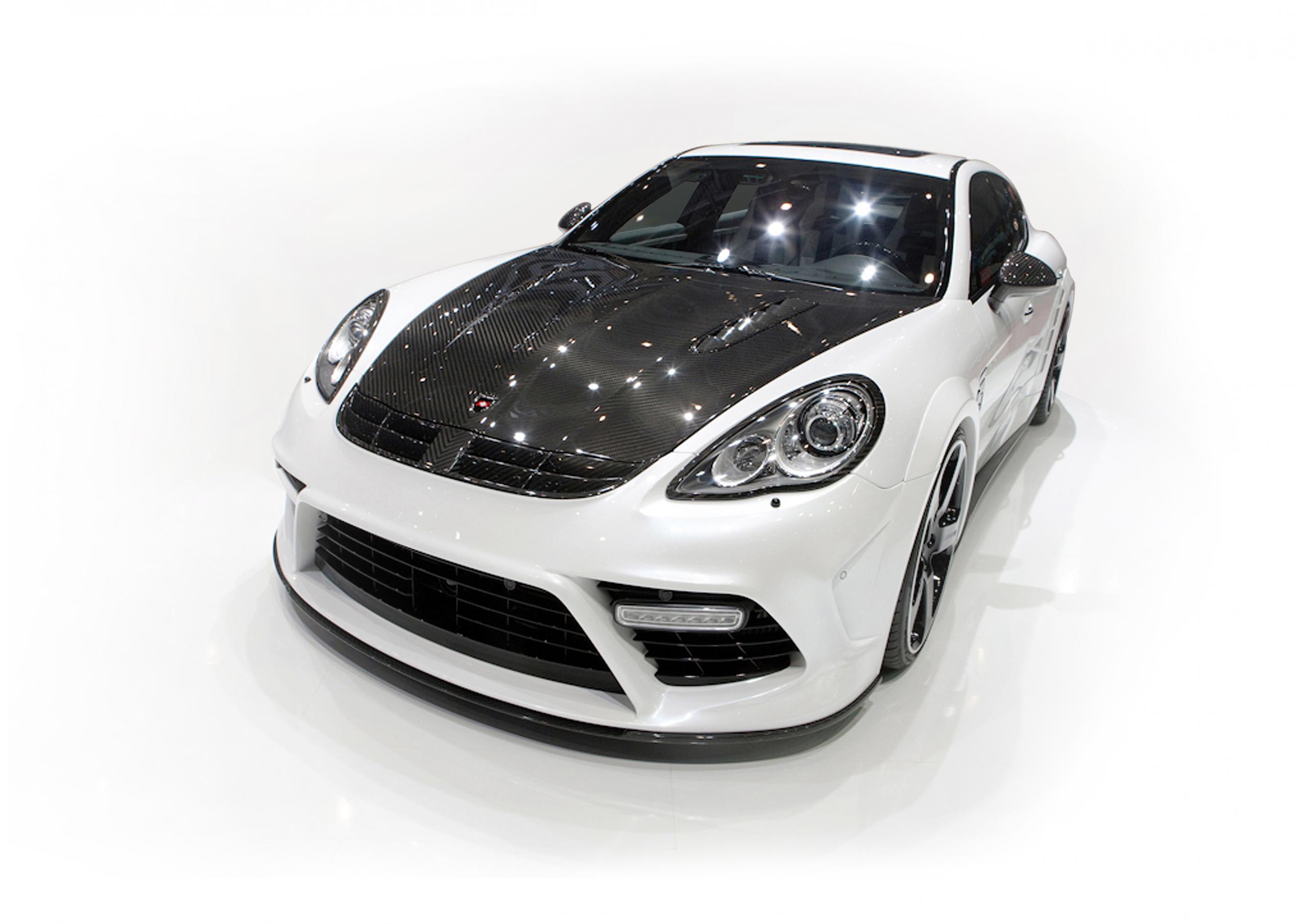
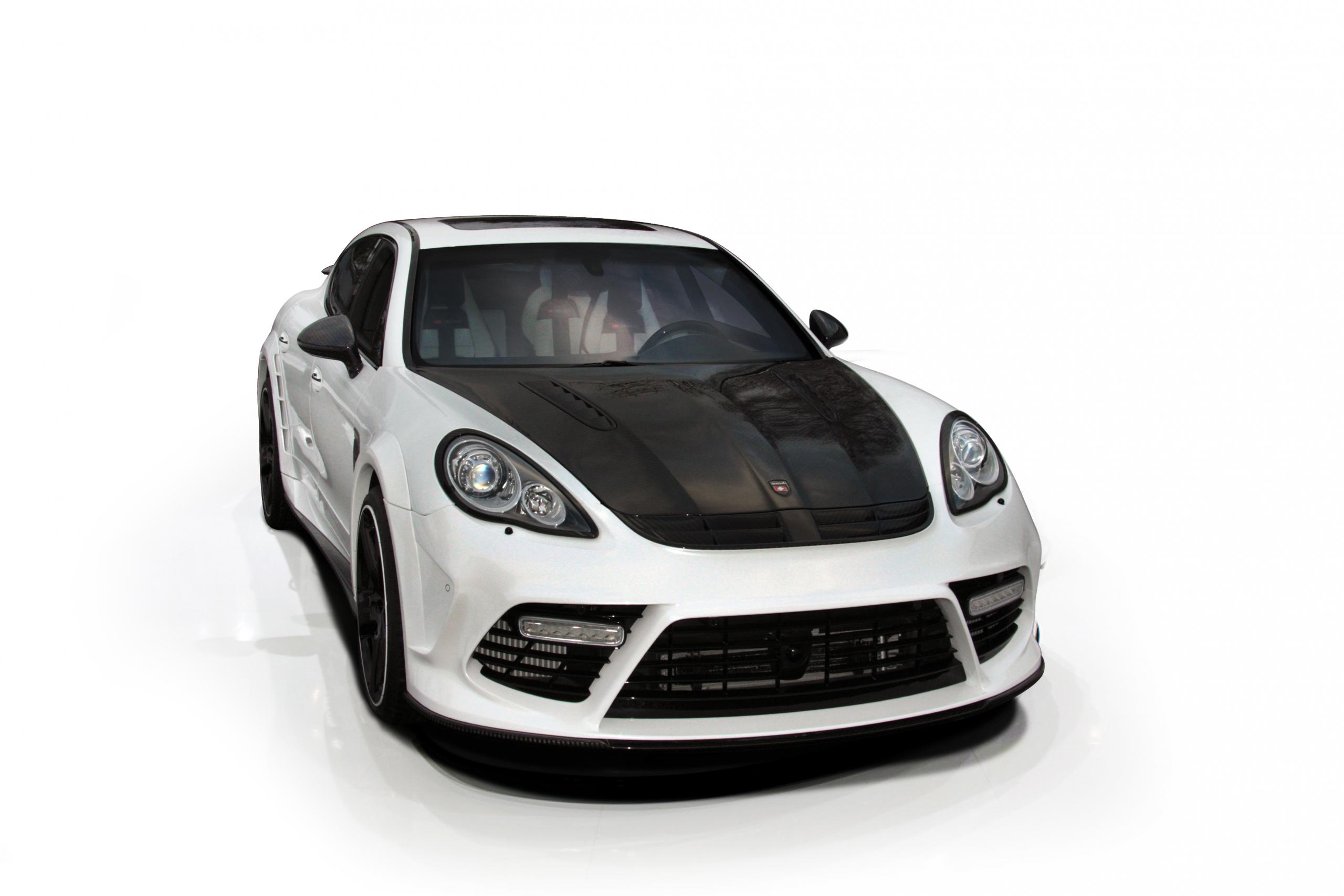
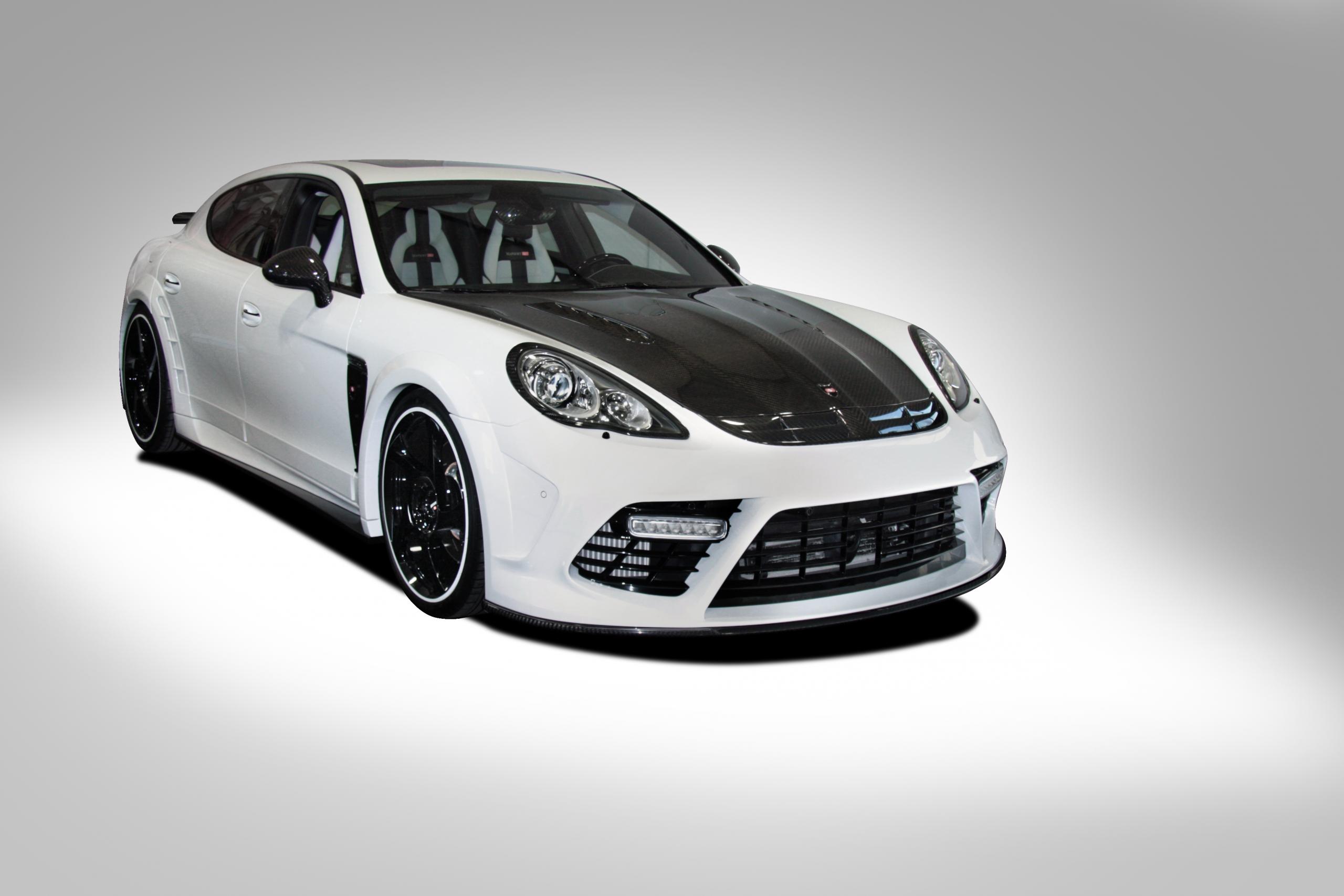
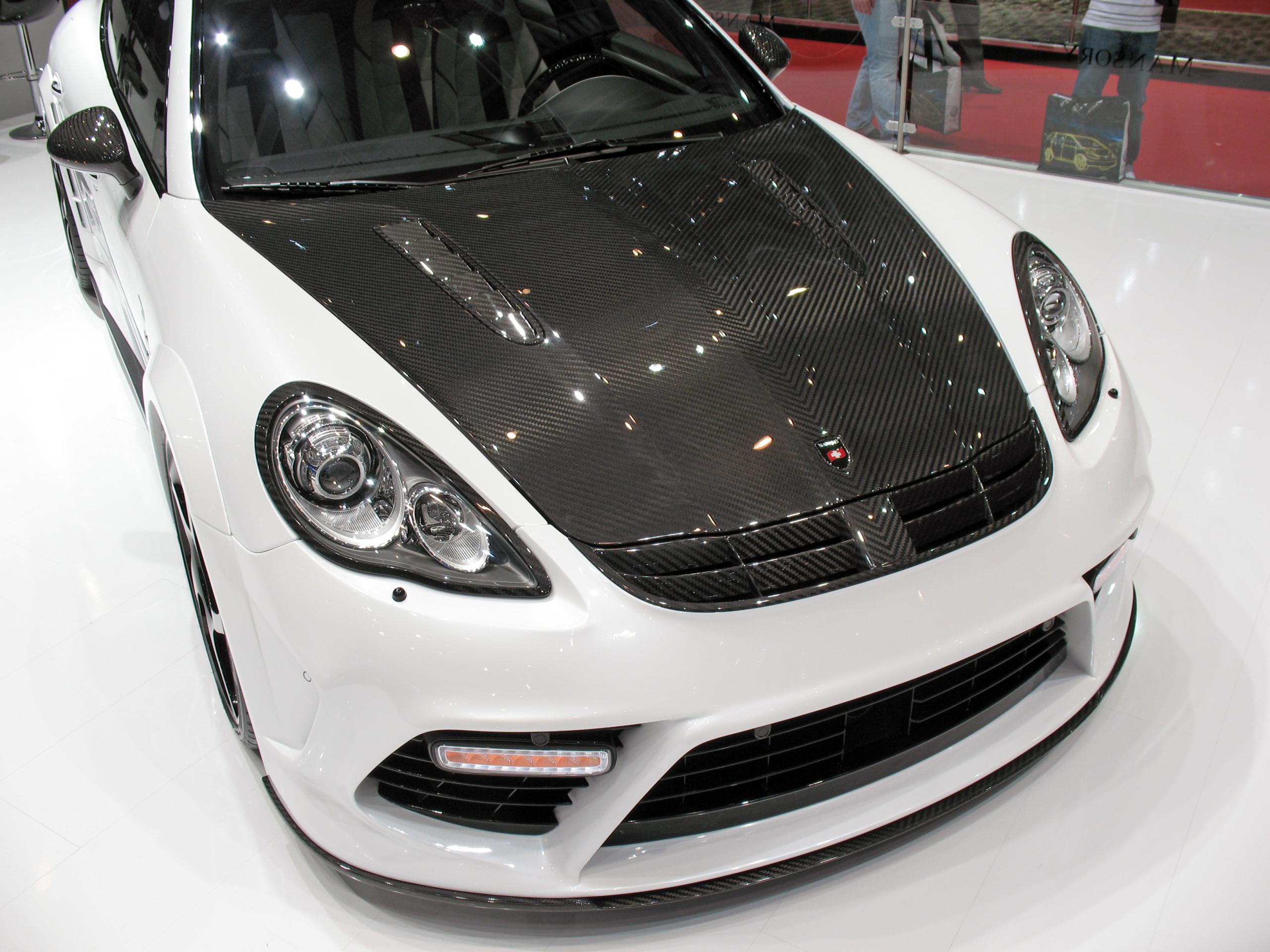
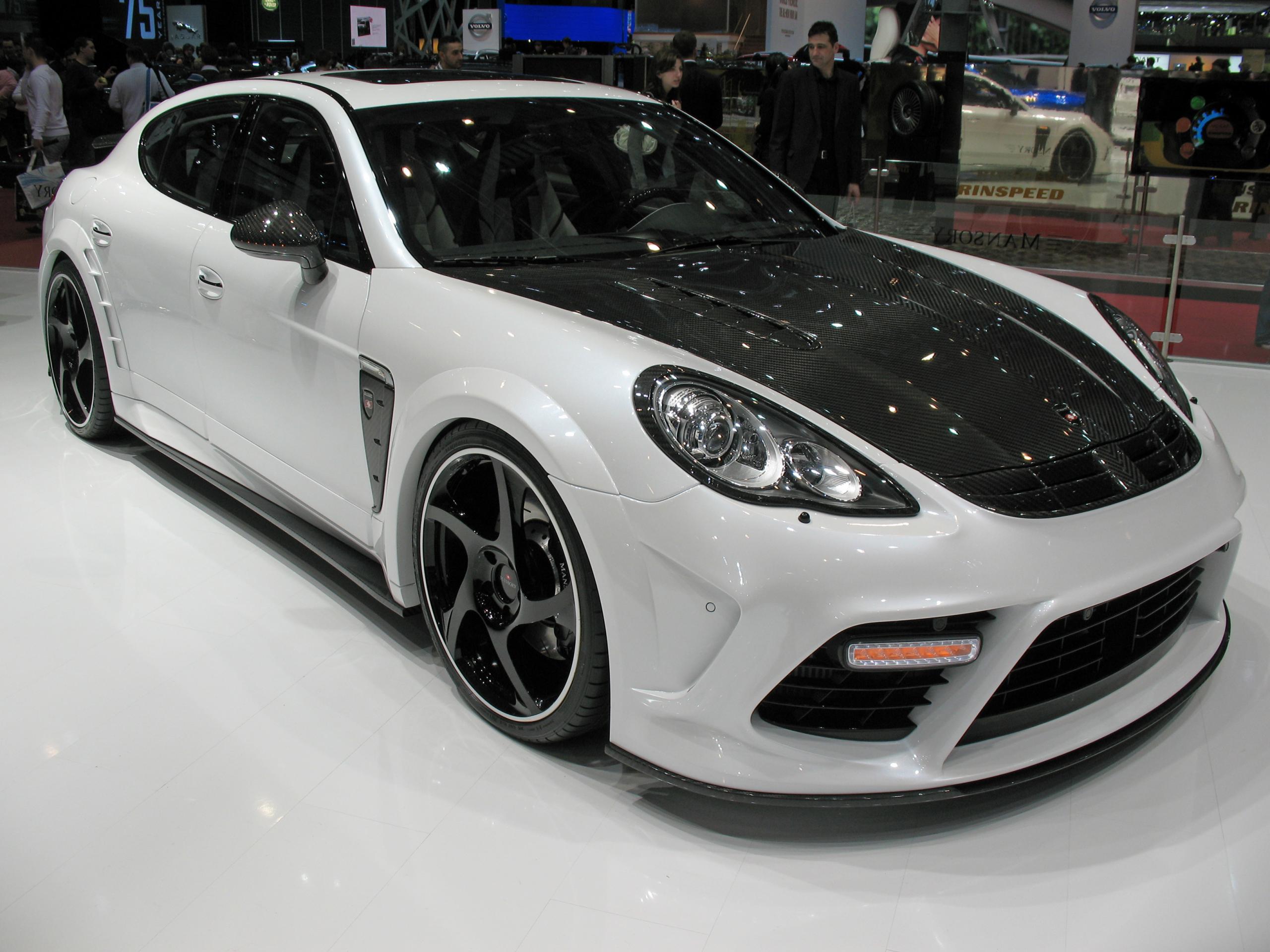
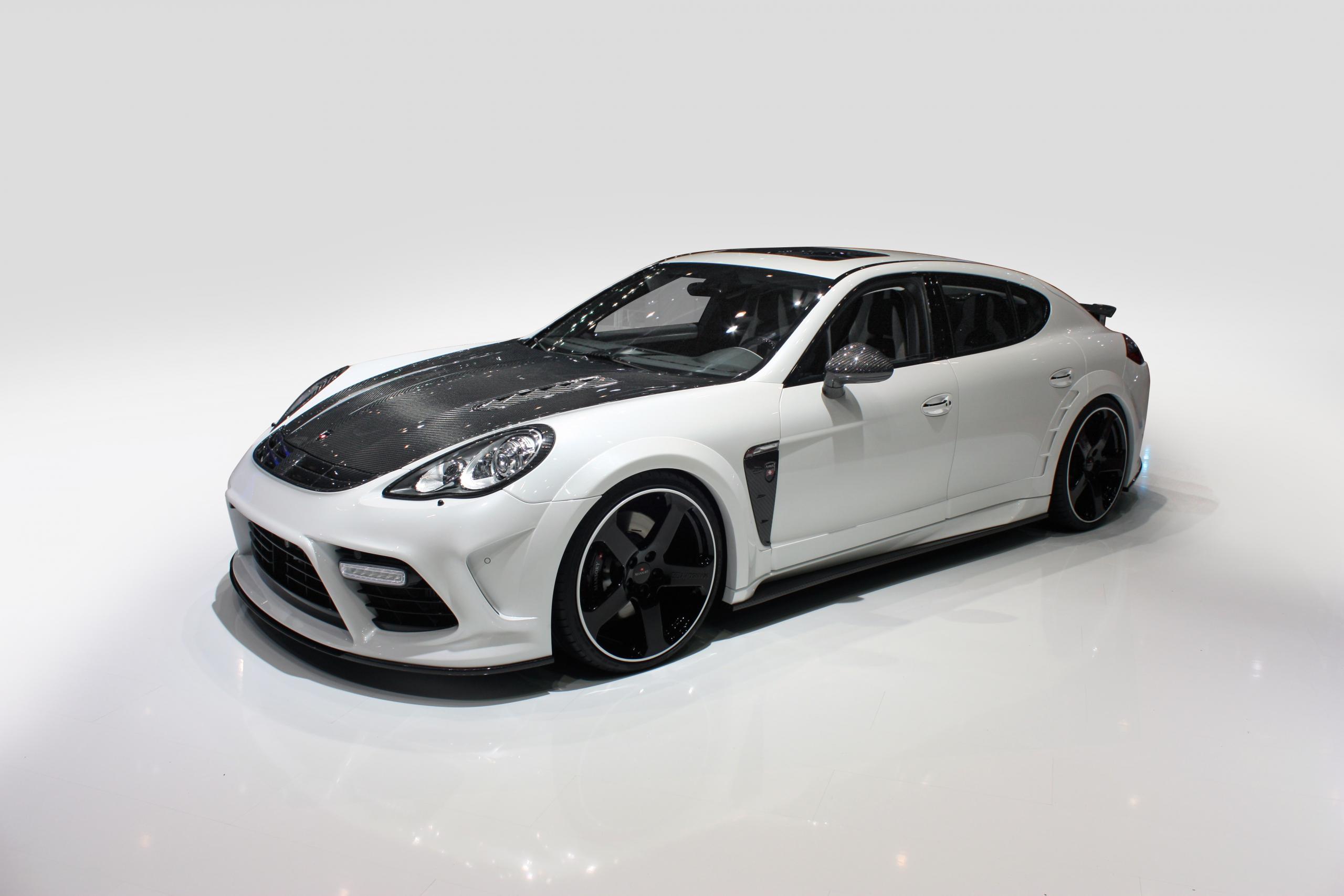
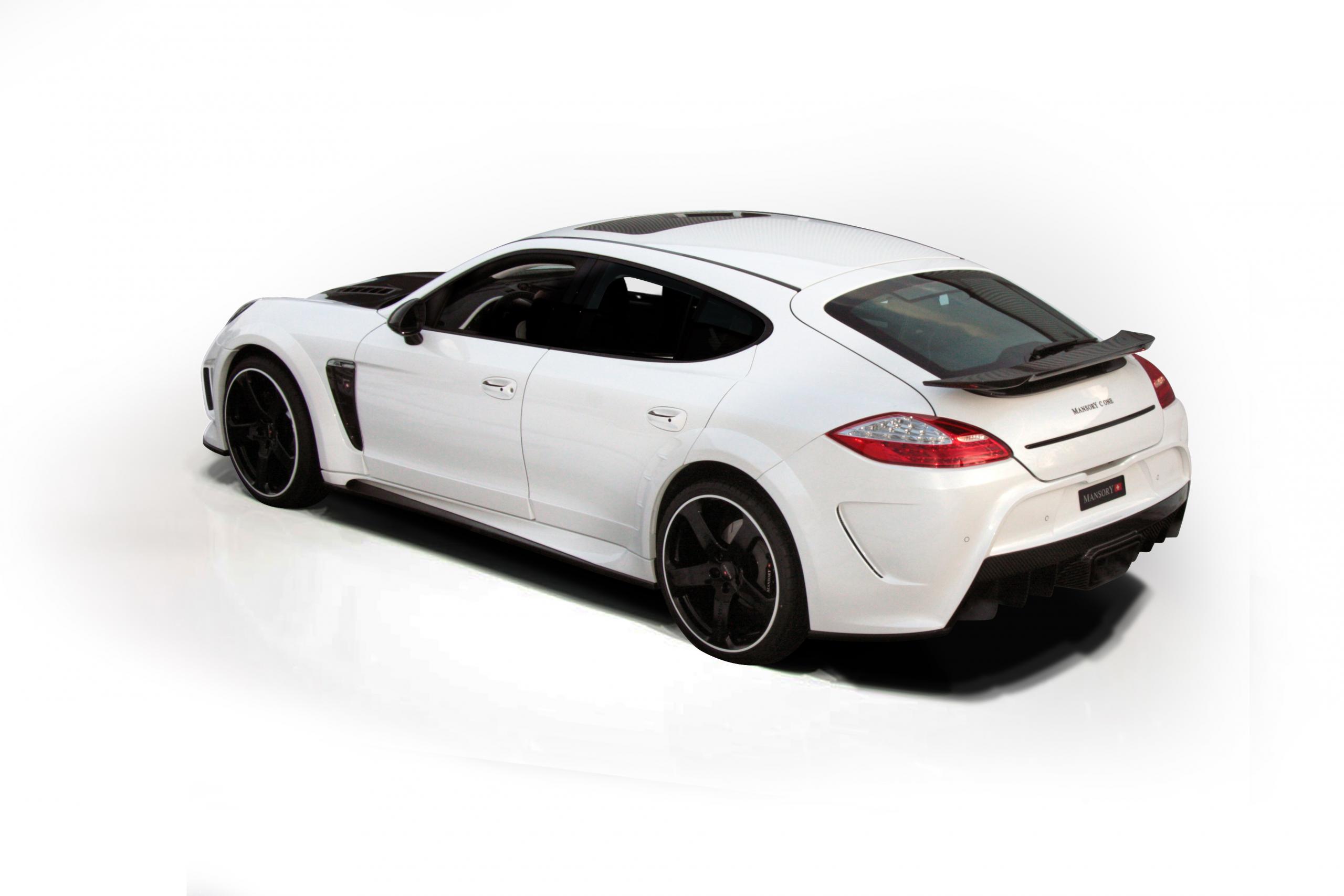
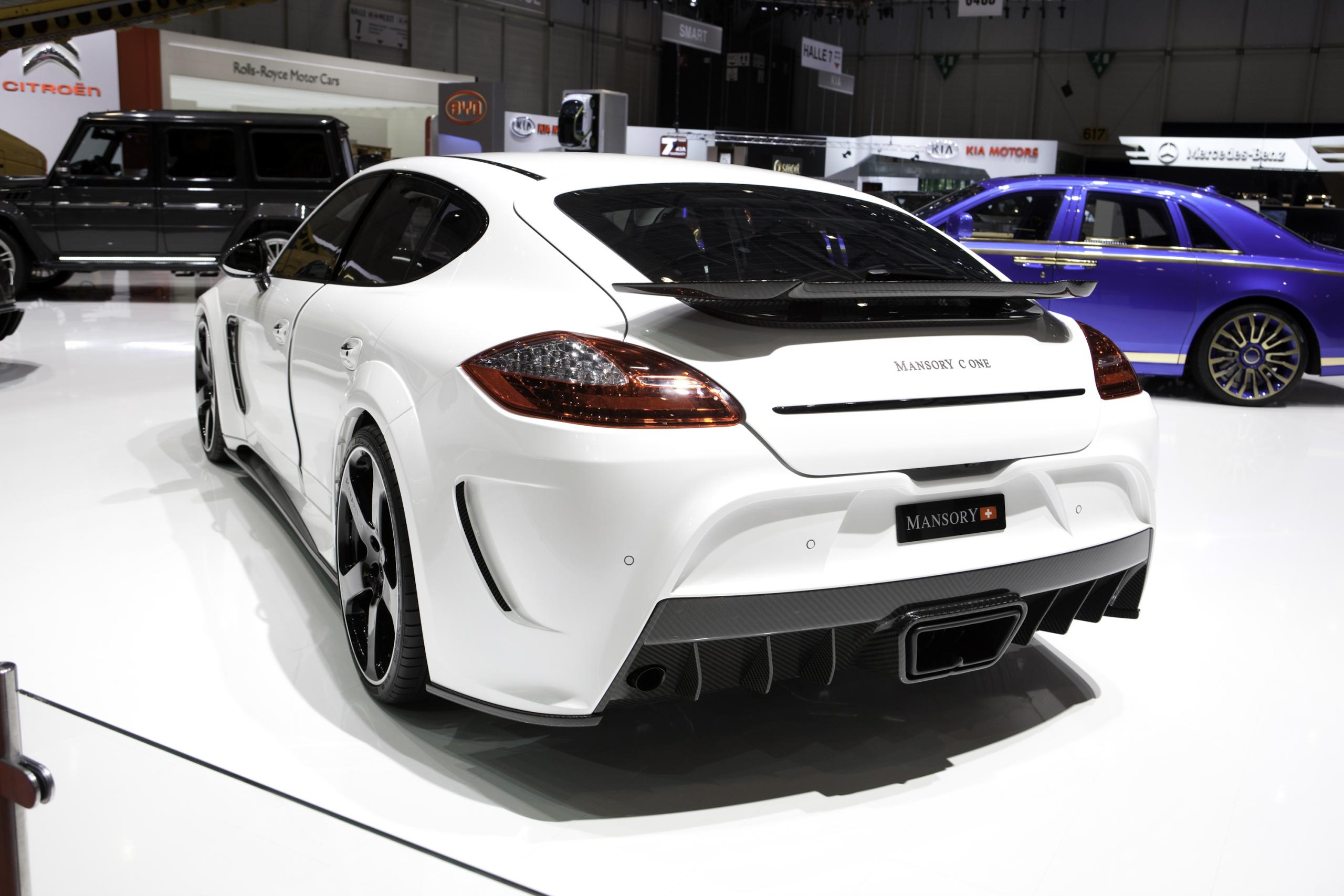
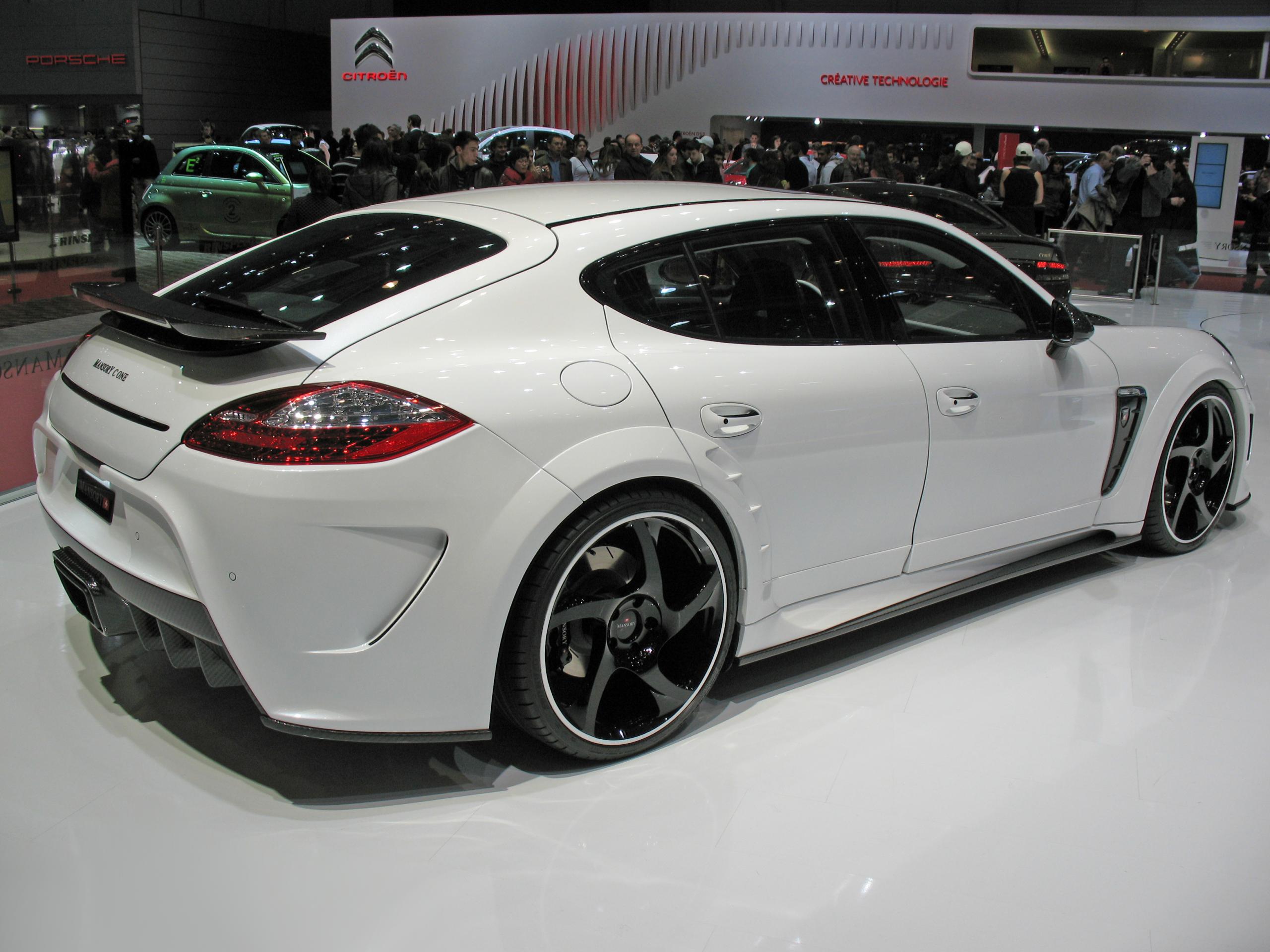
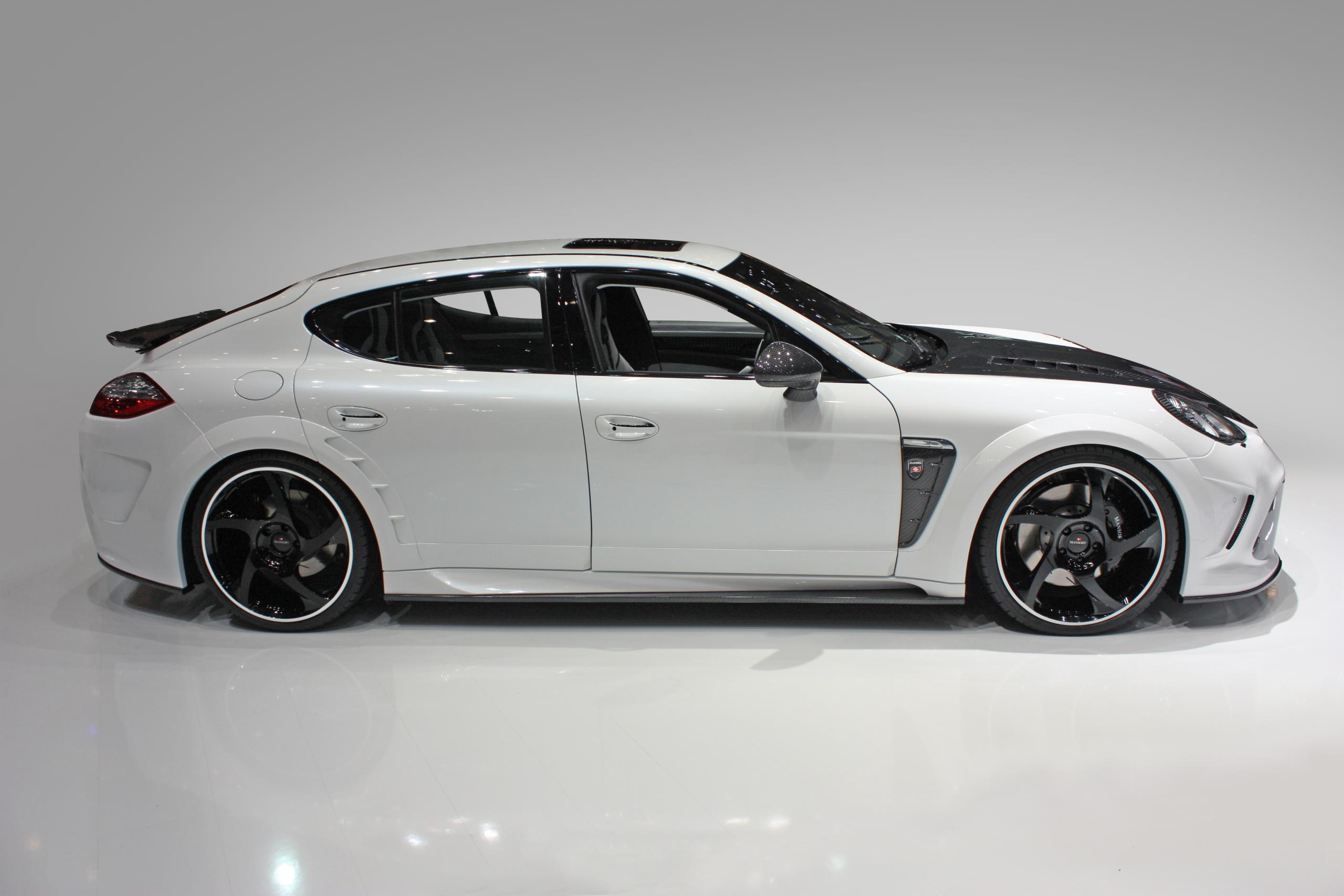
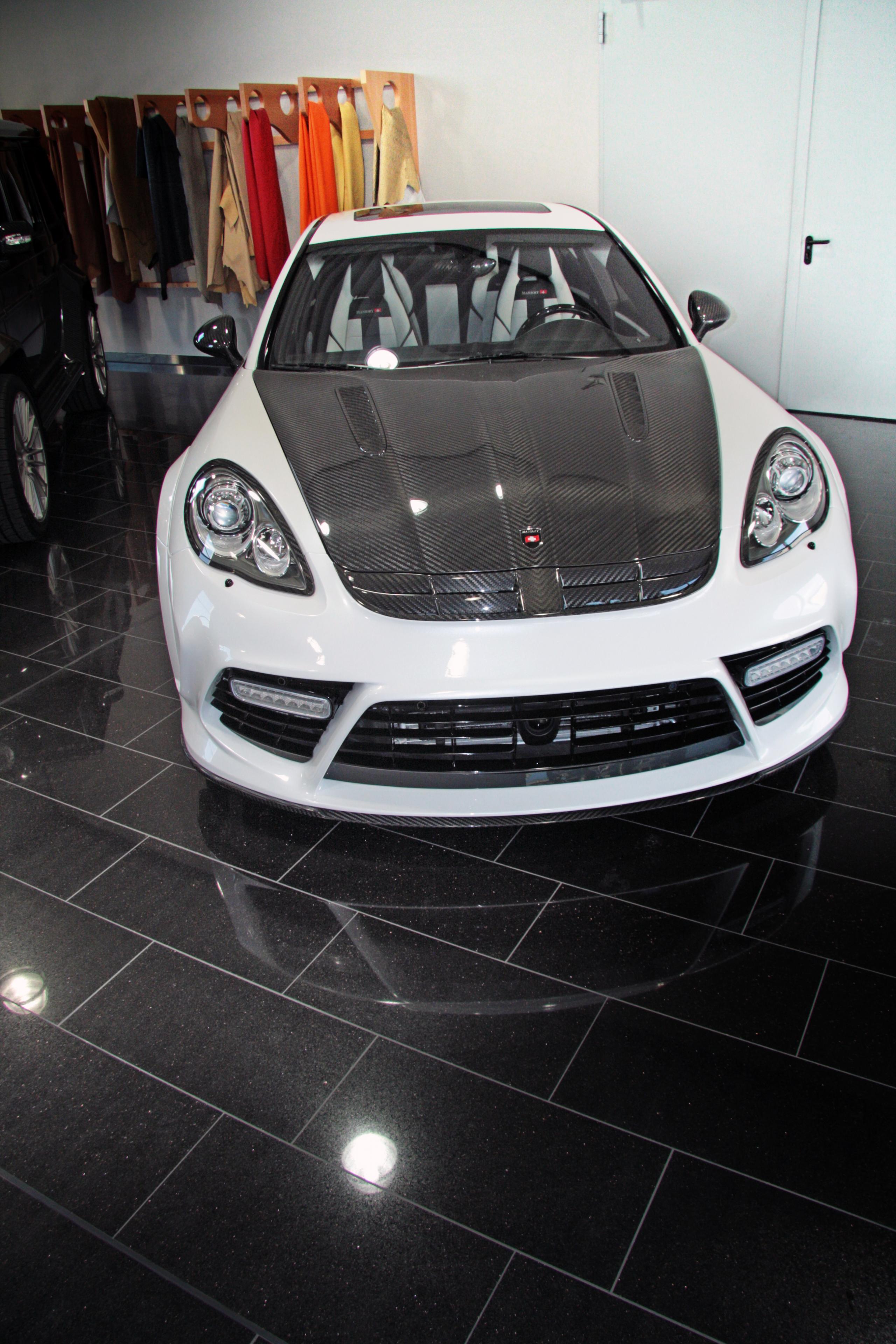
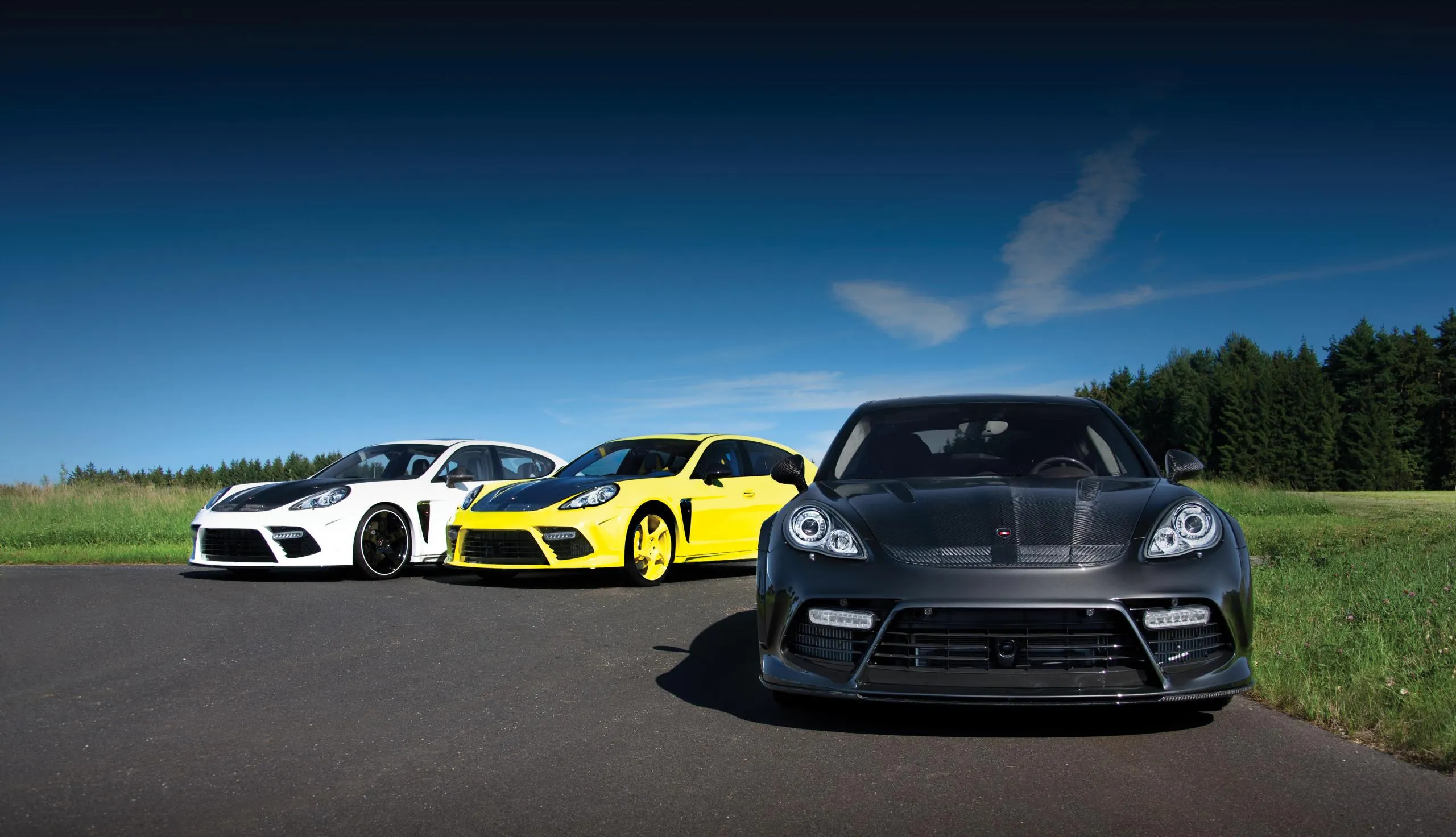
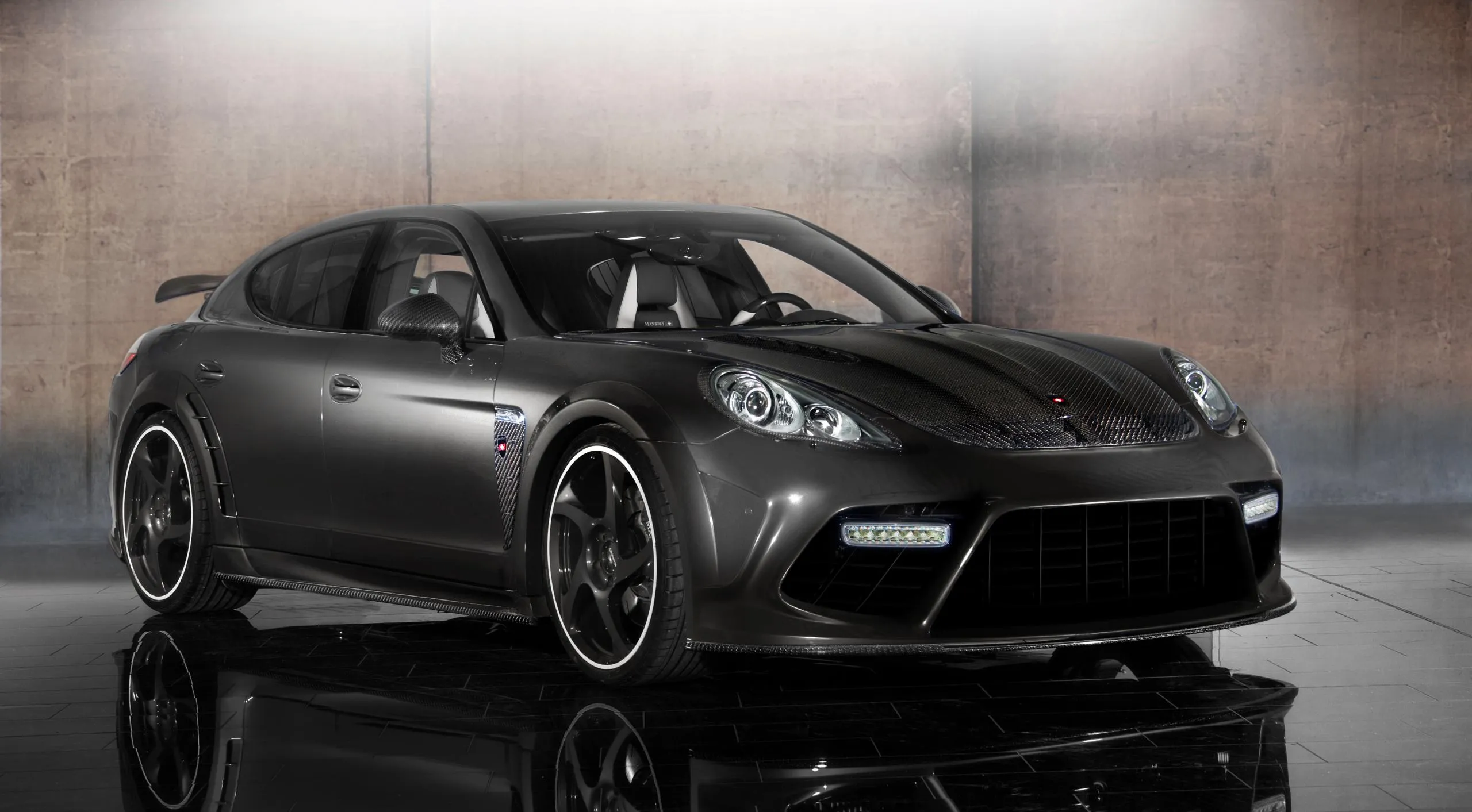
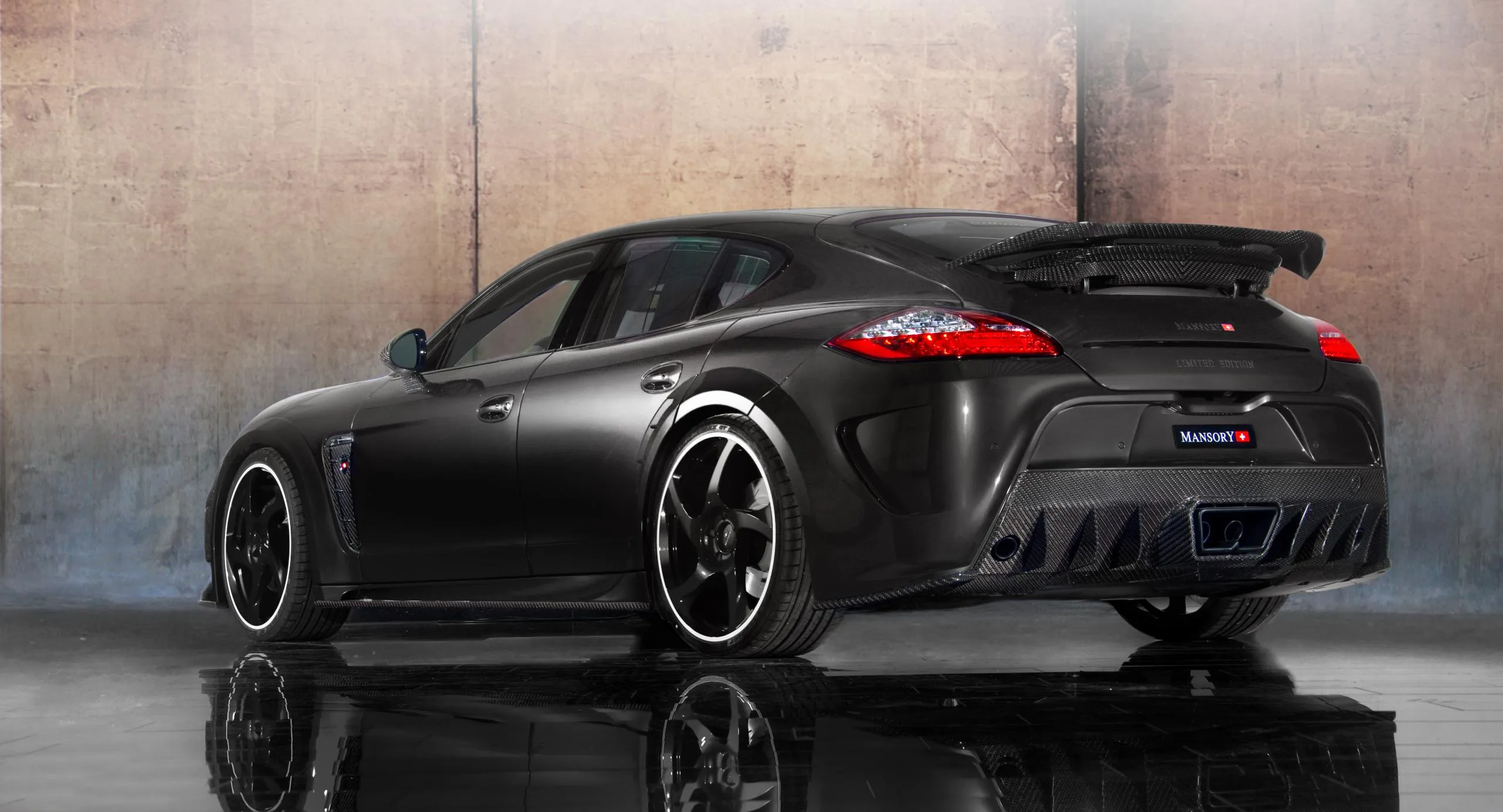
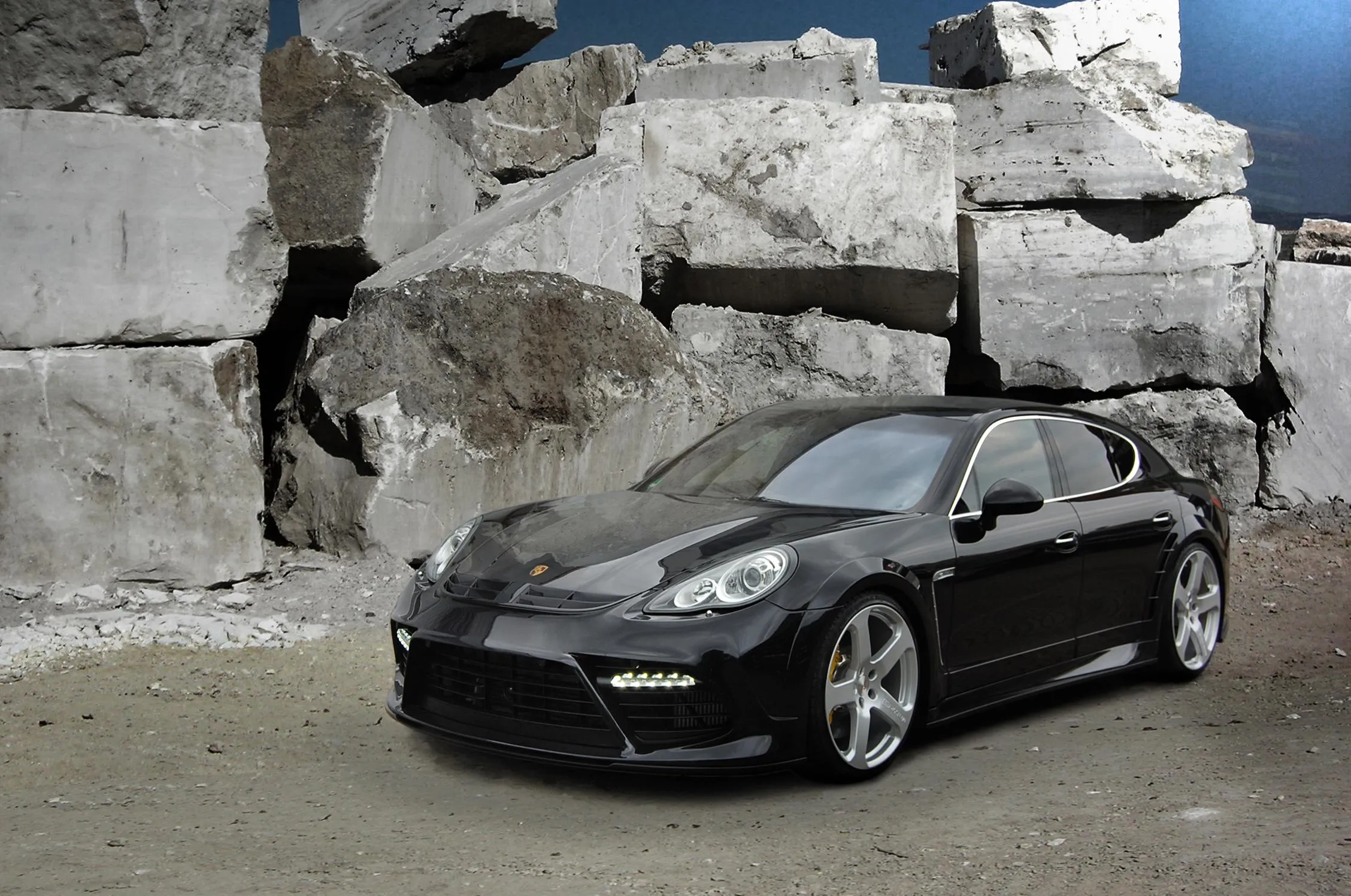
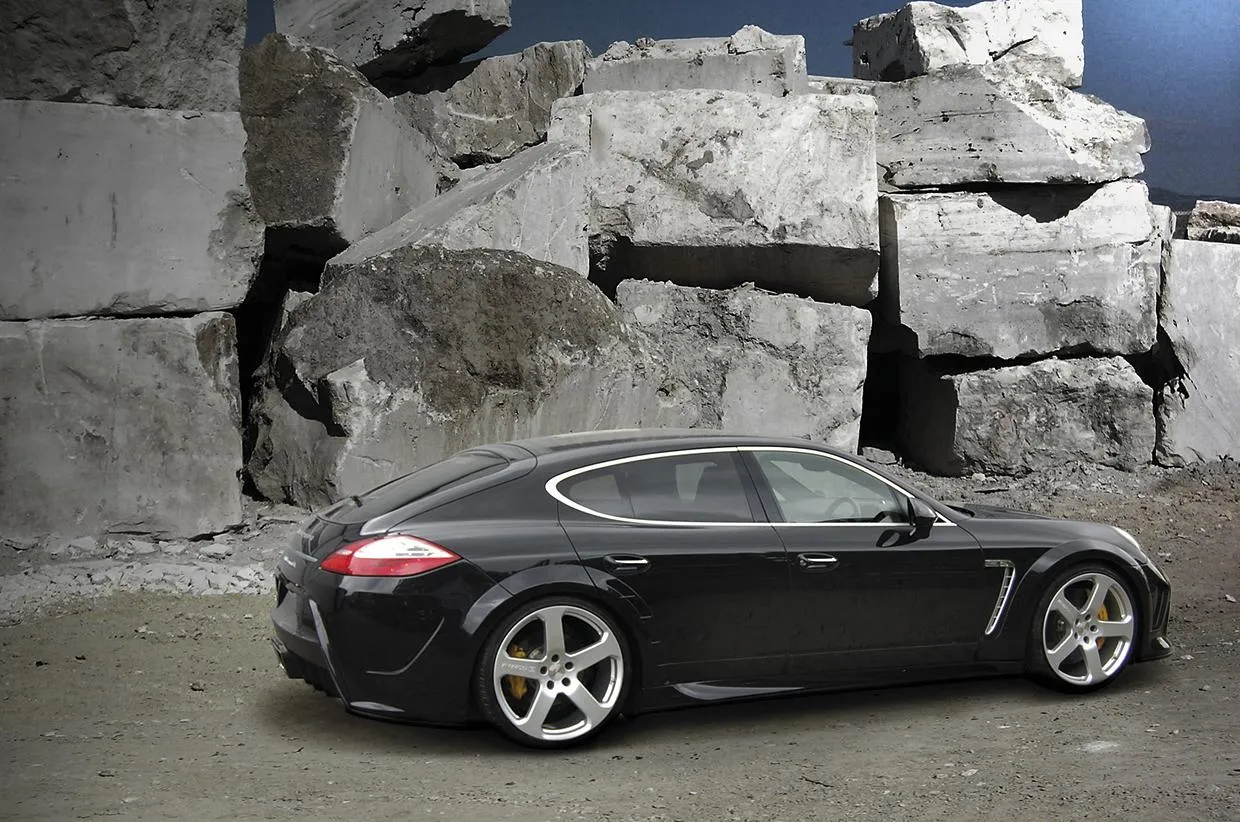
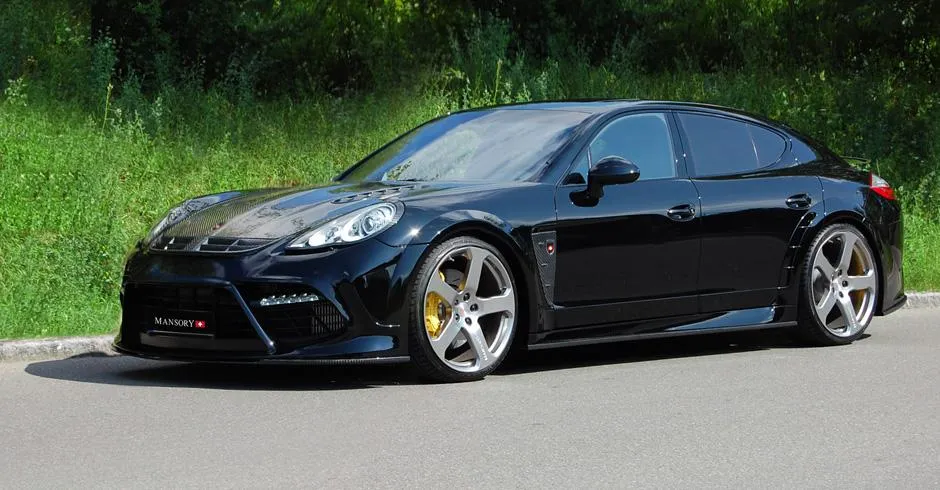
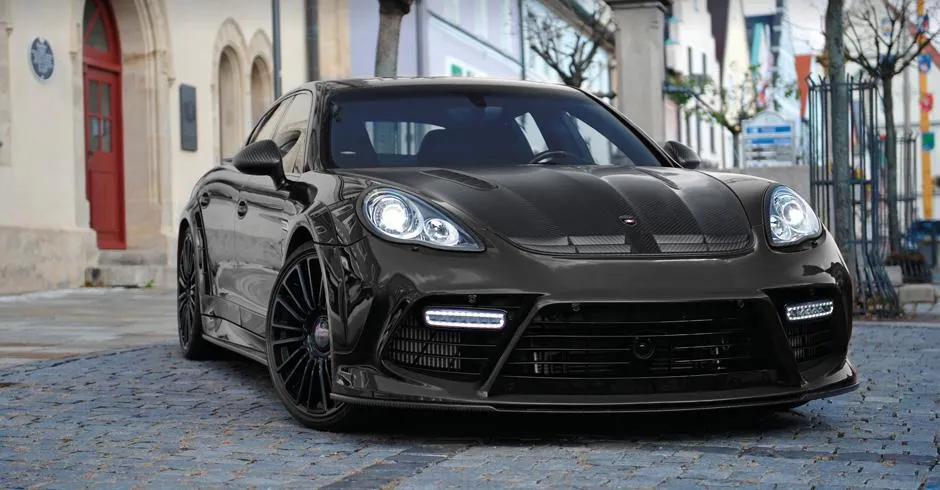
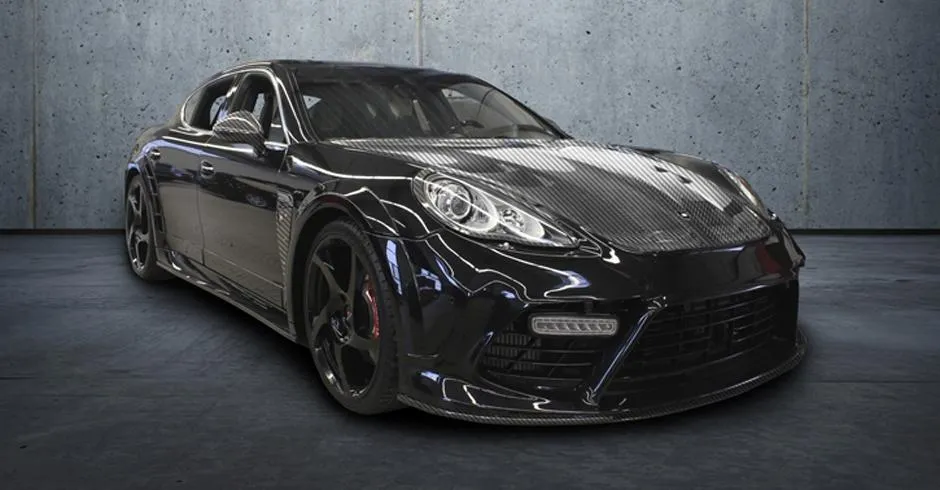
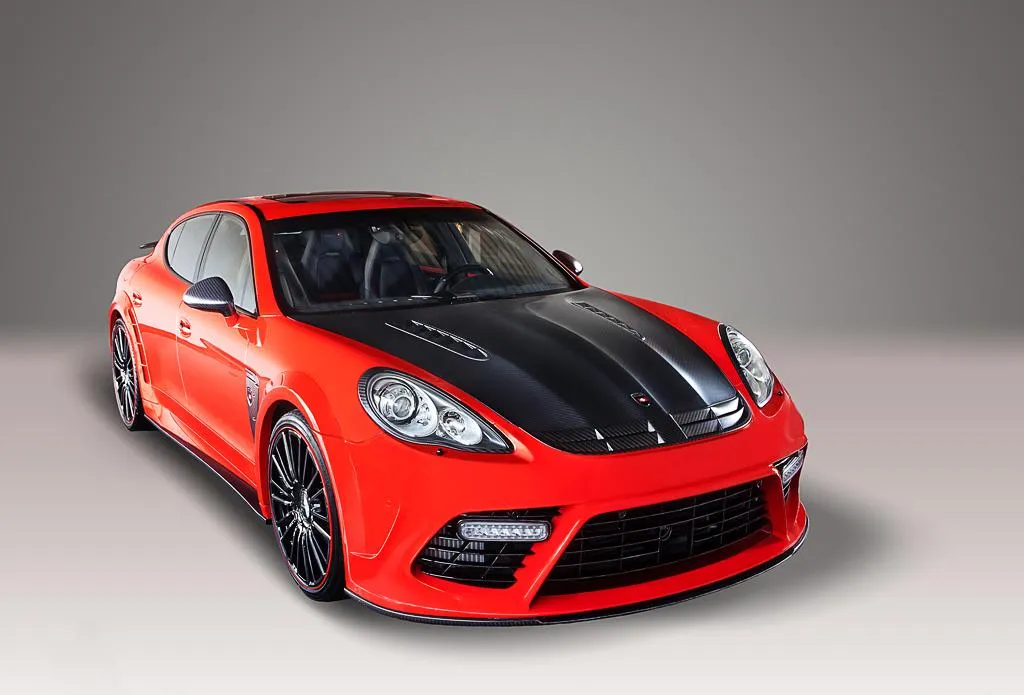
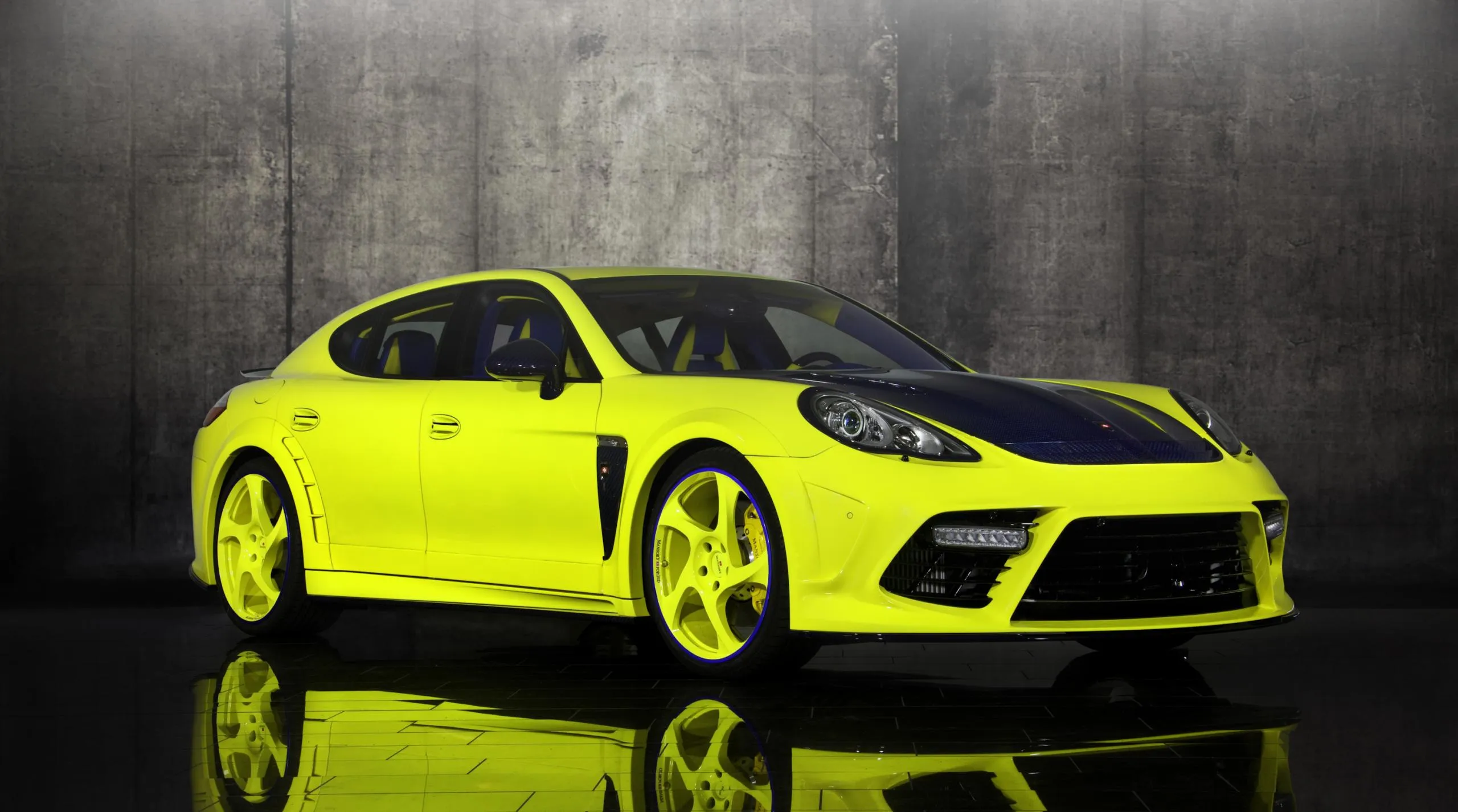
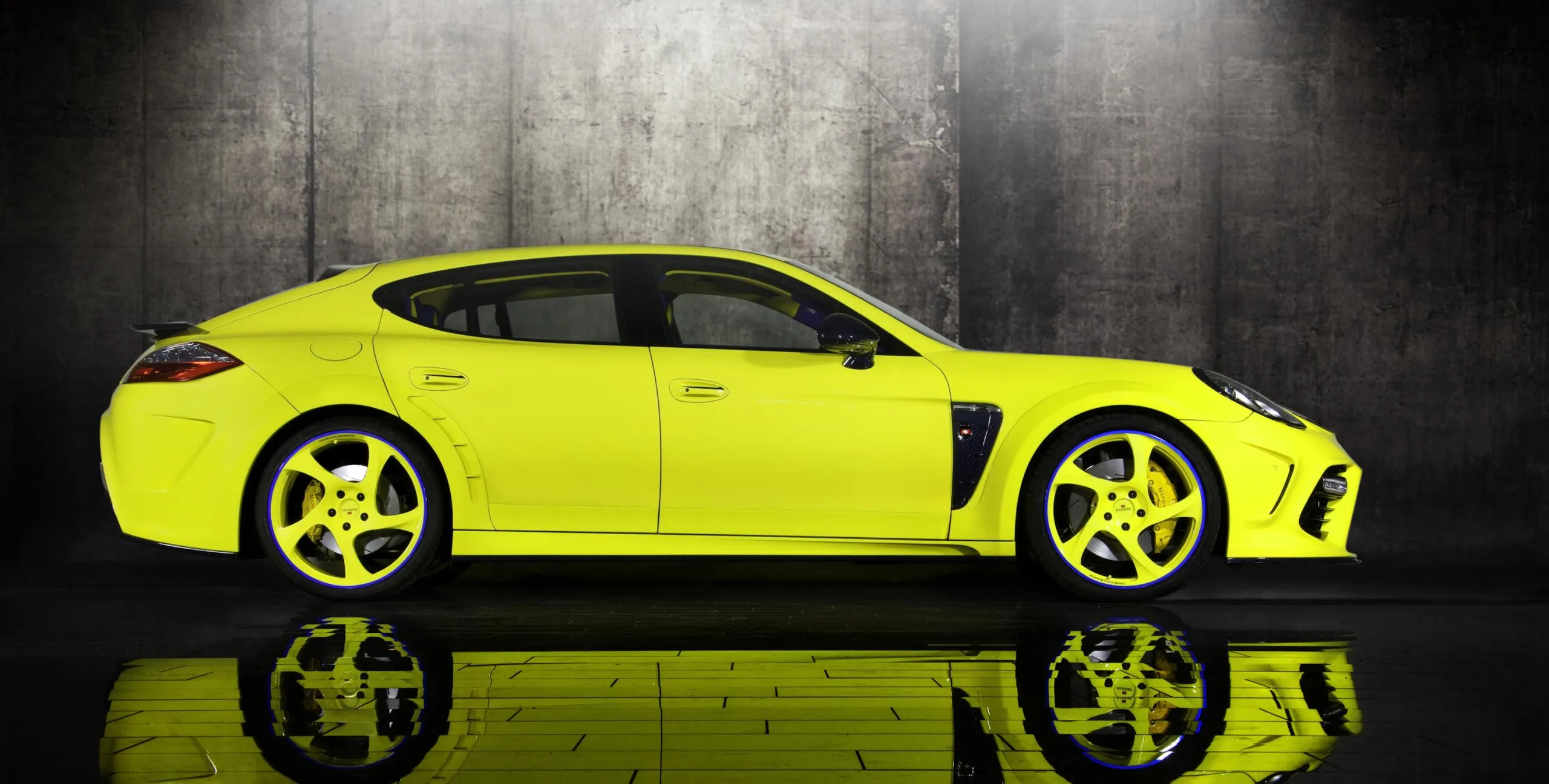
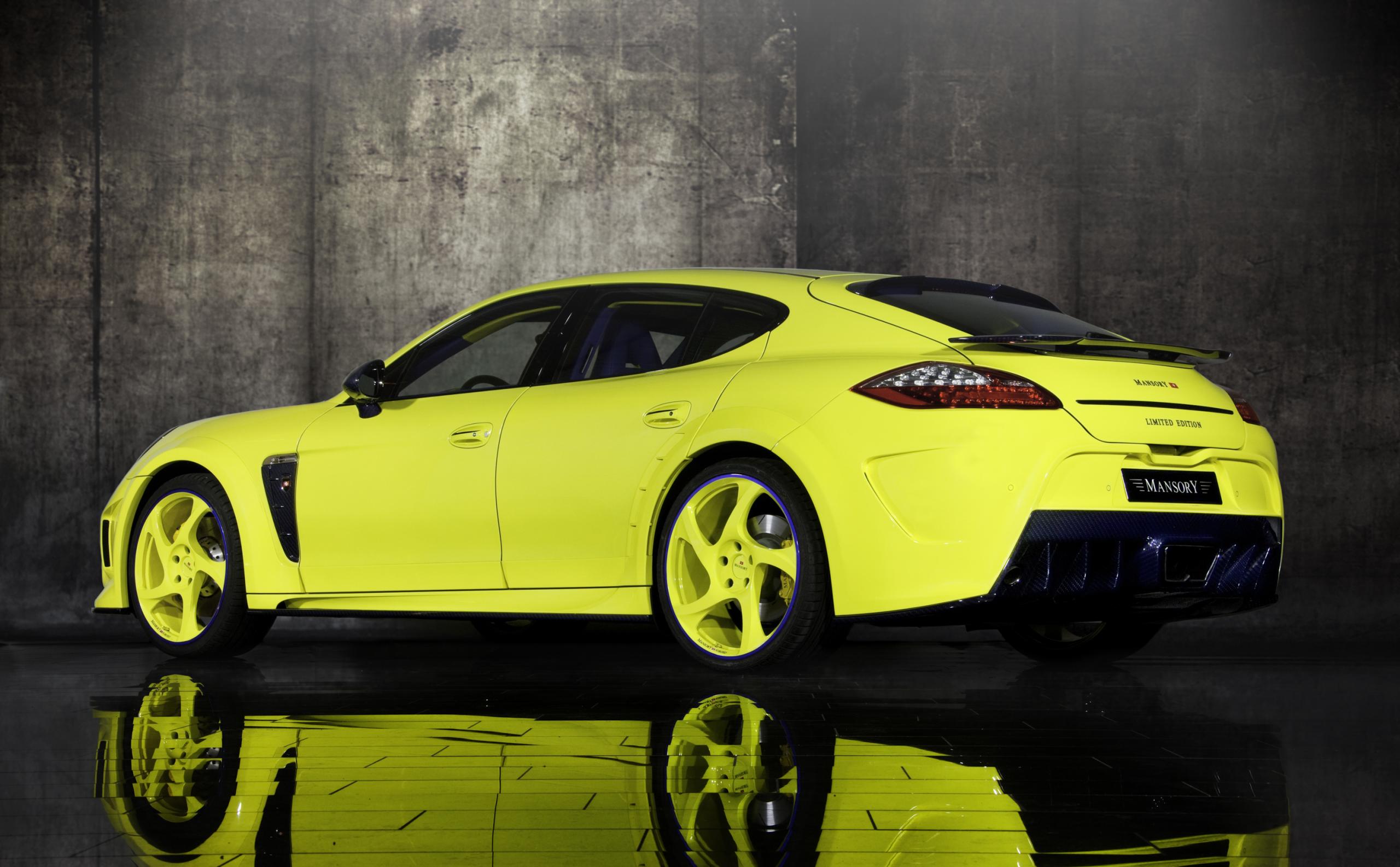
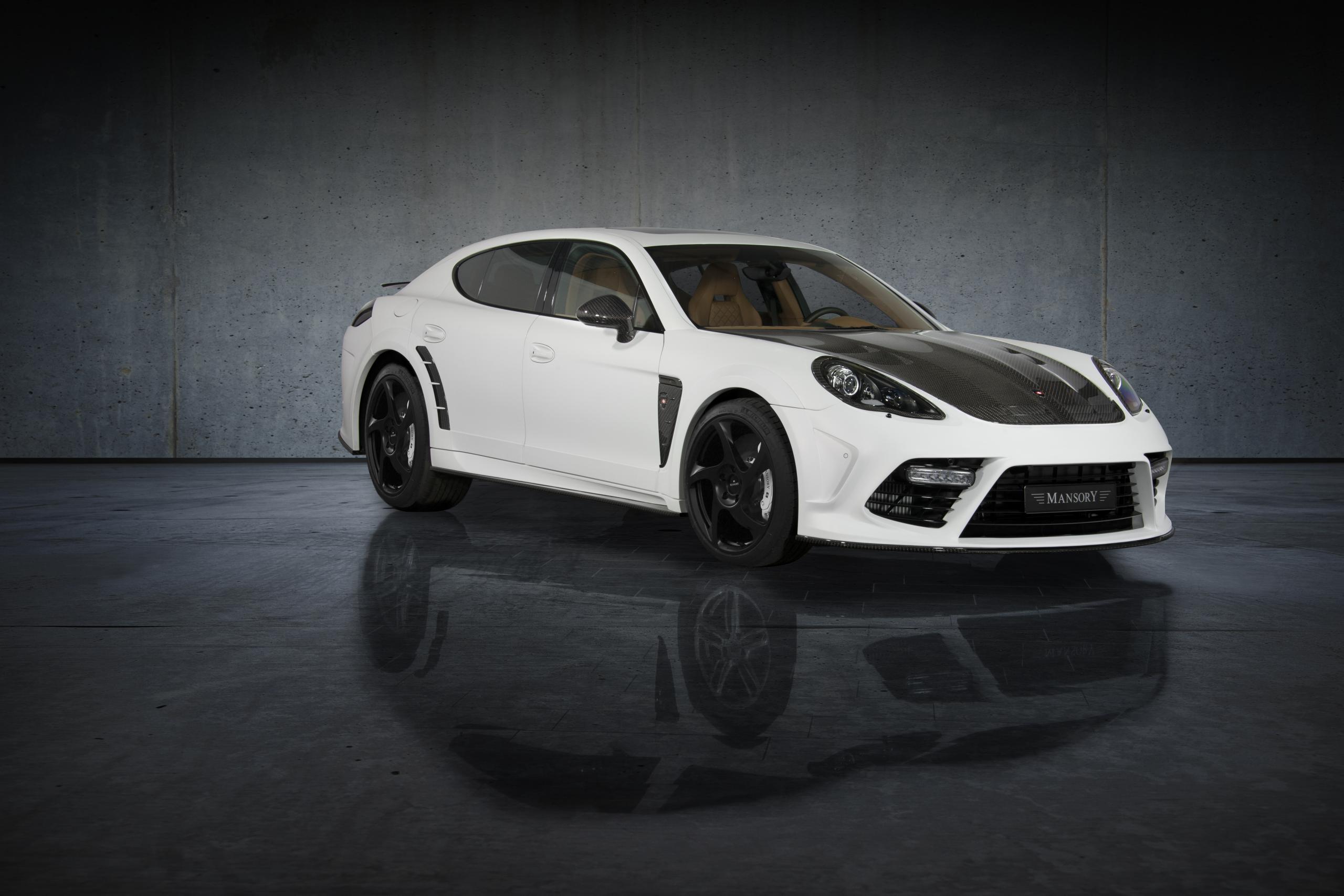
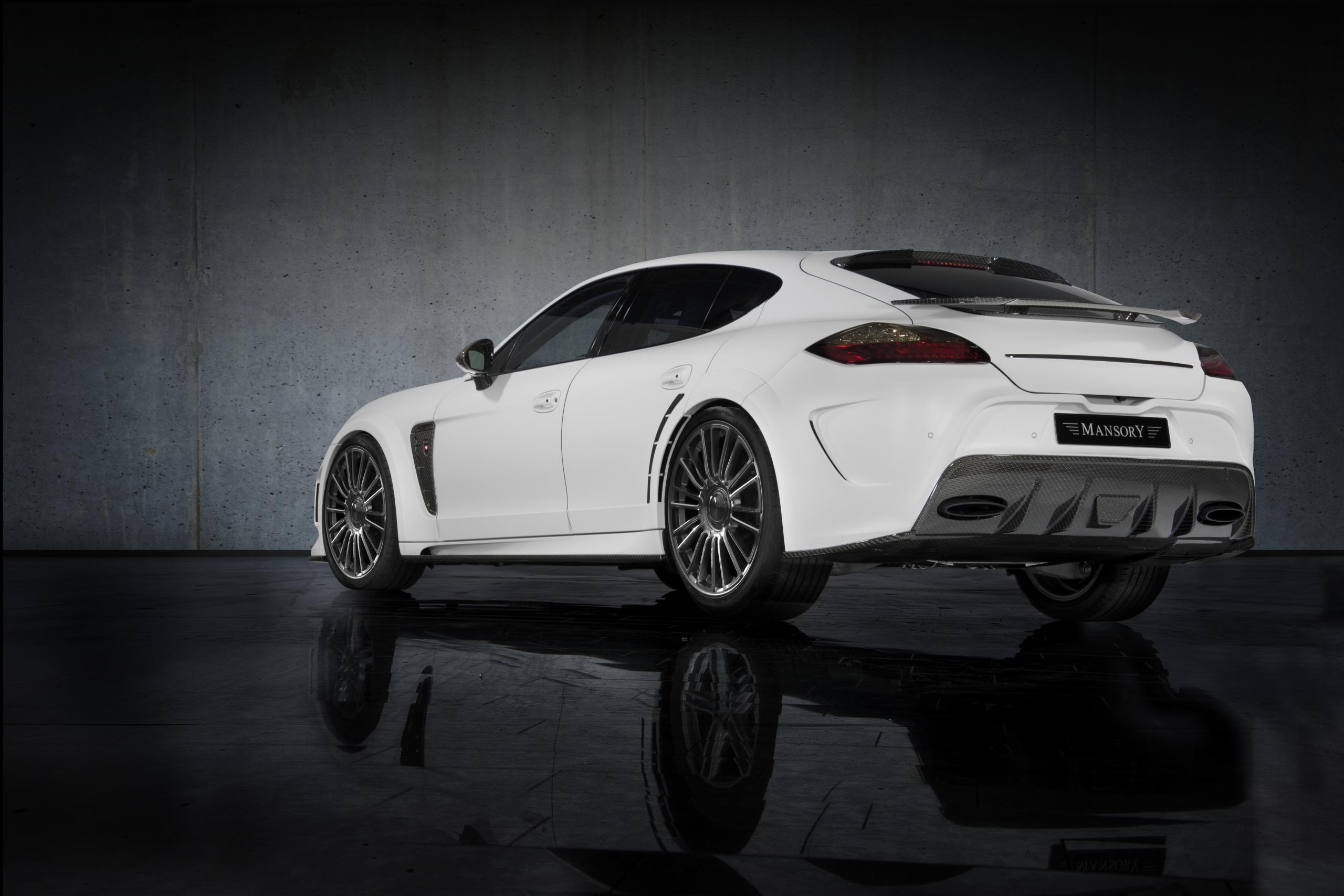
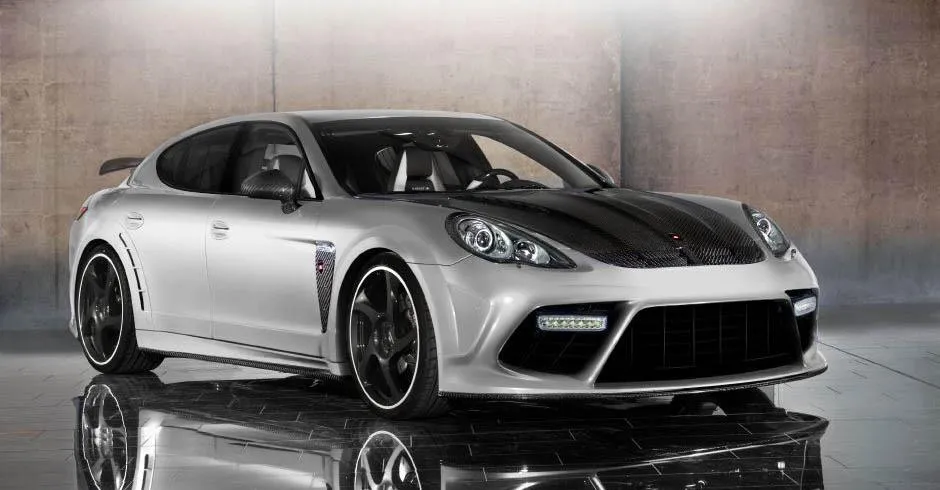
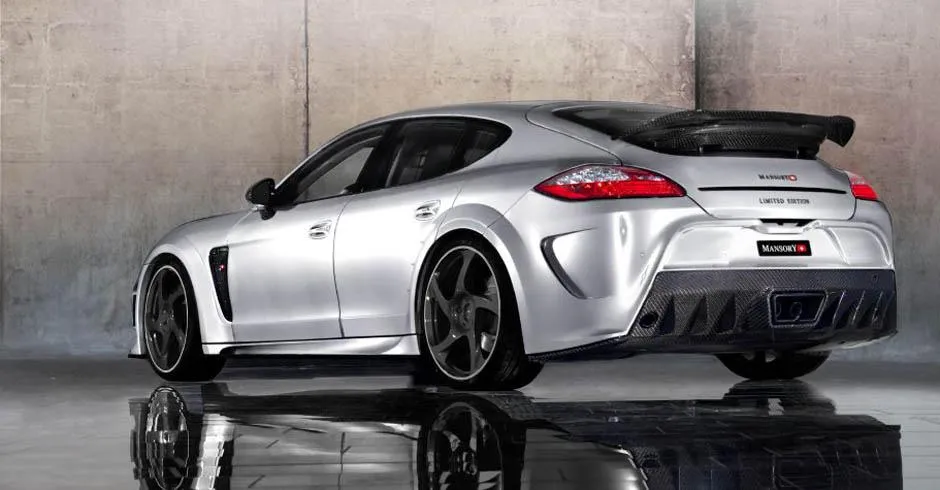
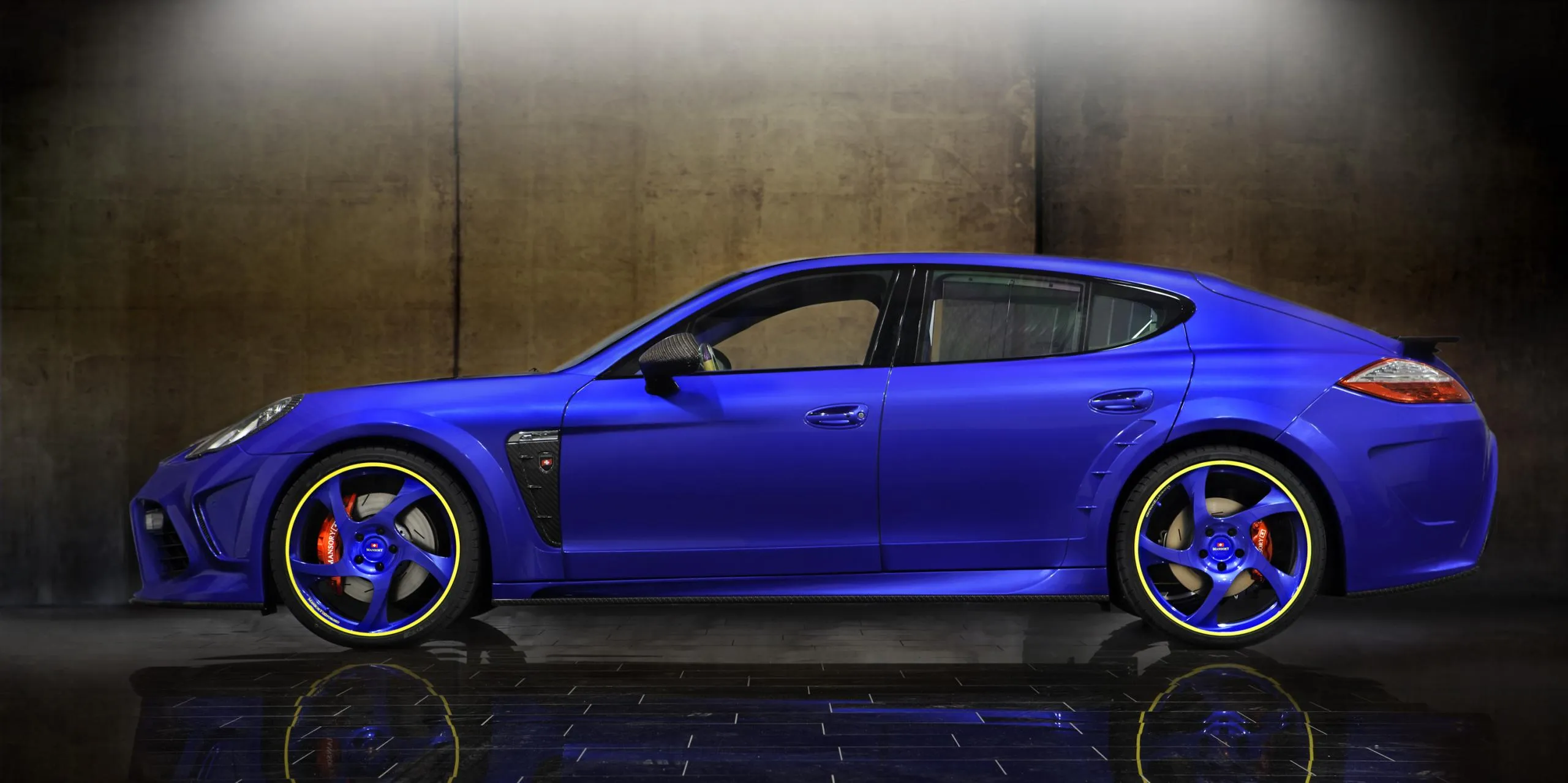
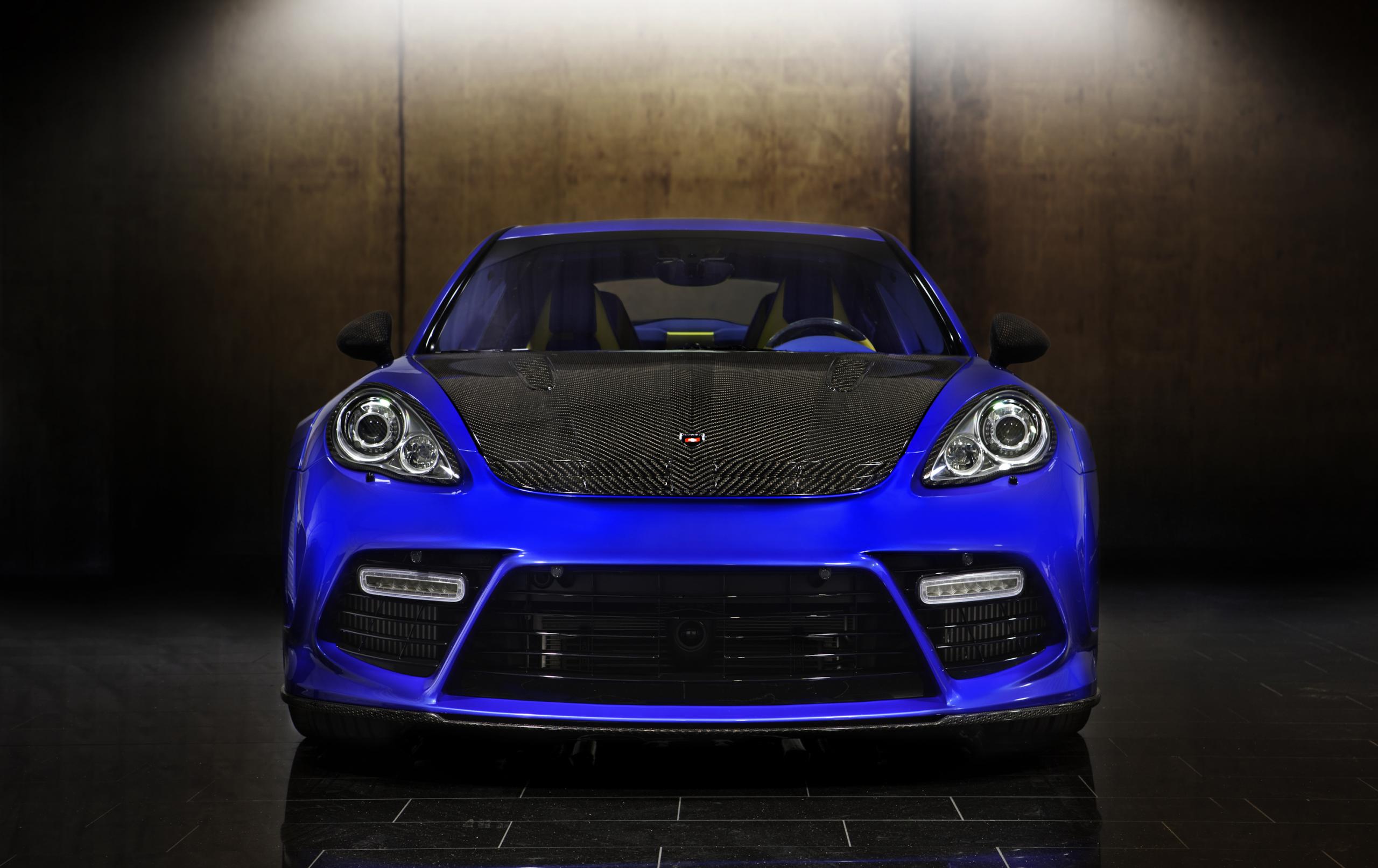
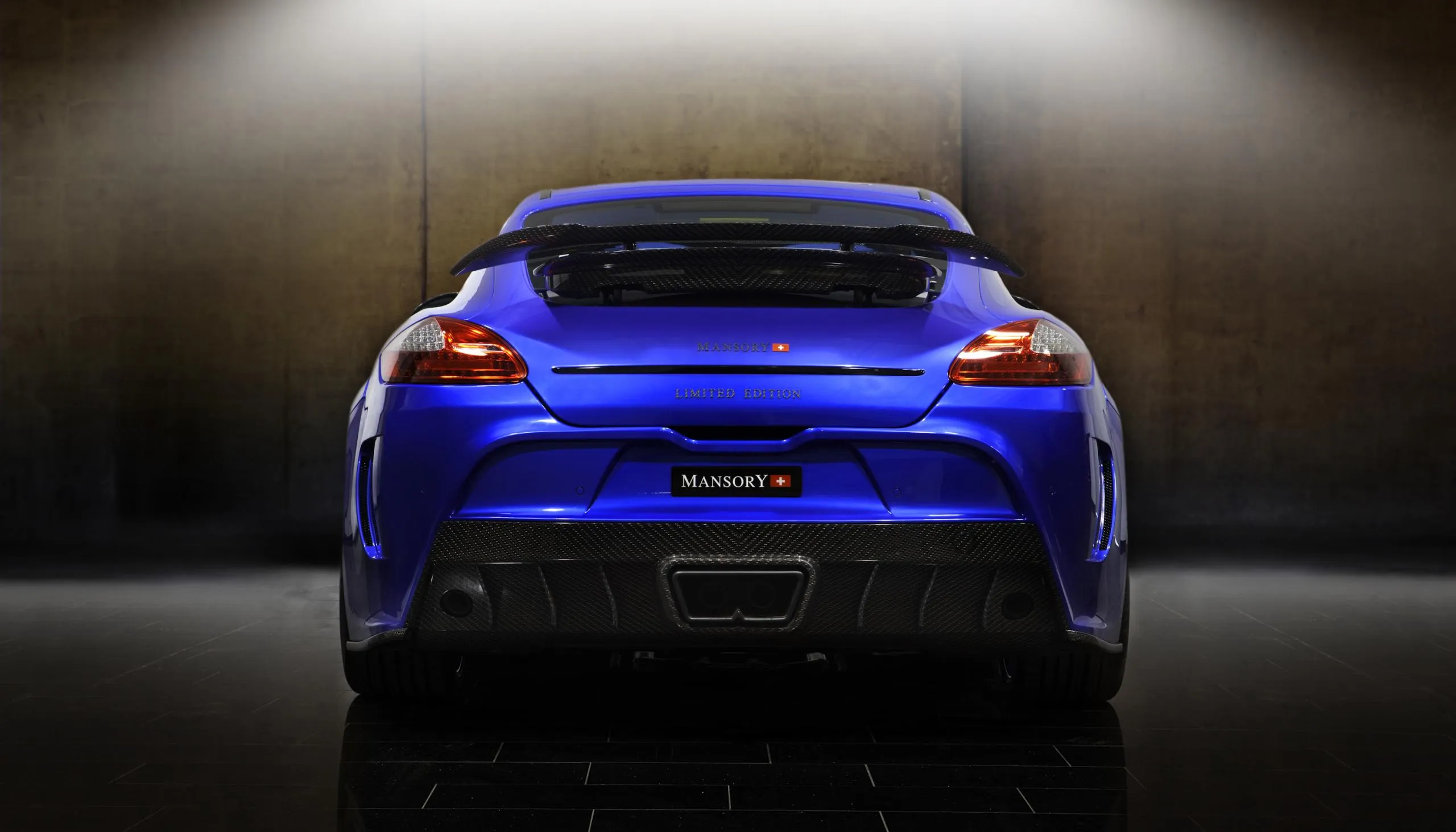
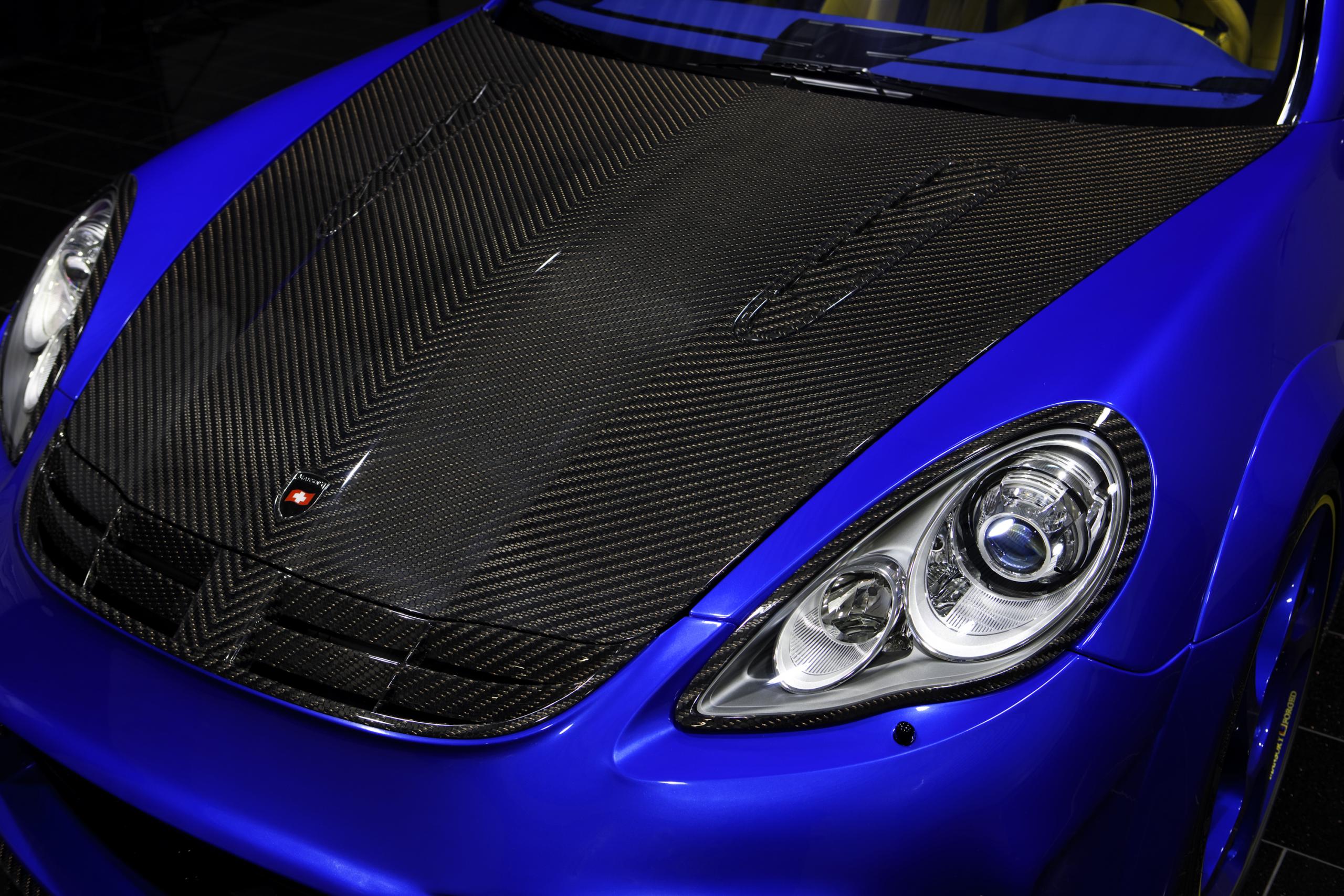
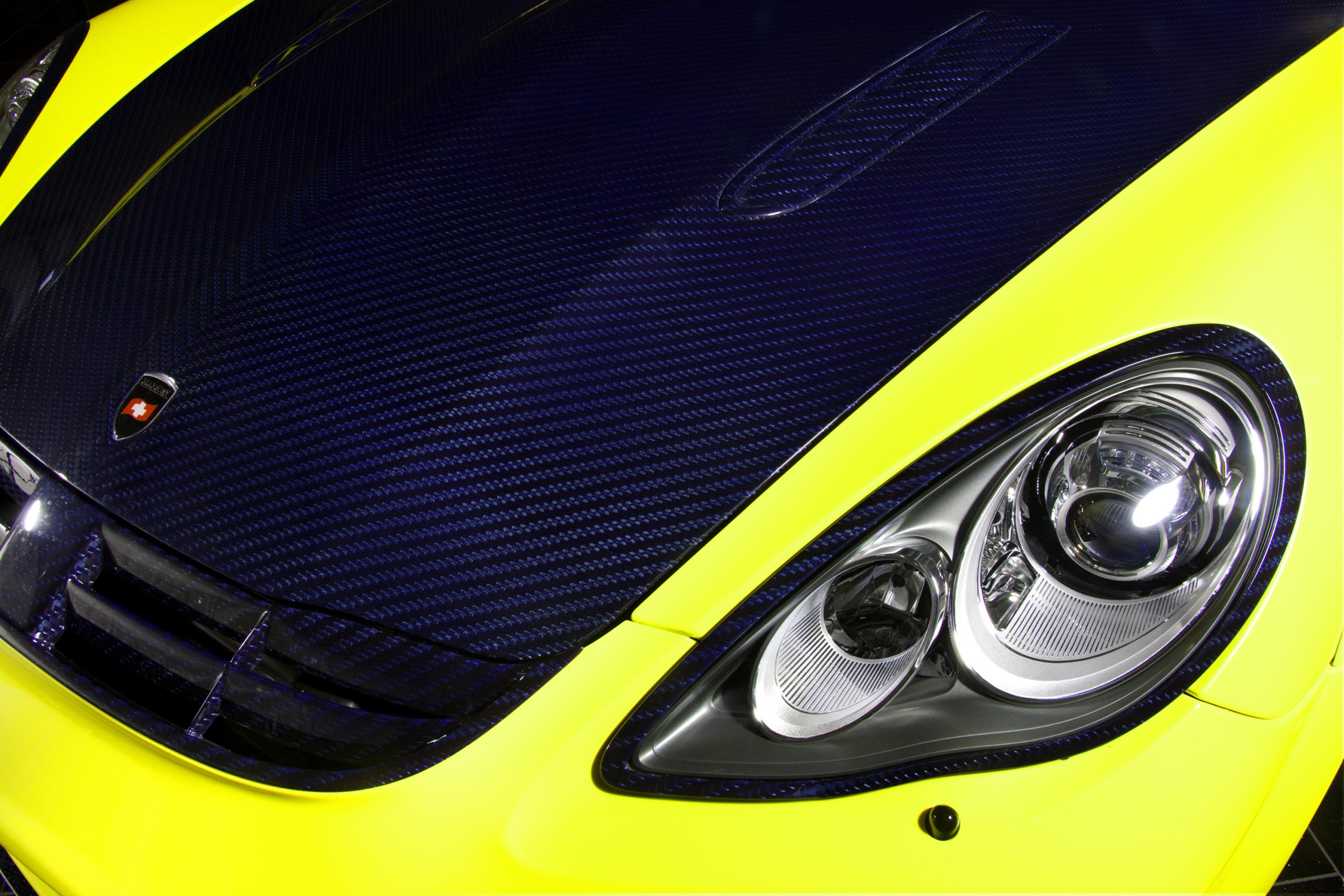



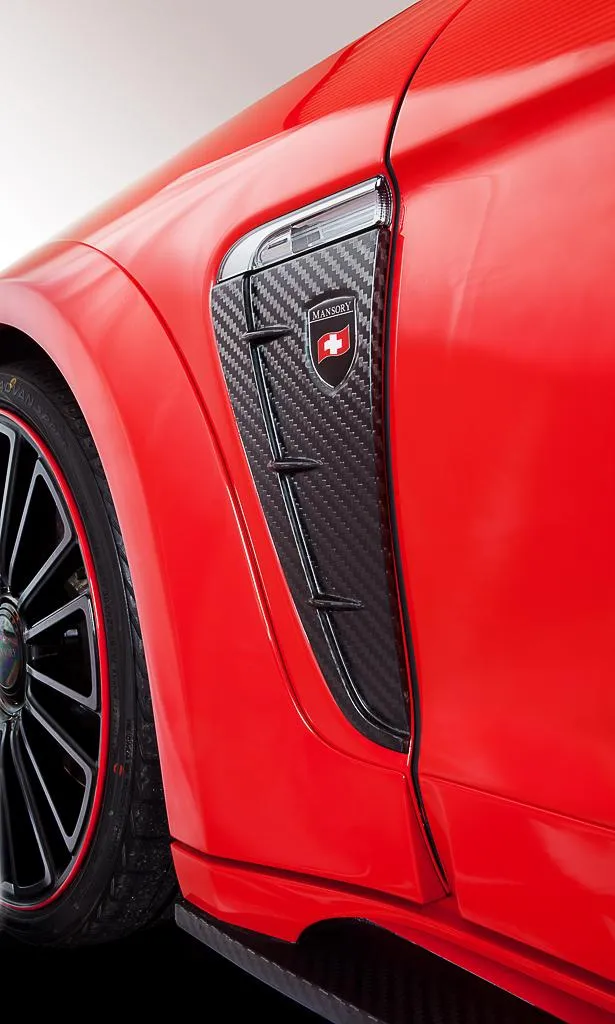
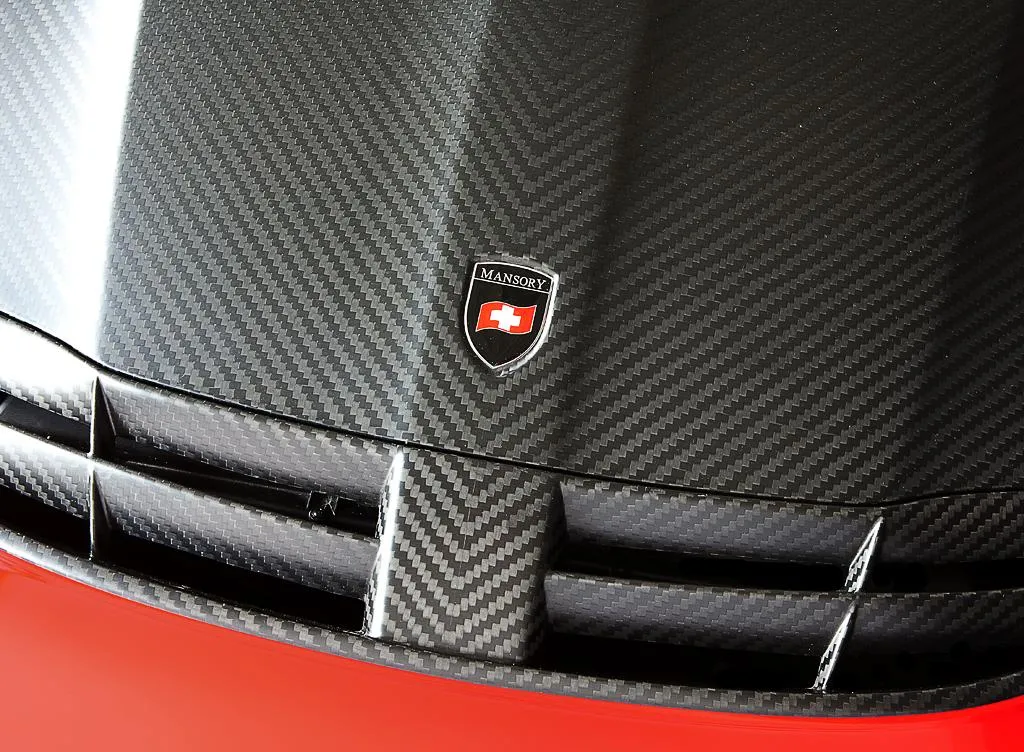
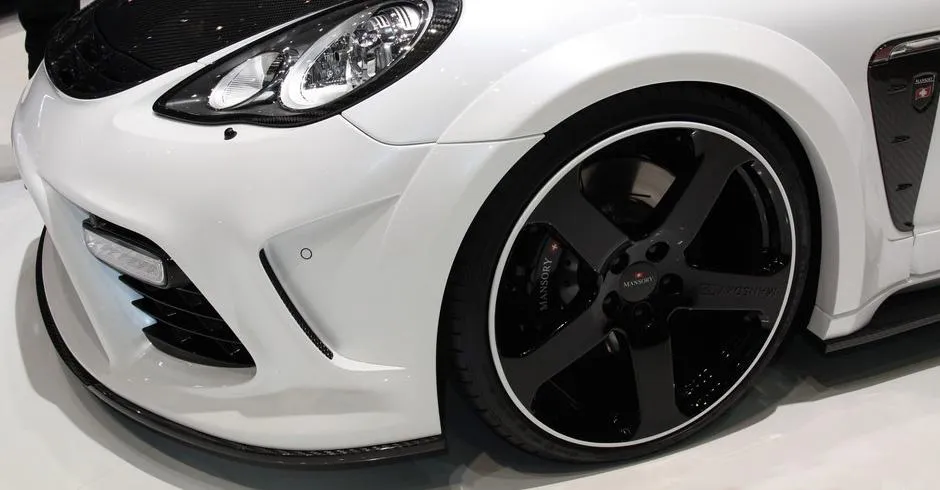
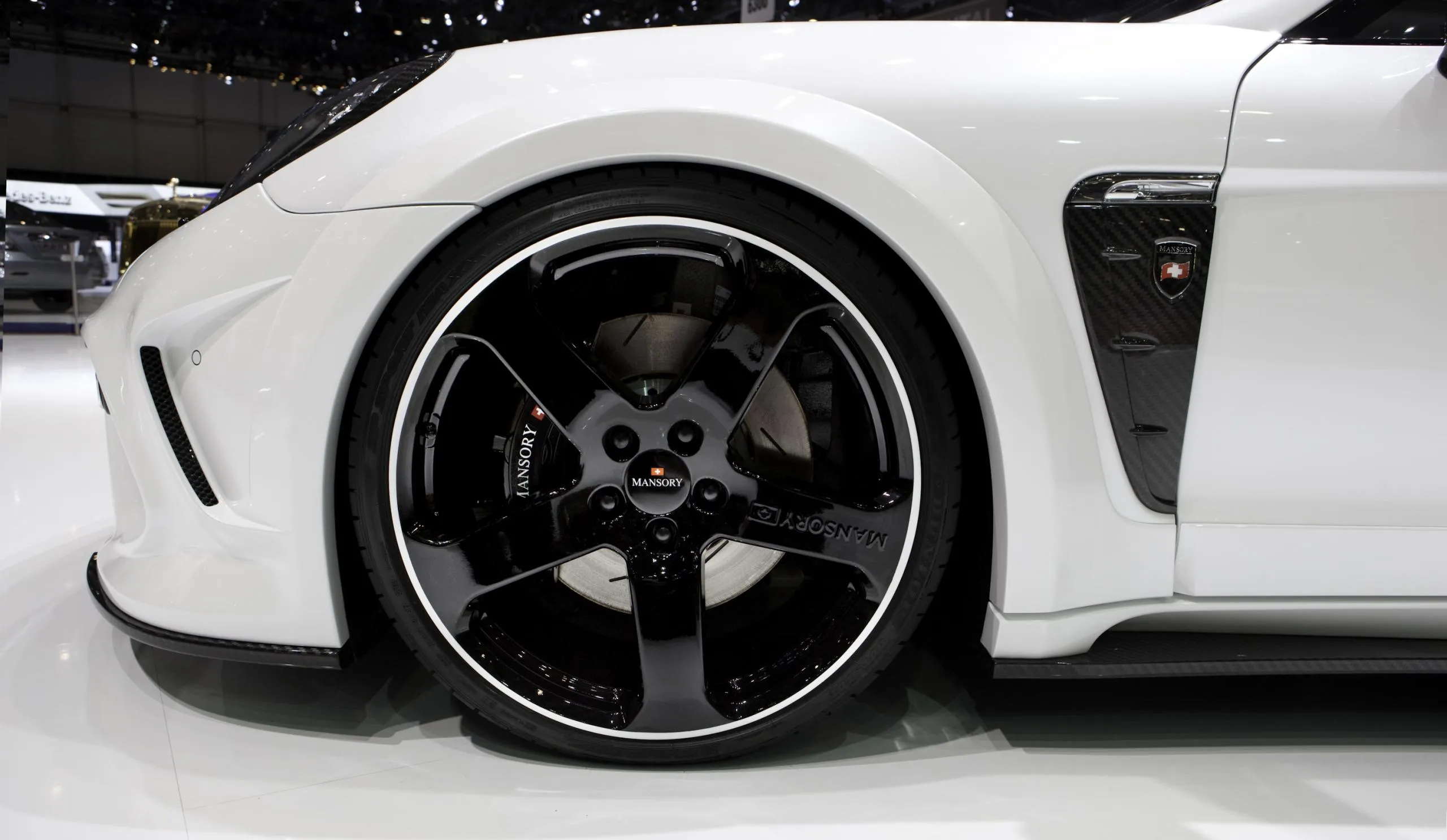
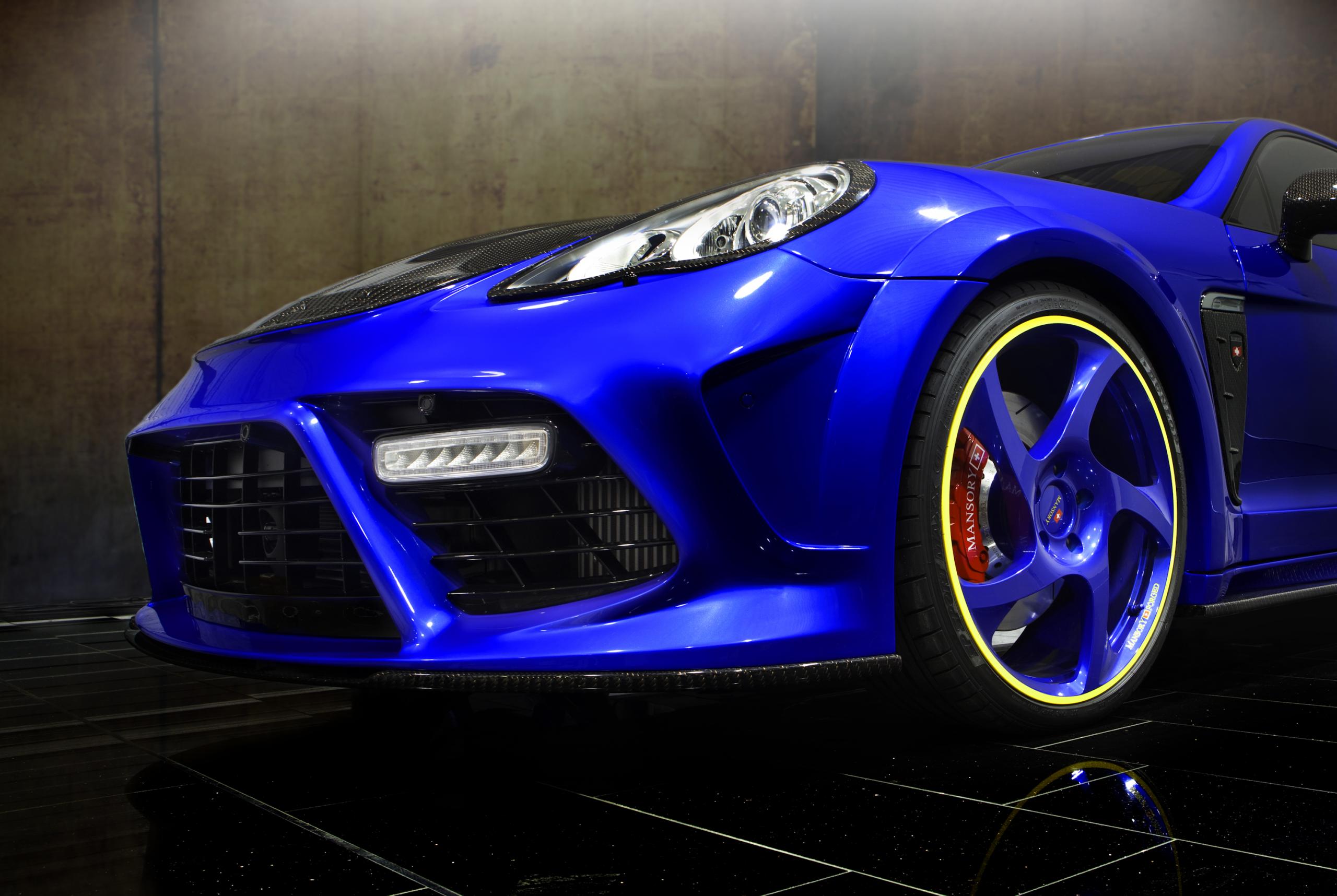
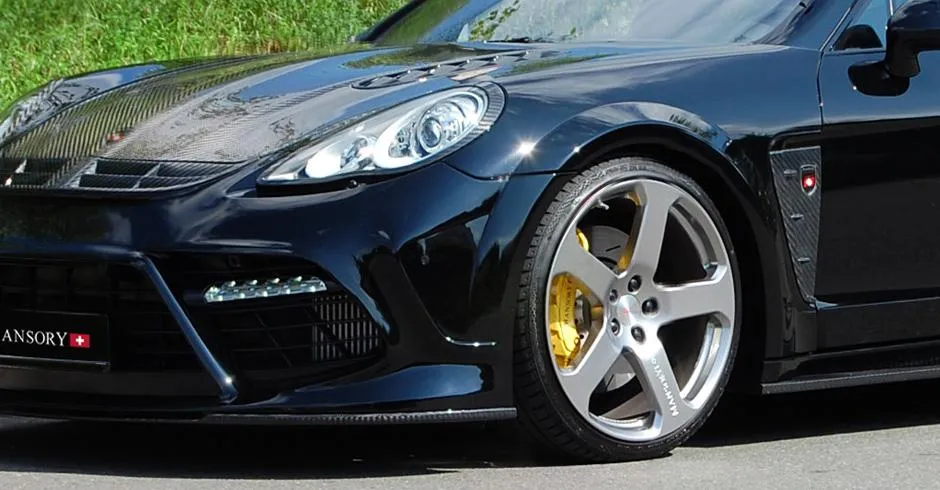
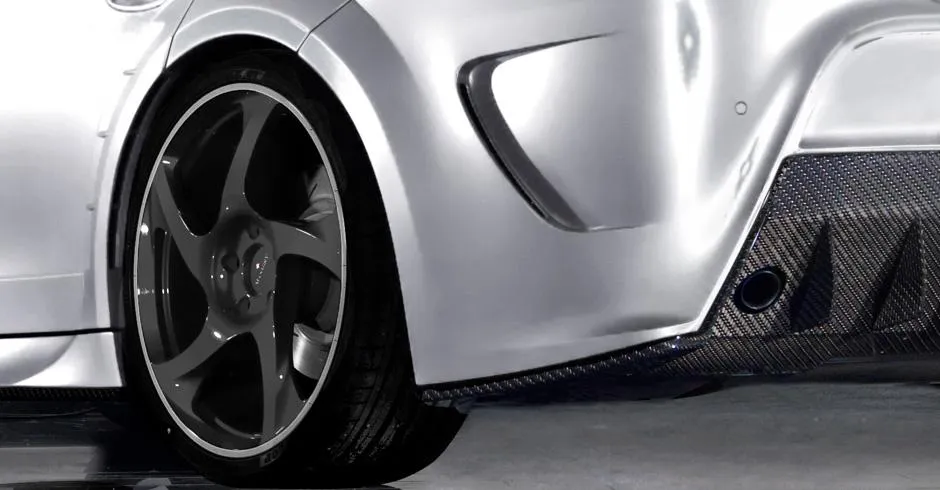
Mansory Carbon Fiber Body kit set for Porsche Panamera 970


MANSORY for the PORSCHE PANAMERA 970 — Re-Balancing the Proportions of the First-Generation Panamera, the Sedan Porsche That Took Two Production Cycles to Find Its Body Language
The first-generation Panamera (970, 2009-2016) is the Porsche the design press never quite got over. The original 2009 launch car landed with a roofline that read awkwardly to the trained eye — a long flat hood, a high greenhouse, a haunch that did not commit, a rear three-quarter where the C-pillar met the rear deck at an angle that flattered no other surface around it. Porsche themselves acknowledged it indirectly in 2013 with the 970-II facelift — revised front fascia, re-cut rear lighting, and detail work to soften the proportions. The current second-generation 971 Panamera (2016+) is a different car entirely; the 970 stayed inside its skin until production ended.
The Mansory programme for the 970 is an unusual one in the Mansory catalogue because the brief was not "make the donor more aggressive" — the brief was "rebalance proportions Porsche themselves were uneasy about". The kit does this through deeper splitter geometry that lengthens the apparent front overhang, side aero that resolves the awkward haunch line, and a re-cut rear that pulls the visual mass downward away from the high greenhouse.
What Mansory was solving
Three specific design problems on the 970 silhouette and how the kit addresses each:
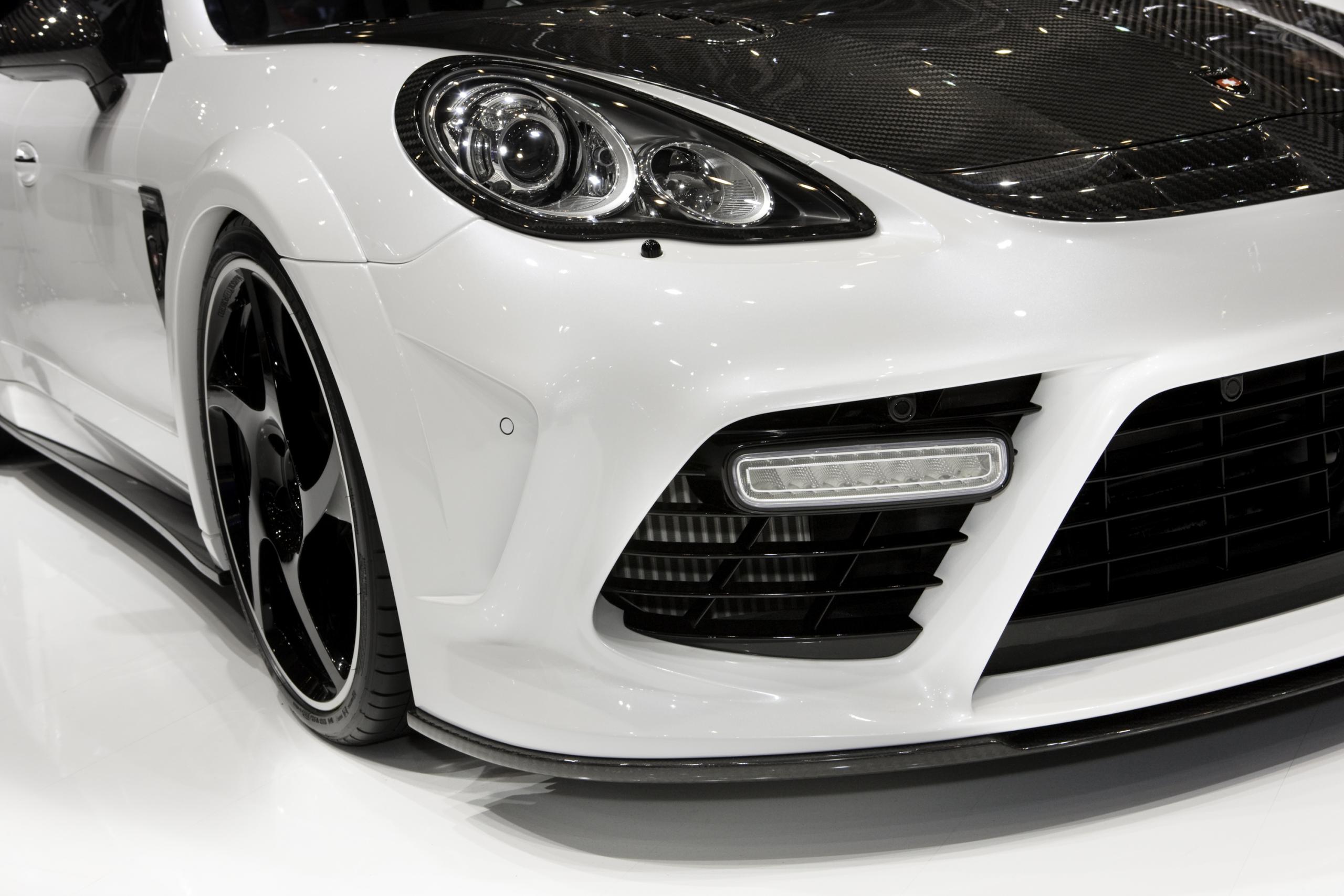
The roofline reads too high relative to the front fascia. Mansory adds a carbon front lip with deeper splitter geometry that visually extends the front overhang downward, lowering the apparent front fascia mass and re-establishing the front-to-greenhouse ratio.
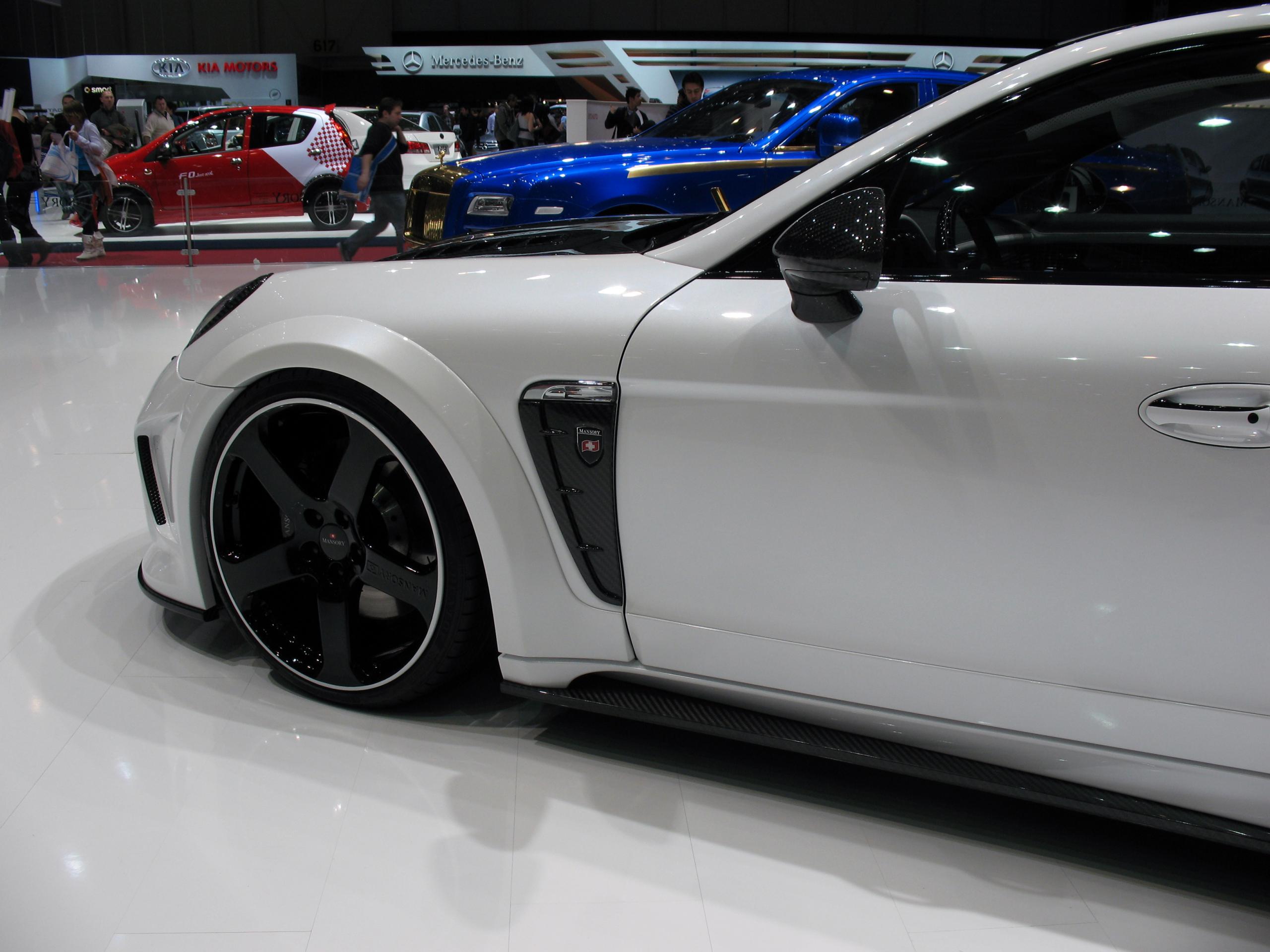
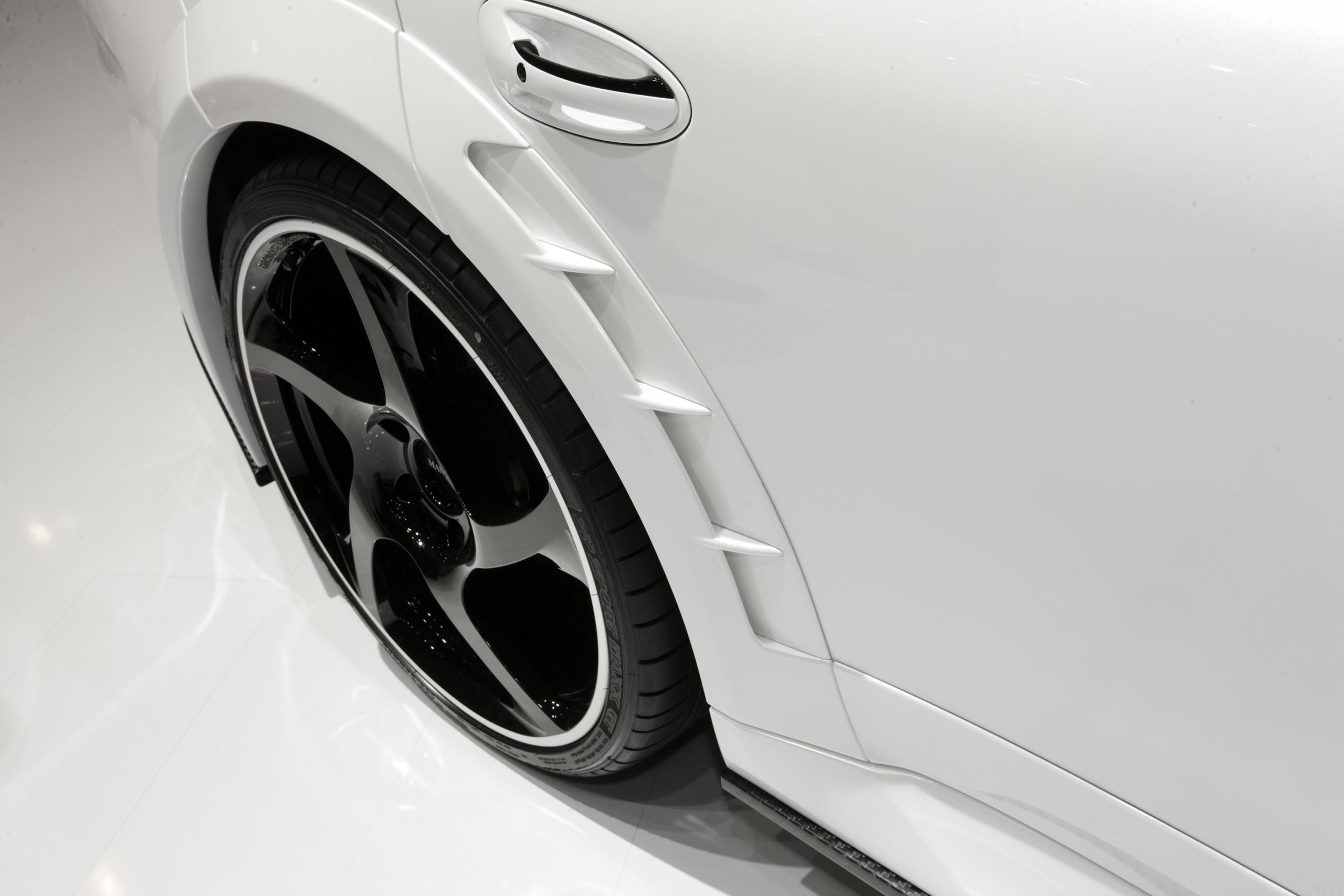
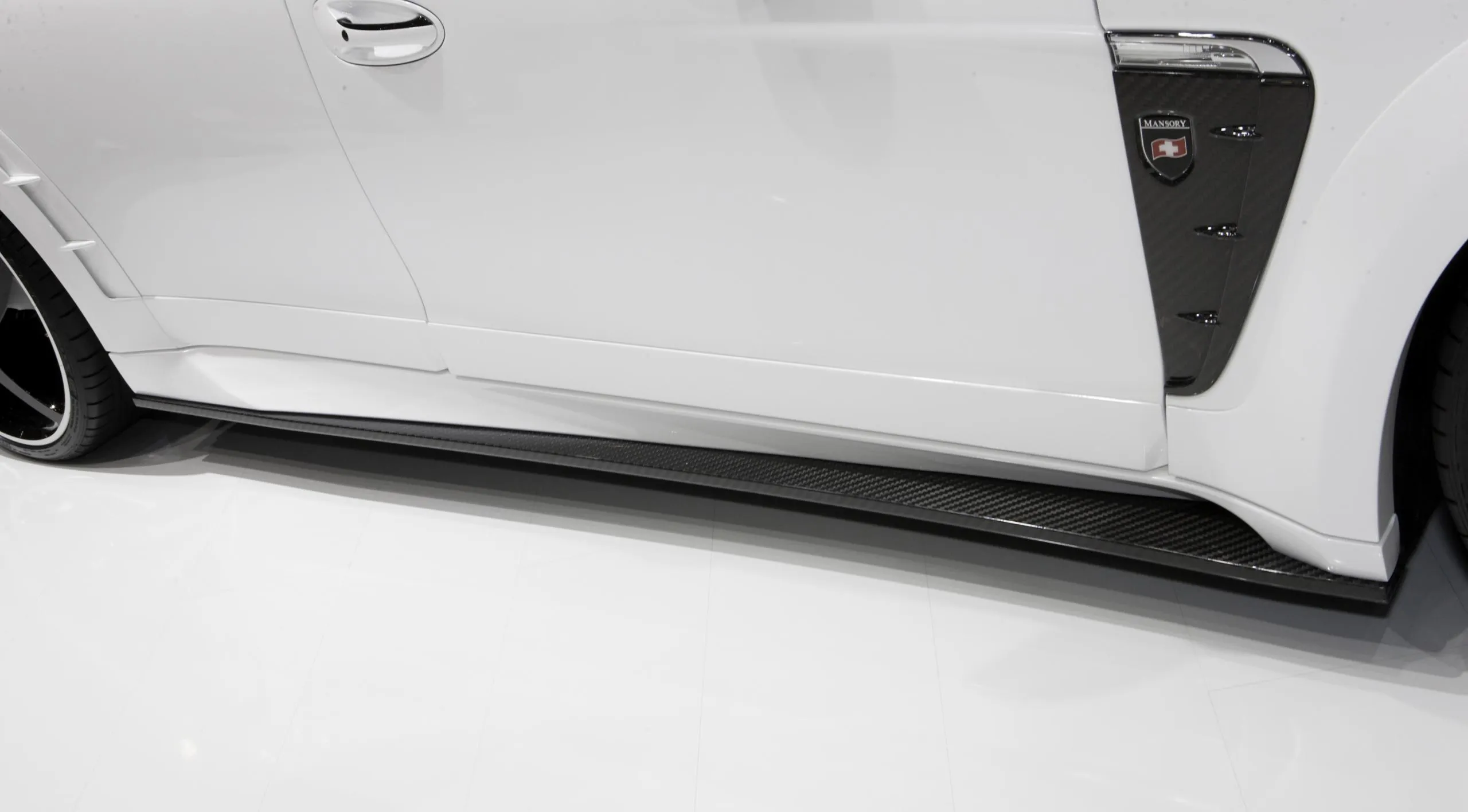
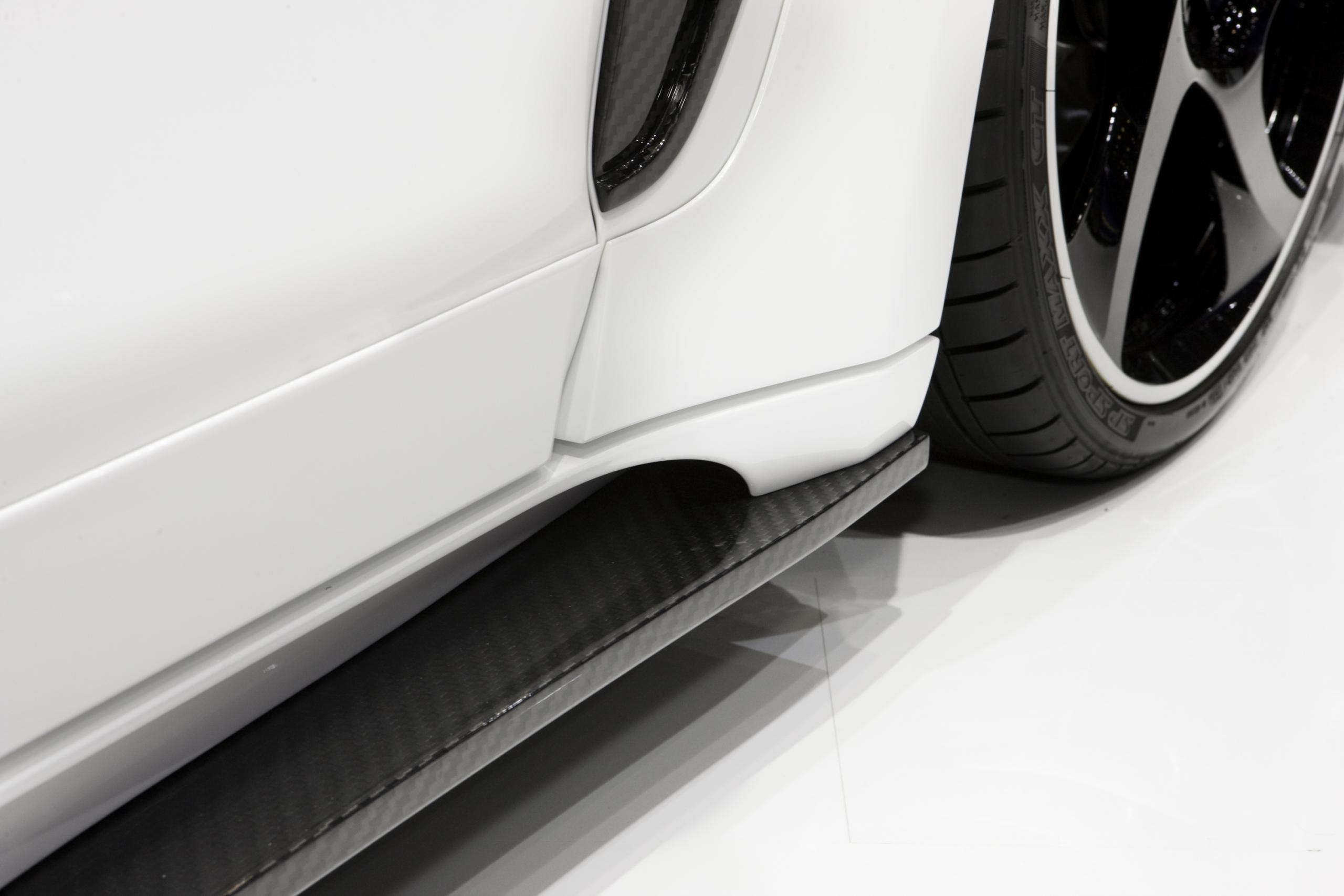
The rear haunch does not commit — the visual line from the rear-door cut up over the wheel and into the rear deck is too soft. Mansory adds bonded carbon fender extensions (+15 mm per side) and a deeper carbon side skirt that shifts the visual mass outward, sharpening the haunch read.
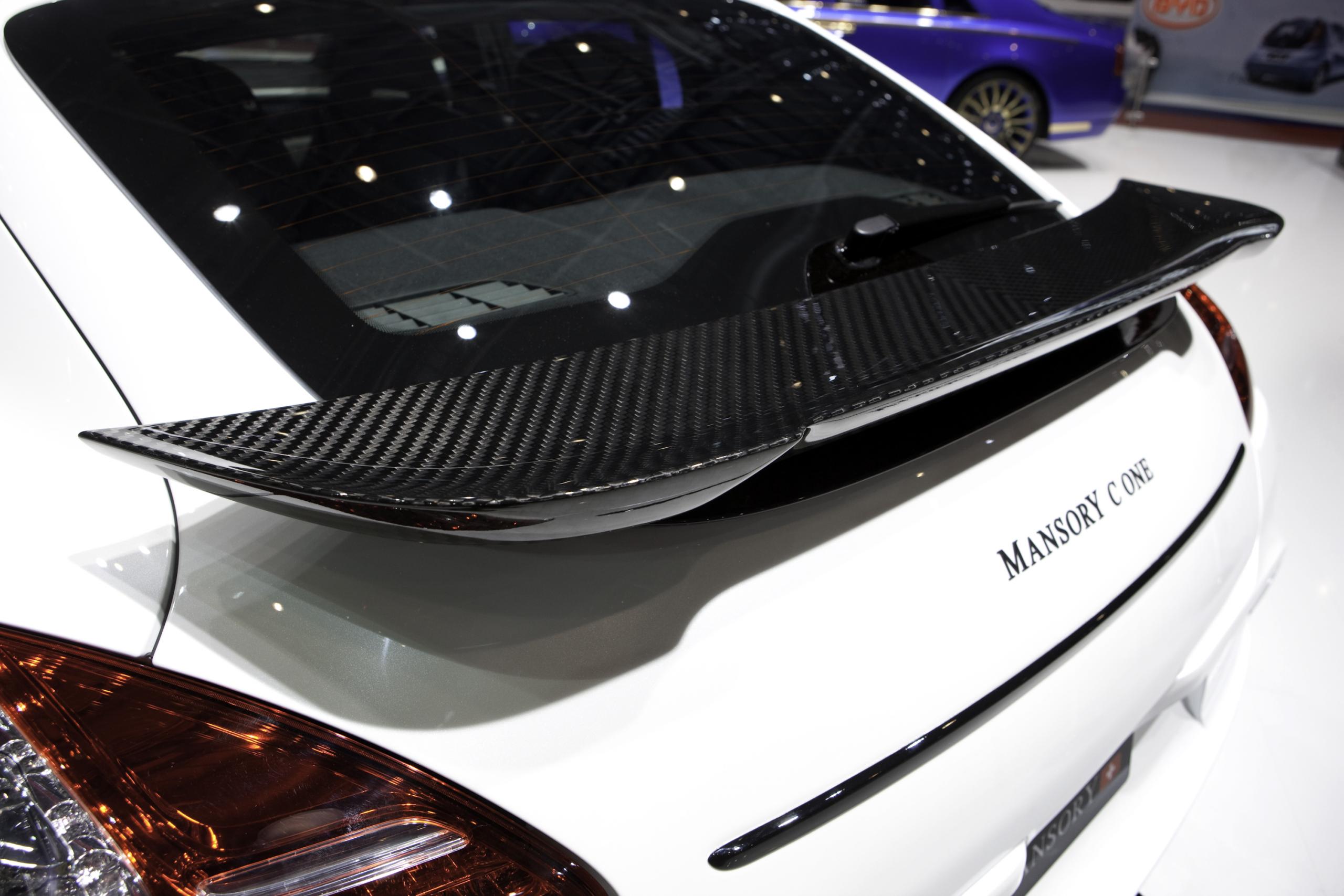
The rear three-quarter resolves badly. Mansory replaces the rear bumper with a deeper diffuser-prominent geometry that pulls visual mass downward and adds a low-profile decklid spoiler that resolves the rear-deck-to-C-pillar transition. On the 970-II facelift cars this work is less aggressive because Porsche themselves had already partially solved the rear-three-quarter issue at the facelift.
Body programme components
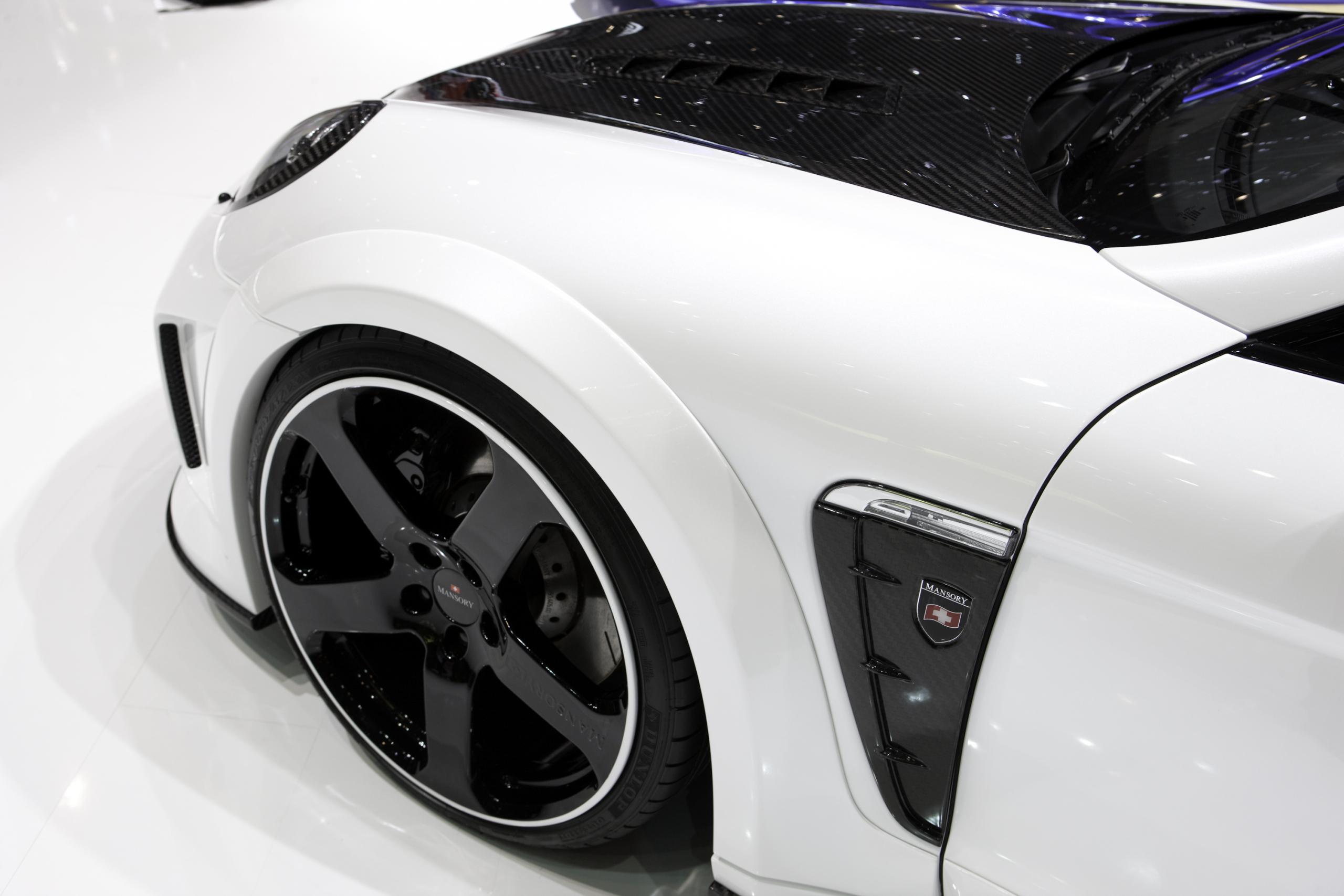
- Carbon front lip splitter — bonded to the lower edge of the factory bumper; deeper than factory, recessed brake-cooling intakes
- Vented carbon bonnet with twin heat-extractors (V8 / Turbo donors only — V6 cars do not require it)
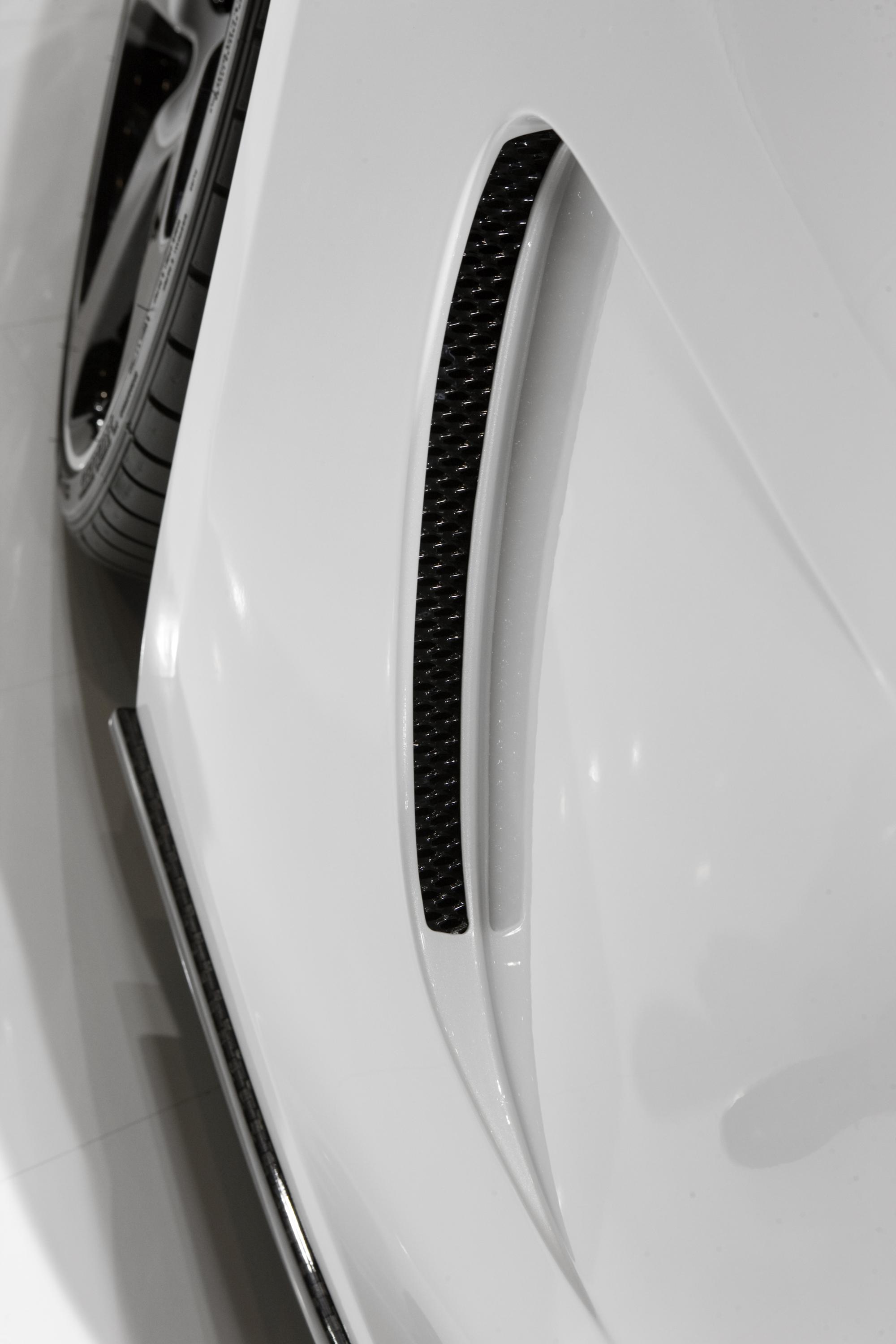
- Bonded carbon front fender extensions — +15 mm per side
- Deep carbon side skirts with longitudinal aero blade
- Bonded carbon rear fender extensions — +20 mm per side
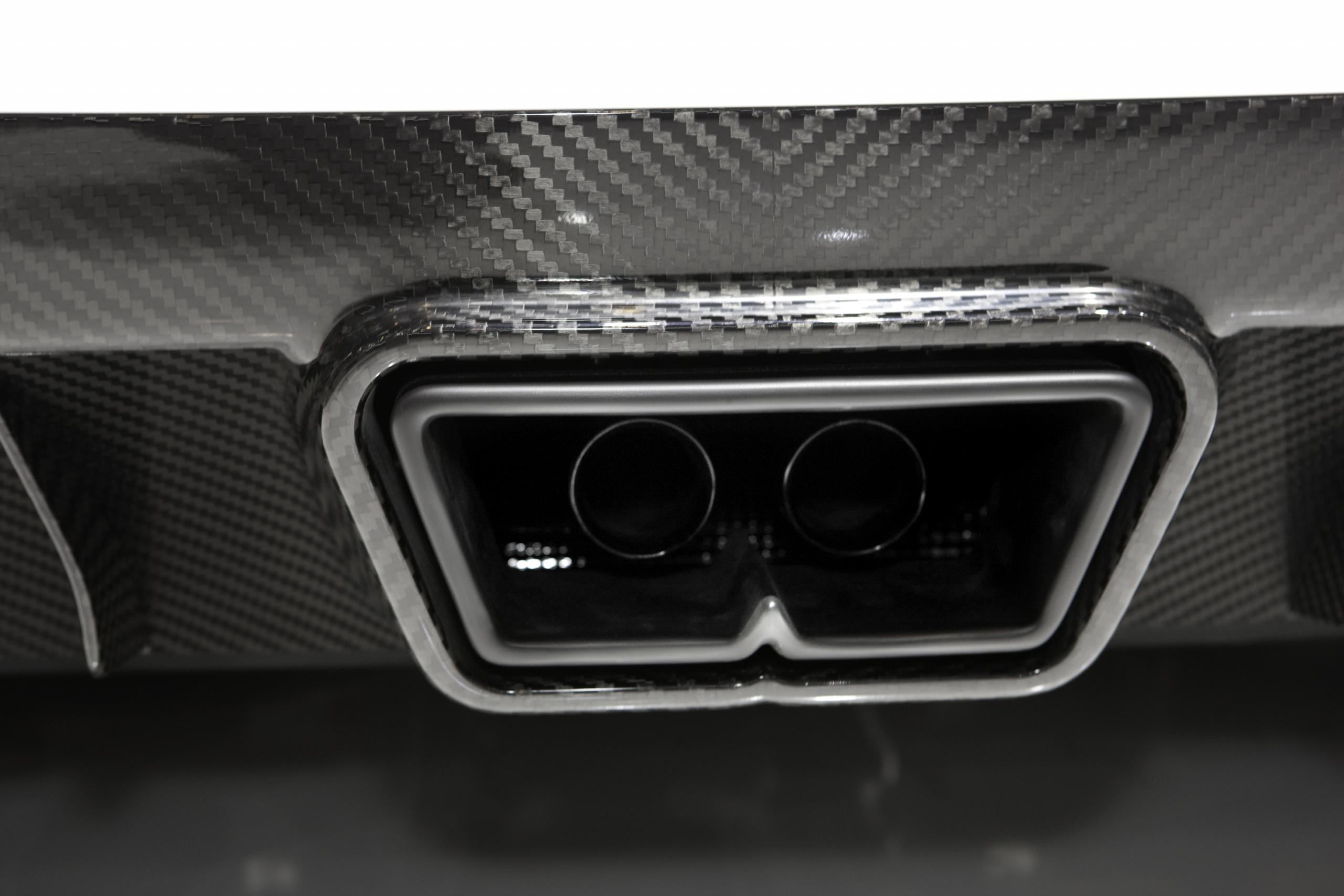
- Replacement carbon rear bumper with full-width diffuser, vertical strakes, quad-exit Mansory exhaust bezels
- Carbon decklid spoiler in low-profile geometry; the factory active spoiler on Turbo and Turbo S cars is retained as the primary aero device, with the Mansory spoiler as a visual extension when the active spoiler is retracted
- Carbon mirror caps, carbon B-pillar trim, optional carbon roof panel
Donor scope across the production cycle
The 970 ran a wide donor range over its production cycle. Mansory supports the kit across the full range:
- Panamera — 3.6 V6 (300 hp)
- Panamera 4 — 3.6 V6 with AWD
- Panamera S — 4.8 V8 (400 hp pre-facelift, 420 hp post-facelift; replaced post-facelift by twin-turbo 3.0 V6 at 420 hp)
- Panamera 4S — equivalent S spec with AWD
- Panamera GTS — 4.8 V8 (430 hp pre-facelift, 440 hp post-facelift), naturally-aspirated, sport calibration
- Panamera Turbo — 4.8 V8 TT (500 hp pre-facelift, 520 hp post-facelift)
- Panamera Turbo S — 4.8 V8 TT (550 hp pre-facelift, 570 hp post-facelift)
- Panamera S Hybrid / S E-Hybrid — 3.0 V6 supercharged plug-in hybrid (380-416 hp)
- Panamera Diesel — 3.0 V6 TDI (250-300 hp)
All run a 7-speed PDK or 8-speed Tiptronic depending on year and trim. The pre-facelift (2009-2013) and post-facelift (2013-2016) cars carry slightly different bumper-mount geometry; the kit ships configured for the donor at order intake.
Forged set
Factory 970 wheel sizes range 19"-21". Mansory steps to 22" forged staggered, tyre fitment 265/35 R22 front and 295/30 R22 rear. The 970's larger executive-sedan kerb weight (~1 970 kg V8 Turbo) and the rear-axle steering on Turbo S cars require forged construction tested for the platform load profile. Most-specified patterns on the 970 are the FM.5 classic five-spoke (period-correct, reads as a continuous evolution of the factory Turbo wheel) and the FD.16 dual-spoke directional. Forged catalogue: hodoor.world/collection/forgedwheels.
Where these still ship
The 970 is past its production cycle but second-hand-market activity is steady, particularly the post-facelift Turbo S 970-II as a value buy in the executive-sedan segment. Mansory commissions on the 970 cluster in Germany (Stuttgart-Frankfurt-Munich corridor), the United Kingdom, and Russia; the kit is one of the longer-running Mansory programmes still actively shipping to second-hand-market builds.
Order
Required at quote: VIN, donor trim, build year (pre-facelift 2009-2013 or post-facelift 2013-2016), exterior paint code, scope (front-only / rear-only / full), wheel pattern and finish, destination country.
Production typically 8-10 weeks for full body programme and 22" forged wheels. Installation 2 weeks at any Porsche-experienced workshop. Contact: [email protected] · WhatsApp +44 7488 818747.
Porsche Panamera 970 kit — where it actually lands
Most Mansory Porsche Panamera 970 commissions in 2026 originate from the same set of markets. Gulf demand routes through Dubai and Riyadh, with secondary volume across the United Arab Emirates. Western European commissions concentrate in the United Kingdom and the Netherlands, with periodic single-build orders out of Austria. Mediterranean demand — Greece, Cyprus — clusters around coastal collector communities. Hodoor handles freight, insurance, and import documentation end-to-end on every Porsche Panamera 970 commission.
Mansory cross-references for cross-shoppers
Closest in DNA — the configurator analogues to this programme are Carbon Fiber Body kit set for Porsche Panamera 970 and Porsche Panamera 970 facelift.
And on the wider Mansory shelf, watch Carbon Fiber Body kit set for Porsche Panamera 971.
FAQ
Does the kit fit pre-facelift and post-facelift 970 cars equally? Yes — both 2009-2013 (pre-facelift) and 2013-2016 (post-facelift / 970-II) are supported. Bumper-mount geometry differs slightly between the two; the kit is supplied configured to the donor's build year.
Is the kit compatible with the 970 Hybrid / E-Hybrid? Yes. The hybrid donors share body geometry with non-hybrid Panameras of the same trim; the only specification difference is that the front-bumper intake area is supplied at the smaller V6 spec rather than the larger V8 spec, regardless of how the hybrid drivetrain is internally classified.
Does the kit retain the factory active rear spoiler on Turbo / Turbo S? Yes. The Mansory carbon decklid spoiler is a visual extension that fits below the active aerofoil; the factory spoiler retains its full deployment range and remains the primary aero device. There is no recalibration of the active-aero ECU.
Will the kit fit a 970 Sport Turismo or Executive long-wheelbase? The 970 was not produced as a Sport Turismo (that came with the second-generation 971). The Executive long-wheelbase 970 (2014-2016) is supported separately — the rear door, rear quarter and roof are LWB-specific; the front fascia, fender extensions and rear-bumper geometry are common with standard-wheelbase 970s.
Is the 970 programme still shipping or is it end-of-life? Still shipping. Mansory keeps the 970 programme in active production because second-hand-market 970 commissions remain at sustainable volume. The kit is not a heritage / archive product — it is a current catalogue line.