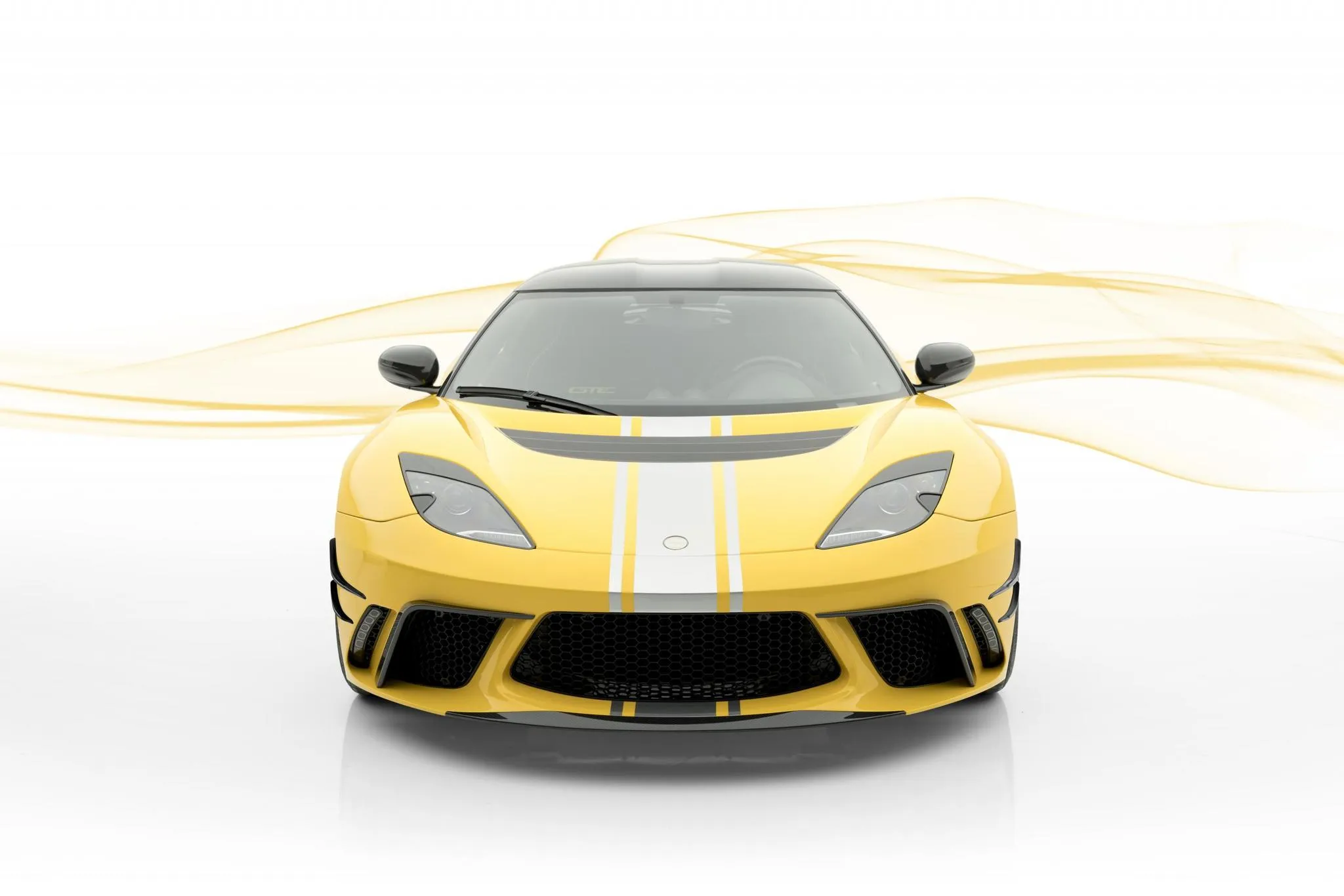
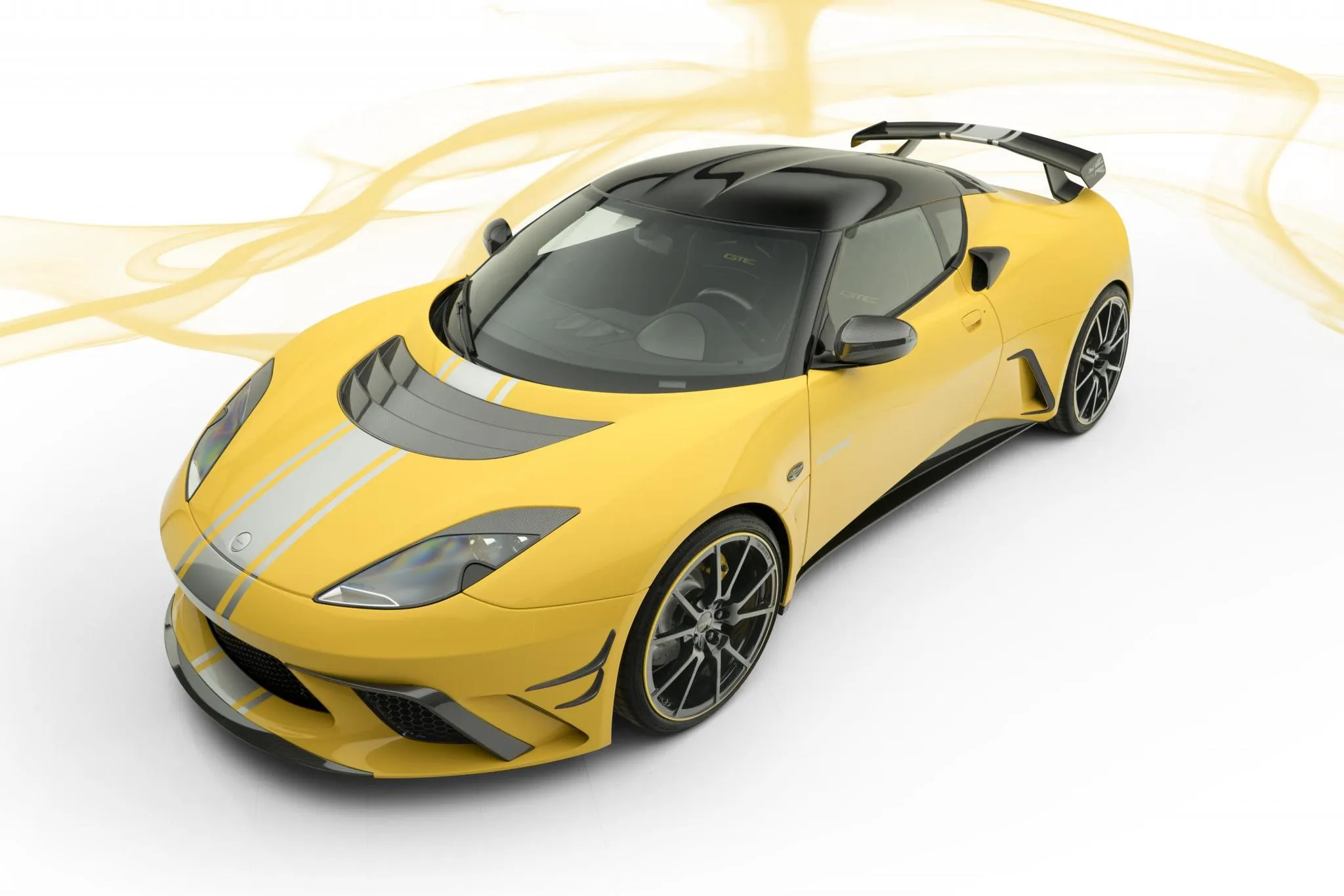
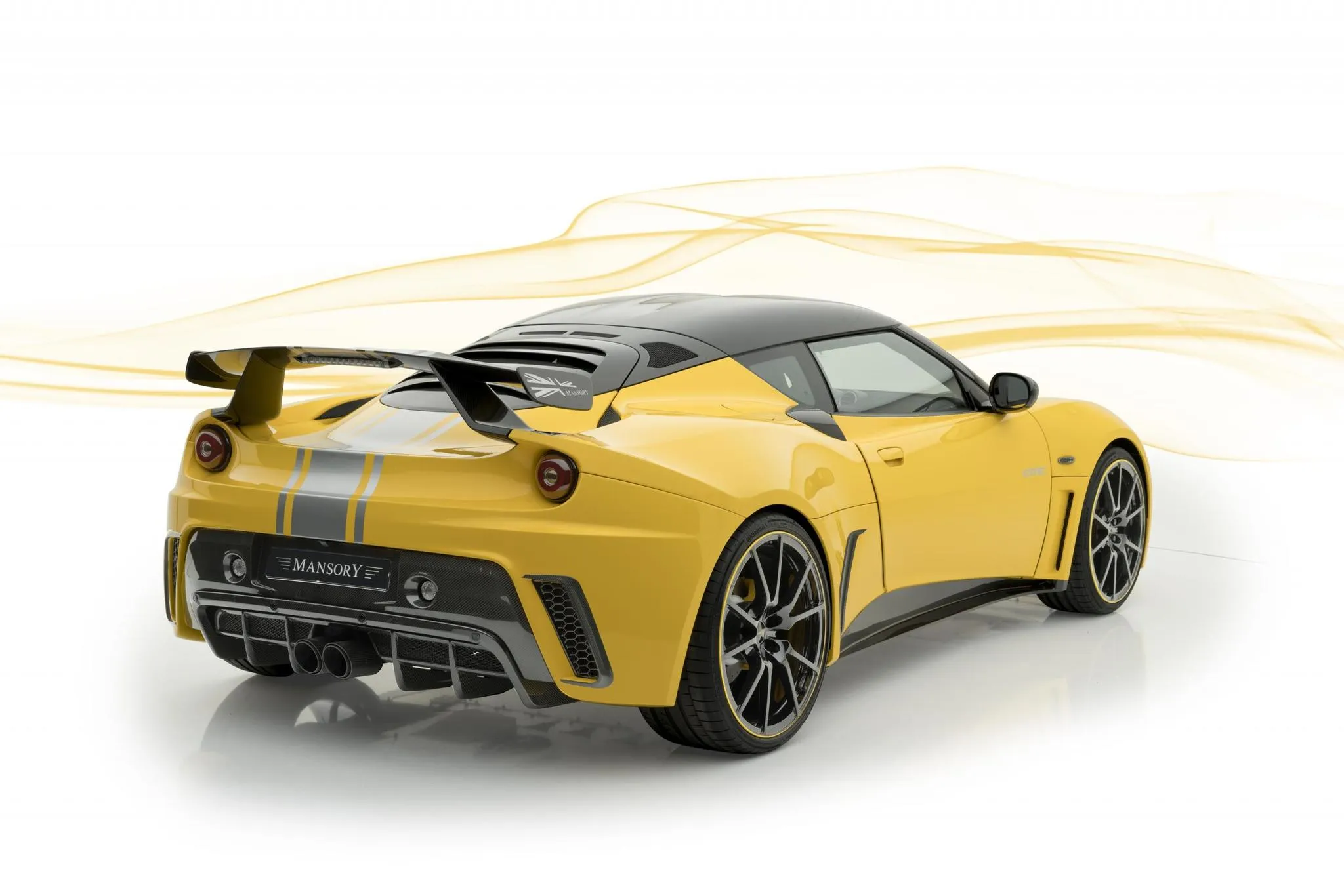
Mansory Carbon Fiber Body kit set for Lotus Evora


MANSORY Carbon Body-Kit Set for the LOTUS EVORA — a Provenance-Marker Programme for the Last Analogue Lotus Before the Geely Electrification Pivot
The Lotus Evora is one of two clear anomalies in Mansory's portfolio. The first is the Mercedes-Benz SLK R172 — a small German two-seat folding-roof roadster in a catalogue otherwise built around heavy SUVs and twelve-cylinder grand-tourers. The Evora is the second: a small mid-engined British 2+2 sports car, produced from 2009 to 2021, when Lotus was financially fragile under Group Lotus and the DRB-HICOM era. So the obvious question is, why did Mansory build a carbon programme for it at all? The answer is enthusiast demand. A specific cohort of Evora owners wanted a carbon overlay before Lotus itself pivoted to the Geely-funded Eletre SUV and Emeya saloon and abandoned analogue mid-engined construction altogether. Mansory's Evora kit exists as a provenance-marker for the last analogue Lotus — the last car the firm made on its bonded-aluminium philosophy with a transverse Toyota V6 and a manual gearbox.
Lotus in Mansory's portfolio — the second anomaly
Mansory's catalogue logic is straightforward most of the time: heavy donors, expensive donors, donors that benefit from added visual mass — Bentaygas, Cullinans, G-Wagens, Aventadors, Ferrari V12s. The Evora fits none of those criteria. It is a sub-1 450 kg mid-engined sports car from a manufacturer that never sold more than a few thousand cars per year. The Evora was always Lotus' overlooked car — the Elise had purity, the Exige had drama, and the Evora was meant to be the grown-up: the first Lotus you could realistically daily-drive, with proper air-con, a usable boot and (vestigial) rear seats. Mansory's Evora kit acknowledges that grown-up brief instead of fighting it. Where the Mansory Elise programme is a restrained accent kit respecting the under-ton kerb weight, the Evora programme is a fuller carbon body-kit — front bumper, fenders, skirts, rear bumper, decklid, spoiler — because the 2+2 footprint can carry the visual weight without losing balance.
Evora platform and lifecycle — 2009 to 2021
The Evora launched in 2009 as a Series 1 2+2 with a transverse mid-mounted Toyota 2GR-FE 3.5 L V6, naturally aspirated, 276 hp. The Series 1 was an extruded-and-bonded aluminium chassis derived in philosophy from the Elise/Exige architecture but enlarged to accommodate the V6 and the rear seats. The chassis was developed by Lotus chief engineer Roger Becker's team and was the first all-new Lotus platform of the modern era. In 2010 Lotus added the Evora S with a supercharged 2GR-FE producing 350 hp. Series 2 arrived in 2015 as the Evora 400, with 400 hp from the same supercharged 2GR, weight reduction, revised front and rear clamshells, and a stiffer chassis. Then Evora Sport 410 in 2017, Evora GT410 Sport, Evora GT430 in 2017 with 430 hp and a lighter weight programme, and the US-market Evora GT at 416 hp. Production ended in 2021; the Lotus Emira, launched in 2022, is its true successor and the last petrol Lotus before the Geely-funded EV pivot. Architecture: aluminium-bonded extruded-section chassis. Drivetrain: transverse mid-engined, rear-wheel drive. Transmission: 6-speed manual or 6-speed Toyota IPT automatic. Dimensions: 4 350 × 1 850 × 1 230 mm, wheelbase 2 575 mm. 0-100 km/h: 3.7 s in GT430 spec. The Evora is mechanically the simplest and most analogue mid-engined car of its generation — no dual-clutch, no hybrid, no torque-vectoring beyond a mechanical Torsen LSD on the GT variants.
Carbon kit components
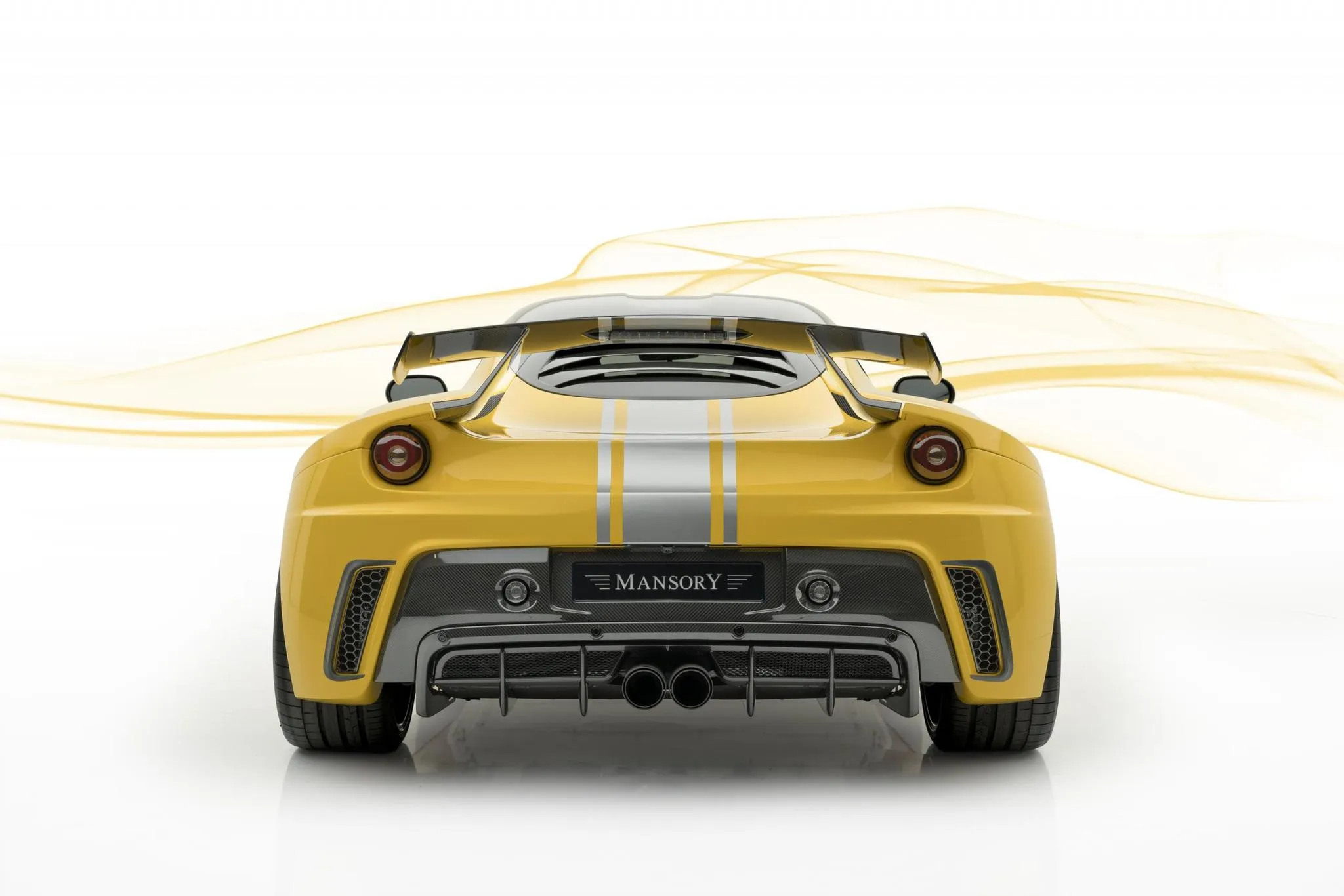
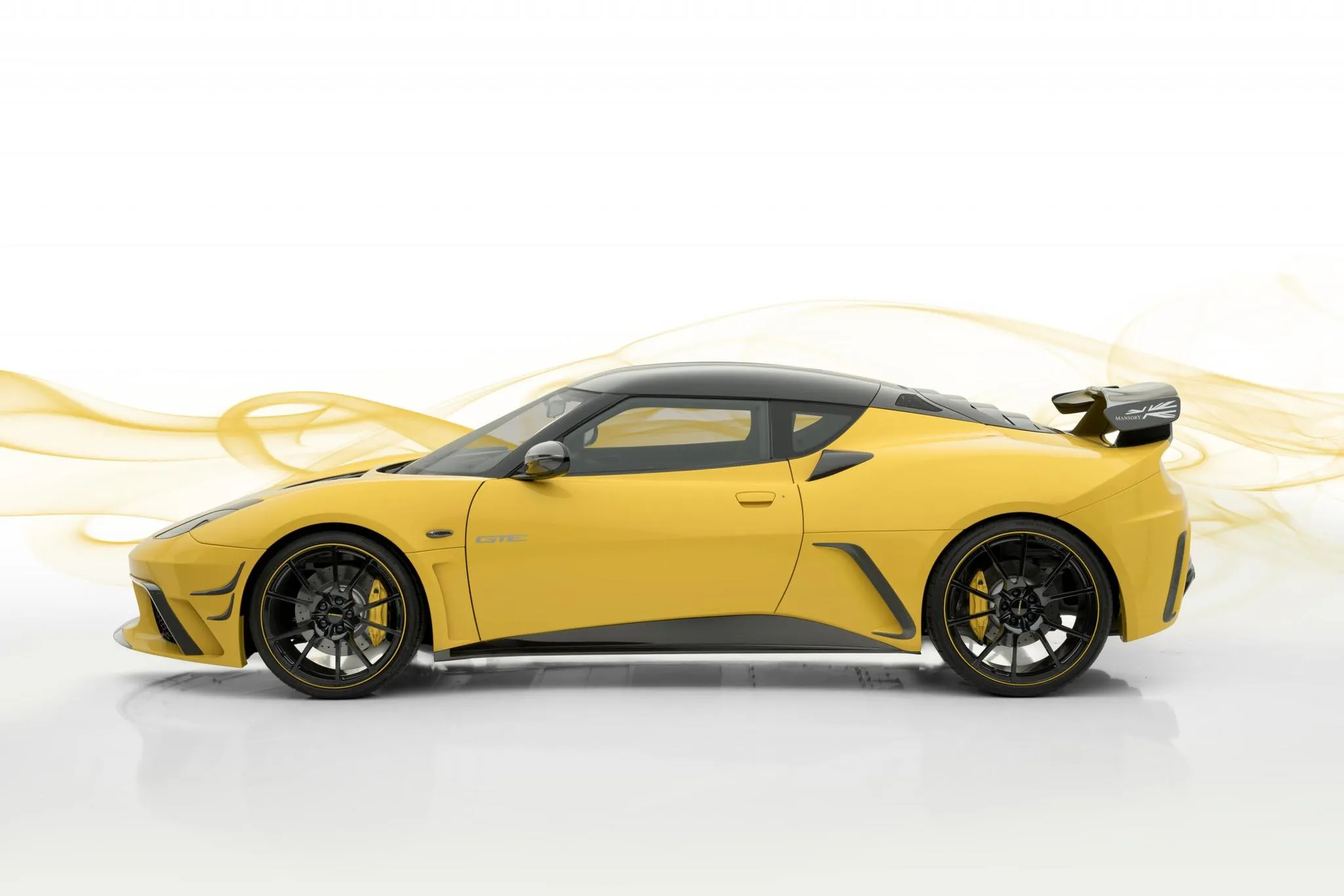
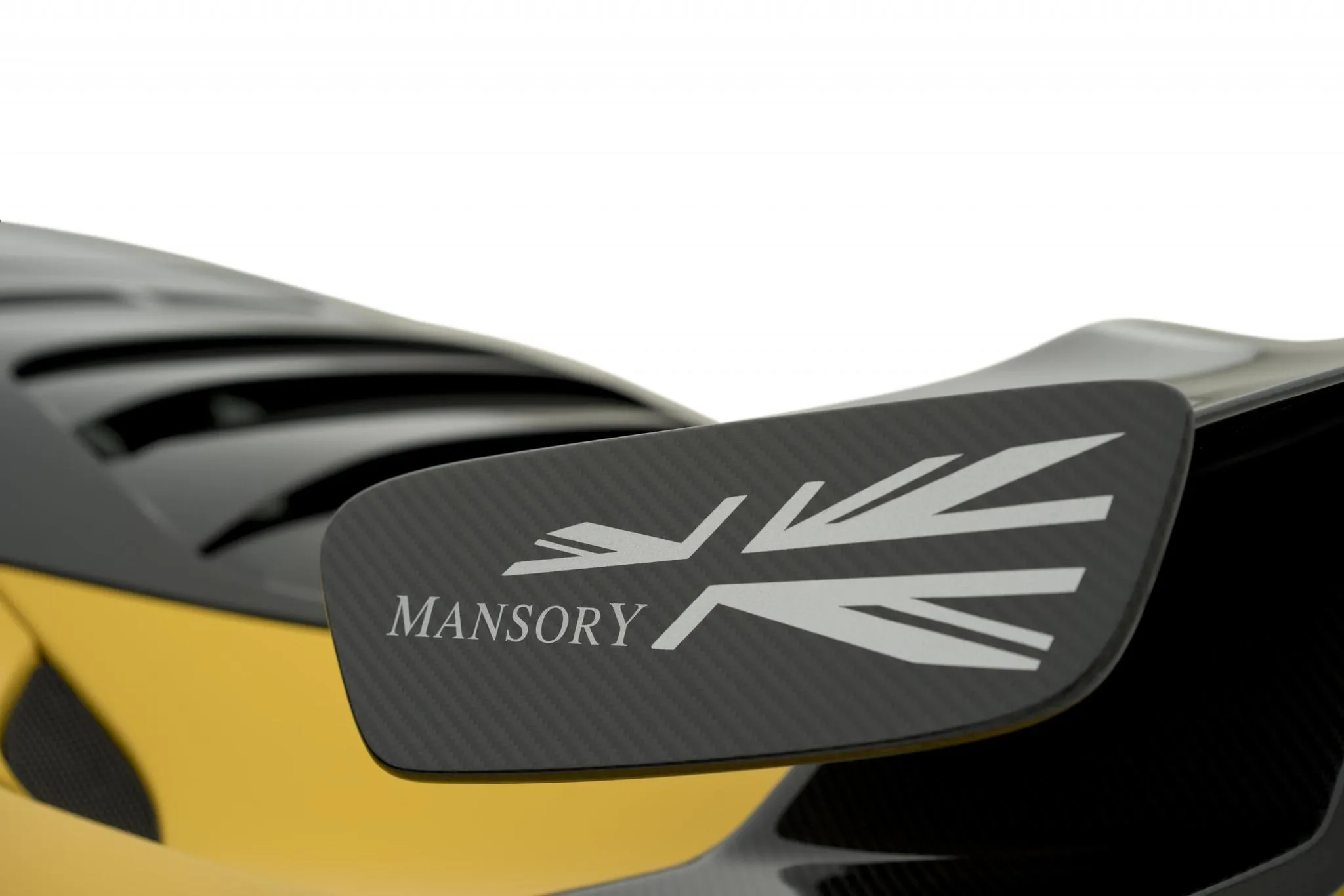
Evora kit schedule, generation-aware (Series 1 versus Series 2 fascia geometry differs and the kit is fitted accordingly): replacement carbon front bumper with deeper splitter and enlarged radiator-cooling intakes; carbon clamshell vent panels for the front bonnet (Series 2 only — Series 1 retains factory aluminium clamshell); carbon front-fender extensions bonded onto factory aluminium fenders; carbon rear-fender extensions matched to 19" staggered fitment; carbon side skirts; replacement carbon rear bumper with exposed central diffuser and twin-exit Mansory exhaust bezels respecting the factory transverse-mounted V6 exhaust routing; carbon rear engine-cover louvres replacing factory glass-louvred decklid panel; carbon rear-wing spoiler (Sport-style low-drag profile or GT-style raised aerofoil — owner choice); carbon mirror-housing replacements; carbon B-pillar appliqués. Optional Mansory interior retrim covers the Evora's somewhat dated factory dashboard with Alcantara-trimmed centre stack and door inlays. The kit does not touch the Evora's bonded-aluminium chassis or the Toyota-sourced drivetrain — all changes are bodywork and cabin only.
3.5 V6 supercharged Toyota 2GR — the heart of the late Evora
Donor: Lotus Evora, Series 1 (2009-2014) and Series 2 (2015-2021). Engine: Toyota 2GR-FE 3.5 L 60° V6 — the same block found in transverse-mounted Toyota and Lexus applications (Camry, RX350, Highlander), but in the Evora rotated for mid-engine duty and modified for either atmospheric (276 hp Series 1 base) or supercharged (350 hp Evora S, 400 hp Evora 400, 410 hp Sport 410, 416 hp GT, 430 hp GT430) output. Supercharger: Edelbrock-supplied roots-type unit on supercharged variants. Transmission: 6-speed manual (preferred enthusiast spec) or 6-speed Toyota IPT torque-converter automatic. Drivetrain: transverse mid-engined RWD with mechanical Torsen LSD on GT-spec cars. Suspension: double wishbones front and rear, Bilstein dampers, Eibach springs (Öhlins on GT430). 0-100 km/h: 5.0 s (Series 1 base), 4.4 s (Evora S), 4.2 s (Evora 400), 3.7 s (GT430). Top speed: up to 305 km/h (GT430). Kerb weight: 1 415 kg (Series 1) down to 1 299 kg dry (GT430). Dimensions: 4 350 × 1 850 × 1 230 mm. The Toyota 2GR was a deliberate Lotus choice — a proven, easily-serviced engine passing global emissions without in-house powertrain development. The kit covers all variants from Series 1 base to GT430.
Wheels — 19" forged for the Evora
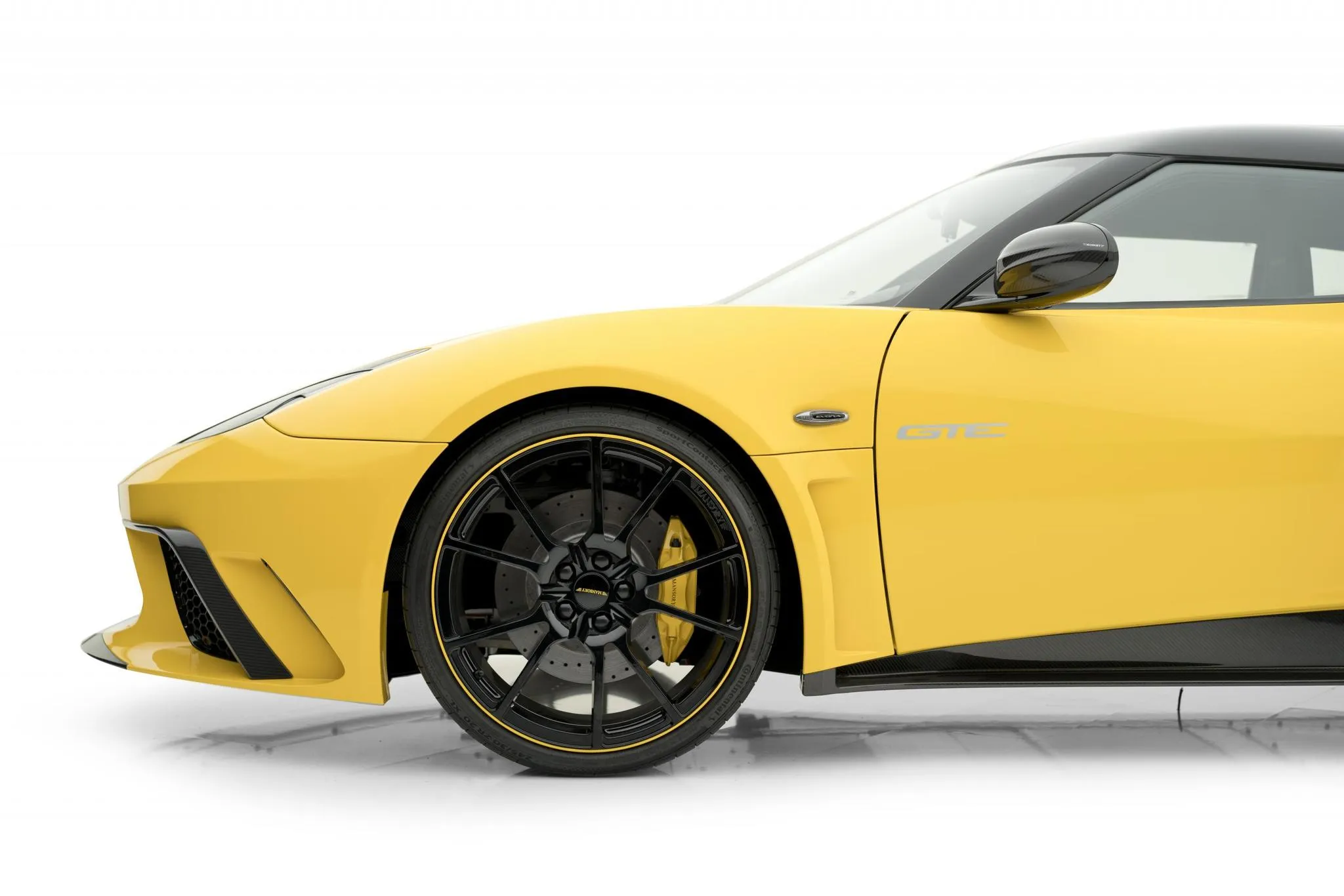
Factory Evora wheels: 18" front / 19" rear staggered (Series 1, Series 2 base) or 19" / 20" staggered (Series 2 GT-spec). Mansory recommended fitment: 19" front and rear staggered forged. Patterns: M.7 deep-concave seven-spoke and M.10 classic ten-spoke split. Finishes: matte-black, satin-gunmetal, polished-silver, period-correct British-Racing-Green-painted hub centres for owners who want a heritage Lotus aesthetic, or paint-to-sample to factory Evora colour codes. Tyre fitment: 235/35 R19 front, 285/30 R19 rear. Wheel weight is matched to factory forged Lotus Sport wheel mass — the Evora's unsprung-mass profile is preserved. Centre-cap branding can be Mansory M-mark or Lotus heritage logo on owner request. Catalogue: hodoor.world/collection/forgedwheels.
Evora's small but distinct enthusiast pockets
United Kingdom — Lotus' home market and by some distance the largest concentration of Evora ownership in the world. Hethel-built, factory-supported, and with a deep specialist network around the Norfolk works, the UK Evora scene is centred on track-day clubs, Lotus Owners Club regional groups and the active Evora-specific online forums that grew up around the GT410 and GT430 launches. Most UK Mansory Evora commissions come from owners who already track the car at Donington, Snetterton or Cadwell and want a carbon overlay that visually matches the seriousness of their cornering speeds. Country shipping and installer documentation: https://hodoor.world/blogs/wide-body-kits-and-wheels-worldwide/gb-performance.
Japan — Japan's small-sports-car culture has always treated Lotus with respect, and the Evora landed there at exactly the right time for a generation of owners trading in NSX and S2000 cars who wanted a more contemporary mid-engined option. The Japanese Evora scene is concentrated around Tokyo and Osaka specialist garages, the Hakone touge weekends and the Tsukuba time-attack circuit. Mansory Japan commissions skew toward the Series 2 Evora 400 and Evora GT430 with tasteful matte-black or satin-gunmetal carbon finishes. Country shipping and installer documentation: https://hodoor.world/blogs/wide-body-kits-and-wheels-worldwide/wide-body-kits-and-forged-wheels-in-japan.
Australia — Australia's Evora pocket is small in absolute numbers but disproportionately active. The car landed as the local hot-Holden and HSV scene was winding down, and owners are concentrated around the Sydney Motorsport Park, Phillip Island and Sandown track-day calendars. Open-road touring culture also suits the Evora's GT brief — the supercharged 2GR is happy at sustained high speeds across inland routes that do not exist in Europe. Australia kits ship with ADR-compliance documentation. Country installer documentation: https://hodoor.world/blogs/wide-body-kits-and-wheels-worldwide/australia-bodykits.
Commission
Commission requires: Evora VIN and series (S1 2009-2014 versus S2 2015-2021), sub-variant (base, S, 400, Sport 410, GT410 Sport, GT430, GT US-spec), atmospheric versus supercharged, manual versus IPT automatic, current paint code, target carbon scope, wheel choice, optional interior retrim, destination country. Production timeline for the Evora is 10-12 weeks for carbon components and wheels (longer than the Elise programme because the kit is fuller), plus installation of 2 weeks at a Lotus-experienced specialist. Total: ~3 months from order to road. Contact: [email protected] or WhatsApp +44 7488 818747.
Sibling Mansory builds
Owners short-list, in order: Carbon Fiber Body kit set for Lotus Elise, Lamborghini Aventador, Rolls-Royce Cullinan.
FAQ — Evora programme
Why does Mansory cover the Evora at all when it covers no other Lotus 2+2? Because the Evora is the last analogue mid-engined Lotus before the Geely-era Eletre and Emeya pivoted the brand to electrification. The kit exists as a provenance-marker for owners who want to preserve and visually elevate that lineage.
Does the kit fit both Series 1 (2009-2014) and Series 2 (2015-2021) cars? Yes — with generation-specific front and rear clamshell geometry. Series 1 cars require slightly more individual fitting because the front-fascia tooling differs from the Series 2 Evora 400 and later GT-spec cars.
Is the supercharged Toyota 2GR-FE engine modified? Not as part of this body-kit programme. A separate Mansory commission covers Edelbrock-supercharger pulley changes, intercooler upgrades and ECU calibration up to approximately 460 hp; that is ordered separately.
Will the carbon kit fit a manual-gearbox car the same way it fits an IPT automatic? Yes — the 6-speed manual and Toyota IPT automatic Evora share the same body shell and clamshell tooling. Gearbox choice is irrelevant to the body-kit fitment.
Will Mansory cover the Lotus Emira (the Evora's 2022 successor)? The Emira is a separate programme on special request — it shares philosophy with the Evora but uses different clamshell tooling and supports the AMG-sourced 2.0 turbo four as well as the Toyota V6.