
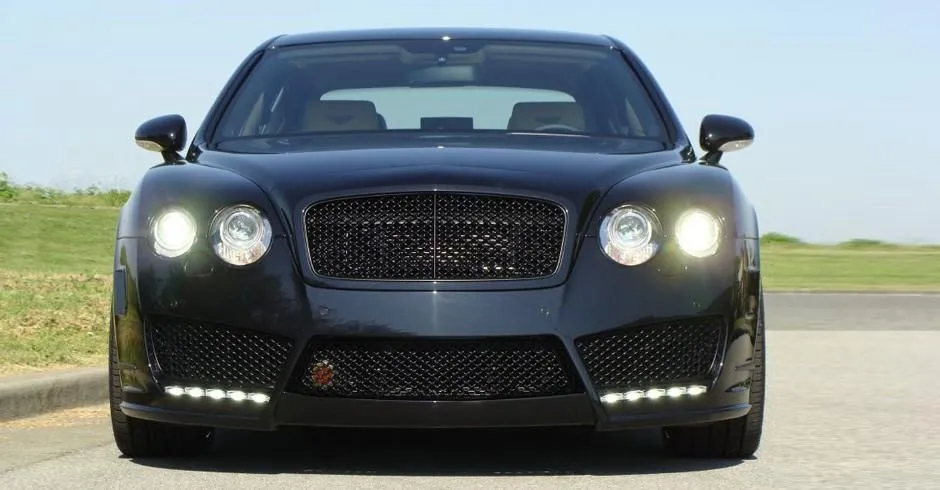
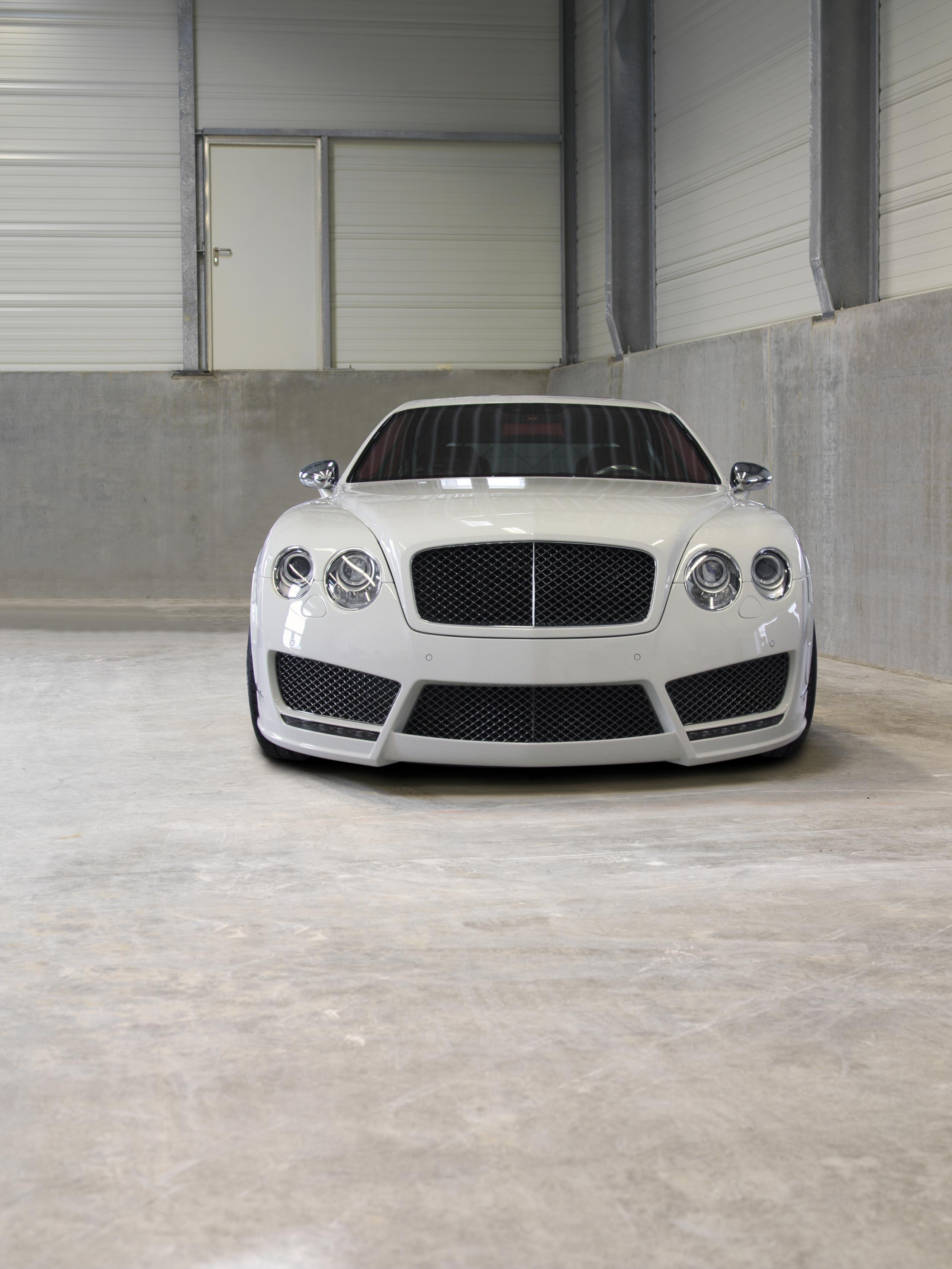
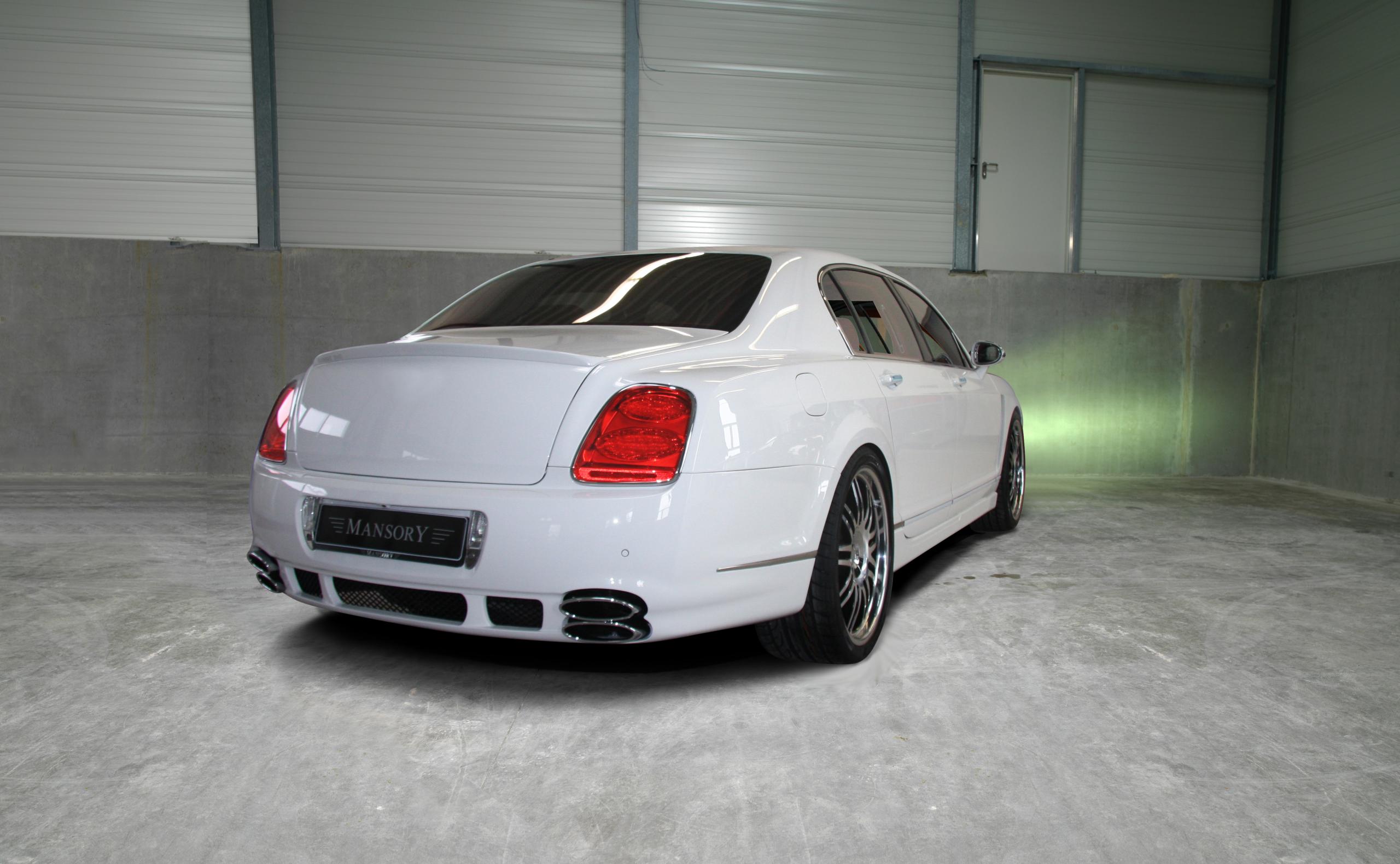
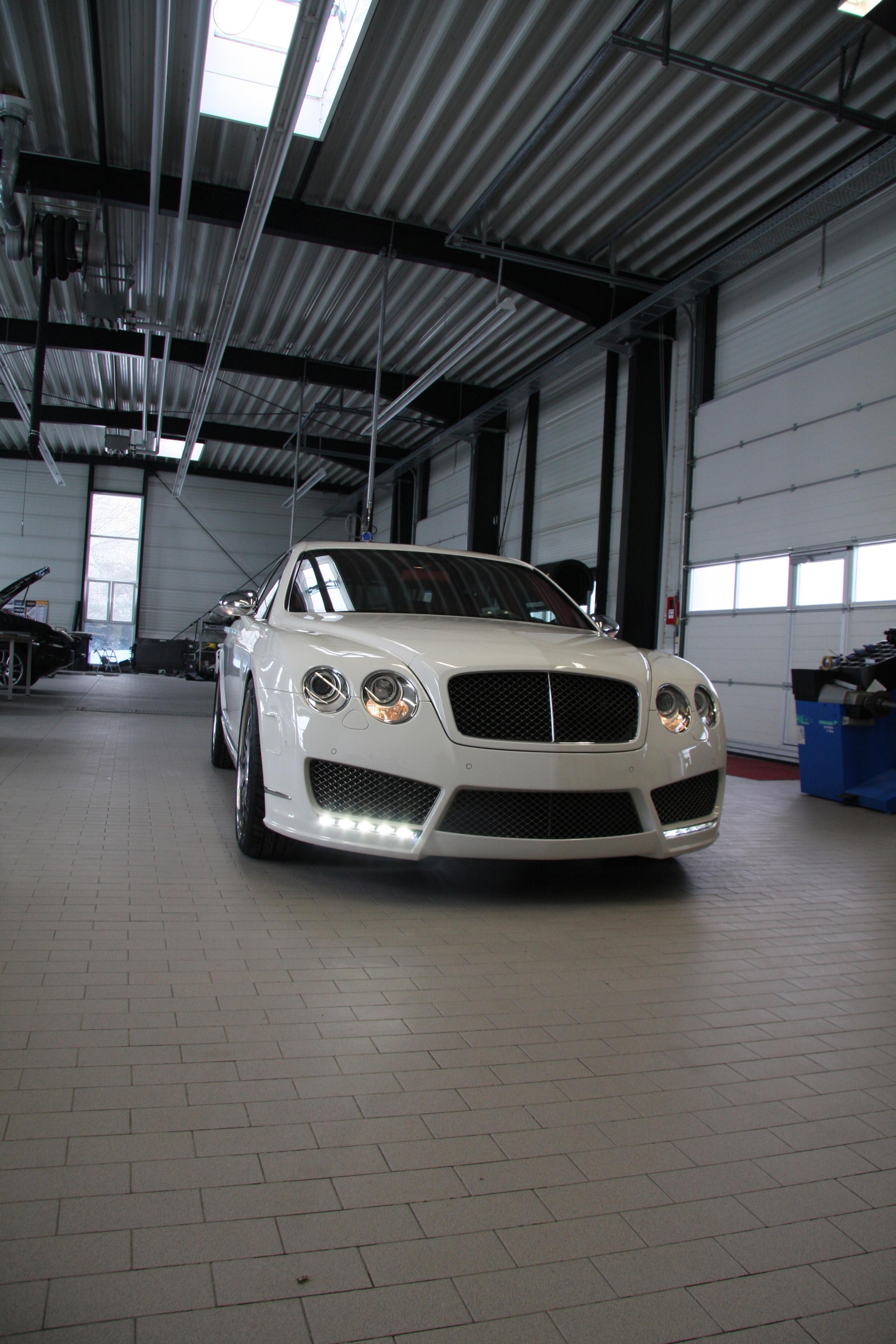
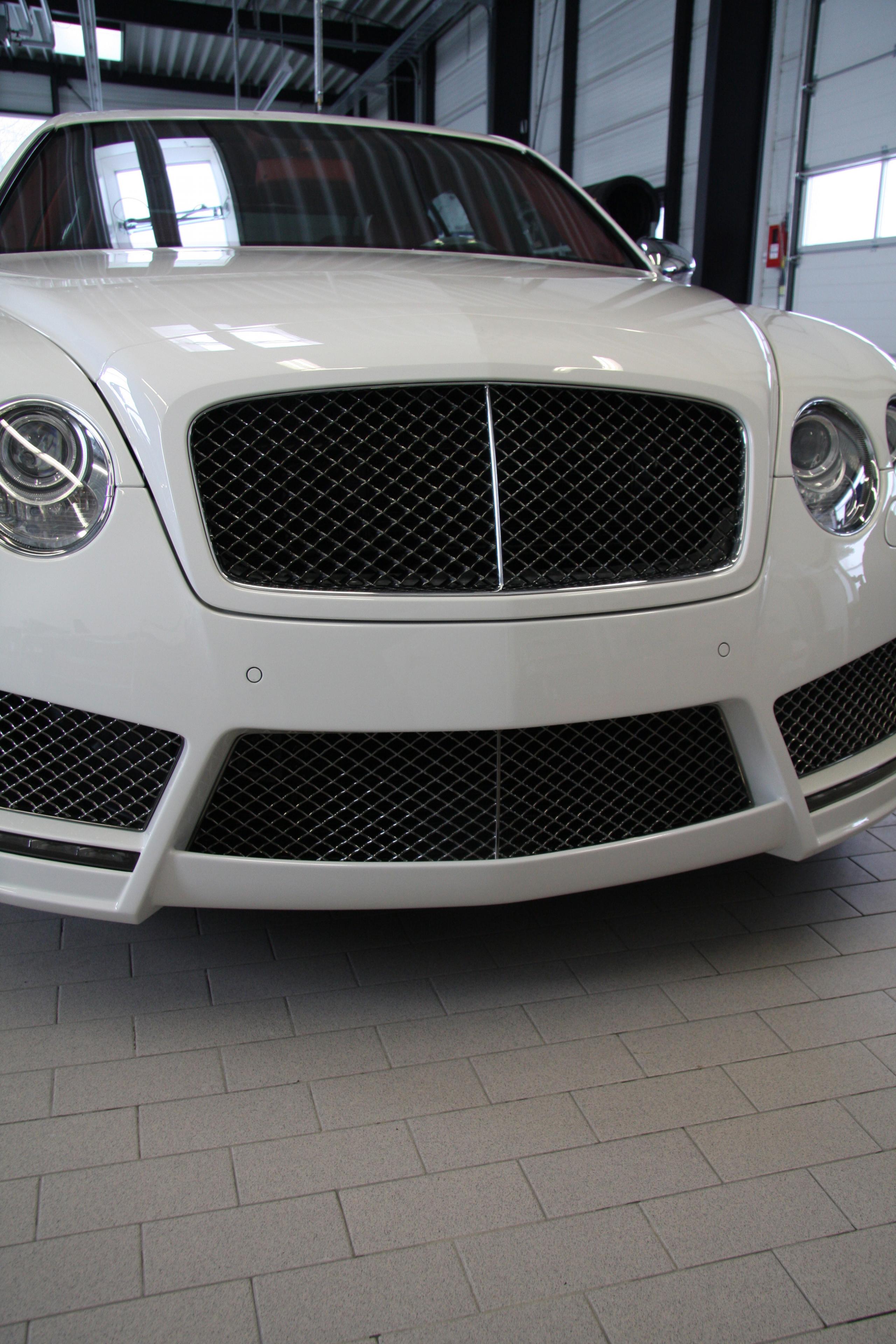
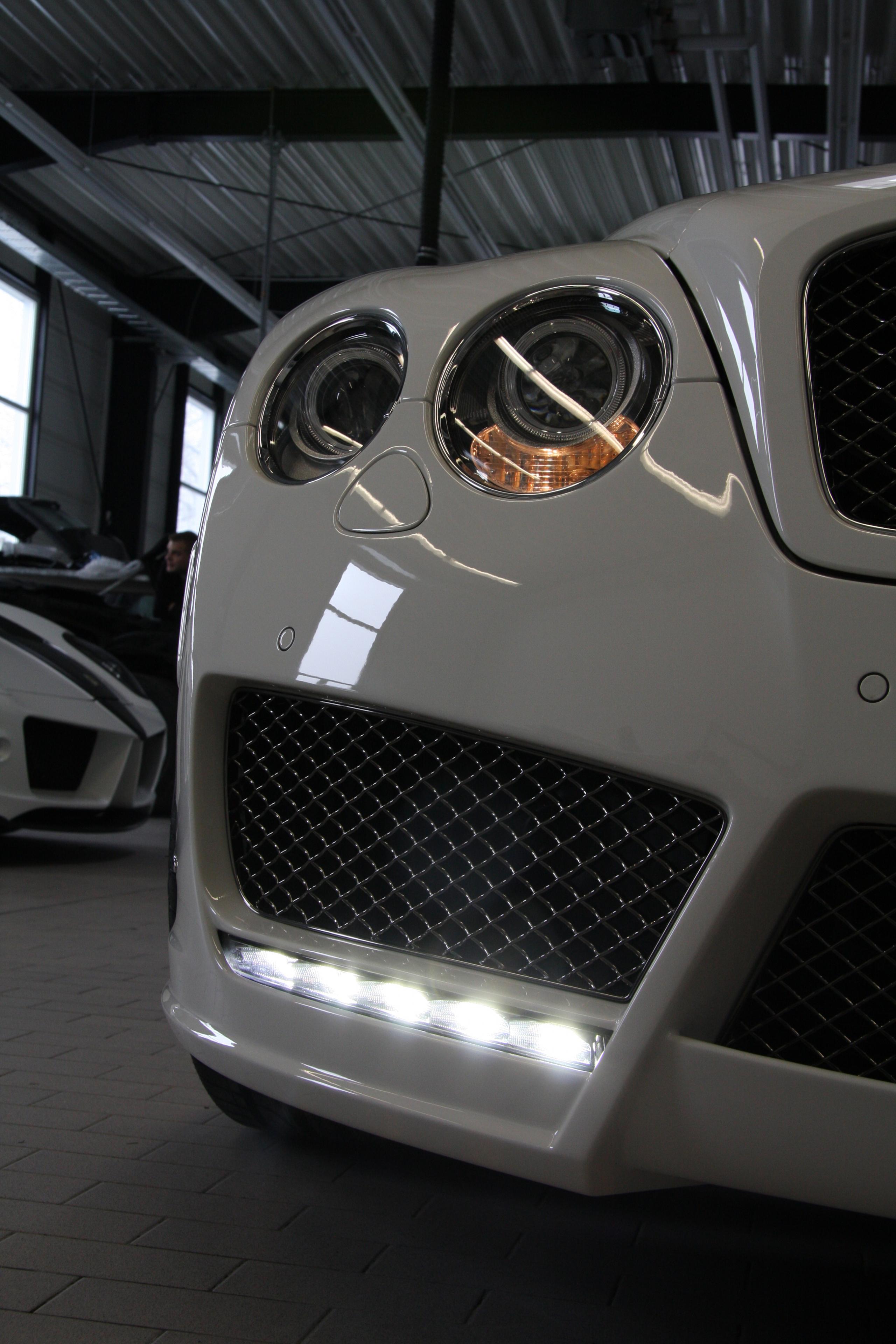

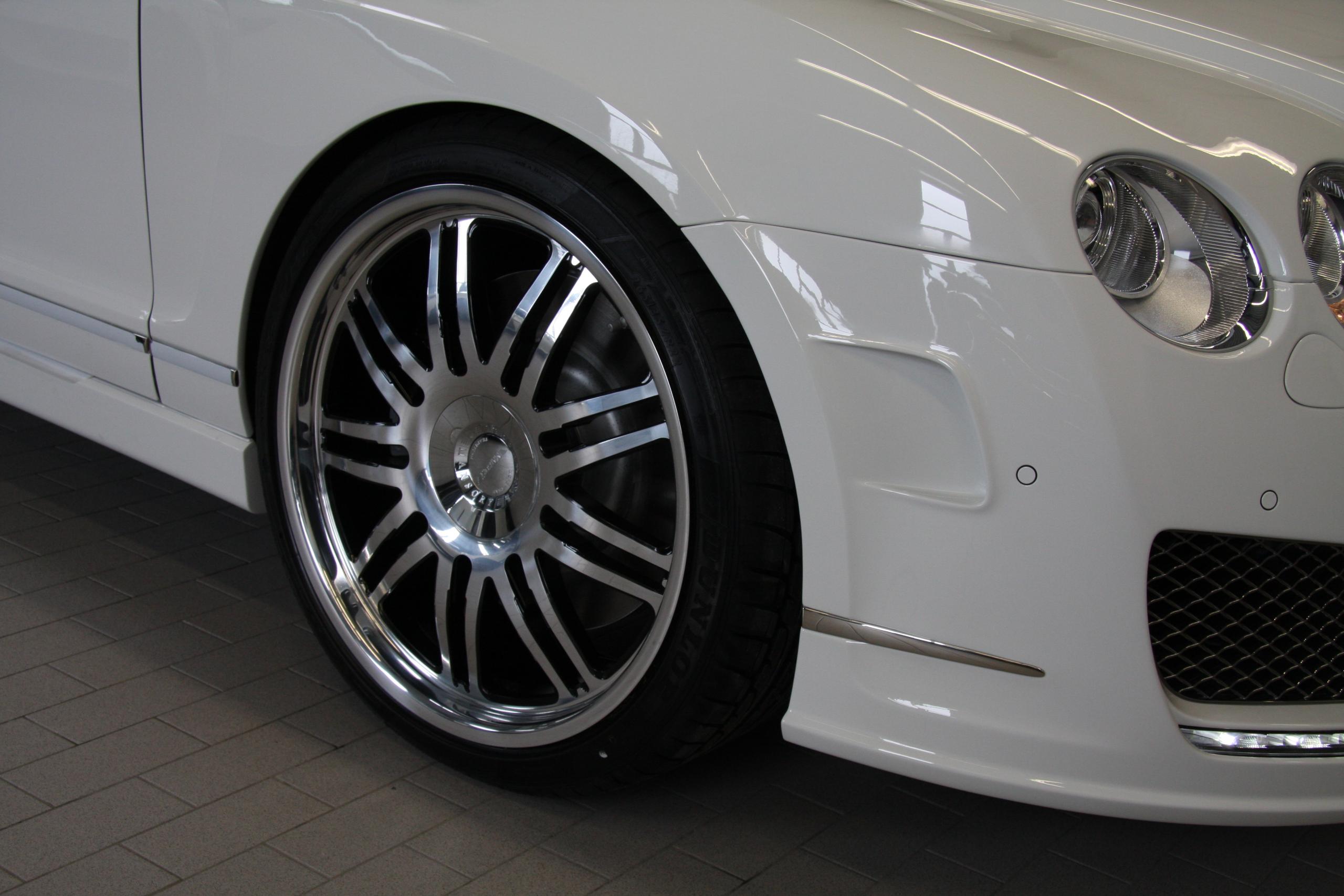
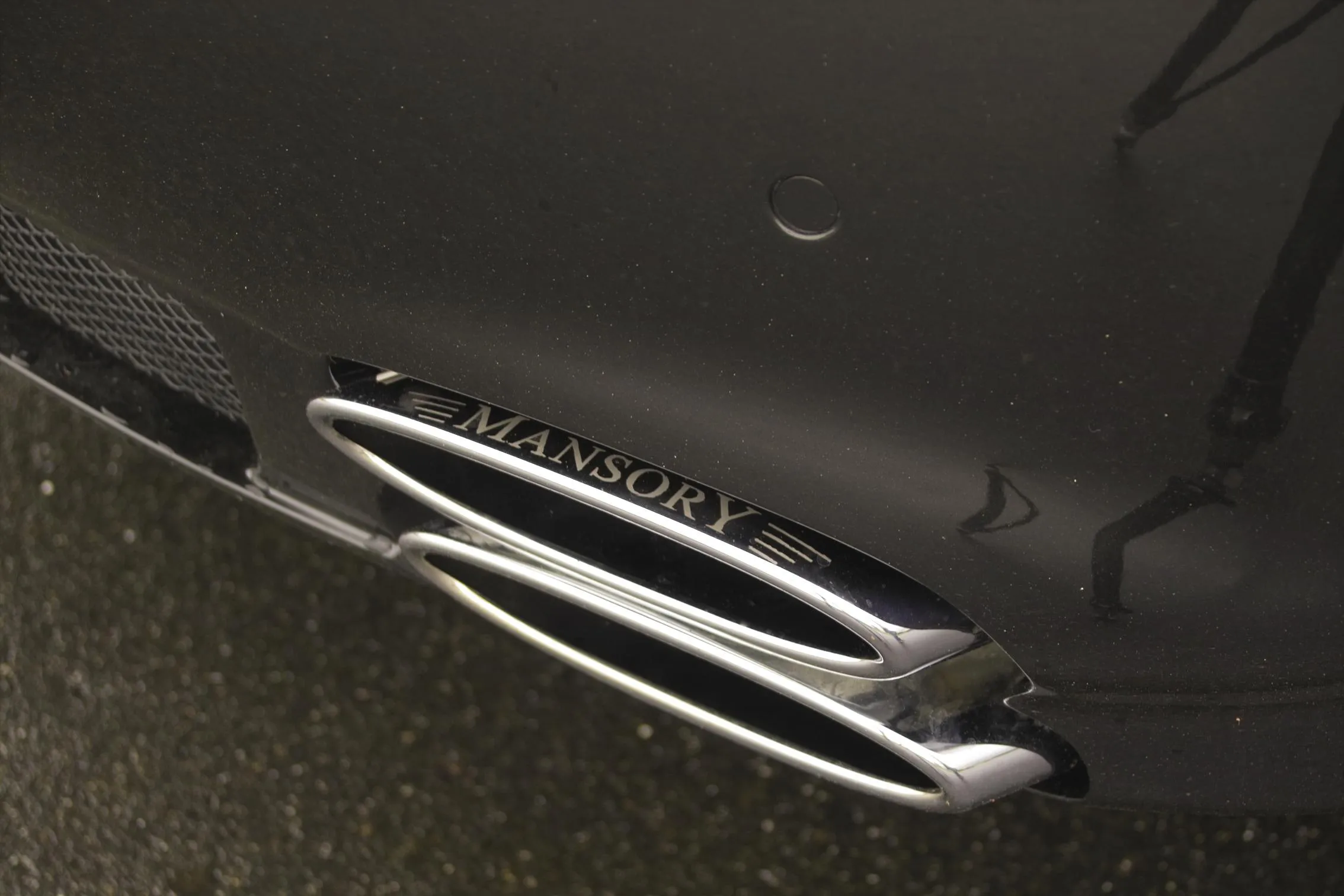
Mansory Carbon Fiber Body kit set for Bentley Flying Spur 2005


Mansory programme — Bentley Continental Flying Spur (1st gen, 2005–2013, D1 platform)
This is the Mansory aerodynamics programme for the first-generation Bentley Continental Flying Spur — the four-door saloon Bentley built between 2005 and 2013 on the Volkswagen Group D1 platform that also carried the original Continental GT and the Audi A8 D3. The Flying Spur 1st gen was Bentley's return to a four-door car after a long absence in the sedan market — the previous Bentley four-door was the Brooklands of the 1990s, and the Spur reset the brief on a modern platform with twin-turbo W12 power and Torsen all-wheel drive. The Mansory programme on this chassis is a period piece: developed in the late 2000s when Mansory's body parts were still moulded in PU-RIM polyurethane rather than carbon fibre, and dimensioned around 19" and 20" forged wheel options that were the period-correct fitment.
This page is the brief for the 1st-gen kit specifically. The 2nd-generation Flying Spur (2013–2019, on the redrawn B-platform) takes a different Mansory programme — that build is documented at the 2014 Flying Spur kit page. Owners who own one Spur and want to cross-reference the other generation's Mansory build can read both pages side by side.
Why this is the period-piece kit — PU-RIM, not carbon
Mansory's modern body programmes from approximately 2012 onward are uniformly carbon fibre — moulded in pre-preg carbon, painted or lacquered visible weave, bonded onto cut-back fenders or overlaid onto OEM panels. The 1st-gen Flying Spur kit predates that material standard. The body parts ship in polyurethane reaction-injection moulded (PU-RIM) resin, the same material Mansory used across its 2005–2010 catalogue for high-volume saloons. PU-RIM is heavier than carbon, more impact-resilient, and finishes only in painted body colour — there is no lacquered visible weave option on this kit. For a four-door luxury sedan on the D1 platform, PU-RIM is the correct material brief: the parts are paint-finished panels rather than lacquered carbon objects, and the kit reads as a period-original Mansory rather than a retrofit.
The chassis — D1 across Continental GT, Spur and Audi A8
The D1 platform was a Volkswagen Group long-wheelbase saloon architecture used across three nameplates: the Audi A8 D3 (2002–2010), the Bentley Continental GT 1st gen (2003–2011, two-door), and the Bentley Continental Flying Spur 1st gen (2005–2013, four-door). All three shared a common underbody, common front suspension hardpoints and a common rear multi-link geometry. Each took a different upper body and a different powertrain — the Spur ran the W12 6.0 TwinTurbo at 552 PS, with the Flying Spur Speed variant introduced in 2008 lifting that to 600 PS / 750 Nm. The Mansory PU-RIM kit was developed against the Spur's specific bumper and side-sill geometry; it does not fit the Continental GT 1st gen (different door cut and different rear deck) and does not fit the Audi A8 D3.
Body parts — every Mansory piece in the period kit
The 1st-gen Flying Spur programme is an additive aerodynamics set that overlays the OEM panels without bumper replacement or fender flares. The build philosophy here is closer to a period soft-kit than to a wide build.
- Front bumper lip — PU-RIM lower spoiler that fits below the OEM front bumper, integrated splitter geometry
- Side sill add-ons — full-length PU-RIM extensions below the OEM rocker, finished flush with the door cut
- Rear bumper apron — PU-RIM diffuser-shaped piece below the OEM rear bumper, integrated cutouts for OEM exhaust tip geometry
- Boot lid spoiler — discreet PU-RIM kick on the boot trailing edge, sized for the Spur's long four-door rear deck
- Twin-pipe sport exhaust — tip-only change with a valved muffler, retains OEM headers and catalysts
None of the body parts requires bodywork prep. Total fitment runs 5 to 7 hours at a Mansory-experienced shop. PU-RIM material is paint-finished only — body shops handle the panels with the same prep, primer and clear-coat workflow they use for OEM panels, with no special lacquered-weave finishing required.
Wheels — period-correct 20" forged
Mansory specifies the M-series fully forged 20" wheel as the matched fitment for the 1st-gen Flying Spur. The OEM 19" Bentley wheel was a cast unit; the period-correct upgrade for this chassis was the 20" forged stagger. Owners who want a more aggressive 21" or 22" fitment can spec that on quote, but the chassis air-suspension calibration on the D1 platform was tuned around 19"–20" sidewall stacks, and a 22" forging requires the suspension to be re-calibrated to match. The period-correct 20" route avoids that workload. Diamond black, gloss black and polished face are the available finishes; the wheel range lives at the forged wheel collection.
Powerbox on the W12 — modest gain by design
Mansory's optional Powerbox piggyback module on the W12 6.0 TwinTurbo lifts the Flying Spur from 552 PS / 650 Nm to roughly 620 PS / 720 Nm. On the Flying Spur Speed (600 PS / 750 Nm) the gain is closer to +50 PS. These are deliberately conservative numbers for a 2.5-tonne sedan on a 2007-era ZF 6-speed gearbox; Mansory does not offer a stage-2 reflash on the 1st-gen Flying Spur because the period gearbox was calibrated for a fixed torque envelope and a stage-2 reflash would shorten clutch-pack life on a chassis that frequently logs significant city-driven distance. Service intervals do not change; the Powerbox is reversible at the OBD port.
Interior — Mulliner-aware, narrow Mansory scope
The 1st-gen Spur cabin was already Mulliner-territory — most cars left Crewe with quilted hide, contrast piping, marquetry and a 1,100 W Naim audio system that defined Bentley's sedan-cabin standard for the next decade. Mansory's interior parts on this chassis are intentionally limited: a Mansory sport steering wheel with carbon spoke-back inlay, metal pedals, carbon dashboard inlays and door pulls. The OEM Mulliner trim, the Naim audio architecture and the seats stay factory. Owners who want a fully retrimmed cabin run the Mulliner route through Bentley first, then add the Mansory parts on top.
Generation map — Flying Spur across three platforms
| Generation | Years | Platform | Engine (launch) | Mansory kit material |
|---|---|---|---|---|
| 1st gen (this page) | 2005–2013 | D1 (shared with Conti GT 1st gen, Audi A8 D3) | W12 6.0 TT, 552 PS | PU-RIM polyurethane |
| 2nd gen | 2013–2019 | B-platform (shared with Conti GT 2nd gen) | W12 6.0 TT, 626 PS / V8 4.0 TT 507 PS | Carbon fibre |
| 3rd gen | 2019+ | MSB (shared with Porsche Panamera 2nd gen) | W12 6.0 TT 635 PS / V8 4.0 TT 542 PS | Carbon fibre, separate Mansory tooling |
The kit on this page applies only to the first-generation row. The 2nd-gen kit lives on the linked page above; the 3rd-gen kit is a separate Mansory programme not covered here.
Donor scope — what fits and what does not
The 1st-gen kit fits all production-spec Continental Flying Spur saloons built between 2005 and 2013, including the Flying Spur, Flying Spur Speed (2008+), and the Mulliner Driving Specification edition cars. It does not fit:
- The 2nd-gen Flying Spur (2013–2019, B-platform) — separate kit linked above
- The 3rd-gen Flying Spur (2019+, MSB platform) — separate Mansory tooling
- The Continental GT 1st gen (2003–2011, same D1 platform but different two-door body)
- The Audi A8 D3 (same platform, different upper body and bumpers)
Material and care notes for PU-RIM panels — paint care, impact tolerance, repainting tolerance after minor stone strikes — are documented in the complete body kit guide alongside the carbon-fibre material notes for newer programmes.
Worldwide shipping & quoting
1st-gen Flying Spur owners cluster in markets where the period D1-platform Bentley sedan retained value — the UK home market, Switzerland, Monaco, the Gulf and the Russian collector market. Hodoor World ships pre-assembled crates with paint-pattern documentation to the United Kingdom, Switzerland, Monaco, the UAE and Qatar via DHL or DSV freight forwarding. Pricing on request via [email protected] or WhatsApp +44 7488 818747; quotes specify whether the donor is a Flying Spur or Flying Spur Speed so the right exhaust tip layout ships with the kit.
Sibling Mansory builds
- Carbon Fiber Body kit set for Bentley Flying Spur 2016
- uses the same component sourcing channel through Hodoor.World.
- carries an overlapping forged-wheel catalogue.
- Bentley Flying Spur 3SK (2019+)
- uses the same component sourcing channel through Hodoor.World.
FAQ
Can I retrofit the 2nd-gen Mansory carbon kit onto a 1st-gen Spur?
No. The 2nd-gen kit is dimensioned for the B-platform Spur with a different bumper architecture, a different fender geometry and a different boot-lid trailing edge. The 1st-gen kit on this page is the only Mansory programme that fits the D1-platform Spur.
Why PU-RIM instead of carbon?
PU-RIM was Mansory's standard material for high-volume sedan kits in the 2005–2010 development window when the 1st-gen Spur kit was tooled. The material is heavier than carbon fibre and finishes in paint only, but it is also significantly more impact-resilient, which suits a four-door driven daily rather than a coupé garaged between weekend drives. Mansory's tooling for this chassis was never updated to carbon, because the second-generation kit replaced the brief from the bottom up on a different platform.
Will the 1st-gen kit work on a Bentley Continental GT (not Flying Spur)?
No. The 1st-gen Continental GT shares the D1 platform but takes a different bumper geometry, different door geometry and a shorter rear deck. The Mansory tooling for the GT 1st gen is a separate part-number set and is not catalogued at hodoor.world.
Are the body parts repaintable after stone damage?
Yes. PU-RIM accepts standard automotive primer and topcoat. Body shops handle PU-RIM repaint with the same workflow as OEM PU bumpers — sand, primer, base, clear. Carbon-fibre repaint workflows are different (and not applicable here, since this kit is PU-RIM throughout).
Is the W12 still serviceable in 2026?
Yes. The W12 6.0 TwinTurbo ran from 2003 to 2024 across the Bentley range, including in the most recent third-generation Continental GT cars Bentley sold. Parts supply through Bentley and through specialist independents is good, and the engine's known service items (coil packs, water pump, oil cooler) are well-documented at routine service intervals.