
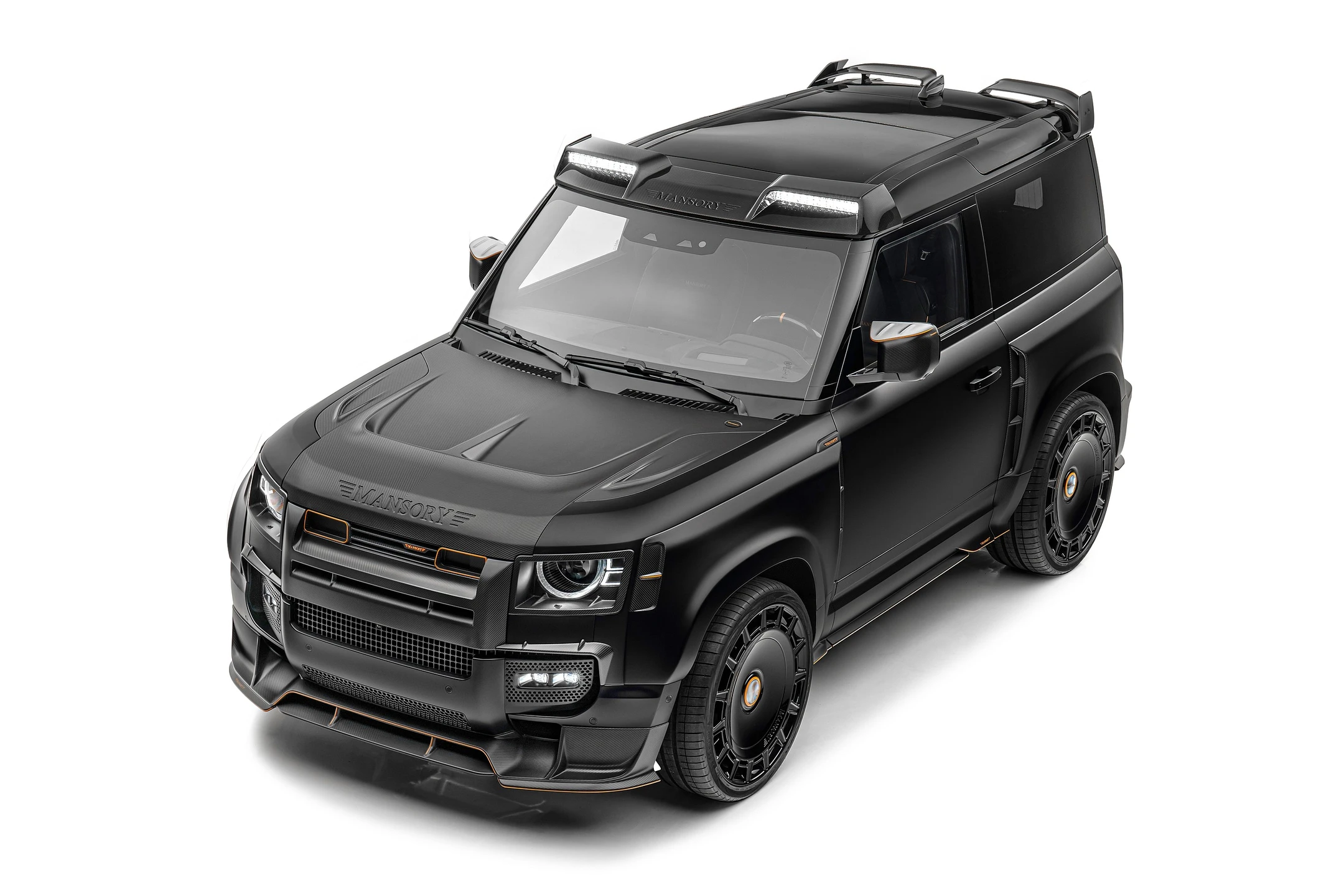
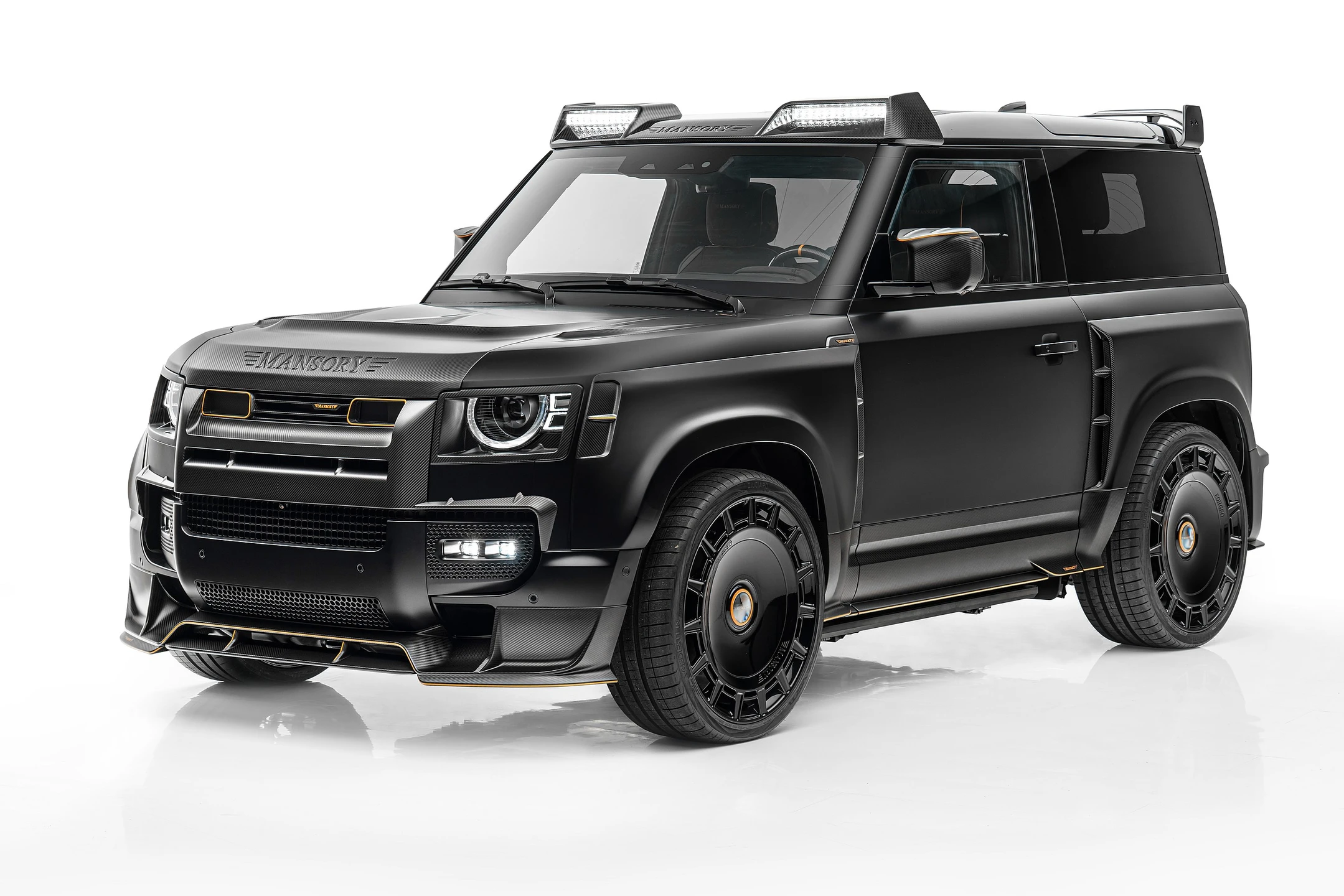
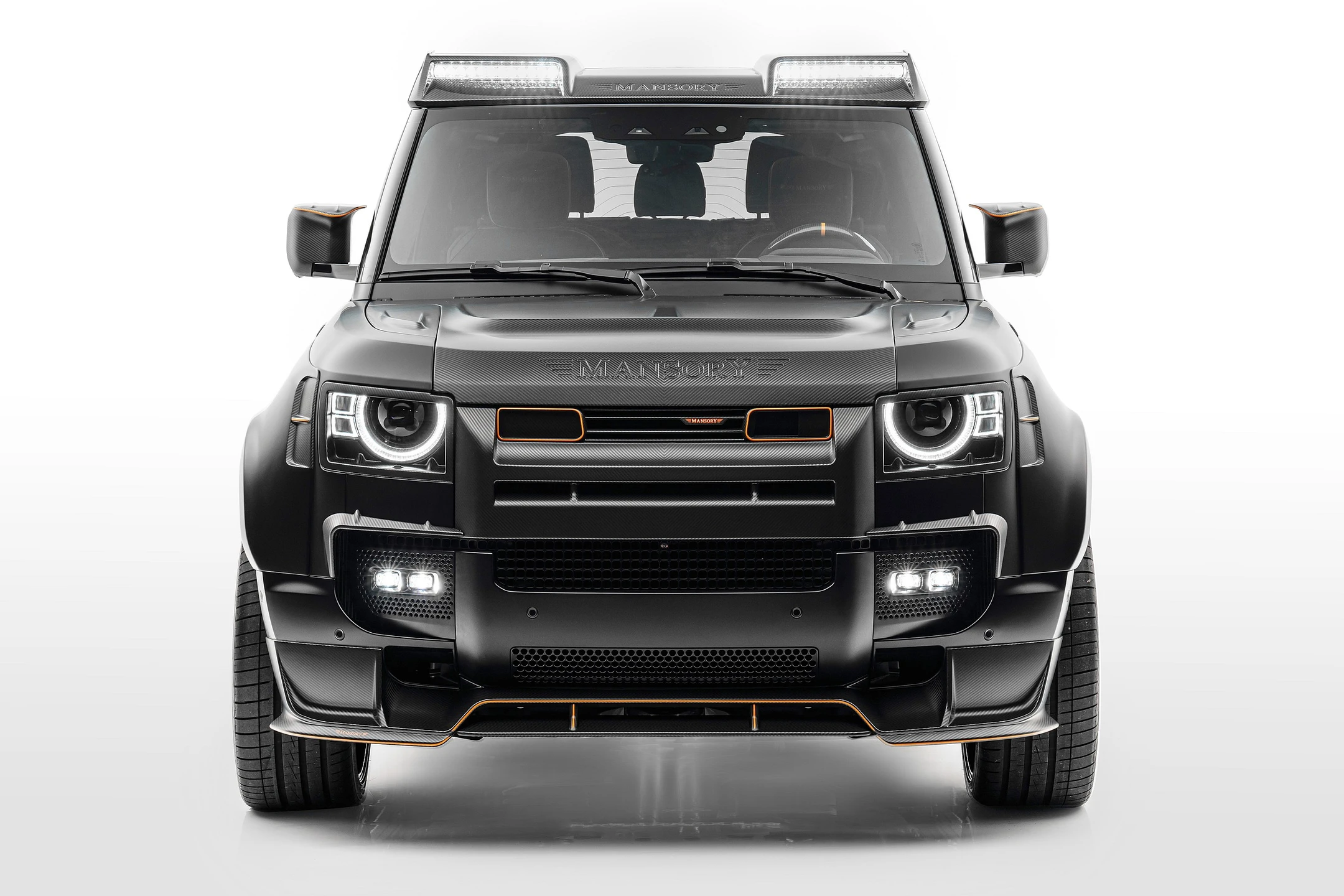
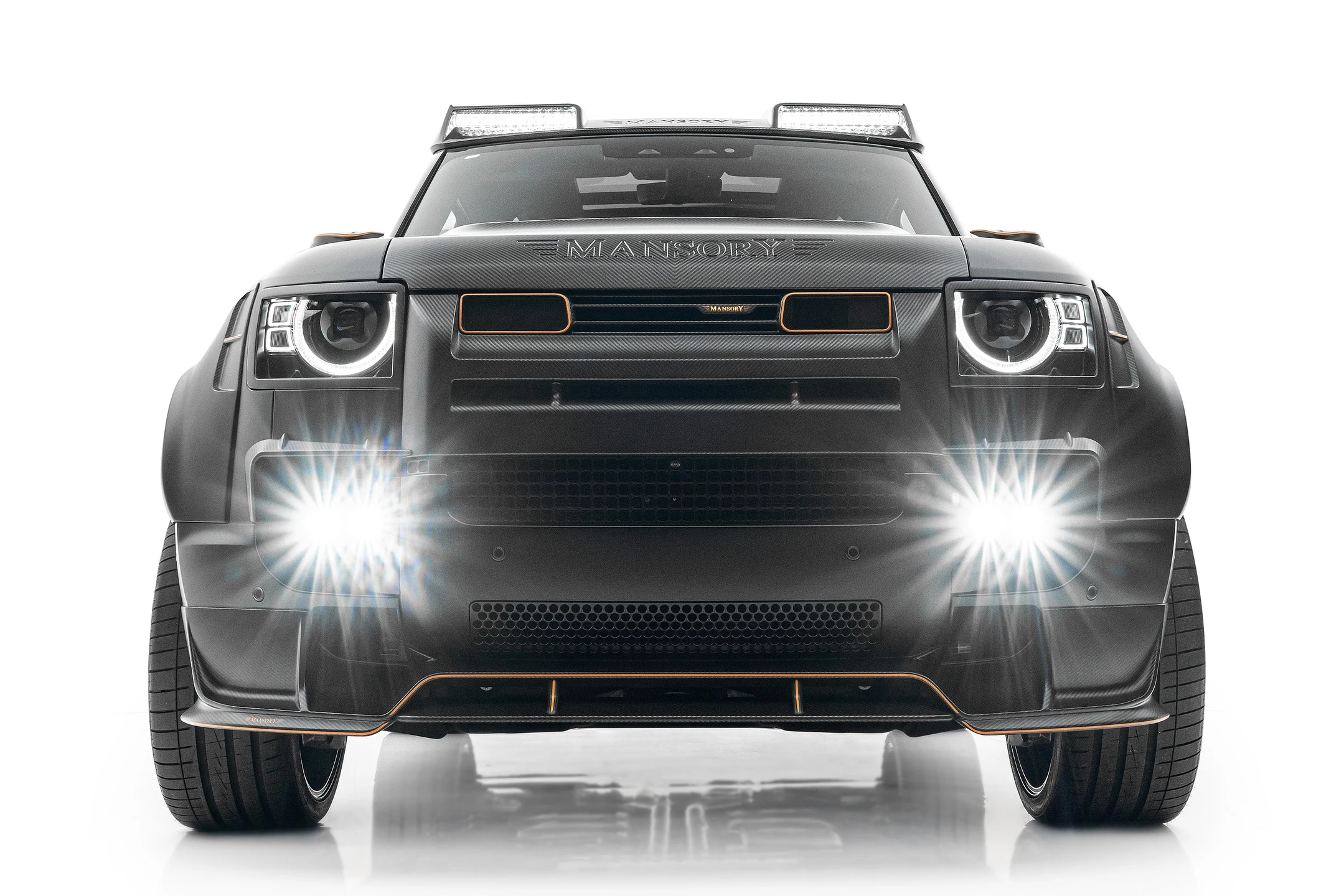
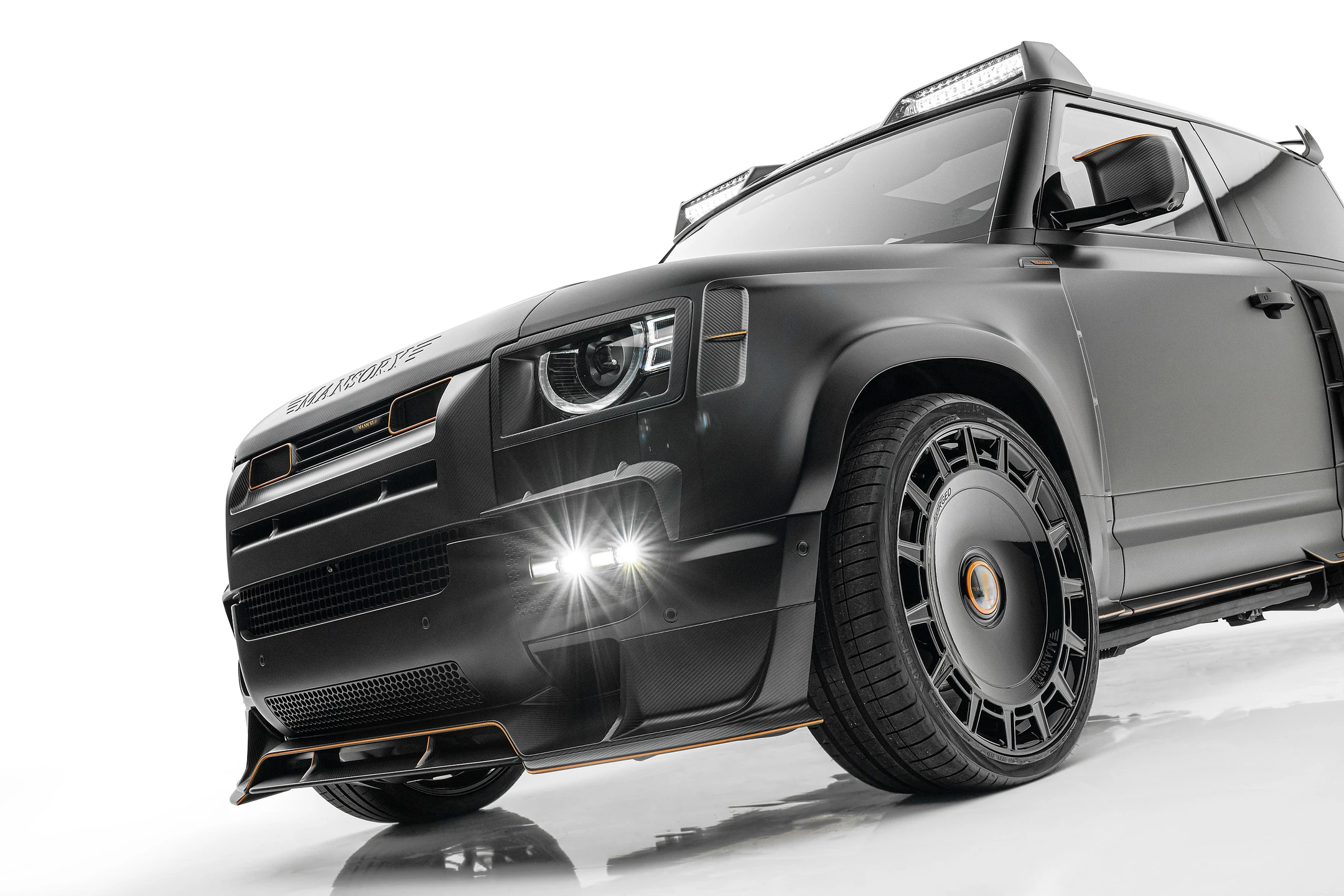
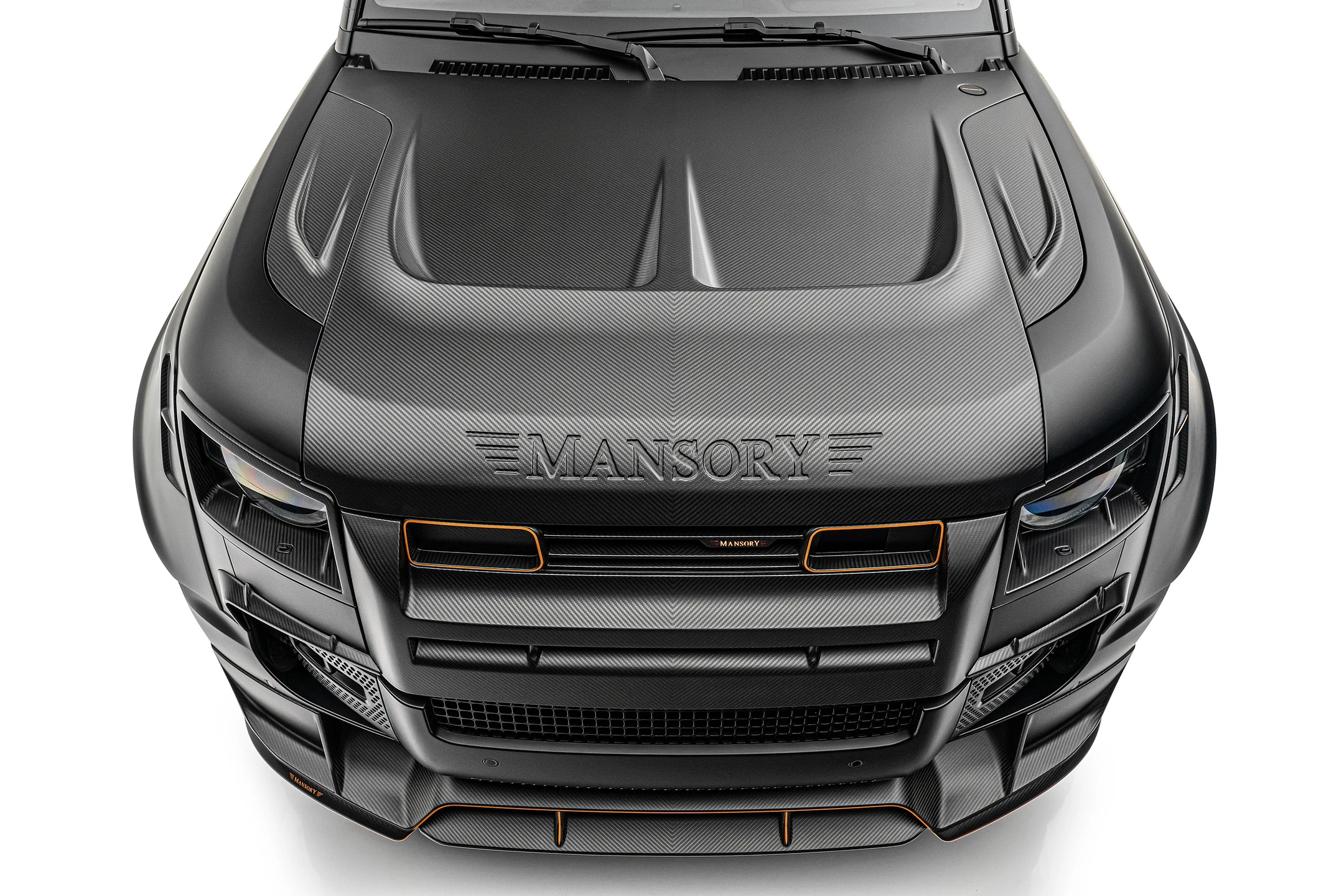
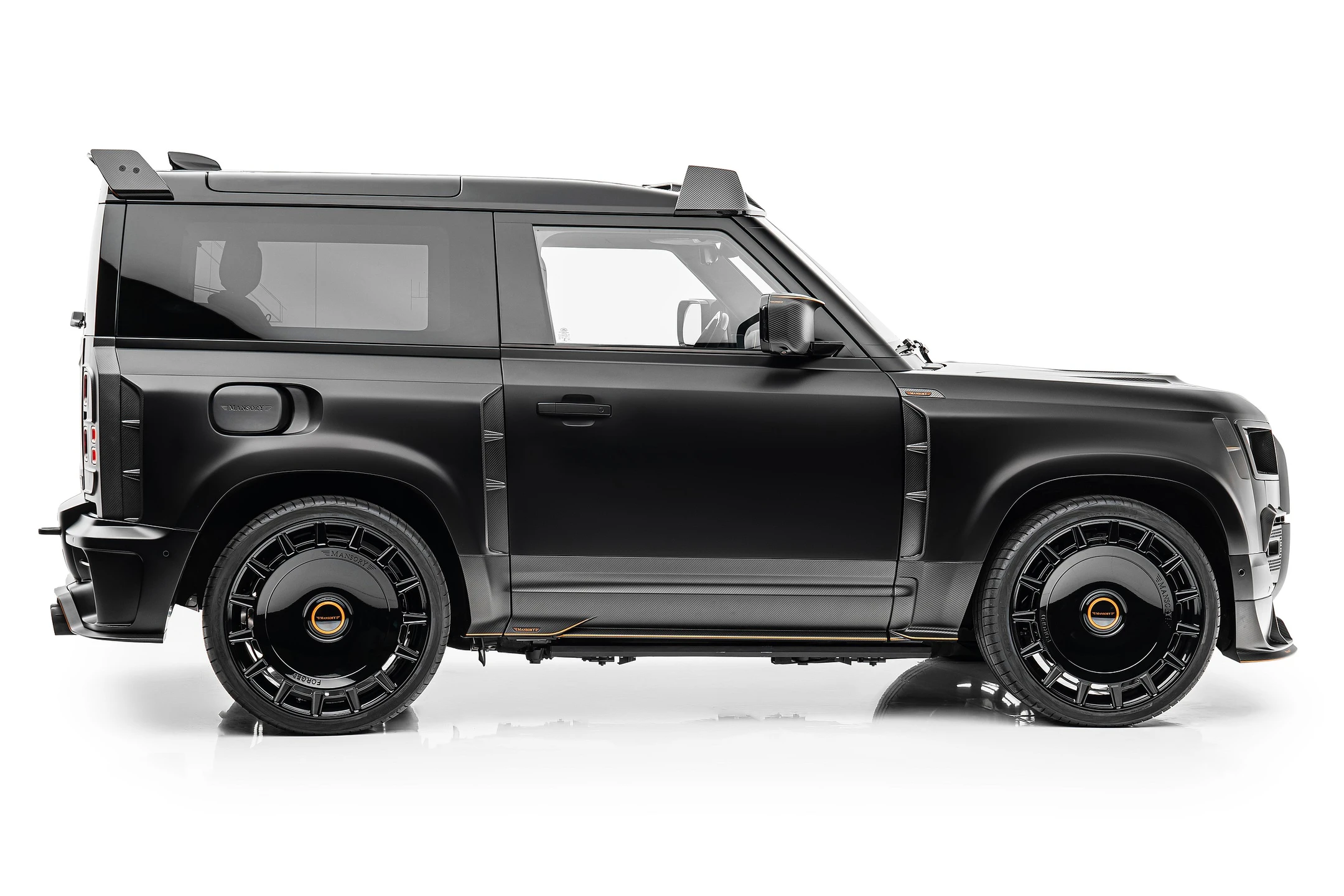
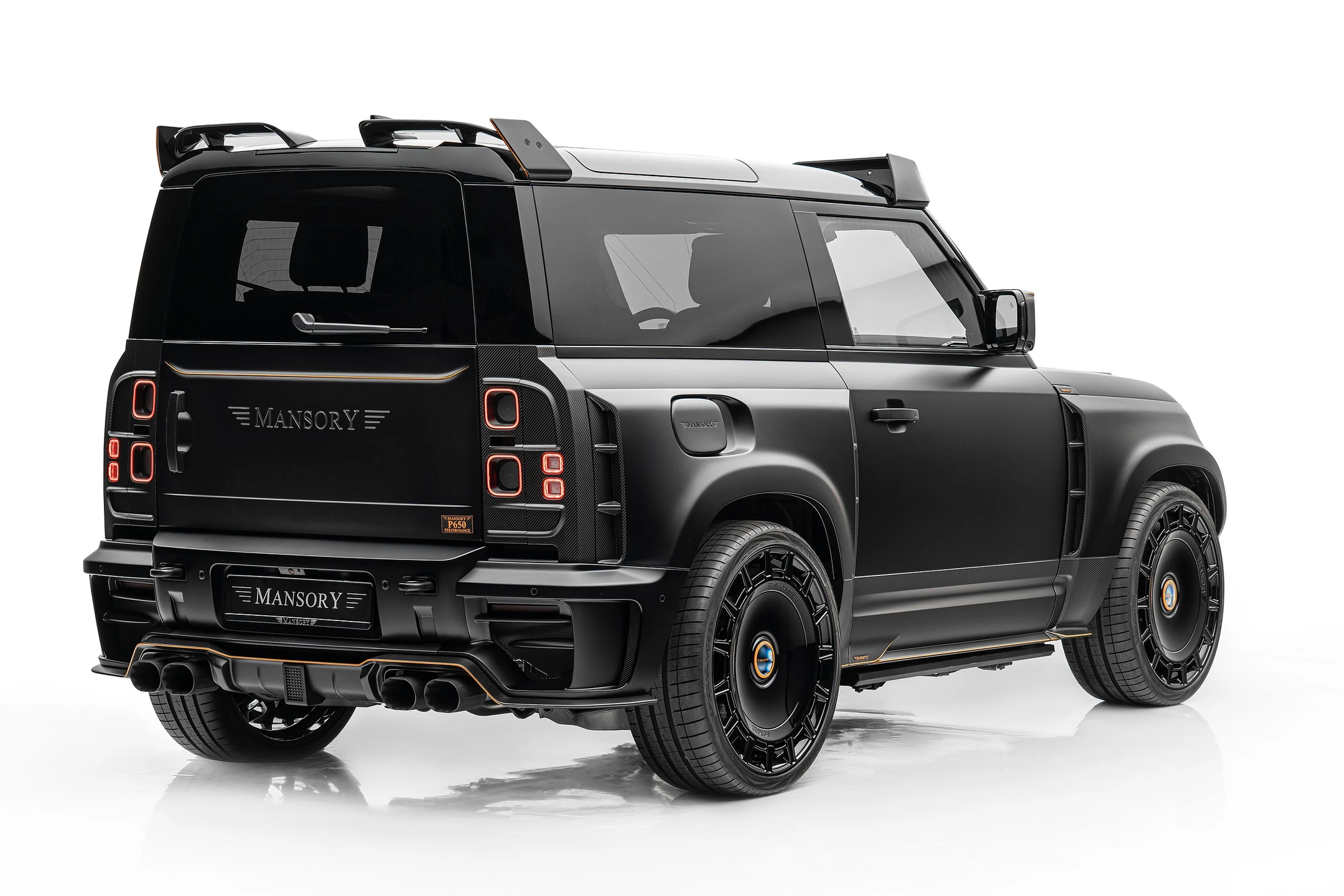
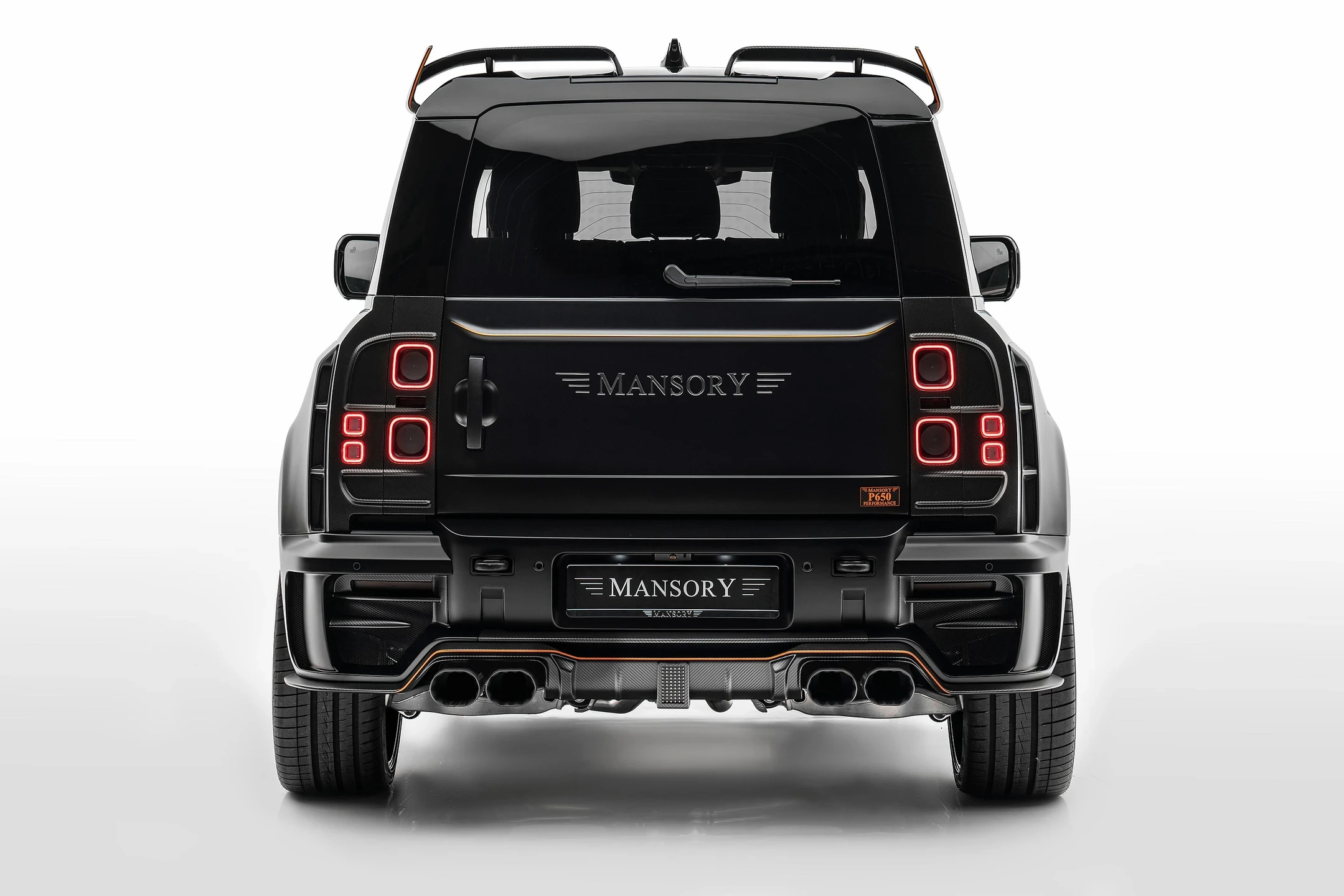
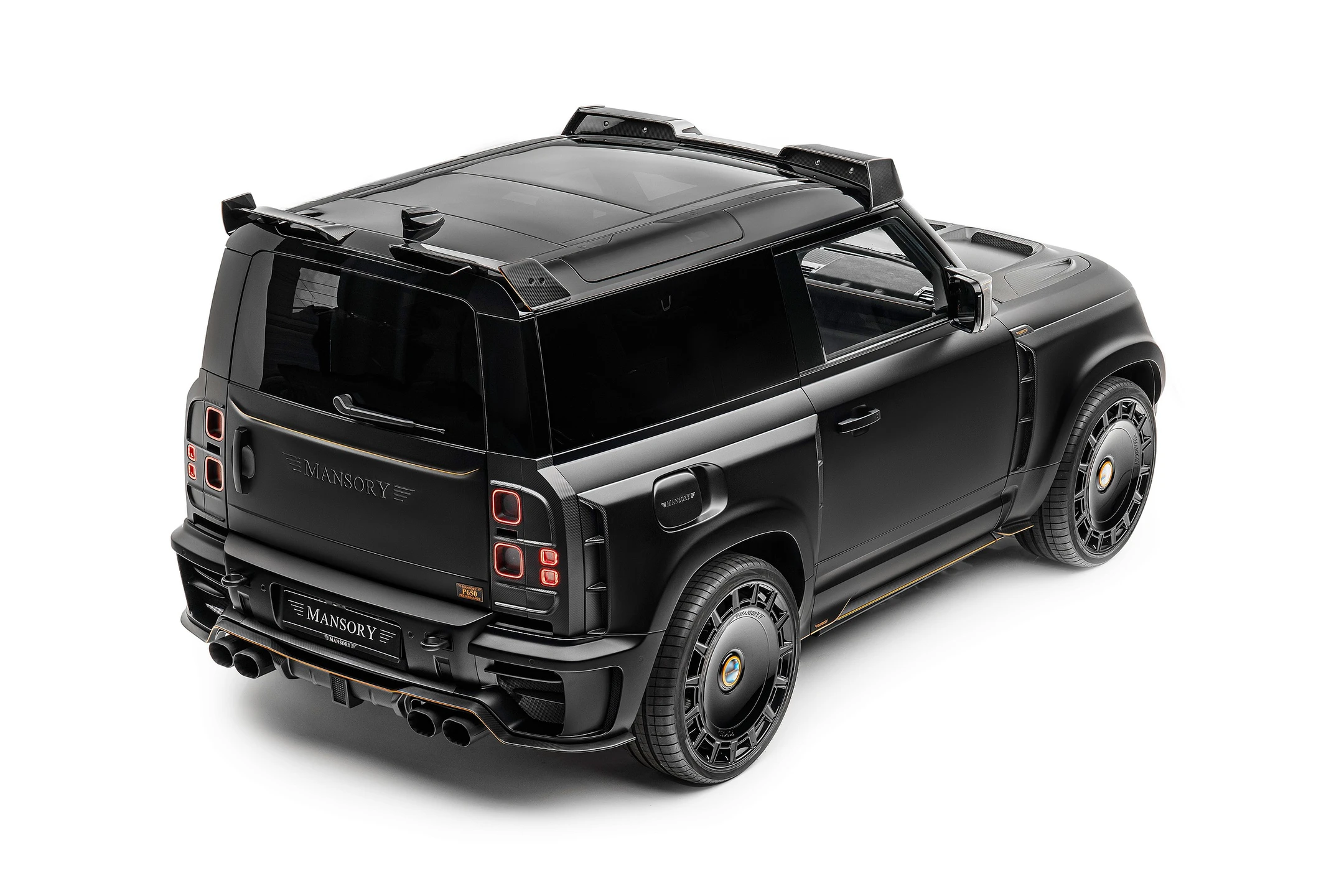
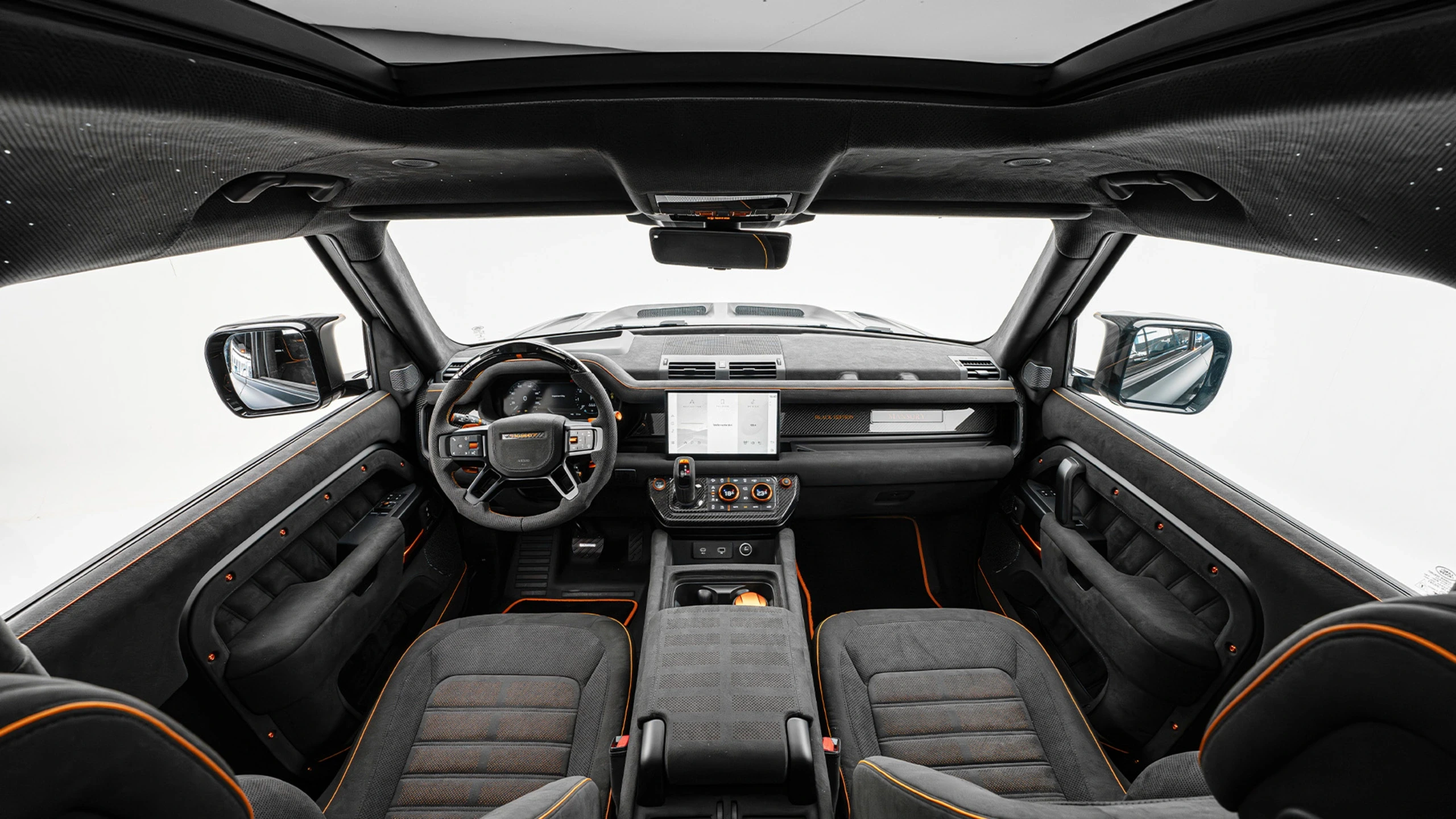
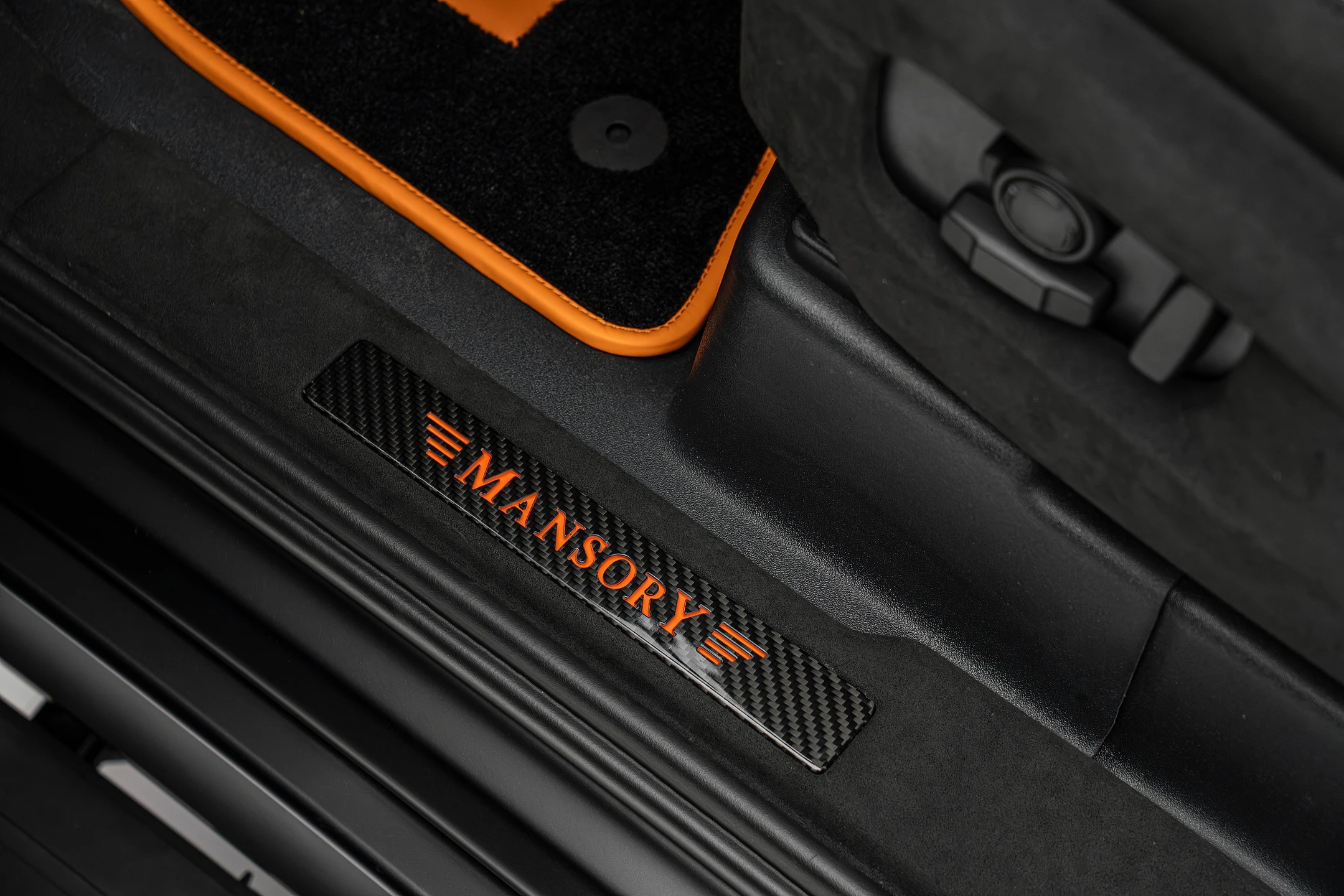
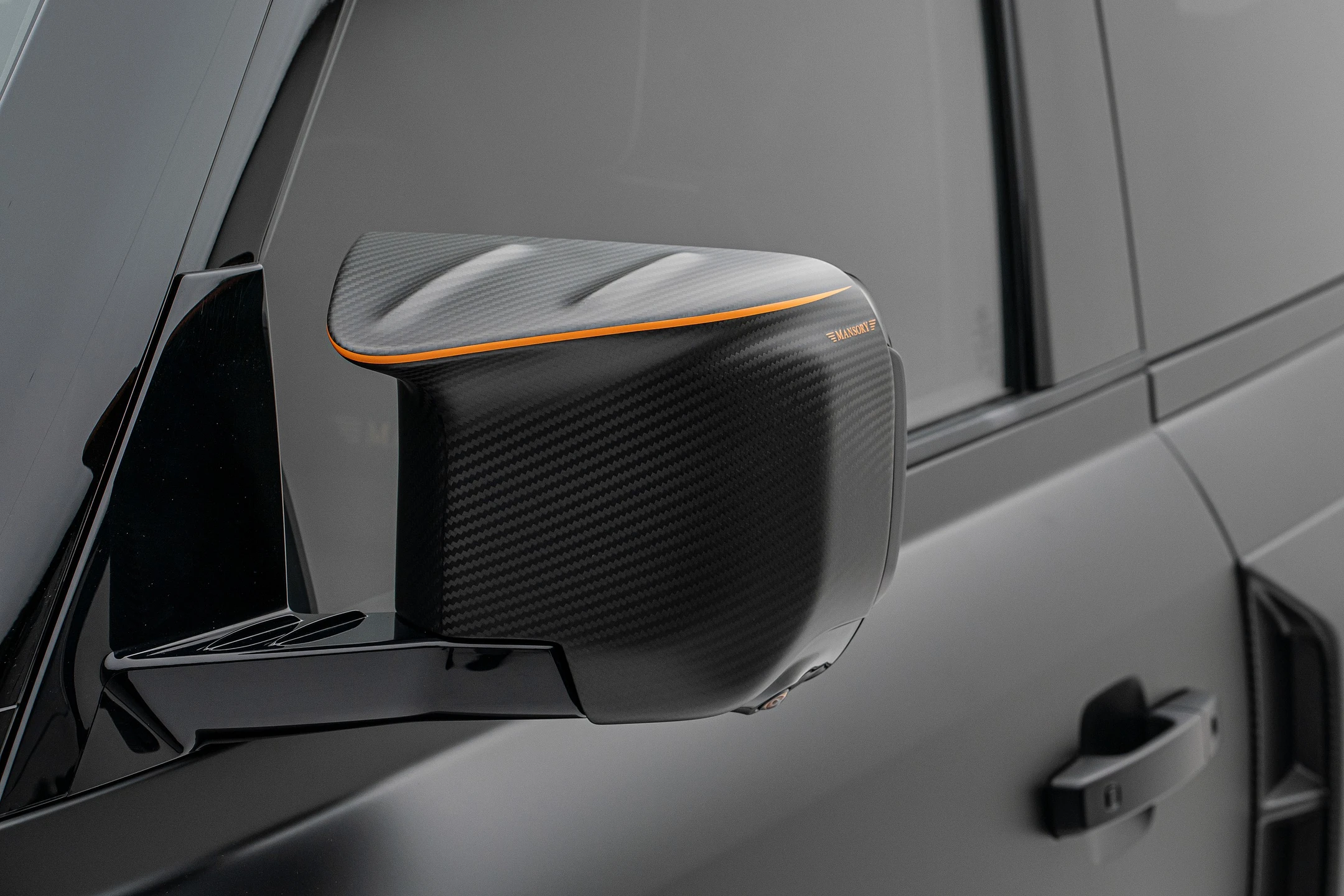
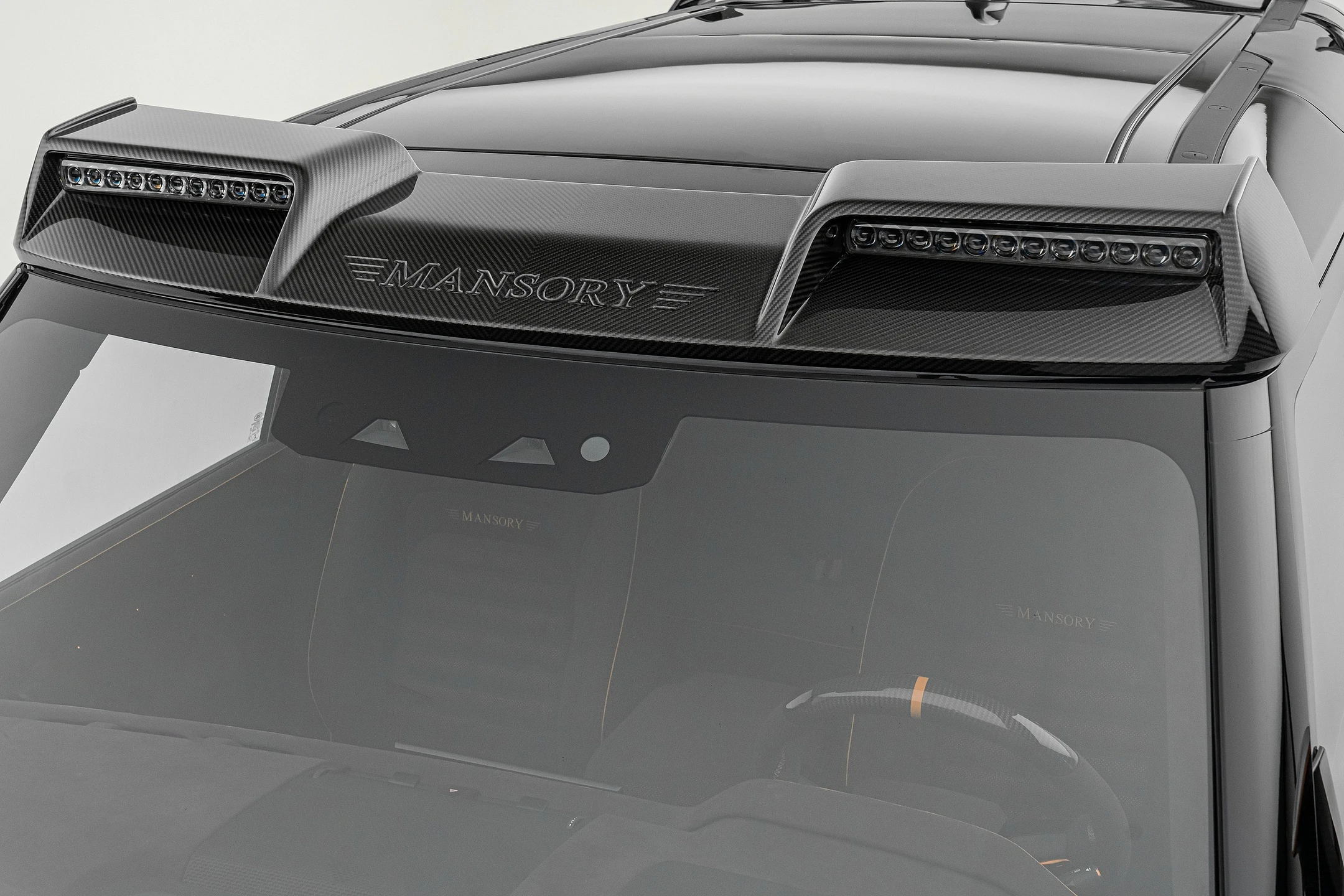
Mansory Wide Body Kit for Land Rover Defender 90


MANSORY Wide Body for the Land Rover Defender 90 — A Tarmac-Coded Programme on a Chassis Designed for Wading Depth
The Defender 90 is the three-door, short-wheelbase variant of JLR's L663 platform, in production from 2020 on the new MLA-Flex aluminium-monocoque architecture. It is the body Land Rover's marketing photographs send up Icelandic glaciers and across Namibian sand. Mansory's response — a full carbon wide-body programme with hand-laid panels, +30 to +40 mm fender flares, a louvred hood, a rear-mounted spare-wheel carbon shroud and 22-23" forged wheels — is the visual opposite of that brief. This is a Defender that has been re-styled for the asphalt of Wilshire Boulevard, Sheikh Zayed Road and Park Lane rather than for the trail. The card below treats that contradiction as the centre of the build, not as a footnote, because the customers who commission the kit are buying that contradiction on purpose. For the broader programme context across the catalogue see the Mansory body kits complete guide.
Off-road body, tarmac-styled programme — the philosophical split
The Defender 90's industrial-design DNA is unambiguous. JLR briefed the L663 as a successor to a vehicle whose entire reputation was built on ladder-frame durability, 900 mm rated wading depth, articulating live axles, low-range transfer and a body shape so square it could be drawn from memory by anyone over the age of forty. The new car kept the silhouette deliberately legible — the upright glasshouse, the alpine-light strip behind the rear quarter, the visible spare wheel on the tailgate, the exterior hinges. Every cue says working off-road tool dressed in luxury trim.
Mansory's wide-body programme is then the inverse of that brief. The flares are not there to clear larger off-road tyres on more articulation — they are there because the car looks correct from a low photographic angle when its track is wider. The carbon hood with louvres is not solving a thermal problem on the ingenium six — it reads as a supercar's vented bonnet and signals that the Defender on which it sits is a styling exercise. The 22-23" forged wheels swap rugged all-terrain rubber for road-compound performance tyres. None of these decisions help the Defender do what the marketing video claims it was built to do, and that is the point. The buyer is making a deliberate philosophical statement: the visual presence of the car matters more than the residual off-road capability metrics that the OEM brochure leads with.
This is not a programme that rewards owners who actually use a Defender for what Land Rover designed it for. The kit suits owners who keep the Defender on tarmac — Knightsbridge, Beverly Hills, Dubai Marina, Monaco — and who treat the car as a square-jawed, photogenic city presence rather than as an expedition tool. Anyone who actually drives green-lanes or fords streams should buy a stock Defender and leave the body kit catalogue closed.
Why the 3-door 90 specifically
The 90 is the more difficult Defender to commission a wide-body programme onto, because the proportions are tighter. The wheelbase is 2 587 mm against the 110's 3 022 mm, and the body length is 4 583 mm against 5 018 mm. The cabin is short, the overhangs are stubby, and the visible spare wheel on the tailgate sits proportionally larger relative to the rear quarter. When the fenders are flared by 30-40 mm per side on a body this short, the silhouette becomes more aggressive than the 110 equivalent — closer to a Brabus G-Wagon visual register than to the gentleman's-estate reading the 110 wide-body usually carries.
There is also an exclusivity logic. In the United States the 110 is the volume Defender, while the 90 is the priced-up specification — the SWB three-door commands a premium over the LWB equivalent in most US markets, opposite to the European pattern. So a Defender 90 in the US is already a statement of preference for the proportions over the practicality, and adding the Mansory wide body is the second-order amplification of that same preference. In the UAE and the UK the 90 sells against the 110 roughly fifty-fifty, and the wide-body Defender 90 commission rate is, anecdotally, higher than the 110 ratio would predict.
Carbon parts list — wide-body schedule
Hand-laid dry carbon, autoclave-cured, supplied as visible weave or in body-colour paint. Each panel ships with its own bonding-and-hardware sub-assembly; the wide-body flares specifically include the spacer geometry that re-positions the wheel within the new arch. The schedule below is the full wide-body specification. Owners can subset the schedule (front-only, rear-only, fenders-only) but the visual reading rewards the full kit.
- Carbon front bumper — replaces the OEM front fascia, deeper splitter, enlarged side intakes, integrates with the OEM parking-sensor harness at the bumper level (no harness extension required).
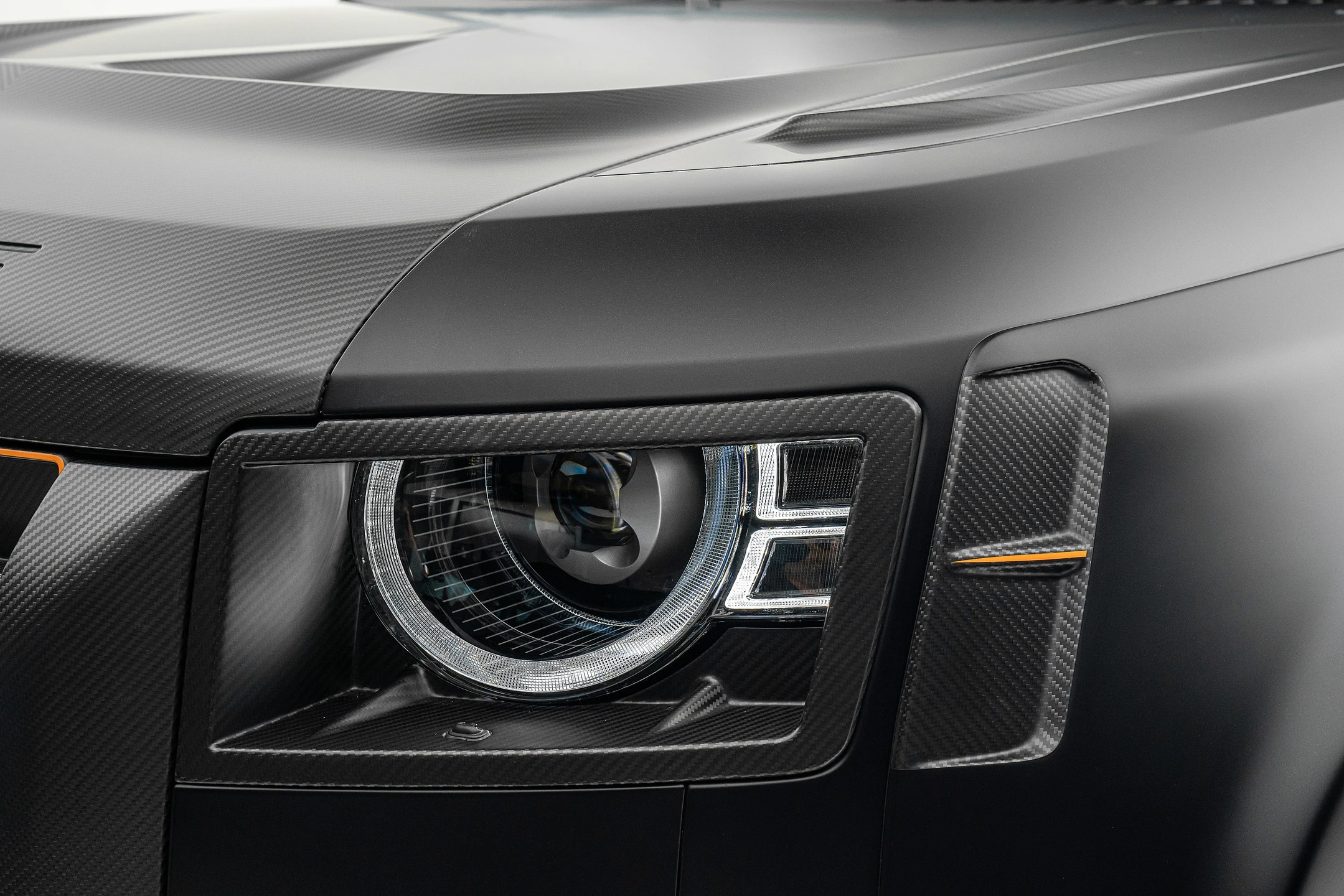
- Carbon hood with louvres — louvre cut-outs are functional thermal vents; the panel weighs roughly 40 percent less than the OEM aluminium hood, retains the OEM bonnet-prop hinge geometry.
- Front fender flares — bonded carbon overlay, +30 mm per side, re-positions the front wheel outboard within the kitted arch, supplied with the matching arch-liner reshape.
- Rear fender flares — bonded carbon overlay, +40 mm per side, dimensioned around the 22-23" forged wheel rather than around the OEM 20" all-terrain tyre.
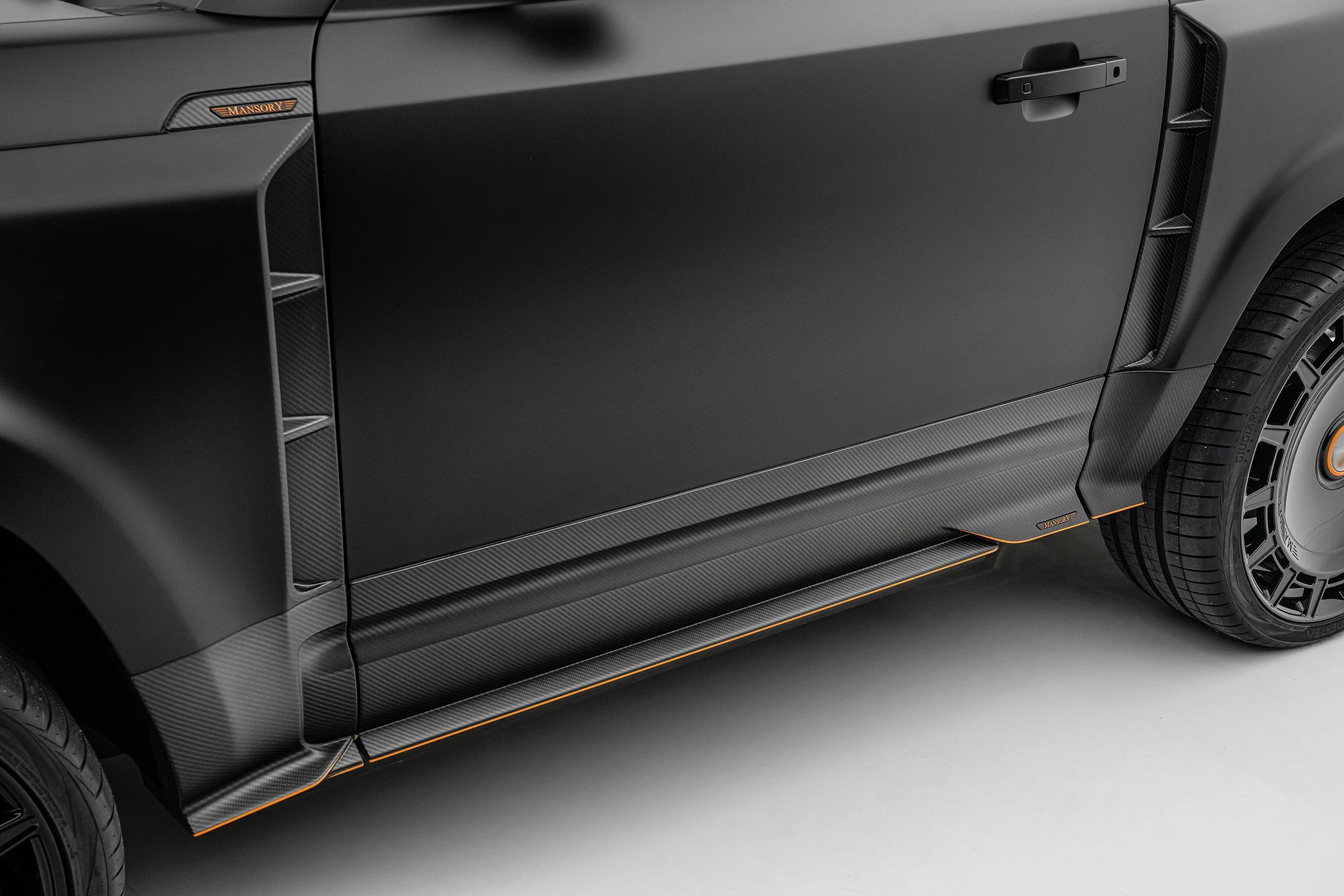
- Side skirts — two-piece carbon, Mansory-branded, bonds along the rocker panel; the rocker geometry remains visible at low photo angles.
- Spare wheel carbon shroud — the rear-mounted spare on the tailgate is encased in a carbon cowling; the spare itself is retained and remains accessible.
- Carbon rear bumper — redrawn fascia with cut-outs for the diffuser and the optional Mansory exhaust outlets.
- Rear diffuser — multi-fin carbon insert beneath the rear bumper, dimensioned to read at low angles.
- Optional roof rack with carbon — flat-platform style, carbon side rails, a styling component rather than a load-bearing expedition rack.
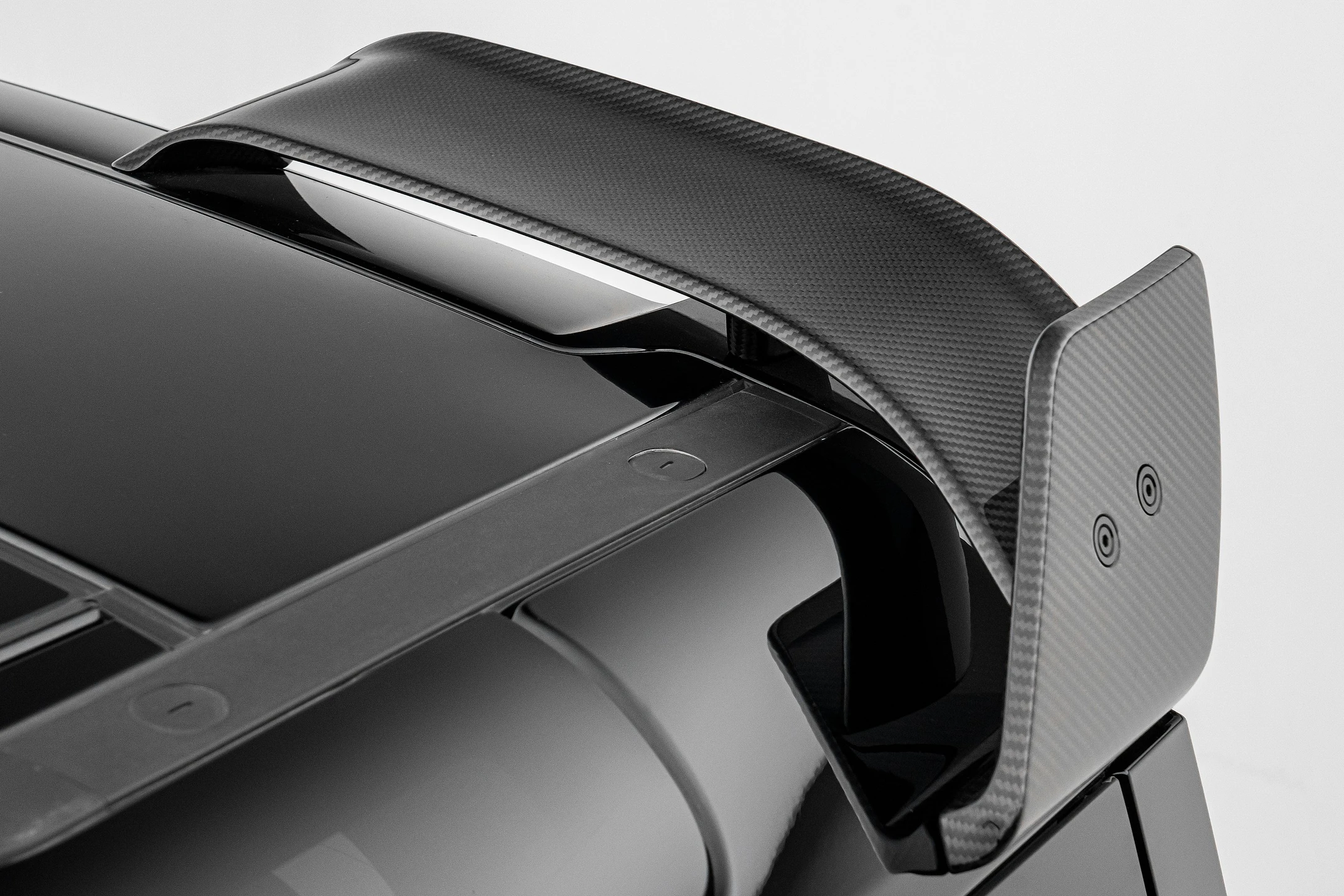
- Optional carbon tailgate trim — surrounds the spare-wheel shroud and integrates the rear lamp graphic edge.
Approach/departure angle penalty (and how Mansory handles it)
This is the question every honest Defender 90 wide-body commission has to answer at order intake. The factory L663 Defender 90 has an approach angle of 38 degrees, a departure angle of 40 degrees and ground clearance of 291 mm at the highest air-suspension setting. Adding a Mansory carbon front bumper with a deeper splitter, and wider fender geometry that pulls bodywork outboard, changes those numbers. The realistic post-kit figures are an approach angle around 32-34 degrees, a departure angle around 35-37 degrees, and a ground clearance roughly unchanged because the OEM air-suspension travel is preserved.
That is a real reduction in off-road capability. It is not, however, catastrophic — the kitted 90 would still out-trail almost anything else photographed wearing 23" wheels. Mansory's engineering choice has been to preserve the air-suspension hard points and the wading-sensor inputs untouched (the Terrain Response calibration is unmodified), and to push the visible compromise into the splitter, where an owner can specify a removable lower-splitter element that bolts off for trail use. That is a styling-first compromise rather than a ladder-frame restoration: it acknowledges the kit is a tarmac programme and gives the very small minority of owners who actually want to drive their wide-body Defender across a beach a way to do so without dragging the carbon front lip through the sand.
Forged wheel pairing for a Defender 90
The wide-body geometry was dimensioned around 22" or 23" forged. Mansory's standard offering on the kitted 90 is the FD.5 seven-spoke or the FD.10 deep-concave multi-spoke, in 9.5J width front and 10.5J width rear, six-bolt fitment to the L663 hub. Recommended tyre dimensions: 285/45 R22 or 285/40 R23. Going back to the OEM 20" all-terrain wheel inside the kitted arches makes the visual silhouette read hollow — the flares were drawn around a larger wheel face. The full Mansory and Hodoor forged catalogue, with finishes from satin black through brushed bronze to matt champagne, sits on the forged wheels collection page; the FD.5 and FD.10 are the two patterns specified most often on the Defender 90 commission.
Where Defender 90 wide-body commissions go
In the United Arab Emirates, the kitted Defender 90 is a Dubai-Marina and Abu-Dhabi-Corniche presence — a tarmac car for the cooler months, parked alongside a Brabus G-Wagon or a Mansory Bentayga in the same household garage rather than used for any actual desert work.
In the United States the wide-body 90 lands cleanly on the West Coast — Los Angeles, Malibu, Beverly Hills — where the three-door's premium pricing already signals styling-first intent and the Mansory programme amplifies it; East-Coast commissions are concentrated in Miami and Greenwich.
In Germany the kit goes to Munich and Stuttgart owners who treat the Defender 90 as a third or fourth car in a household that already runs a 911 GT3 daily and a Cayenne Coupe weekly, with the Defender filling the role of autumn statement vehicle rather than any kind of utility tool.
In Australia the wide-body 90 is concentrated in coastal Sydney and along the Gold Coast — a beachfront-suburb car parked outside Bondi cafes and Noosa boutiques, almost never seen with sand on its skirts despite the geography.
In the United Kingdom the kit ships to London, Cheshire and the Cotswolds, where it sits in walled driveways alongside the family's 110 wide-body and rarely sees a single B-road with a hedgerow tighter than two car-widths on either side.
Email [email protected] with your VIN, engine variant (P300 / P400 / P525 / P575) and destination country and we will quote the kit, the FD.5 or FD.10 forged set and the freight as a single landed package. WhatsApp the workshop on +44 7488 818747 for a same-day specification call.
Common queries
Will the kit physically clear the 20" OEM off-road wheel if I want to keep all-terrain tyres?
Yes — the kitted arches clear the OEM 20" wheel without rubbing — but the styling reading suffers. The flares were drawn around a 22-23" wheel face. We do not encourage the 20" specification with this kit because the visible arch gap looks unfinished.
Does the hood louvre vent change the engine's water-wading rating?
The factory rated wading depth of 900 mm is preserved. The louvre cut-outs sit above the OEM intake snorkel line and above the air-box inlet. The wading limit is unchanged on paper. In practice an owner who wades a Mansory-kitted Defender 90 to the rated depth is a customer outside the buyer profile this kit is sold for.
Does the kit fit the new Defender Octa?
The Octa is body-on-the-same L663 platform but with a wider OEM track, recalibrated air suspension and a Twin-Turbo 4.4 V8 from the BMW 4.4 family rather than the supercharged JLR 5.0. The carbon panels physically locate, but the OEM track-width difference may shift the flare positioning by a few millimetres per side; we ask Octa-VIN owners for a pre-commission fitment check before placing an order.
Will the kit transfer to an older Defender (the L316, 1983-2016)?
No. The L316 is a different chassis, a different body shell, different bumper-mount geometry, different everything. Mansory does not currently produce a wide-body programme for the original Defender. Any L316 work we accept is a per-VIN bespoke commission rather than a catalogue product.
Shipping the Mansory Wide Land Rover Defender 90 — current 2026 routes
Order traffic for the Mansory Wide Land Rover Defender 90 clusters around a handful of markets in 2026. The European footprint is led by Austria and Luxembourg, with specialist body shops in the United Kingdom servicing local fitment. Gulf demand routes through Dubai and Riyadh, with secondary volume across Qatar. Asia-Pacific volume runs through Japan and Singapore, where forged-wheel sets are usually configured alongside the body kit. All routes use insured logistics with destination-side customs clearance pre-prepared.