Bar exposed for front bonnet Mansory for Rolls-Royce Spectre


Bar Exposed for Front Bonnet Mansory for Rolls-Royce Spectre
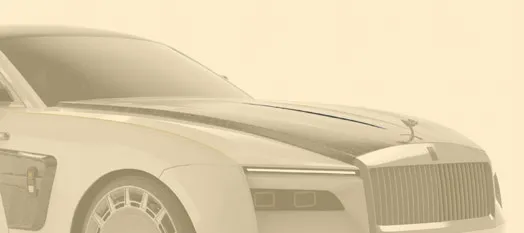
The exposed-weave centre bar is the smallest piece on the Spectre's bonnet plane and the loudest one in terms of carbon attitude. It is a longitudinal raw-twill strake that runs along the bonnet's spine, from the lip just above the Pantheon Grille up toward the windshield base, sitting proud of the surrounding paint or carbon by a few millimetres. Owners specify it as a precision accent within the wider Mansory Carbon Fiber Body kit set for Rolls-Royce Spectre programme — a way to broadcast the brutalist exposed-weave aesthetic without committing the entire bonnet panel to a raw finish. On a silent, 2,975 kg electric coupe whose visual identity is built on length and stillness, that single carbon spine becomes the eye-line that anchors the long hood from grille to glass.
Construction & Materials
The bar is laminated as a thin shell with a thicker central rib, designed to bond cleanly to either the OEM aluminium bonnet or the Mansory carbon front bonnet that many owners specify alongside it. The weave on the visible face is left bare — no clear lacquer is poured over the twill, so the surface reads as pure 3K cloth rather than the warm, glassy depth of a coated panel. The flow of fibres is hand-aligned across the length so the diamond pattern stays parallel to the bonnet's centre crease, with no diagonal drift toward either fender.
Beneath the cosmetic skin sits a unidirectional core that gives the bar its longitudinal stiffness — important because the strake sits in the airstream and must not vibrate or hum at autobahn speeds. The bonding face is prepared flat, masked, and primed for a structural adhesive system; this is the surface owners never see, but it is what keeps the bar attached for the life of the car.
- Visible face: 3K twill, raw-weave (no clear lacquer over the bar — pure exposed cloth, satin-natural sheen)
- Core: unidirectional carbon spine for axial stiffness, prepreg laid by hand
- Cure: autoclave at controlled pressure for low void content
- Wall thickness: ~1.6–2.0 mm at the edges, ~3.5–4.0 mm at the central rib crown
- Weight: roughly 0.35–0.45 kg depending on length variant
- Mounting: structural adhesive (modified-acrylic / 3M VHB-class) onto OEM aluminium bonnet OR Mansory carbon bonnet
- Edge finish: hand-deburred and sealed with a clear penetrating sealer to lock the weave ends
- Underside: matte black tooling primer so the bonnet edge does not glow through the bond line
Design & Visual Function
The bar's job is purely visual — it does not redirect airflow, generate downforce, or shed heat. Its purpose is to carve a strict carbon axis from the Pantheon Grille up the bonnet spine to the windshield base, so the Spectre's already long bonnet reads even longer. Mansory designers exaggerate that visual axis in two ways: by leaving the weave bare so it reflects light differently than the painted or lacquered surrounding panel, and by stepping the bar a few millimetres above the bonnet plane so it casts a thin shadow line that follows the car's centreline.
Light behaviour is the secret of this part. A lacquered carbon panel reflects the sky like dark glass; a raw-weave panel scatters light at the fibre level and reads as a deep, dry charcoal grey that shifts slightly with viewing angle. From the driver's seat the bar appears as a matt strake that interrupts the bonnet's mirror; from a low front-three-quarter angle it picks up direct sun and the twill diamonds glint individually like rows of carbon scales. That dryness is exactly what owners chasing the brutalist look ask for — it is the visual opposite of the Spectre's piano-black trim and the polished Spirit of Ecstasy.
The strake also gives the front bonnet a visual centre, which matters on the Spectre because its bonnet plane is unusually wide and uninterrupted compared with combustion-era Rolls coupes — the absence of a traditional engine bulge means the centreline can read flat without an accent. The exposed bar restores hierarchy: grille badge, bar, base of windshield, all on one line. Some owners go further and pair the bar with the Mansory carbon front bonnet for a two-tone weave conversation — lacquered field, raw-weave bar — while others bond it directly to the OEM aluminium bonnet so the contrast is paint vs. carbon rather than gloss vs. matt.
Compatibility & Fitment
The bar is cut and pre-curved for the Rolls-Royce Spectre (MY2024+, fully electric) bonnet profile, both LHD and RHD cars, with the same shell across markets — the bonnet panel itself is symmetric. It can be bonded onto the original Architecture of Luxury aluminium bonnet or specified together with the Mansory carbon front bonnet sold separately. The bar's underside curvature is matched to the Spectre's bonnet crown, so it sits flush along the entire bond line rather than tenting at the ends. Because the Spectre is electric, there is no engine bulge or service heat under the bonnet centreline that would stress the adhesive — the area beneath the bar is the front motor and inverter compartment, sealed and largely thermally calm.
Installation & Reversibility
Installation is a 90–120 minute job in a clean, climate-controlled bay. The bonnet is opened and supported, the centreline is masked with low-tack tape and laser-aligned to the grille badge and the windshield base so the strake reads true on the car's optical centreline. The OEM bonnet (or Mansory carbon bonnet) surface is degreased with isopropyl alcohol, scuffed lightly only on the bond footprint, and an adhesion promoter compatible with modified-acrylic chemistry is applied. The bar's bonding face carries pre-applied 3M VHB-class structural adhesive tape under a release liner; the installer peels the liner, lowers the bar onto the alignment marks, and applies firm, even pressure along the length using a roller for 60 seconds. Final cure to full structural strength takes 24–72 hours at room temperature — the car should not be driven through a high-pressure carwash within that window.
Reversibility is honest rather than perfect. The bar can be removed if the OEM bonnet later needs servicing, repainting, or accident repair: a thin nylon cutting wire is run under the bonded edge to slice the adhesive, and the residual VHB is rolled off the bonnet surface with adhesive remover and microfibre. On the OEM aluminium bonnet that leaves the original paint untouched provided the cutting is done patiently. On a Mansory carbon front bonnet the same technique applies but extra care is taken not to score the lacquered weave underneath. A new bonding tape is fitted before re-installation. We recommend a Mansory-trained installer or a high-end body shop for first fitment so the centreline is laser-true; the removal and re-bond procedure is well within the comfort zone of any competent detailer.
Pairing within the Mansory Spectre programme
The bar is at its strongest as part of a coordinated front-end story. Most owners specify it together with the Mansory front bonnet for the Spectre (shared install workflow, identical surface prep, the carbon-on-carbon pairing reads as one continuous panel with a raised raw-weave spine). To ground the visual axis at the lower edge, owners add the Mansory front lip, which extends the carbon line below the Pantheon Grille and gives the front-three-quarter view a single uninterrupted descent from windshield to road. A subtler third pairing is the silver-engraved emblem for the front motor cover — once owners commit to exposed weave on the bonnet, they often want the matching jewellery one layer beneath, visible the moment the bonnet is opened.
Maintenance & Durability
Raw-weave carbon needs more thought than lacquered carbon, and the bar is the test piece on the car for that routine. UV is the single biggest enemy: without a clear lacquer, the resin matrix at the surface is exposed to direct sun, and over years of garage-then-sun cycles uncoated carbon can develop a faint amber cast. The mitigation is a transparent UV-stable sealant applied at install and refreshed annually — either a dedicated raw-carbon sealer or a hard ceramic coating formulated for matt finishes. Avoid carnauba waxes; they fill the weave texture and gloss it up, which kills the dry brutalist look the owner specified the part for.
Day-to-day care is ordinary: pH-neutral shampoo, soft microfibre, no abrasive sponges, no alkaline wheel cleaners drifting onto the bonnet, no ammonia glass cleaners on the carbon. After every wash the bar should be dried with a separate microfibre to avoid water spots that print across the weave. Bird-droppings and tree sap should be lifted within hours, not days — uncoated resin is more porous than lacquered resin and will stain faster. With a yearly seal refresh and routine garage storage, the bar holds its appearance for the realistic life of the car.
Lead Time & Warranty
Lead time is typically 4–8 weeks from order — Mansory builds the bar to spec rather than from a finished-goods shelf, and the raw-weave finish requires more careful surface inspection than a lacquered piece. Owners pairing the bar with the front bonnet often time both orders together so the pieces are weave-matched at the layup stage. The bar carries a 12-month warranty against manufacturing defects: voids, fibre misalignment beyond the alignment tolerance, delamination of the adhesive carrier, and edge fraying. The warranty does not cover wash damage, impact damage, or appearance change due to skipped sealant maintenance.
FAQ
Q: Does the bar work without the Mansory carbon front bonnet?
A: Yes — it is engineered to bond to either the OEM aluminium bonnet or the Mansory carbon front bonnet. Owners who want the brutalist accent without committing to a full carbon bonnet specify it as a standalone piece on the OEM panel.
Q: Why is the bar raw weave instead of lacquered?
A: That is the design intent. Raw twill scatters light differently than lacquered carbon and reads as a dry charcoal accent rather than a glossy mirror. The trade-off is annual UV-stable sealant maintenance, which we cover in the Maintenance section.
Q: Can the bar be removed if the bonnet needs paint or panel work?
A: Yes. A thin nylon cutting wire run under the bond line releases the adhesive, the residual is rolled off with a citrus-based remover, and a new VHB carrier is fitted at re-install. The OEM paint or the Mansory bonnet's lacquer is preserved when the work is done patiently.
Q: Will the bar buzz or hum at high speed?
A: No. The unidirectional carbon spine and the full-length structural adhesive bond give the part axial stiffness across its mounted length. There is no airflow gap under the bar that could excite it, and the Spectre's cabin silence is unaffected.
Q: Does it fit both LHD and RHD Spectres?
A: Yes. The bonnet plane is symmetric across markets, so the bar uses a single shell for both LHD and RHD MY2024+ cars.
Q: How much weight does the bar add?
A: Roughly 0.35–0.45 kg depending on length variant — visually significant, dynamically irrelevant on a 2,975 kg coupe.
Pair the bar with the Mansory front bonnet and front lip for a coherent front-end carbon story, or fit it as a single accent on the OEM bonnet for the cleanest possible expression of the exposed-weave aesthetic. Talk to us before you spec — for a tailored quote, weave-match samples, or installation booking, message WhatsApp +44 7488 818 747 or email [email protected].