Audi RS7 (4K / C8) Tuning Guide 2026 — Body Kits, Wheels & Performance


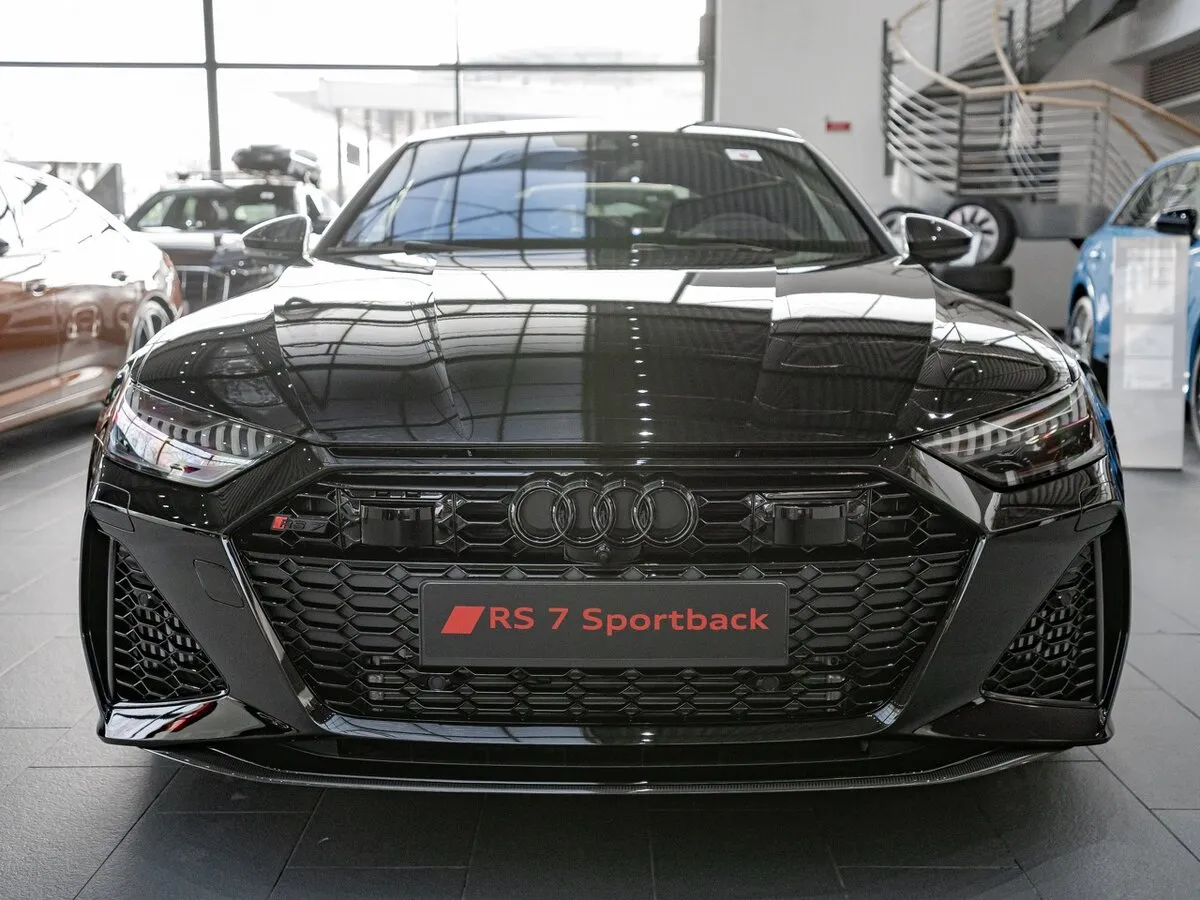
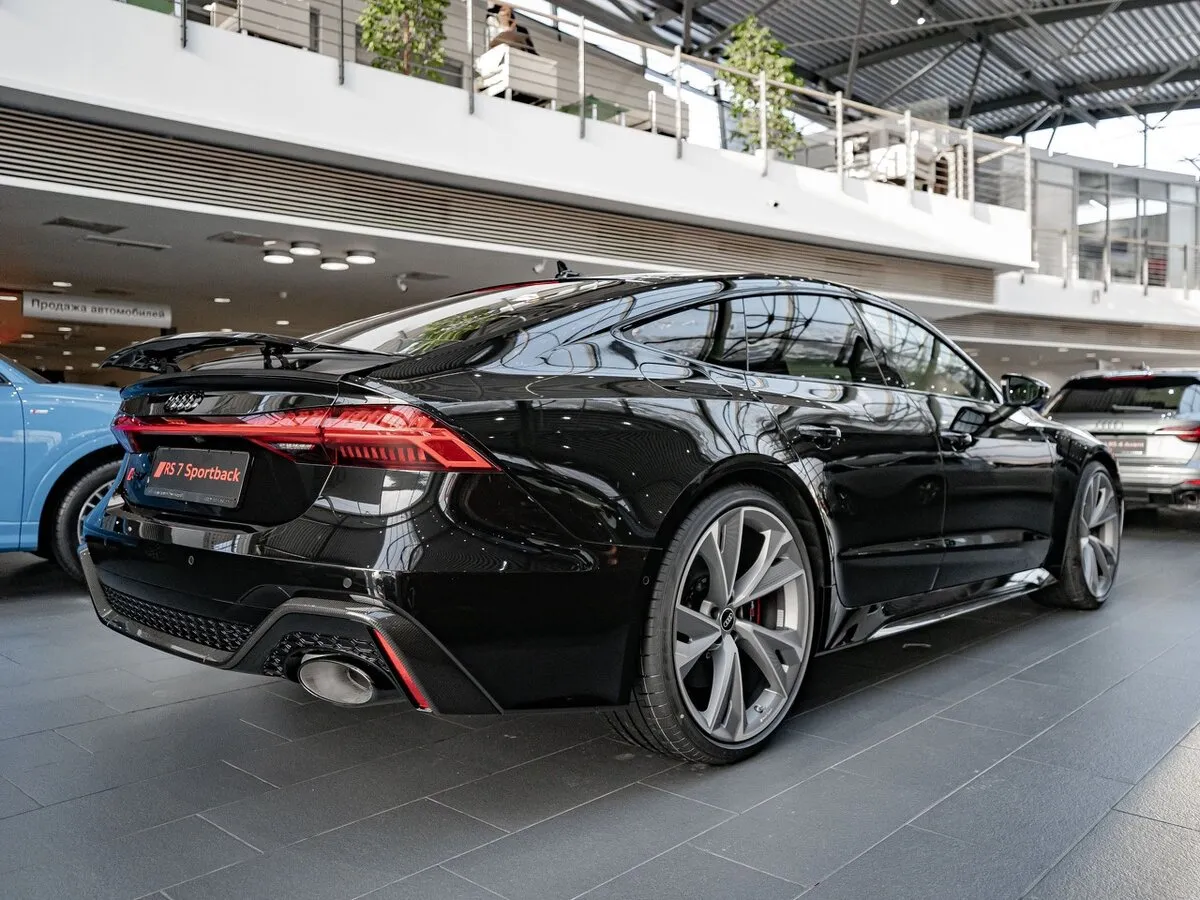
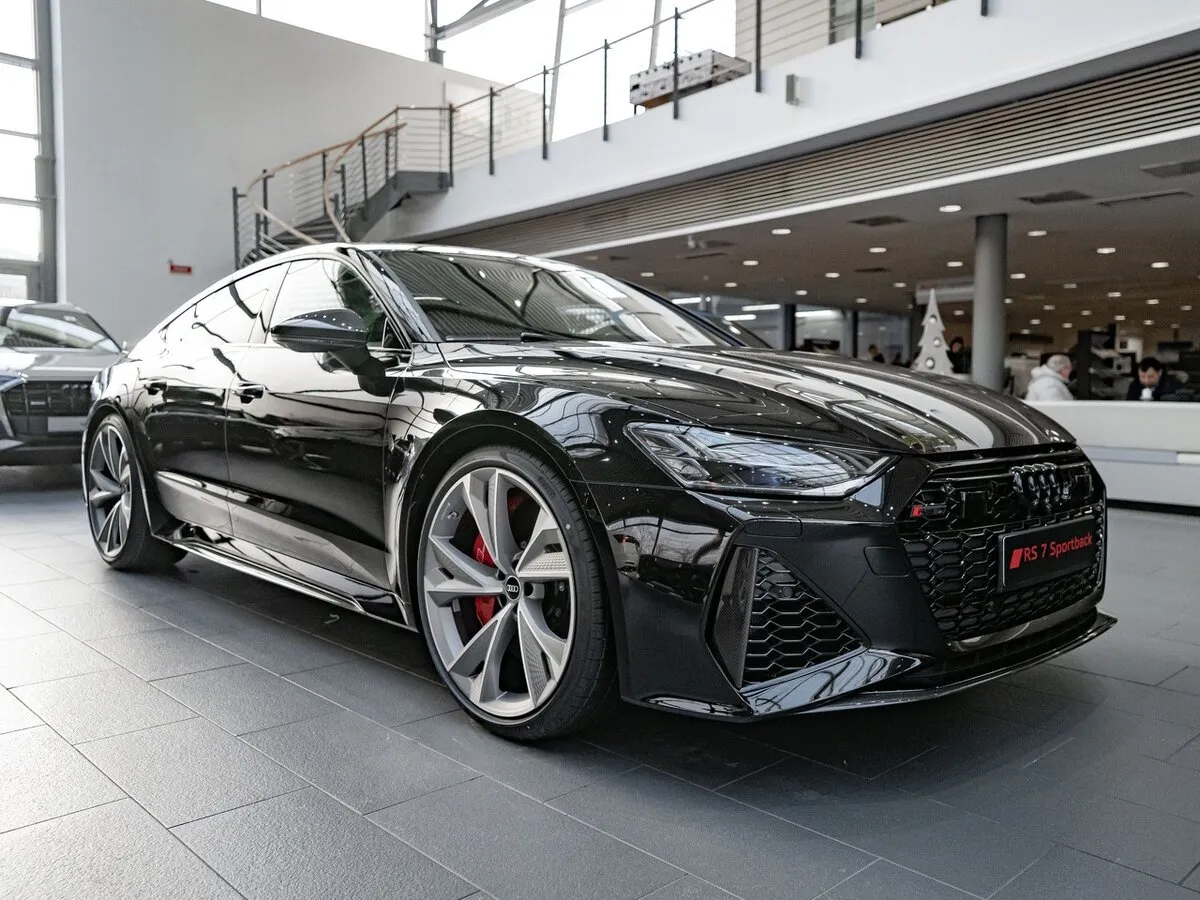
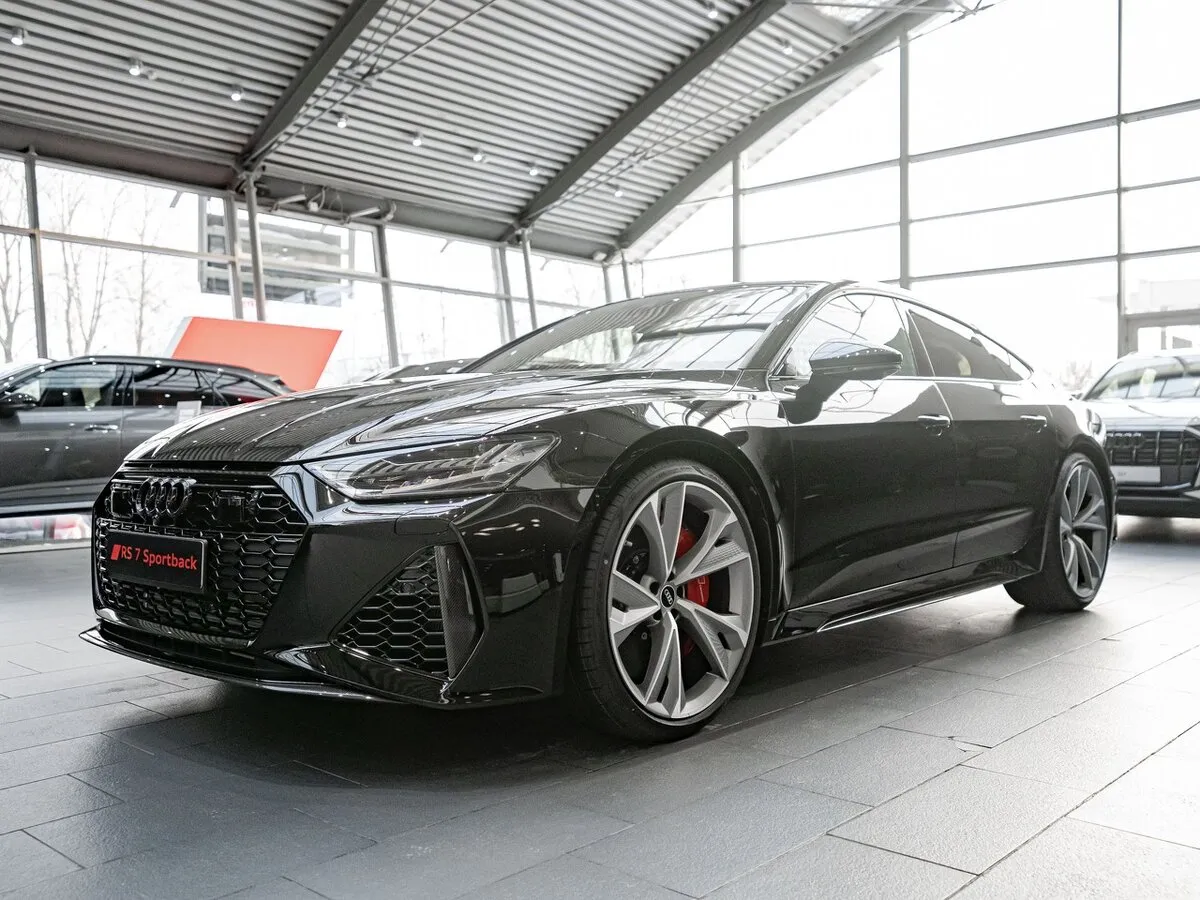
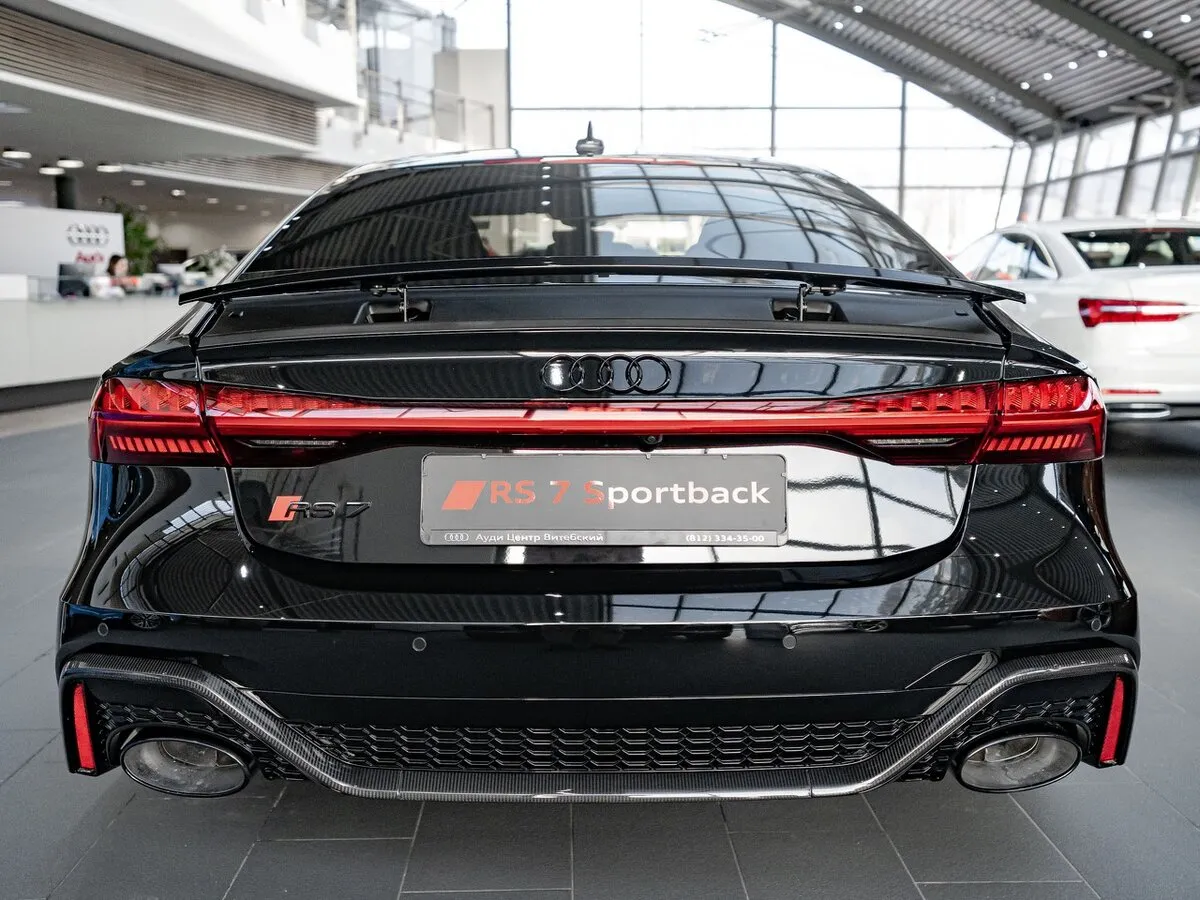
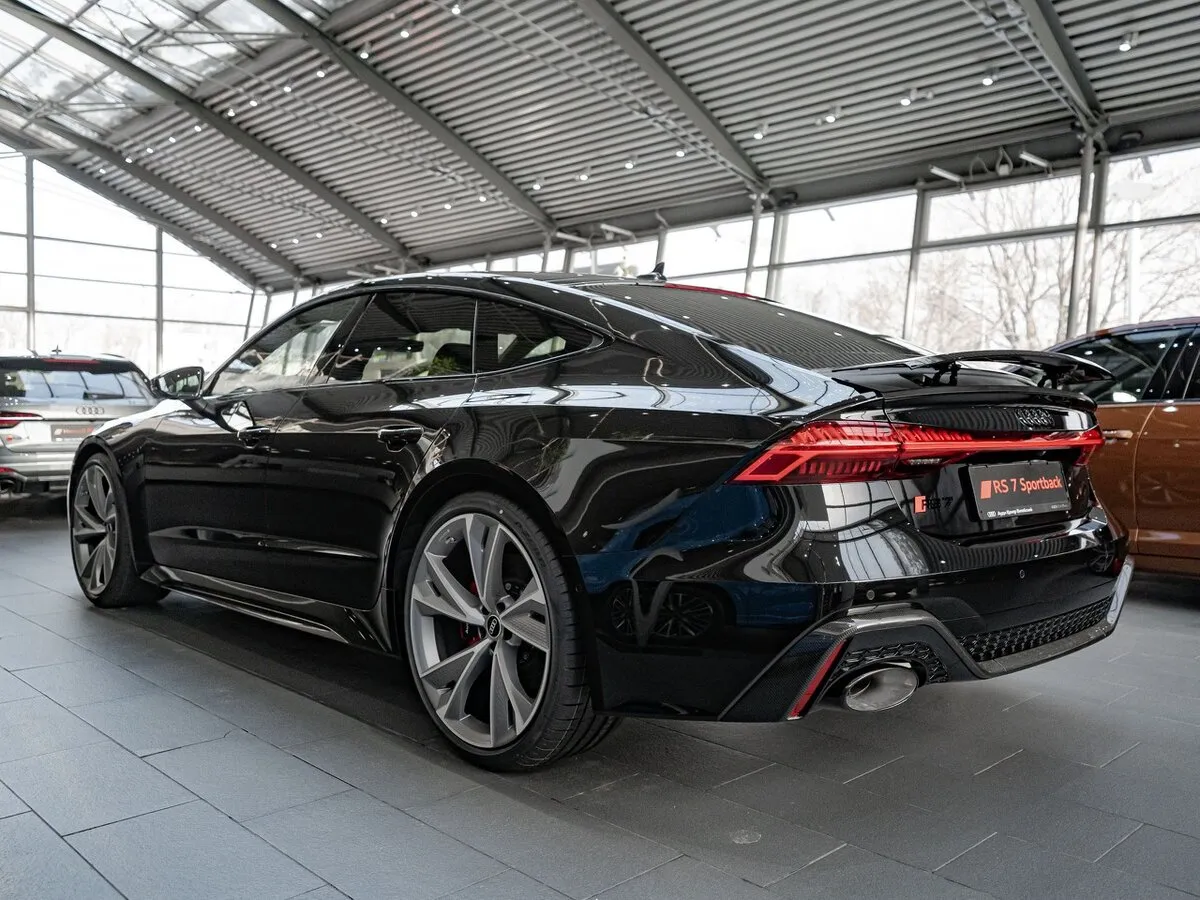
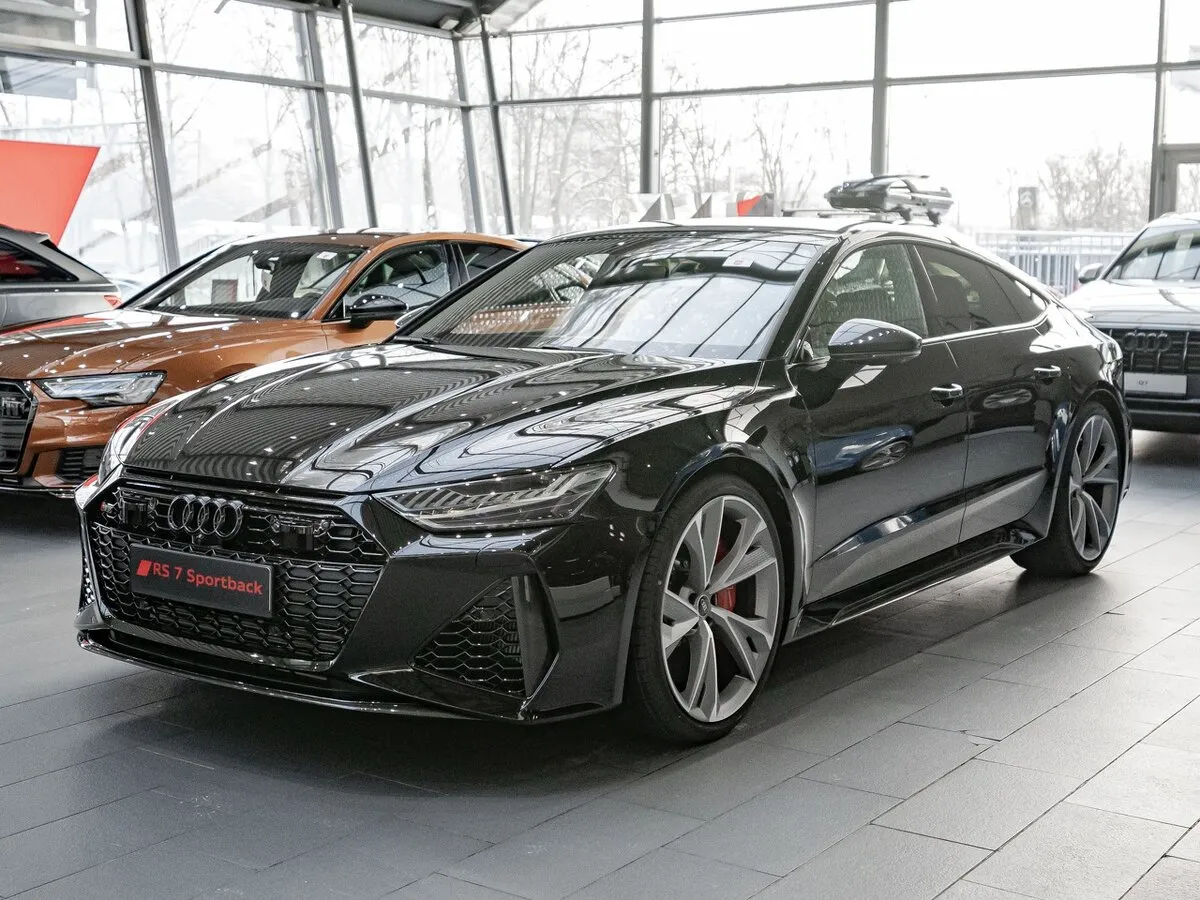
The Audi RS7 (4K, C8 generation) is arguably the most complete four-door sports car on sale — a 600 hp (630 hp in Performance trim) twin-turbo V8 Sportback that shares its bones with the Lamborghini Urus and the Bentley Continental GT. Factory figures read 0-100 km/h in 3.4 seconds and a limited 305 km/h with the Dynamic Plus package. What it lacks, in stock form, is visual drama — the bodywork is deliberately restrained so Audi can sell the RS6 Avant and RS7 Sportback to executives who do not want to advertise the engine under the bonnet. This guide covers every meaningful aftermarket upgrade available for the 4K-generation RS7 — body kits, wheels, Stage 1/2 performance, interior and an honest look at how tuning affects resale value.
Platform Overview
The RS7 4K launched in late 2019 as the second-generation RS7, replacing the 4G (C7) car. It rides on Volkswagen Group's MLB Evo longitudinal architecture — the same platform that underpins the Audi A6/A7/RS6 C8, the Audi Q7 and Q8 4M, the Porsche Cayenne 9Y0, the Bentley Bentayga and the Lamborghini Urus. That shared DNA is a gift for tuners: hardware developed for the Urus (brakes, turbochargers, exhaust manifolds) is physically interchangeable with the RS7, and software calibrations cross-pollinate between the ECUs. The car is built at Audi's Neckarsulm plant and uses the 4.0-litre TFSI biturbo V8 (codename DJPB) producing 600 hp and 800 Nm — the Performance variant lifts this to 630 hp and 850 Nm with revised turbos and a recalibrated ECU. Transmission is the 8-speed ZF Tiptronic (not the DL501 S-tronic used on the smaller RS models), quattro all-wheel drive is standard, and four-wheel steering with dynamic ride control is optional. Production runs 2018 to present, with the facelift introduced in 2023.
| Specification | Value |
|---|---|
| Platform | MLB Evo (longitudinal) |
| Engine | 4.0 TFSI biturbo V8 (DJPB) |
| Power | 600 hp (standard) / 630 hp (Performance) |
| Torque | 800 Nm / 850 Nm |
| 0-100 km/h | 3.4 s (Performance 3.4 s) |
| Top speed | 250 / 280 / 305 km/h (depending on package) |
| Transmission | 8-speed ZF Tiptronic automatic |
| Drivetrain | quattro AWD (self-locking centre + sport differential) |
| Suspension | Adaptive air suspension (standard) / DRC optional |
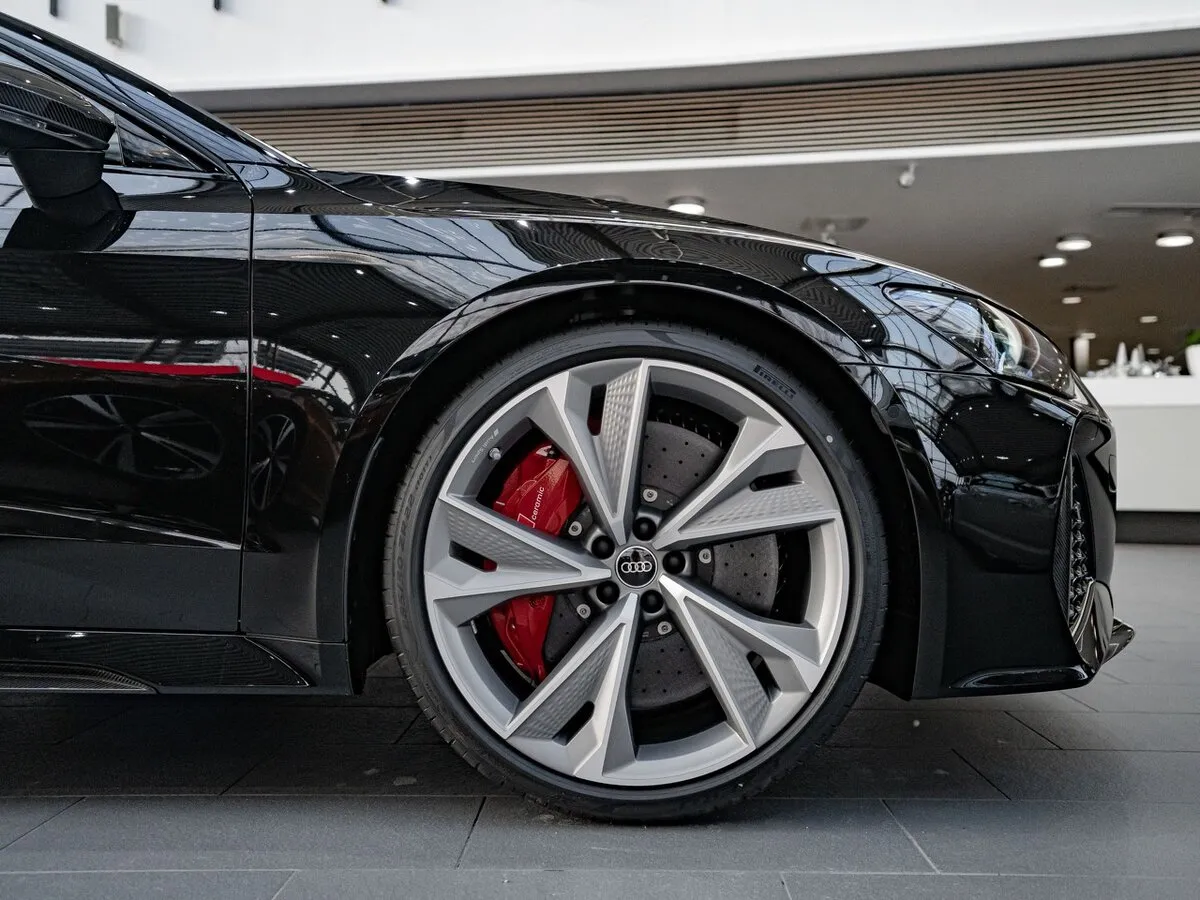
| Brakes | Steel 420 mm front / Carbon-ceramic 440 mm optional |
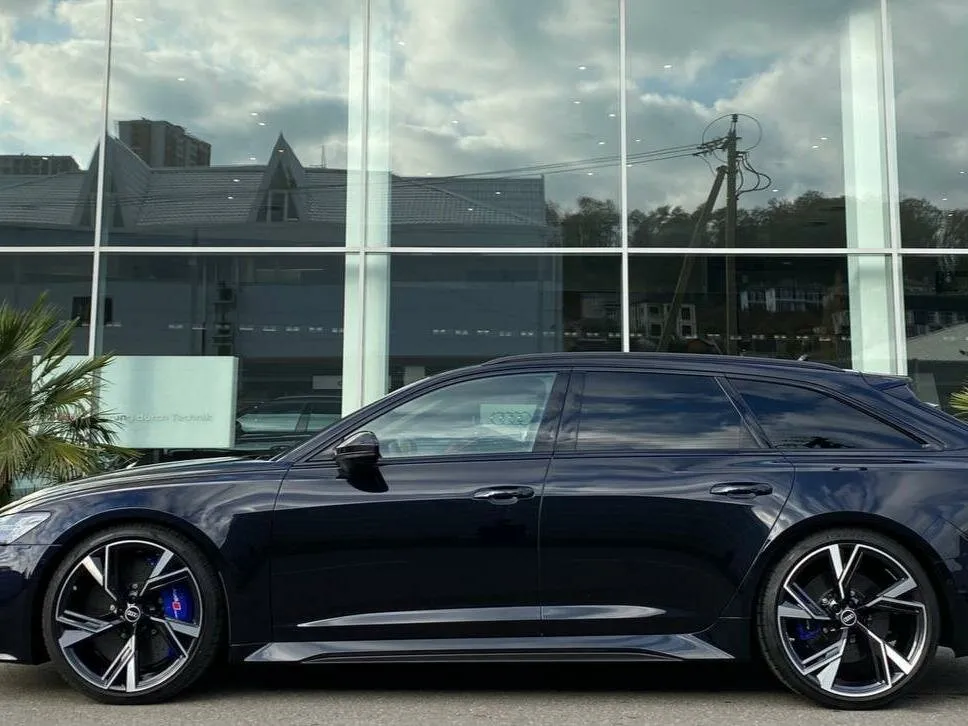
| Wheels (factory) | 21-inch standard / 22-inch optional |
| Kerb weight | ~2,065 kg |
| Length / Wheelbase | 5,009 mm / 2,928 mm |
| Production | 2018 - present (facelift 2023) |
Body Kits
The RS7 4K is a visually expensive car to tune well — its stock silhouette is already dramatic, so the difference between a tasteful upgrade and an overwrought one is narrow. The serious tuners who build for the 4K bodywork are a short, consistent list.
ABT Sportsline — RS7-R and RS7 Legacy Edition
ABT's relationship with Audi is uniquely close — it is the factory's official DTM partner — and their RS7-R programme is the most credible "next-level" RS7 available. The RS7-R package lifts power to 740 hp and 920 Nm via a larger intercooler, reworked turbos, a recalibrated ECU and an ABT-spec titanium exhaust. The aero programme comprises a new front splitter, carbon mirror caps, vented front fenders, a widebody rear-bumper insert with integrated diffuser and the signature "R" tailgate spoiler. ABT limits production to 125 cars worldwide per model year and issues each with a numbered plaque. The full bodywork alone lands around €28,000 to €34,000 installed; the 740 hp powertrain package pushes total programme cost to €78,000 to €92,000 on top of the base RS7.
Mansory P820 Widebody
Mansory's P820 takes the opposite view — where ABT preserves the RS7 silhouette, Mansory rebuilds it. The P820 programme is a full widebody with new forged-carbon front bumper, widened front and rear fenders (+80 mm total width), bespoke bonnet with vented extractors, side skirts with carbon blades, a carbon rear diffuser with quad 120 mm tailpipes and a rear wing. Inside, Mansory retrims the cabin in custom Nappa leather, Alcantara and forged carbon with contrasting stitching to the client's spec. The engine package is typically optioned to 820 hp (hence the name) via a Mansory ECU and downpipes, though clients can stop at the bodywork. Delivered price for bodywork alone is €68,000 to €82,000; full turnkey build £190,000 to £240,000.
MTM (Motoren Technik Mayer) — RS7 Nardò Edition
Wolfgang Mayer's MTM of Wettstetten is the most credible drivetrain-led tuner for the RS7 4K. Their Nardò Edition programme is quieter on bodywork (a light aero kit, 21 or 22-inch MTM Bimoto wheels, a modest lip spoiler) but dominant on power: a reworked ECU, uprated intercoolers and a stainless downpipe set lift the 4.0 TFSI to 805 hp and 1,050 Nm. The Nardò has run 340 km/h at the eponymous Italian ring. Aero programme ~€6,800; powertrain package €14,500 to €18,000 installed.
Audi Exclusive / Audi Sport GmbH
Audi's in-house personalisation division offers a sizeable catalogue of factory-supported exterior and interior options for the RS7 — carbon exterior package (mirror caps, front lip, diffuser inserts, boot spoiler, window trim in exposed gloss carbon), matrix laser headlamp retrofit, bespoke paint (over 50 colours on order), Valcona leather in any Pantone, extended leather to the A-pillars and headliner, and carbon twill or piano-gloss real-wood inlays. The Audi Exclusive carbon exterior package typically runs €8,400 to €12,200 ex-factory; bespoke paint adds €6,500 to €10,000.
Wheelsandmore / Prior Design
Smaller-batch programmes worth naming: Wheelsandmore's stage-based RS7 upgrade combines a modest aero kit with forged wheels and an ECU flash (up to 780 hp), priced at €24,000 to €38,000. Prior Design's PD-RS7 widebody is a more affordable widebody alternative to Mansory — roughly half the price (€28,000 to €36,000 installed) with comparable visual drama, though less interior work.
Need help choosing your RS7 programme?
Our team has shipped ABT, Mansory, MTM and Audi Exclusive parts for the RS7 4K to the UK, Germany, UAE, KSA, Switzerland and the US. Email [email protected] with your VIN and we will confirm availability, lead time and delivered price within 24 hours.
Wheels
The RS7 leaves the factory on 21-inch forged alloys (10J front, 10J rear, ET40) with 275/35 R21 Pirelli P Zero or Continental SportContact 6 tyres; 22-inch is a factory option (10J ET38 with 285/30 R22). The aftermarket sensible ceiling is 22 inches — a 23-inch wheel looks cartoonish on the RS7 silhouette and introduces unsprung mass that the air suspension struggles to damp at motorway speed. For a flush stance on an unwidened bodywork, run 10.5J ET35 front and 11J ET32 rear in 22-inch with 285/30 and 295/30 tyres respectively — this requires a 10 mm rear spacer on some chassis and air-suspension recalibration via VCDS or ODIS. On a Mansory or Prior Design widebody, step to 11J ET28 front and 12J ET25 rear with 305/30 R22 Michelin Pilot Sport 4S or Pirelli P Zero Corsa. Forged wheels are essential at the RS7's 2,065 kg kerb weight — cast wheels flex under hard cornering and corrupt steering feel, and the factory carbon-ceramic brake clearance demands a specific barrel profile that cast castings rarely hit. Brands we ship repeatedly for this car: Vossen Forged (EVO-2R, S17-01, M-X1), HRE (P101SC, S207, RS309M, Vintage 501M), ADV.1 (ADV5.2 MV.2 SL, ADV7.0), Rotiform (KPR, AeroDisc forged), Loma Wheels (GT3-SL) and BBS (FI-R forged monoblock).
Performance
The 4.0 TFSI DJPB responds exceptionally well to ECU work and bolt-on hardware, largely because Audi left meaningful headroom on the factory tune — the same block makes 650 hp in the RS Q8 Performance and pushes past 800 hp in the Urus Performante with only modest internal changes.
Stage 1 — ECU flash only (98 RON / 93 octane required)
Standard RS7 (600 hp): Stage 1 typically lands 700 to 720 hp and 920 to 960 Nm. Performance variant (630 hp): Stage 1 reads 720 to 740 hp and 950 to 980 Nm. Tuners we trust for this calibration: APR, MTM, ABT Sportsline (their "Power S" flash), Stage 11 Performance and Unitronic. All of these are switchable via a handheld programmer so the car reverts to stock for service visits.
Stage 2 — Downpipes and intake (usually retains factory turbos)
Add a full stainless downpipe set with 200-cell high-flow sport catalysts (Akrapovic, MTM, Wagner Tuning or ARM Motorsports), a colder-feed intake (034 Motorsport or APR Carbonio) and a Stage 2 recalibration: expect 760 to 800 hp and 1,000 to 1,050 Nm. Full catless downpipes add 20 to 30 hp more but require a catless map and are not MOT/TÜV legal in most EU markets.
Stage 3 — Turbo upgrade
APR, MTM and Pure Turbos all offer drop-in turbocharger upgrades for the DJPB — typically a hybrid billet-wheel conversion that runs higher boost while retaining the factory twin-scroll architecture. With supporting fuel-system work (larger HPFP from Dorch Engineering, port injection add-on from Integrated Engineering), the RS7 makes 880 to 950 hp reliably on pump fuel. Beyond 950 hp you are into forged-internals territory; the factory rods are a known limitation above 1,000 Nm of sustained torque.
Exhaust
Akrapovic's Evolution Line for the RS7 4K is the factory-approved option — a full titanium system with carbon tailpipes, valve control integrated to the factory Audi Drive Select, and roughly 14 kg weight savings over the OEM exhaust. Delivered price ~€7,800. Capristo (Italy) and Cargraphic (Germany) offer comparable titanium systems at €6,400 to €8,900. For a more aggressive note, MTM's stainless system with ceramic coating is €4,200 and keeps OPF/GPF compliance on EU cars.
Suspension and brakes
For owners who want to sharpen the chassis without losing air-suspension comfort, KW H.A.S. hydraulic lift kit integrates with the factory air struts and drops ride-height by 20-30 mm while keeping adaptive damping. For trackday-oriented builds, KW Clubsport three-way coilovers (converted from air to coil) run €8,200 installed. Brake upgrades: RS7 owners typically retrofit the optional carbon-ceramic package (440 mm front, 370 mm rear) from the Audi parts catalogue — €12,000 to €14,500 supplied and fitted — or step to an AP Racing or Brembo GT big-brake kit with 405 mm two-piece discs.
Interior
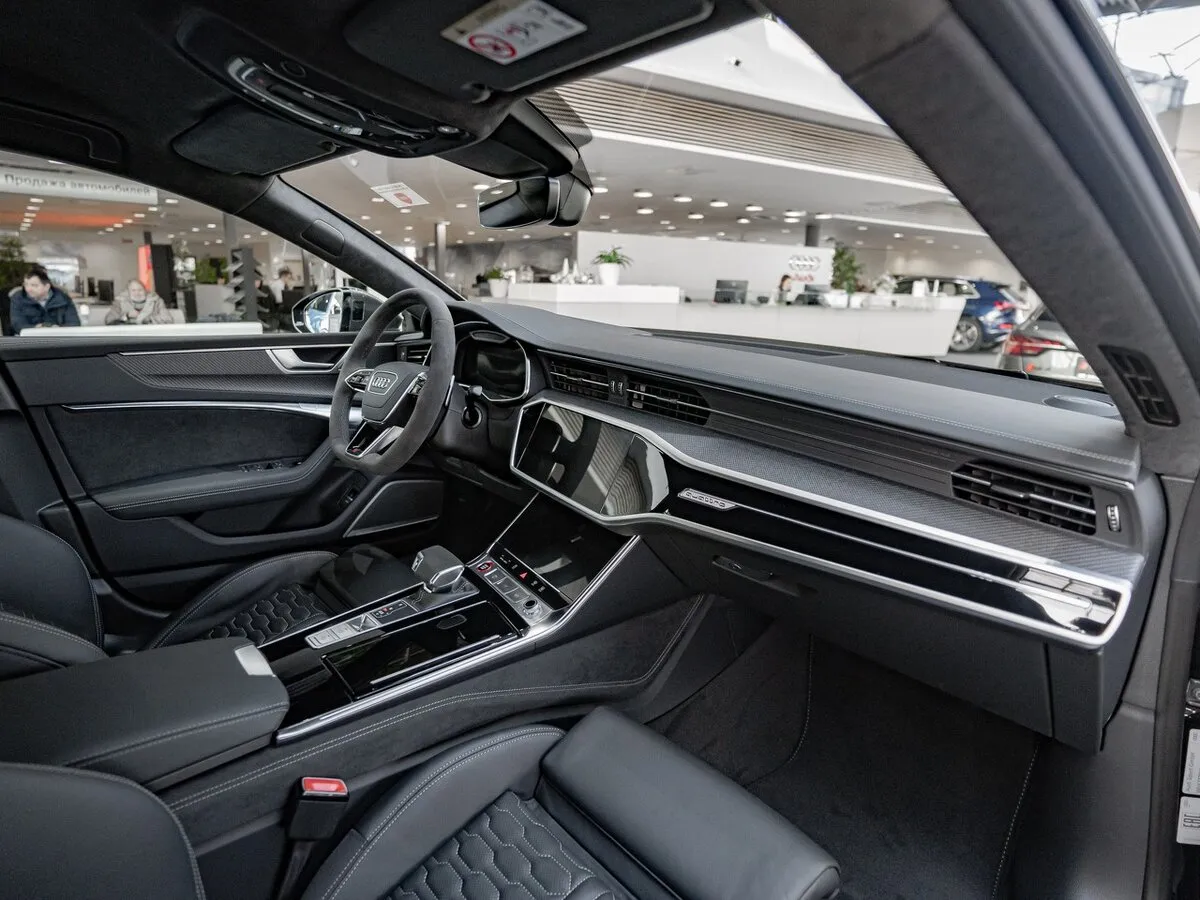
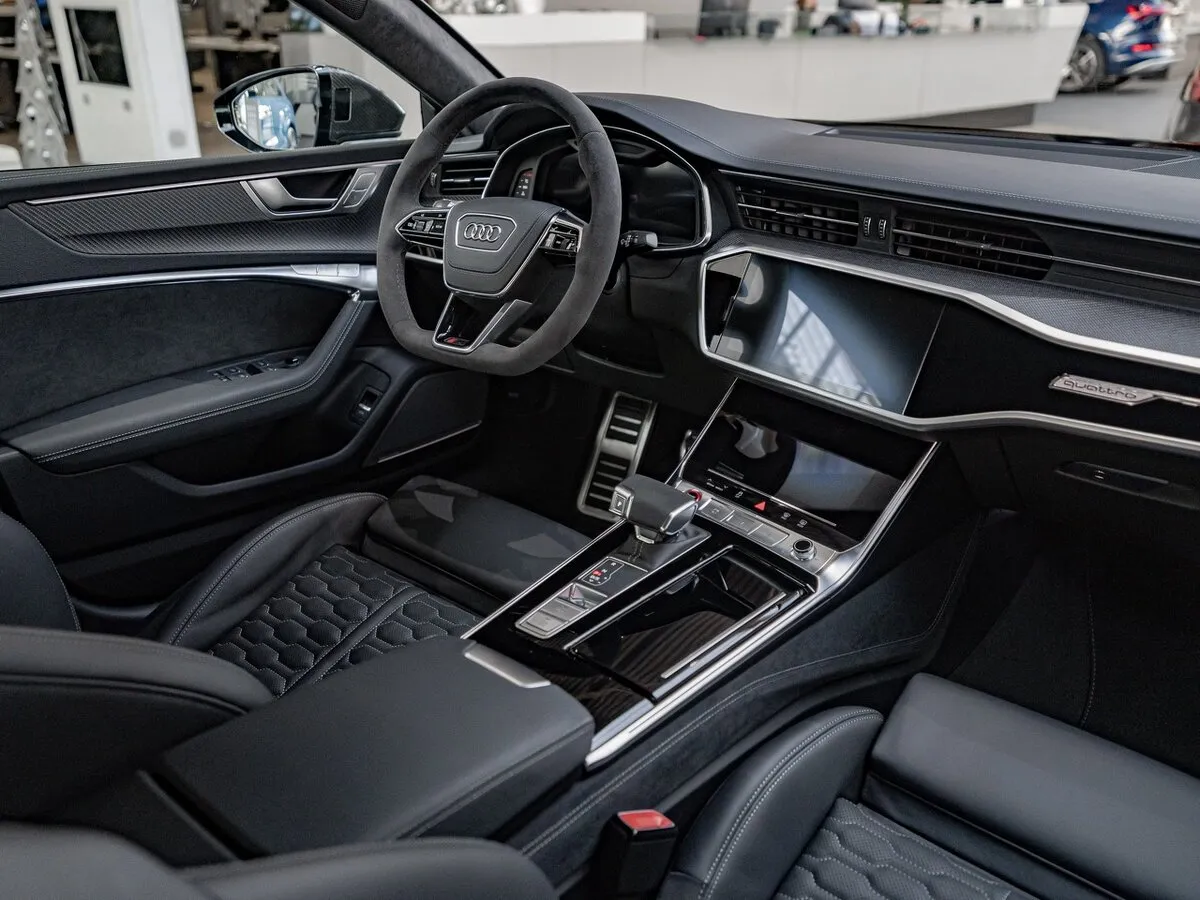
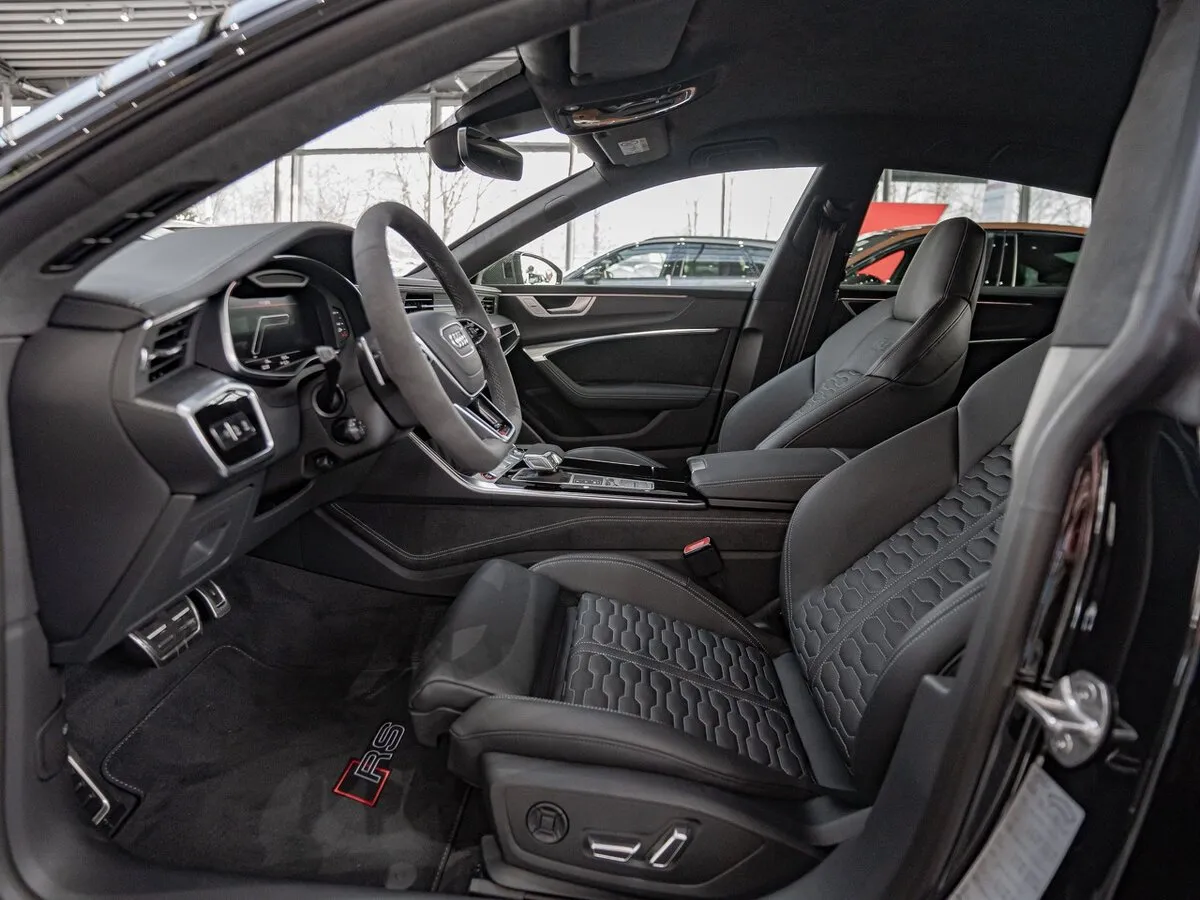
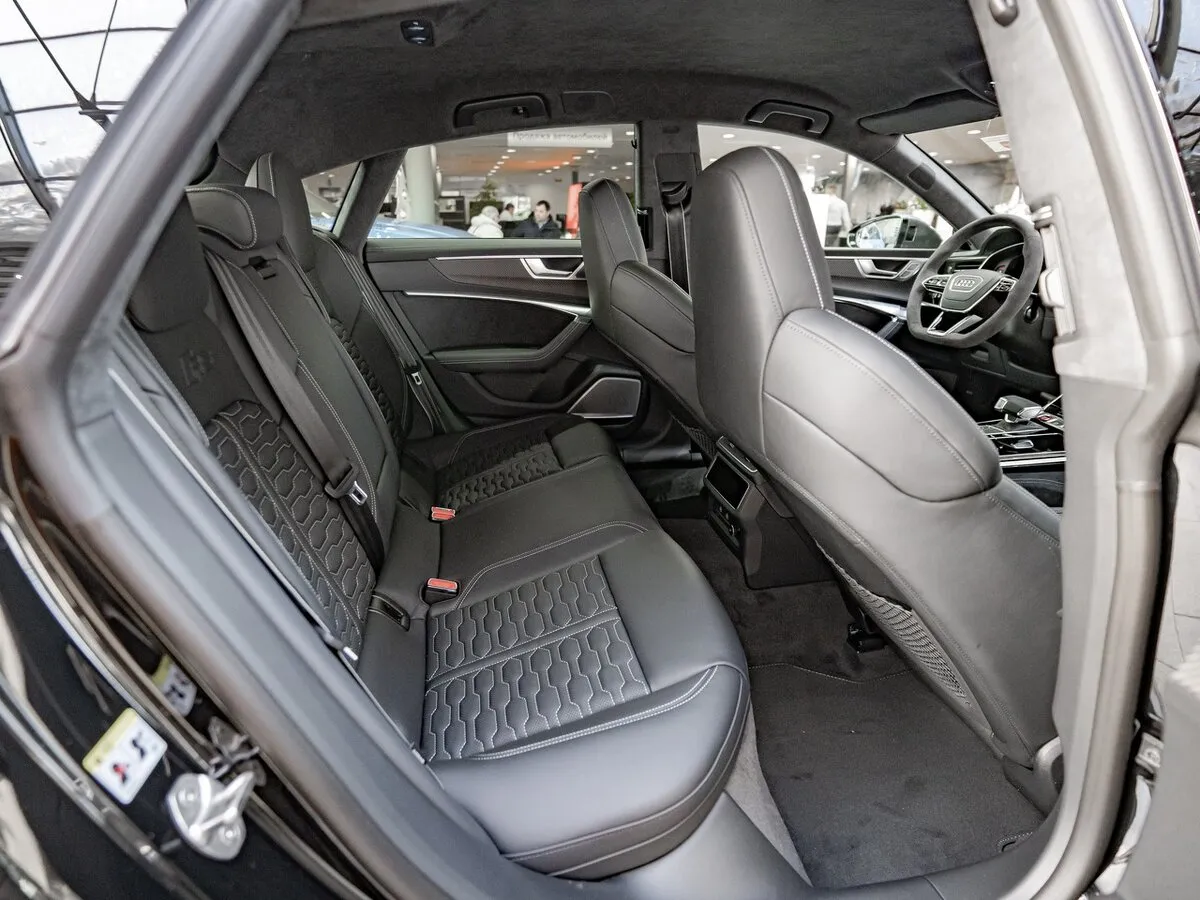
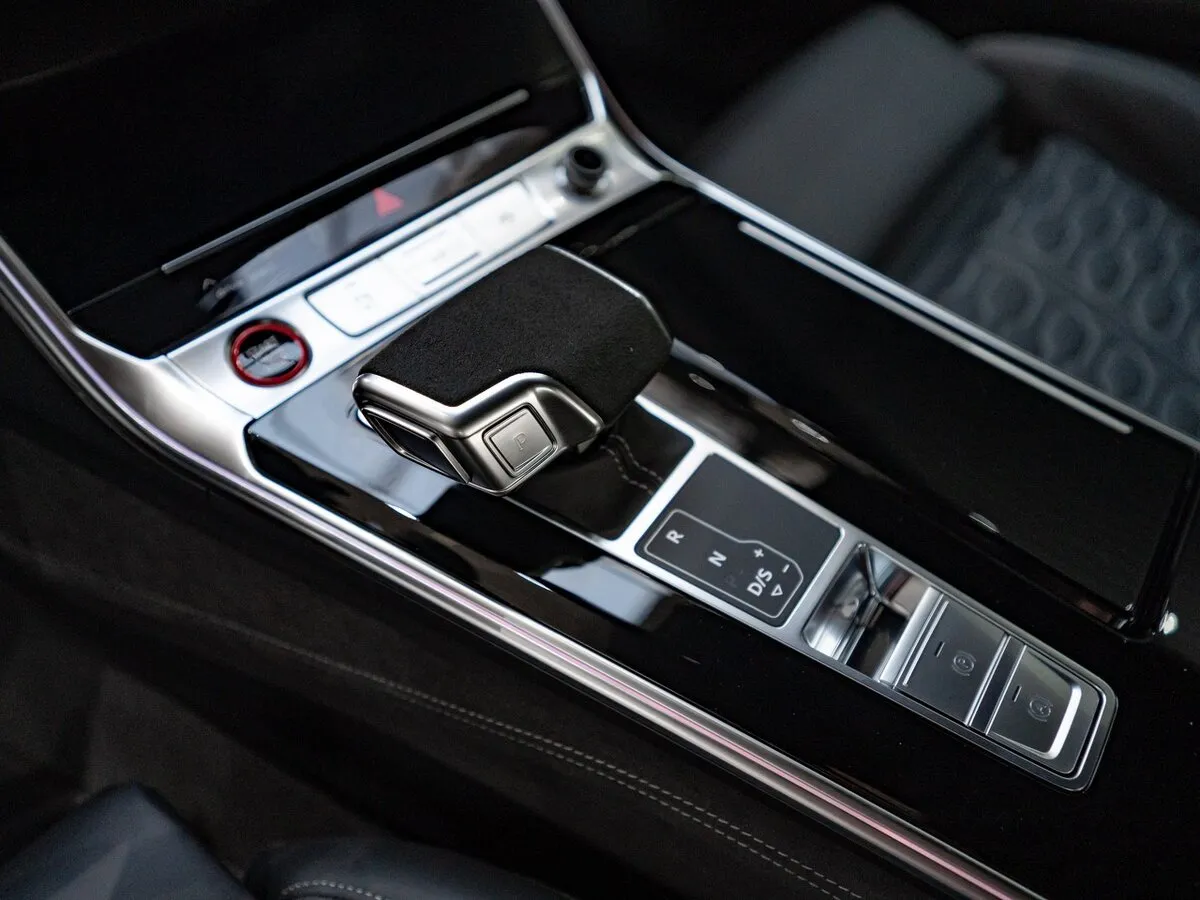
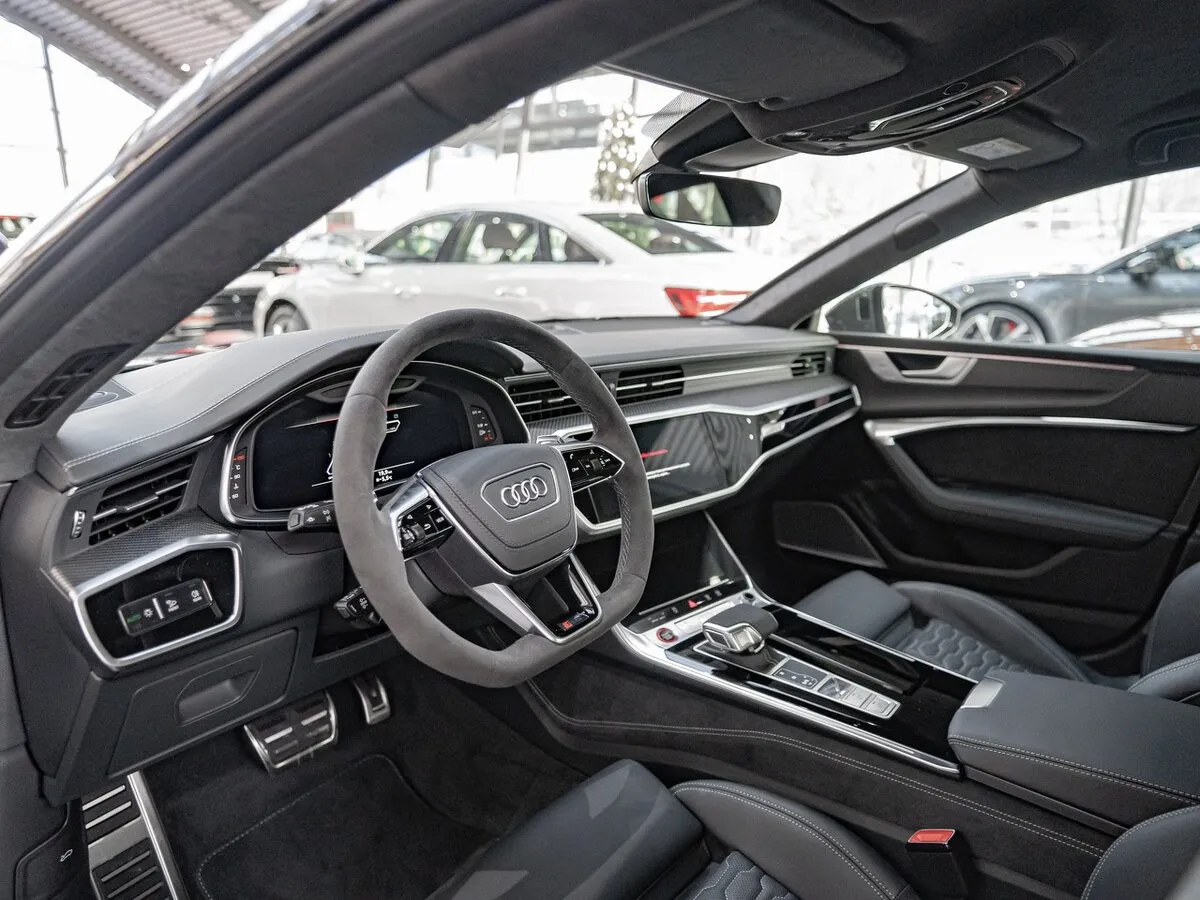
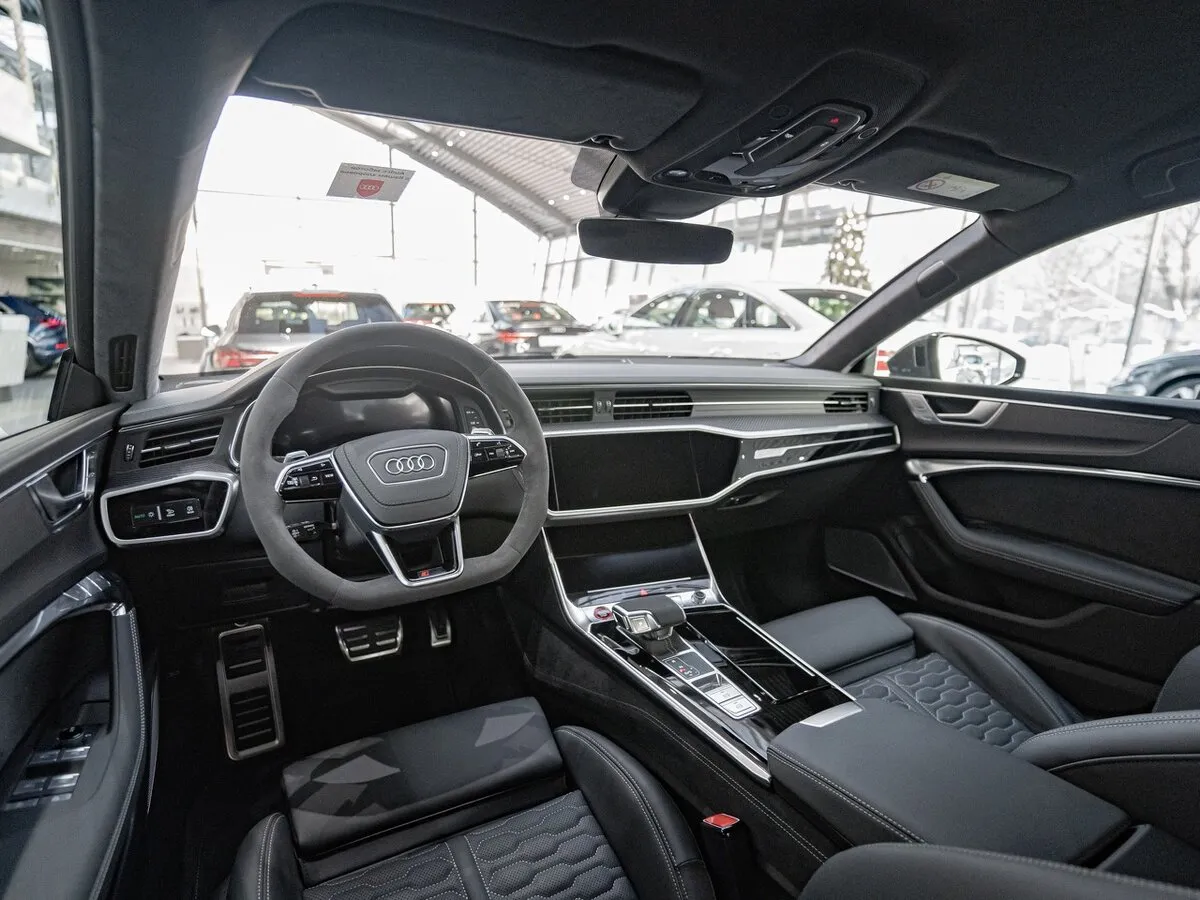
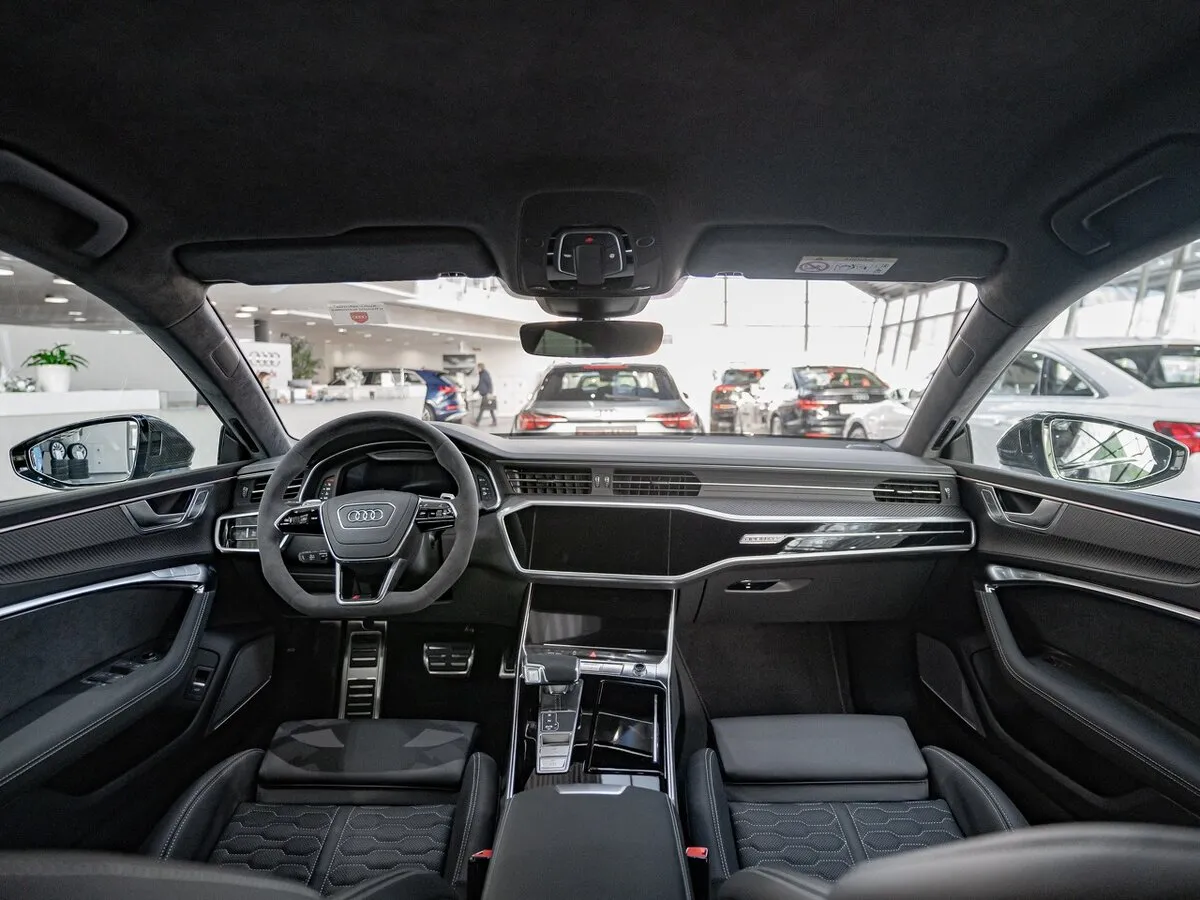
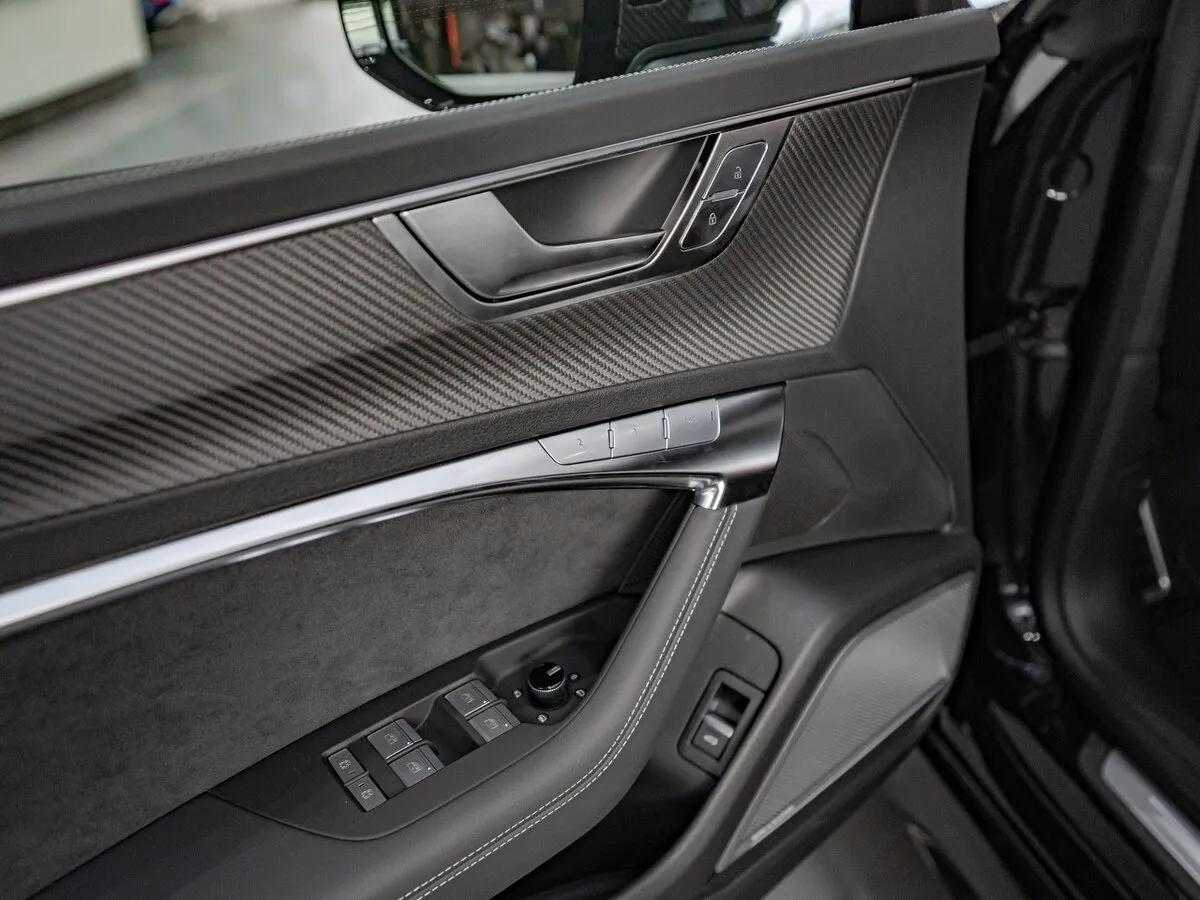
RS7 interior work tends to be subtle — the factory Valcona leather and real-carbon inlays are already high quality. Popular upgrades are Alcantara headliner retrim (Vilner, Carlex Design or Neidfaktor, £1,800 to £2,400), extended leather to the A-pillars and centre console (£2,600 to £3,400), forged-carbon or Alcantara steering wheel with RS contrasting 12 o'clock stitch (£1,200 factory / £2,400 bespoke), RS-logo illuminated door sills and an ambient-light retrofit extending the factory 30-colour system to the footwells and door pockets.
Tuning and Resale Value — How Modifications Affect What Your RS7 Is Worth
The RS7 4K is an unusually strong resale performer in the 600 hp+ German segment — at three years old, low-mileage examples typically retain 62 to 68 percent of list in the UK/EU, compared with 52 to 58 percent for the Mercedes-AMG GT 4-door and the BMW M8 Gran Coupe. That premium reflects rarity (annual global production is under 6,000 units) and cross-shopping demand from Porsche Panamera Turbo clients. Modifications affect that residual in very specific ways.
Tasteful, factory-style work preserves and can enhance value. ABT Sportsline kits carry brand equity at resale — particularly the RS7-R with its numbered plaque, which trades at a small premium over unmodified Performance cars in the used market. Audi Exclusive carbon exterior, bespoke paint and matrix-laser retrofits are cataloguable on the VIN and read as factory options to the second owner. Forged wheels from HRE, Vossen or BBS at 21 or 22 inches are universally accepted. Akrapovic exhaust is frequently seen as a positive on auction listings.
Extreme widebodies limit buyer pool but command premium with the right buyer. A Mansory P820 or Prior Design PD-RS7 compresses the addressable resale market — most mainstream used-Audi buyers will not consider a widebody — but finds its audience in the Middle East, Russia and parts of Asia where the visual statement commands a €40,000 to €80,000 premium over the unmodified car. Sell through a Mansory or Prior Design-aware broker, not a mainstream used-car lot, and photograph the car with factory parts retained and offered as a return-to-stock option.
Document everything and retain the factory parts. Keep the original bumpers, wheels, exhaust and ECU-stock-dump in a dry, dated storage box — this costs little and raises resale by 3 to 6 percent because buyers can see an exit. For ECU work, choose a dealer-revertible flash from APR, MTM or ABT that reads as stock during a service visit; a permanent, non-revertible tune can halve the pool of buyers and voids the Audi powertrain warranty explicitly. Permanent hardware such as catless downpipes and forged internals should be documented with full receipts, builder correspondence and any dyno sheets — paperwork substantially out-values the car unpapered.
Ready to build your RS7?
Send your VIN and budget tier (entry / mid / top) to [email protected]. We will return a line-item quote, recommend an installer in your region and confirm shipping timelines to your postcode.
Frequently Asked Questions
Will an ABT RS7-R or Mansory P820 void my Audi factory warranty?
ECU tuning (Stage 1 or above) explicitly voids the Audi powertrain and transmission warranty for the remaining term — this is stated in the Audi Sport warranty booklet. Bolt-on bodywork alone does not affect the powertrain warranty under EU block-exemption rules, and Audi dealers who are ABT-partnered (of which there are several in Germany, the UK and UAE) will service ABT-kitted cars without issue. If you are inside the first three years, most owners use a dealer-revertible "switchable" ECU map from APR or MTM, or stay on the factory tune and add bodywork only, until the factory warranty expires.
Can I fit 23-inch wheels on an RS7 4K?
Physically yes with a widebody kit and air-suspension recalibration, but we rarely recommend it. 23-inch adds roughly 18 kg of unsprung mass per corner versus 22-inch — the adaptive air suspension struggles to damp this at speed, ride quality drops noticeably on broken tarmac, and the 275 or 285-section tyres available in 23-inch have stiff sidewalls that corrupt steering feel. The ABT and MTM programmes stop at 22-inch for this reason. If a 23-inch fitment is essential to the project, forge a dish-style wheel with a deep barrel and pair with a Michelin Pilot Sport 4S in 305/25 R23.
How much power can the factory DJPB V8 take before forged internals are required?
The 4.0 TFSI DJPB has well-documented limits. On 98 RON pump fuel with supporting mods (downpipes, intake, HPFP upgrade), the factory rotating assembly reliably handles 900 to 950 hp for road use. Above 950 hp, or at sustained track use over 850 hp, the factory connecting rods are the weak point — Pauter, Integrated Engineering and Pankl all offer forged H-beam rods. Factory crankshaft, block and head are good to 1,200 hp. Turbo housings are the next limit: above 900 hp you need billet-wheel hybrids from Pure Turbos, APR or MTM.
Do you ship RS7 4K parts outside of Europe?
Yes. Our European warehouse ships ABT, Mansory, MTM, Audi Exclusive, Akrapovic, Vossen, HRE and BBS parts weekly to the US, Canada, UAE, KSA, Bahrain, Kuwait, Qatar, Hong Kong, Singapore, Australia and South Africa via DDP (Delivered Duty Paid) for bodywork and DAP for wheels and exhaust. A typical Mansory widebody to a UAE address runs twelve to sixteen business days including paint and export documentation. Email [email protected] with your VIN and delivery address for a line-item delivered quote.
Build your RS7 4K with Hodoor
Every part we ship is sourced direct from the manufacturer — ABT Sportsline, Mansory, MTM, Audi Exclusive, Akrapovic, KW Suspension, Vossen, HRE, BBS. No grey-market copies, no guesswork on fitment. Contact [email protected] for a full quote and build plan.