
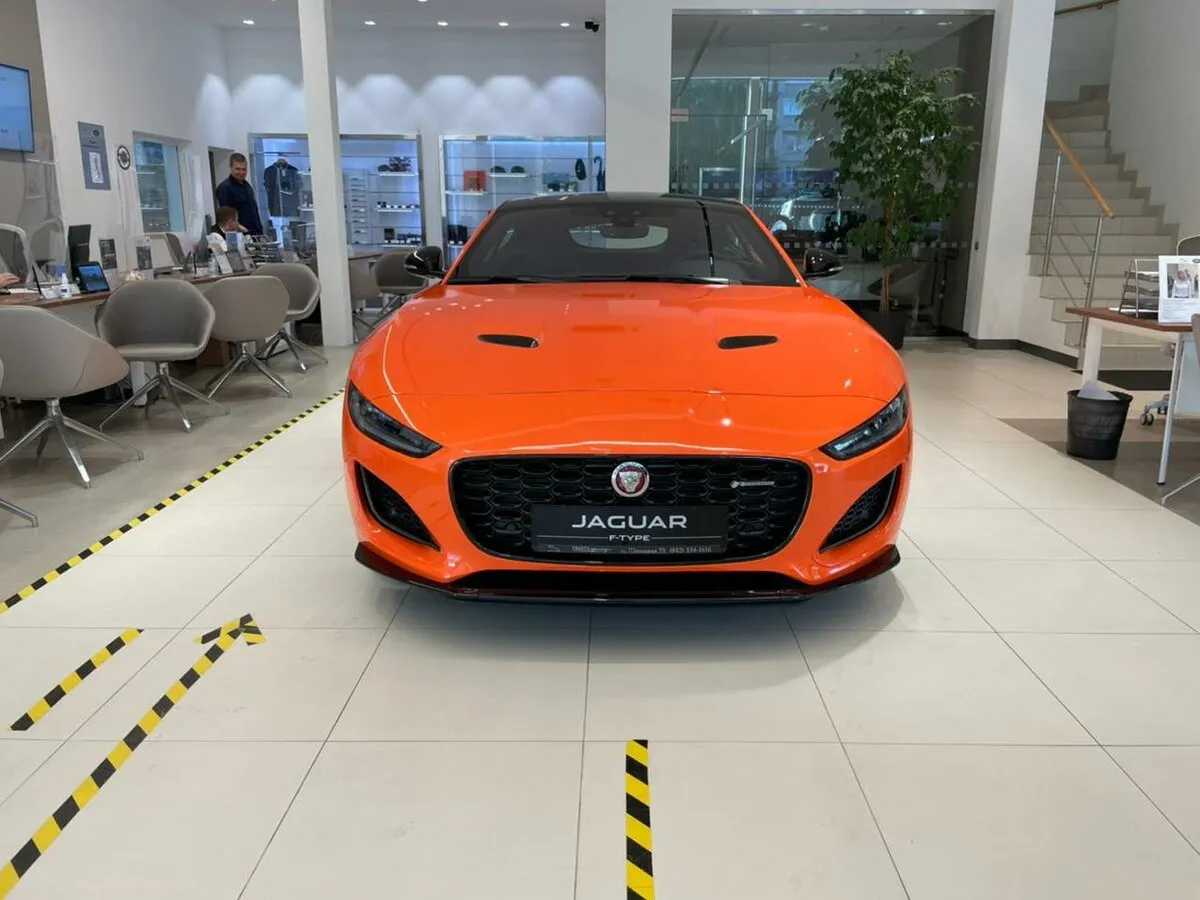
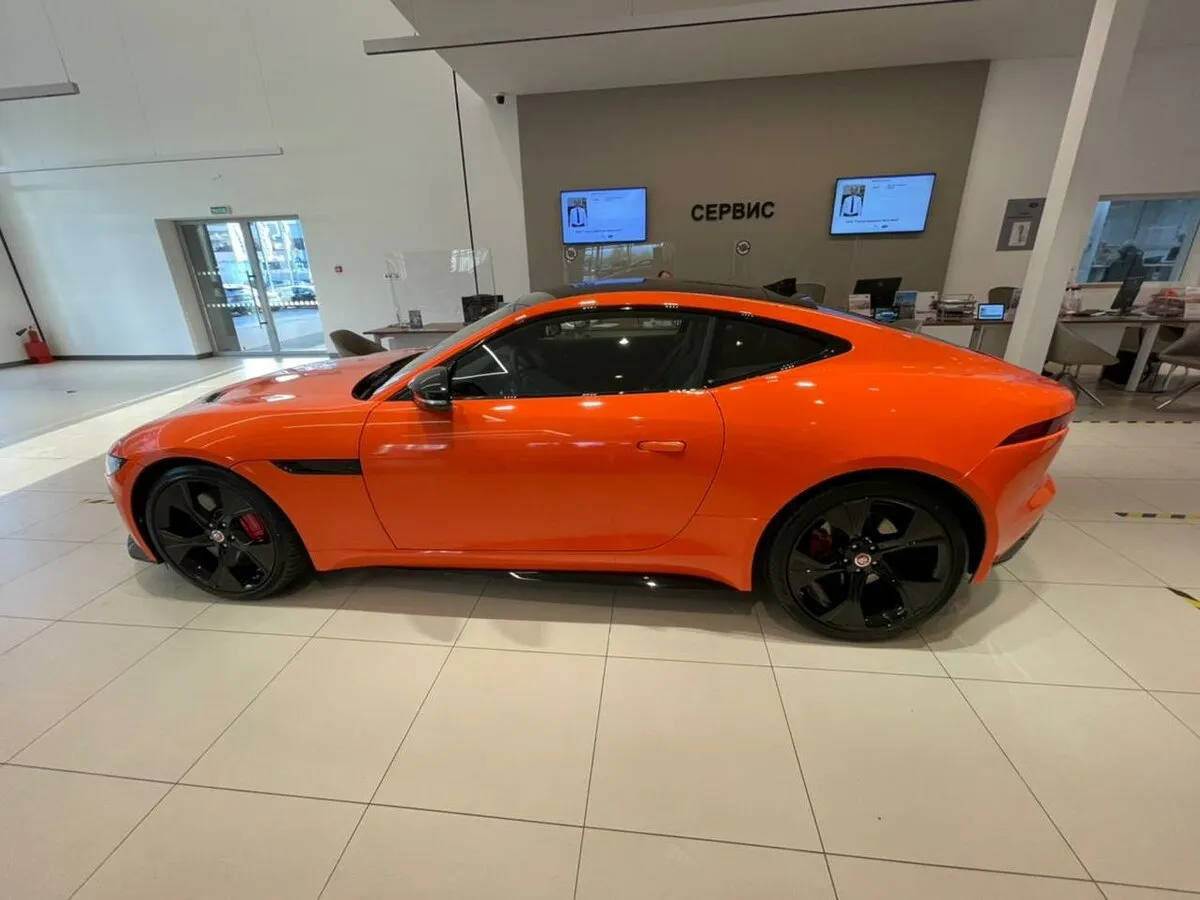
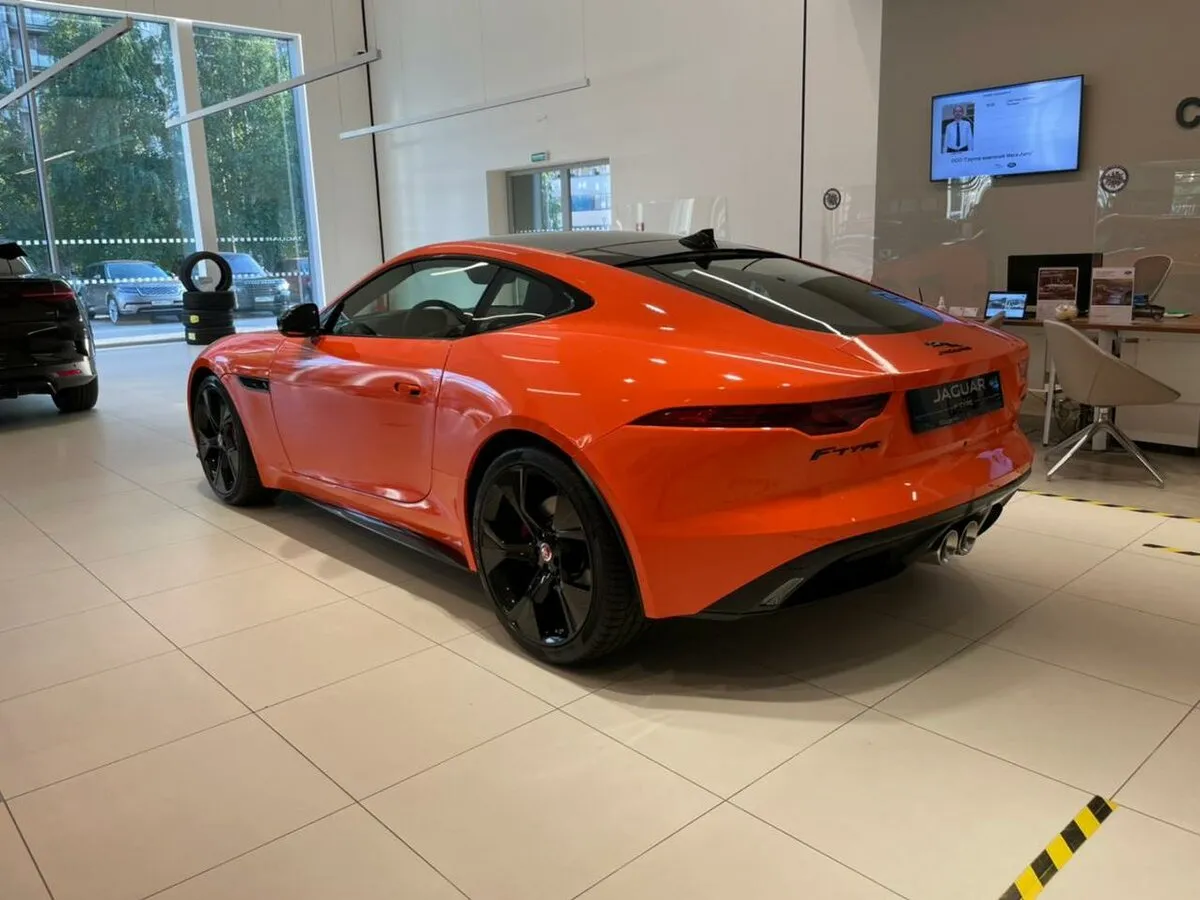
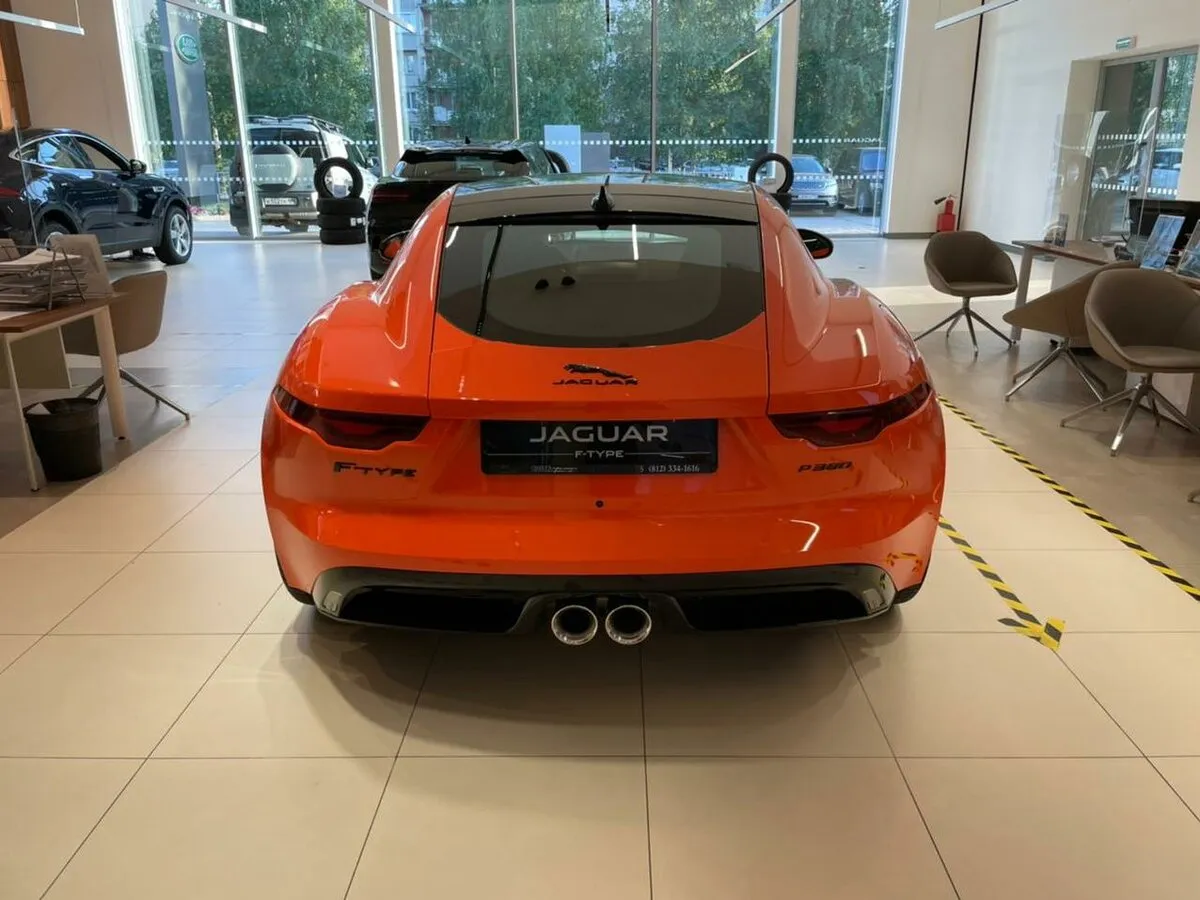
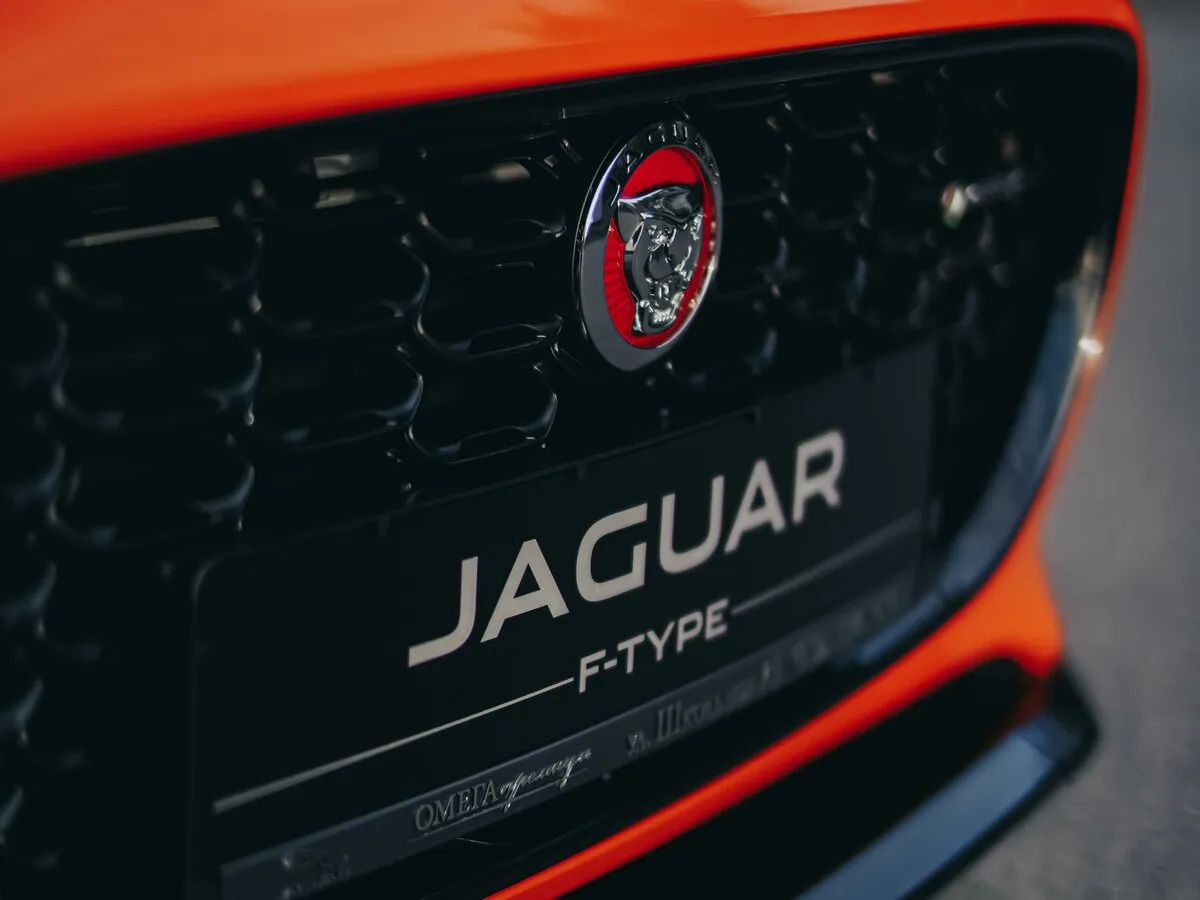
Jaguar F-Type Tuning Guide 2026 — Body Kits, Wheels & Performance Upgrades


The Jaguar F-Type (X152) is one of the most emotionally charged sports cars Britain ever produced. From its debut in 2013 to the final model year in 2024, it delivered a combination of sculptural bodywork, rear-wheel theatre, and a soundtrack that reduced grown adults to childlike grins. The 5.0-litre supercharged V8 in SVR trim — 575 hp, a crackle-and-pop exhaust that registers on seismographs — became the stuff of automotive legend. Now that production has ended, the F-Type is crossing the threshold into "modern classic" territory, and 2026 is the year tuners are circling this platform with serious intent. Whether you own the entry-level 2.0 turbocharged four-cylinder or the full SVR convertible, this guide covers every upgrade path: wide-body kits, forged wheels, ECU remapping, exhaust systems, and the interior refinements worthy of a thoroughbred.
Technical Specifications
| Variant | Engine | Power | 0–100 km/h | Top Speed |
|---|---|---|---|---|
| F-Type 2.0T | 2.0L Turbocharged I4 | 300 hp / 400 Nm | 5.7 s | 250 km/h |
| F-Type V6 S | 3.0L SC V6 | 380 hp / 460 Nm | 4.9 s | 275 km/h |
| F-Type V8 S | 5.0L SC V8 | 450 hp / 580 Nm | 4.3 s | 300 km/h |
| F-Type R / SVR | 5.0L SC V8 | 575 hp / 700 Nm | 3.5 s | 322 km/h |
Platform: IQ[Al] aluminium architecture. Body styles: 2-door coupe, 2-door convertible. Production: 2013–2024. Drive: RWD / AWD (AWD from 2016 on V6 S and above).
Body Kits — Exterior Transformation
The F-Type's aluminium skin is already a work of art, but aftermarket coachbuilders have found ways to amplify its aggression, width, and visual drama without destroying the Jaguar's inherent elegance.
Prior Design Wide-Body Kit
The German design house Prior Design built its reputation on wide-body conversions, and the F-Type kit is among their finest work. The package adds approximately 50 mm of track width per axle through bolt-on polyurethane overfenders — styled to follow the F-Type's existing creases rather than fight them. The front bumper receives enlarged air intakes framed by carbon fibre splitter lips, while the rear bumper extension integrates a diffuser with twin central cutouts sized for 90–100 mm tailpipes. The carbon fibre rear spoiler maintains downforce without looking afterthought. Prior Design offers the kit in unpainted fiberglass or pre-primed polyurethane, with full carbon fibre execution available as a bespoke order. It pairs best with 20" staggered fitments: 255/30 front, 295/25 rear.
Mansory F-Type Programme
Mansory's approach to the F-Type is characteristically total: every exposed surface becomes a canvas for carbon fibre weave. The front fascia receives Mansory's signature twin-blade splitter in pre-preg carbon, flanked by revised dive planes. Side skirts bridge the gap between front and rear arches with sculpted carbon extensions. The engine bonnet is available in full-replacement carbon fibre — saving approximately 8 kg over the factory aluminium unit — with a central vent channel that channels hot air away from the windscreen. At the rear, a Mansory trunk lid spoiler in carbon sits above a diffuser module with integrated LED brake light strip. The complete Mansory exterior programme also includes custom door sill plates with backlit Mansory lettering and carbon A-pillar trim inserts.
Arden JAG-100 Exterior Package
Arden Automobil has tuned Jaguar products since 1973, and their JAG-100 exterior kit for the F-Type is a masterclass in restrained enhancement. The front spoiler lip is a clean carbon unit that reduces front-end lift at motorway speeds without adding visual clutter. The rear diffuser is a three-fin carbon item, elegantly integrated. Arden's sideskirts are notably slimmer than competitors' offerings — suitable for owners who want the look of a tuned car without shouting. Arden also offers a carbon boot lip spoiler and a bonnet vent insert kit. All components are manufactured in Germany and come with a fitment guarantee and certificate of origin.
TopCar F-Type Details
Russian-founded tuner TopCar offers a focused selection of F-Type carbon accessories: front bumper canards, a replacement bonnet vent grille, carbon mirror housings, and a rear diffuser. Their approach is modular — customers build a-la-carte packages rather than committing to a full kit. All TopCar components are manufactured in pre-preg carbon fibre with a choice of 2x2 twill or 1x1 plain weave finish, clear-lacquered to show the weave or body-colour painted. The TopCar rear diffuser is a popular standalone addition for owners who want a subtle visual upgrade without committing to a full kit. Worldwide shipping is available, and Hodoor.world stocks TopCar F-Type components.
Ready to transform your Jaguar F-Type?
Our experts will select the ideal kit for your exact variant and build vision — Prior Design, Mansory, Arden, TopCar.
[email protected]Wheels — Forged Perfection for the F-Type
The F-Type runs on a 5x10⁸ bolt pattern — a specification shared with Volvo, Ford Mondeo ST, and several Citroen performance models, but in the tuning world it is overwhelmingly identified with Jaguar. The factory fitting ranges from 19" on base trims to 20" on V8 S and SVR, with tyre profiles that reflect the car's sporting intent. Here is how to upgrade properly.
Fitment Specifications
- Bolt pattern: 5x10⁸
- Centre bore: 63.4 mm
- ET range: ET35 (rear on wide-body builds) to ET45 (standard fitment)
- Rim diameter: 19" (coupe base) or 20" (V8 / SVR / wide-body)
- Rim width: 8.5J–9.5J front, 9.5J–10.5J rear (wide-body)
- Tyre (standard): 245/40 R19 front, 275/35 R19 rear
- Tyre (20" wide-body): 255/30 R20 front, 295/25 R20 rear
Recommended Forged Wheels
HRE P101 (20"): One of the finest monoblock forged wheels on the market. Available in a 10-spoke radial design that suits the F-Type's curved body language. Specify in Gloss Liquid Silver or Satin Black for maximum contrast against the bonnet bulge. Weight per wheel in 20x9.5J: approximately 9.4 kg — a significant saving over the factory 10.8 kg cast aluminium.
Vossen Forged VPS-302T (20"): A twin-spoke open-face design that looks purposeful without being derivative. The three-piece construction allows custom offsets to be dialled in precisely — essential on wide-body builds where ET35 rear and ET42 front may be required simultaneously. Vossen offers concave face profiles that add depth and shadow to the wheel face.
BBS RE-C (19"–20"): The classic BBS multi-spoke remains the default choice for European drivers who want German engineering credibility. The RE-C in 20x9J at ET40 fits all F-Type variants without spacers. Available in gold, silver, and matte black. OEM-quality finish longevity.
Vorsteiner VFF-107 (20"): Flow-formed lightweight construction, 5-spoke directional design. The brushed titanium finish is uniquely suited to Jaguar's British Racing Green and Glacier White body colours. At 9.6 kg per wheel (20x9.5J) these represent the budget forged option without sacrificing quality.
Performance Upgrades — Unleashing the Supercharger
The F-Type's AJ-V8 Gen III supercharged engine is fundamentally overengineered for its factory output. Jaguar's engineering sign-off conservatism means there is substantial power latent in the block, heads, and fuelling system — and a well-planned Stage 1 or Stage 2 tune unlocks it cleanly.
V8 Stage 1 — 500 hp
Stage 1 is an ECU remap only, no hardware changes required. The 5.0L SC V8 responds dramatically to revised boost pressure targets, ignition timing advance, and fuel enrichment maps. Results on the 450 hp V8 S: typically 498–510 hp at the crank, 620–640 Nm of torque. The 0–100 km/h time improves to approximately 3.9 seconds. The remap also sharpens throttle response — notably in Dynamic mode, which becomes genuinely aggressive rather than merely enthusiastic. Recommended ECU partners: Revo Technik (UK), Superformance Motorsport (South Africa / global), and JLR specialist Autowerke (Germany). All Stage 1 maps are OBDII-flash only, preserving the factory ECU hardware and leaving no physical evidence of tuning.
SVR Stage 2 — 650 hp+
Stage 2 adds a supercharger pulley reduction (typically from the factory 2.65" diameter to 2.45"), an upgraded intercooler, and high-flow air induction. The revised pulley spins the Eaton TVS1900 supercharger faster, raising boost from approximately 7.5 psi to 10.5–11 psi. Combined with a matching ECU remap, the SVR produces 645–665 hp at the crank and up to 780 Nm. Quarter-mile times drop into the 11.4-second range. It is essential at this level to upgrade the fuel injectors to 900 cc items and to verify the in-tank fuel pump for sustained high-load duty. Cooling upgrades — specifically the factory-optional front-mount heat exchanger upgrade from the SVR parts catalogue — are strongly recommended. Driveline: the factory 8-speed ZF8HP70 transmission handles Stage 2 power comfortably in stock form.
Exhaust Systems — The F-Type Sound Is Sacred
No component defines the F-Type experience more than its exhaust note. The factory active exhaust valve system already delivers one of the most visceral sounds in the segment, but aftermarket systems take it further — deeper, louder, more theatrical at low rpm and genuinely terrifying at full throttle.
Capristo Exhaust System: The Italian specialist built their F-Type system around valve control — retaining the factory active bypass valves but replacing every other component. The mid-section is 70 mm stainless, the rear muffler assembly is a straight-through resonated design. In open-valve mode, the SVR sounds like a Le Mans prototype at a traffic light. Weight saving over factory: approximately 12 kg. Available in polished stainless or titanium-tipped finish.
Quicksilver Sport Exhaust: British brand Quicksilver's F-Type Sport system uses 304-grade stainless with 3.5" (90 mm) oval tailpipes. The sound character leans toward a raspy, high-pitched note compared to Capristo's more bass-heavy profile — a matter of personal taste. The Quicksilver system is also available in a Supersport variant with switchable valve control via smartphone app. Quieter in comfort mode than the factory active system; louder in sport mode. Ideal for owners with access to private roads or track days.
Interior — British Craftsmanship Elevated
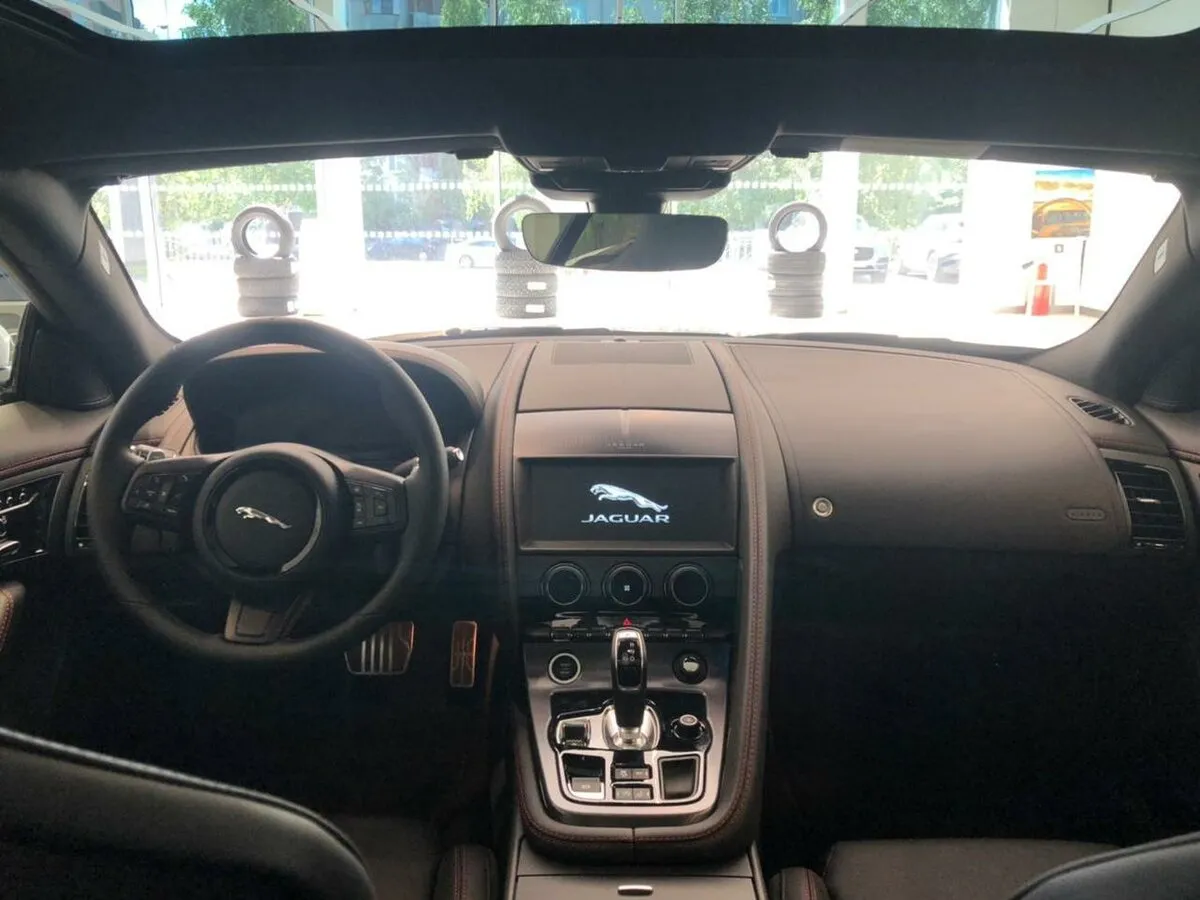
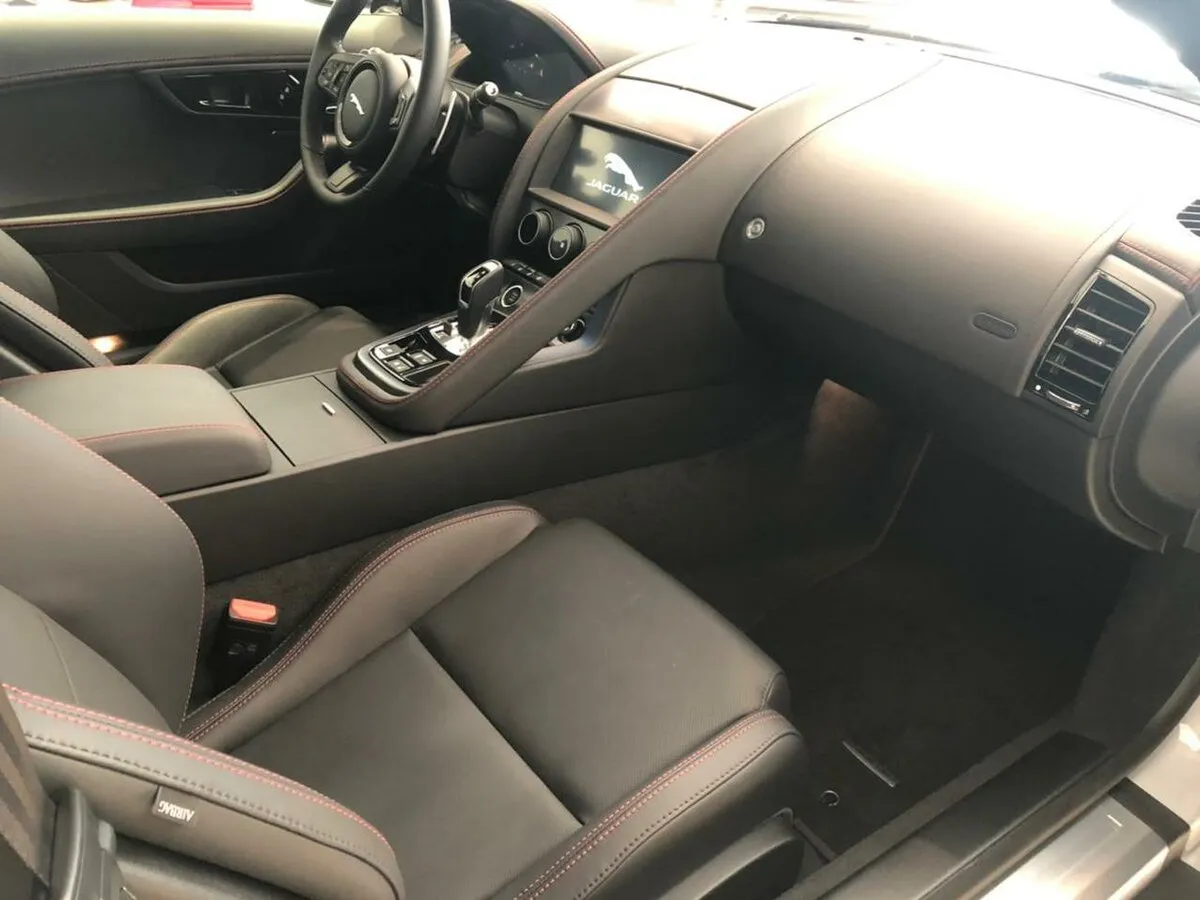
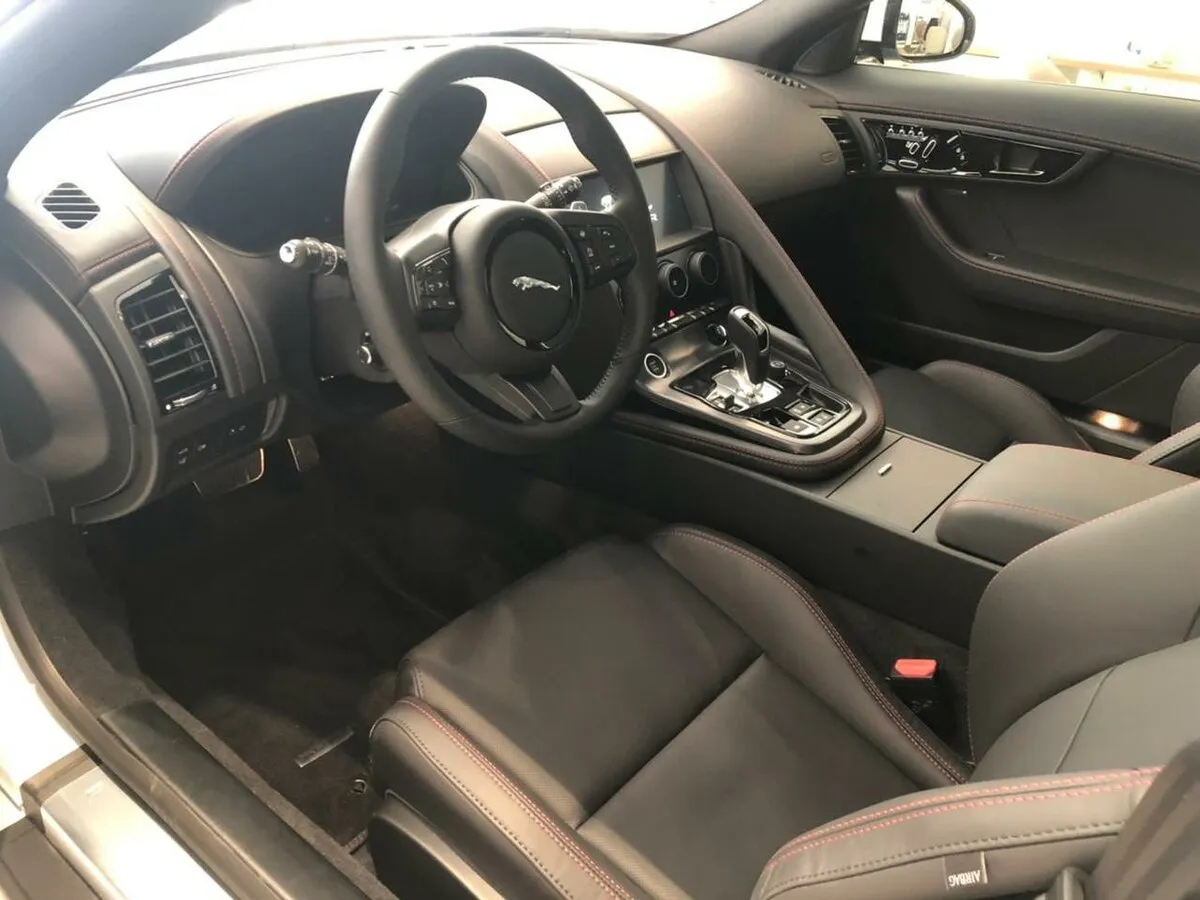
The F-Type's cabin is already among the most beautifully resolved in the segment — the floating centre console, the air vents that rise when the ignition is engaged, the Windsor leather seats. But factory trim grades leave room for personalisation, and the right interior upgrade transforms a sports car into a bespoke object.
Leather Retrim
Full Nappa leather retrim in a custom two-tone specification — say, Jet Black bolsters with Ivory centre inserts, or British Racing Green with champagne stitching — costs between 4,000 and 8,500 EUR depending on scope and hide grade. Recommend Muirhead Scottish leather for authenticity; the same source used by luxury watchmakers for strap projects. Key surfaces: seats (front and rear), door cards, dashboard top roll, centre console sides, and steering wheel rim.
Alcantara Trim Package
Alcantara headliner replacement is the single most impactful interior visual upgrade, reducing perceived interior noise by several decibels and adding a motorsport reference that works in both coupe and convertible. Steering wheel rims wrapped in perforated Alcantara improve wet-grip feel significantly. Alcantara seat inserts (centre panel replacement only) are the most common partial-retrim choice.
Carbon Fibre Interior Trim
Replace the factory Piano Black or Aluminium trim inserts with pre-preg carbon fibre. Dashboard centre surround, door card inserts, gear selector surround, and paddle shifters are the key pieces. Mansory offers a complete interior carbon package for the F-Type that includes carbon-wrapped HVAC bezels and door sill kick plates. Weight saving is negligible — this is purely an aesthetic and tactile upgrade, and it is the correct one.
Why Tune Now — The Modern Classic Window
The Jaguar F-Type built its last car in 2024. Production has ended, the order books are closed, and Jaguar is in the middle of repositioning itself as an ultra-luxury electric brand. The F-Type will never be made again.
That fact changes the economics of ownership — and the economics of tuning — in ways that are now becoming clear in 2026. Here is the case for tuning your F-Type this year specifically.
Residuals are stabilising. In the 12–18 months immediately following a model's discontinuation, used values oscillate. Buyers are unsure whether to treat the car as a depreciating commodity or an appreciating asset. By mid-2026, that uncertainty is resolving: low-mileage SVR coupes and V8 convertibles are holding their values, and any meaningful service history or tasteful modification record is now a net positive rather than a negotiating deduction. A tastefully tuned, documented F-Type commands a premium in private sales.
Parts supply is at its peak. OEM and OES parts availability for a freshly discontinued model is at its historical maximum right now. Supercharger rebuild kits, intercooler cores, ZF transmission fluid, and factory body panels are all either in dealer stock or available through the global Jaguar parts network. In five years, that landscape changes. The time to fit a Stage 2 kit with genuine, catalogued ancillary parts is today — not when the sourcing becomes an exercise in creativity.
The tuning ecosystem is mature. Prior Design's F-Type wide-body kit has been in production long enough to have fitment data across multiple build variants. Capristo and Quicksilver have dialled their exhaust maps for both the pre-facelift and post-2017 exhaust valve systems. ECU specialists hold extensive maps for every F-Type engine variant. You are not a pioneer paying premium prices for experimental work — you are the beneficiary of a decade of development.
The modern classic premium is arriving. The E-Type's status was confirmed roughly ten years after production ended. The F-Type, given its technological sophistication, global fan base in the UK, Germany, and USA, and its role as the last great Jaguar combustion sports car, is on a faster trajectory. Invest in a well-specified, well-documented tuned F-Type now, before the market fully recognises what it has lost.
The window for affordable enhancement of a future icon is open. It will not stay open indefinitely.
FAQ
Does the famous F-Type exhaust crackle survive aftermarket remapping?
Yes — and it gets better. The factory over-run fuel delivery map that creates the characteristic pop-and-crackle on the overrun is preserved and typically enhanced in Stage 1 and Stage 2 remaps. Capristo and Quicksilver systems amplify the acoustic output of this map significantly. In some builds, customers request a slightly reduced crackle map for daily use — this is a configurable parameter in any reputable remap. The short answer: the F-Type's vocal character is not diminished by tuning. It is amplified.
Is the F-Type suitable for daily use after a Stage 1 tune?
Completely. A Stage 1 ECU remap on the F-Type's 5.0L V8 does not alter drivability, idle quality, or fuel economy in normal driving — the only difference is in the upper half of the rev range and boost response under hard acceleration. The factory emissions systems (catalytic converters, EGR) remain intact. The car passes standard MOT/TUV emissions testing. Reliability is unaffected on a properly calibrated remap from a reputable tuner with F-Type-specific map experience.
Will the Prior Design wide-body kit fit both the coupe and the convertible?
Prior Design produces separate kits for the coupe and convertible body styles. The rear arch geometry differs between the two, and the convertible's structural reinforcement around the rear haunches requires a slightly different mounting approach for the overfenders. Both kits are available, and Hodoor.world can advise on fitment specifics for your exact variant and model year. Note that the 2017+ facelift variants have minor front bumper dimension differences — Prior Design has updated their kit accordingly, so always specify your build year when ordering.
What is the best wheel size for an F-Type with the Prior Design wide-body kit?
With the Prior Design kit fitted, the optimal fitment is 20x9.5J ET42 front and 20x10.5J ET35 rear, running 255/30 R20 and 295/25 R20 tyres respectively. This fills the extended arches properly without rubbing under compression. Without the wide-body kit, the factory 20x9.5J ET40 all-round fitment is correct for most forged upgrades. Always verify actual hub-to-arch clearance with your installer before finalising offset specifications, as individual car condition and ride height affect fitment.
Build your Jaguar F-Type. Now, while the parts are plentiful.
Full packages available: body kits, forged wheels, ECU tuning, exhaust systems, interior retrim. Worldwide delivery. Expert consultation included.
Contact Hodoor — [email protected]