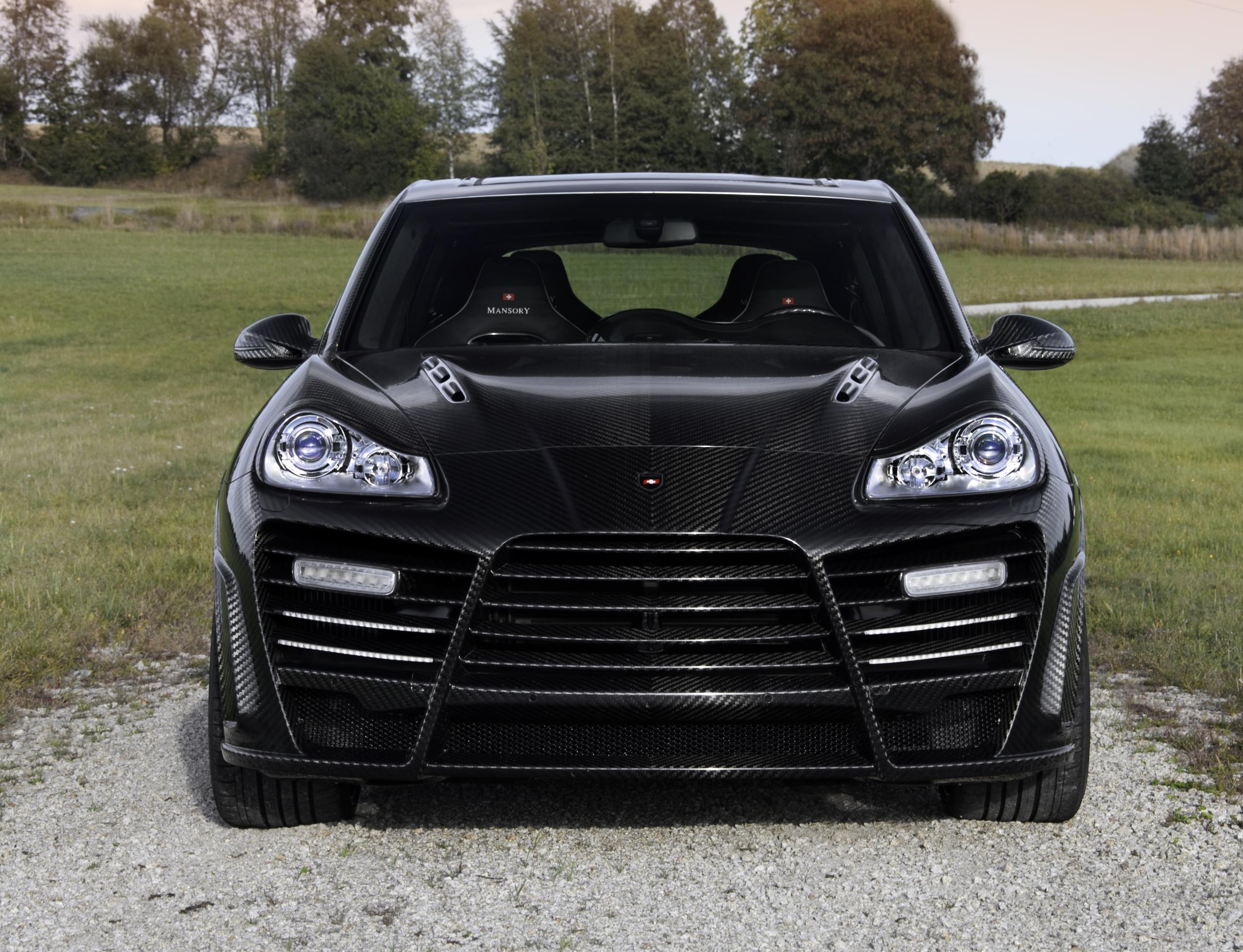
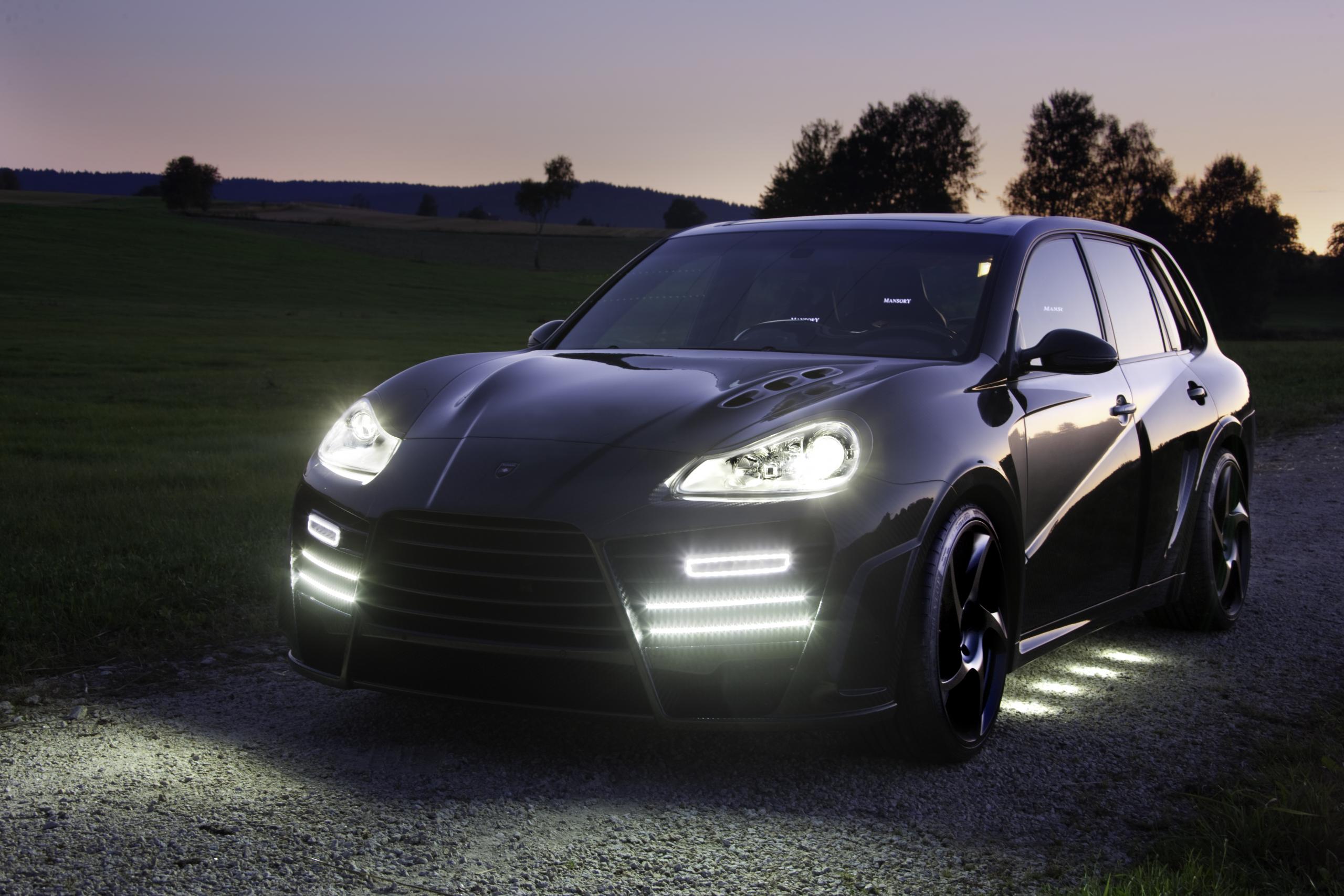
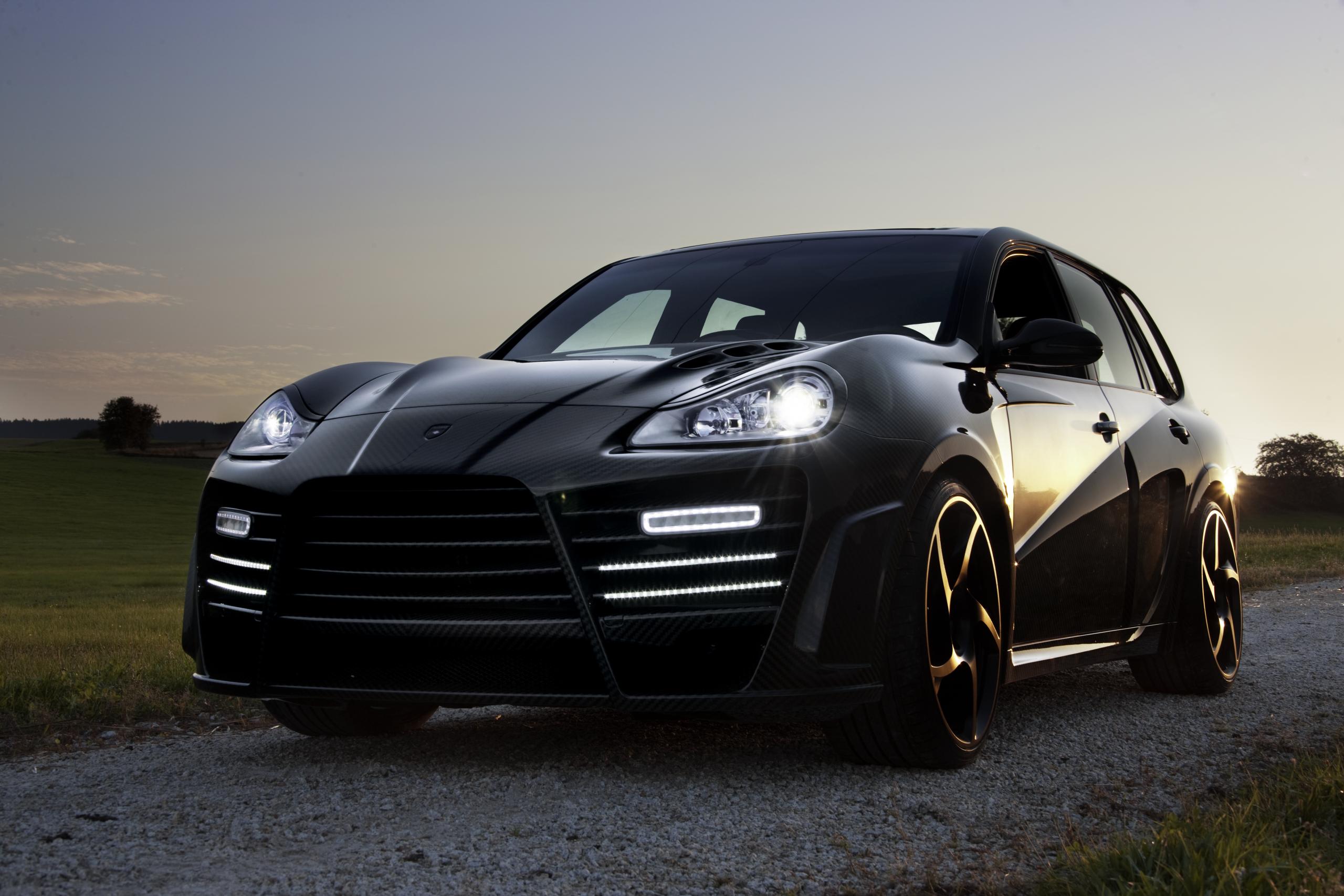

Mansory Carbon Fiber Body kit set for Porsche Cayenne Chopster


MANSORY CHOPSTER for the PORSCHE CAYENNE — a Two-Door Coupe Conversion of the First-Generation 957/958 Cayenne, and Possibly the Most Notorious Coachbuilt Programme in Mansory's History
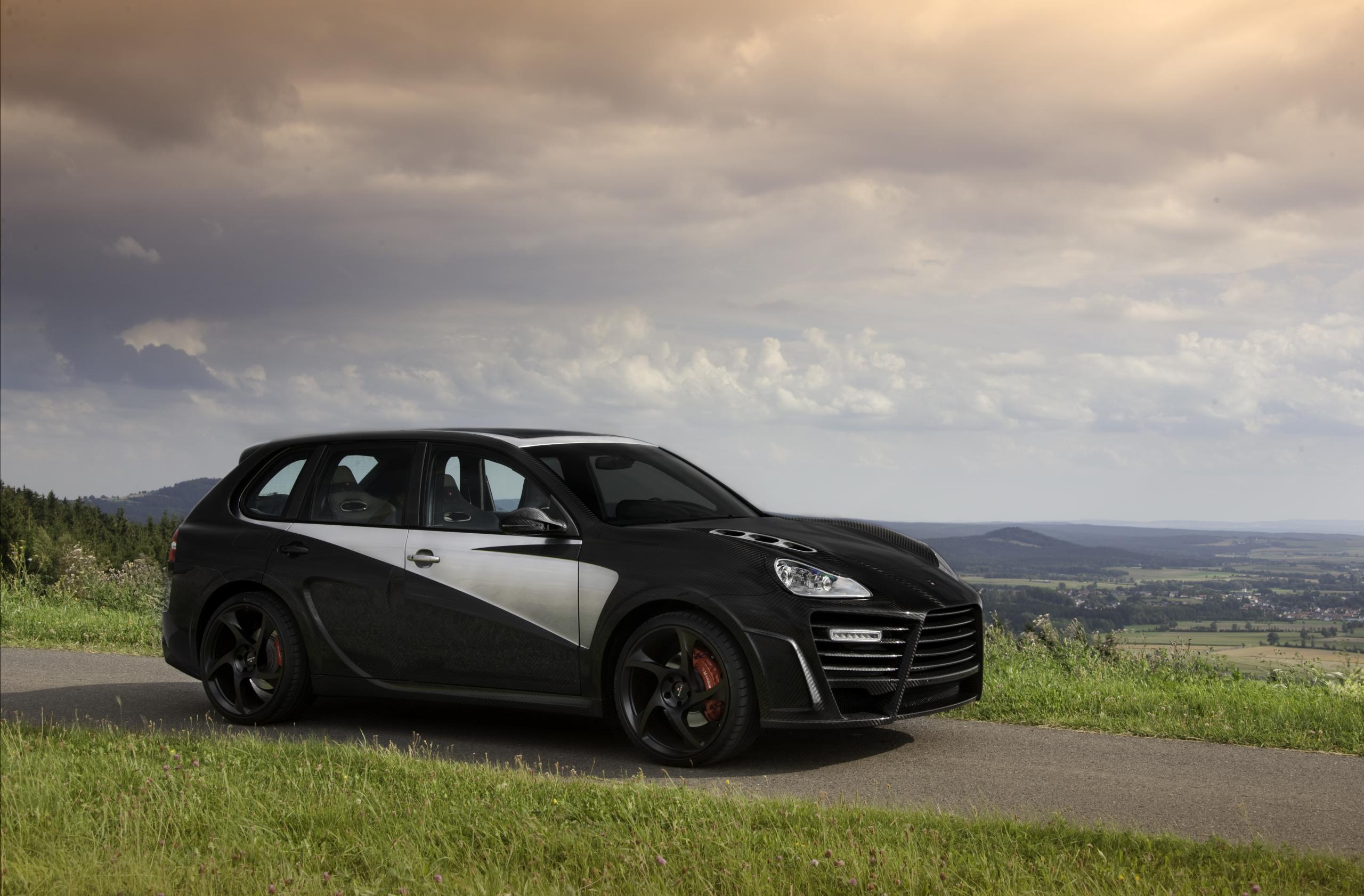
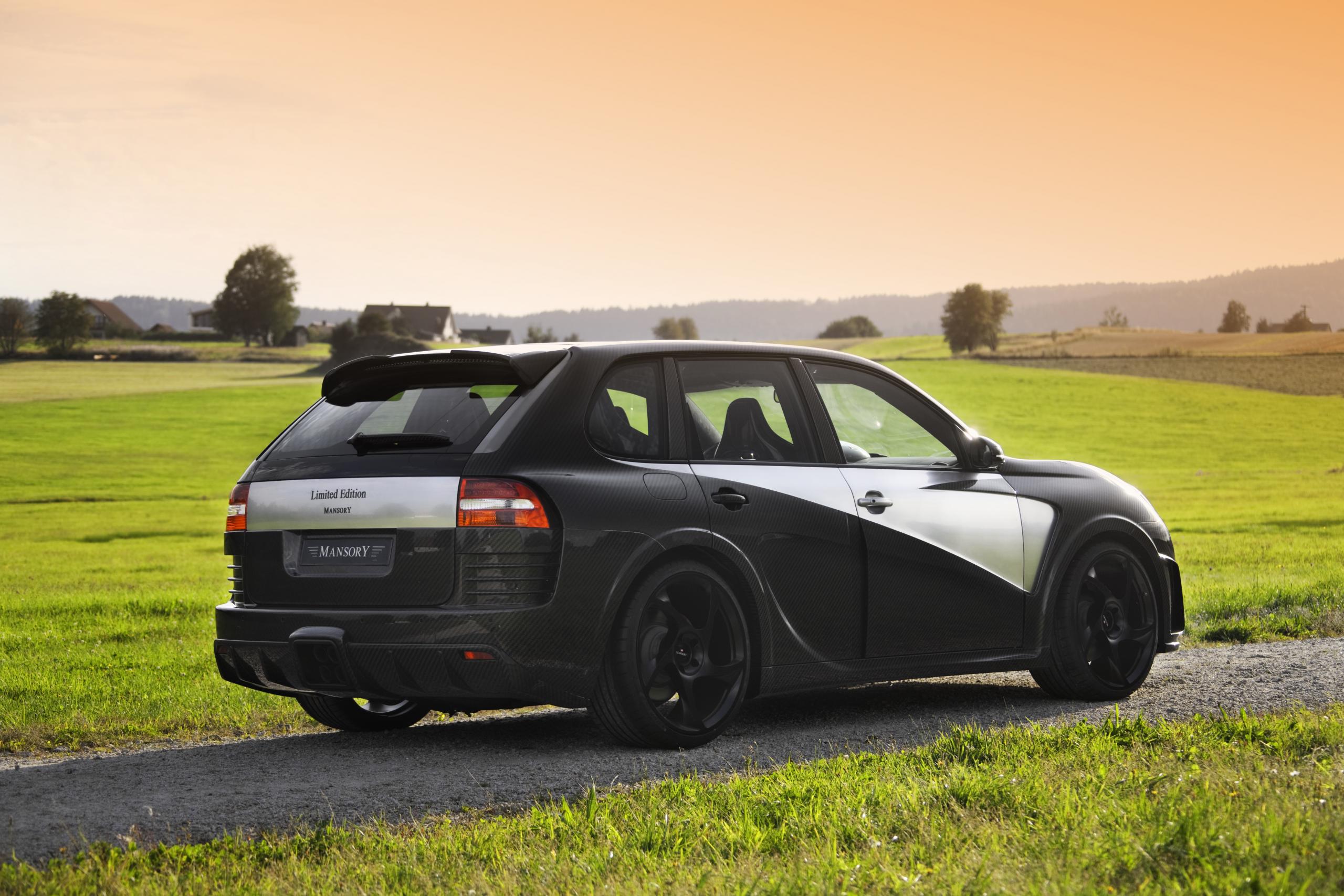
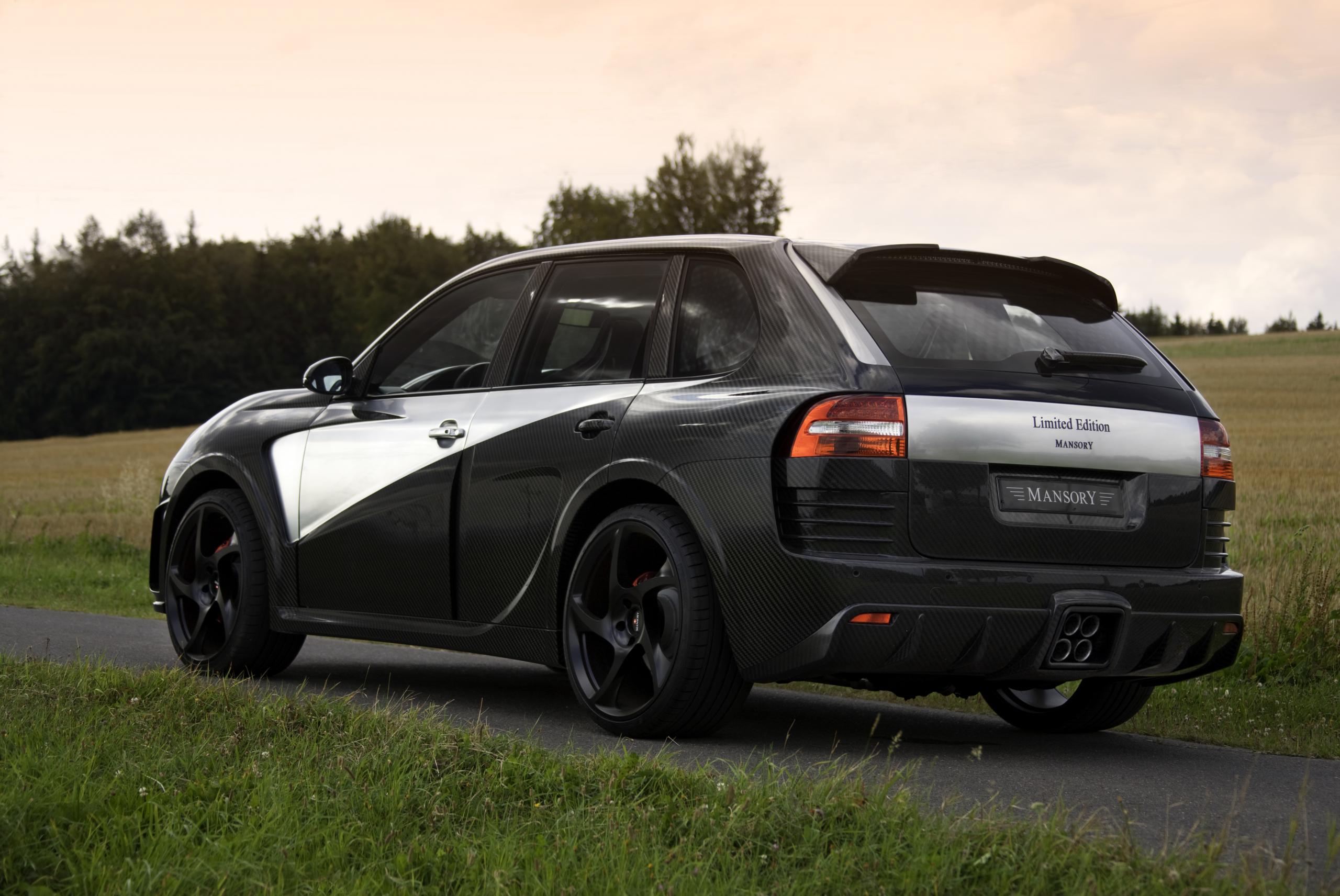
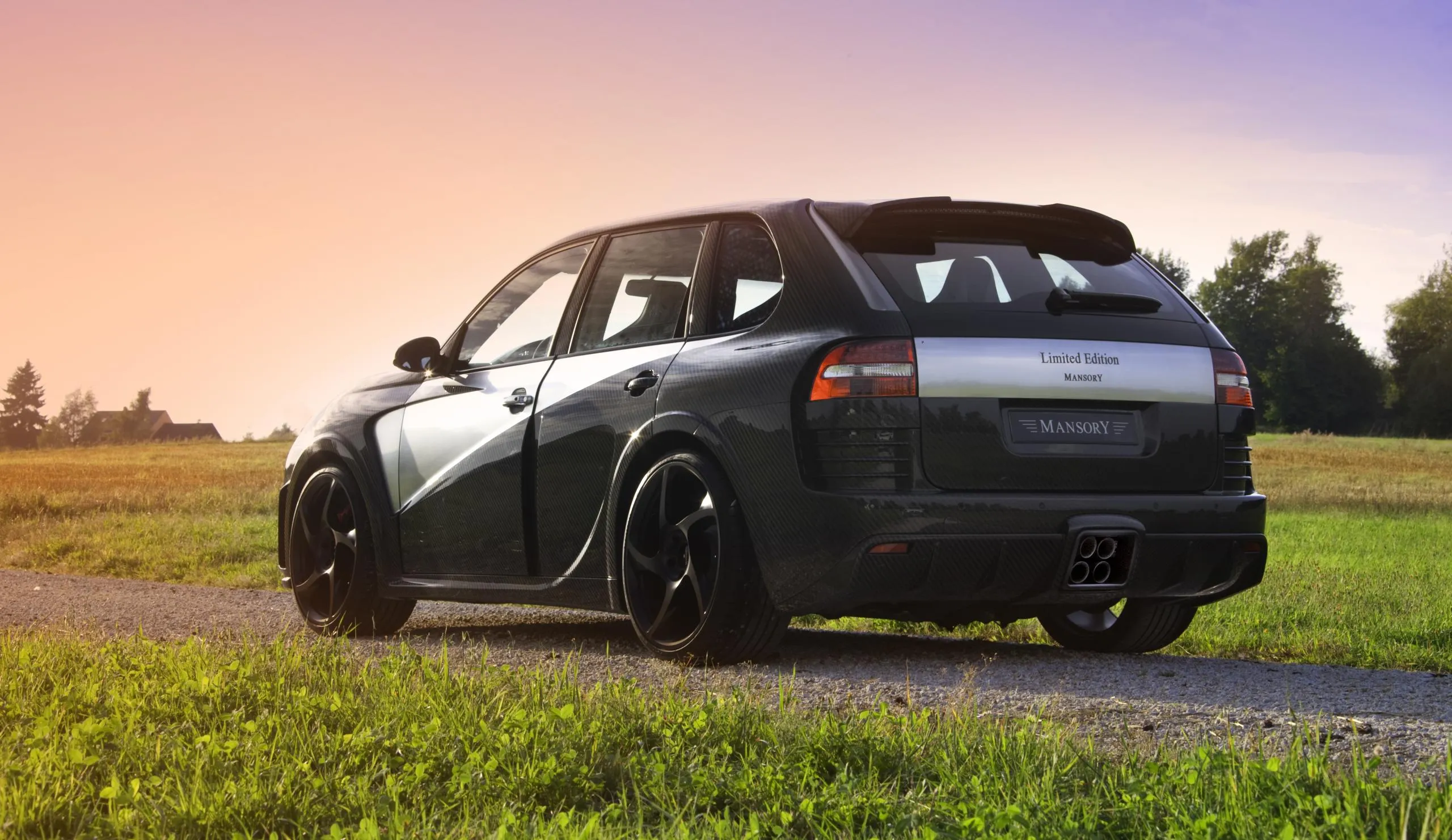
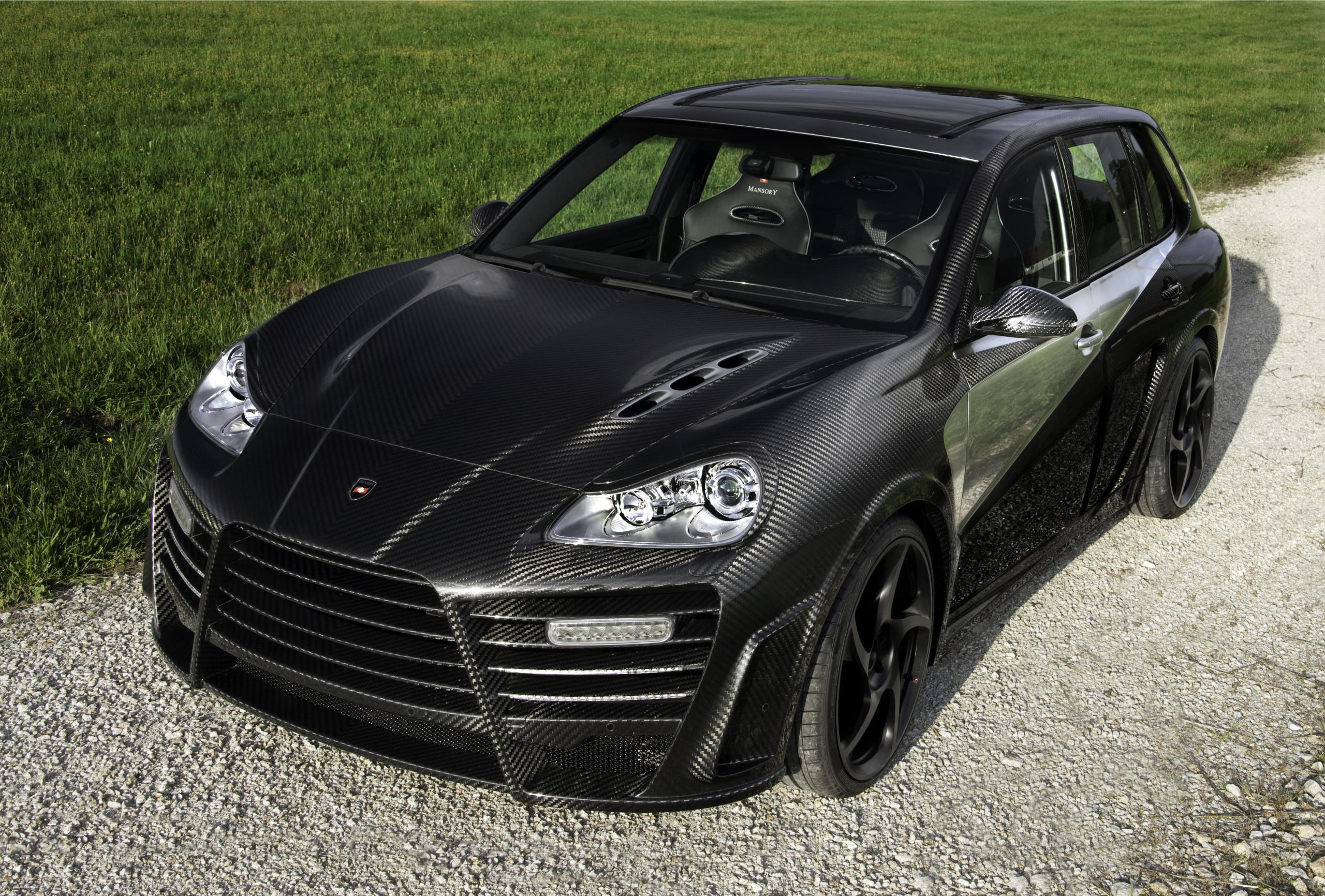
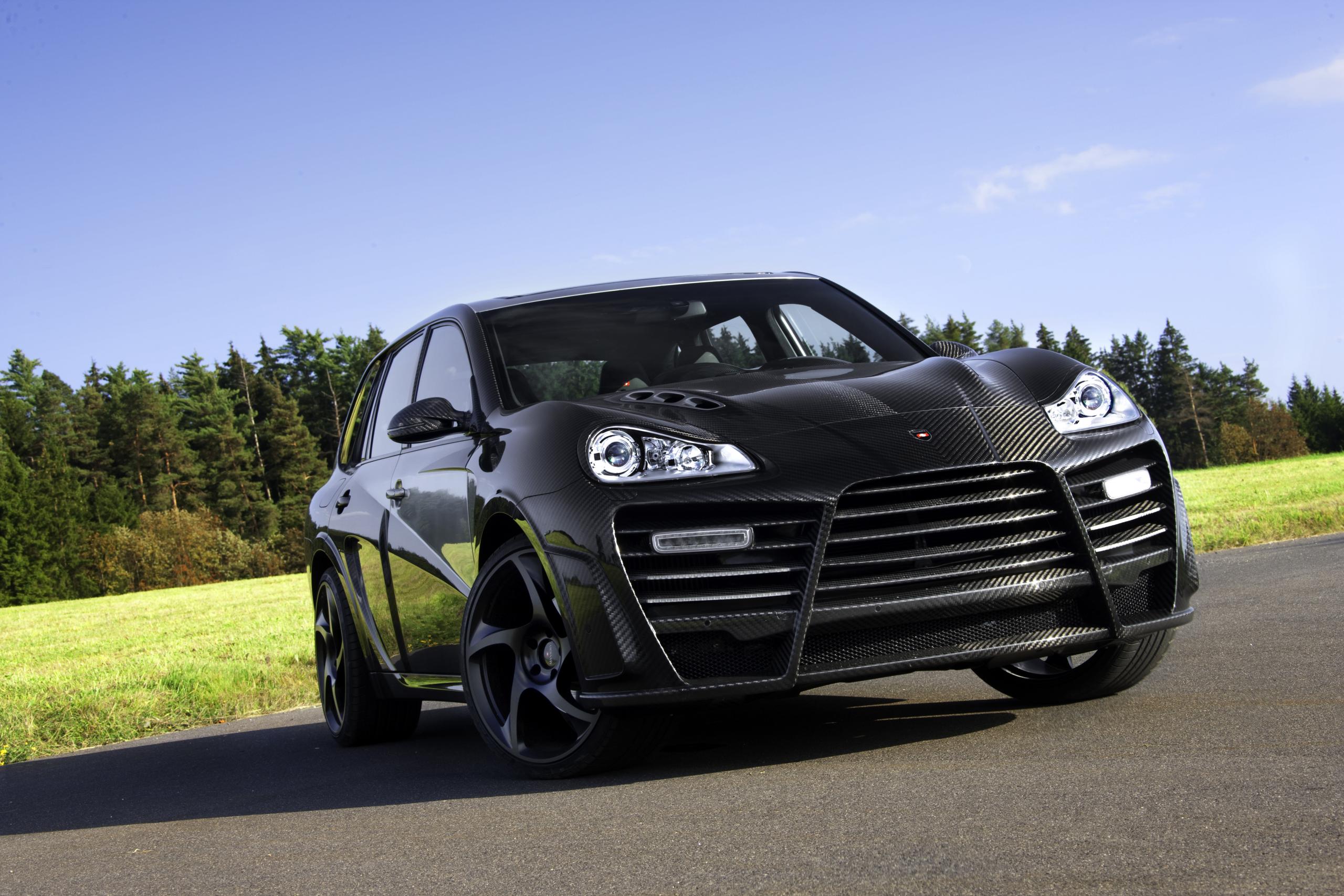
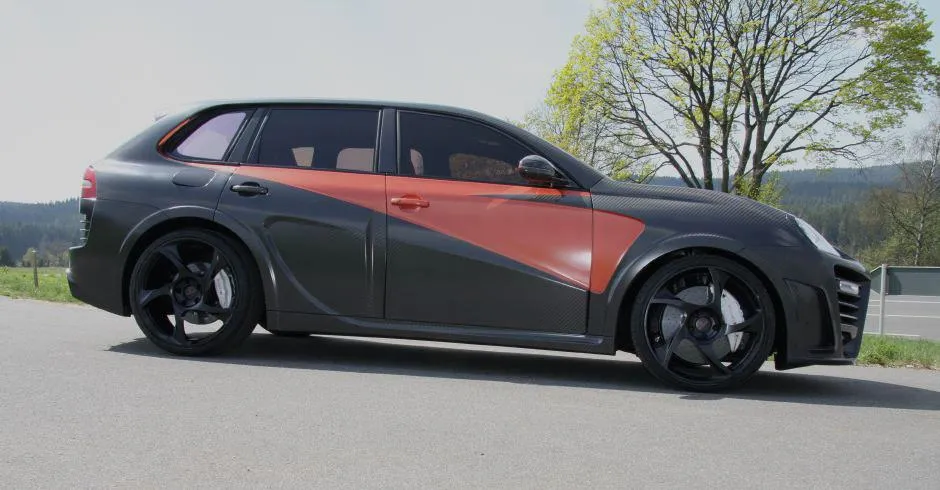
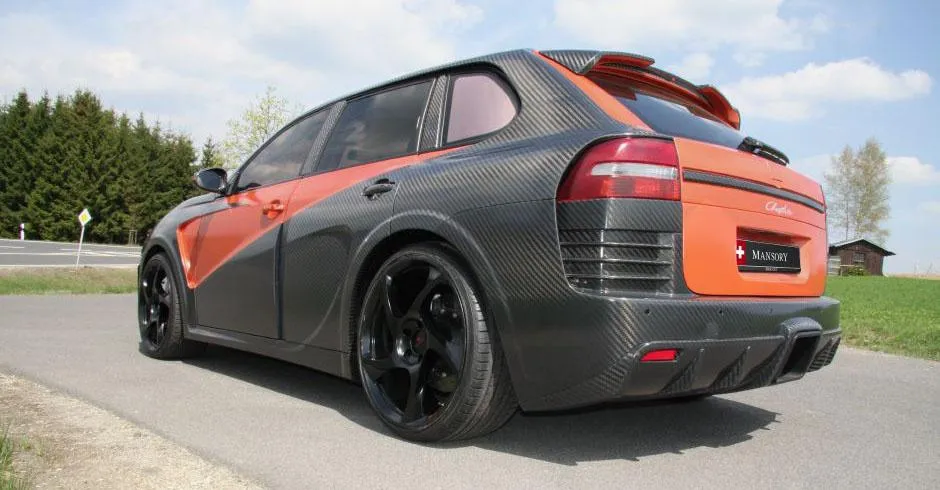
The Mansory Chopster is not a body kit in any normal sense of the term. It is a structural coachbuilt re-architecture of the first-generation Porsche Cayenne: the four-door SUV is shortened into a two-door coupe, with the rear passenger doors eliminated, the B-pillar relocated rearwards, and the roofline cut down. Carbon-fibre body work is then layered over the new geometry. The original Chopster brief was released circa 2008-2010 on the 957 facelift Cayenne (and, in a small number of cases, on the early 958 generation that launched in 2010), and Mansory have never re-issued the conversion on the later 92A or 9YA Cayenne platforms. Believed worldwide population: approximately 12-18 examples. Hodoor catalogues this programme for completeness — commissioning a new Chopster in 2026 is effectively a custom restoration brief on a donor first-gen Cayenne, not a bolt-on tuning order.
The Chopster phenomenon — what it actually is
To understand why the Chopster is treated as a separate category in the Mansory archive, the conversion has to be itemised. A standard wide-body kit is bolt-on or bonded carbon panelwork over the factory bodyshell — fenders, bumpers, skirts, bonnet, decklid. The Chopster is something else: the factory four-door Cayenne bodyshell is cut. The rear passenger doors are removed entirely. The B-pillar — the structural pillar that sits between the front and rear door apertures — is relocated rearwards by approximately the length of one rear door, so that a single elongated front door now fills the entire side-aperture between the A-pillar and the new B-pillar. The roof is shortened, with reports of around 250 mm cut from the rear of the roof structure. Sill and floor reinforcements are added to recover torsional rigidity lost when the original B-pillar was cut. The result is a five-door SUV reduced to a three-door coupe-SUV. This is the sort of operation that Bentley Continental shooting-brake conversions or 1990s coachbuilt Range Rovers required — it is not within the scope of any normal aftermarket programme. The Chopster is the Mansory programme that broke the rule; it is not a body kit, it is a coachbuilt re-architecture, and treating it as a body-kit product page is itself a categorisation choice.
Two-door Cayenne conversion ethics
A two-door Cayenne raises questions that an Urus Venatus or a GLE Coupe widebody never raises. Crash structure: the original Cayenne bodyshell was homologated as a four-door SUV with a B-pillar at a specific position, contributing to side-impact stiffness and roll-over resistance. Relocating the B-pillar rearwards changes the side-impact load path. Mansory's structural engineering for the Chopster involves reinforced sill structures, additional floor cross-members and a modified B-pillar that recovers stiffness — but a converted Chopster is not, and cannot be, factory-homologated. It is a coachbuilt one-off in the legal sense. In most jurisdictions the converted vehicle requires individual single-vehicle approval (SVA in the UK, einzelabnahme in Germany, equivalent processes elsewhere) and may not be eligible for type-approved registration. Insurance is also a bespoke conversation. Commissioning a Chopster therefore involves accepting that the resulting car is a coachbuilt vehicle and not a tuned production Cayenne — the legal and insurance status changes.
Carbon kit components — what's structural vs cosmetic
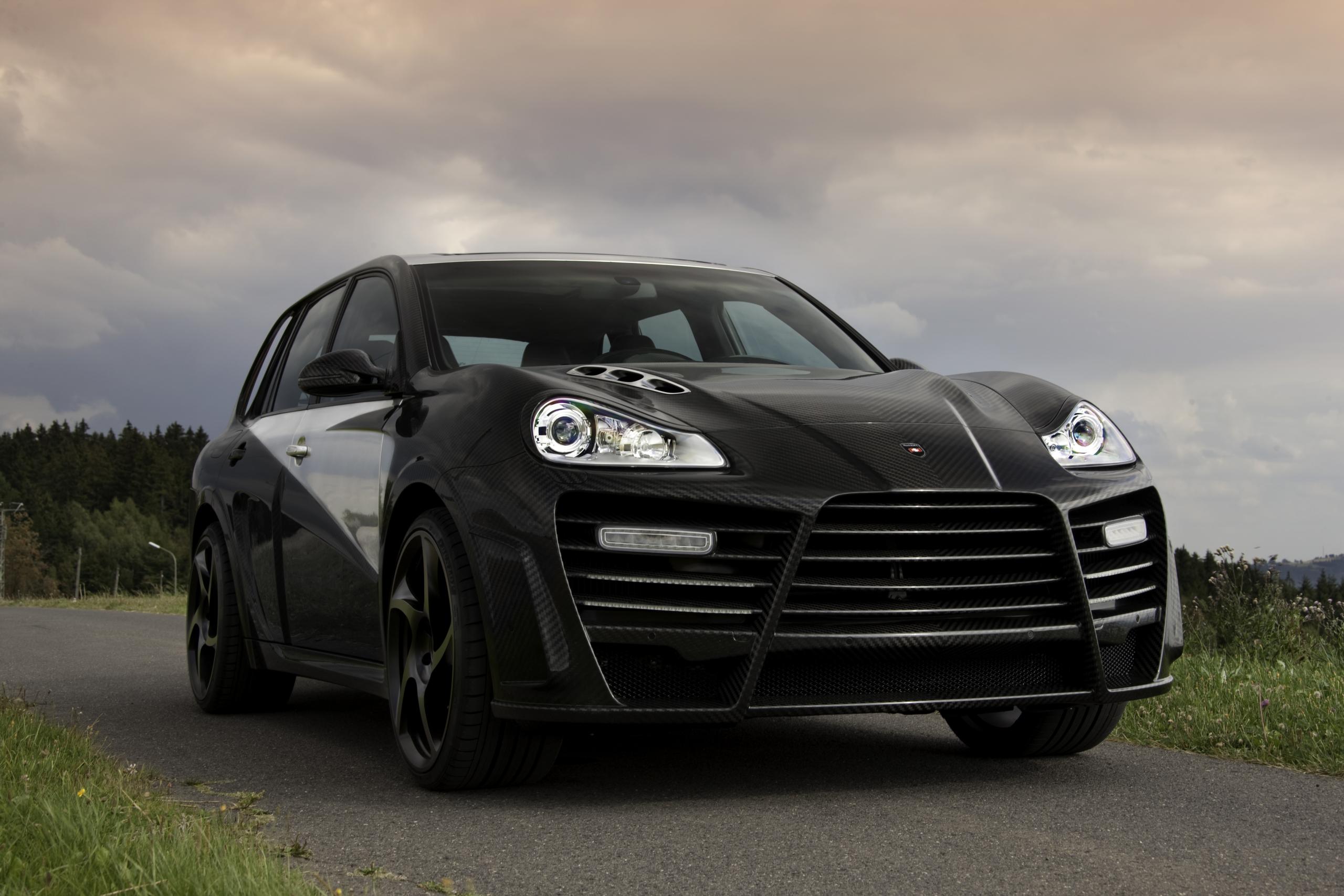
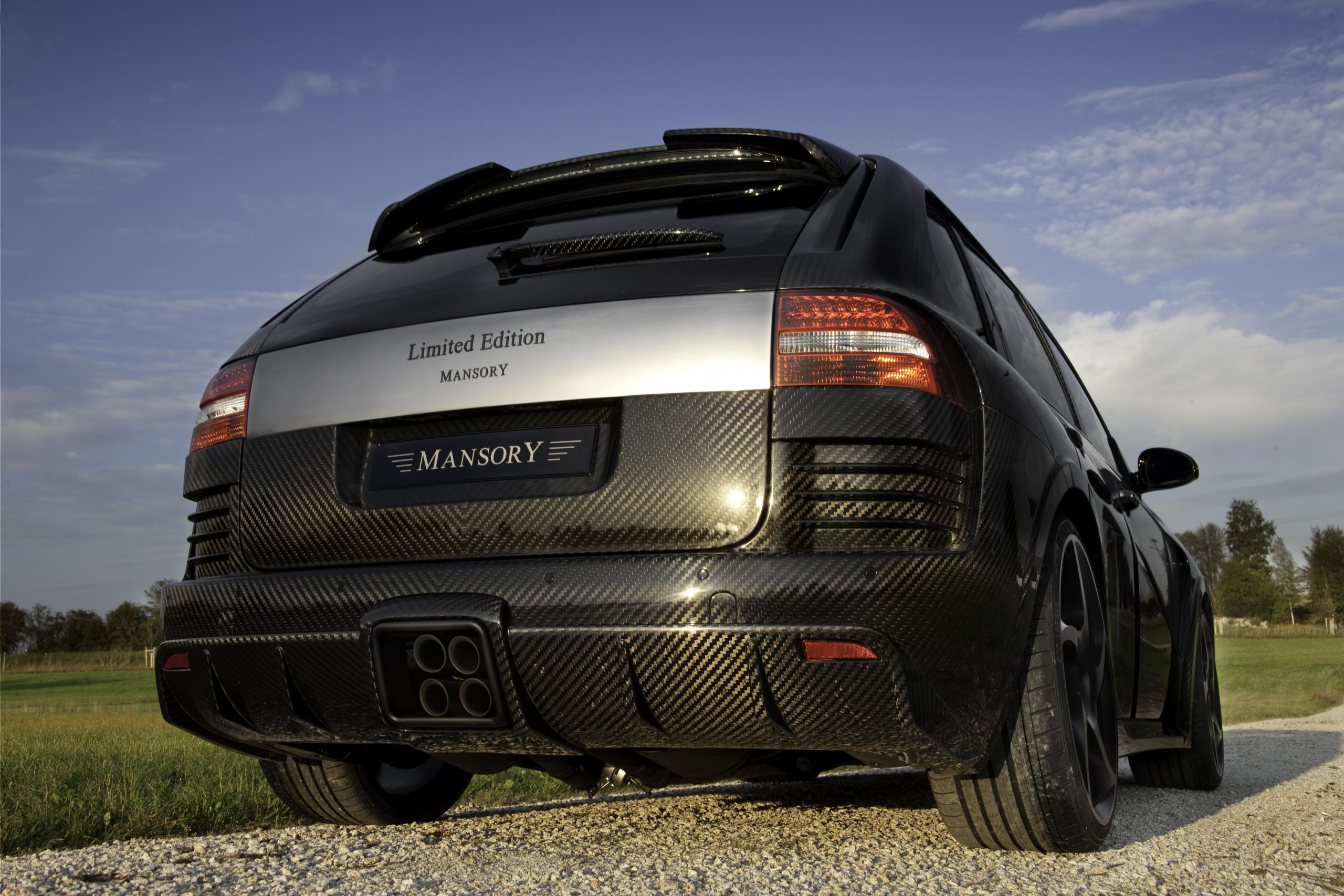
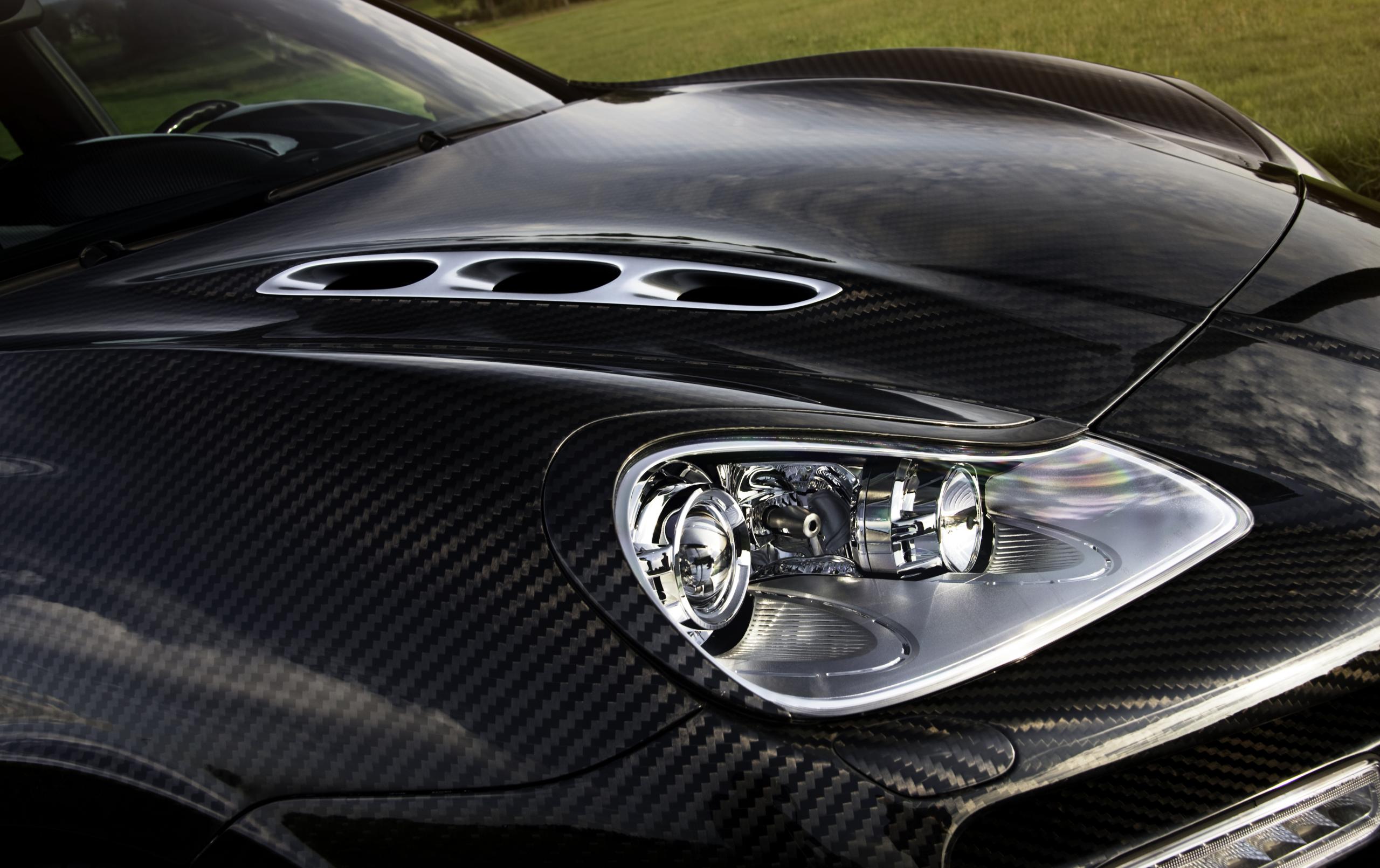
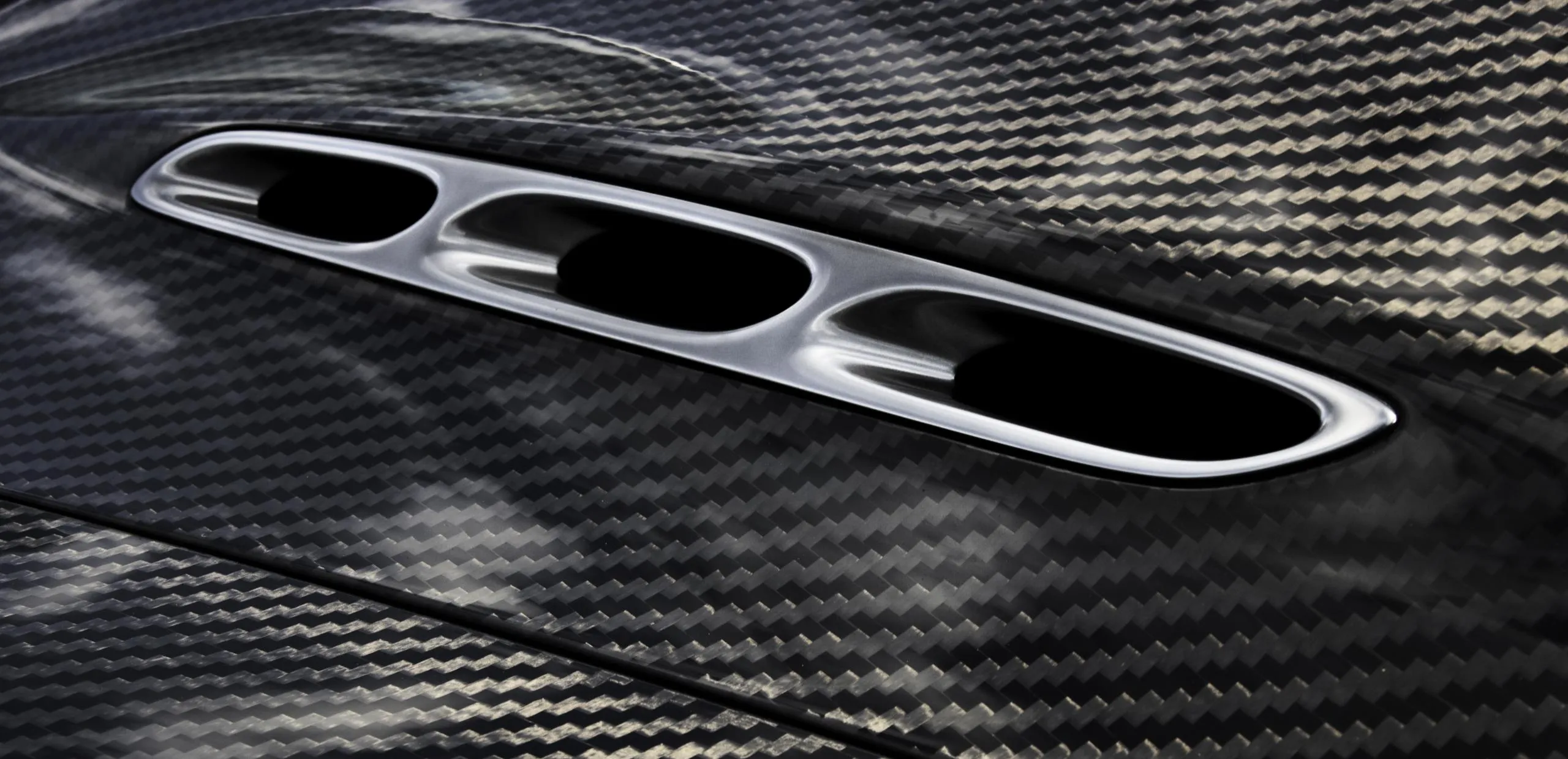
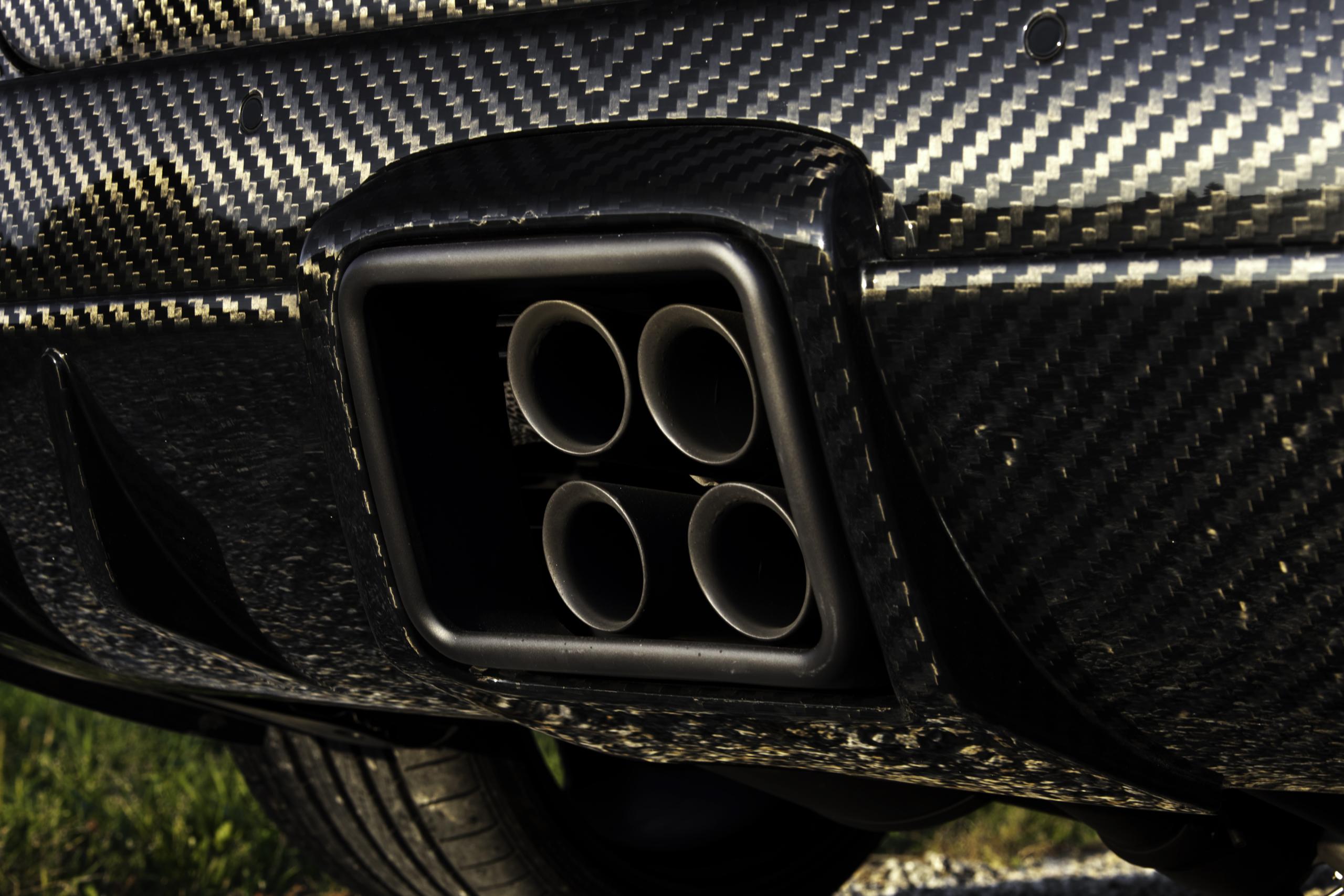
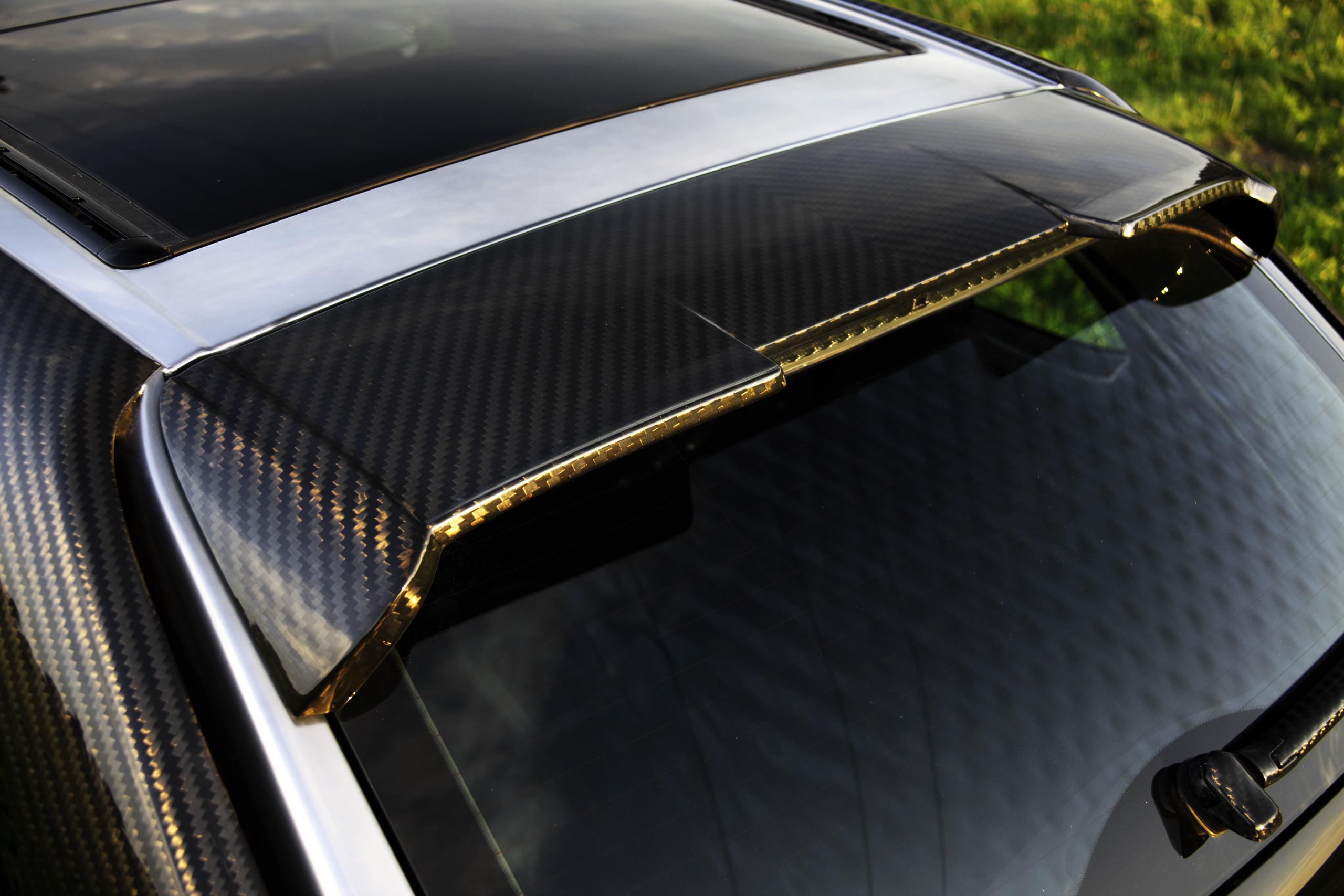
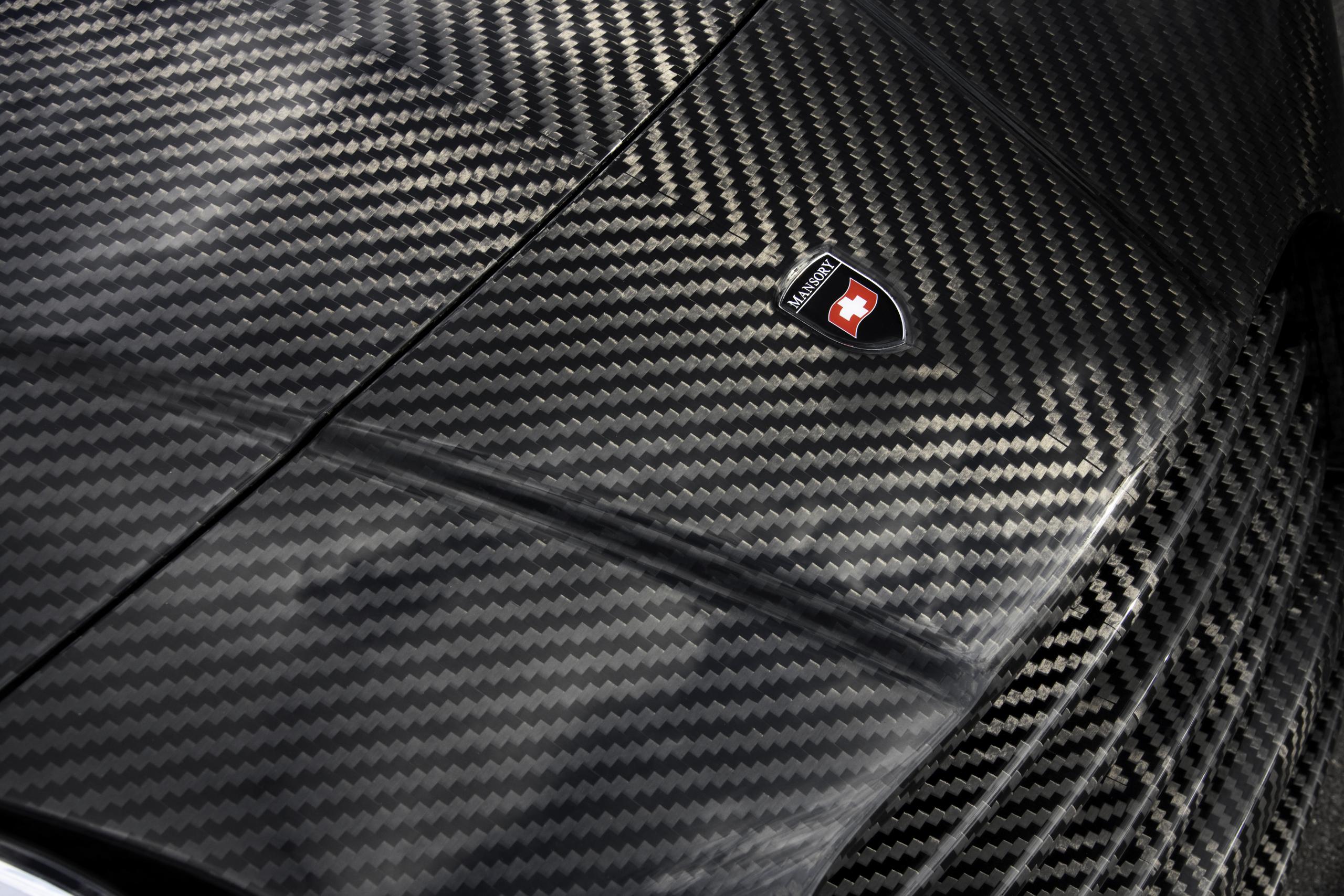
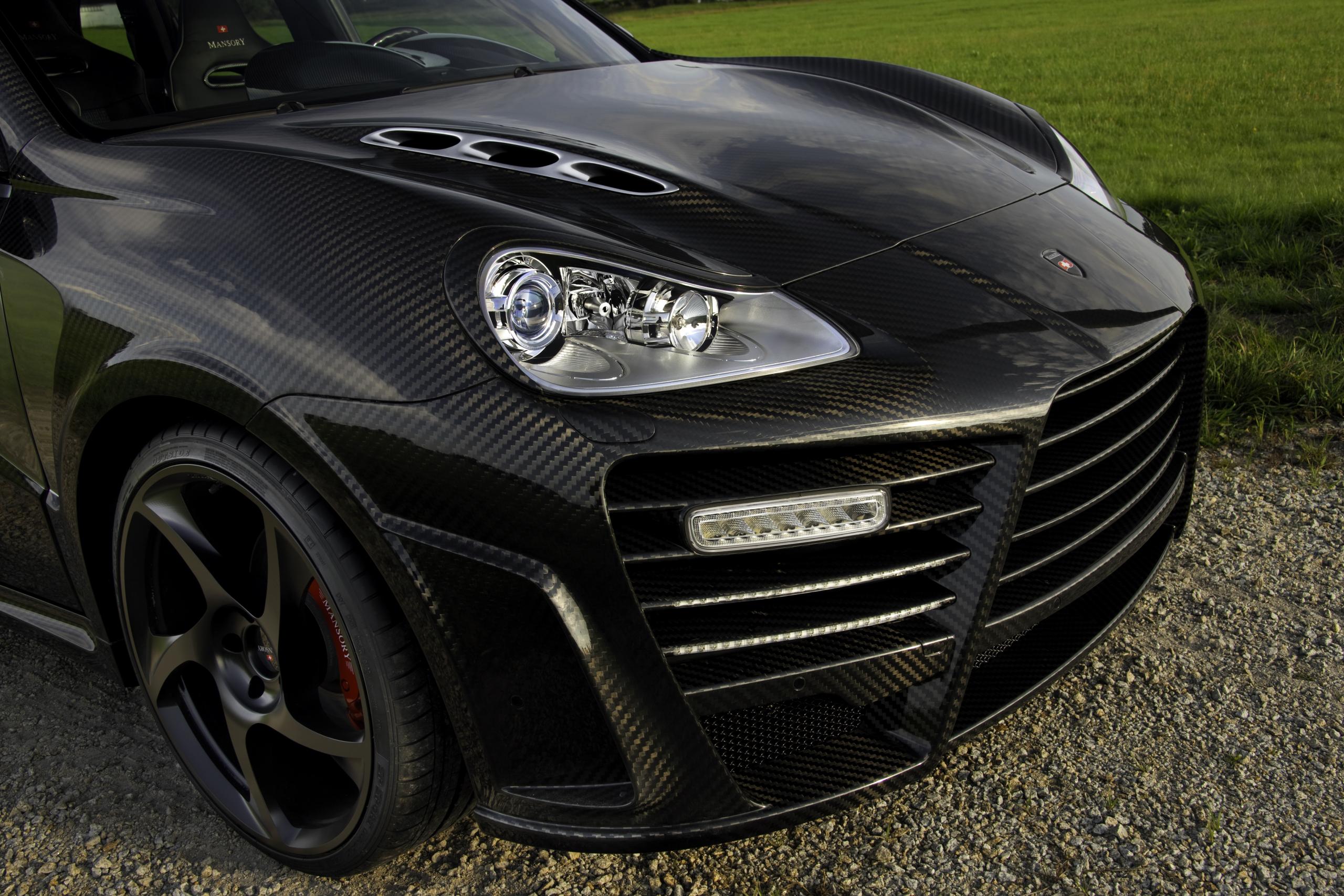
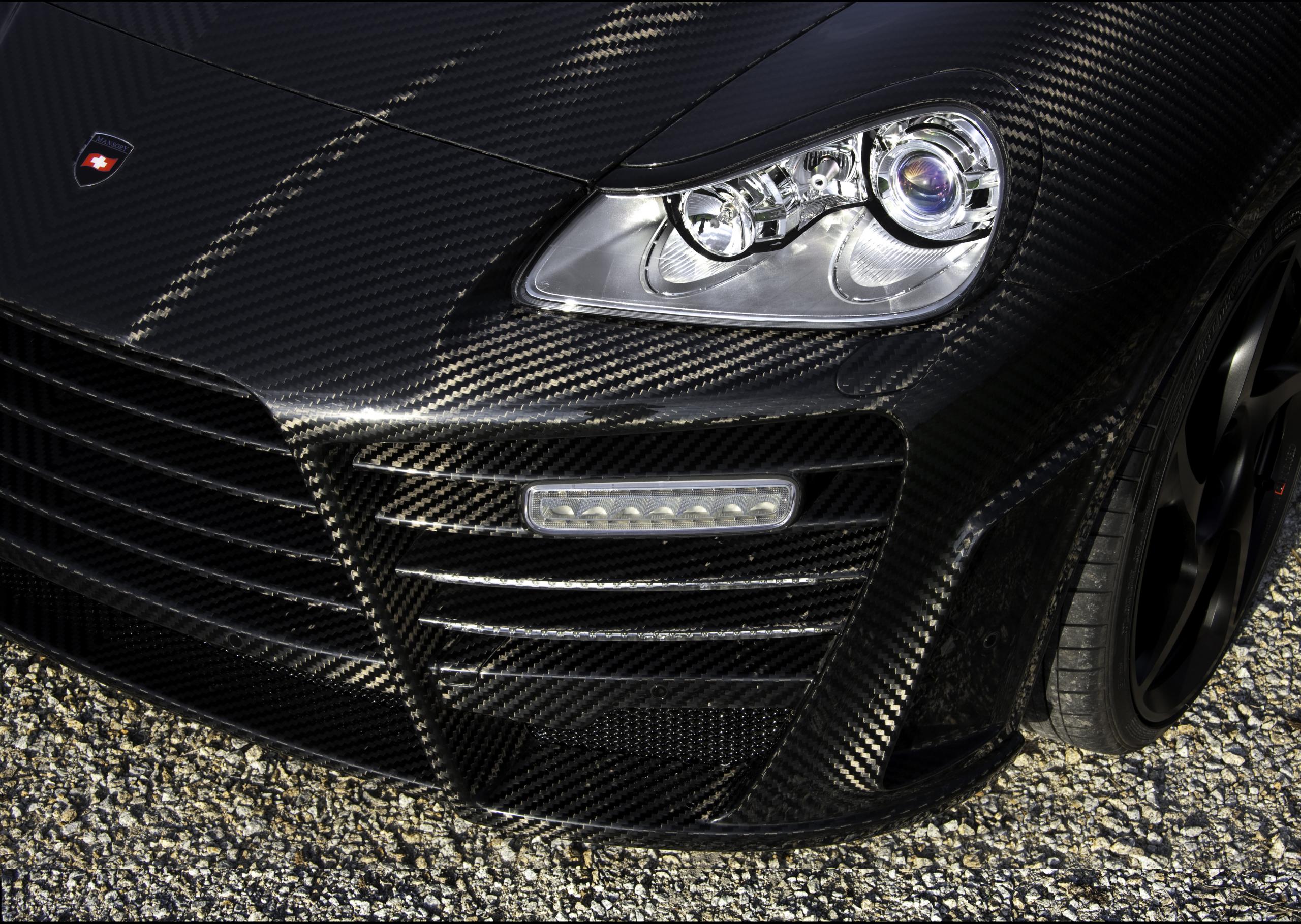
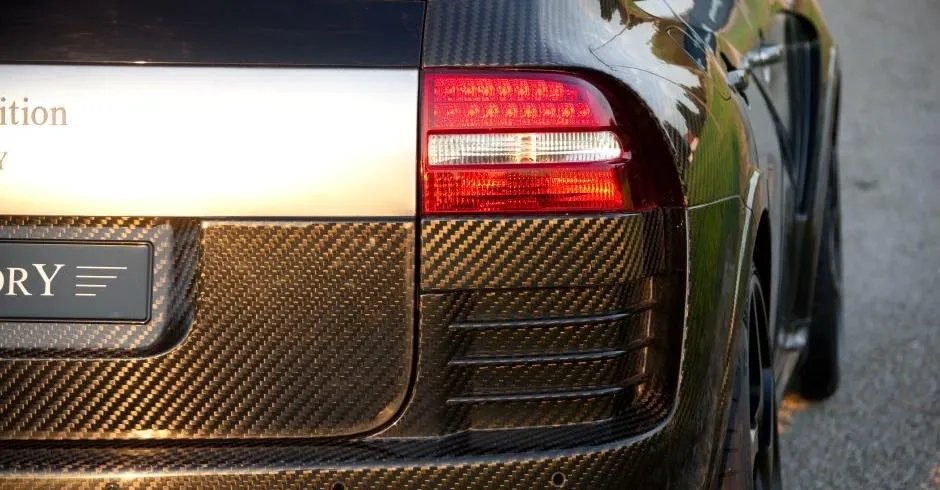
The carbon-fibre work on a Chopster falls into two distinct categories. The structural carbon — and to be precise, the structural work uses a mix of carbon, steel and aluminium reinforcement under the visible carbon panel — covers the relocated B-pillar trim, the shortened roof panel, the new full-length single door per side and its inner reinforcement, the reinforced sill claddings, and the new rear-quarter panel that fills the area where the rear door used to be. The cosmetic carbon is the more familiar Mansory wide-body inventory layered onto the new coupe geometry: replacement carbon front bumper with three-piece splitter and enlarged intakes; carbon bonnet with heat-extraction louvres; carbon front and rear-fender widebody extensions; deep carbon side skirts; replacement carbon rear bumper with central diffuser and dual-exit Mansory exhaust bezels; carbon rear-roof spoiler shaped for the new shortened roof; carbon mirror caps. The structural carbon is what makes the Chopster a Chopster; the cosmetic carbon is what makes it visibly a Mansory.
957 vs 958 donor — the chassis confusion
There is persistent confusion about which generation of Cayenne the Chopster was built on. The first-generation Cayenne is the 9PA chassis code. The 9PA pre-facelift launched in 2002. The 9PA facelift, introduced in 2007 and produced through 2010, is commonly referred to as the 957 in informal usage. The second-generation Cayenne — chassis code 92A, often informally called the 958 — launched in 2010. Mansory's original Chopster brief was developed on the 957 facelift Cayenne (2007-2010), and the bulk of the known examples are 957-based. A small number of Chopster commissions were carried out on the early 958/92A Cayenne shortly after its launch, but these are rarer. Donor variants used: Cayenne Turbo (4.8 L V8 twin-turbo, 500 hp on 957, 500 hp on 958); Cayenne Turbo S (550 hp on 957, 570 hp on 958); occasionally the Cayenne GTS (4.8 L V8 naturally-aspirated, 405 hp on 957). The Turbo and Turbo S are by far the most common donors. Mansory have never built a Chopster on the third-generation 9YA Cayenne (2017+) — the brief was retired with the second-generation platform.
Wheels — 22" forged on a Chopster
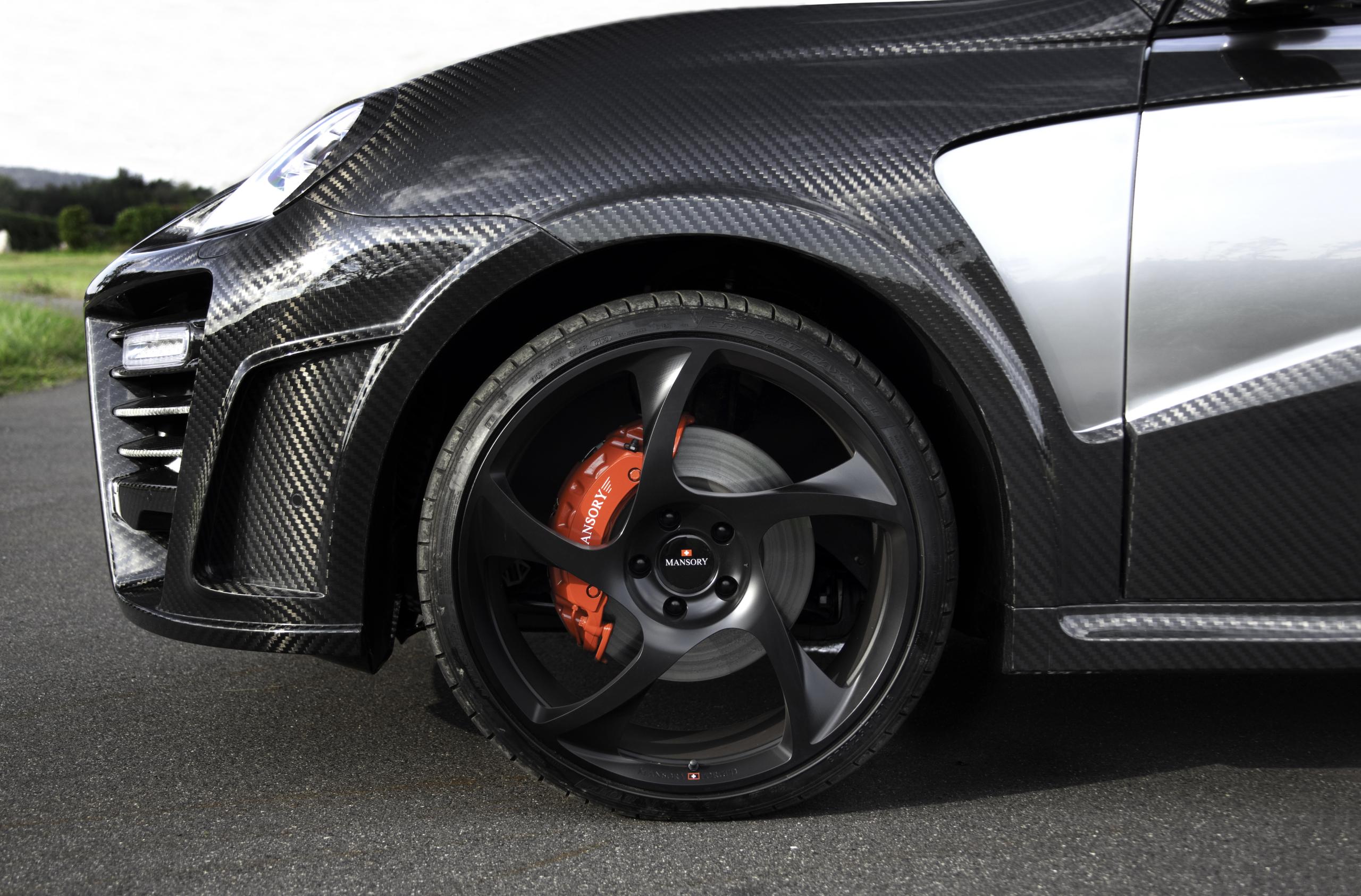
Factory first-generation Cayenne Turbo wheels: 19"-21" depending on package. Mansory Chopster fitment: 22" forged 5-bolt staggered. Patterns typically associated with the original Chopster: Mansory M.7 deep-concave multi-spoke, FM forged-Monoblock split-spoke. Tyre fitment: 295/30 R22 all round, occasionally staggered with a wider rear. Finishes: matte-black, glossy-silver, polished, two-tone with carbon centre. Centre caps with the Mansory crest. For new commissions in 2026, the wheel selection draws from the current forged-wheels catalogue: hodoor.world/collection/forgedwheels. The 22" 295/30 fitment is heavy and the load index must be matched to the kerb weight of the donor Cayenne Turbo (approximately 2 355 kg pre-conversion, modestly different post-conversion depending on the carbon and structural work).
Where the Chopster survives in 2026
The Chopster is geographically concentrated where coachbuilt one-offs were collected during the 2008-2012 window. Approximate distribution of the known surviving examples in 2026:
- Russia (CIS) — Moscow garages have a documented Chopster history, and the conversion sits within the broader CIS preference for unique and visually dominant SUVs. Reference: tsar body kits and wheels.
- China — a small number of Chopster examples are known in mainland China, mostly in private collections in Beijing and Shanghai. Reference: wide body kits and forged wheels in China.
- United Arab Emirates — Dubai and Abu Dhabi each have at least one known Chopster, predictable given the appetite of the 2008-2012 era for extreme one-off SUVs in the Gulf market.
- Germany — the home market of both Porsche and Mansory has retained at least two Chopster examples in private hands, including one believed to be in a museum-adjacent collection.
- Switzerland — Swiss collectors of coachbuilt Porsches have absorbed at least one Chopster, where the legal status of single-vehicle-approval coachbuilt cars is comparatively well-established.
Other markets — the United Kingdom, Saudi Arabia, the United States — may hold one or two further examples, but the worldwide population is small enough that the Chopster effectively functions as a known-by-name vehicle within the Cayenne enthusiast community.
Commission — for an out-of-production conversion
Commissioning a new Chopster in 2026 is not a tuning-shop transaction. The brief involves: sourcing a suitable donor first-generation Cayenne (957 facelift Turbo or Turbo S preferred, in good structural condition, ideally a low-mileage chassis); shipping the donor to a workshop capable of executing the structural conversion (B-pillar relocation, roof cut, door fabrication, sill reinforcement); commissioning the carbon panelwork; commissioning the wheels; arranging single-vehicle approval in the destination jurisdiction; and registering the result. Realistic timeline: 9-15 months from donor acquisition to road-legal car. Realistic budget: substantially higher than a standard Mansory wide-body programme on a current vehicle — the structural conversion alone is the larger share of the cost. Hodoor opens the conversation for clients interested in this kind of commission. Three channels are appropriate for a brief of this scope: email [email protected], WhatsApp +44 7488 818747, and Telegram @Hodoor_Bot — the Telegram channel is added here because a bespoke commission of this kind benefits from the more conversational back-and-forth that Telegram suits.
Mansory cross-references for cross-shoppers
- Carbon Fiber Body kit set for Porsche Cayenne 958
- carries an overlapping forged-wheel catalogue.
- Carbon Fiber Body kit set for Porsche Cayenne Coupe
- sits in the same Mansory programme tier on Hodoor.World.
- Carbon Fiber Body kit set for Porsche Cayenne 2019
- carries an overlapping forged-wheel catalogue.
Country-by-country order pattern — Mansory Porsche Cayenne Chopster
Order traffic for the Mansory Porsche Cayenne Chopster clusters around a handful of markets in 2026. Western European commissions concentrate in the United Kingdom and Austria, with periodic single-build orders out of Switzerland. On the African continent, Egypt, Nigeria and South Africa take occasional but consistent Porsche Cayenne Chopster commissions. The Gulf cluster — anchored by Saudi Arabia and Bahrain — accounts for a meaningful share of Porsche Cayenne Chopster orders. Whichever route applies to your build, transit is insured and customs paperwork is shipped with the crate.
FAQ — Chopster programme
Is the Chopster currently in production at Mansory? No. The original Chopster brief ran approximately 2008-2010 on the 957 (and early 958) Cayenne. Mansory have not re-issued the conversion on the third-generation 9YA Cayenne. New examples in 2026 would require a custom commission on a sourced first-generation donor.
How many Chopster examples exist worldwide? Approximately 12-18 are believed to exist. The exact figure is not published; the number reflects the known examples in private collections, auction records and enthusiast documentation.
Which donor Cayenne is best for a new Chopster commission? A 957 facelift Cayenne Turbo or Turbo S (2007-2010) in good structural condition, low to moderate mileage, with original drivetrain. The Turbo S 550 hp variant is the most commonly cited preferred donor.
Is a Chopster road-legal? It can be made road-legal in most jurisdictions through a single-vehicle-approval process (SVA in the UK, einzelabnahme in Germany, equivalent elsewhere). It is not type-approved as a series-production vehicle. Insurance is bespoke.
How does the structural conversion affect crash safety? The relocated B-pillar and the reinforced sill and floor structures are designed to recover stiffness lost when the original B-pillar was cut, but the converted vehicle is not factory-homologated for crash performance. Single-vehicle approval typically requires a static structural inspection rather than a full crash test.
Can the rear doors be re-added if the Chopster is later reverted? No, in any practical sense. The B-pillar relocation, the sill reinforcement and the new full-length door tooling are permanent modifications. A Chopster is a one-way conversion — that is part of its character.