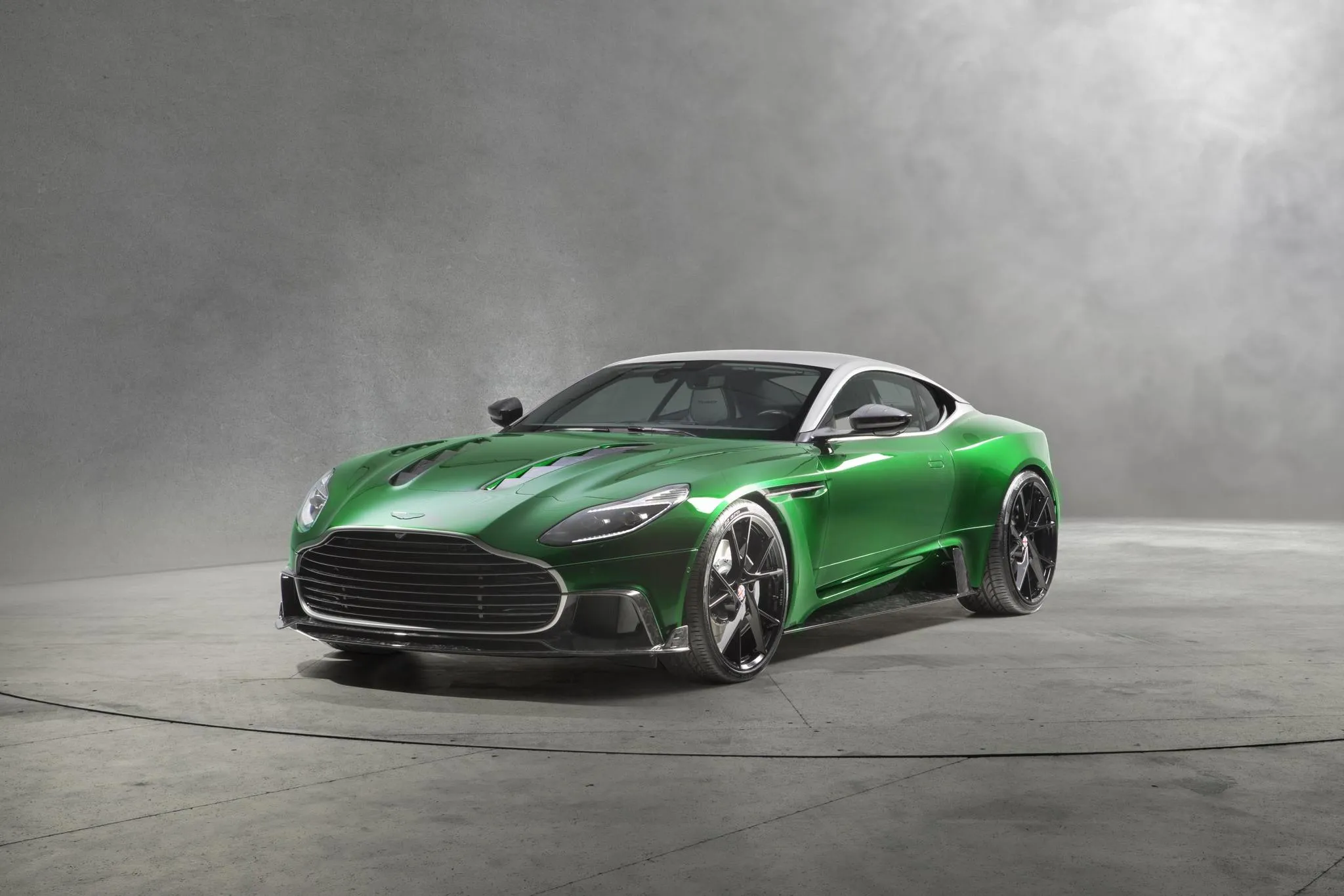
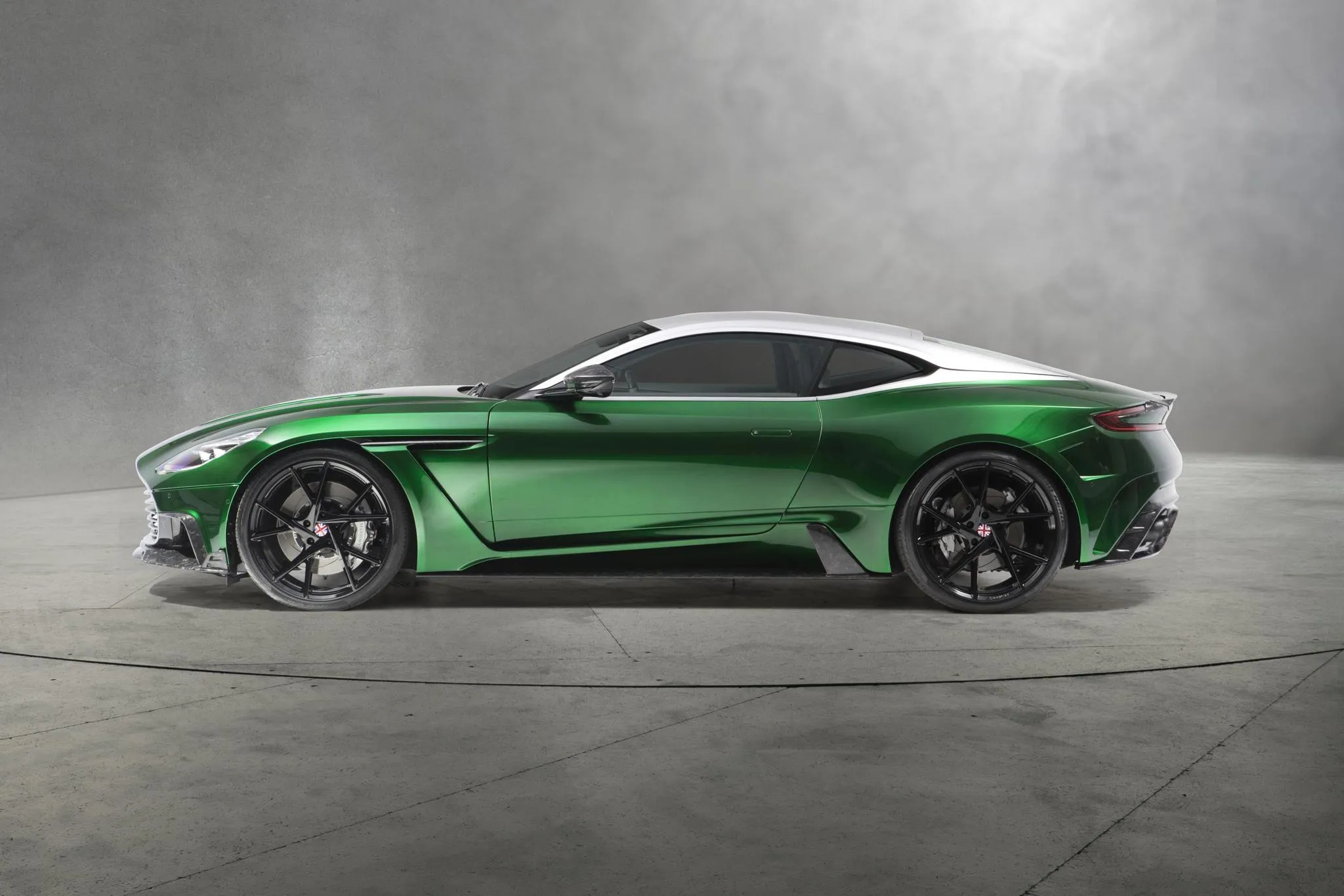
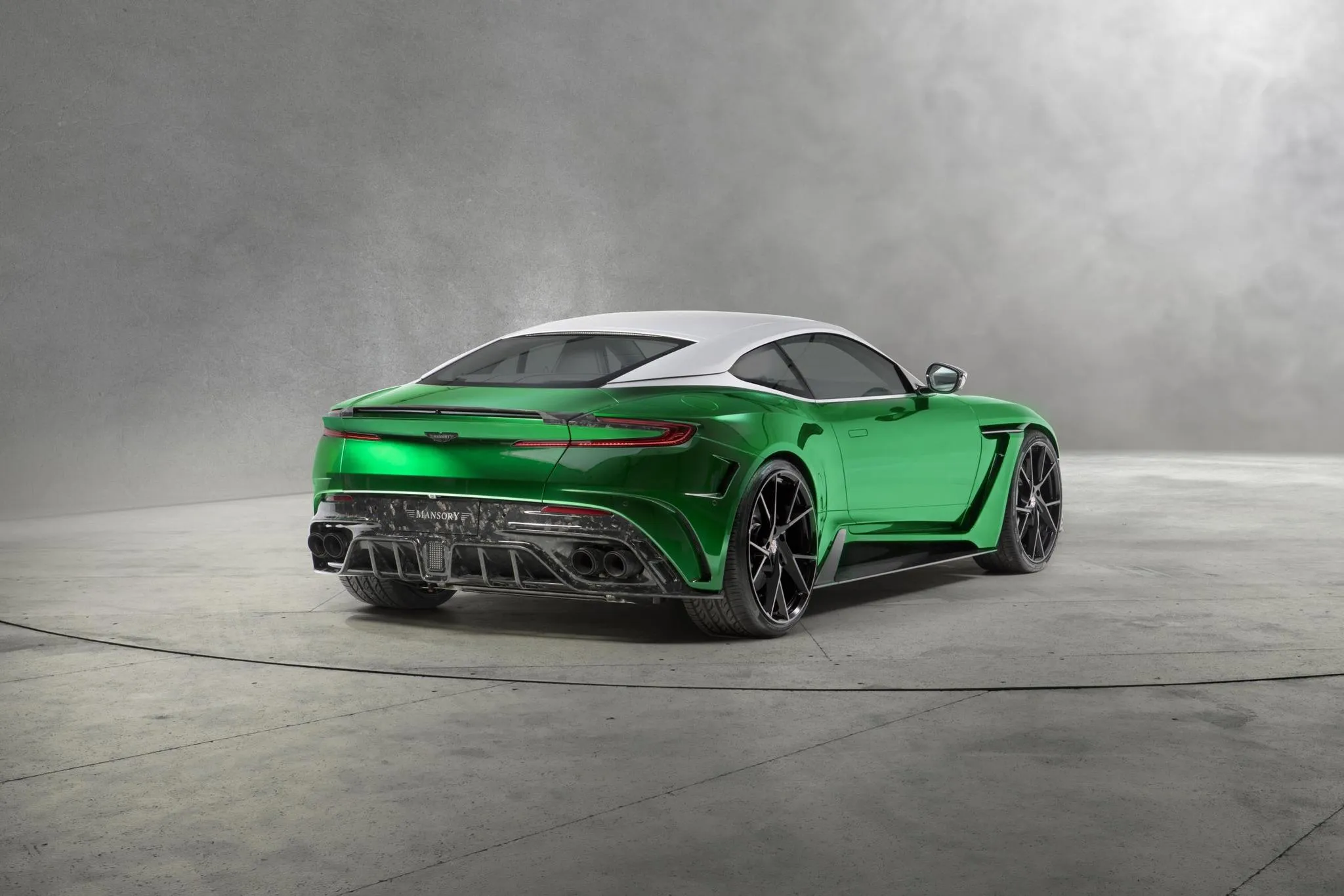
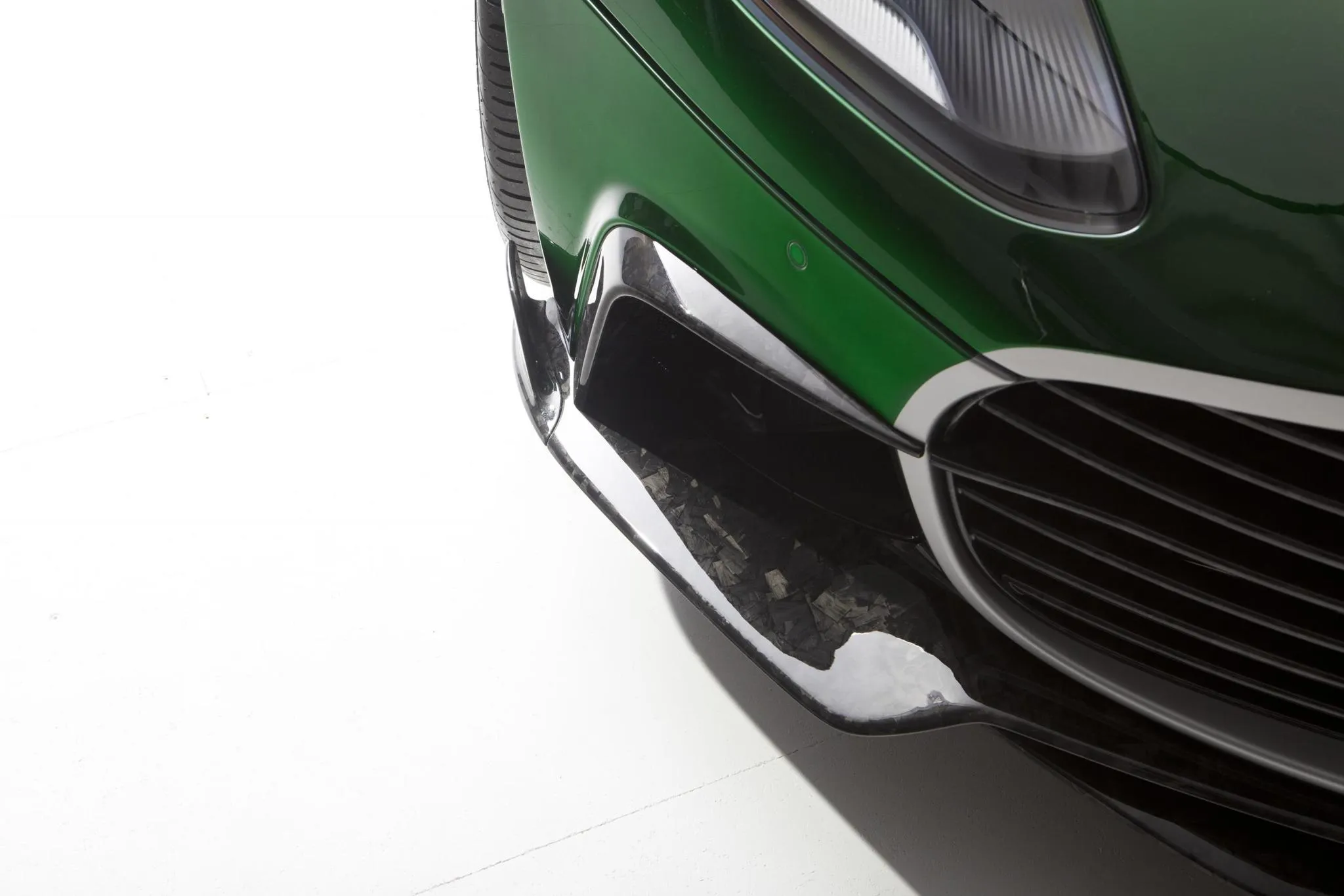
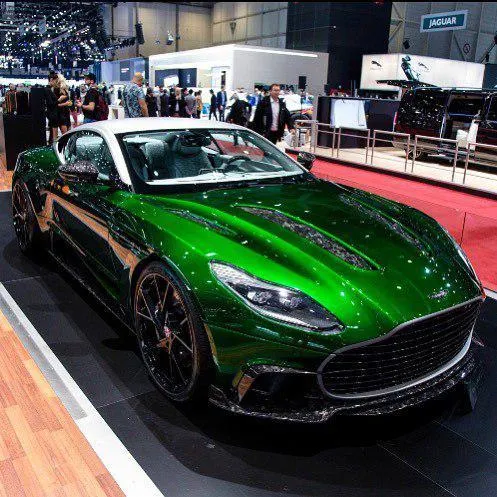
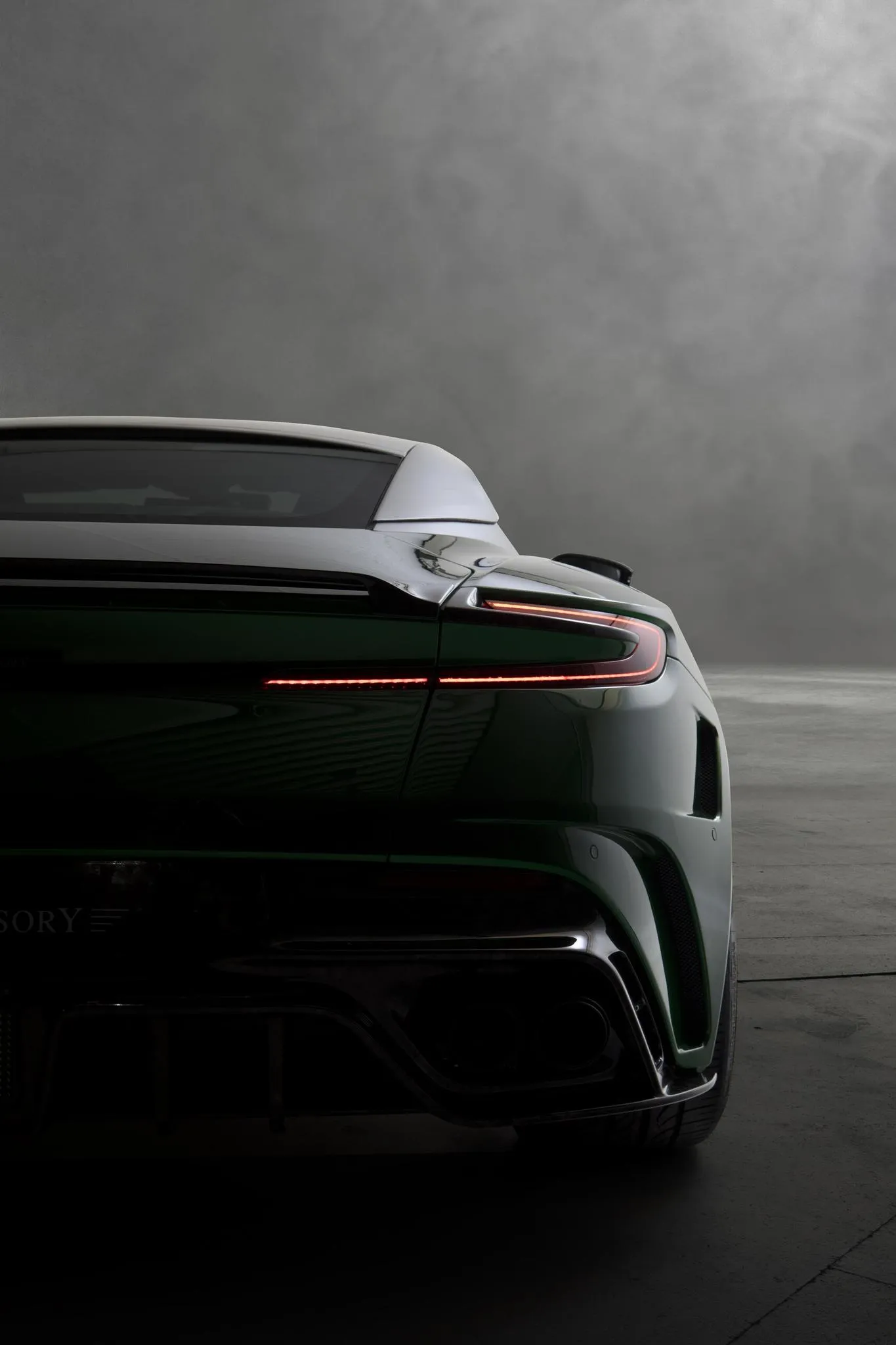
Mansory Carbon Fiber Body kit set for Aston Martin DB11


Mansory Cyrus on the DB11 — a chassis-transition body programme
The Aston Martin DB11 occupies a strange middle seat in Aston's modern history. It rides on the AMR-CRT bonded-aluminium chassis — Aston's transition platform between the older VH architecture (DB9, Vanquish 2012, Rapide) and the newer MSB-shared spine that underpins the current-generation Vanquish-grade flagships. Mansory's Cyrus programme for the DB11 is the only carbon body line written specifically for that AMR-CRT transition era, and that constraint shapes every decision in the kit.
This page covers the DB11 V12 Coupe (2016 onwards), the DB11 V8 (2017 onwards, with the Mercedes-AMG-sourced 4.0 twin-turbo), the Volante and the AMR-spec V12. Sister Aston programmes: Vanquish S Cyrus, V8 Vantage, DBS / DB9 Cyrus, DB9 Volante, DBX SUV.
Why the AMR-CRT chassis dictates everything in this kit
The DB11 was the first Aston car built on the bonded-aluminium platform engineers internally call AMR-CRT. Compared with the older VH spine of the DB9 and the 2012-era Vanquish, AMR-CRT moves the front bulkhead rearwards, lowers the cowl and re-distributes torsional load through a heavier transmission tunnel. Compared with the newer MSB-shared architecture of the current Vanquish-grade flagships, AMR-CRT keeps the transverse exhaust routing of the DB-line cars rather than the centre-exit packaging Mansory uses on later builds. In practical terms, a Cyrus body for the DB11 has to clear a different cooling geometry, sit on different fender attachment points and respect a different rear-bumper crash structure than any other car Mansory bodies. It is not a re-skin of an older Cyrus mould, and it cannot be ported to the next-generation chassis without a full re-tooling — which is what makes the DB11 Cyrus a single-generation body programme.
In engineering terms, the kit is a width-track validation scheme. Mansory widens the track by 40 mm per side at both axles, then re-bodies the lower half of the car in pre-preg autoclave carbon to match the new track. The aluminium tub itself is untouched — no welding, no cuts, no permanent modification. Every wide-body panel bonds and bolts to factory hard-points, and the original DB11 body can be restored if the car is moved on. That approach is specifically tuned to the AMR-CRT chassis, where the bonded structure tolerates additional unsprung mass at the corners but not fastener pull-through into the structural panels.
Component matrix — what arrives in the crate
The Cyrus DB11 ships as a coordinated body programme rather than a parts pile. The table below is the canonical order sheet. Every line item is also available as a standalone SKU for staged commissioning.
| Component | Construction | Fitment scope |
|---|---|---|
| Front bumper with integrated splitter | Pre-preg autoclave carbon, primed | V12 / V8 / AMR — bumper-specific intake cut |
| Engine bonnet with cooling extractors | Forged carbon over aluminium sub-frame | All DB11 variants, AMR-spec vents available |
| Front fender flares (+40 mm per side) | Pre-preg autoclave carbon, bonded | Re-cut arches, shared across coupe and Volante |
| Side skirts and lower door blades | Pre-preg autoclave carbon | Continuous line into the rear quarter |
| Rear fender flares (+40 mm per side) | Pre-preg autoclave carbon, bonded | Geometry matches the front; coupe and Volante share moulds |
| Rear bumper with integrated diffuser | Pre-preg autoclave carbon | Houses the quad-tip exhaust outlets |
| Stainless quad-exit sport exhaust | Stainless steel, valved option | V12 5.2 TT and V8 4.0 TT calibrations |
| Decklid trim and performance wing | Forged carbon | Coupe wing; Volante uses a soft-top-clearance trim |
| Mirror caps and engine-bay carbon set | Forged carbon | Available as a standalone interior / engine-bay configuration |
Hidden mounting flanges are reinforced FRP for daily-driver durability. Visible-fibre panels ship in glossy primed finish by default, or matte on request, and the weave pattern is chosen at order stage.
Track-width geometry, aero balance and powertrain calibration
Adding 40 mm per side at both axles changes more than the photograph. The front splitter is re-profiled to feed cooler air into the V12's intercoolers at the new track width, and the rear diffuser channels are re-cut to keep the under-body flow attached at the wider footprint. Aerodynamic balance — which on the factory DB11 already favours the rear thanks to the AeroBlade tail — is preserved by sizing the rear performance wing to match the new front-end download. The result is a car that sits visibly lower yet carries the same neutral high-speed manners as the factory AMR. The engineering brief was deliberately to widen the stance without re-writing the chassis behaviour.
Wheel and tyre geometry is configured per car. Mansory's reference fitment is a 21-inch one-piece forged set, staggered front-to-rear, with offsets calculated to clear both the new fender geometry and the donor car's brake calipers. The Hodoor forged wheels collection lists current finishes, and we map offsets for a DB11 Cyrus build in writing before the wheels ship.
On the powertrain side, calibration is optional rather than mandatory. The V12 5.2 twin-turbo lifts from a factory 600 PS (or 630 PS on the AMR) to a measured 700 hp with 850 Nm after ECU recalibration, sport air filter and the stainless quad exhaust shipped with the rear bumper. The tune is built on top of the factory engine — block, heads, turbochargers and gearbox stay original. An analogous V8 4.0 TT recalibration is available. Owners can take the body kit without the powertrain package; we ship body-only configurations regularly.
Commissioning sequence — how a Cyrus DB11 is ordered and built
Hodoor runs the DB11 Cyrus as a managed build rather than a part-by-part shopping cart. The sequence below is the standard commissioning flow from first enquiry to a painted, fitted car.
- Initial brief and VIN check. Send the VIN, the variant (V12 / V8 / AMR / Volante), the production year and a current photo. We map the VIN against the AMR-CRT variant table and confirm which bumper, decklid and exhaust SKUs are correct.
- Specification lock-in. We work through the configuration — full wide-body or front-only, forged carbon or FRP, the 21-inch forged wheel set or your own wheels, optional V12 power package — and send a written specification for sign-off.
- Production slot and deposit. Once the spec is signed, the DB11 enters Mansory's production queue. Lead time is four to six weeks for the body programme; a deposit secures the slot.
- Pre-shipment QC and crating. Each panel is gel-coat-checked against the master mould, the carbon weave is inspected under raking light for surface defects, and the kit is foam-bedded into a road-freight crate with a parts manifest and HS codes attached.
- Door-to-door logistics. The crate ships with insured tracking and destination-side customs paperwork prepared in advance. We coordinate with your installer or route the car through one of our partner body shops.
- Fitment and paint. A trained body shop completes the wide-body installation in five to seven days for the full programme. The car leaves the booth fully colour-matched, with the OEM body components stored for resale.
To discuss a build live: WhatsApp our build desk, Email a build brief, or send a Telegram note via our build-desk bot. We answer with model-specific quotes inside one working day. Background on every Aston programme sits on the Mansory Aston Martin index; programme news on the Hodoor Mansory blog; and the Custom Design and Build service covers single-VIN work outside the catalogue.
Markets that order this Aston Martin Db11 Cyrus kit most
Delivery routes for the Aston Martin Db11 Cyrus kit are predictable: Gulf, Greater China, and select European clusters dominate. The European footprint is led by the United Kingdom and Switzerland, with specialist body shops in Luxembourg servicing local fitment. Greater China and the Asia-Pacific cluster — mainland China, Japan — order via specialised RHD/LHD distributors. African footprint covers Egypt and South Africa, with periodic Egyptian deliveries via Nigeria. Whichever route applies to your build, transit is insured and customs paperwork is shipped with the crate.
Owner questions before commissioning a Cyrus DB11
How is the AMR-CRT chassis under the DB11 different from the MSB-shared platform under the current Vanquish-grade flagships, and why does it matter for the kit?
The AMR-CRT chassis is Aston's first bonded-aluminium spine, sitting between the older VH architecture and the newer MSB-shared platform. It uses a different front-bulkhead position, different cooling geometry and a transverse exhaust routing instead of the centre-exit packaging of the next-generation cars. The Cyrus body for the DB11 is engineered specifically against AMR-CRT hard-points; it cannot be ported to a Vanquish-grade flagship without re-tooling.
Will fitting the Cyrus body programme affect the Aston Martin factory warranty on a DB11?
The donor car's aluminium structure is not modified, no welding is performed and no permanent cuts are made — every panel bonds or bolts to factory hard-points. That said, Aston Martin's warranty position on cosmetic and aero modifications is dealer-dependent and market-dependent, and a wide-body conversion is unlikely to be covered under any standard new-car warranty. Speak to your supplying Aston Martin dealer in writing before the kit is fitted; our build desk can supply the engineering documentation your dealer will need to assess the install.
Does the Cyrus programme fit the V12 Coupe, the V8 Coupe, the Volante and the AMR equally well?
Yes — Cyrus is published as a DB11-family programme. The V12 Coupe, the V8 Coupe and the AMR share the body shell and use bumper-specific configurations to match each variant's intake geometry. The Volante uses a dedicated decklid trim to clear the folding soft-top mechanism. We confirm the SKU list against your VIN before the order leaves the workshop.
Is the wide-body conversion reversible if the car is ever sold on?
Yes. Because the kit bonds and bolts to factory hard-points and the aluminium tub is not cut or welded, the original DB11 body can be re-fitted by a competent body shop. We recommend storing the OEM bumpers, fenders and decklid in a climate-controlled location after the install.
What is the realistic lead time from order to a painted, fitted car?
Plan for four to six weeks of Mansory production, plus shipping time to your destination, plus five to seven working days at a trained body shop for the full wide-body install and paint. Aero-only configurations (front bumper, side skirts, rear diffuser without the wide-body fenders) typically complete in two to three days.
Can the body programme be ordered without the V12 power upgrade?
Yes. The body and the powertrain calibration are separate line items. Collectors who want to keep the drivetrain factory-original take the body and the wheels and skip the ECU recalibration; owners after the full Mansory experience take the lot. The exhaust hardware ships with the rear bumper either way, but the ECU map is only flashed if the powertrain calibration is ordered.
Parts