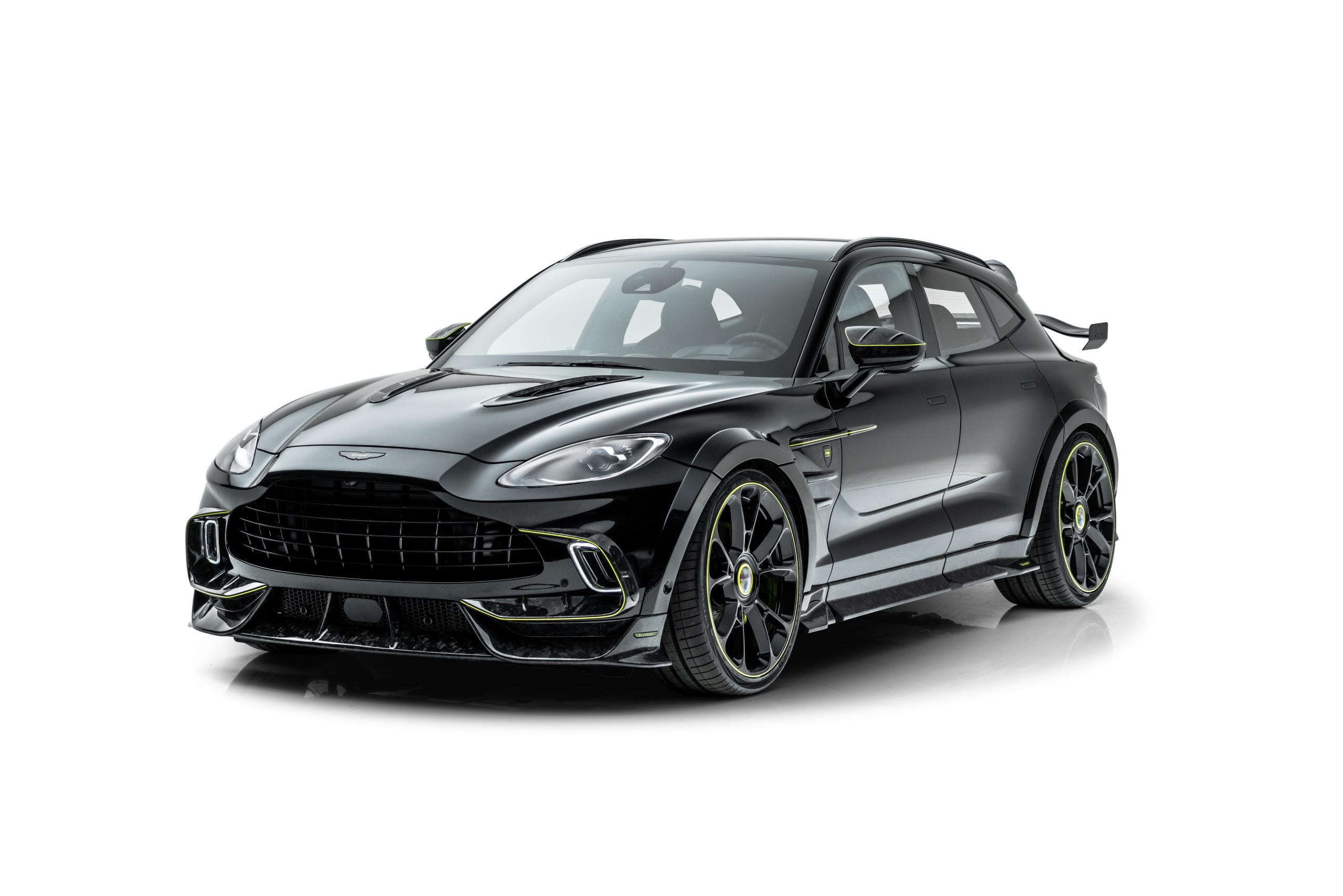
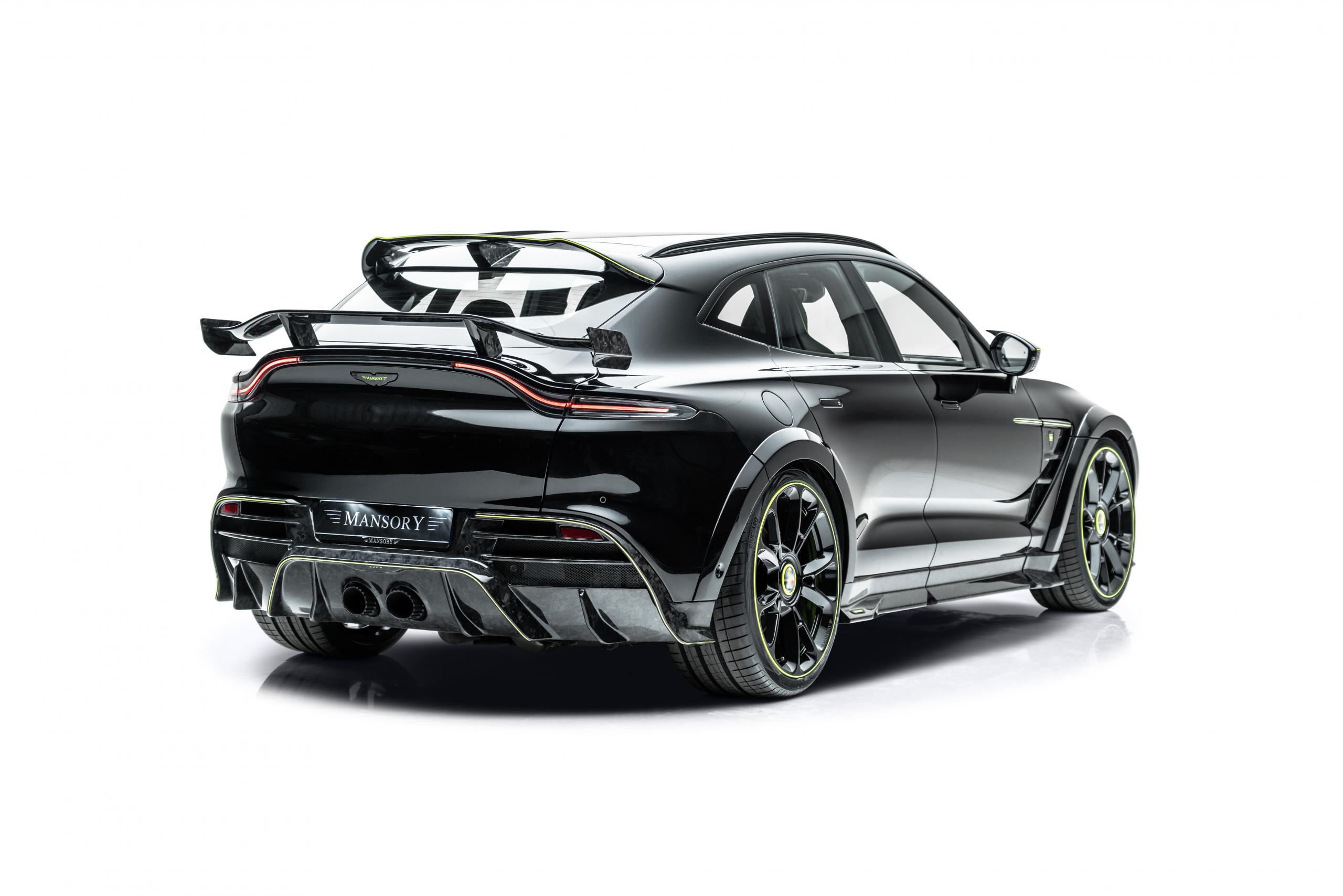
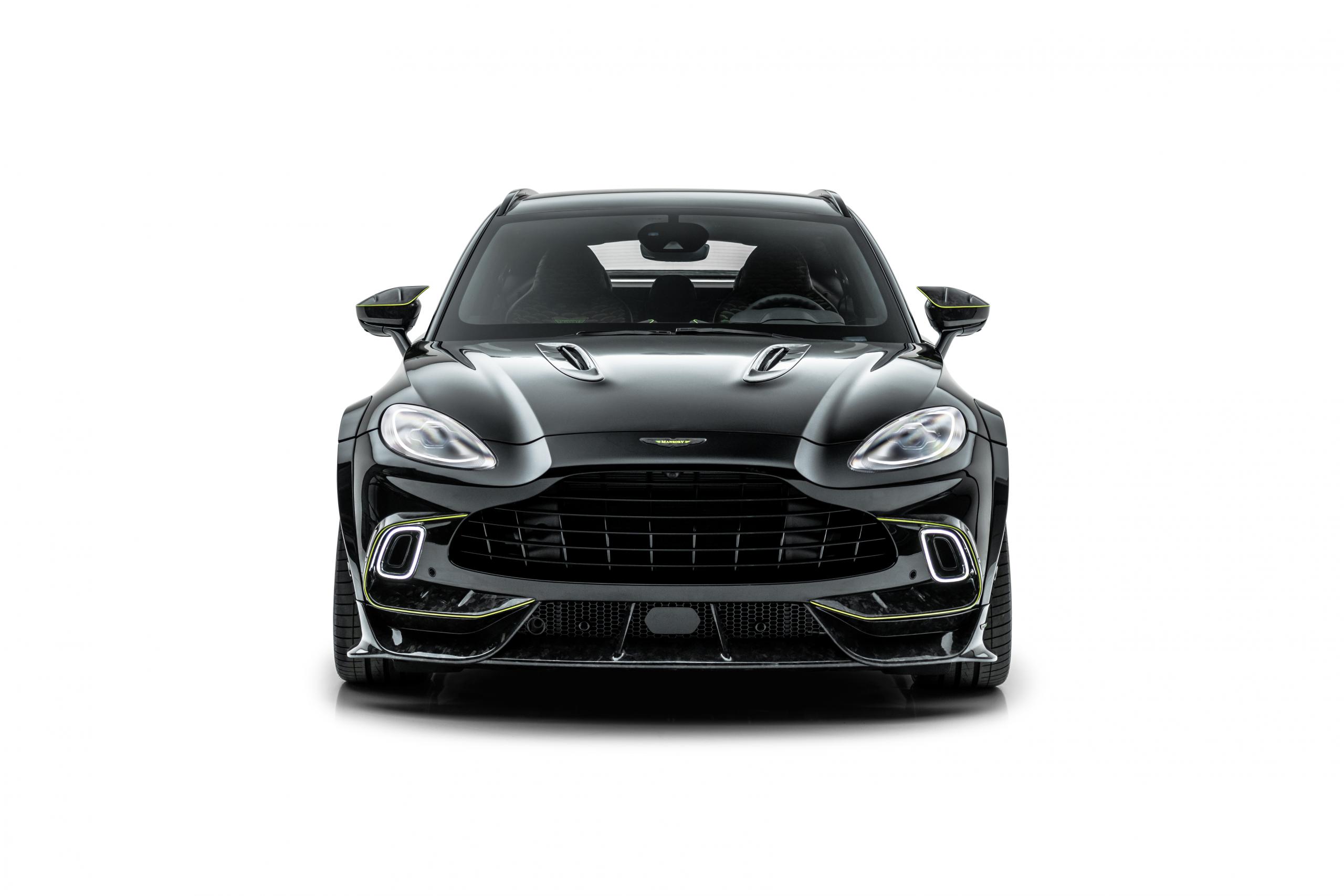
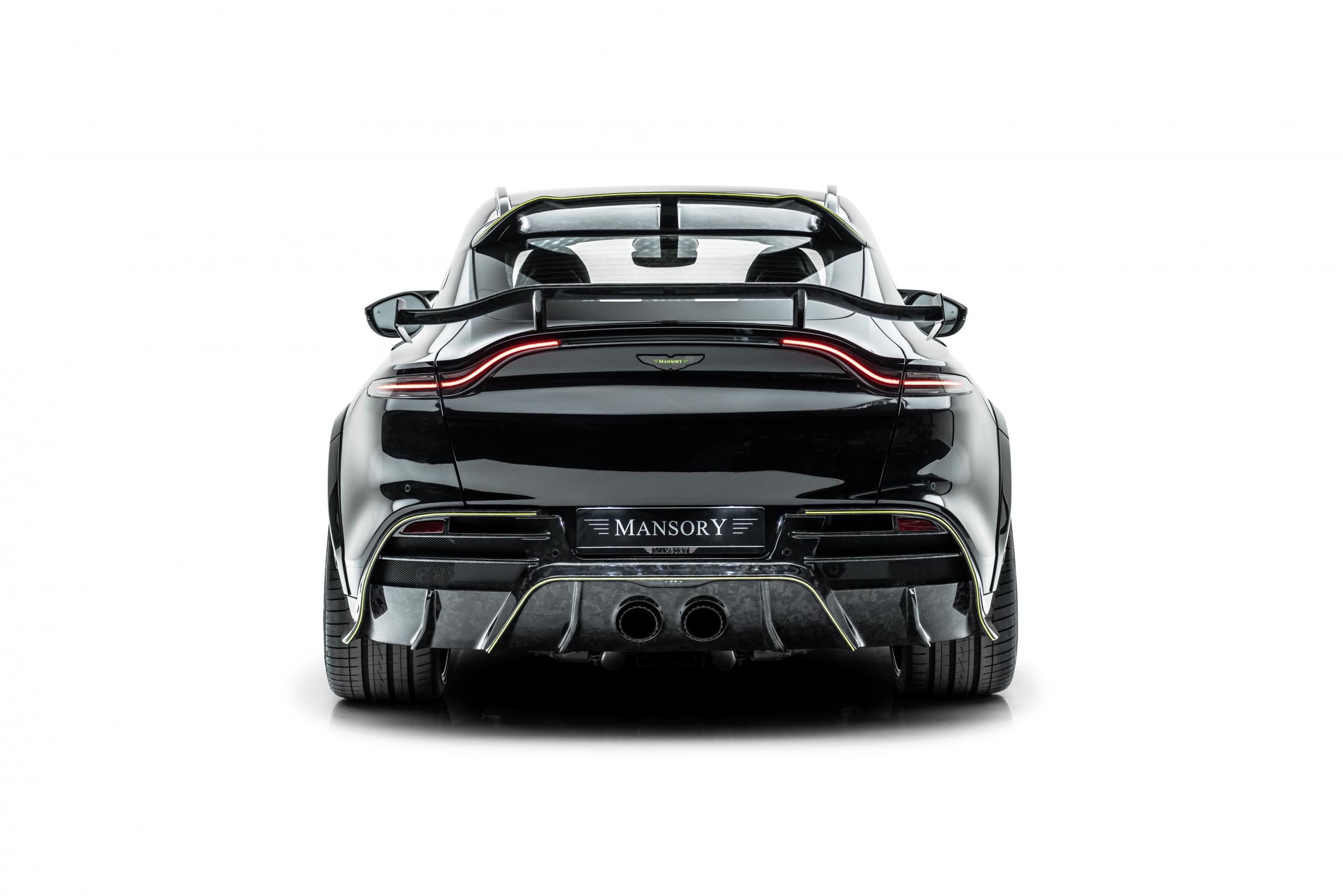
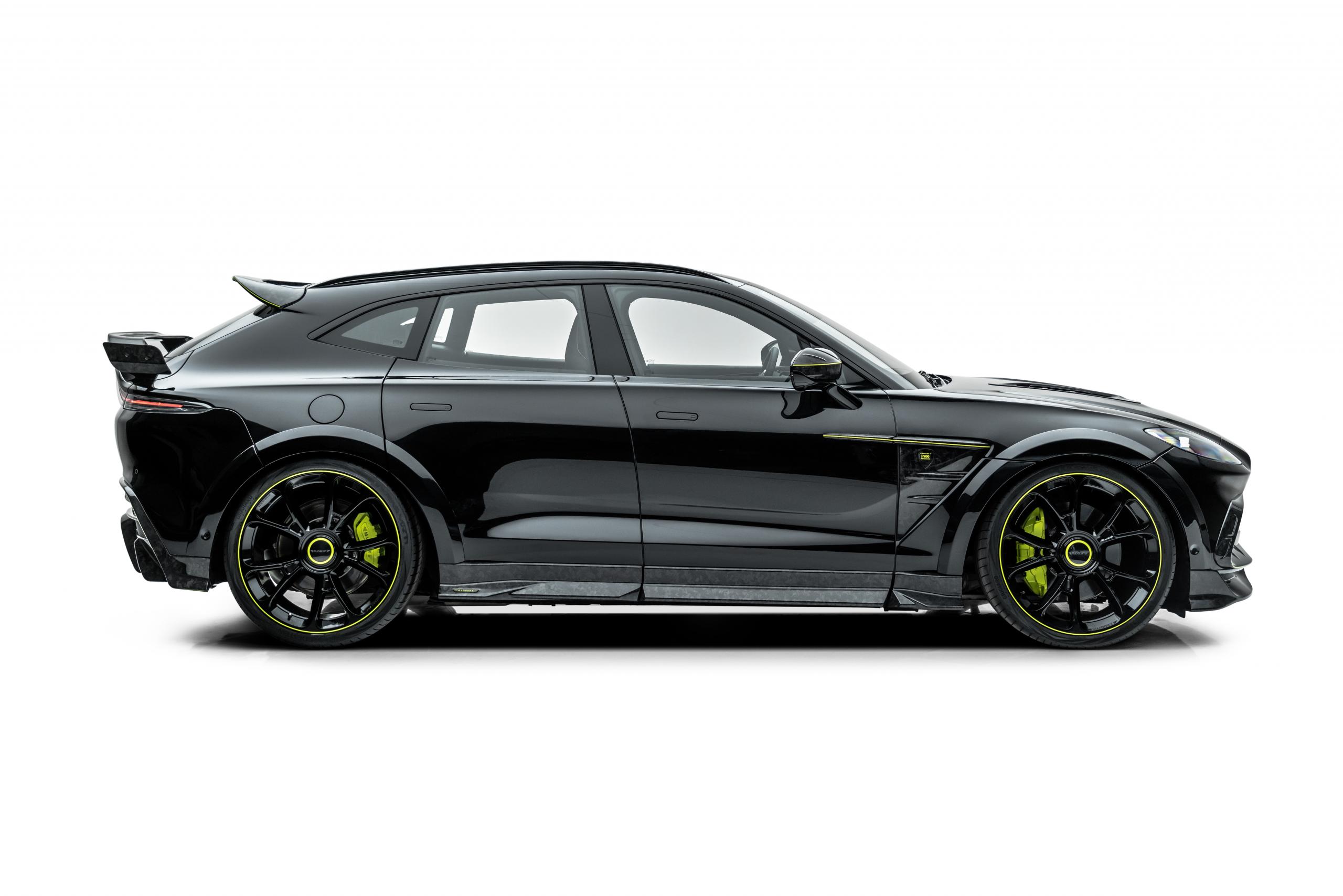
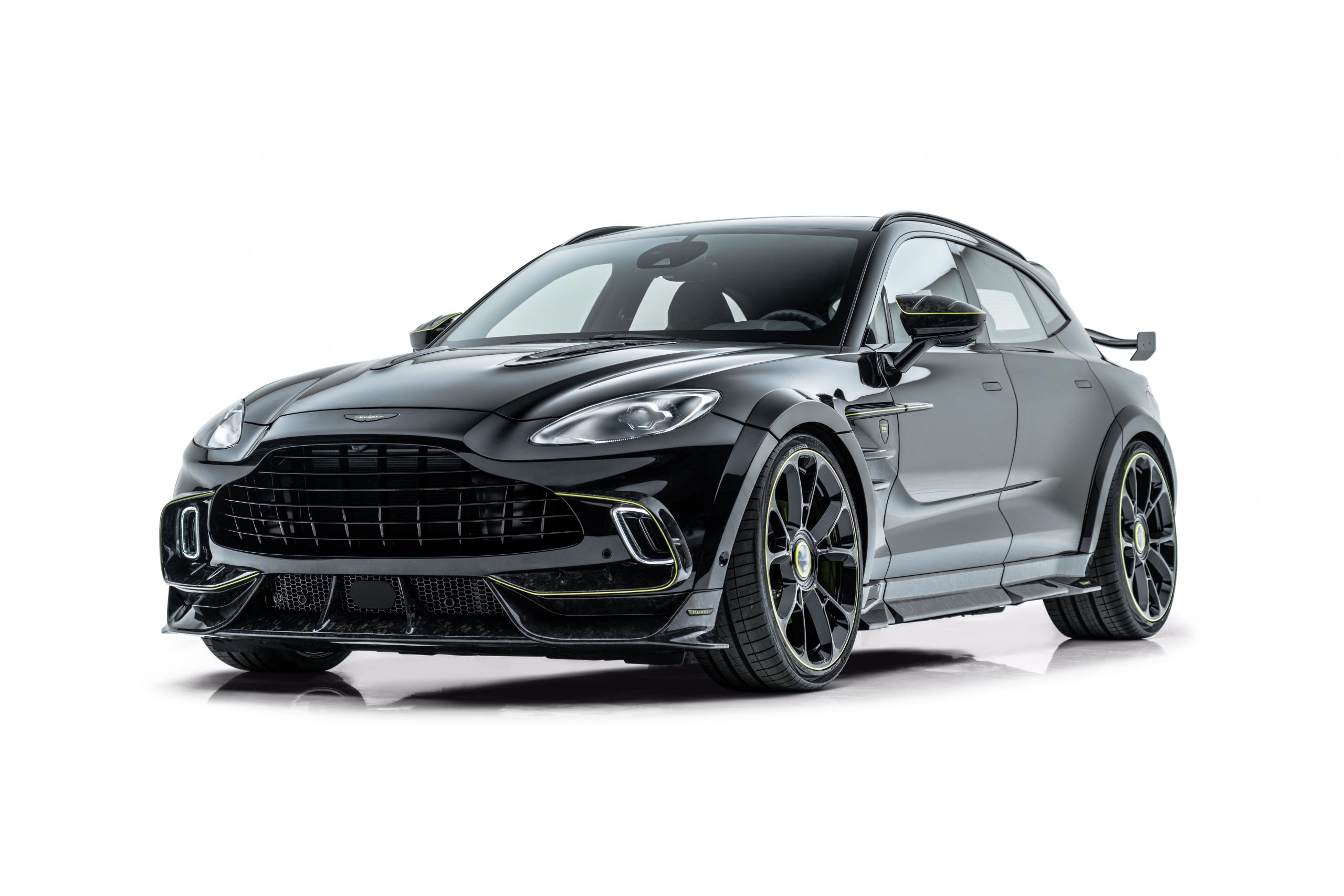
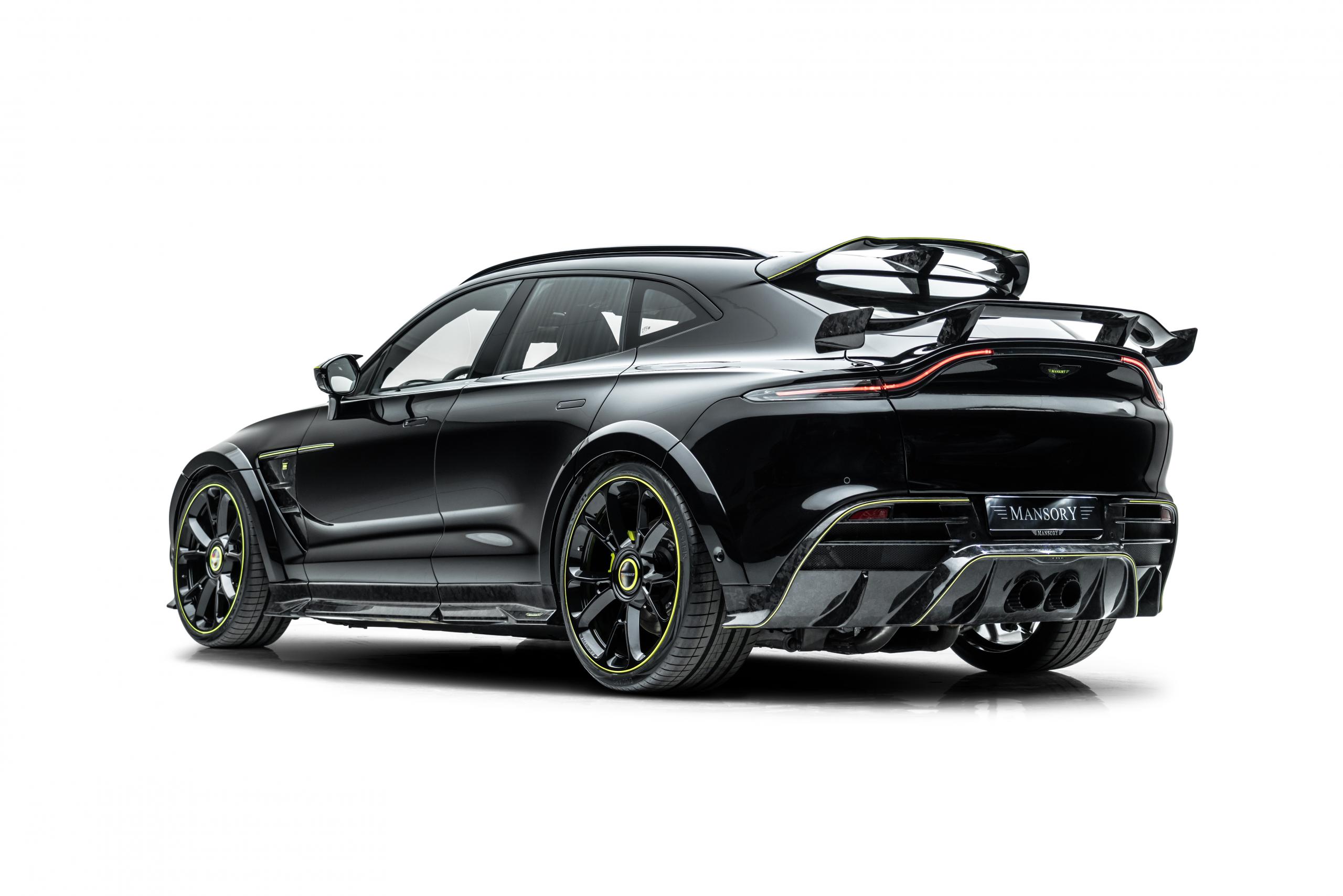
Mansory Carbon Fiber Body kit set for Aston Martin DBX


MANSORY for the Aston Martin DBX — the first SUV in Aston's 110-year history
The Aston Martin DBX — Aston's first SUV across the brand's entire 1913–2020 history — launched into production in 2020 at Aston's purpose-built St Athan plant in South Wales. The DBX is hand-built on a bespoke aluminium platform and shares its drivetrain architecture not with Aston's sports-car stack but with Mercedes-AMG's M177 twin-turbo V8 — the product of Aston's long-standing AMG supply partnership. The DBX ships in two factory tiers: the standard DBX at 542 hp / 700 Nm, and the DBX707 at 707 hp / 900 Nm, which at its 2022 launch was the most powerful SUV in volume production. The Mansory carbon programme fits both variants without dimensional change — the DBX707 differs visually at the brake calipers, the factory front grille slats and the interior trim, but the DBX body shell is common across both donors.
Kit content — the published line items
The Mansory DBX kit is structured in two layers: a base set of panel-conversion pieces that apply to every commission, and a set of optional carbon overlays that individual owners select.
Base set — included on every commission:
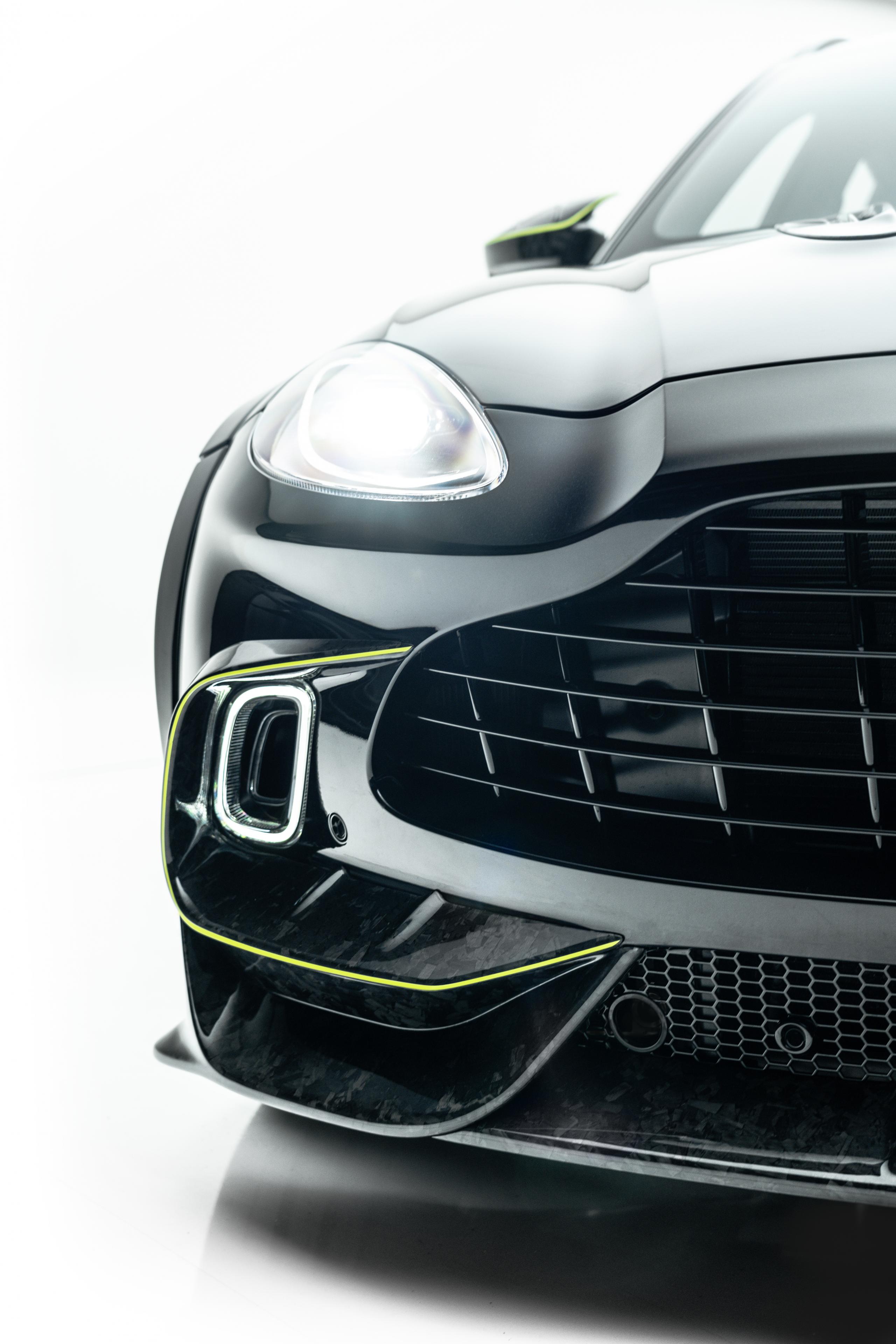
- Front bumper lip (carbon, below the factory bumper lower edge)
- Front splitter (carbon, continuation of the bumper lip into the under-tray)
- Wide-body extensions (front and rear fender overlays, structural not overlay)
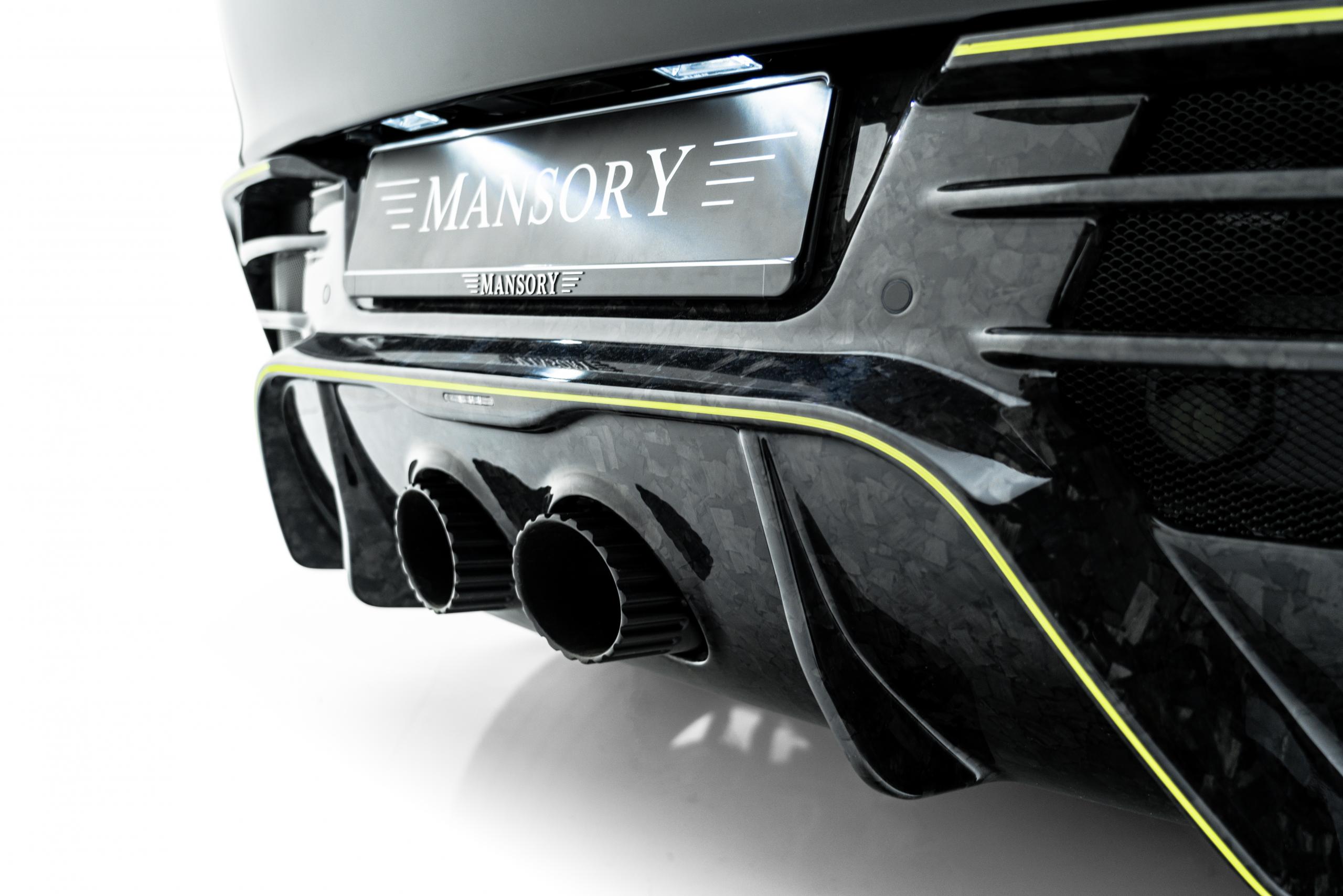
- Rear diffuser (carbon, with integrated lower-outlet splitter)
Optional carbon overlays — specify at commission time:
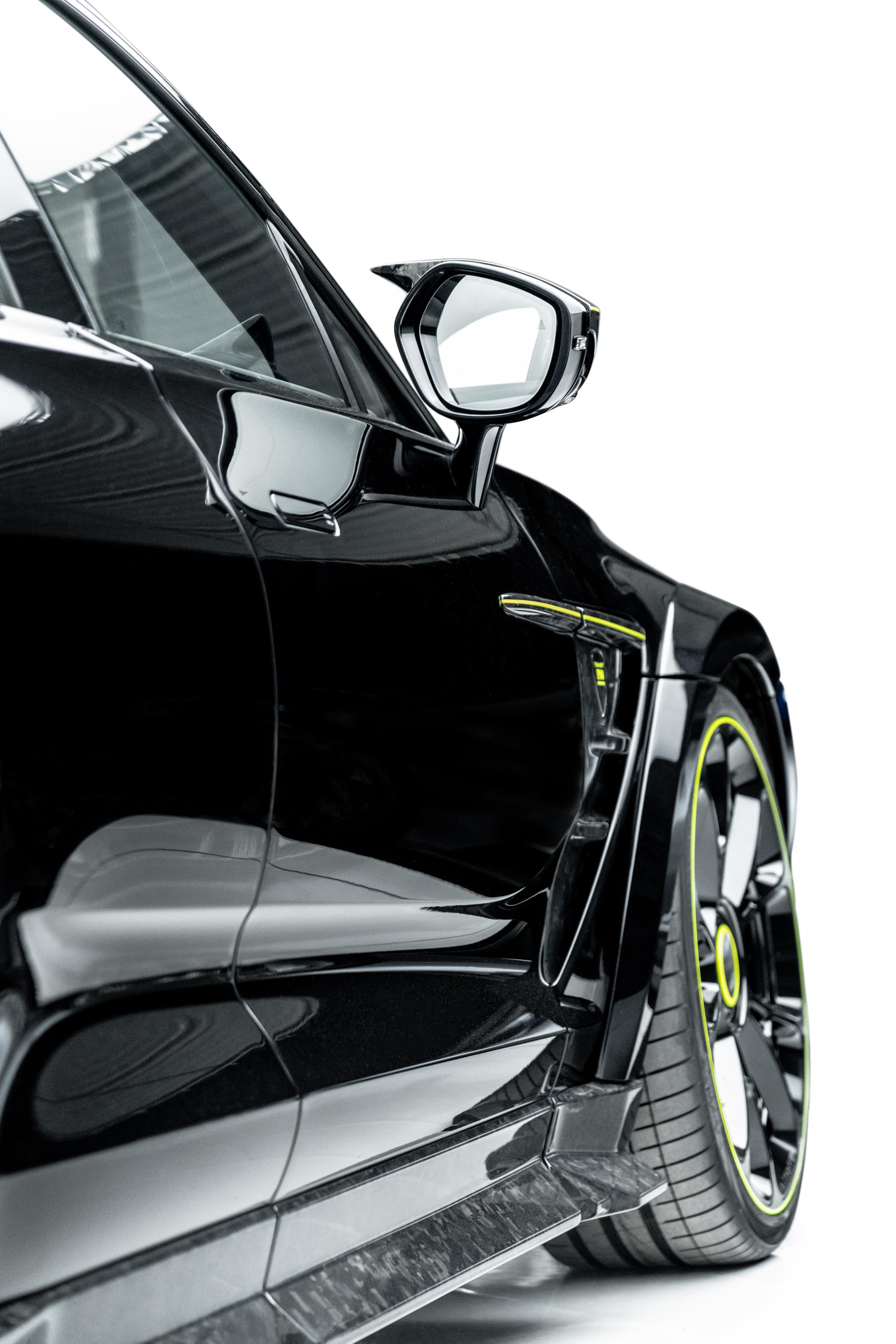
- Carbon mirror caps (pair)
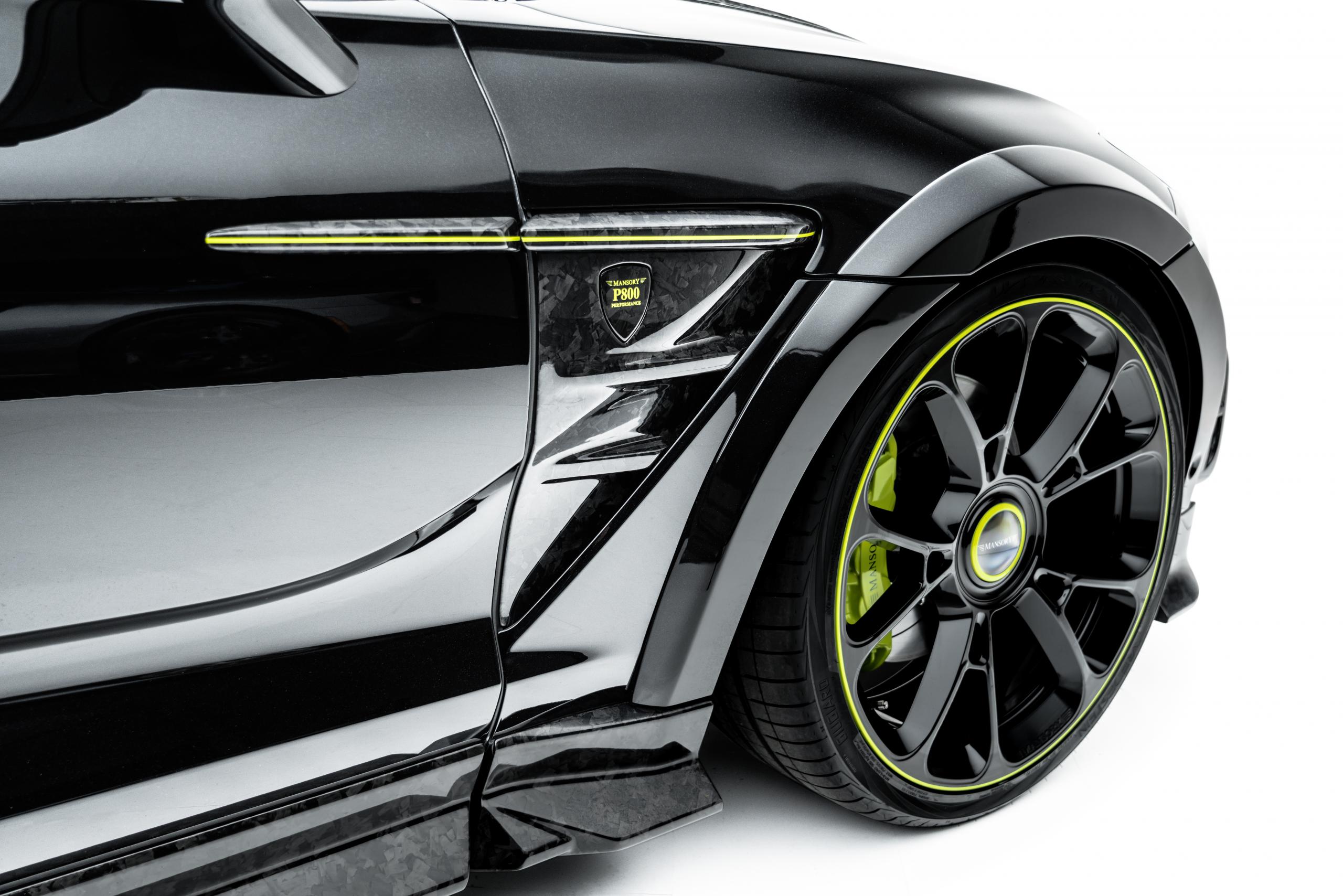
- Front-fender carbon panel (overlay on the factory fender outer skin)
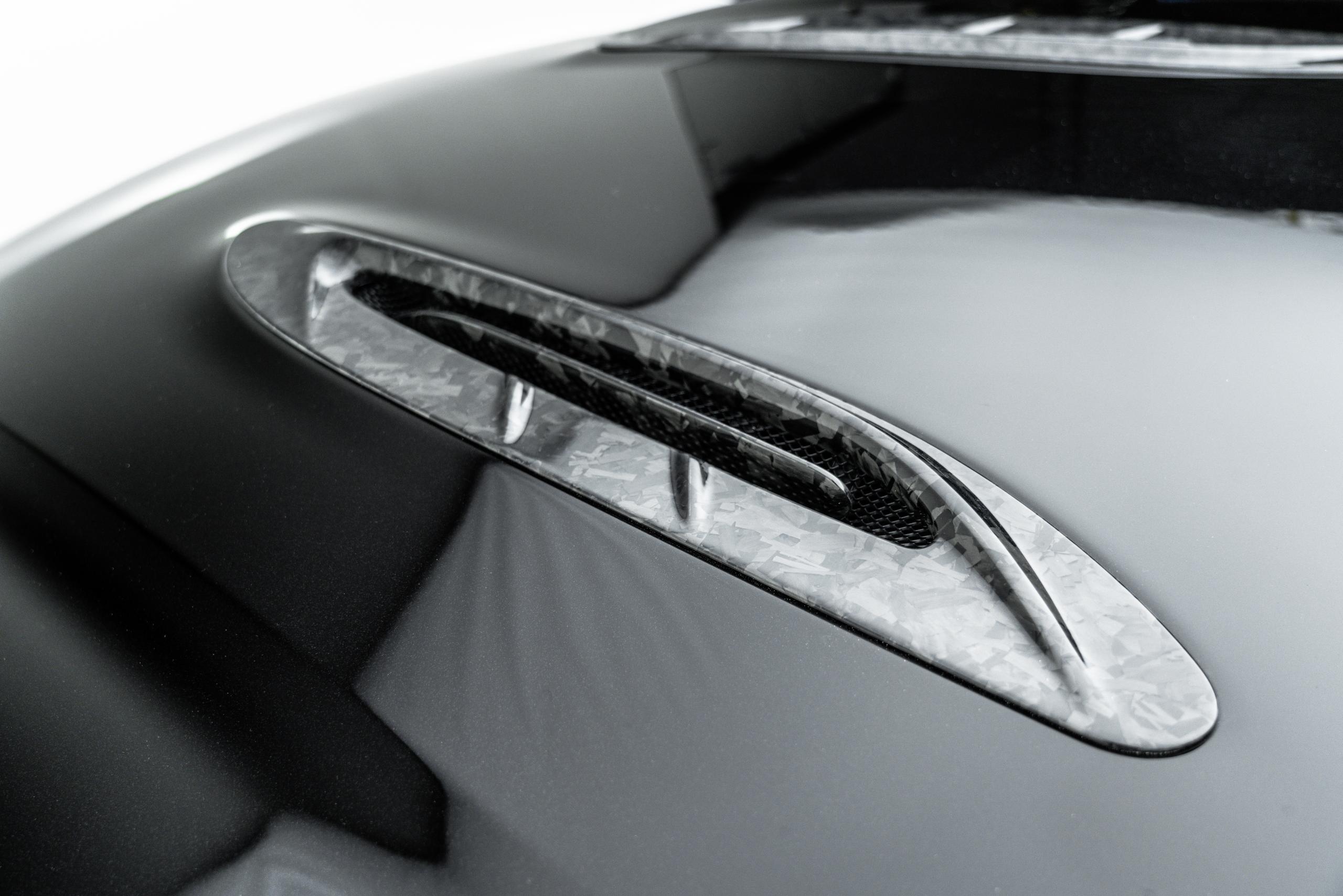
- Carbon engine bonnet (bonnet replacement, not overlay — dry-carbon, full-panel)
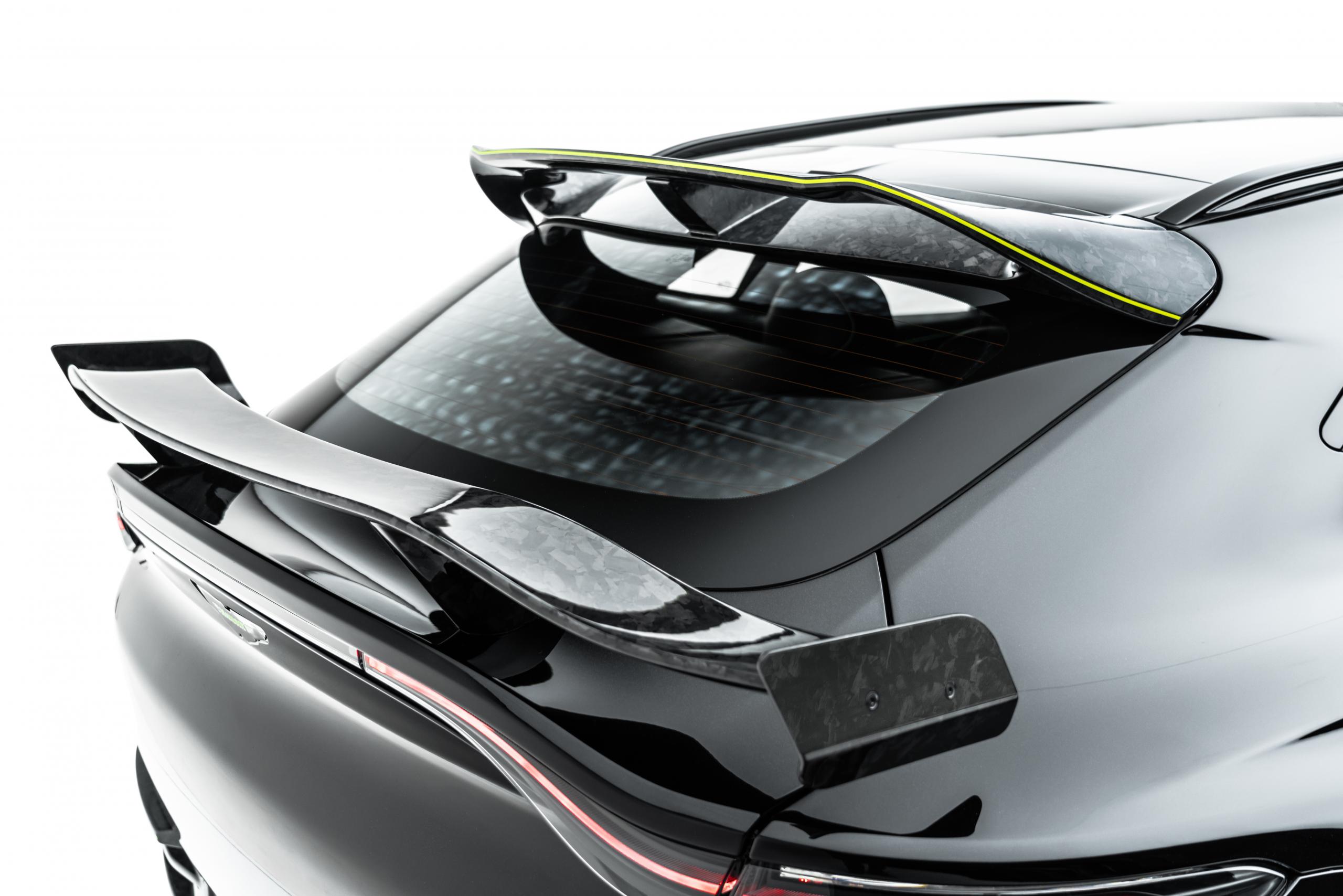
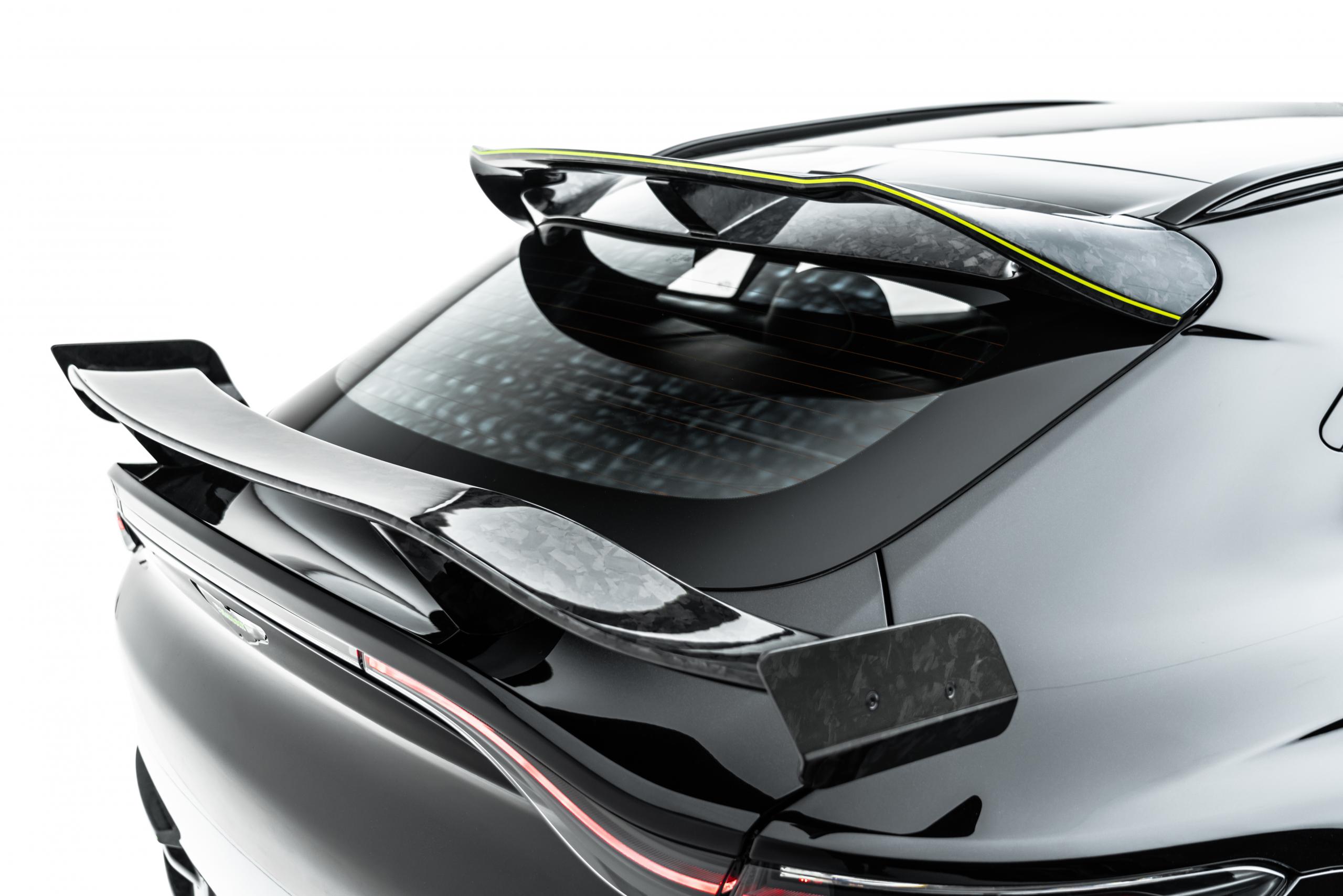
- Carbon air-outtake rear hatch panel (overlay on the factory tailgate lower section with integrated rear-quarter air-outlet louvres)
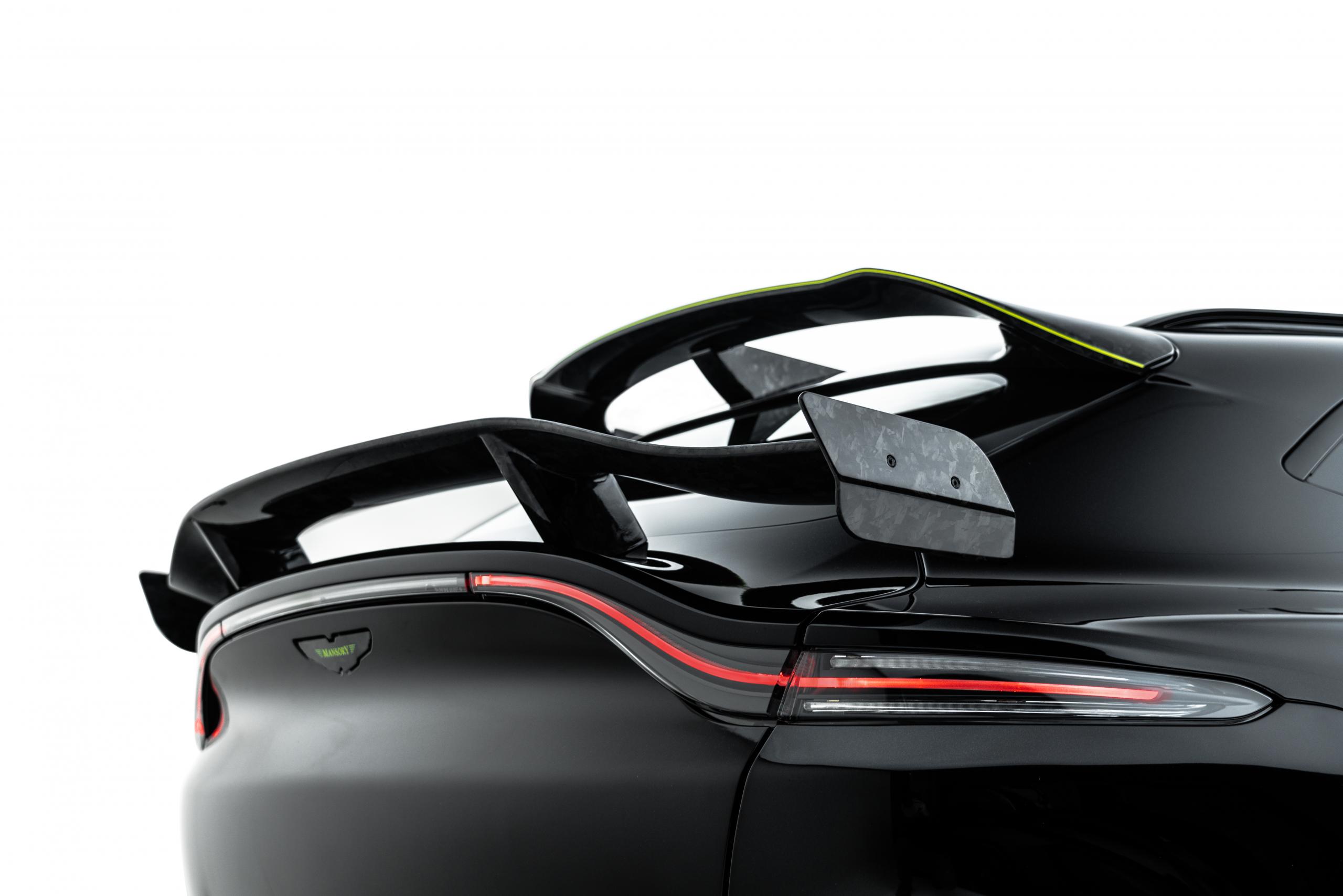
- Rear spoiler (boot-lid / tailgate upper-edge lip)
- Roof spoiler (roof-trailing-edge carbon lip)
- Air-outtake splitter (rear-bumper lower carbon trim)
- Mansory logo set (carbon inserts for front and rear bumper)
The most-commissioned optional overlay is the carbon engine bonnet — around three quarters of commissions include it — because the DBX's long bonnet line reads more cohesive against the wide-body fender extension when the bonnet carries the same carbon weave. The second-most-commissioned optional is the front-fender panel. The roof spoiler and the rear-hatch air-outtake panel are the least-commissioned — these tend to appear on full-spec commissions rather than on mid-tier spec orders.
Standard DBX vs DBX707 — what changes on the kit
No kit dimensioning changes between the standard DBX and the DBX707. The two variants differ on:
- Gearbox: standard DBX runs a torque-converter 9-speed; DBX707 runs a bespoke wet-clutch 9-speed (the wet-clutch is Aston-specific, not shared with any AMG)
- Brakes: DBX707 runs factory carbon-ceramic as standard; the Mansory kit does not change caliper aperture on either variant and both brake packages are preserved
- Front grille: DBX707 uses a satin-black open-slat grille where the standard DBX uses a chrome-bordered grille; the Mansory front bumper lip preserves both grille geometries without overlap
- Factory badging: the DBX707 carries a specific rear-hatch badge — the Mansory air-outtake rear hatch panel preserves the factory badge position
AMG M177 V8 — powertrain untouched
Both the standard DBX and the DBX707 run variants of the 4.0-litre M177-family twin-turbo V8 sourced from Mercedes-AMG under the long-running supply partnership. Factory output sits at 542 hp on the standard DBX and 707 hp on the DBX707, with the DBX707's higher output coming from Aston's own calibration, a larger-A/R turbocharger compressor wheel and the wet-clutch gearbox. The Mansory carbon programme is bodywork only and does not change engine output on either variant. A Mansory sport-exhaust fits both tiers and is a common line item on commissioned DBX707s where owners want the bi-turbo V8 character more audible. The AMG-sourced powertrain means the DBX shares service cadence and tuning-ecosystem familiarity with Mercedes-AMG donors — owners stepping into a Mansory DBX from a Mansory Maybach S-Class or S63 E Performance garage find the underlying powertrain familiar.
Wheels — 22" or 23" forged on 5×112
The DBX from factory ships on 22" wheels as standard across both tiers. The Mansory forged wheel offering for the DBX covers 22" and 23" in multi-spoke designs, configured to the DBX's 5×112 PCD. The 23" is the more-commissioned size on DBX707 specs; the 22" is more common on standard-DBX specs where owners prioritise ride comfort over visual presence. Full wheel range at Hodoor forged wheels.
Geography — the Aston-specialist service-network map
The DBX order book has a geographic signature that is specific to Aston Martin and does not match other ultra-luxury SUVs. Aston's global dealer network is thinner than Mercedes-AMG's or Bentley's, and the factory Aston-specialist service infrastructure concentrates in a specific set of cities. Mansory DBX commissions track the Aston service-network map closely — owners tend to specify the kit in markets where they have confidence that their main Aston dealer can service the vehicle after the Mansory conversion.
The dominant geographic clusters for Mansory DBX commissions are: London and the UK Home Counties (Aston's home market — the most DBX-dense geography globally, with several Aston specialists in the Surrey / Berkshire corridor that service Mansory-converted DBXs without issue); the UAE (Dubai and Abu Dhabi — high DBX-per-capita registration, and Aston's Middle East service centre in Dubai accepts converted cars for service); the US Northeast (Greenwich / Long Island / Boston — Aston specialist depth is strongest in this corridor); South Florida (Miami / Palm Beach, with a growing DBX707 registration volume); and Switzerland (Geneva and Zurich).
Second-tier Aston geographies — Hong Kong, Singapore, Shanghai, Qatar — carry a smaller DBX commission volume, but the commissions that exist in these markets are almost exclusively DBX707 donors rather than the standard DBX. The DBX707's factory-status as the most powerful SUV in production at launch is a dominant purchase driver in these markets. Russia / CIS orders route through the Tsar programme and tend to specify the full-optional stack (bonnet, fender panel, roof spoiler, rear-hatch air outtake) on a DBX707 donor.
Sister Mansory builds with AMG-M177 DNA
The DBX's AMG-sourced V8 creates a cross-platform sister relationship that the Mansory catalogue makes explicit. The Mercedes-AMG GLS63 X167 shares the same M177 engine family and a similar SUV-flagship market position. The Maybach S-Class W223 shares the long-wheelbase factory positioning. In the Aston Martin stack itself, the DBX sits alongside the DB11 Cyrus sports-GT and the V12-powered coupé sisters — DBX owners with DB11s in the garage typically commission both to a matched paint and weave spec.
Ordering & lead time
Base DBX kit (four base-set pieces): three to four weeks from the workshop. Full-optional stack (base + all eight optional overlays): five to six weeks. 23" forged wheel set: four weeks. Mansory sport-exhaust (V8 twin-turbo): three weeks. Email [email protected] or WhatsApp +44 7488 818747 with your VIN, variant (DBX / DBX707), the OEM Aston paint code, the preferred optional-overlay list (mirror caps / fender panel / engine bonnet / rear-hatch air outtake / rear spoiler / roof spoiler / air-outtake splitter / logo set — specify which of the eight), and your preferred wheel size. Full-optional commissions are the common path on DBX707 donors.
FAQ
Is the kit dimensioned to both the standard DBX and the DBX707?
Yes. The body shell is common between the two variants — the DBX707 differs at the brake calipers, the gearbox, the front grille, the rear badge and the factory trim, but none of these differences affect kit dimensioning. The Mansory front bumper preserves both grille geometries and both brake-aperture packages.
Does the carbon engine bonnet require modification to the DBX's factory bonnet-latch system?
No. The Mansory carbon bonnet uses the factory Aston hinge and latch geometry, with no modification to either. Bonnet-open clearance and factory gas-strut travel are preserved. The carbon bonnet runs around 8 kg lighter than the factory aluminium panel.
Is Aston Martin warranty affected by a Mansory body kit commission?
The body conversion is bodywork-only. Factory powertrain and gearbox warranty remain intact; Aston service centres in the markets listed above accept Mansory-converted DBXs for service. Some optional carbon pieces (the engine bonnet specifically) may be considered non-factory at time of bonnet-related service — confirm with your specific service centre if bonnet-replacement coverage is a concern.
Will the rear-hatch air-outtake panel interfere with the factory power-tailgate?
No. The panel is dimensioned to the factory tailgate geometry and installs without modification to the power-tailgate motor or latching. Factory tailgate-height memory settings are preserved.
Can I specify the kit on a pre-2020 Aston — or is it DBX-only?
DBX-only. Aston did not build an SUV before 2020. The closest platform sister in Aston's stack is the DB11 / DBS grand-tourer — a different Mansory programme entirely.
Does the wide-body fender extension clear the factory air-suspension on a DBX707 at full compression?
Yes. The Mansory extension was dimensioned against the DBX707's factory air-suspension compression envelope including the DBX707's lowered Sport Plus ride-height setting. Full-compression arch clearance is preserved on both the 22" and 23" wheel fitments.
Parts