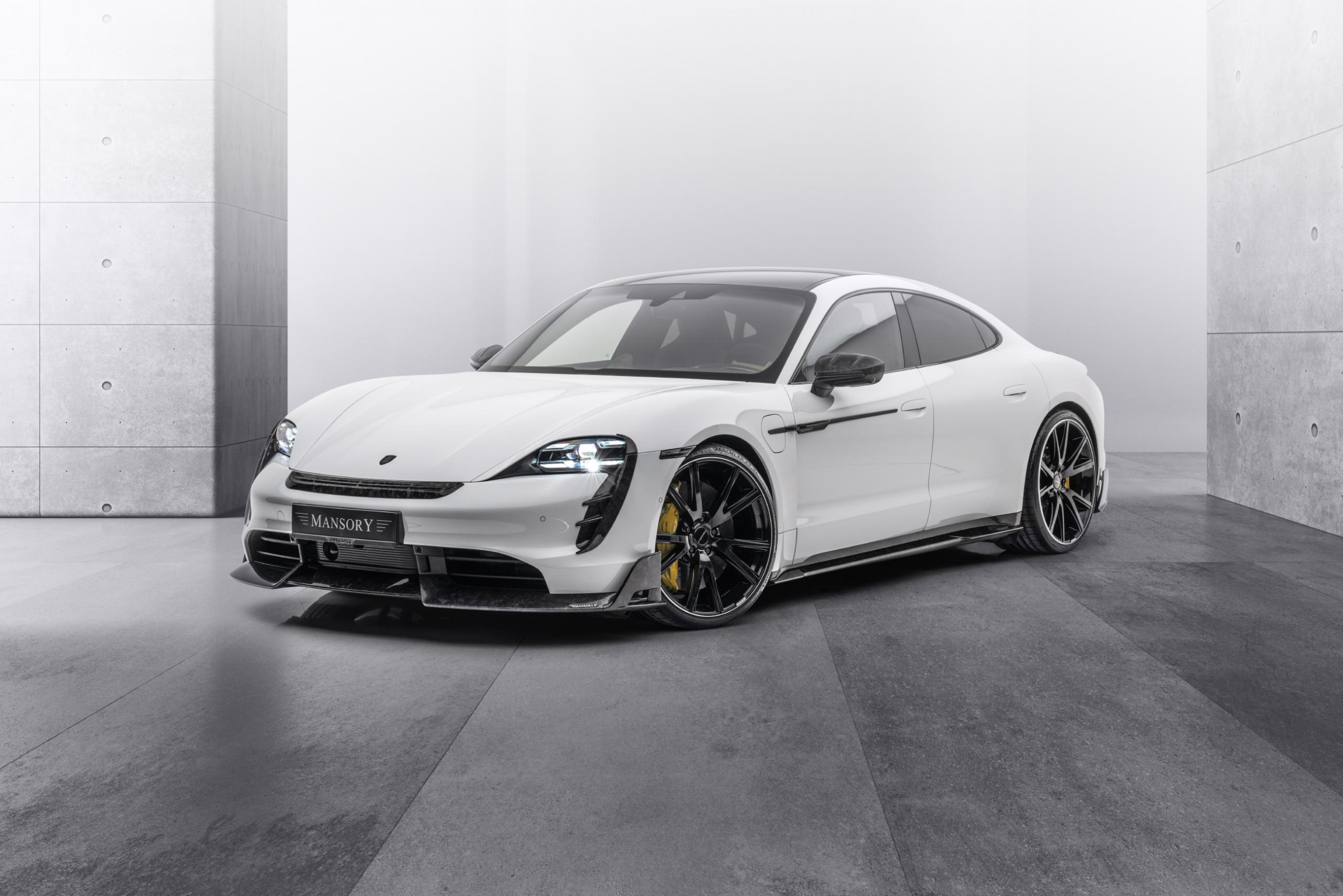
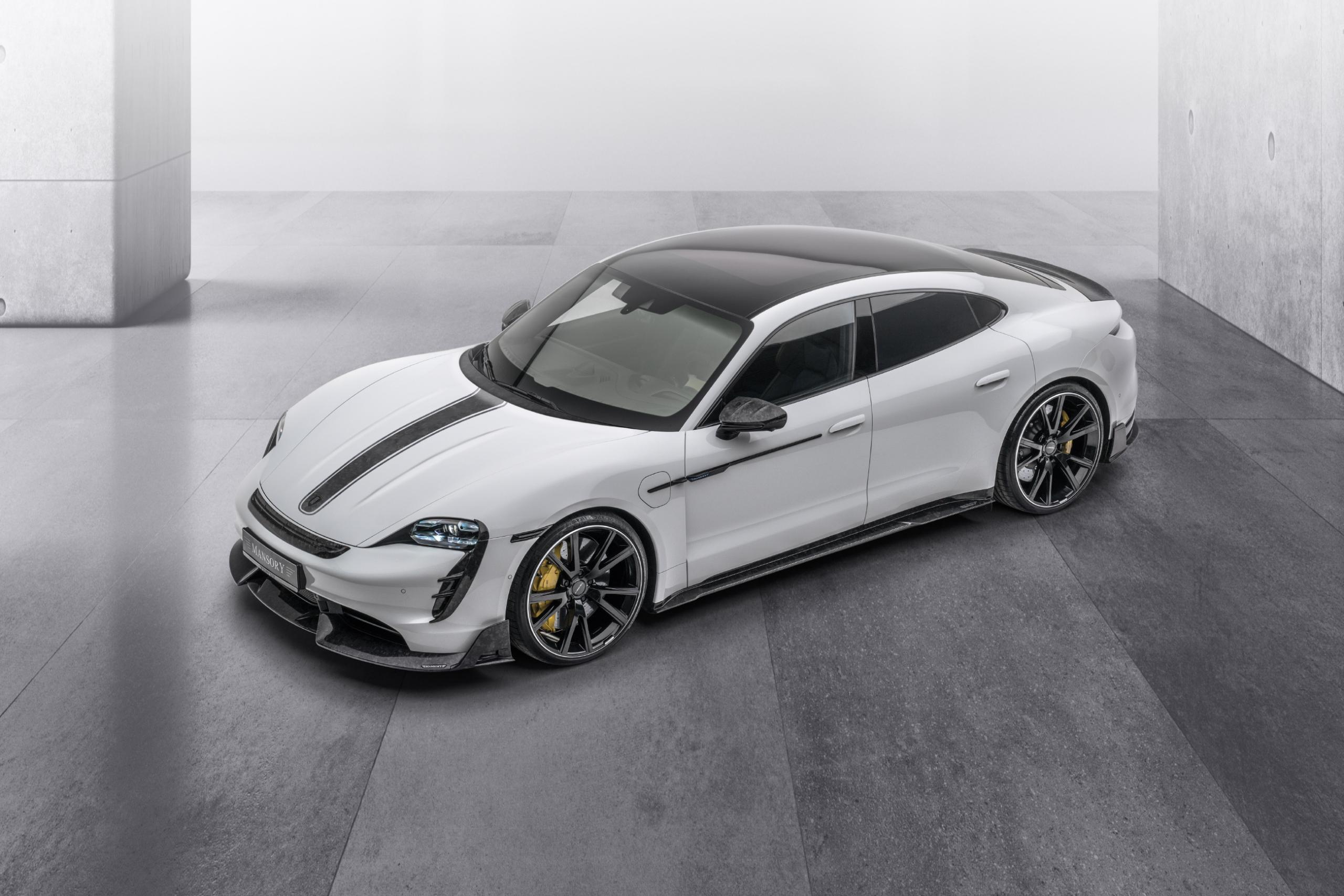
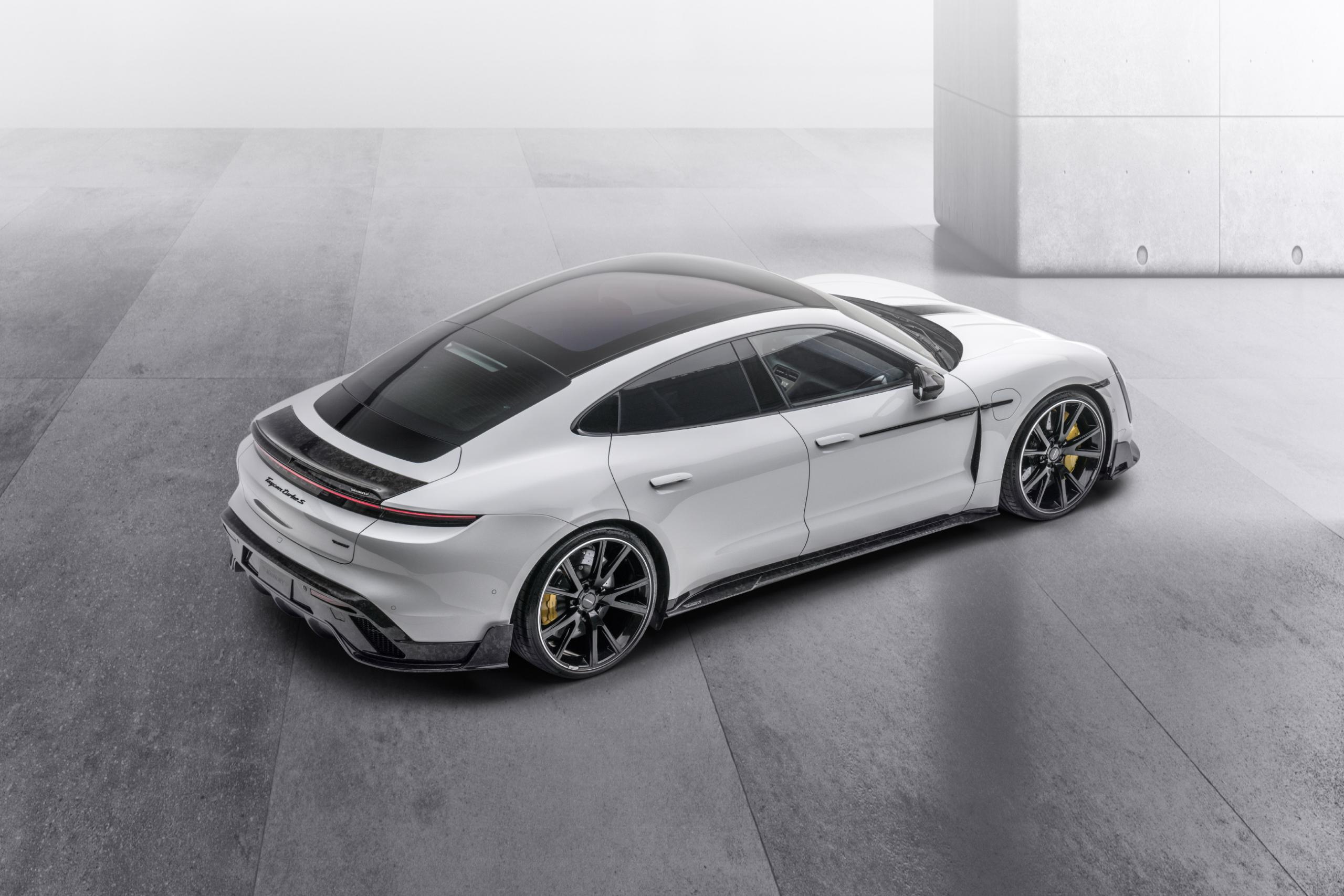
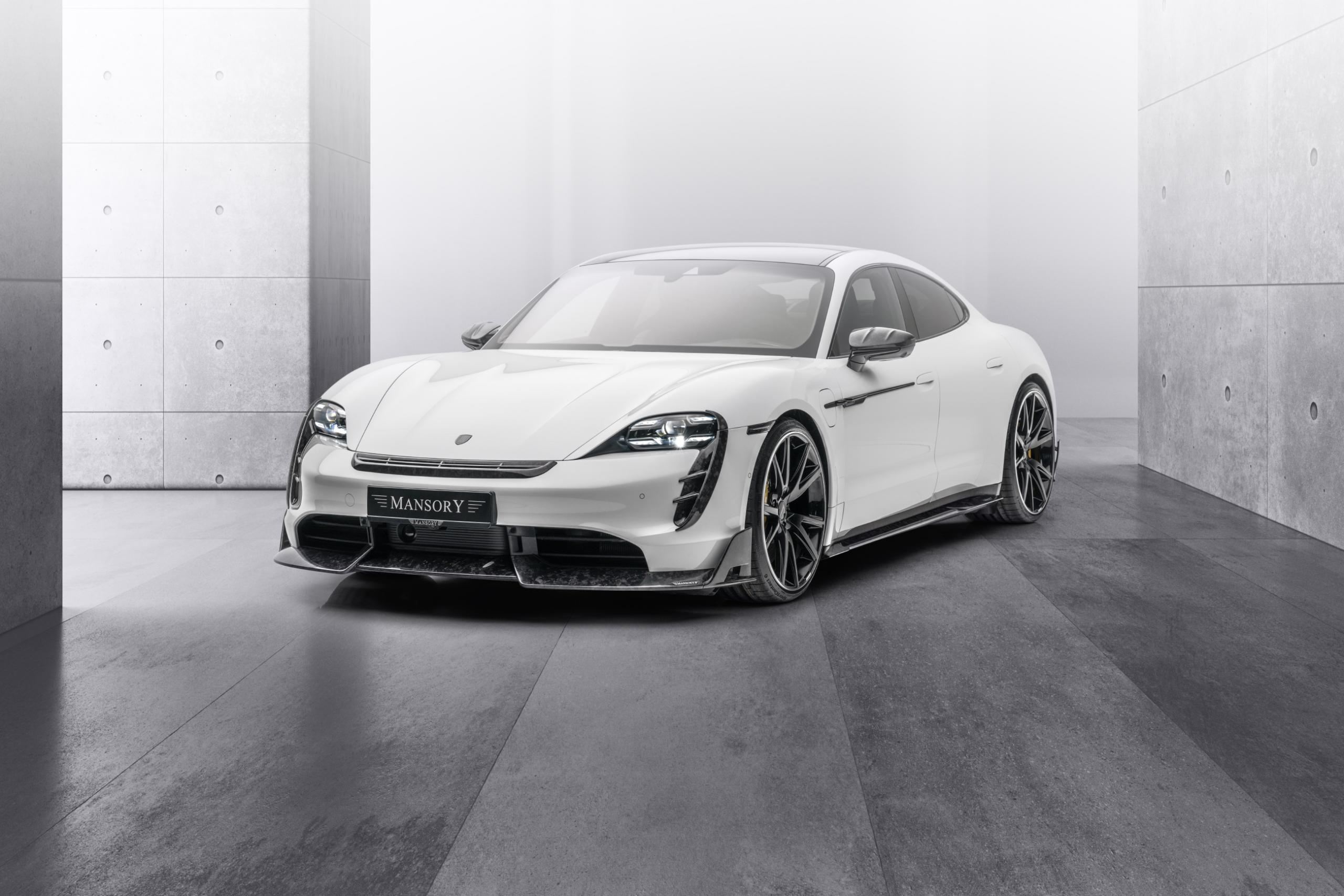
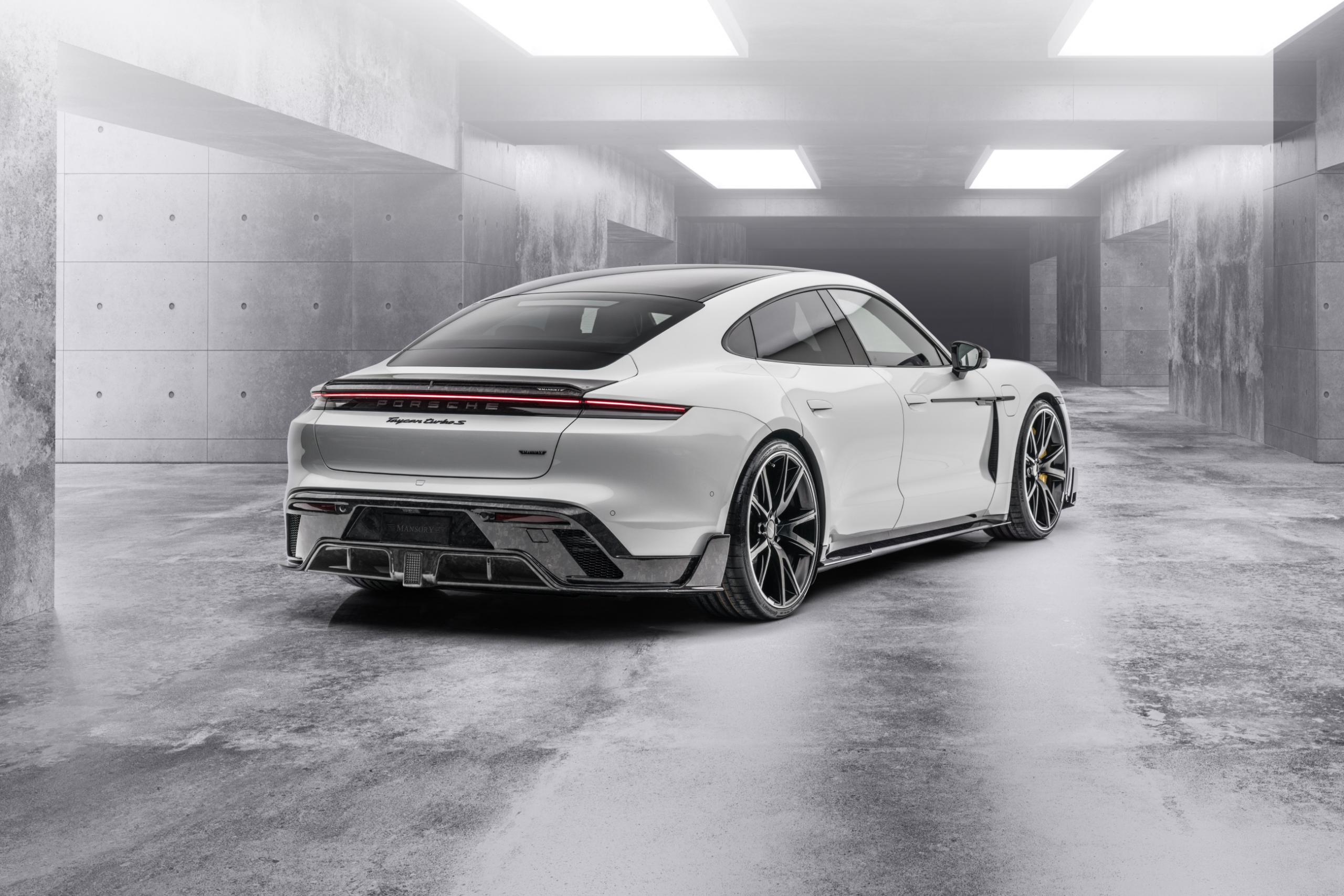
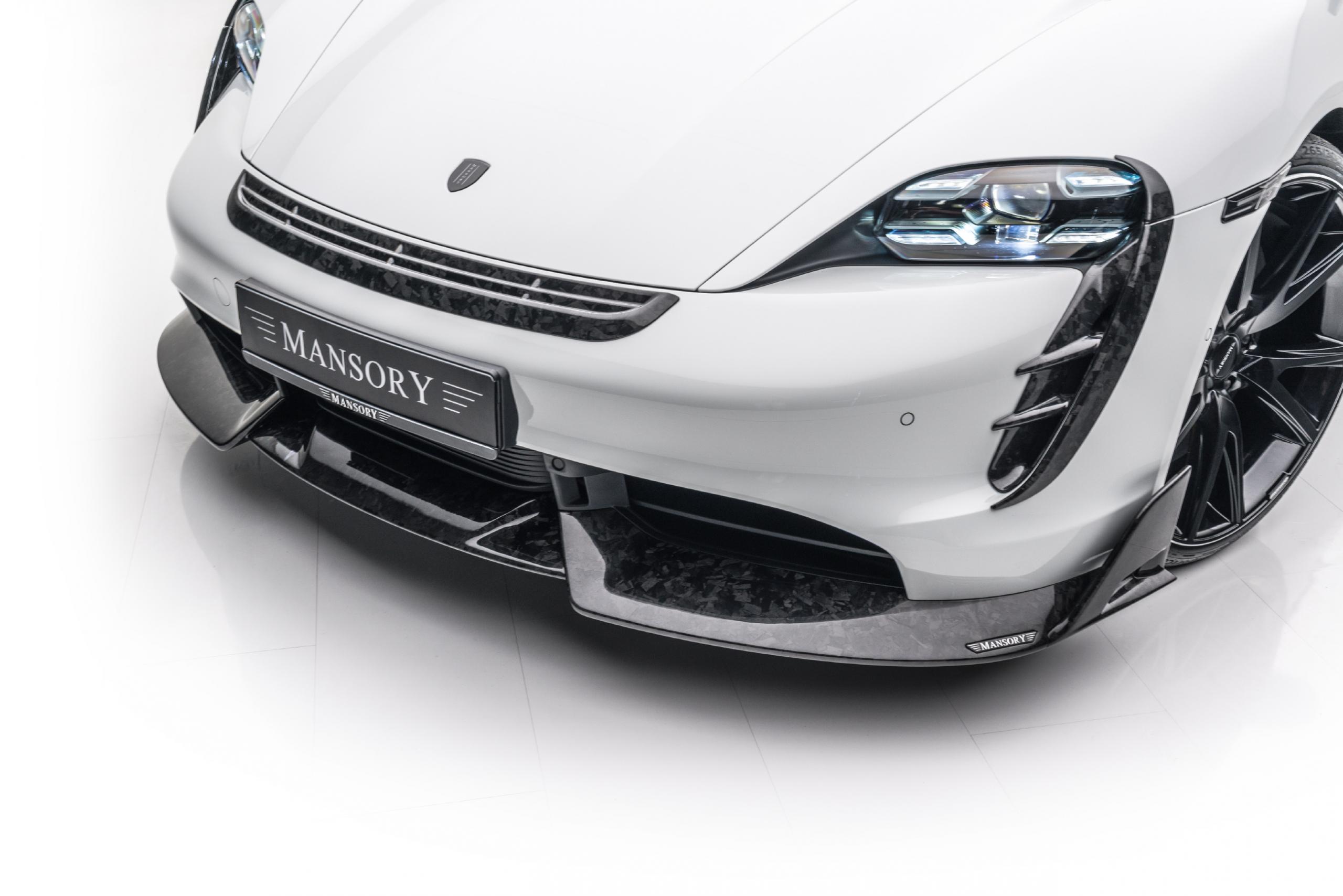
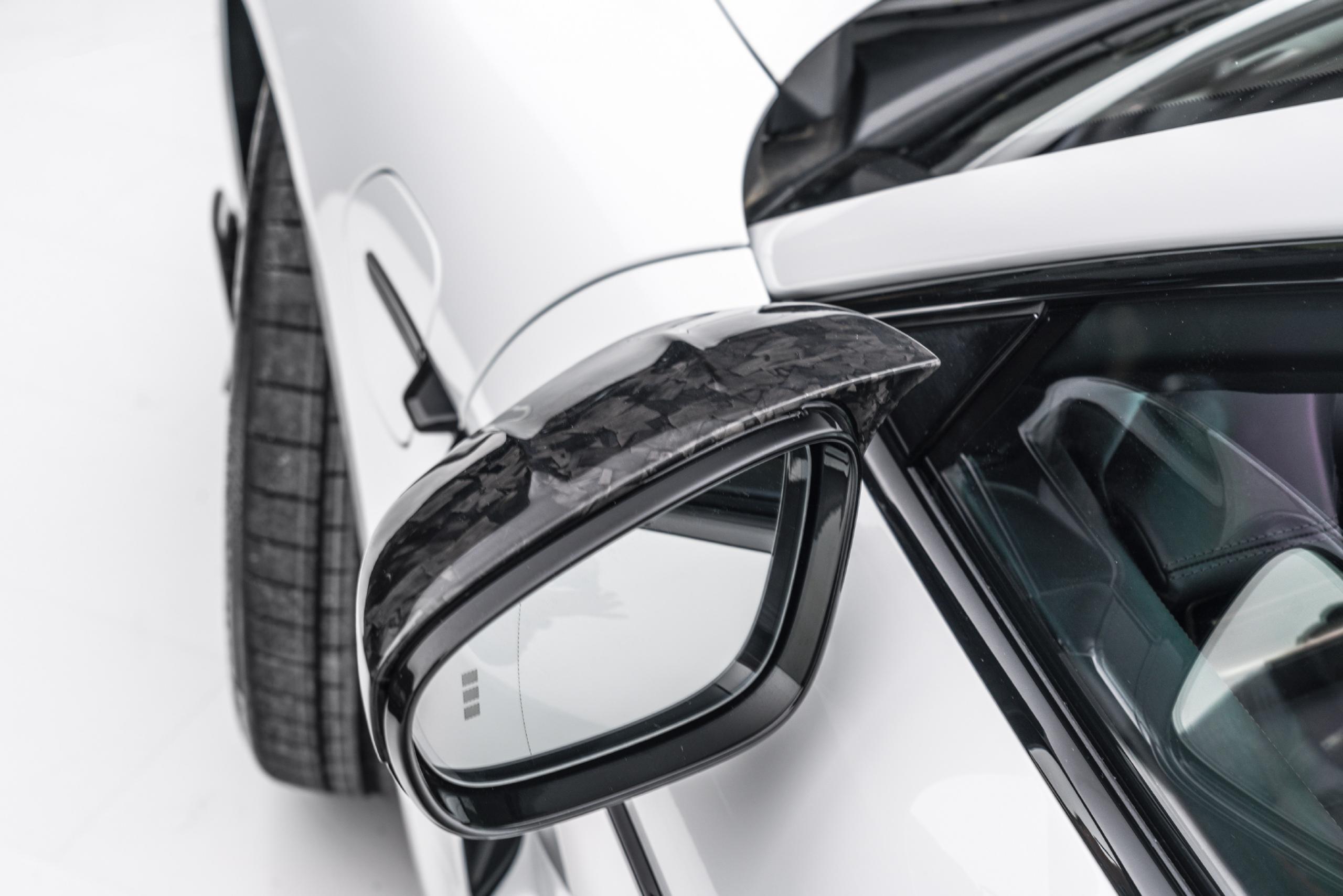
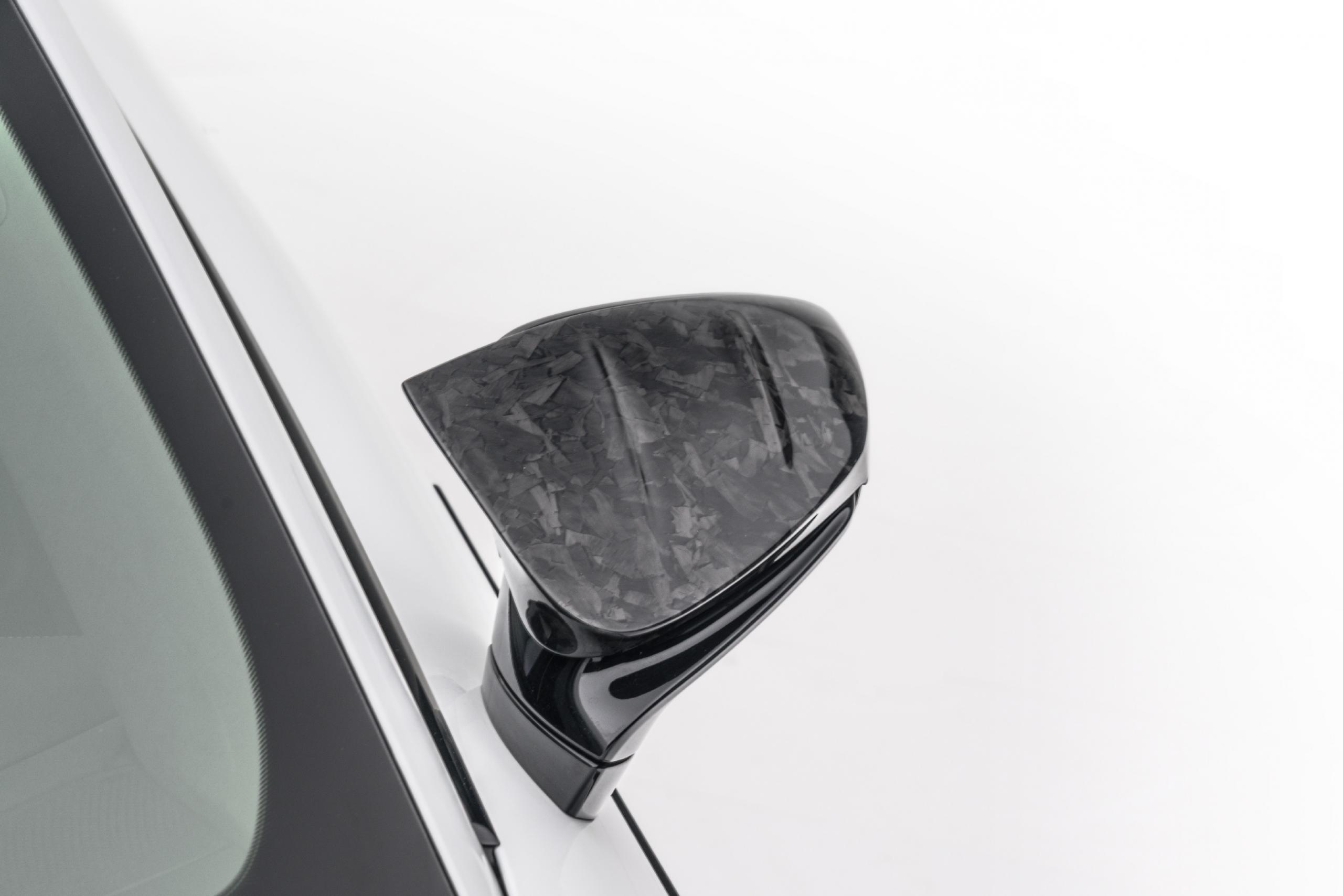
Mansory Carbon Fiber Body kit set for Porsche Taycan


MANSORY for the Porsche Taycan — the only Porsche EV in the Mansory catalogue
The Taycan is Porsche's first ground-up battery-electric platform — the J1 chassis, shared with the Audi e-tron GT, in production since 2019 and updated through the 2024 facelift cycle. Power runs from the rear-drive Taycan base through the AWD 4S, Turbo and Turbo S, with the Turbo S Cross Turismo wagon at the practical end of the line and the Turbo GT (with the Weissach Package) at the lap-time end. Mansory's response is unlike most of the catalogue: there is no PowerBox, no exhaust, no engine work, because there is no engine. The Taycan programme is body-and-wheels-only, and the carbon set is built around the J1's already-low silhouette without trying to make it look like a combustion supercar.
There is no direct EV sibling for the Taycan elsewhere in the Mansory programme, but the closest cousin by donor type is the Tesla Cybertruck Elongation — the workshop's other published EV build. Internal combustion sister builds in the Porsche line: the 911 Turbo S Coupé/Convertible programme and the Panamera 970 facelift (the closest internal-combustion saloon analogue to the Taycan). New Mansory releases sit on the Hodoor Mansory blog.
What's in the carbon set — and what isn't
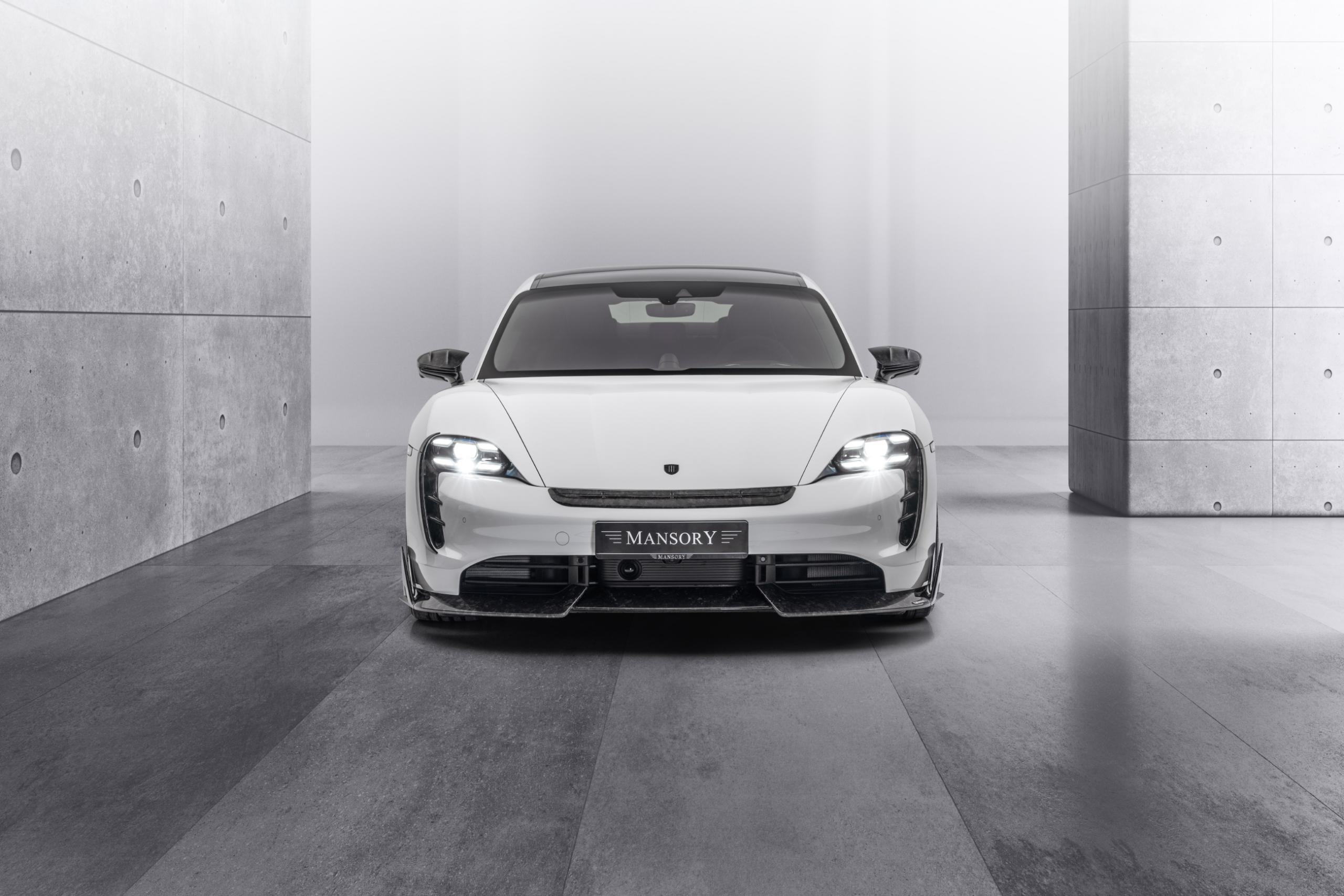
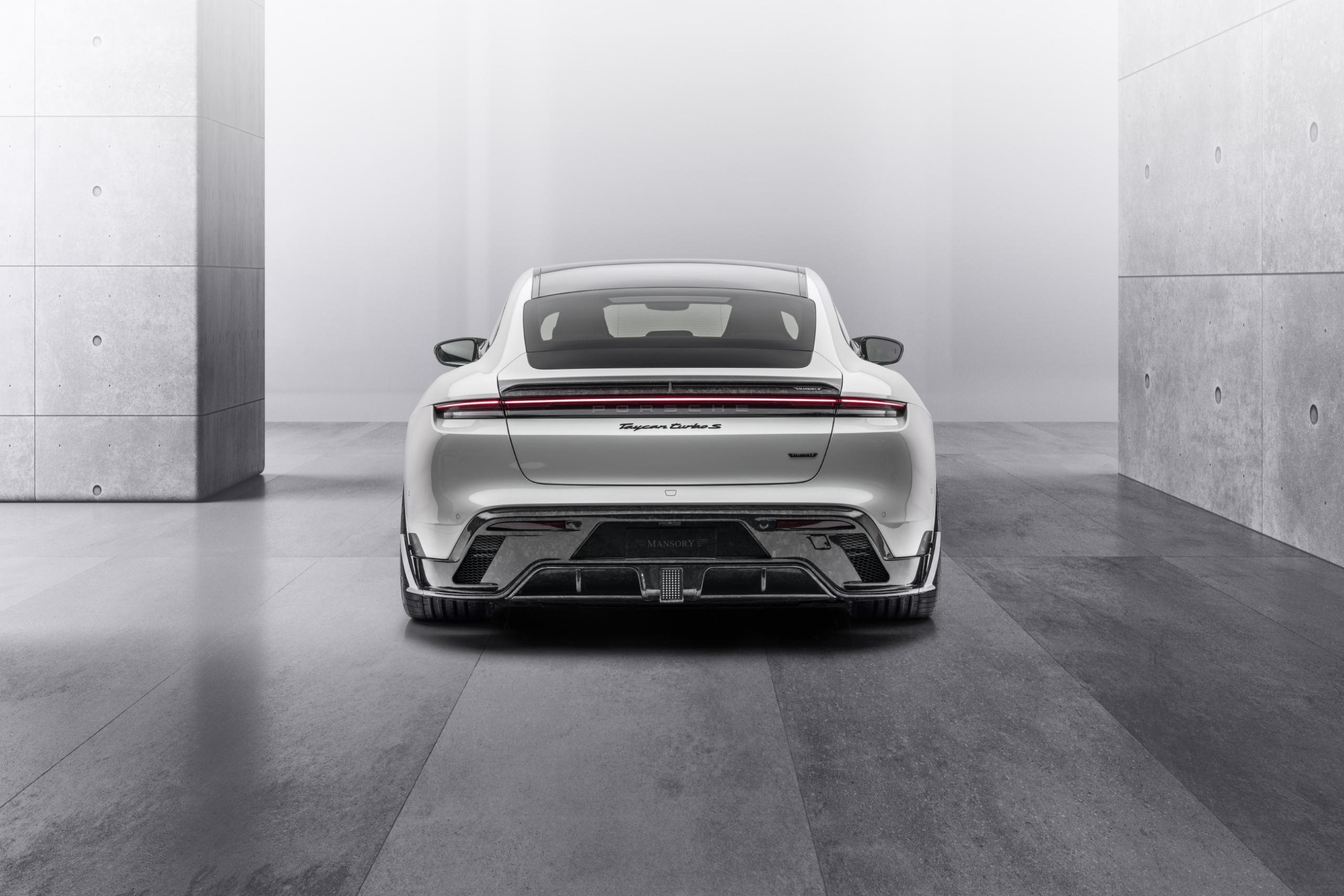
Total dry-carbon weight against the OEM panels lands at ≈10 kg, and the install is one to two shop days depending on whether the wheel package is fitted at the same time. There is no widebody — the carbon panels sit at OEM body width and clear both the OEM 21" Porsche wheel and the Mansory 22" forged set. The kit is dimensioned for the sedan and the Cross Turismo wagon (the Sport Turismo body uses the same OEM panel mounting).
Front:
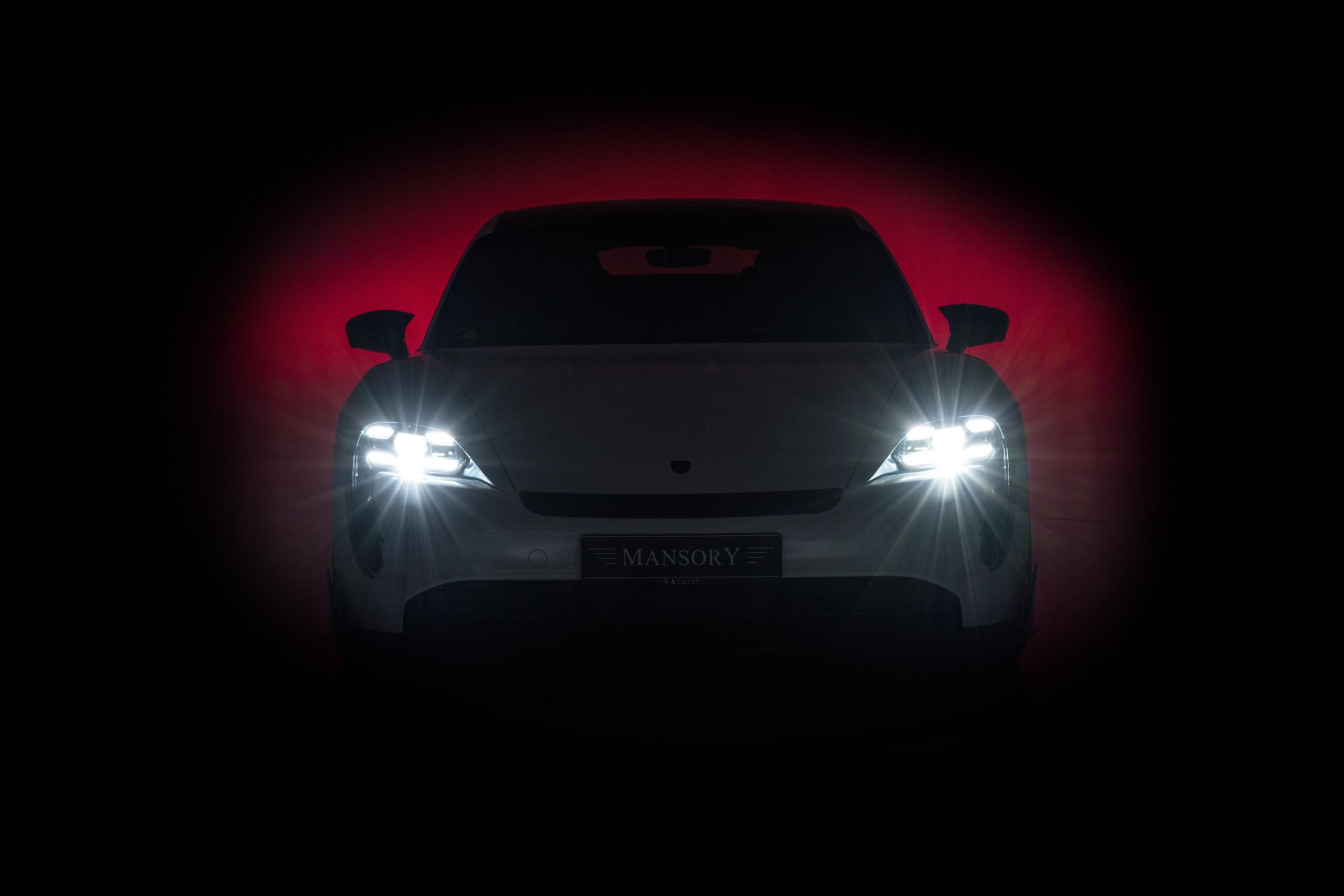
- Front lip with carbon splitter
- Front bumper trim accents (eyebrow surrounds in carbon)
- Front fender side air vents in dry carbon
Sides:
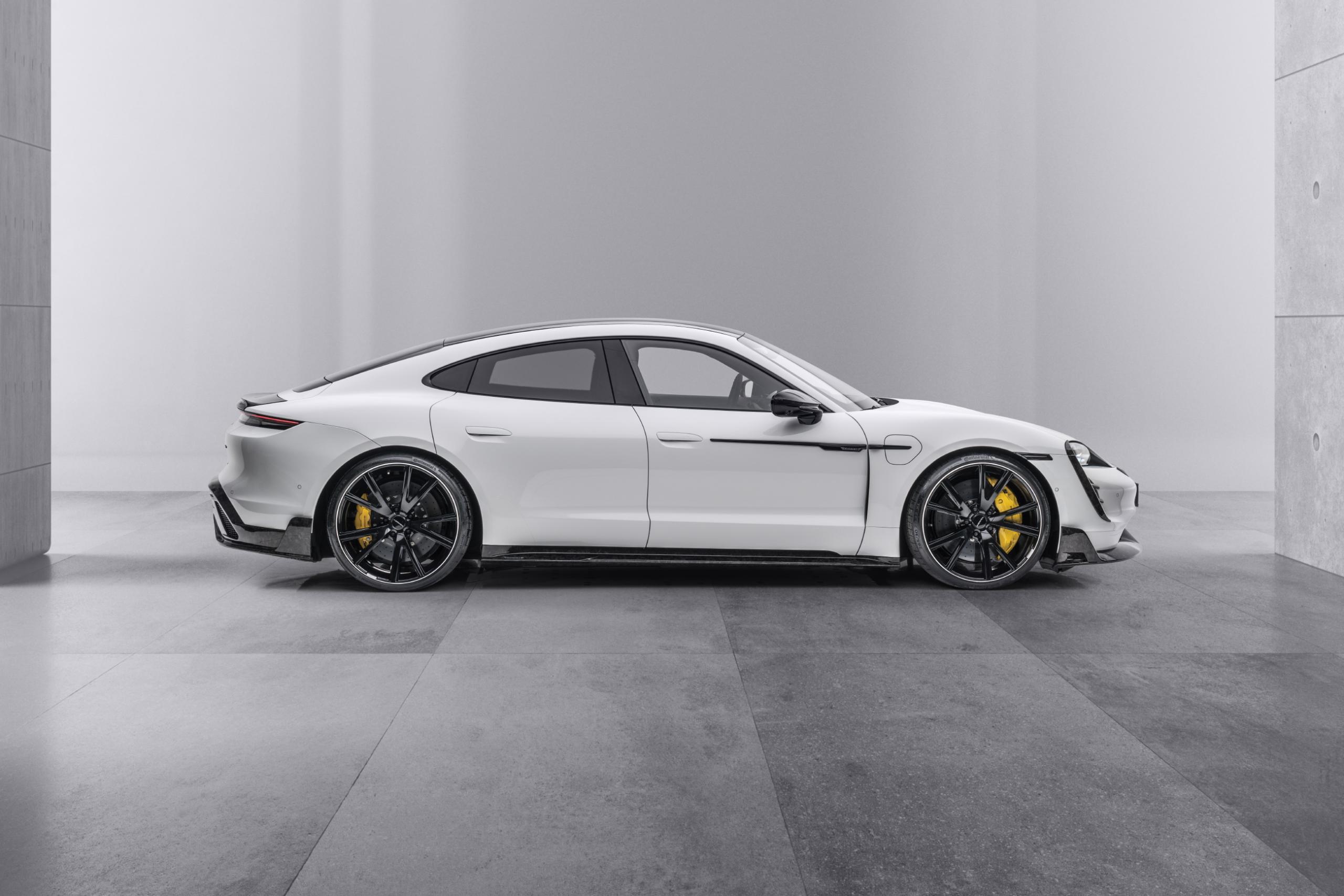
- Side skirts, two-piece
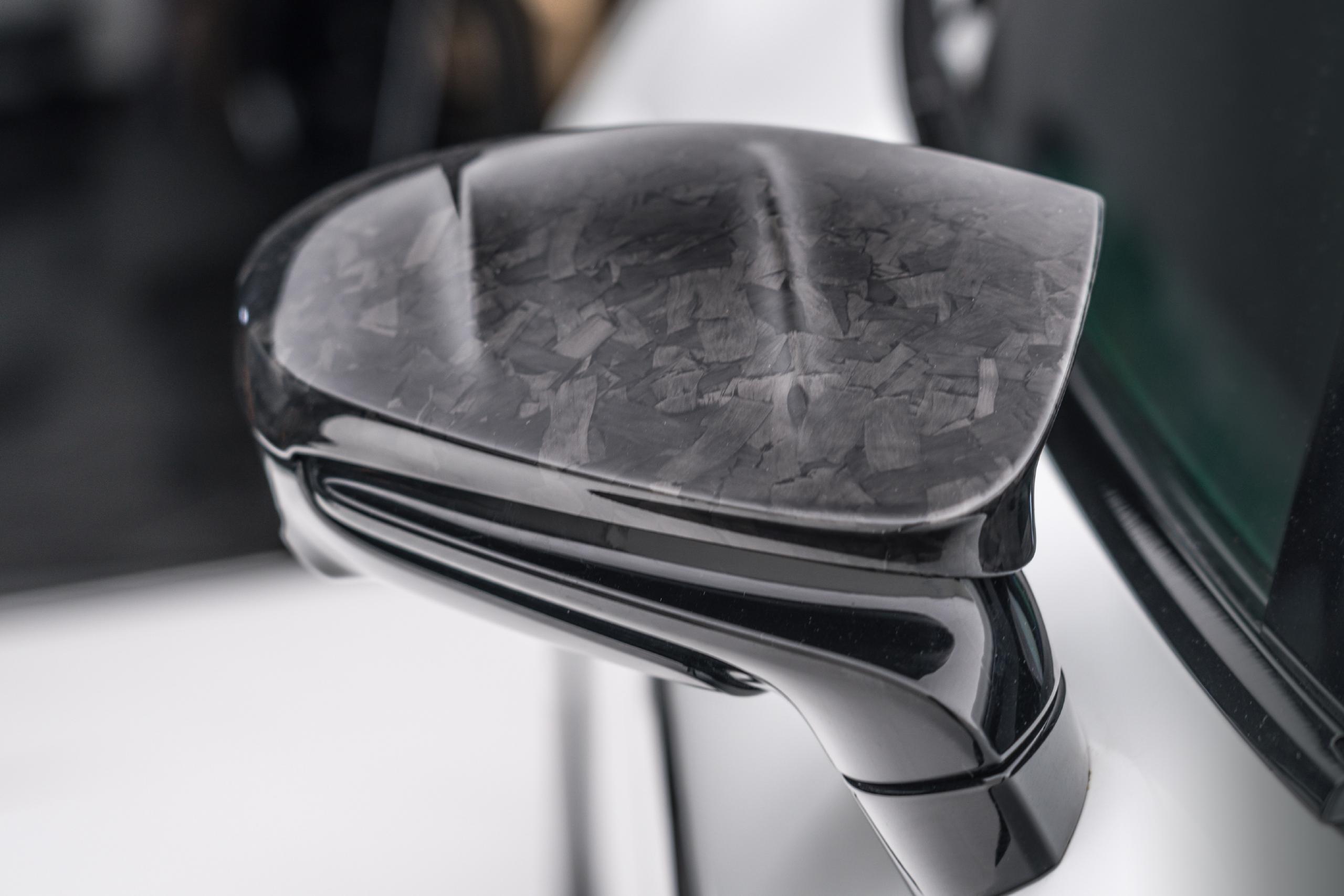
- Exterior mirror covers in carbon
- Optional door-handle covers
Rear:
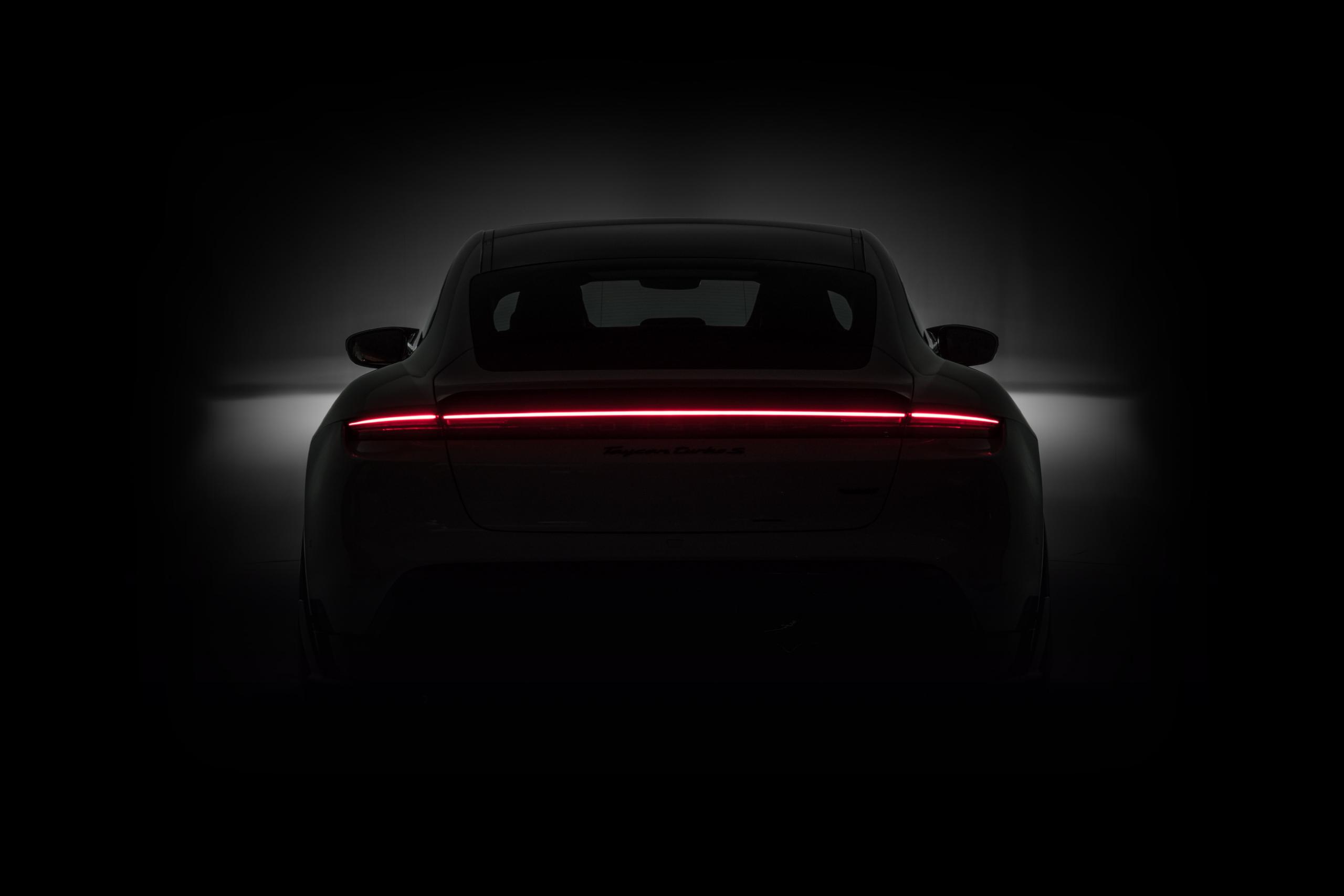
- Rear diffuser in dry carbon (with the OEM Taycan rear apron preserved)
- Rear bumper accent trims
What isn't in the kit: a PowerBox, an exhaust, a roof spoiler, or wide-body fender flares. Each of those omissions is deliberate and worth the explanation below.
Why there is no PowerBox — and why that matters
Porsche's EV powertrain calibration is locked behind the OEM battery-management system in a way that combustion ECU work isn't. Lifting power on a J1 Taycan beyond the factory Turbo S output (761 hp on launch control) is not a calibration commission — it requires battery-cell, inverter and cooling work that no aftermarket workshop, Mansory included, has published a programme against. The workshop's standing position on the Taycan is that the body kit is the entire scope and the powertrain is left at factory output. Owners who want more horsepower from a Mansory build are routed to the combustion 911 Turbo S programme rather than a Taycan custom commission.
Wheels and stance
Mansory's standard wheel offering for the kitted Taycan is a 22" forged multi-spoke, supplied in single-tone or two-tone polish. The OEM 21" Porsche wheel is preserved on lighter builds. Rolling resistance and the J1's regenerative-braking calibration are unaffected by the wheel swap — both wheel sizes were tested by the workshop against the OEM regen map without changes to recovery rate. The J1's air-suspension geometry is preserved (no lowering springs) and the OEM ride-height is retained because the kit panels sit above the OEM ground-clearance line.
Charging and the kit installed
The kitted car retains both the AC charge port (driver's side) and the DC fast-charge port (passenger side) at the OEM apertures. Neither flap is moved or modified. The 800-volt DC charging map is unchanged at up to 270 kW peak (J1 facelift cars) and the 22 kW AC on-board charger (where specified) operates without re-mapping. The carbon fender vents do not interfere with the OEM cooling-pack airflow into the front-axle motor or the battery-pack thermal management.
Fitment
The kit is dimensioned for the J1 chassis across both production cycles (2020-2023 pre-facelift and 2024+ post-facelift), across all powertrain trims (Taycan rear-drive, 4S, Turbo, Turbo S, Turbo GT) and across both body styles (sedan and Cross Turismo wagon, Sport Turismo where specified). The kit does not transfer to the Macan EV (different platform, different chassis architecture) or to the upcoming J2 Taycan successor. Audi e-tron GT owners — same J1 platform underneath — can use most of the carbon set with a per-VIN check on the front-fender geometry; talk to us with the VIN before ordering.
The EV-friendly map — where this kit ships
The Taycan order book is the most geographically European of any Mansory build, by some margin. The reason is simple: the kit lands cleanly in markets where the EV is a status object rather than a compromise, and that map is concentrated in Western Europe and East Asia. Two specific buyer geographies dominate the order book:
EV-status corridor — Northern and Western Europe. Norway is the single largest national Taycan market in the world by per-capita registration and by absolute count outside the United States; the kitted Taycan reads cleanly against Oslo and Bergen winter use. Norway, Iceland and the Netherlands carry the EV-status share. The Netherlands has no country-blog page on our site — Dutch Taycan orders ship on standard EU terms.
EV-status corridor — East Asia and Pacific. The Taycan is a high-status object in mainland China (Beijing, Shanghai), Hong Kong, Singapore (where the Cross Turismo specifically reads as a ride-height-friendly daily) and South Korea.
The two outlier corridors. The United States is the single largest Taycan market on the donor side (California, the Pacific Northwest, the New York tri-state) and Mansory ships US Taycan orders on standard freight without a country-blog page. The Gulf — usually the heaviest cluster for Mansory builds — is a small Taycan corridor: the Gulf summer is hard on EV battery thermals, and the kitted Taycan is far less common in UAE or Saudi Arabia than the same workshop's G-Class or Maybach programmes. CIS routes through the Tsar programme and is small for the same Gulf reason — Russian winter rather than Russian summer is the limiting factor.
Lead time and ordering
The full carbon set ships in three to five weeks from the workshop — the shortest lead time of any Mansory body kit programme, because the panel count is small and there is no widebody fitment dependency. The 22" forged wheel set adds four to six weeks. Most Taycan orders we ship are body kit + wheels in a single freight booking, landed in five to seven weeks total from order acceptance. Email [email protected] or WhatsApp +44 7488 818747 with your VIN, the trim (4S / Turbo / Turbo S / Turbo GT / Cross Turismo) and the production cycle (pre-facelift / post-facelift). For interior trim work see the Custom Design & Build service.
FAQ
Does the kit affect regenerative braking or the OEM brake regen calibration?
No. The Taycan's front and rear brake regen calibration is on the BMS side and the Mansory carbon panels do not touch any sensor input. Both wheel sizes (OEM 21" and Mansory 22") were tested against the regen map without recalibration.
Can I install the body kit on my Cross Turismo wagon?
Yes. The front and side panels are common between the sedan and the Cross Turismo / Sport Turismo bodies. The rear diffuser is wagon-specific and is supplied as a separate SKU on Cross Turismo orders.
Will the carbon panels block the front-axle motor cooling?
No. The carbon front fender vents are functional and align with the OEM cooling-pack airflow into the front-axle drive unit. The vent geometry was wind-tunnel-tested against the OEM cooling-pack temperature curve.
Can Mansory increase the Taycan's horsepower?
Not in the catalogue programme. EV powertrain calibration is locked behind the OEM BMS in a way that an aftermarket plug-in tune cannot reliably address. Per-VIN custom commissions to lift power on a Taycan are not currently accepted by the workshop.
What about the upcoming J2 Taycan (2025 successor)?
The J2 platform is not yet covered by a Mansory programme. The current carbon set is dimensioned for the J1 chassis across both production cycles. A J2-specific programme will be announced separately when the donor's body geometry is finalised.
Will the kit fit an Audi e-tron GT?
Most of the panels physically fit because the e-tron GT shares the J1 platform with the Taycan. Front-fender geometry differs at the side-vent line and is the main fitment risk. We accept e-tron GT orders on a per-VIN check rather than as a catalogue order — send the VIN before placing the order.
Parts