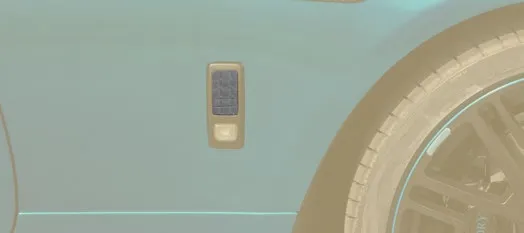
Individualized emblems for front fender with silver logo Mansory for Rolls-Royce Spectre


Individualized Emblems for Front Fender with Silver Logo Mansory for Rolls-Royce Spectre
Sitting on the painted wing surface of the all-electric Spectre, this pair of individualised silver Mansory emblems is the most personal element in the entire Mansory Carbon Fiber Body kit set for Rolls-Royce Spectre. Where stock kit emblems carry only the Mansory wordmark, the individualised pair is hand-engraved to the owner's specification — initials, a family monogram, a dynasty crest reduced to silhouette, the year of acquisition, an anniversary date in Roman numerals, or a hull-style identification number for collectors who treat their Spectre as part of a wider fleet. The pair is mirror-imaged left and right, sits just behind the front wheel arches in the side three-quarter sightline, and turns the silent coach-door coupe into a piece of bespoke jewellery that reads as one-of-one.
Construction & Materials
The blanks are produced by investment casting in solid brass, then silver-plated to a heavy gauge so the engraver can cut deep into the metal without exposing the underlying yellow alloy. Hand-engraving is carried out under a binocular microscope by a Mansory craftsman using miniature gravers, with the cut lines polished and then sealed under a thin clear lacquer that keeps the silver from tarnishing in damp climates. The result is a small, dense, jewellery-grade object — about the footprint of a credit card — with a tactile surface you can feel with a fingertip rather than the printed inlay you find on lesser badges.
- Substrate: investment-cast brass blank, ~1.6 mm wall thickness
- Plating: heavy-gauge fine silver electroplate, polished to mirror
- Engraving: hand-cut by Mansory artisan, depth tuned to silver layer
- Sealing: ammonia-resistant clear lacquer over engraved silver
- Adhesive: 3M VHB modified-acrylic foam pad pre-applied to back face
- Alignment: stainless locating pin into existing trim hole or fresh template
- Pair: left and right mirror-imaged badges, identical engraving
- Lead time longer than stock badges due to engraving queue
Design & Visual Function
The Spectre's silhouette is dominated by an exceptionally long bonnet plane that flows uninterrupted from the Pantheon Grille all the way back to the A-pillar. That plane is gentle, almost architectural, and it deliberately leaves the side three-quarter view starved of detail until the eye reaches the coach-door shut line. Mansory's individualised wing emblems are positioned to fill exactly that quiet zone — high enough on the wing to read at standing height in a forecourt, low enough to sit beneath the shoulder line, far enough back that they do not crowd the bonnet shut. Because each badge is a true silver piece rather than a printed disc, it picks up cool side light differently from the surrounding paint and behaves a little like a tiny mirror, flashing as the car rolls past.
The individualisation is what changes the character of the part. A standard Mansory wing emblem is a brand statement; an engraved monogram is a private one. Owners who run more than one Mansory commission often choose a small series number engraved in a corner, so that the Spectre carries the same identifier as their Cullinan or their Phantom — a quiet thread that ties a collection together without ever appearing on the exterior in any obvious way. Anniversary dates in Roman numerals, family crests reduced to a single silhouette, and stylised initials in a custom serif are the most-specified motifs, because they read as artwork rather than corporate marking.
Visually, the pair is at its strongest when the rest of the Spectre is also a Mansory commission. Against painted metal alone the badges sit beautifully, but against the carbon background of the optional matching wing panel they take on a far more graphic quality, because the silver reflects off a dark twill weave instead of off body colour, and the contrast doubles. That is why the pair is most often specified together with the Mansory front fender panel — the panel provides the canvas, the badge supplies the signature.
Compatibility & Fitment
Designed for the Rolls-Royce Spectre from MY2024 onwards, the model year that introduced the all-electric Architecture of Luxury platform. Both LHD and RHD bodies are accommodated because the emblem is mirror-imaged in pairs and the wing surface is symmetrical. The mounting position is calibrated to the OEM crease line that runs above the wheel arch, so the badges sit on flat metal rather than across a contour, and the alignment template ships with each pair to mark the centre point precisely. Because the Spectre's spaceframe is aluminium rather than steel, the adhesive system is the modified-acrylic VHB family that bonds reliably to factory paint over aluminium without the long cure window urethanes need.
Installation & Reversibility
Installation is a low-risk operation that nevertheless rewards patience. Total time is around forty-five minutes for the pair if the wing surface is properly decontaminated first. Tools required are a paper alignment template, a low-tack masking tape, isopropyl alcohol at 70% concentration, a lint-free cloth, a heat gun set to a low warm setting, and a soft pressure roller. The wing is washed, clay-barred to remove embedded contamination, then wiped with isopropyl until the cloth comes away clean. The template is taped into position, the badge's alignment pin is dropped into a small drilled or pre-existing hole, the VHB liner is peeled, and the badge is rolled firmly into the paint with a soft roller for sixty seconds per badge. A gentle warming with the heat gun activates the acrylic and brings the bond to near-final strength inside fifteen minutes; full cure is reached at twenty-four hours. The pair is reversible — fishing line under the badge releases it without damaging paint, and a citrus-based adhesive remover lifts the residue. We recommend a Mansory-trained installer for a first fit, after which the badges can be retrofitted to a second car by an owner with reasonable mechanical confidence.
Pairing within the Mansory Spectre programme
The individualised wing emblems are most often specified with the matching front fender panel, which provides the carbon canvas the silver engraving plays against and completes the side-profile signature. To carry the engraved monogram theme around the rest of the car, owners frequently add the rear trunk emblem with silver logo for a coherent silver-on-paint statement at the back, and the engraved silver emblem for the front motor cover so that the same monogram greets anyone who lifts the bonnet. Specifying all three at the same time keeps the engraving style consistent across the car.
Maintenance & Durability
The lacquer that seals the silver is the layer that takes the wear, not the silver itself, and treating it gently is the whole maintenance story. A pH-neutral car shampoo is the only soap that should ever touch the badges. Polish-style metal cleaners — especially anything containing ammonia — must be avoided, because ammonia attacks both the lacquer and the silver underneath; the same goes for alkaline wheel cleaners that can splash up onto the lower wing if the car is washed inattentively. A microfibre cloth, a drop of pH-neutral shampoo, gentle circular pressure, then a rinse with cool water and a soft drying cloth — that is the entire routine. Once or twice a year the badges can be re-sealed with a ceramic-style coating compatible with chrome and silver, which extends the lacquer's life by a year or two. Properly cared for, the silver will hold its mirror finish for the lifetime of the car; if the lacquer ever clouds, Mansory can re-plate and re-engrave the same blank rather than producing a fresh pair, which preserves the original artisan's hand.
Lead Time & Warranty
Because each pair is hand-engraved to a unique brief, lead time is longer than for stock Mansory emblems and typically runs five to eight weeks from the moment the engraving artwork is signed off. The artwork stage itself takes a week — Mansory's design office produces a vector sketch from the owner's brief, the owner approves or revises, and only then does a blank enter the engraving queue. A twelve-month manufacturing warranty covers plating defects, lacquer clouding, engraving errors against the approved artwork, and adhesive failure under normal use. Stone chips, deliberate damage, and chemical attack from prohibited cleaners are excluded.
FAQ
Q: How long is the engraving brief?
A: There is no hard character limit, but anything beyond a four-letter monogram, a date, or a single-line crest tends to compromise legibility at standing distance. Mansory's design office will advise during artwork.
Q: Can I keep the engraving private?
A: Yes. Many owners specify a monogram in a stylised serif that reads as ornament rather than as initials, so the personal meaning stays with them.
Q: Will the silver tarnish?
A: Not under the protective lacquer that ships from the factory. If the lacquer is ever damaged, the exposed silver can dull, and Mansory will re-plate and re-seal under warranty for the first twelve months.
Q: Does this fit my RHD Spectre?
A: Yes. The pair is mirror-imaged so the same item codes cover LHD and RHD cars without modification.
Q: Can the pair be removed for sale of the car?
A: Yes. The VHB pad is reversible with fishing line and a citrus solvent. Many owners order a fresh pair with the new owner's initials when transferring the car, keeping the original engraved set as a memento.
Specify the individualised wing emblems together with the matching carbon front fender panel and the silver rear trunk emblem to carry the personal signature across the full Mansory Spectre side profile. Discuss artwork and engraving brief on WhatsApp +44 7488 818 747 or [email protected].