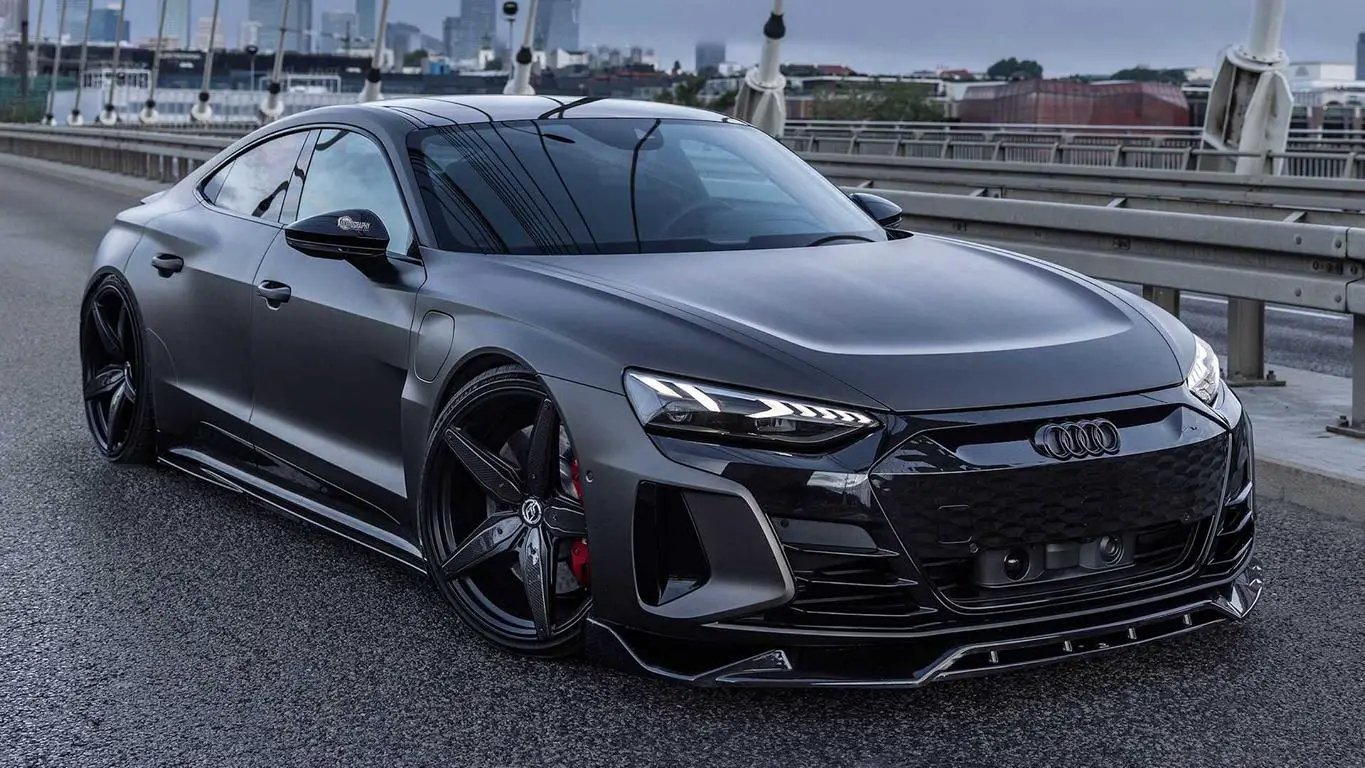
Tuning for drifting: Strategies for enhancing the performance of cars designed for drifting
Drifting is the art of controlled chaos — a discipline where tires scream, angles defy logic, and the driver balances on the knife's edge between a perfect slide and a spin. But behind every smoke-filled corner is a carefully tuned machine. Whether you're building a Nissan S-chassis for grassroots events or prepping a 1,000 hp GT-R for Formula Drift, the mechanical modifications that make a car drift well are specific, deliberate, and often counterintuitive compared to traditional performance tuning.
What Makes a Good Drift Car? The Fundamentals
Before diving into modifications, understand what drifting demands from a car:
- Rear-wheel drive — Essential. AWD cars can drift (see: "drift mode" on the BMW M5 F90 or Audi RS3), but competitive drifting is exclusively RWD.
- Abundant, controllable torque — You need enough power to break traction and maintain angle, but it must be progressive and controllable. A peaky, on/off power delivery makes the car unpredictable.
- Steering angle — Factory steering lock is almost never enough. Competitive drift cars run 50–70° of steering angle (vs. 35–40° stock).
- Lightweight and balanced — Lower weight means less inertia to overcome when initiating and transitioning drifts. Near-50/50 weight distribution is ideal.
- Durability — Drifting destroys components. Everything from engine mounts to oil pans to steering racks takes enormous stress. Build for abuse.
Engine and Power Modifications for Drifting
Power Targets by Level
| Drift Level | Power Target | Typical Setup |
|---|---|---|
| Grassroots / Practice | 200–350 hp | Stock turbo + tune, bolt-ons |
| Regional Competition (Pro-Am) | 350–550 hp | Upgraded turbo, supporting mods, built bottom end |
| National / Formula Drift Pro | 600–1,200+ hp | Built engine, large turbo or supercharger, standalone ECU |
Key insight: More power doesn't automatically make you a better drifter. At the grassroots level, 250–300 hp is the sweet spot for learning car control without overwhelming the chassis. Many seasoned drivers will tell you that a 300 hp Nissan 240SX with great suspension teaches more than an 800 hp monster that punishes every mistake.
Engine Swaps: The Drift Standard
The most common engine swaps in competitive drifting:
- 2JZ-GTE (Toyota Supra) — The gold standard. Capable of 1,000+ hp on stock internals with proper supporting mods. Iron block, massive aftermarket support. Common swap into Nissan S-chassis, BMW E36/E46, and even Lexus IS300.
- LS series (Chevrolet) — LS1, LS3, LS7. Affordable, lightweight (for a V8), enormous torque curves. The most popular swap in Formula Drift. An LS3 makes 430 hp stock and responds to boost with off-the-shelf turbo kits to 700+ hp.
- RB26DETT (Nissan Skyline) — Iconic inline-6, smaller aftermarket than the 2JZ but still capable of 800+ hp with proper building. Common in Japanese and Australian drift scenes.
- VR38DETT (Nissan GT-R) — Increasingly popular for high-budget builds. The twin-turbo V6 makes 800–1,200 hp with built internals and is compact enough to fit in S-chassis cars.
Understanding how these power modifications affect engine longevity is critical — especially for drift cars that see extreme thermal cycling and sustained high-RPM operation. Read our detailed analysis on tuning and engine longevity.
Suspension: The Most Critical System in a Drift Car
If you can only modify one system, make it suspension. The right suspension setup transforms a sloppy, unpredictable slide into a precise, repeatable drift.
Coilovers
Purpose-built drift coilovers differ from track coilovers in several ways:
- Softer rebound, firmer compression — This allows weight transfer to initiate the drift while maintaining stability mid-slide.
- Ride height adjustability — Drift cars typically run 30–50 mm lower than stock, but not slammed. Ground clearance matters — you're hitting curbs and running over debris.
- Spring rates: Front 8–12 kg/mm, Rear 6–10 kg/mm is a common starting point for a drift S-chassis. Pro cars may run stiffer.
- Top brands: BC Racing (budget-friendly at $1,000–$1,500), KW Suspensions ($2,500–$4,500), Öhlins ($3,500–$6,000), and MCA (Australian, $4,000–$7,000).
Steering Angle Kits
Increasing steering angle is non-negotiable for competitive drifting. Factory steering provides approximately 35–40° of lock. Aftermarket angle kits extend this to 50–70° by modifying or replacing steering knuckles, tie rods, and rack spacers.
- Wisefab — The industry standard. Wisefab kits for Nissan S-chassis ($1,200–$2,000), BMW E36/E46 ($1,500–$2,500), and Toyota 86 ($1,200–$1,800) provide massive angle with reliability.
- DIY lock kits — Modified stock knuckles with extended tie rods. Cheaper ($300–$800) but less refined and potentially less safe.
Differential
A welded or 2-way mechanical limited-slip differential (LSD) is mandatory. Open differentials are useless for drifting — you need both rear wheels spinning at the same rate to maintain angle.
- Welded diff — Free, effective for learning. Downside: terrible for street driving, can break under shock loads.
- Mechanical 2-way LSD — Cusco RS, OS Giken, ATS. $800–$2,500. Locks under both acceleration and deceleration. The correct choice for any serious build.
Chassis and Body Preparation
Roll Cage
Mandatory for competition and strongly recommended for practice. A proper 6-point or 8-point cage adds safety and significantly stiffens the chassis, improving the car's response to suspension inputs. Expect $1,500–$3,000 for a bolt-in cage, $3,000–$6,000 for a welded custom cage.
Weight Reduction
Every kilogram removed makes the car easier to rotate and less demanding on tires. Common weight-saving strategies for drift cars:
- Remove rear seats, sound deadening, carpet, and unnecessary trim (20–40 kg saved).
- Lightweight battery (lithium, 1.5 kg vs. stock 15–20 kg).
- Carbon fiber body panels — A carbon fiber hood, trunk, and fenders from brands like Liberty Walk can save 20–35 kg while adding aggressive styling. The Liberty Walk GT-R R35 kit in CFRP is a favorite in the pro drifting scene for exactly this reason. Learn more about weight savings in our guide to carbon fiber components for luxury and performance cars.
- Lexan (polycarbonate) rear and side windows (saves 8–15 kg on a coupe).
Wide Body Kits for Drift Cars
Wide-body kits serve a functional purpose in drifting: they accommodate wider wheels and tires, which provide more grip when needed and more smoke when shredding. Popular drift-oriented wide-body options:
| Brand | Platform | Fender Extension | Price Range |
|---|---|---|---|
| Liberty Walk | GT-R, Huracán, 370Z | +40–60 mm per side | $8,000–$18,000 |
| Rocket Bunny / Pandem | S-chassis, 86/BRZ, Z33/Z34 | +50–70 mm per side | $3,000–$6,000 |
| Clinched Flares | Universal / multi-platform | +30–55 mm per side | $2,000–$4,500 |
| Origin Lab | S-chassis, JZX100 | +40–60 mm per side | $1,500–$4,000 |
Curious about the cost of body kits and what factors drive the price? Check our detailed breakdown at body kit costs explained.
💡 Hodoor Performance for Drift Builds
Building a drift car with a premium body kit? We source wide-body kits, carbon fiber components, and custom aero from the world's top tuning brands. Our team can advise on the best combination of style and function for your specific drift platform. Reach out at [email protected] or browse our custom design options.
Cooling: The Overlooked Drift Essential
Drift cars run hot — constant high RPM, aggressive clutch engagement, and sustained sideways driving generate enormous heat. Critical cooling upgrades:
- Aluminum radiator — 40–60% better cooling capacity than stock plastic/aluminum units. $300–$800.
- Oil cooler — Essential for turbocharged drift cars. Keeps oil temps below 130°C during extended sessions. $400–$1,200.
- Transmission cooler — Repeated clutch kicks and aggressive shifts destroy transmission fluid. A dedicated trans cooler ($200–$500) extends gearbox life significantly.
- Power steering cooler — Full-lock sustained drifting cooks power steering fluid. A simple $100–$300 cooler prevents steering rack failure.
Tires: Your Biggest Ongoing Expense
Budget more for tires than any other single item. A competitive drift day can consume 2–4 sets of rear tires. Here's what the costs look like:
| Level | Tire Choice | Cost per Set (Rear) | Sets per Event | Annual Budget |
|---|---|---|---|---|
| Practice / Grassroots | Budget all-seasons (e.g., used tires) | $100–$200 | 1–2 | $1,000–$3,000 |
| Regional Competition | Performance summer (Federal 595RS-RR, Achilles 123S) | $300–$500 | 2–3 | $5,000–$10,000 |
| Pro Level | Spec tire (varies by series) | $400–$700 | 3–5 | $15,000–$30,000+ |
Electronics and Safety
Hydro E-Brake (Hydraulic Handbrake)
The most important control input unique to drifting. A hydraulic handbrake replaces (or supplements) the stock cable handbrake with a hydraulic cylinder that locks the rear brakes instantly — essential for initiating drifts. Cost: $150–$500 for the unit, plus installation.
Kill Switch and Fire Suppression
Mandatory for competition, highly recommended for practice. An engine kill switch ($30–$50) and plumbed fire suppression system ($300–$800) can save your car and your life.
Data Logging
Serious drift teams use data logging to analyze speed, angle, throttle position, and steering input. AiM Solo 2 DL ($800–$1,200) is the most popular option for recording and reviewing runs.
Building a Drift Car: Budget Tiers
| Tier | Base Car | Modifications Budget | Total Project | Power Level |
|---|---|---|---|---|
| Grassroots Starter | Nissan 240SX / BMW E36 ($3,000–$8,000) | $5,000–$10,000 | $8,000–$18,000 | 200–300 hp |
| Competitive Regional | Nissan 350Z / BMW E46 ($8,000–$15,000) | $15,000–$30,000 | $23,000–$45,000 | 350–550 hp |
| Pro-Level Build | Nissan S15 / GT-R / Toyota Supra ($15,000–$40,000) | $50,000–$150,000+ | $65,000–$200,000+ | 700–1,200+ hp |
Common Drift Build Mistakes
- Too much power, too early — Building a 600 hp car before mastering throttle control at 250 hp is dangerous and counterproductive. Power doesn't teach technique.
- Neglecting cooling — The engine that kills your drift car isn't the one that blows up from boost — it's the one that overheats because you cheaped out on an oil cooler.
- Stiff suspension = fast, right? — Wrong. Overly stiff suspension prevents weight transfer, which is how you initiate and control drifts. Start soft, then add spring rate incrementally.
- Skipping the LSD — No amount of power, suspension, or steering angle compensates for an open differential. Install a 2-way LSD before anything else.
- Ignoring safety gear — Cage, harness, helmet, fire suppression. These aren't optional for any serious drift practice. The car is replaceable; you aren't.
The Sound of Drifting
Part of drifting's appeal is auditory — the scream of a 2JZ on boost, the rumble of an LS V8 at full lock, the crack of an anti-lag system. Exhaust choice in drift cars is about more than sound: it's about flow, back-pressure reduction, and turbo spool. If you're interested in how exhaust modifications and tuning affect your car's acoustic character, read our article on how tuning modifications affect your car's sound.
Frequently Asked Questions
What's the best beginner drift car?
The Nissan 240SX (S13/S14) remains the gold standard for beginners: affordable, lightweight, massive aftermarket, and a chassis that rewards learning. The BMW E36 (325i or 328i) is an excellent European alternative. Both can be purchased for $3,000–$8,000 and turned into capable drift cars for under $10,000 in additional modifications. See our list of the most popular cars for tuning.
How much does it cost to build a competitive drift car?
A regionally competitive drift car (Pro-Am level) typically requires $23,000–$45,000 total investment including the base car. Pro-level Formula Drift cars range from $80,000 to well over $200,000. Ongoing costs (tires, maintenance, entry fees) add $10,000–$30,000+ per season.
Can you drift an automatic car?
Technically yes, but manual transmission (or sequential gearbox) is strongly preferred. Automatics lack the ability to blip and clutch-kick for drift initiation, and most torque converters overheat under drift conditions. Some modern DCT (dual-clutch) transmissions can handle drifting with the right programming, but manual remains the standard.
Do I need a wide-body kit to drift?
No — but a wide body allows wider tires, which means more grip for grip-running sections and more smoke during drift sections. At the grassroots level, stock fenders with modestly wider tires are perfectly adequate. Wide-body kits become more relevant at competitive levels where tire width regulations and visual presentation matter. Compare your custom vs. pre-made body kit options to find the right fit.
How do I protect my engine when drifting?
Install an oil cooler, use high-quality synthetic oil (changed every 3,000–5,000 miles or after every 3–5 drift events), monitor oil pressure and coolant temps with gauges, and add a baffled oil pan to prevent oil starvation during sustained high-G slides. Read our complete guide on tuning and engine longevity for more detail.
Conclusion: Build Smart, Slide Hard
Building a drift car is a unique discipline within automotive tuning. It's not about chasing the highest horsepower number or the lowest lap time — it's about creating a machine that responds precisely to your inputs, looks spectacular while doing it, and survives the punishment of sustained sideways driving. Start with the fundamentals (LSD, suspension, steering angle), build power progressively, and never compromise on safety and cooling.
At Hodoor Performance, we supply body kits, carbon fiber components, and aero packages from brands like Liberty Walk, Aimgain, and TopCar Design that serve both competitive drift builds and show-stopping street machines. Whether you need a wide-body kit to accommodate 295-section rears or a full carbon aero package to shed weight, we've got you covered.
📩 Ready to build your drift machine? Contact us at [email protected] or explore our full catalog for body kits, carbon components, and performance accessories from the world's top tuning brands.