Engine bonnet Mansory Carbon for Mercedes-Benz AMG GT S Coupe


Mansory Carbon Engine Bonnet (Exposed Weave) for Mercedes-Benz AMG GT S Coupé (C190)
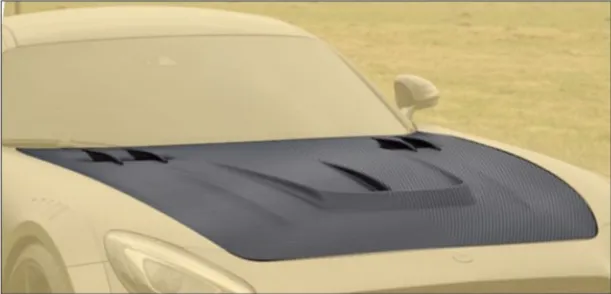
The Mansory engine bonnet in exposed 3K twill carbon is the showpiece panel of the AMG GT C190 carbon programme — a full one-piece replacement for the OEM long bonnet that sits above the 4.0L M178 V8 BiTurbo with its hot-V architecture and dry-sump lubrication. Where the primed variant is built to disappear under body colour, the exposed-weave bonnet is built to be seen: deep-gloss lacquer floats over a continuous, hand-laid weave that runs the full length of the cab-rearward proportions. As part of the Mansory Carbon Fiber Body kit set for Mercedes-Benz AMG GT S Coupe, this is the panel that telegraphs the rest of the build — pair it with exposed-weave front-lip and side-lip and the car reads as a coherent GT3-flavoured statement, not a parts-bin assembly.
Construction & Materials
Built as a single-piece outer skin bonded to a load-bearing inner sub-frame that mirrors OEM hinge points, latch geometry and gas-strut anchors. The cosmetic outer skin uses 3K twill broadcloth oriented for visual continuity along the centreline; the structural inner uses uni-directional stacks where stiffness matters most — around the latch boss, hinge mounts and the central spine that runs above the V8 hot-V valley.
- Outer skin: 3K twill carbon, hand-laid for weave continuity along the long-bonnet length
- Inner sub-frame: uni-directional carbon stacks at hinge bosses, latch boss, central spine
- Cure: autoclave prepreg, post-cured for dimensional stability over heat-soaked V8 bay
- Wall thickness: ~1.6–2.0 mm cosmetic skin, locally reinforced to ~3.5 mm at hinge / latch zones
- Weight: roughly 30–35% lighter than the OEM aluminium bonnet, reducing front-axle mass
- Finish: exposed weave under multi-stage UV-stable clear lacquer, machine-polished to deep-gloss
- Hardware: re-uses OEM hinges, latch, gas struts and sound-pad clips; supplied with new clip set
- Optional: heat-reflective inner foil for engine-bay thermal load above the hot-V turbos
Design & Visual Function
The C190's long bonnet is one of the longest in the segment — the cab-rearward stance puts the visual mass forward of the windscreen, and the panel's surface is what the eye reads first. The exposed-weave bonnet treats that surface as the canvas. The 3K twill is laid with deliberate weave alignment: a single continuous bias from the front shut-line back to the cowl, so the diamond pattern reads as one piece even at oblique angles. There is no paint break, no colour shift, no shadow line where the weave would otherwise meet primer — just lacquered carbon, end to end.
Visually it harmonises with the rest of the exposed-carbon family. Where the front lip sets the tone at ground level and the side lip carries the weave along the rocker line, the bonnet completes the upper plane — three exposed-carbon surfaces stacked vertically from the splitter to the cowl. Against the Panamericana grille's vertical chrome slats, the horizontal sweep of the bonnet weave creates a deliberate cross-axis tension that owners of GT R and Black Series cars tend to chase. It is the move that makes the car read as a coherent build rather than a collection of accessories.
For owners considering the lighter-touch route, the splitter for OEM engine bonnet is a small add-on that bolts onto the stock aluminium bonnet — a modest carbon accent rather than a panel replacement. The exposed-weave full bonnet sits at the opposite end of that scale: it is the showpiece choice, the one that defines the car's posture from twenty paces.
Compatibility & Fitment
Designed for the Mercedes-AMG GT (C190) Coupé in GT, GT S, GT C, GT R, GT R Pro and Black Series specification, both pre- and post-2017 facelift — the bonnet panel itself was not redesigned at the facelift, so the carbon replacement carries across. Roadster fitment should be confirmed with the installer (the engine bonnet is generally shared with Coupé but final shut-line tolerances are best validated on-car).
Crucially, this bonnet is not compatible with the 4-door AMG GT 63 (X290) — that is a separate platform with completely different long-bonnet geometry, hinge spacing and crash structure. OEM hinges, latch, gas struts, sound-deadening pads and underside heat shield all transfer across. AIRPANEL active underbody aero on the GT R is unaffected, as is the OEM exhaust note path and the rear-mounted DCT transaxle's clearance envelope.
Installation & Reversibility
Plan on 4–6 hours for a careful swap with shut-line setting, plus a half-day in the booth if the installer chooses to re-clear the lacquer for a perfect tactile match to other exposed-carbon parts. Tooling: trim tools, T30 / T40 hinge bolts, a second pair of hands for the swap, dial gauge for shut-line gap consistency, soft-faced mallet, gas-strut transfer tool. Shop process: support OEM bonnet, transfer hinges and gas struts to the new panel, drop into hinge mounts, set shut-line clearances against the front fenders and cowl, verify latch engagement and primary/secondary catch travel, refit sound-pad and underside heat shield. The job is fully reversible — OEM bonnet bolts back on with no changes to body or wiring. Recommended installer: AMG-certified body shop or a Mansory-trained installer for first-time carbon-bonnet fitments; the panel is not difficult, but the shut-line tolerances on the long C190 bonnet reward a body-shop eye.
Pairing within the Mansory AMG GT programme
The exposed-weave bonnet is the centrepiece of an exposed-carbon build. The natural three-way conversation is with the primed engine bonnet (paint-ready, for owners who want the carbon's weight saving but body-colour finish) and the splitter for OEM engine bonnet (a small carbon accent that keeps the stock aluminium bonnet). Choosing exposed weave commits the car to a carbon-forward visual language. From there, the obvious siblings are the front lip and the side lip — running the same exposed weave along the lower body lets the bonnet anchor a vertical visual sweep from splitter to cowl.
Maintenance & Durability
Lacquered exposed weave is the most demanding finish in the catalogue — the eye sees every micro-scratch in the clear coat because the weave underneath is the visual feature, not a hidden substrate. The single biggest service is a quality ceramic coating applied to a corrected surface; carnauba is fine but needs more frequent attention on a long horizontal panel that bakes in summer sun. What kills lacquered carbon: alkaline wheel cleaners drifting up onto the bonnet at a wash, ammonia-based glass cleaners over-spraying onto carbon, abrasive sponges, and most of all UV exposure on a car parked outdoors — the C190's long flat bonnet is a worst-case UV target, and a ceramic top-up every 18–24 months is realistic. Stone chips on the leading edge are the other hazard; PPF over the front 30 cm of the bonnet is strongly recommended for any car driven on motorway. Repair workflow: small chips can be filled and re-cleared by a carbon-trained body shop, larger weave damage may need a localised re-lay. The panel is durable — the lacquer is the maintenance item.
Lead Time & Warranty
Lead time is typically 4–8 weeks from order, reflecting Mansory's bespoke autoclave production cycle. The bonnet ships with a 12-month warranty against manufacturing defects (delamination, lacquer failure, fitment outside published tolerance), with a one-time re-clear available within the warranty window if a flaw appears.
FAQ
Q: Why pick exposed weave over the primed bonnet if the weight saving is the same?
A: Because the visual statement is the point. The primed bonnet hides the carbon under body colour — same weight, no carbon read. Exposed weave commits the car to a carbon-forward language and harmonises with the front-lip and side-lip exposed-weave parts.
Q: Does the bonnet fit my pre-facelift GT S (2014–2017)?
A: Yes — the bonnet panel itself wasn't changed at the 2017 Panamericana facelift. The grille area changed, but the bonnet shut-lines and hinge geometry carry across both phases of the C190.
Q: Is this compatible with the AMG GT 63 4-door (X290)?
A: No. The X290 is a separate platform with its own long-bonnet geometry. This part is for the 2-door C190 (Coupé and, with installer confirmation, Roadster) only.
Q: How much weight does it actually save versus the OEM aluminium bonnet?
A: Roughly 30–35% reduction over the OEM panel — meaningful for front-axle mass and yaw inertia, modest in absolute terms relative to total kerb weight.
Q: Can I re-clear the lacquer at home if it dulls?
A: Not recommended. The deep-gloss finish is built up in multiple stages with UV-stable clear and machine-polished — a body-shop respray is the right path, and Mansory offers a re-clear inside the warranty window for any factory-attributable flaw.
Pair it with the front lip and side lip for a coherent exposed-carbon read. To order, confirm trim and finish via WhatsApp +44 7488 818 747 or [email protected].