Carbon panels Mansory for Lamborghini Aventador S


Mansory Carbon Panels for Lamborghini Aventador S
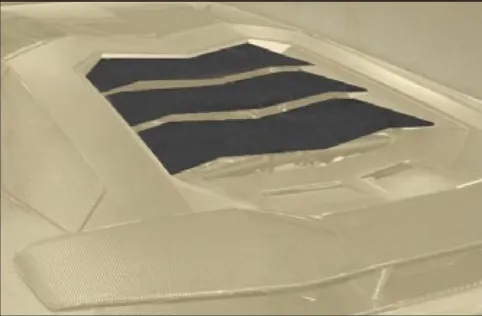
The Mansory carbon panel programme for the Lamborghini Aventador S sits inside the wider Mansory Body Kit for Lamborghini Aventador S and behaves differently from a single bumper or wing component: it is a modular family of accent surfaces that drape lacquered carbon across the smaller details an LP740-4 S exposes once the major aero has been resolved. Rocker finishers, body inserts behind the door cut, narrow surrounds around the side intakes, finishers under the lower-side exhaust outlets, badge plinths and decorative line items — supplied as a complete suite or specified piecewise. The role on a naturally-aspirated V12 chassis with rear-wheel-steering, scissor doors and an aluminium-CFRP monocoque is finishing rather than aero: turning the painted panels that remain after a full Mansory conversion into a coherent carbon canvas, with weave clocked across adjacent surfaces so the eye reads one material rather than a patchwork of composite parts.
Construction & Materials
Each panel in the set is laid up individually but specified to a shared materials sheet, so the suite reads as one fabric stretched across the body. Mansory builds a master roll plan for any given Aventador S build and routes plies from that plan through every line item in the panel order, so weave repeat, twill direction and lacquer batch line up across rocker, A-pillar trim and badge surround.
Substrate handling differs from larger aero panels. These trims sit on existing painted bodywork — they are an additive finish layer rather than a replacement panel — so the bond face is engineered for adhesive thickness, not mechanical fixings, and the visible face is finished to display lacquer standard with ply orientation policed before cure.
- Weave: 3K twill 2x2 default across the suite; 1K plain weave on rocker accents for finer scale; forged-look composite reserved for badge plinths and small detail items where the chunky chip pattern reads better at hand distance
- Cure: autoclave at roughly 6 bar / 120 deg C with prepreg epoxy, full vacuum bagged; smaller items run together in a shared cycle to keep lacquer batch consistent
- Wall thickness: 1.0-1.6 mm depending on item — rocker accents 1.6 mm, body inserts 1.2 mm, badge surrounds 1.0 mm
- Weight per item: 60 g for a badge surround, 120-180 g for a body insert, 280-340 g for a rocker accent; full suite typically 1.6-2.4 kg depending on selection
- Mounting hardware: 3M VHB acrylic foam tape strips and structural methacrylate adhesive on bond faces, no mechanical fasteners on visible items, OEM stainless clip features retained where original panel relied on them
- Finish: deep gloss UV-stabilised polyurethane lacquer is the reference; satin matte and visible-weave-and-paint hybrid finishes available on request
- Edge work: every visible edge dressed to a consistent radius, weave continued around the radius rather than stopping at the corner
- Tolerances: panel-to-panel weave clocking held to plus or minus two degrees, gap to neighbouring painted bodywork held to OEM panel-gap tolerance
Design & Visual Function
The visual logic of the panel set is paint break versus full carbon coverage. Once a Mansory front bumper, side skirts and rear diffuser are on a Lamborghini Aventador S, the silhouette already reads carbon; what remains is a series of intermediate surfaces that can either be left in body colour as a paint break — letting the carbon read as a band along the lower body — or dressed with this trim suite to push carbon into the upper body and turn the lower and mid-section into a continuous lacquered fabric. The panel programme exists to give either choice cleanly.
Weave alignment is the discipline that holds the suite together. On a single rocker accent the twill direction is read directly; across two adjacent items the eye picks up any rotation between weaves immediately, even at five metres. Mansory clocks the weave on every panel to the same reference line — typically the longitudinal axis of the car — so the twill marches in one direction from front fender insert through rocker accent to rear quarter trim. The same clocking discipline runs across door cut accents and the smaller items that frame the side intakes, so the eye walks down the flank without snagging on a panel that runs the wrong way.
Light handling is also part of the design brief. The Aventador S has aggressive surface tension on its flanks — the diagonal cuts above the rocker, the hexagonal side-intake cues, the long door cut — and a flat lacquer would flatten these features. The panel set is finished with a high-build deep gloss layer that holds reflection sharply, so the weave appears underneath a wet skin and the body lines reflect in the lacquer rather than vanishing into it. On Roadster cars the rocker accents read particularly well because the lower lip of the open cabin sits closer to the eye.
Compatibility & Fitment
Set is engineered for the Lamborghini Aventador S (LP740-4 S, 2017-2021), coupé and Roadster, with pre-SVJ front bumper geometry, lower-side exhaust outlets, and the standard rear arrangement without active aero or high-mount exhaust. Every item retains OEM Lamborghini parking sensors, scissor-hinge clearance, side-intake plumbing, and oil-cooler ducting paths. Roadster builds account for the targa-style top and its stowage area at the rear deck, so accent panels behind the cabin do not foul the soft-top closure mechanism. Items can be ordered to match an existing Mansory carbon programme on the same car or as a stand-alone trim refresh on a factory Aventador S, with the line item list adapted to which panels are already in place.
Installation & Reversibility
The panel programme is the most installer-friendly part of the Mansory Aventador S catalogue. Most line items go on with surface preparation, primer-compatible adhesive priming on the bond face, application of acrylic foam tape or methacrylate beads, and a weighted cure period; no panels are removed, no hinges are disturbed, no sensor harnesses unplugged. Time per item runs from 25-40 minutes for a badge surround or small body insert to 90-150 minutes for a rocker accent including masking and cure dwell. A complete suite ordered as a single job typically books 8-14 hours of bodyshop time for a coupé, 9-16 hours for a Roadster.
Aventador bodywork includes panels bonded with methacrylate to the CFRP monocoque, and adhesive selection on accents that bridge those zones must respect substrate chemistry — Mansory recommends MMA-compatible adhesive lines and avoids any cyanoacrylate or strong-solvent surface prep on those areas. Reversibility is a design goal: every accent uses an adhesive system that will release with controlled heat (60-80 deg C) and a plastic blade, leaving the original paint intact provided the lacquer below is in sound condition. Recommended installer is a Lamborghini-certified body shop or a Mansory-trained detailer; small items (badge surrounds, narrow finishers) are inside the range of an experienced enthusiast working in a clean indoor environment with controlled temperature.
Pairing within the Mansory Aventador S programme
The panel suite is the connective tissue of a Mansory Aventador S build. It is most often specified alongside Carbon Windshield Wipers Cover and Mirror Housing, since those three items together cover most of the small painted real estate that survives a full carbon conversion. Adding the Trunk Carbon Cover at the front extends the carbon reading onto the bonnet detail and closes the loop visually — front trunk surround, wiper cover, mirror housings, rocker accents and body inserts all clocked to the same weave reference. Build order matters: lower body parts first, then door cut and rocker accents, then upper body, badge plinths and surrounds last. That sequence lets the bodyshop work bottom-up, masking each completed line as it climbs.
Maintenance & Durability
Lacquered carbon trim is finished to a polyurethane standard equivalent to OEM clearcoat, so the same care protocol used on the painted Aventador S works on the panels — pH-neutral shampoo, deionised rinse, soft microfibre dry. UV exposure is the headline risk: a ceramic coating extends the lacquer's working life by stripping UV energy at the silica skin before it reaches the resin. Carnauba waxes are acceptable but need frequent reapplication and tend to dull the deep gloss.
Things that kill lacquered trim: alkaline wheel cleaners migrating onto rocker accents, ammonia glass cleaners overspraying onto body inserts, abrasive sponges, and high-pressure jets directed at panel edges from a close angle. Keep wash media segregated and mask rocker accents during alkaline wheel work. Engine-bay heat is not a factor — the accents sit away from the V12 hot zone. Chip repair on a small accent is straightforward: sand, touch-in lacquer, re-polish; for a deeper hit through the weave, the affected item is replaced individually under the modular approach.
Lead Time & Warranty
Lead time runs 4-8 weeks from order confirmation to release. The suite is built to order against a customer ply plan, and small variations in line-item count change build time more than they change calendar days, since the autoclave cycles are shared. Warranty: 12 months against manufacturing defects (delamination, lacquer haze under normal use, weave misalignment outside Mansory's published tolerance, adhesive failure on bond faces). Wear and tear, stone-chip damage, fluid contamination and modifications by third parties are excluded.
FAQ
Q: Do I have to order the full suite, or can I pick line items?
A: Pick line items. The suite is modular by design; a first order is typically rocker accents plus inserts, badge plinths added later.
Q: Will the weave on my panels line up with the carbon on a Mansory front bumper or rear diffuser already on the car?
A: Yes if Mansory built the original aero — they pull the new panels from the same ply plan. If the existing aero is from another supplier, weave matching is best-effort; specify a sample swap during the build to confirm visual continuity.
Q: Coupé versus Roadster — does the suite differ?
A: Most line items are shared. Roadster builds adjust the rear quarter accents to clear the soft-top stowage and add an optional cabrio-only finisher behind the cabin; coupé builds use the equivalent area for a longer rocker extension.
Q: How is durability against stone chips on rocker accents?
A: Comparable to a painted rocker. Owners who track the car commonly add a self-healing PPF clear film over the rocker — the lacquer is robust but not impact-proof.
Q: Raw weave or lacquered — can I mix?
A: Possible but discouraged. Raw weave needs frequent UV protection and ages differently from lacquered carbon, so mixing the two on the same car drifts the weaves apart over years. The default suite is fully lacquered.
Q: If a single panel is damaged, can it be replaced individually?
A: Yes. The modular design is built around individual replacement. A new item is cut from a fresh ply, weave-clocked to the build reference of the original suite, and supplied as a drop-in.
Pair the panels with Carbon Windshield Wipers Cover, Mirror Housing and Trunk Carbon Cover for a full small-detail carbon refresh on the Lamborghini Aventador S. CTA: WhatsApp +44 7488 818 747 or [email protected].