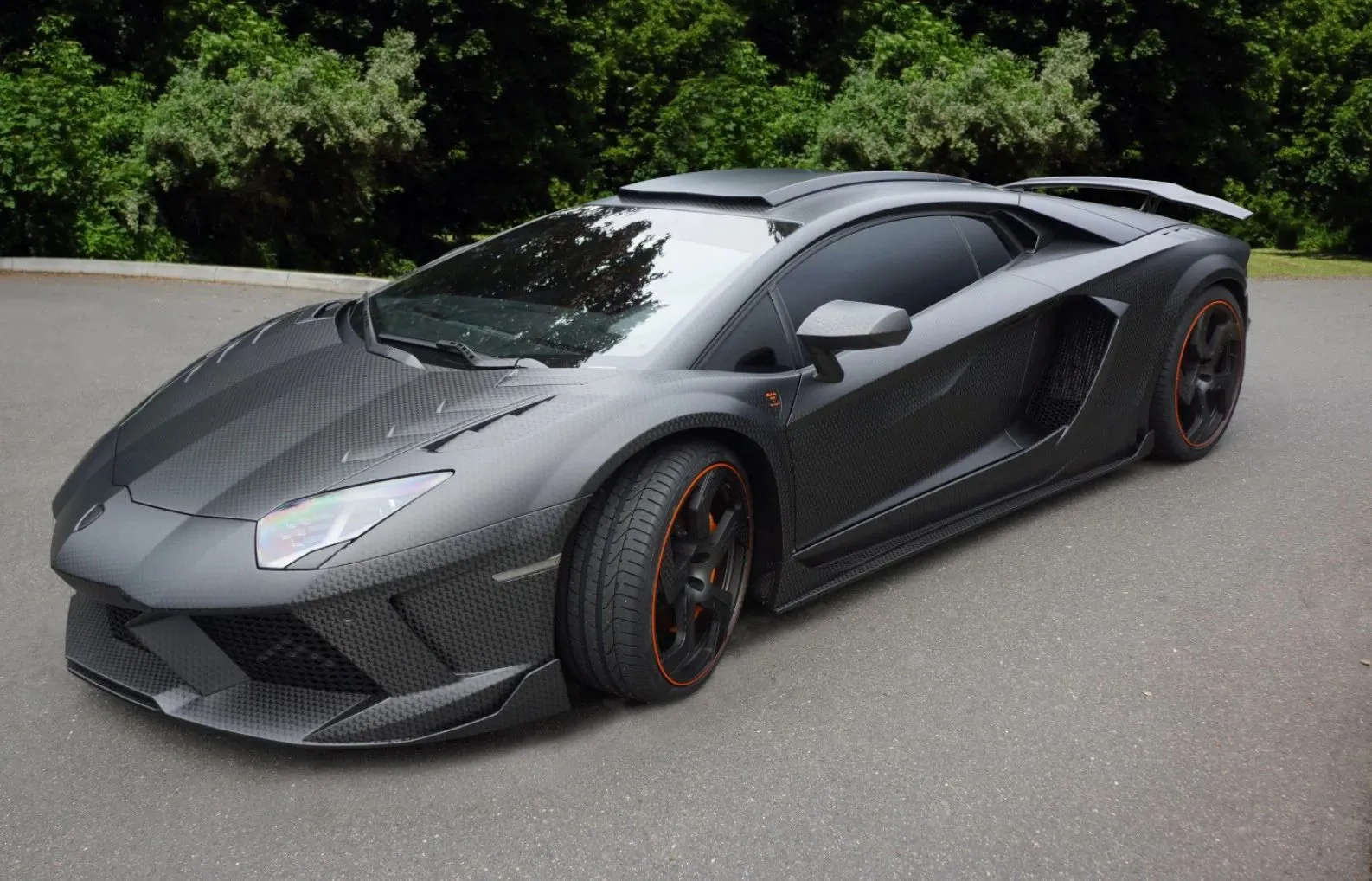
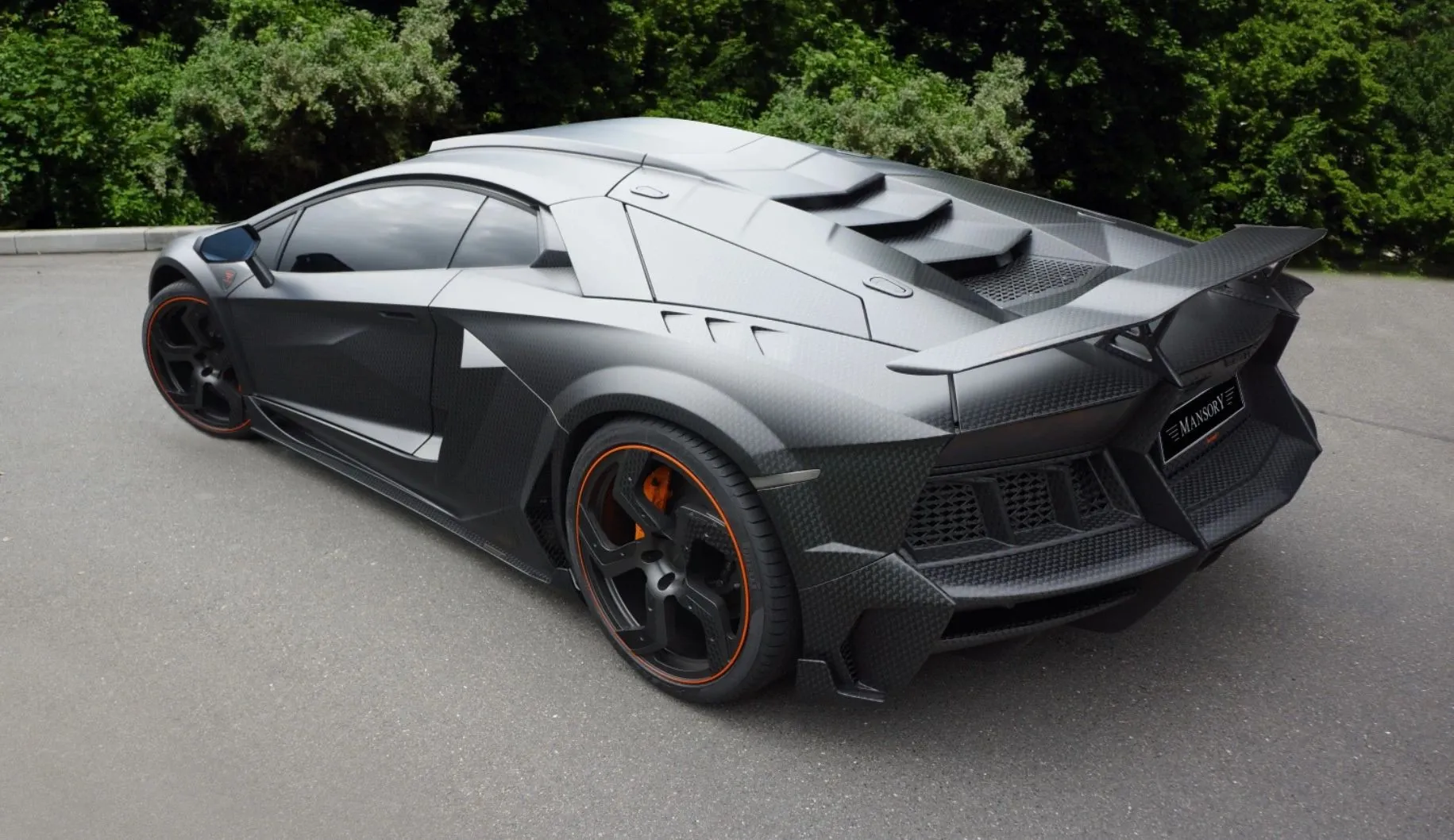

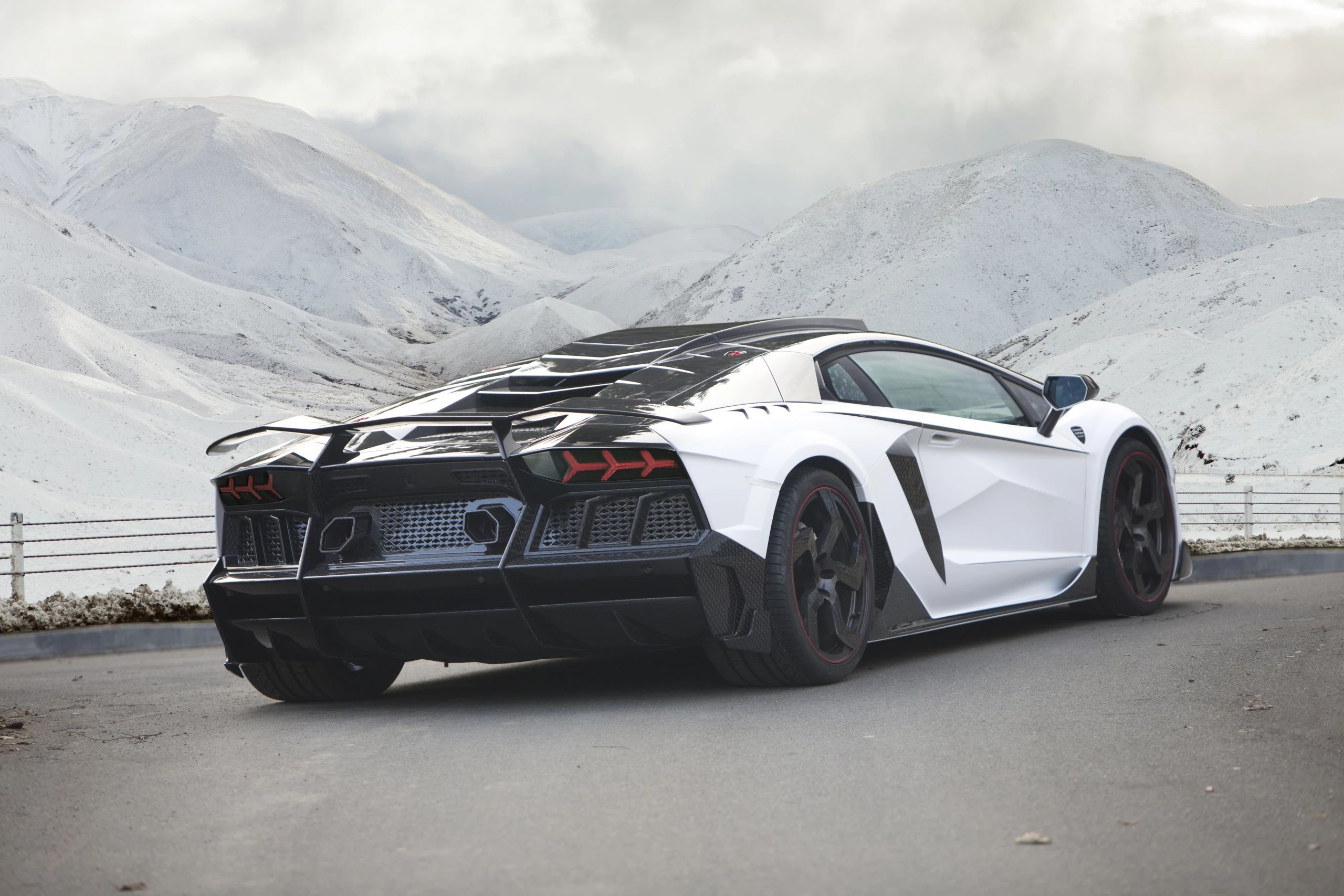
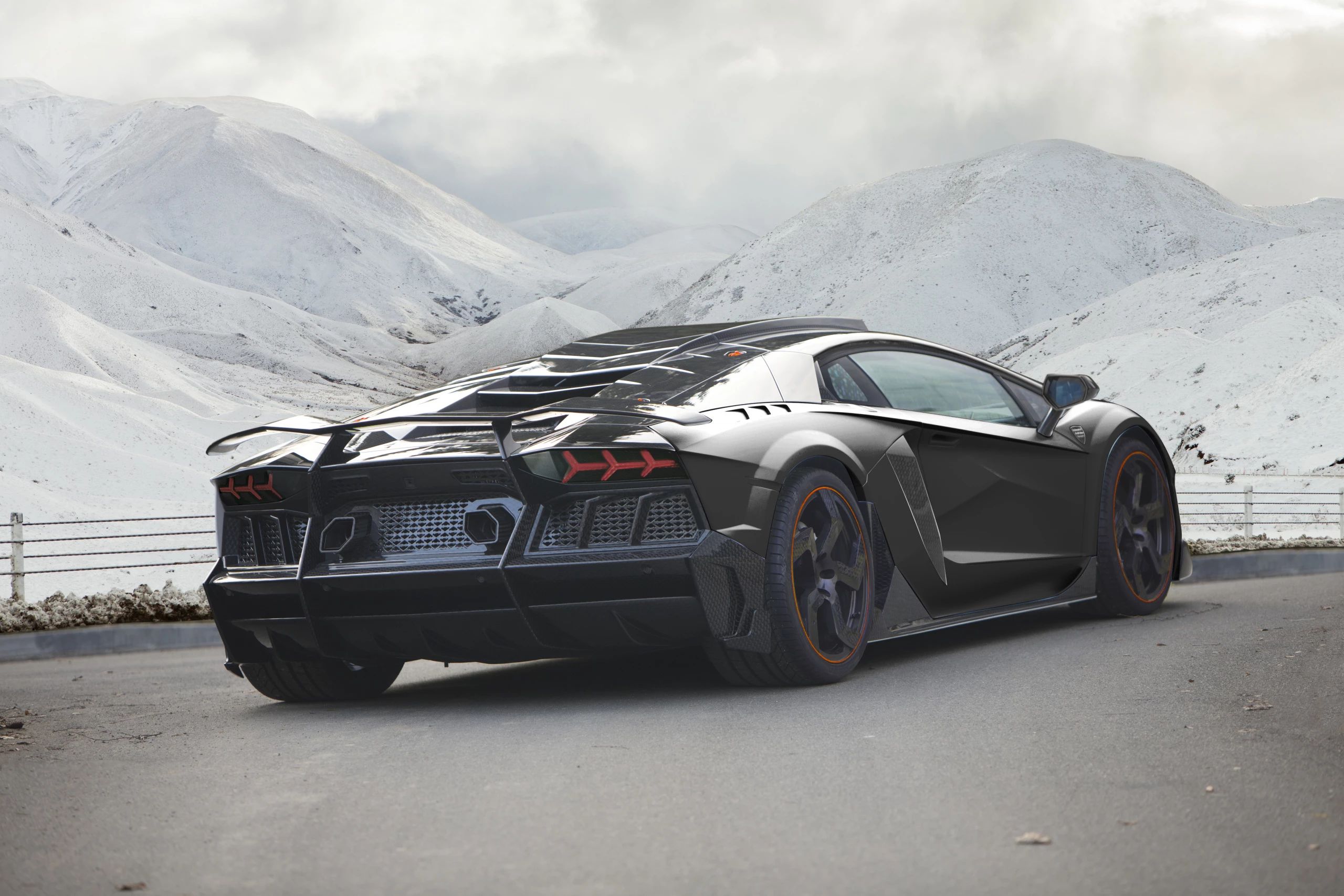
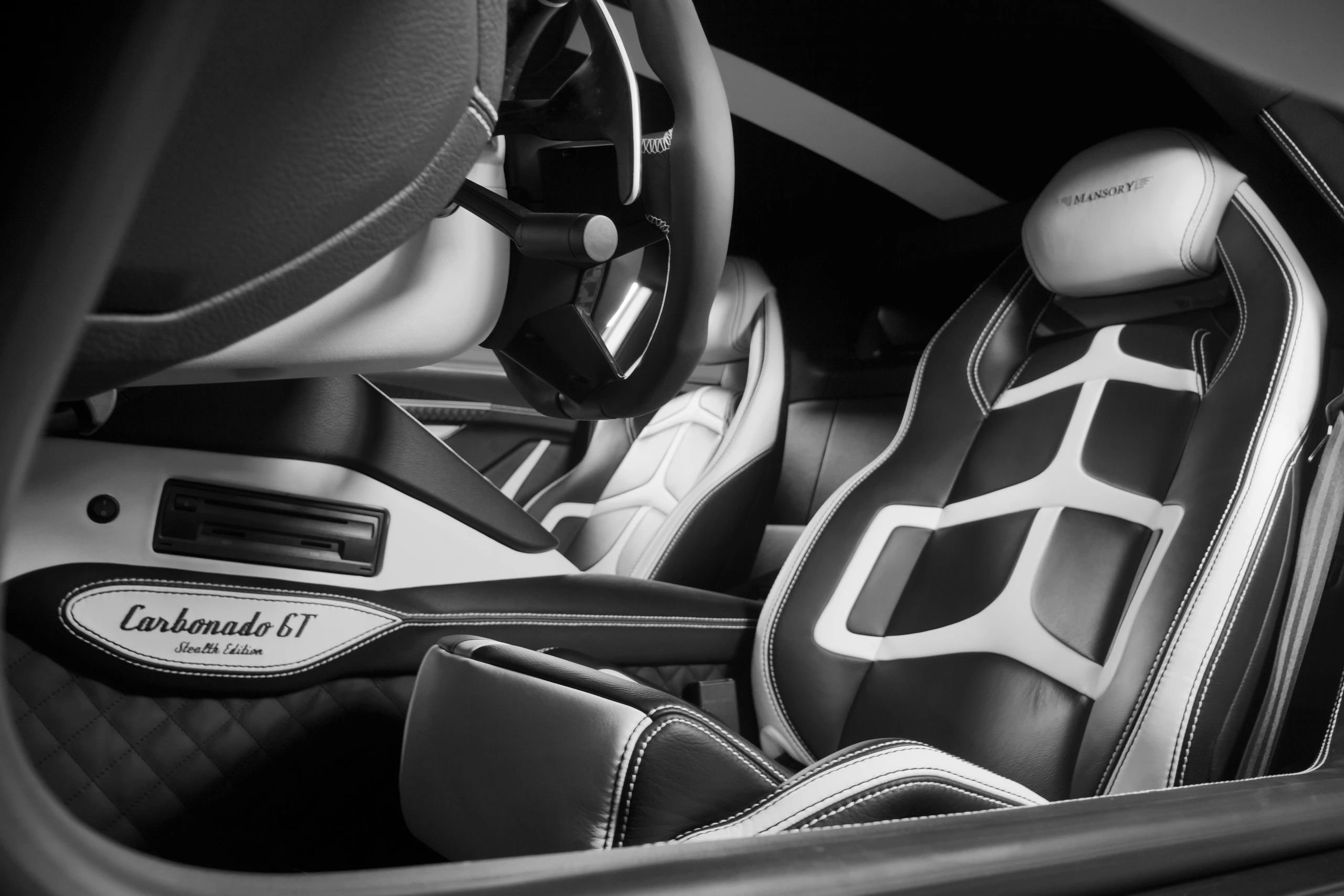
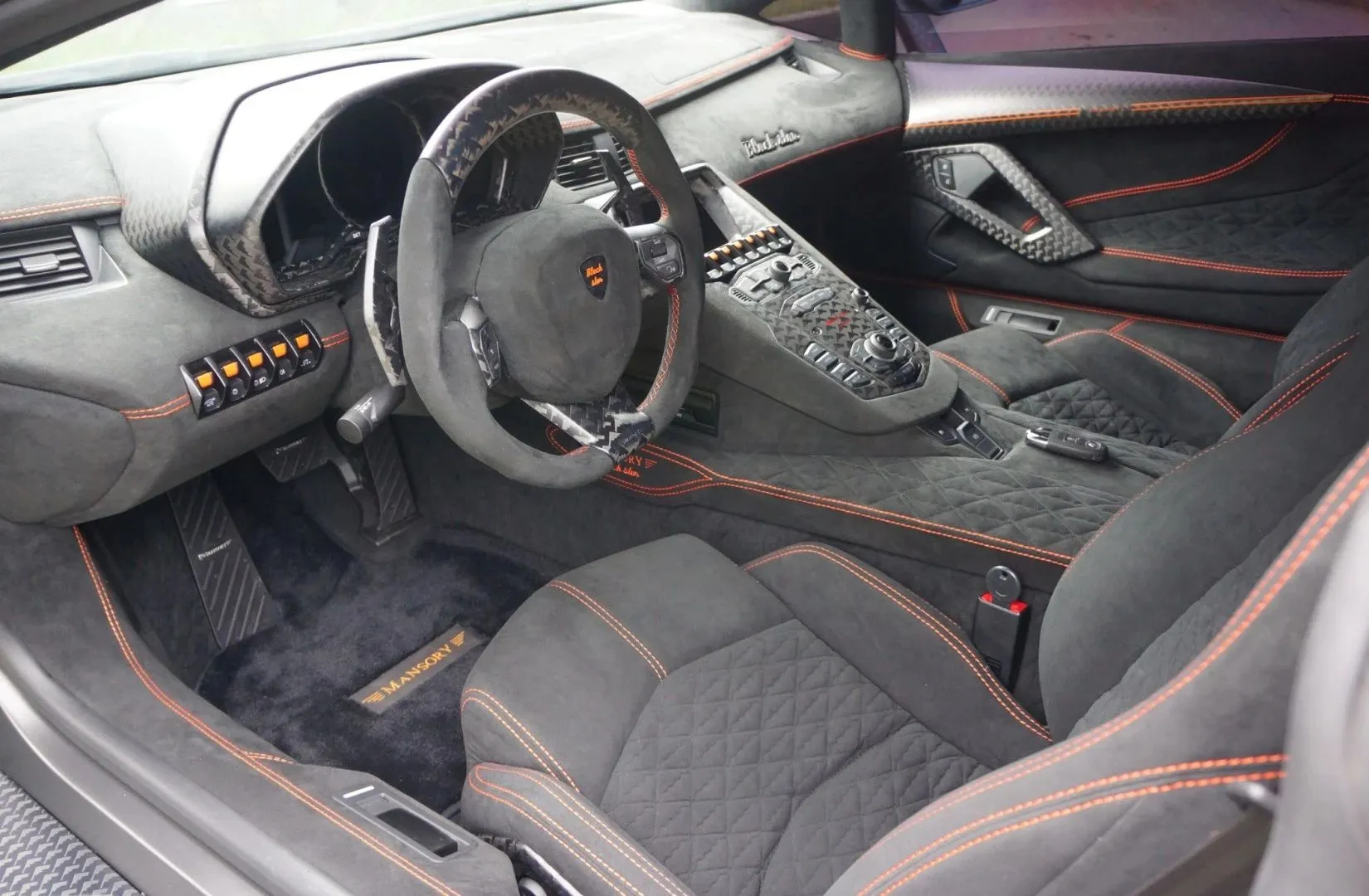
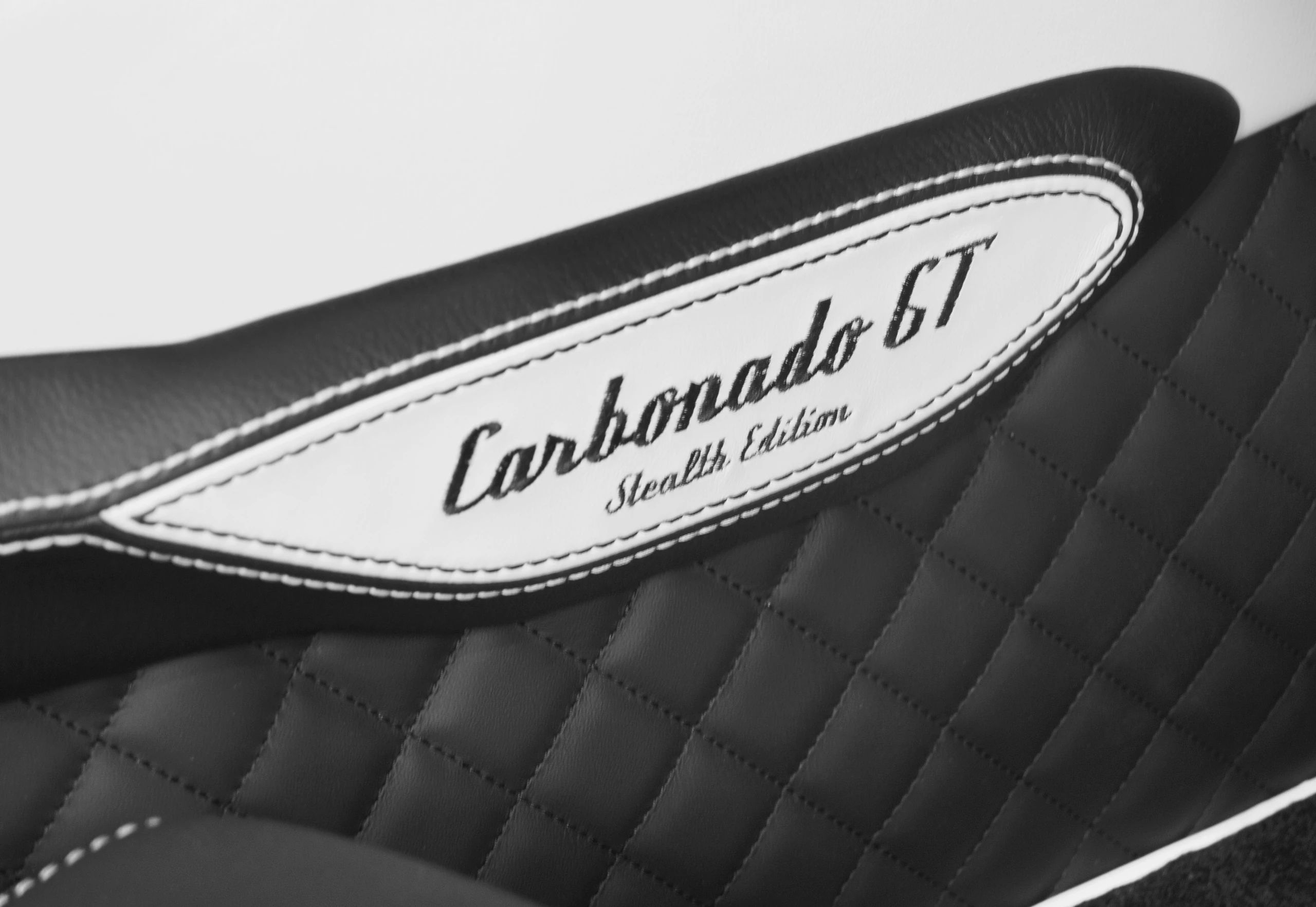
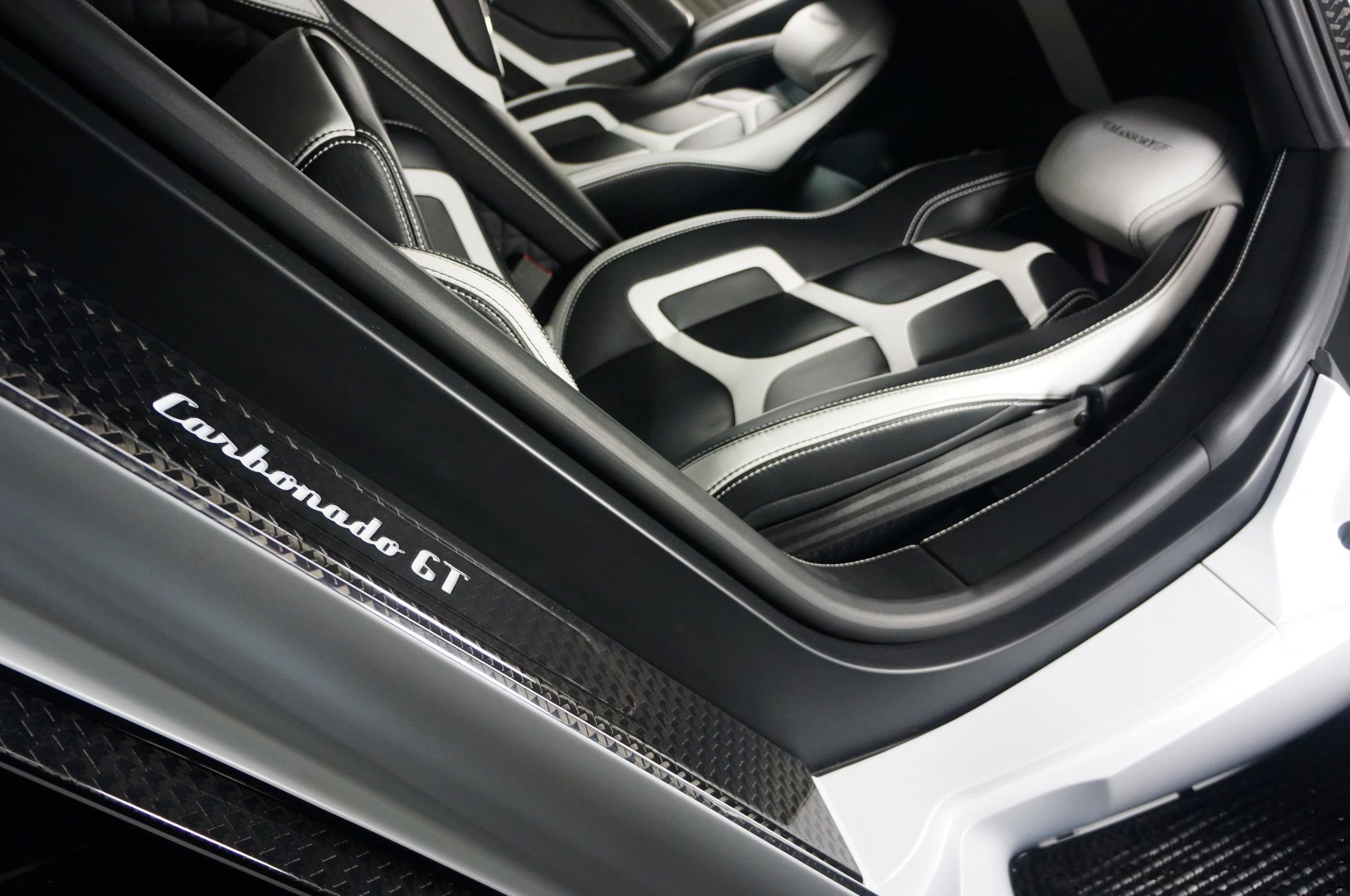
Mansory Carbon Fiber Body kit set for Lamborghini Aventador Carbonado GT


MANSORY Carbonado GT — the halo build at the apex of the Aventador V12 Carbonado lineage
Carbonado GT is the build the rest of the Aventador Mansory catalogue points up to. Where the Carbonado Original in 2012 founded the lineage at 1 250 hp, where the Carbonado Apertos drew an open-top variant for Roadster donors, and where the Carbonado EVO rebuilt the second-generation stealth schedule, the GT does what the others stop short of: it takes the L539 6.5-litre V12 to roughly 1600 hp through a twin-turbocharger conversion, redraws every body panel in forged carbon, and lifts aerodynamic loading to the most aggressive geometry in the lineage. The parallel SVJ-donor programme is the Carbonado GTS; the aero-only Aventador S brief sits one tier down at the Aventador S Mansory page. The GT is a halo commission — built to order, configured per car, with no two identical.
What separates Carbonado GT from the rest of the lineage
Three things. Power: the Original launched at 1 250 hp, the EVO sits between 1 200 and 1 400 hp, and the Carbonado GT runs at ~1600 hp through twin-turbocharging the L539 V12 — the largest delta over factory LP700-4 (~900 hp) any Mansory road-car programme delivers on a single donor. Body geometry: deeper front splitter than the Original or EVO, dive planes at +25 mm protrusion, deeper rear diffuser with six fence elements (vs four on the Original), and a fixed swan-neck rear wing on the rear deck rather than a deck-integrated lip. Finish library: forged-carbon flake by default rather than twill weave, with dry-carbon upgrade available on every panel that the Original and EVO offer only on bumpers and bonnet.
L539 V12 — the donor
Built around the Lamborghini L539 6.5-litre naturally-aspirated 60-degree V12 in LP700-4 base trim: 700 PS at 8 250 rpm, 690 Nm at 5 500 rpm, paired with the ISR (Independent Shifting Rod) single-clutch 7-speed automated manual (50 ms shifts) and Lamborghini's Haldex AWD. 0-100 km/h: 2.9 seconds. Top speed: 350 km/h. Wheelbase: 2 700 mm. Length: 4 780 mm. Dry weight: 1 575 kg. The carbon-fibre monocoque is what makes Carbonado possible without structural reinforcement — the chassis is already a single-piece carbon tub, and the wide-body work bonds against existing carbon hardpoints.
- Aventador LP700-4 (2011-2017 Coupe) — the founding donor; most Carbonado GT commissions sit on this chassis
- Aventador LP700-4 Roadster (2013-2017) — supported through a Roadster-specific rear deck panel; swan-neck wing geometry preserved
- Aventador LP720-4 50° Anniversario (2013, 720 PS) — commissioned as heritage builds; the anniversary tune is retained beneath the twin-turbo overlay
- Aventador S LP740-4 (2017-2022) — supported through revised front-bumper SKU because the post-S front fascia geometry differs from the LP700-4
- Aventador SVJ LP770-4 (2018-2022) — SVJ donors with ALA 2.0 active aero are commissioned through the parallel Carbonado GTS programme rather than the GT
- Aventador LP780-4 Ultimae (2021-2022) — supported as bespoke commission rather than catalogue order
Twin-turbocharger system — what the 1600 hp number actually means
The conversion replaces the L539's catalytic-converter section with a pair of compact-housing turbochargers mounted in the engine bay's rear quarters. The factory NA intake plenum is retained; the calibration is rewritten from scratch by the workshop's powertrain partner against a turbocharged combustion cycle. Headline output: ~1600 hp at 8 200 rpm with peak torque ~1 350 Nm at 5 500 rpm. The intercooler stack mounts behind the rear-quarter intake apertures, so the kit re-cuts the rear air-intake covers around enlarged duct openings. The ISR transmission is reinforced with an upgraded clutch pack rated to the new torque envelope; the Haldex differential is recalibrated. The conversion is reversible at the workshop's powertrain-partner level. Operating fuel: 98+ RON unleaded mandatory.
Body schedule — what ships in the Carbonado GT crate
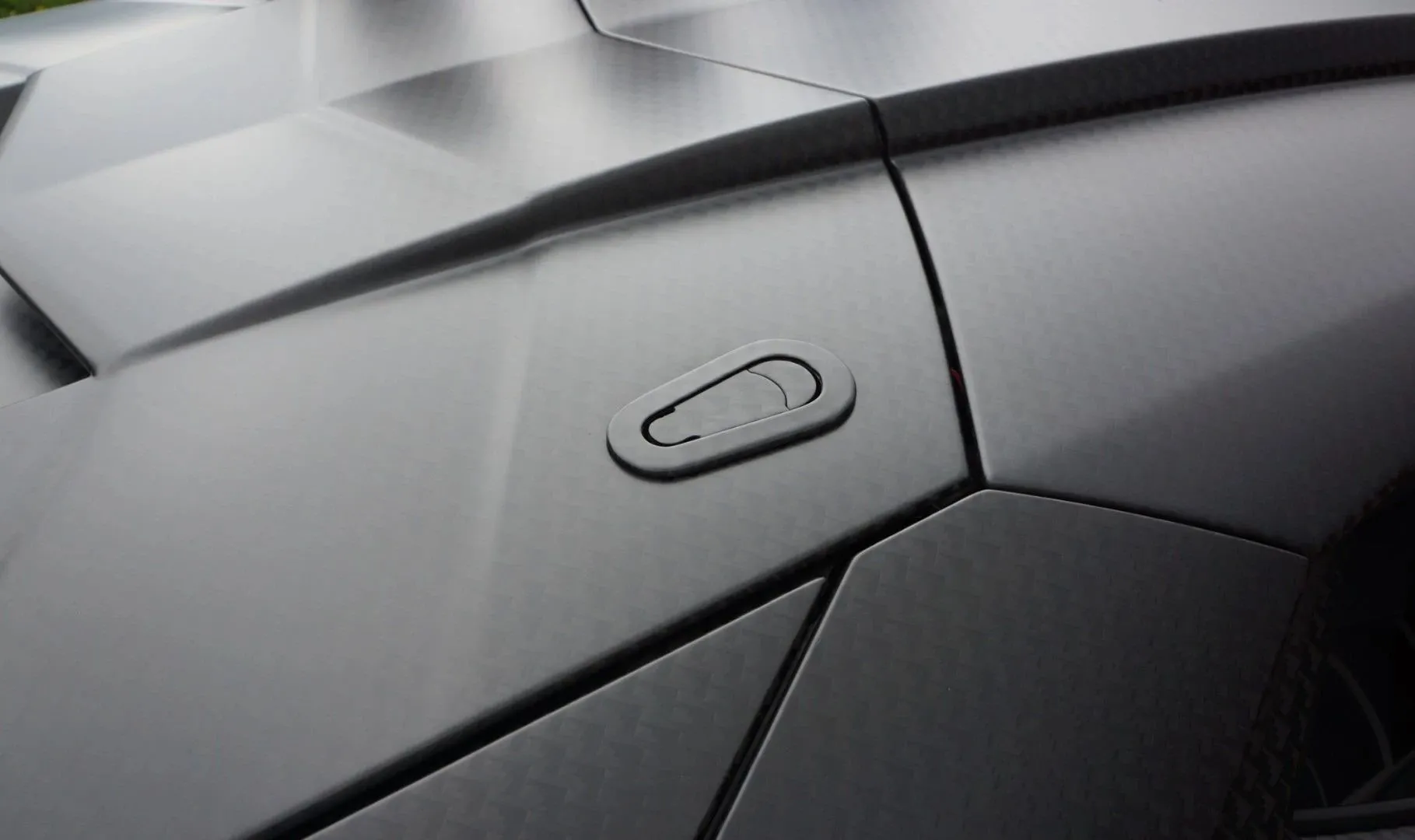
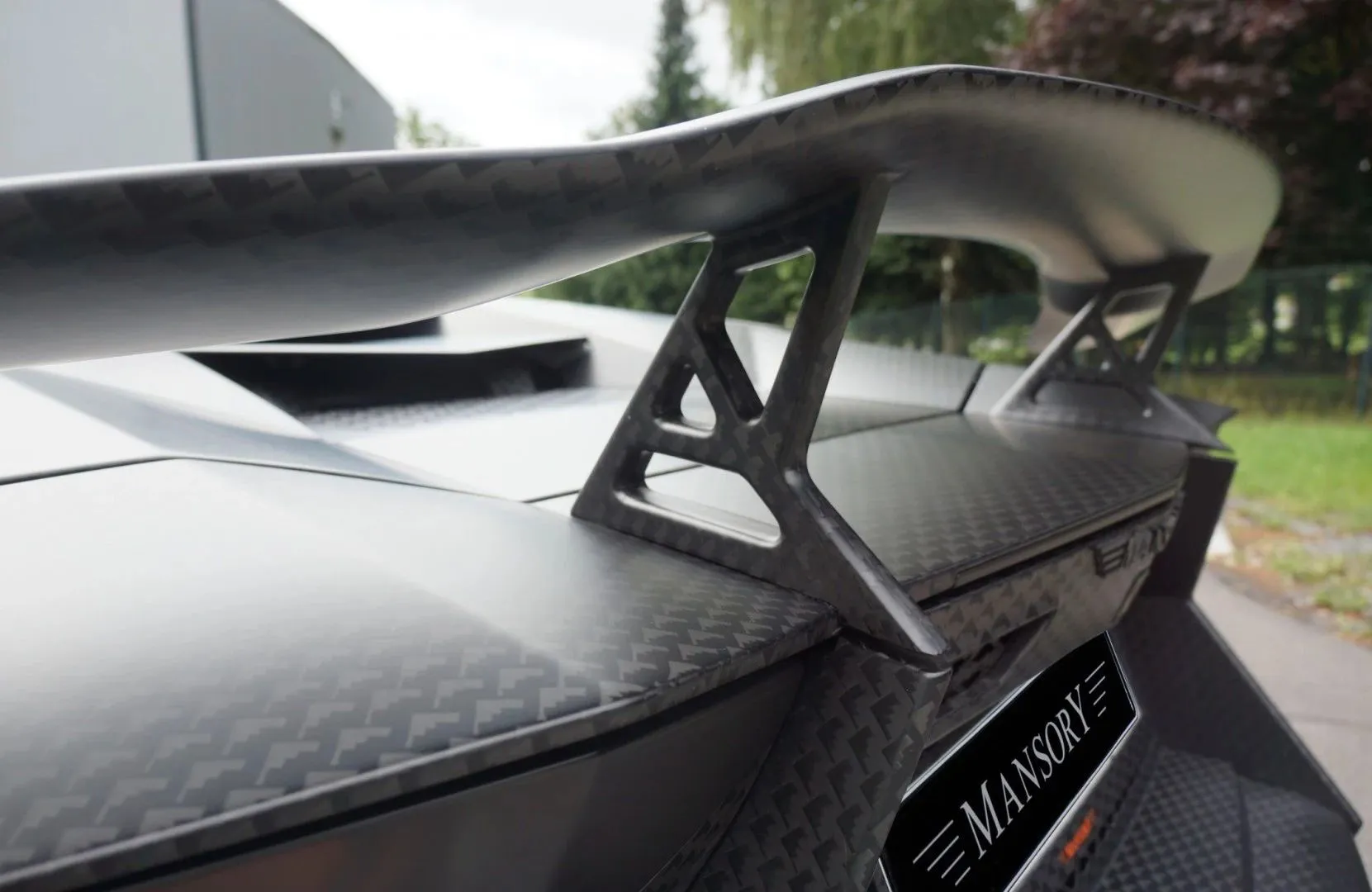
Forged-carbon flake is the default visible finish across every panel; the marbled-flake surface is what visually distinguishes a Carbonado GT from the twill weave on the Original and EVO. Hidden mounting flanges are reinforced FRP for daily-driver durability rather than show-only carbon. Painted-carbon, twill alternative and matte-clear finishes are available on commission.
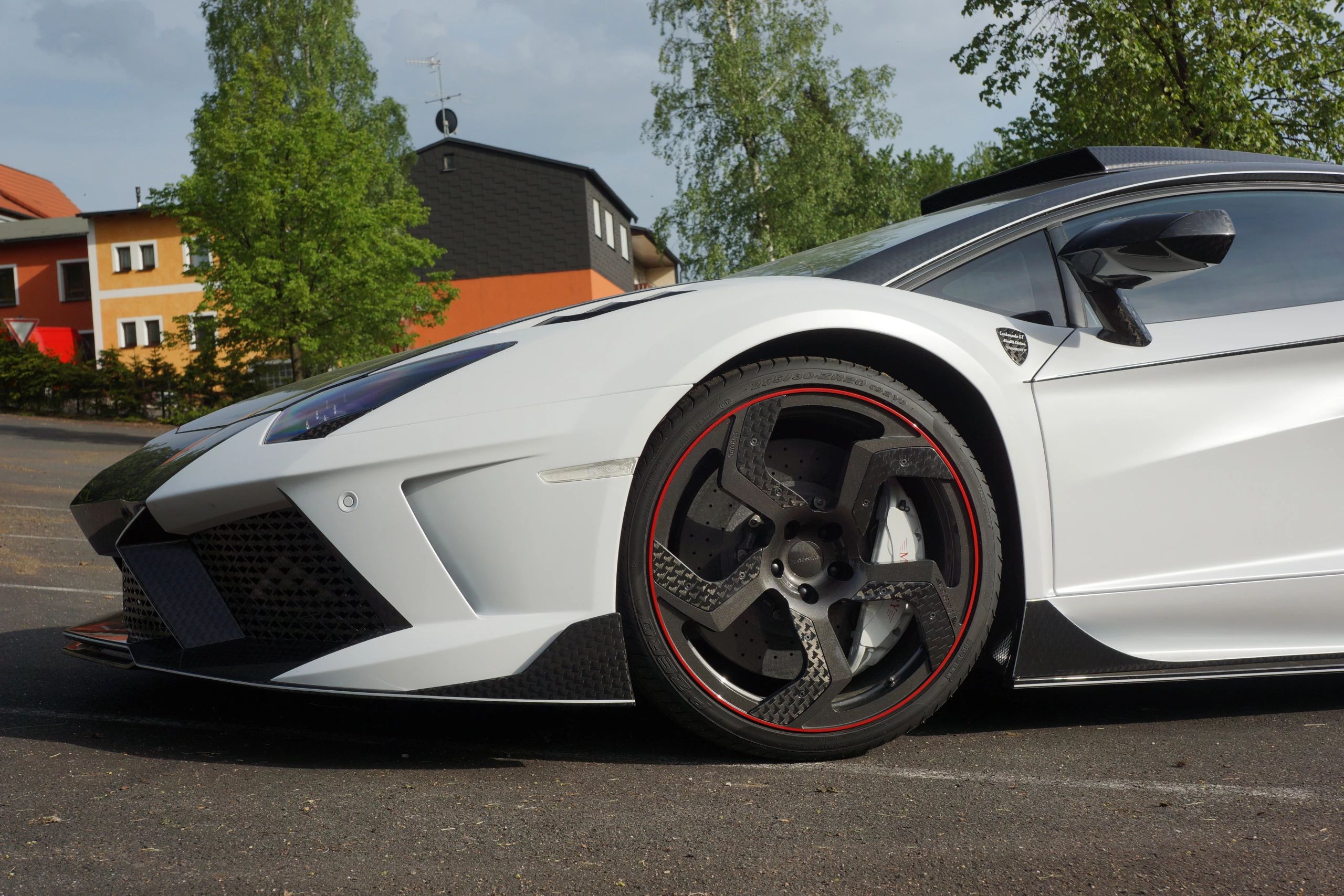
- Front bumper — full forged-carbon replacement with deeper splitter (+30 mm forward of OEM bumper line), dive planes at +25 mm protrusion, lower intake apertures dimensioned to the twin-turbo air-feed
- Vented bonnet — full forged-carbon with twin functional NACA outlets and centre power-bulge sized to the twin-turbo plumbing's heat envelope
- Bonded fender flares — front (+30 mm per side) and rear (+45 mm per side), bonded to the OEM monocoque fender hardpoints; clear the matched 9x20 / 13x21 forged stagger
- Side air-intake covers — revised forged-carbon intakes at the rear quarters with enlarged duct apertures to feed cool air to the twin-turbo intercoolers
- Replacement doors in weight-reduced forged carbon with reinforced inner FRP frame; preserves OEM scissor-hinge geometry
- Side skirts — bonded forged-carbon with integrated air-strake
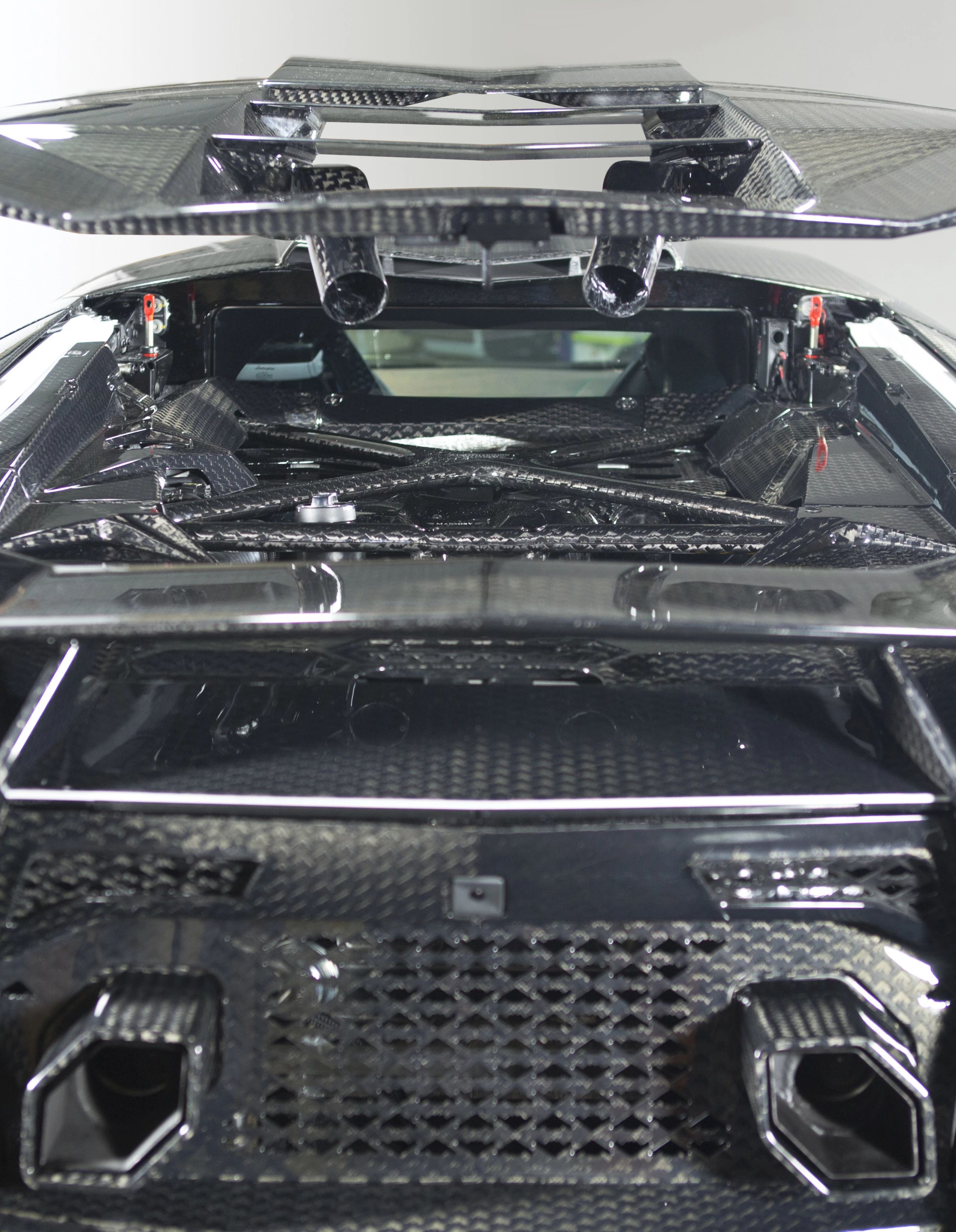
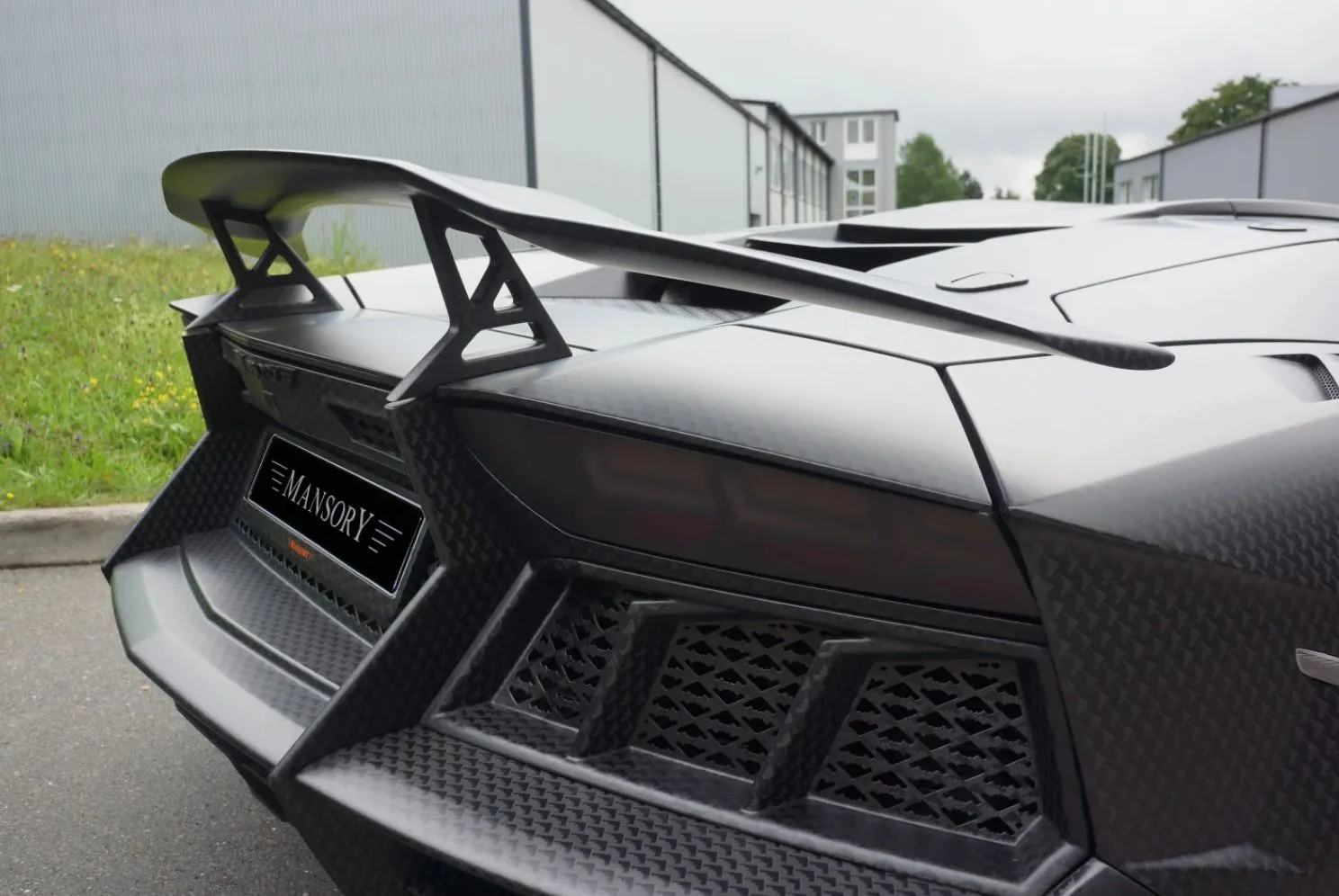
- Rear bumper — full forged-carbon with deeper diffuser (six fence elements vs four on the Original), exhaust cutout dimensioned to the Mansory titanium quad-tip exhaust
- Rear engine cover — full forged-carbon with revised heat-extraction louvres; OEM Lamborghini badge mount preserved
- Fixed swan-neck rear wing — dual-element forged-carbon on swan-neck mounts passing through the rear deck; angle of attack set at fitment
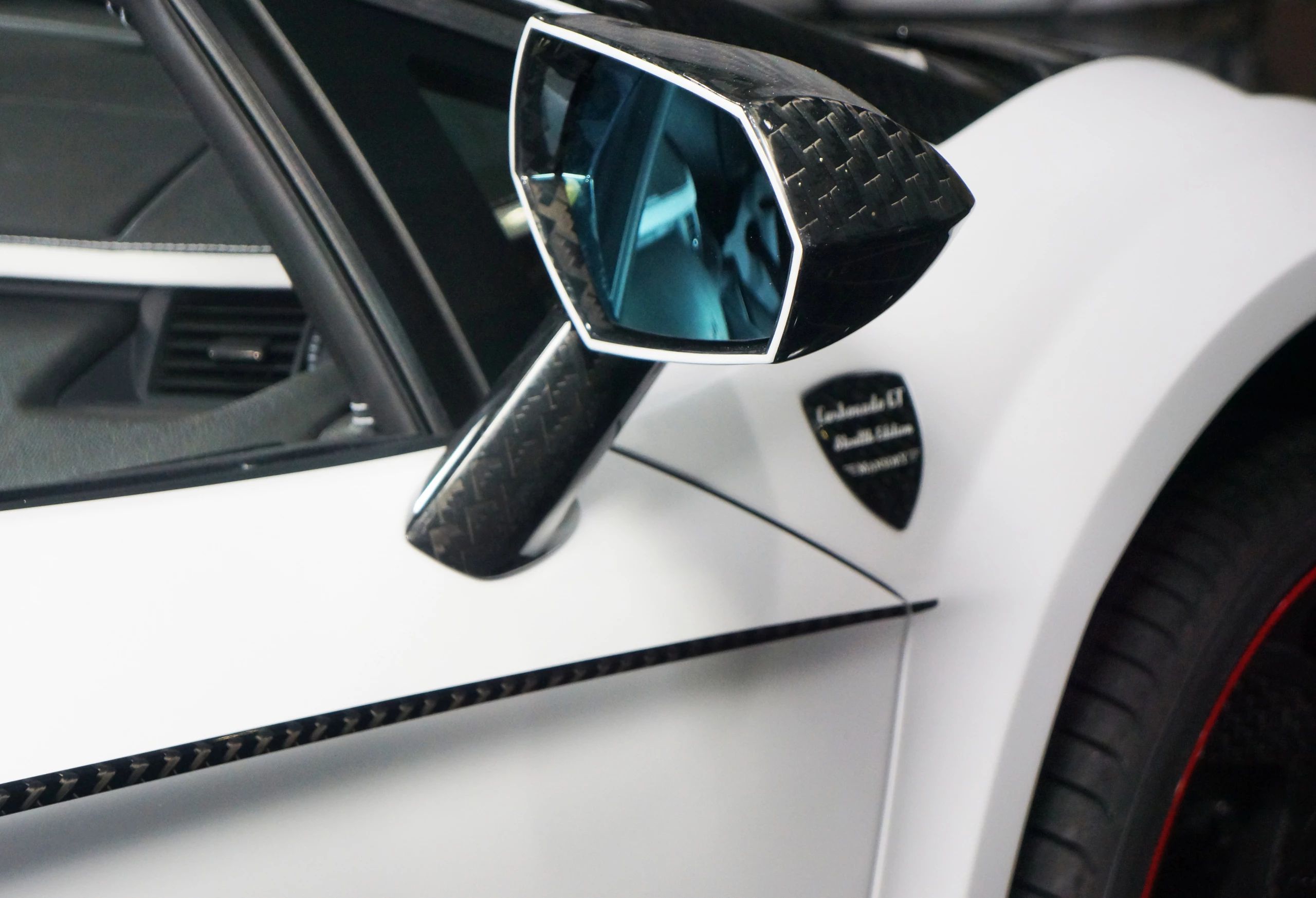
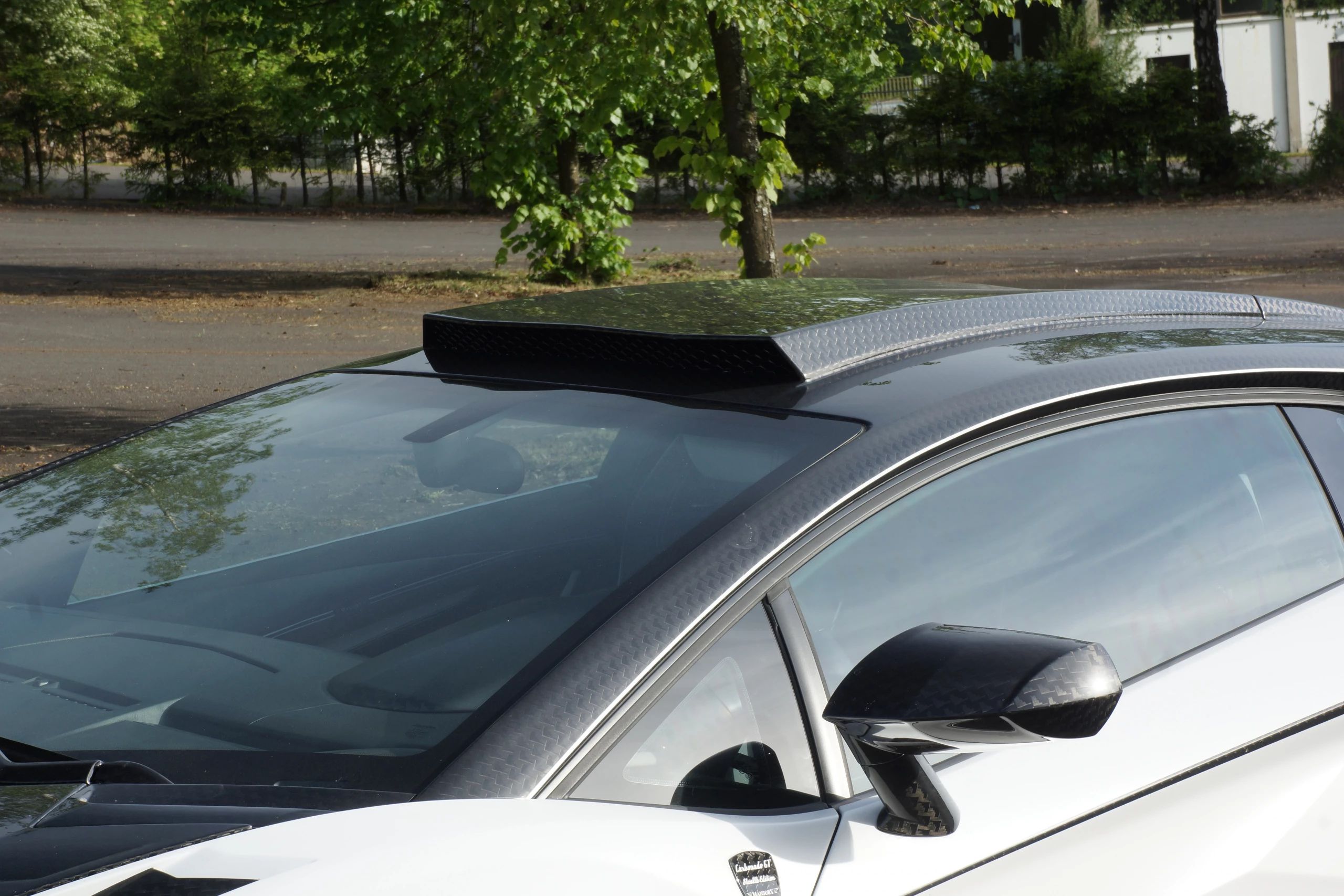
- Mirror caps, mirror stalks, roof panel (Coupe SKU) — visible forged-carbon detail trim
Workshop fitment time: 20 to 25 working days for a complete commission including paint-prep, twin-turbo install and ISR clutch-pack upgrade. Once bonded, the rear flares are not field-removable without workshop tools.
Wheels — CV7 Air forged in 9x20 / 13x21 stagger
The GT is specified around the Mansory CV7 Air fully-forged wheel in 9x20" front and 13x21" rear with the OEM Aventador centre-lock pattern (or 5-lug bolt pattern depending on chassis generation). Tyre fitment: 255/30 ZR20 front, 355/25 ZR21 rear, with Pirelli P Zero or Michelin Pilot Sport 4 S the recommended compounds. Standard finishes: gloss black, matte black, anthracite, gun-metal with diamond-cut accents, paint-to-Lamborghini-Ad-Personam. The forging clears the OEM Lamborghini carbon-ceramic brake package without spacers. Full forged catalogue at Hodoor's forged wheels collection; load ratings against the OEM Aventador kerb-weight specification are documented and supplied with each set on shipping.
Geographic distribution — the halo-commission map
Carbonado GT volume is intentionally low — a halo commission concentrated in collector-corridor markets that hold low-mileage Aventador donors in long-hold:
- UAE — deepest single market by a clear margin; Dubai-based collectors commission the full ~1600 hp twin-turbo specification plus Mansory titanium exhaust, often paired with a sister Mansory build on a Cullinan or Maybach GLS
- Qatar — royal-family commissions often request paint-to-sample finishes matched against an existing collector-livery palette rather than the workshop's standard forged-carbon flake
- Saudi Arabia — Riyadh and Jeddah commissions skewed toward Coupe donors with painted-carbon flake finishes rather than visible flake
- Monaco — small but consistent flow on Roadster donors, often run alongside an existing Mansory build on a sister supercar
- Hong Kong — commission flow concentrated in Coupe donors; owners typically specify the matte-clear finish over forged-flake, which reads more discreetly in the city's vertical streetscape
Lead time & commission workflow
Carbonado GT commissions open via [email protected] with the donor VIN, the Aventador variant declaration (LP700-4 / LP720-4 Anniversario / LP740-4 S / LP780-4 Ultimae), the build year, the OEM Lamborghini Ad Personam paint code, the desired output specification (1 400 hp / 1 500 hp / ~1 600 hp), and the destination country. WhatsApp +44 7488 818747 handles the fastest turnaround on landed-quote calculations. Lead times: full carbon panel set 14 to 18 weeks; twin-turbo system manufacture and bench-calibration 10 to 12 weeks in parallel; body-shop install 20 to 25 working days; CV7 Air forged wheel set 4-5 weeks; cabin retrim 4-6 weeks in parallel. Total commission lead time from deposit to driveable car: 20 to 24 weeks. Hodoor coordinates door-to-door international logistics across all listed corridors.
FAQ
How does the Carbonado GT compare with the Carbonado EVO at the body level?
The GT carries deeper aero geometry (deeper splitter, dive planes, deeper rear diffuser with six fence elements vs four on the EVO, fixed swan-neck rear wing rather than the EVO's deck-integrated lip). The GT defaults to forged-carbon flake where the EVO defaults to twill weave. Mechanically, the GT's twin-turbo conversion sits at the apex; the EVO is configured per order between ~1 200 and 1 400 hp on naturally-aspirated calibration evolutions.
Can the GT body schedule be commissioned without the twin-turbo conversion?
Yes. Owners can commission the body schedule on a stock-engine donor (700 PS LP700-4 or 740 PS LP740-4 S) without the twin-turbocharger conversion. Commission accordingly with the "body-only" flag at order intake.
Will a Carbonado GT build affect collector-trajectory value?
The body work bonds rear fender flares to the OEM monocoque hardpoints; once bonded, the flares are not field-removable without workshop tools. Owners with a long-hold collector use case should weigh the irreversible nature of the bonding. The twin-turbo conversion is reversible at the powertrain-partner level. Body-only specifications (no fender bonding) preserve a higher reversibility envelope at the cost of less aggressive wheel fitment.
Does the Carbonado GT panel set transfer to a Lamborghini Revuelto?
No. The Revuelto runs an entirely different platform, a different L545 V12 engine code, a different transmission and a different bodyshell architecture. Revuelto commissions route to the dedicated Revuelto Mansory page.
What is the operating fuel requirement after the twin-turbocharger conversion?
The calibration runs on 98 RON unleaded as minimum; 100 RON is recommended for sustained high-output operation. The factory Aventador-spec 95 RON map is not supported on the GT calibration. Owners commissioning into markets with limited 98+ RON availability should declare destination fuel grade at order so the calibration is adjusted within the workshop's safe envelope.