Roof cover Mansory for Lamborghini Urus Venatus


Mansory Roof Cover Carbon for Lamborghini Urus Venatus
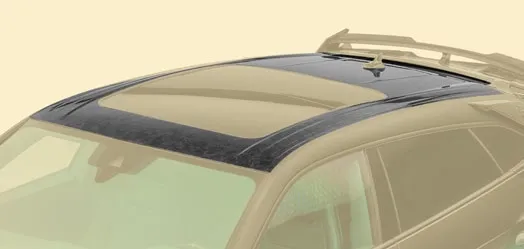
The Mansory roof cover is the largest single carbon panel on the Urus Venatus silhouette — a full-width skin that overlays the OEM roof, dropping the visual centre of gravity and tying the carbon storyline from the front bonnet to the rear hatch into one continuous spine. It is supplied as part of the broader Mansory Body Kit for Lamborghini Urus Venatus S and is one of the few carbon parts on a super-SUV that simultaneously reshapes the proportions and removes mass from the highest point of the body. On a 5.11 m, ~2.20 t SUV with a twin-turbocharged 4.0 V8, hexagonal Lambo design DNA and Y-pattern LED DRL, the roof carbon does what no fender flare or splitter can: it changes the way light falls across the cabin section. Owners who run the widebody fender flares specify the roof cover so the visual weave language reads as one body, not as bolt-on accents.
Construction & Materials
The Mansory roof cover is one of the largest autoclave-cured panels in the Venatus programme. The geometry is laid up in a single piece to keep weave continuity uninterrupted across roughly 1.6 m of roof length, with reinforcing ribs hidden on the underside to keep torsional behaviour neutral relative to the OEM steel roof. The structural-grade adhesive bond is the load path — there are no through-bolts to disturb the visible surface.
- Large-area carbon skin, 3K twill outer ply with multi-axial structural plies underneath, laid up as a single piece for unbroken weave continuity end to end.
- Autoclave cure under pressure and heat — eliminates print-through and gives the deep, glassy lacquer surface that defines a Mansory roof in sunlight.
- Wall thickness in the central span ~2.6–3.0 mm, stepped up at the perimeter and along the central spine where the panel bonds back to the OEM structure.
- Net mass after lacquer ~5.5–7.0 kg depending on whether the panel replaces OEM steel (no panoramic glass) or overlays the painted surround (panoramic glass). Net saving versus OEM steel painted skin is roughly 3–5 kg, taken from the highest point of the body.
- Bonded fitment using high-modulus structural adhesive in an OEM-equivalent bead pattern; no roof-skin holes are introduced and the panel is positioned with locator pins during cure.
- Finish options: signature Mansory deep-gloss lacquer over visible 3K twill, satin matte clear, or a paint-ready primed surface for body-colour roofs that retain the carbon weight saving without the visible weave.
- UV-stabilised topcoat — the roof is the most UV-exposed panel on the car, so the lacquer system is specified accordingly.
- Edge sealing at the perimeter and around the antenna and roof-rail cut-outs prevents capillary moisture under the lacquer line.
Design & Visual Function
The roof cover is the part that, more than any other in the Venatus catalogue, reshapes how the Urus reads from the side. The hexagonal Lamborghini DNA is concentrated at the front mask and the haunches; the OEM roof skin in body colour visually inflates that volume and pulls weight upward. Replacing or overlaying that surface with deep-lacquered carbon does the opposite — it reads as a darker, lower mass that flows into the C-pillar carbon and into the rear-hatch panel, finishing at the high-performance roof spoiler. The eye traces a continuous carbon spine from the front bonnet to the rear wing, and the silhouette appears lower and more sculpted than the same car with a body-colour roof.
For Urus configurations without panoramic glass — the most common specification — the roof cover acts as a true skin replacement layer over the OEM steel. The carbon becomes the visible surface from quarterlight to quarterlight. For Urus configurations with the optional panoramic glass roof, the part overlays the painted surround section that frames the glass on three sides and runs over the central transverse beam; the glass aperture itself is preserved untouched. In both cases the carbon weave aligns with the car's longitudinal axis so the twill geometry mirrors the airflow direction, and the gloss lacquer matches the front bonnet, c-pillar panel and rear hatch panel finishes when those parts are specified together.
The visual centre of gravity drop is the strongest payoff. With the Mansory widebody fender flares pushed wide to fill out the haunches, a body-colour roof leaves the upper section visually heavy. The carbon roof closes that gap — the wide stance below is now answered by a low, dark roof line above, and the car reads as a unified mass rather than a wide chassis under a tall greenhouse. Combined with the c-pillar panel and the high-performance roof spoiler, the carbon language wraps the entire upper third of the body in a single material story.
Compatibility & Fitment
The Mansory roof cover is engineered for the Lamborghini Urus, Urus S and Urus Performante (2018 onward, including the post-2022 Urus S and Performante facelift). The slug uses generic Venatus naming because the Mansory programme retrofits across the Urus line. Because there are two factory roof configurations — solid steel roof and optional panoramic glass — the part is supplied in two fitment variants and the roof option must be confirmed at order via VIN or a roof-line photo. The solid-roof variant is a full skin overlay or replacement layer; the panoramic-glass variant overlays the painted surround that frames the glass aperture and is cut to leave the OEM glass and its trims untouched.
OEM hardware compatibility is preserved. The shark-fin or whip antenna is reinstalled through a sealed cut-out and its OEM gasket is kept in place. Factory roof rails, where specified, bolt back to the original threaded inserts on the body — the carbon panel is contoured around the rail bases and the cover does not increase the rail mounting height. Rear-wheel-steering geometry, adaptive air-suspension self-levelling, the six driving-mode aero state, and OEM parking sensors on bumpers are entirely unaffected — the part is roof-only. The Urus does not have ALA, so there is no ALA constraint to discuss in any roof or rear-wing context.
Installation & Reversibility
Roof cover fitment is a 4–6 hour body-shop operation. The OEM roof surface is cleaned and degreased; the bond zones are scuffed to give the structural adhesive a mechanical key; antenna and roof-rail hardware are removed and stored; the panel is dry-trial-fitted using locator pins and gap gauges so the perimeter sits flush with windshield, quarterlights and rear glass; the high-modulus structural adhesive is applied in the bead pattern specified by Mansory; the panel is set, weighted to the cure profile and left to develop strength; antenna and roof rails are reinstalled with fresh gaskets. Edge sealing at the perimeter is part of the same operation. Reversibility is partial — the bond is structural-grade and removal will require the overlay to be cut and the OEM roof refinished if the car is ever returned to body-colour. We recommend a Lamborghini-certified body shop or a Mansory-trained installer; this is not a DIY operation.
Pairing within the Mansory Urus Venatus programme
The roof cover sits inside a small family of upper-body carbon parts and the strongest pairing is with the C-pillar panel — the two together carry the carbon language from the rear edge of the roof down into the shoulder line, finishing the silhouette story. See C-pillar panel Mansory for Lamborghini Urus Venatus. For the rear of the roof itself there are two complementary parts: the high-performance roof spoiler closes the airflow off the carbon roof with motorsport-derived geometry, and the performance roof logo adds branding theatre at the rear edge of the carbon panel. Specified together, these three parts turn the entire upper third of the body into a single Mansory carbon canvas.
Maintenance & Durability
The roof receives more direct UV exposure than any other panel on a vehicle, and lacquered carbon on a roof is the part most likely to show oxidation if it is neglected. The Mansory topcoat system uses a UV-stabilised clear that is rated for outdoor service, but care still matters — annual ceramic-coating refresh, pH-neutral car shampoo, and regular wash cycles to clear pollen, tree sap and bird-strike acidity will keep the lacquer optically deep for many years. Carnauba waxes work but need to be reapplied more often than a ceramic. What kills lacquered carbon on a roof is alkaline traffic-film removers used at full strength, ammonia-based glass cleaners drifting onto the lacquer from the rear quarterlight, and abrasive sponges that scuff the clear. Owners who park in walled courtyards under direct sun should consider an additional ceramic top layer specifically formulated for horizontal panels. If a chip ever penetrates to the substrate the panel can be locally repaired by a Mansory-trained body shop — the carbon is sanded back, fresh resin is laid in, and the lacquer is feathered out so the repair is invisible. SUV usage profile (school run, long-distance travel, occasional gravel) does not threaten the roof — the part is well above tyre-flung debris range.
Lead Time & Warranty
Mansory bespoke production lead time is 4–8 weeks from order confirmation to dispatch. The roof cover ships with a 12-month warranty against manufacturing defects covering delamination, lacquer adhesion, and dimensional fit. Damage from impact, improper installation outside a Mansory-trained body shop, or unsuitable cleaning chemistry is not covered.
FAQ
Q: I have the optional panoramic glass roof — is the Mansory roof cover compatible?
A: Yes. The part is supplied in two fitment variants. The panoramic-glass variant overlays only the painted surround that frames the glass aperture and the central transverse beam — the glass itself and its OEM seals stay untouched. We confirm the roof option from your VIN or a roof-line photo before production starts.
Q: How much weight is actually saved at the roof line?
A: Net saving versus OEM painted steel is approximately 3–5 kg. This is modest in absolute terms but disproportionately useful because it is removed from the highest point of the body — the part of the car where mass has the largest effect on perceived top-heaviness and on roll inertia.
Q: The fitment uses structural adhesive — can the roof ever be returned to body colour?
A: Reversal is possible but it is a body-shop operation, not a bolt-off. The carbon overlay is cut away and the OEM roof skin is refinished. The bond is engineered for a permanent service life, so most owners specify the part with the assumption it is staying on the car.
Q: Will the OEM antenna, roof rails and panoramic glass continue to work normally?
A: Yes. The antenna is reinstalled through a sealed cut-out and retains its OEM gasket. Factory roof rails bolt back to their original threaded inserts on the body. Panoramic glass — where fitted — is left entirely untouched and continues to operate as designed.
Q: How long is the wait, and can I have the roof in primed-for-paint?
A: Lead time is 4–8 weeks. Primed is available alongside the visible-weave deep-gloss lacquer and the satin matte clear options — primed lets the roof carry the carbon weight saving while finishing in body colour or any custom paint specification.
Pair the roof cover with the c-pillar panel, high-performance roof spoiler and performance roof logo to wrap the entire upper third of the Urus Venatus body in one continuous Mansory carbon canvas. To confirm specification, panoramic-glass option, finish and lead time, contact us on WhatsApp +44 7488 818 747 or by email at [email protected].