


Mansory Carbon Fiber Body Kit Set for Bentley Continental GT


Le MANSORY — the limited-run widebody build for the first-generation Bentley Continental GT
The first-generation Bentley Continental GT was unveiled in 2003 and stayed in production until 2011 — the W12 6.0 TT Coupe (560 PS, later 575 PS in Speed trim, 610 PS in Supersports), the V8 4.0 TT introduced late in the cycle, and the GTC convertible from 2006. Le Mansory is the limited-run widebody programme that turned this car into a collector item with a Mansory build sheet. Unlike Mansory's later Continental GT programmes for the second and third generations, Le Mansory replaces almost every external panel with autoclave-cured pre-preg carbon — not bolt-on add-ons, not over-fenders, but full panel-for-panel substitution.
This page covers the Coupe and the GTC convertible. For the second-generation Continental GT see the Mansory programme for the 2016 Continental GT; for the third-generation V8 build see Mansory Continental GT V8 (3rd gen).
What's included in Le Mansory
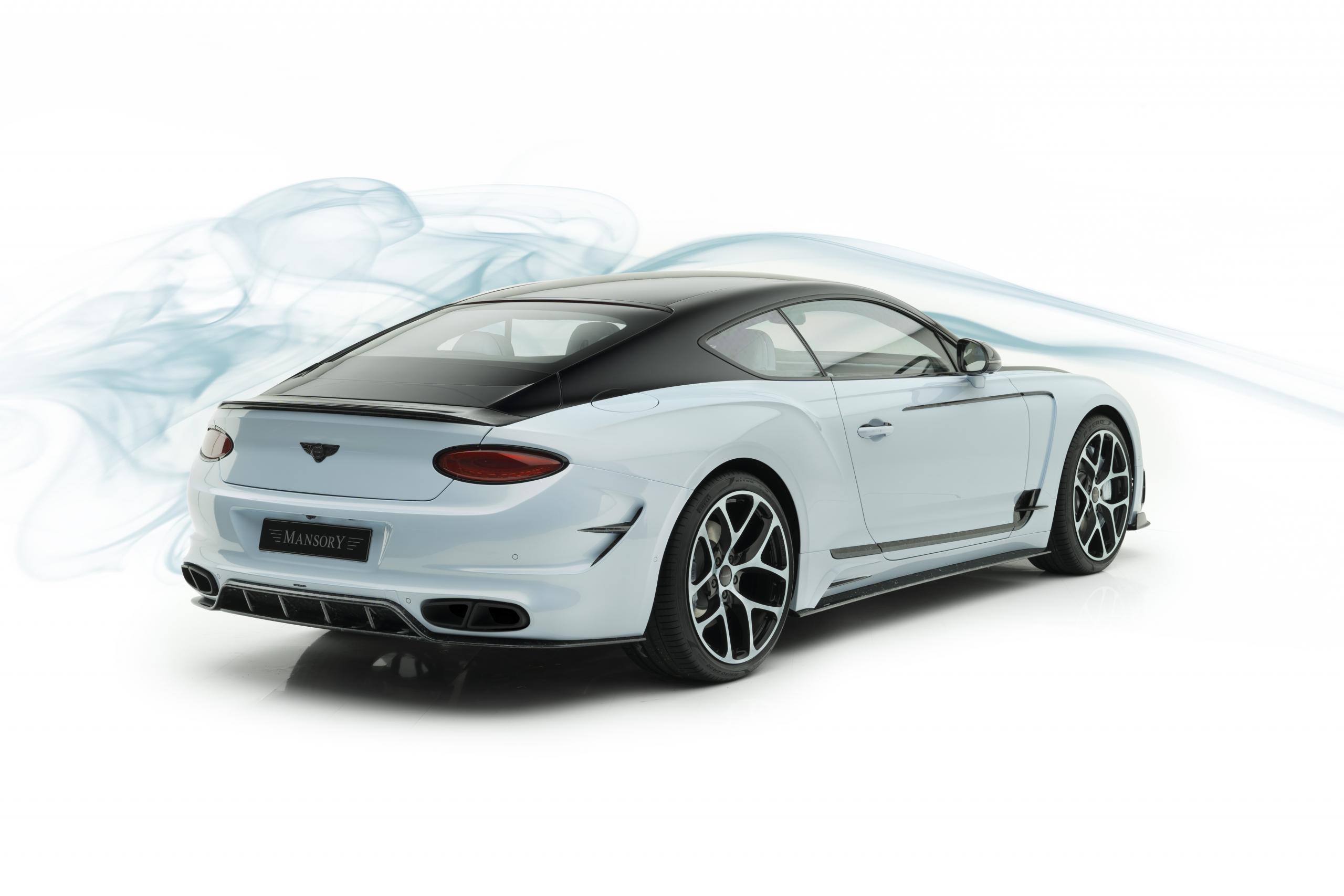
Le Mansory is a complete carbon body, not a kit grafted onto the OEM panels. The factory aluminium bonnet, front fenders, bumpers and rear quarters all come off the car and Mansory carbon panels go on in their place.
Front:
- Front bumper in pre-preg carbon, with integrated splitter, enlarged intakes and LED running-light recesses
- Bonnet with sculpted vent set, full carbon
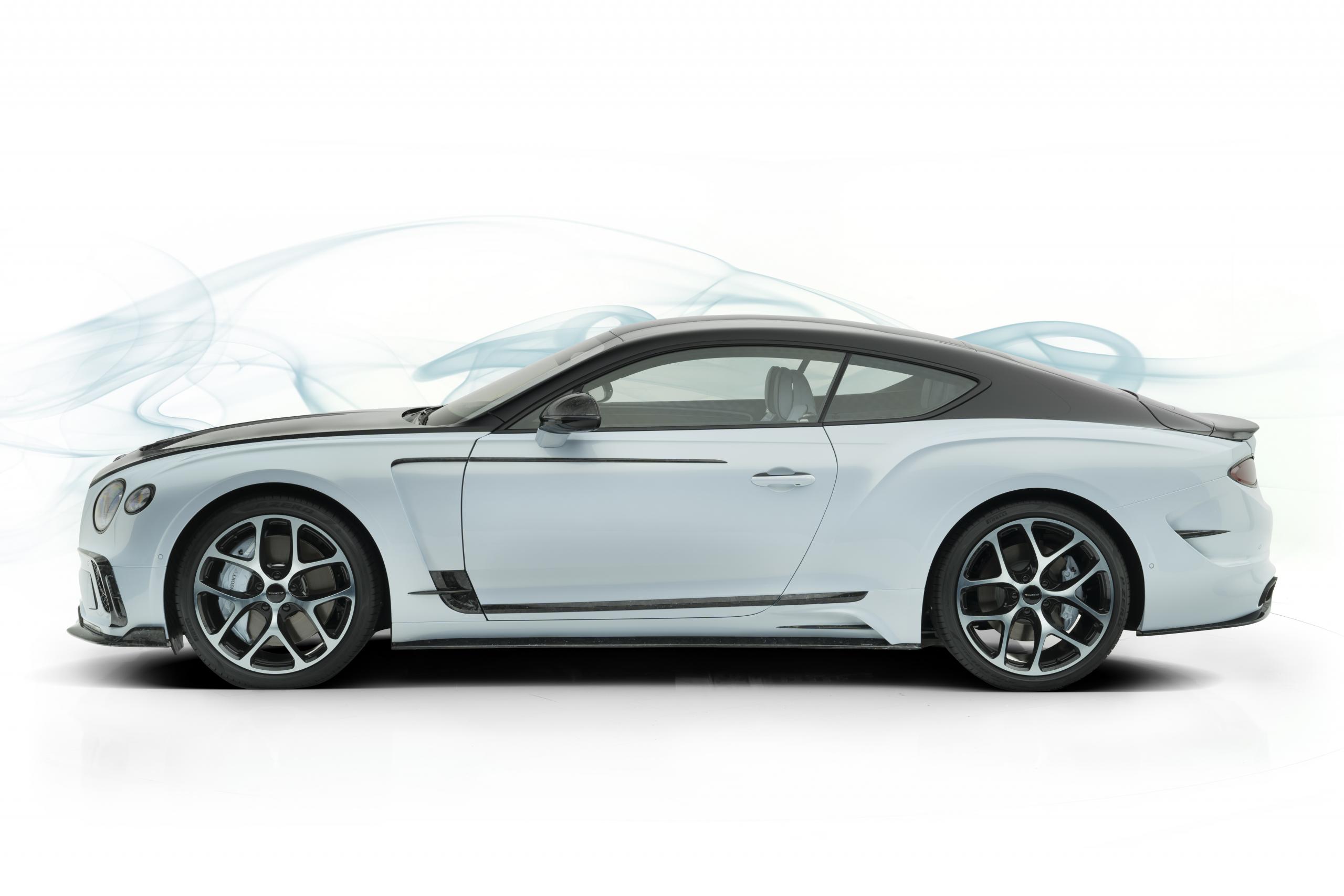
- Pumped front fenders — the source of the widebody width, carbon
- Mirror housings in carbon
Sides:
- Side skirts in deep-cut carbon, joining the front and rear flares
- Door panels with integrated carbon strakes
Rear:
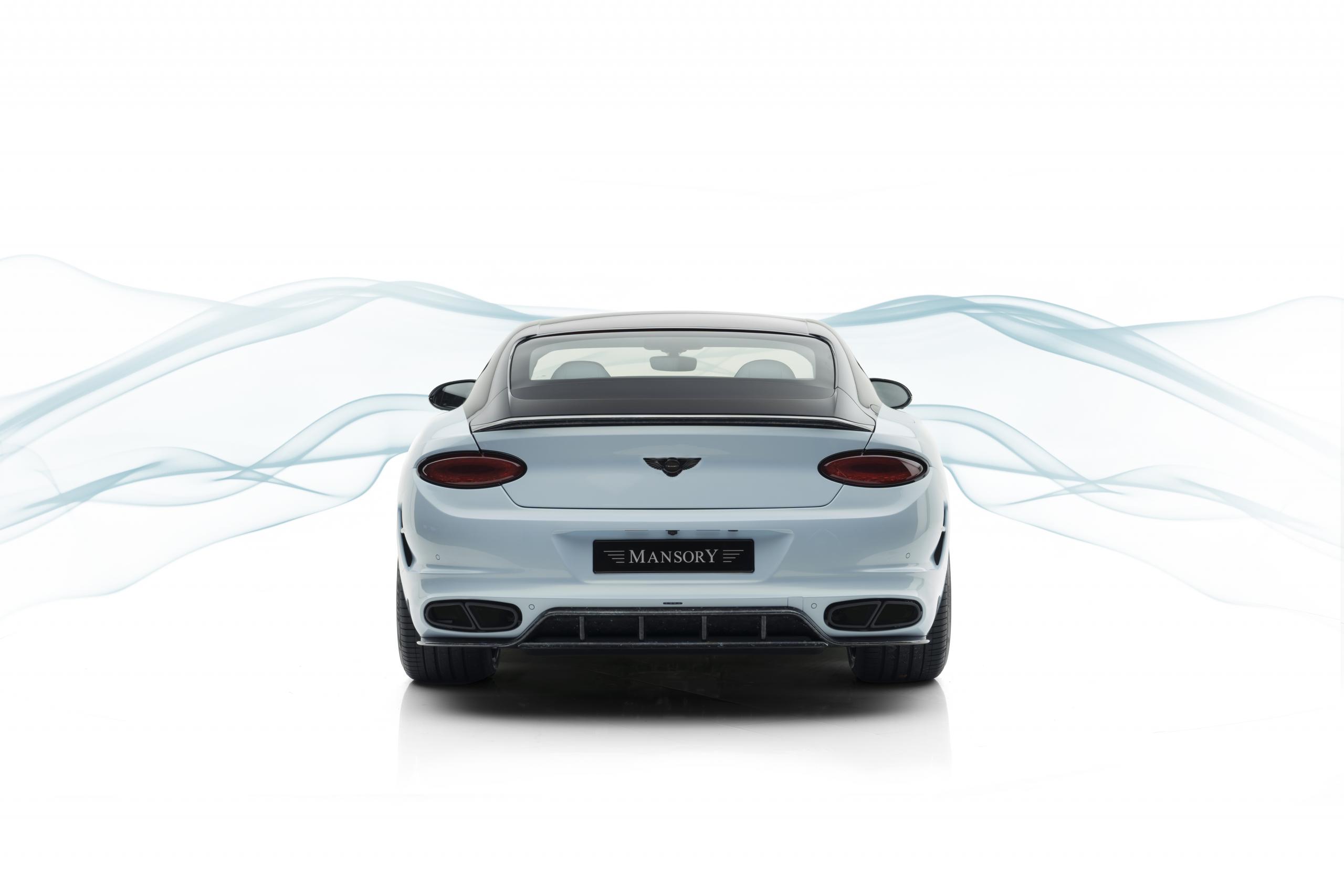
- Rear bumper in carbon with integrated diffuser and quad-exhaust cutouts
- Pumped rear fenders matching the front geometry
- Rear wing in forged carbon — a permanent fixture, not a removable lip
- GTC-only carbon rear deck spoiler that sits behind the folded soft top
Engine & exhaust:
- Sport exhaust system, stainless with quad tips, valve-controlled
- ECU recalibration package, paired with the exhaust
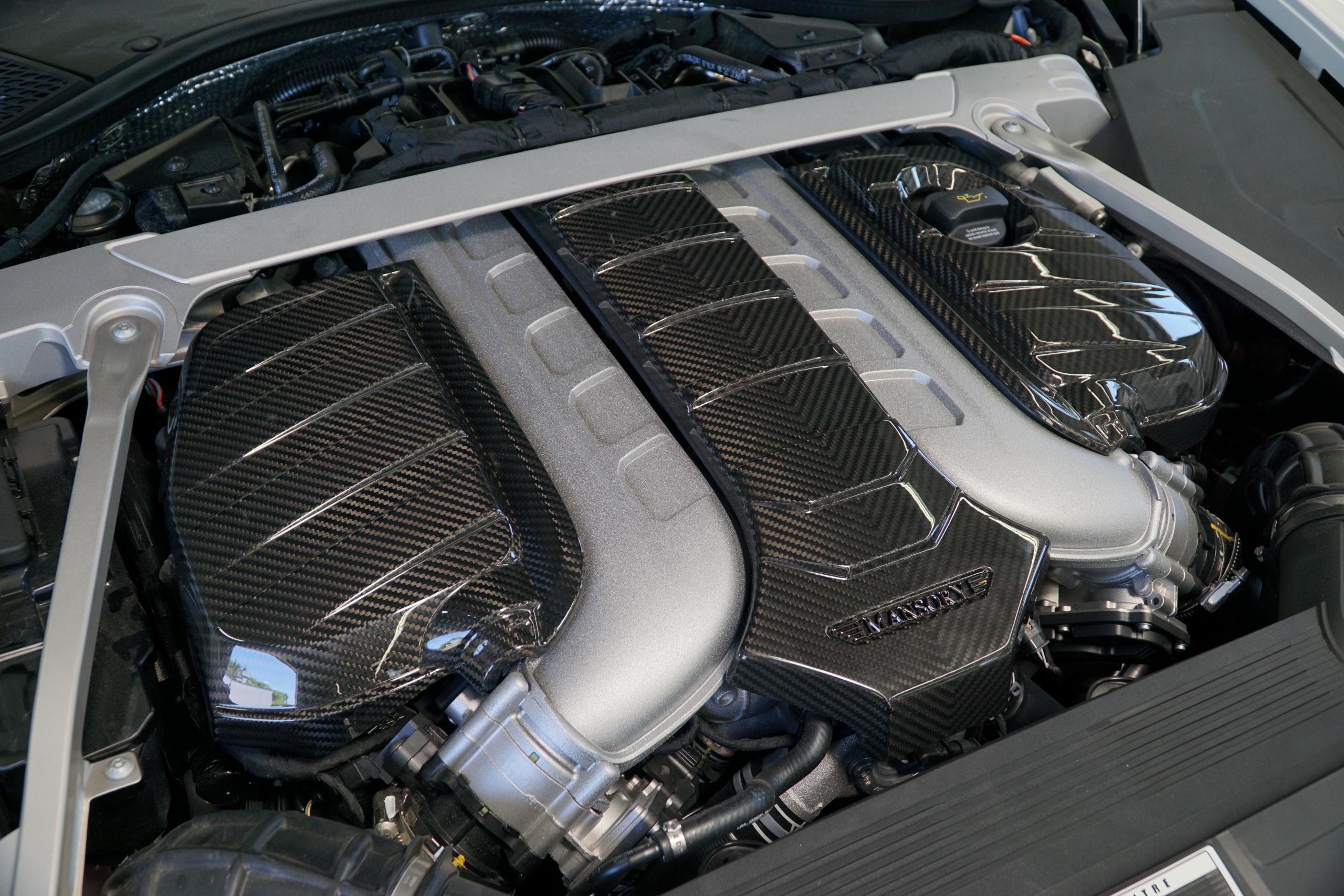
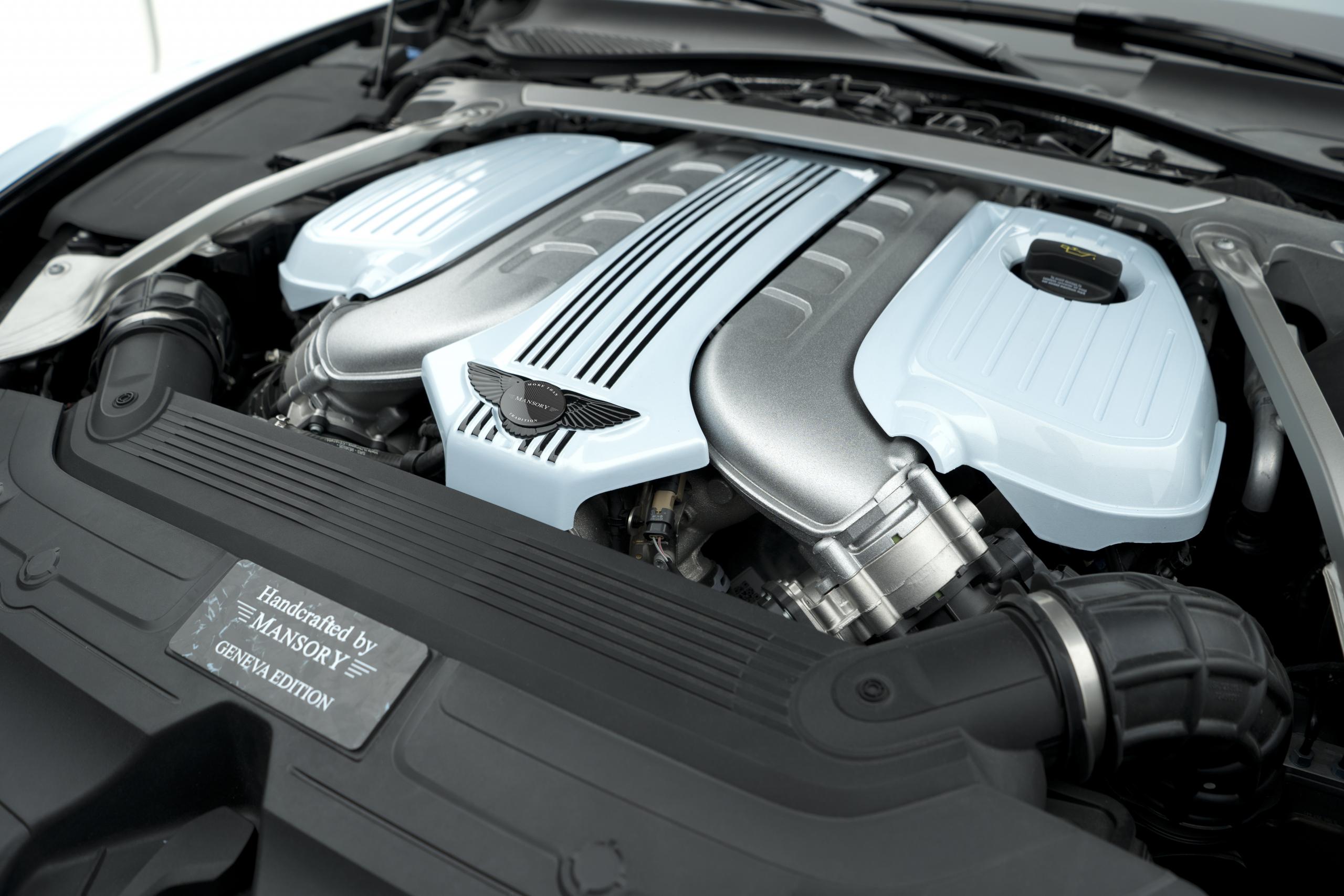
- Engine cover trim in carbon
Build & finish
The carbon used through Le Mansory is autoclave-cured pre-preg — the same process as a modern supercar tub. Panels arrive at the workshop in raw weave; the customer chooses between leaving the carbon visible under clear lacquer (the configuration most photographed in the original Le Mansory press fleet) or painting body-colour over the carbon. Many cars run a mix: carbon-weave roof, bonnet vents and rear wing; body-colour fenders and bumpers. Because every panel is a replacement rather than an add-on, the install needs a body shop with experience in carbon panel alignment — door gaps, bonnet shut lines and bumper-to-fender transitions all have to be re-set against the new geometry. The work is reversible only in the sense that the OEM panels can be re-fitted later if they are kept; the kit itself is engineered as the new permanent body.
Wheels & power
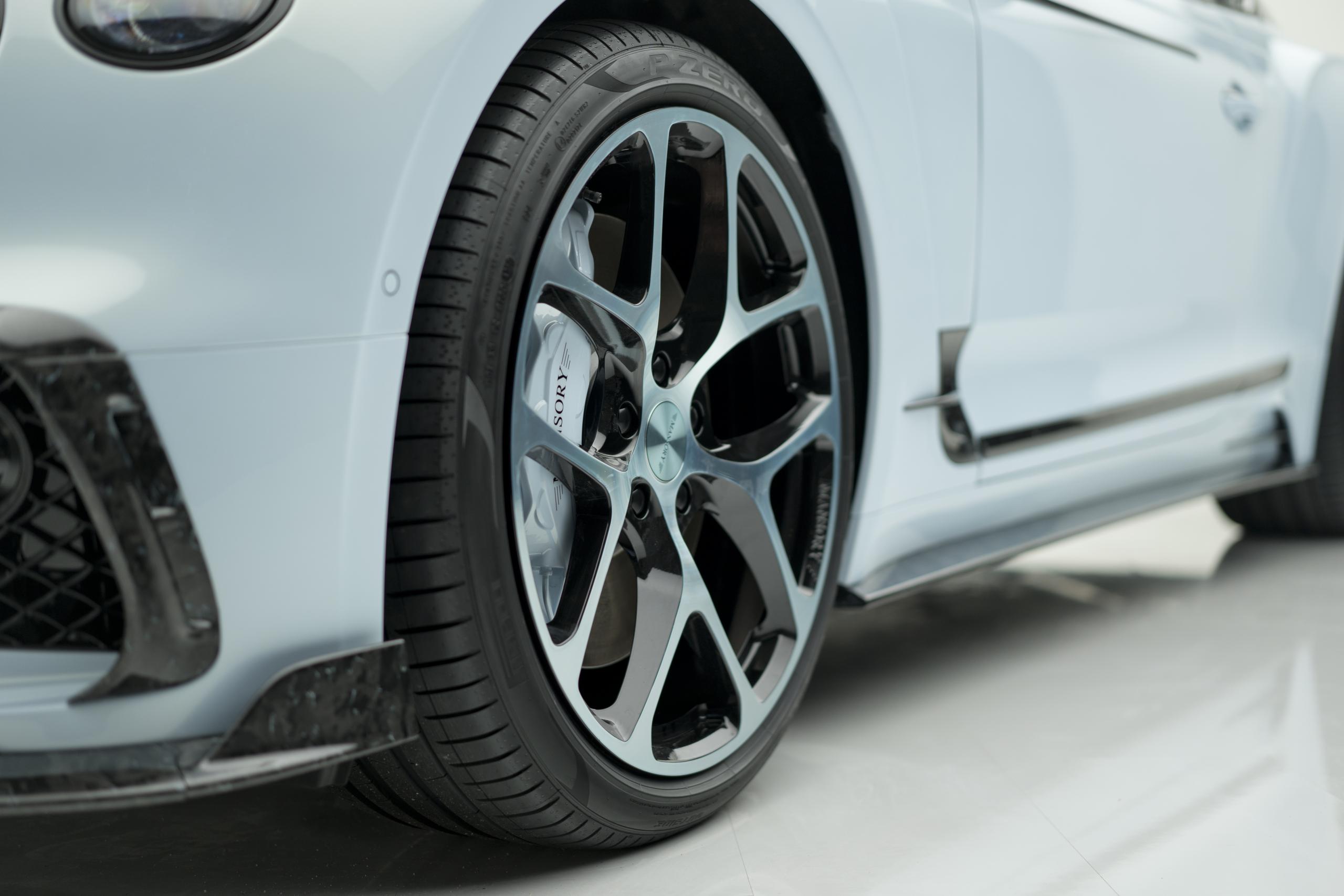
The Le Mansory wheel is a multi-spoke forged design in 22-inch (more common) or 23-inch (specced on the heavier flagship builds), available in machined silver, gloss black, or two-tone carbon-spoke configurations. Tyre fitments run 295/30 R22 front and 325/30 R22 rear on the 22″ setup. Other forged designs from the Hodoor forged wheels collection can be configured to the Continental's bolt pattern with the right offsets.
On the engine side, the W12 6.0 TT receives ECU recalibration and the Mansory sport exhaust as a paired upgrade — factory 560 PS / 650 Nm climbs to roughly 700 hp / 850 Nm on the standard build, with higher figures available on full Mansory engine spec. The V8 4.0 TT (introduced late in the first-generation run) gets its own ECU map. Power is part of the Le Mansory package, not an afterthought — the build was conceived around a Continental that hits its widebody stance and its supercar pace at the same time.
Fitment
Le Mansory panels are engineered against the first-generation Continental GT (2003–2011) and the GTC convertible (2006–2011). The W12 and V8 cars share body geometry; only the GTC needs a dedicated rear deck spoiler. Install is a body-shop project of two to three weeks, including paint and re-trim time — longer than any of Mansory's later, lighter Continental programmes. The donor car comes off the road for the duration. The original Bentley aluminium structure is not modified; only the bolted exterior panels are replaced.
In the Mansory Bentley Continental lineup
Le Mansory was the first big Mansory Bentley programme and remains the most extreme of them. The catalogue since:
- Le Mansory, Continental GT 1st gen (this page): full carbon panel replacement, widebody, ~700 hp W12 tune.
- Mansory GTC programme — a separate, lighter convertible build for owners who do not want the full Le Mansory.
- Continental GT/GTC 2016 — the Mansory programme for the second-generation car.
- Continental GT V8 (3rd gen) — the current-generation Mansory build, aero-focused.
- Continental GT/GTC Race Edition — the limited race-trim variant.
- Continental GT/GTC Sanguis — a paint-and-trim limited series on top of the Mansory body.
- Bentayga 2020 — the SUV in the same lineup.
Background and visual references for every Mansory Continental GT build sit on the Mansory Bentley Continental GT blog.
Why this build matters
Le Mansory is the reference Continental GT build of its era. It set the template that almost every later Bentley aftermarket programme — including Mansory's own follow-ups — worked against. Three things made it different at launch and still make it different on a 2026 lawn. Carbon-fibre panel replacement at this scale was almost unheard of on a luxury grand tourer in 2007 — every other tuner of the era was bolting fibreglass overlays onto OEM steel. The widebody stance was reached through the new pumped fenders rather than over-arches glued onto the original car — the result reads as designed rather than added. And the W12 power figure — ~700 hp on the standard build — was matched to the new bodywork. Most owners now buying a Le Mansory car are looking for one specific thing: a first-generation Continental that has the original badge but a build sheet that puts it in the same conversation as a Pagani Huayra at the auctions.
Where the kit ships
The first-generation Continental sold its largest volumes into the United Kingdom (its home market) and the GCC. Most cars that get a fresh Le Mansory installation today are GCC-based collector pieces or UK-based survivor cars going through a full restoration plus Mansory upgrade.
- Europe — the home of the car. The United Kingdom is the single biggest market for first-generation Continental restomods; Monaco is where most Le Mansory builds get photographed; Switzerland and Luxembourg are where most invoices clear.
- GCC. The first-gen Continental was bought in real numbers in the UAE, Saudi Arabia, Qatar and Bahrain from the start — a strong stock of donor cars survives.
- Asia-Pacific. Right-hand-drive demand is concentrated in Hong Kong, Singapore and Japan; South Korea and Thailand handle the rest of the regional volume.
- Other corridors. Canada, Australia, the United States and Latin America on standard freight.
Ordering & lead time
Le Mansory is rarely ordered as a partial set — the visual identity comes from the full panel substitution and partial builds tend to look unfinished. That said, every panel has its own SKU and individual ordering is supported. Standard lead time from the workshop is six to ten weeks because of the autoclave queue and the GTC-specific rear deck spoiler tooling. We can pair the kit with wheels, exhaust and ECU work into a single freight booking — the way most shops prefer to receive a Le Mansory build because it lets them schedule the body-shop time and the wheel install on the same week. Email [email protected] or WhatsApp +44 7488 818747 with your VIN and the trim variant (W12, V8, GTC, year) and we will quote a landed package price including the W12 power upgrade if you want it. For one-off carbon work — bespoke roof panels, custom interior carbon, paint-on-paint Le Mansory liveries — the Custom Design & Build service is the right route. New Mansory programmes go up on the Hodoor Mansory blog as they ship.
FAQ
Is Le Mansory a panel-replacement kit or an add-on?
Replacement. The OEM Bentley aluminium bumpers, fenders, bonnet and quarter panels come off the car and Mansory pre-preg carbon panels go on in their place. This is what makes the Le Mansory different from almost every other Mansory programme — most are bolt-on or hybrid; this one is panel-for-panel substitution.
Will it fit a GTC convertible?
Yes. The GTC uses the same front and side panels as the Coupe and a dedicated GTC rear deck spoiler that sits behind the folded soft top. Confirm year against build code at order — GTC went on sale in 2006.
How much does the W12 power upgrade actually add?
Roughly +140 hp on the standard W12 6.0 TT — factory 560 PS climbs to about 700 hp / 850 Nm with the Mansory exhaust + ECU package. Higher figures are available on full Mansory engine builds at additional cost. Speed trim (575 PS) and Supersports (610 PS) cars get smaller deltas.
Are the original Bentley panels worth keeping?
Yes — store them. They are valuable both for resale documentation and for the rare collector who later wants to reverse the build. Several 2010–era Le Mansory cars on the auction circuit have changed hands recently with their OEM panels included as a separate lot.
What wheel pattern fits the Continental's hubs?
The first-gen Continental runs a 5x112 PCD with 71.5 mm centre bore. Le Mansory's forged 22" / 23" wheels are made to that pattern; most designs in the Hodoor forged wheels collection can be ordered to fit. We size offsets per VIN against the new widebody arches.
How long does an install take?
Two to three weeks at a body shop with carbon experience. The bottleneck is door-gap and bumper-to-fender alignment after the carbon panels go on — the work is closer to an OEM body restoration than to a bolt-on tuning install.
Does Le Mansory void Bentley factory warranty?
The cars in scope are from 2003–2011, so factory warranty is no longer the question. The relevant question is the body shop's warranty on its own installation work — which is something to negotiate at quote time, not after the build is on the trailer.
Parts