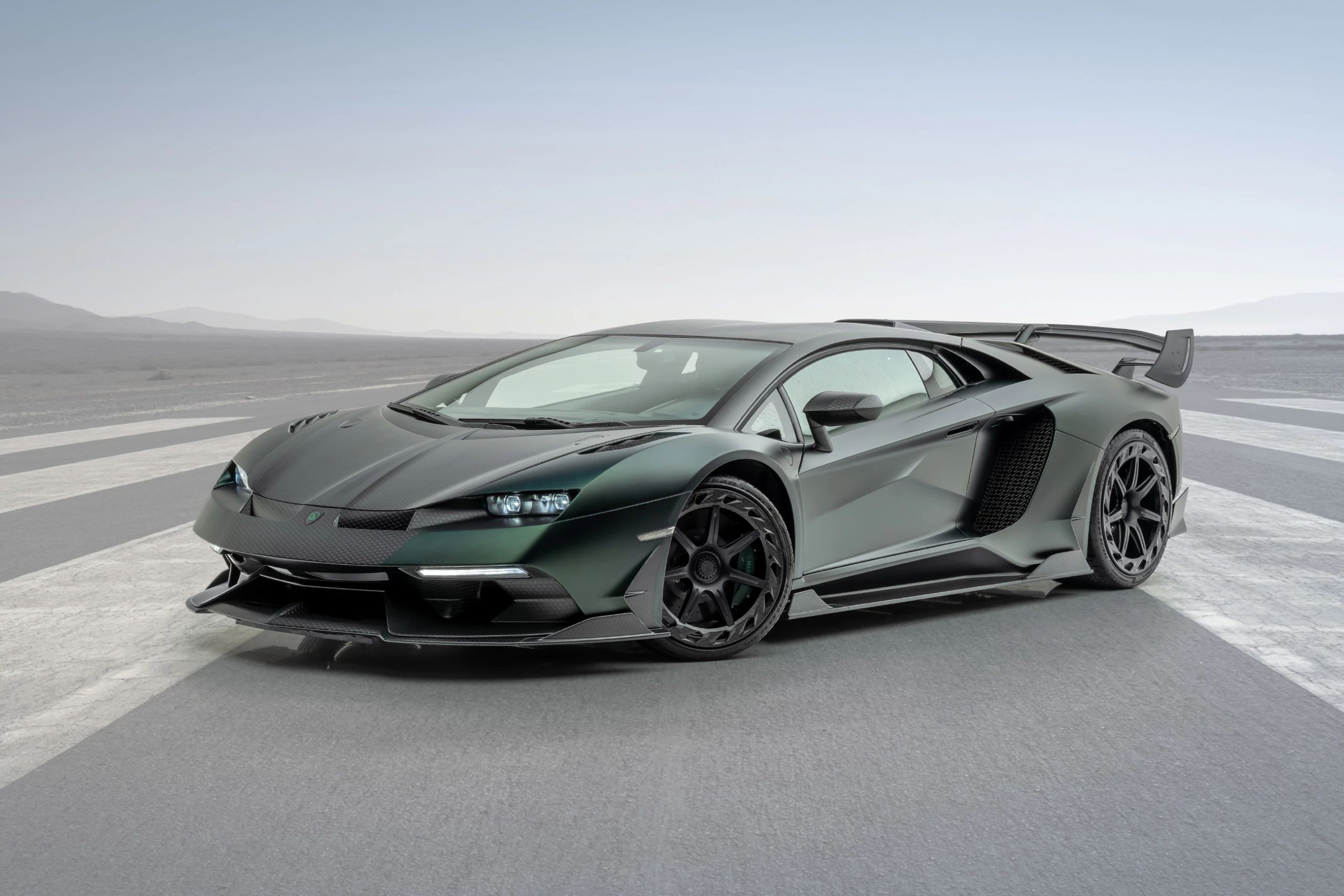
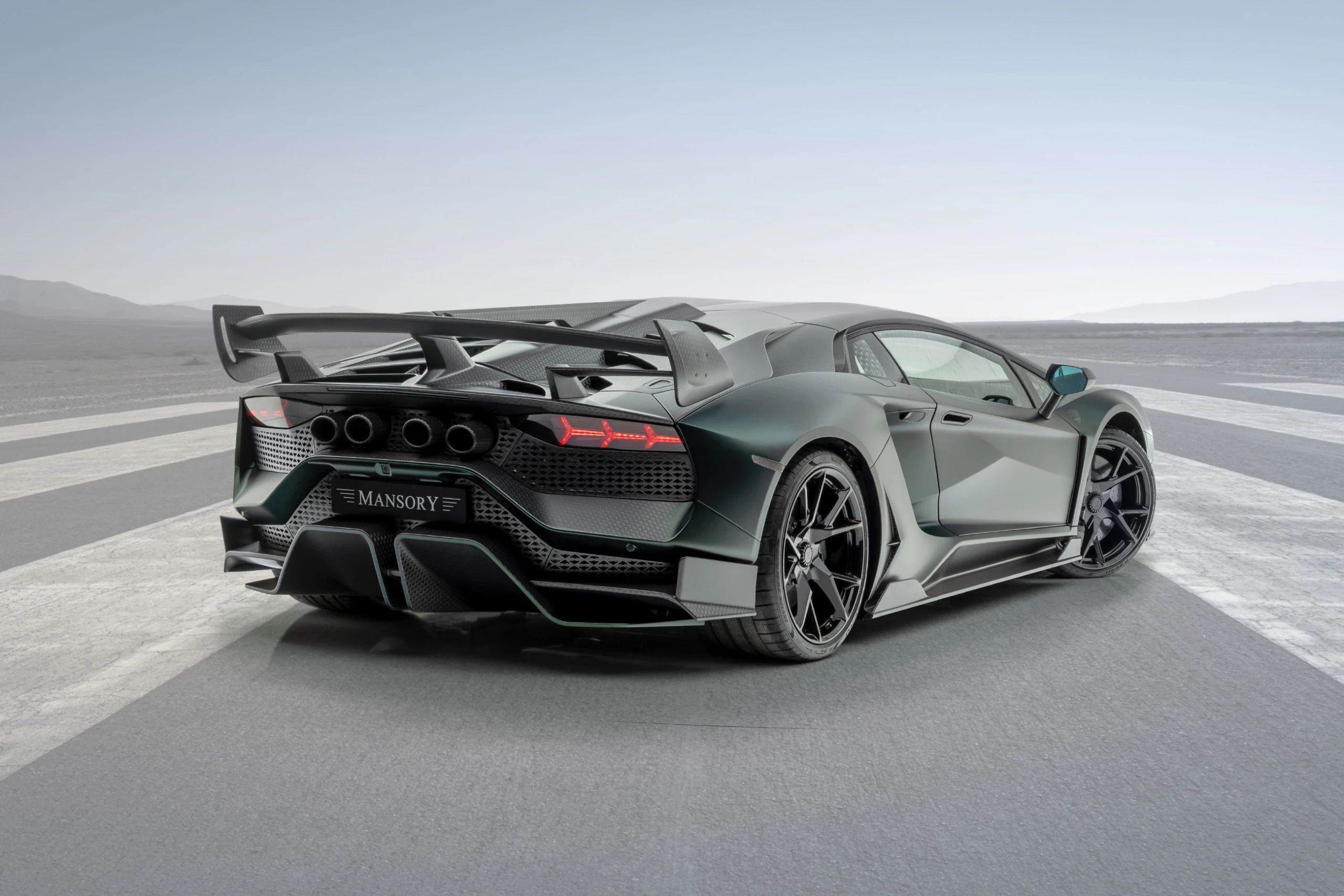
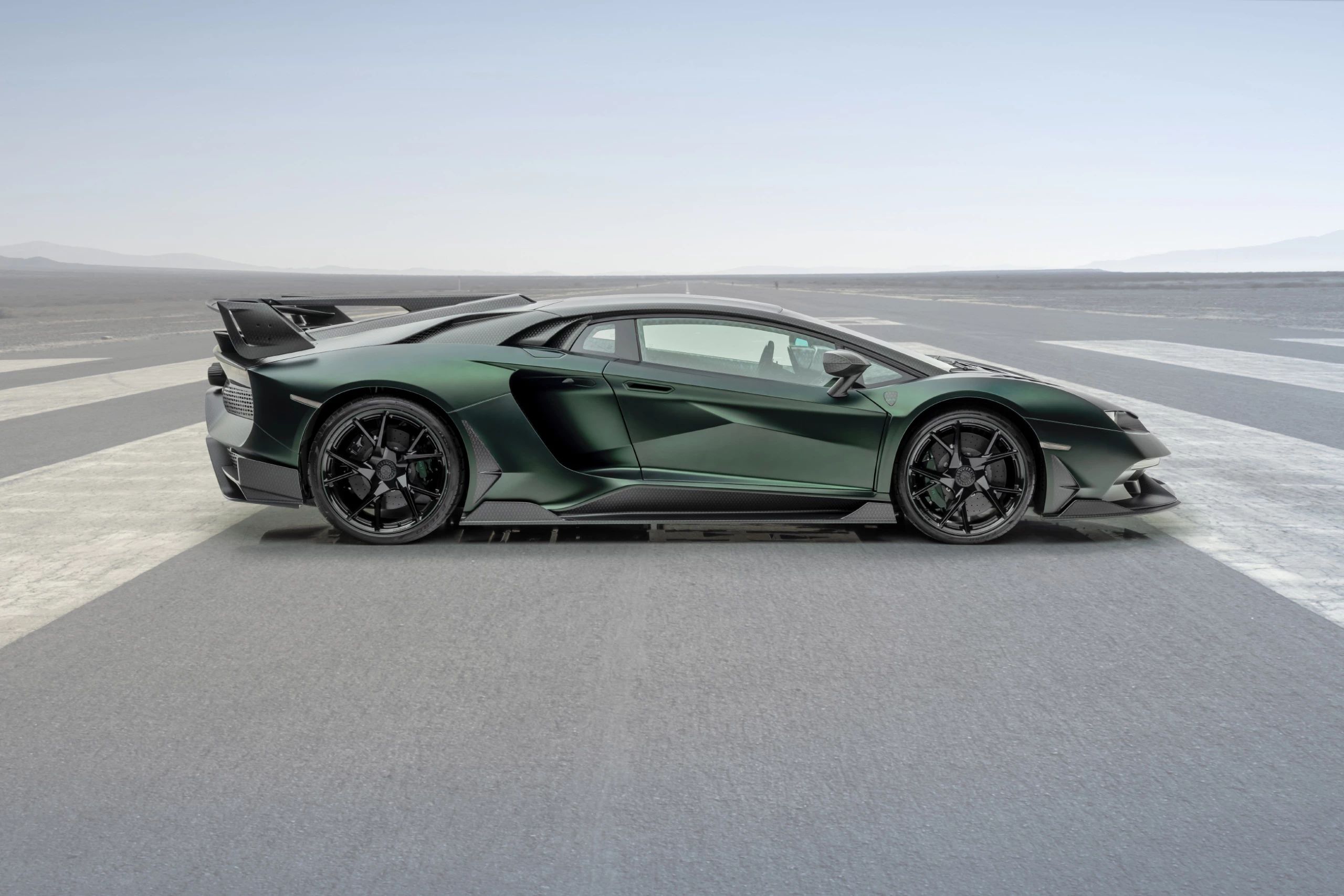
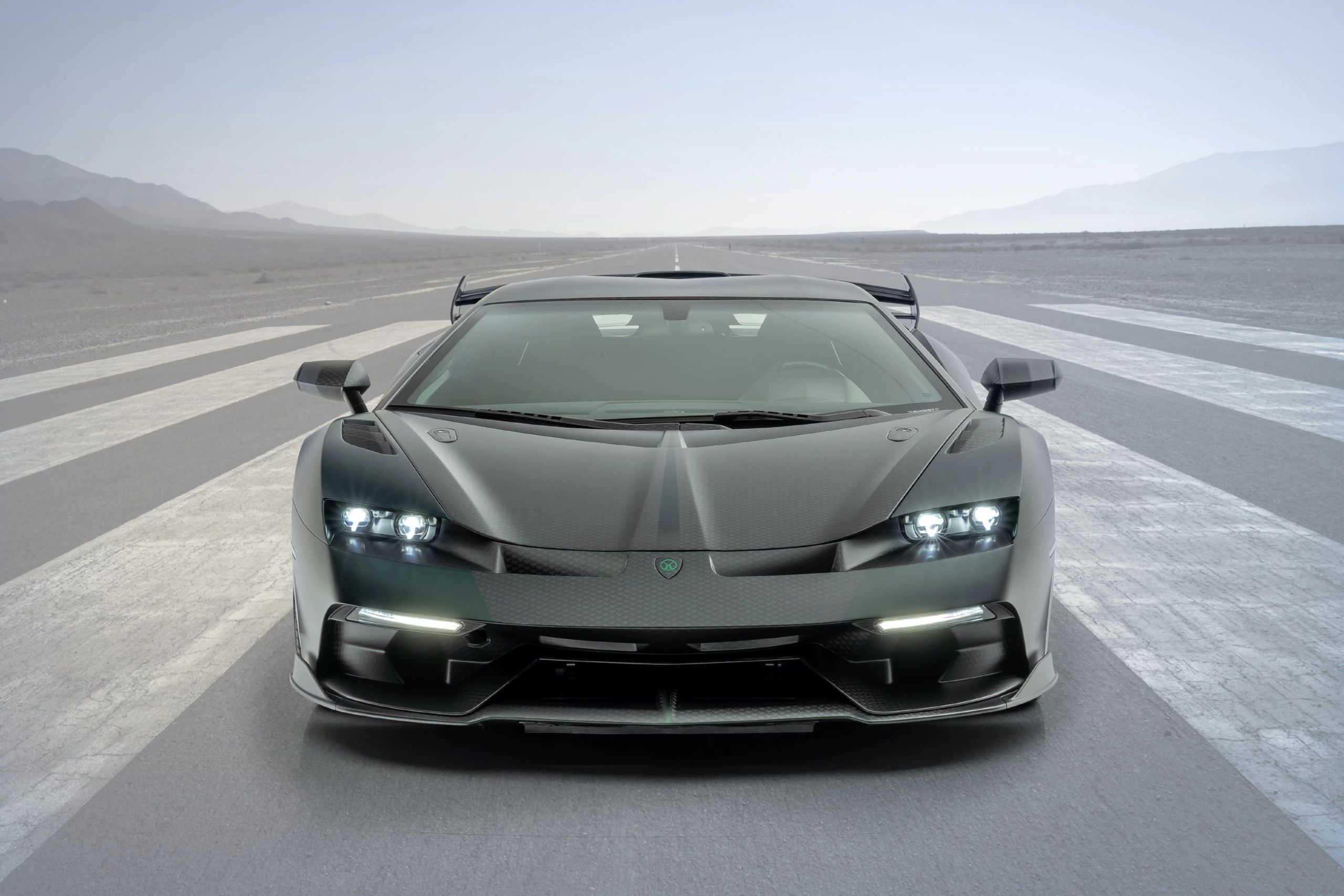
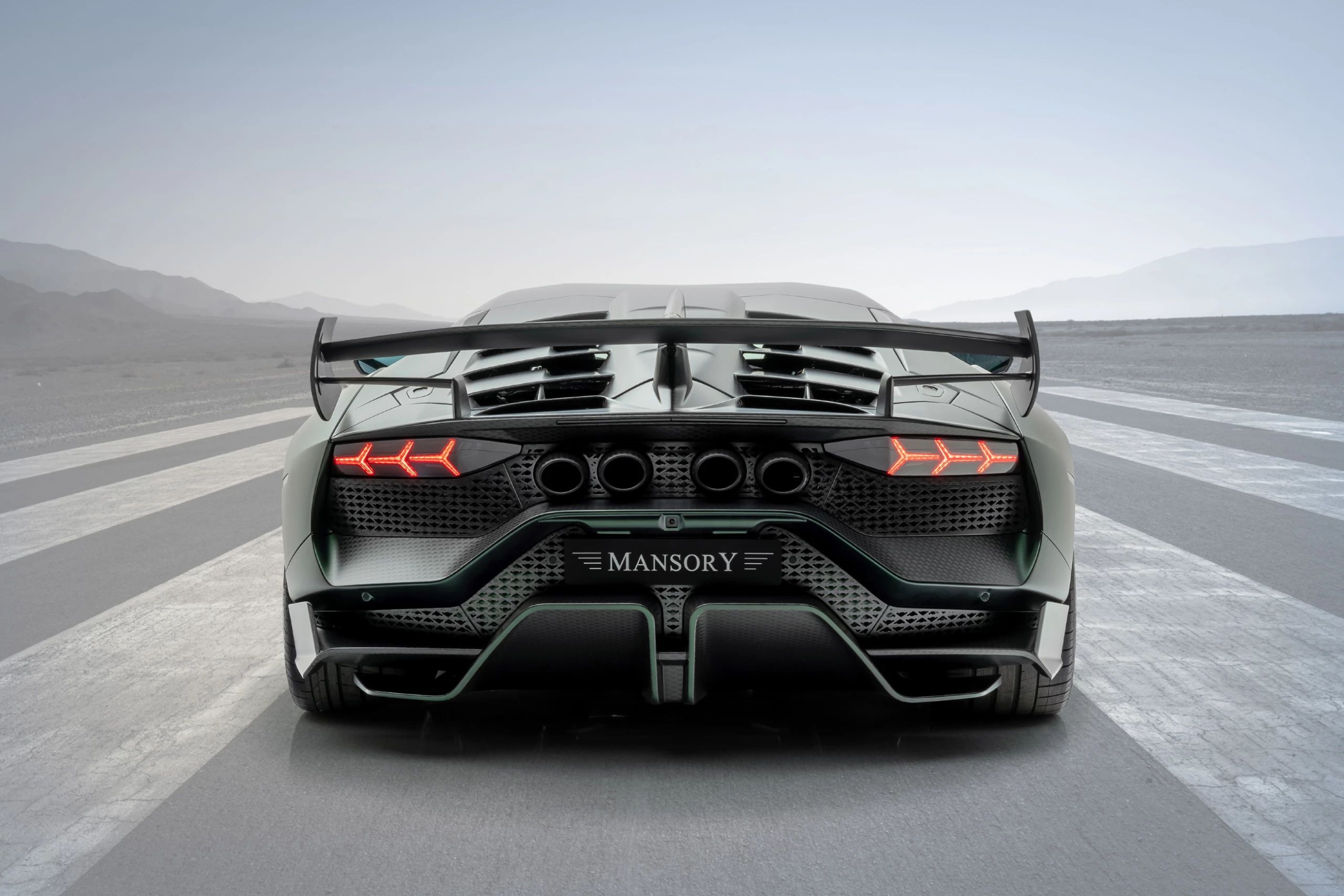
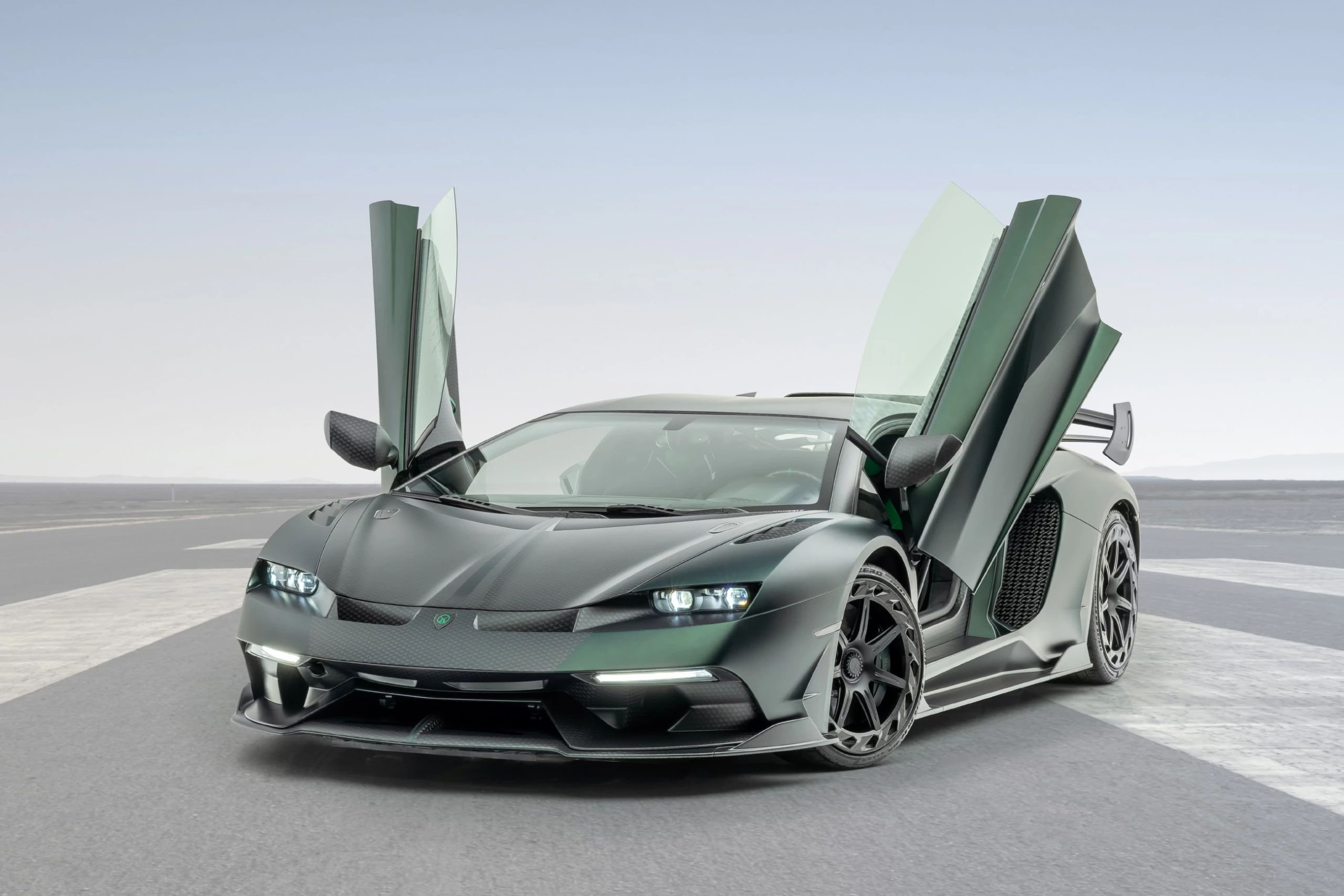
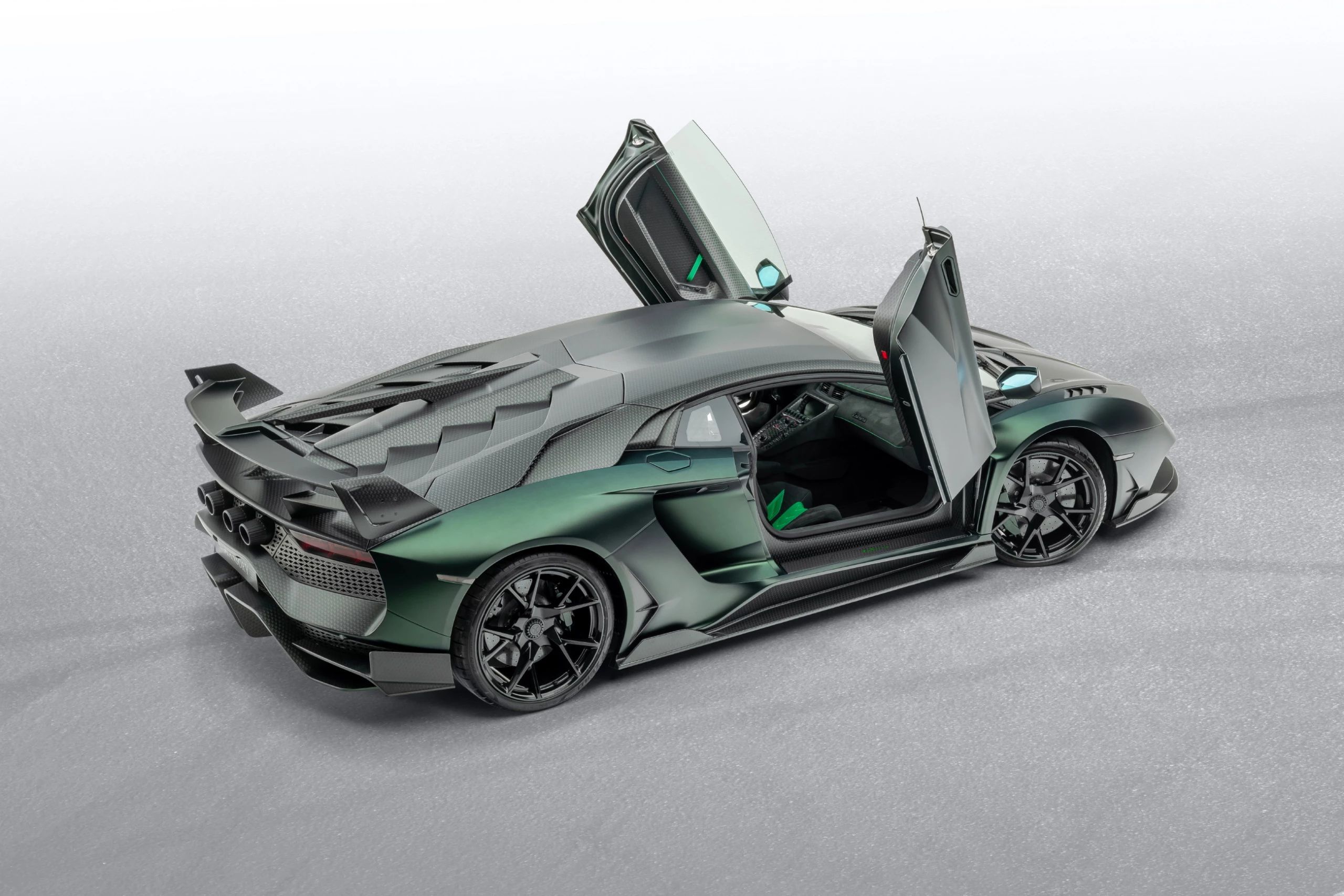
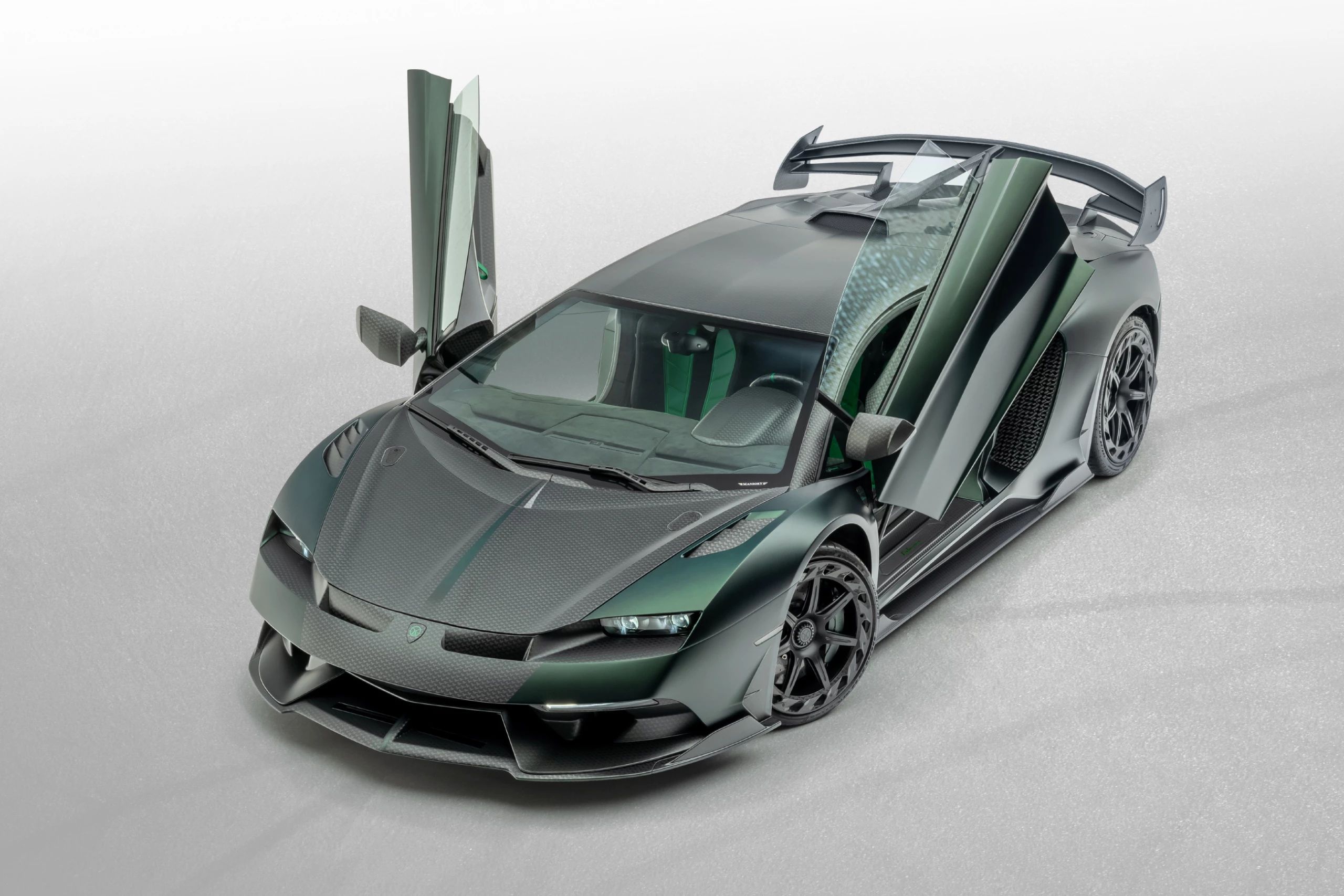
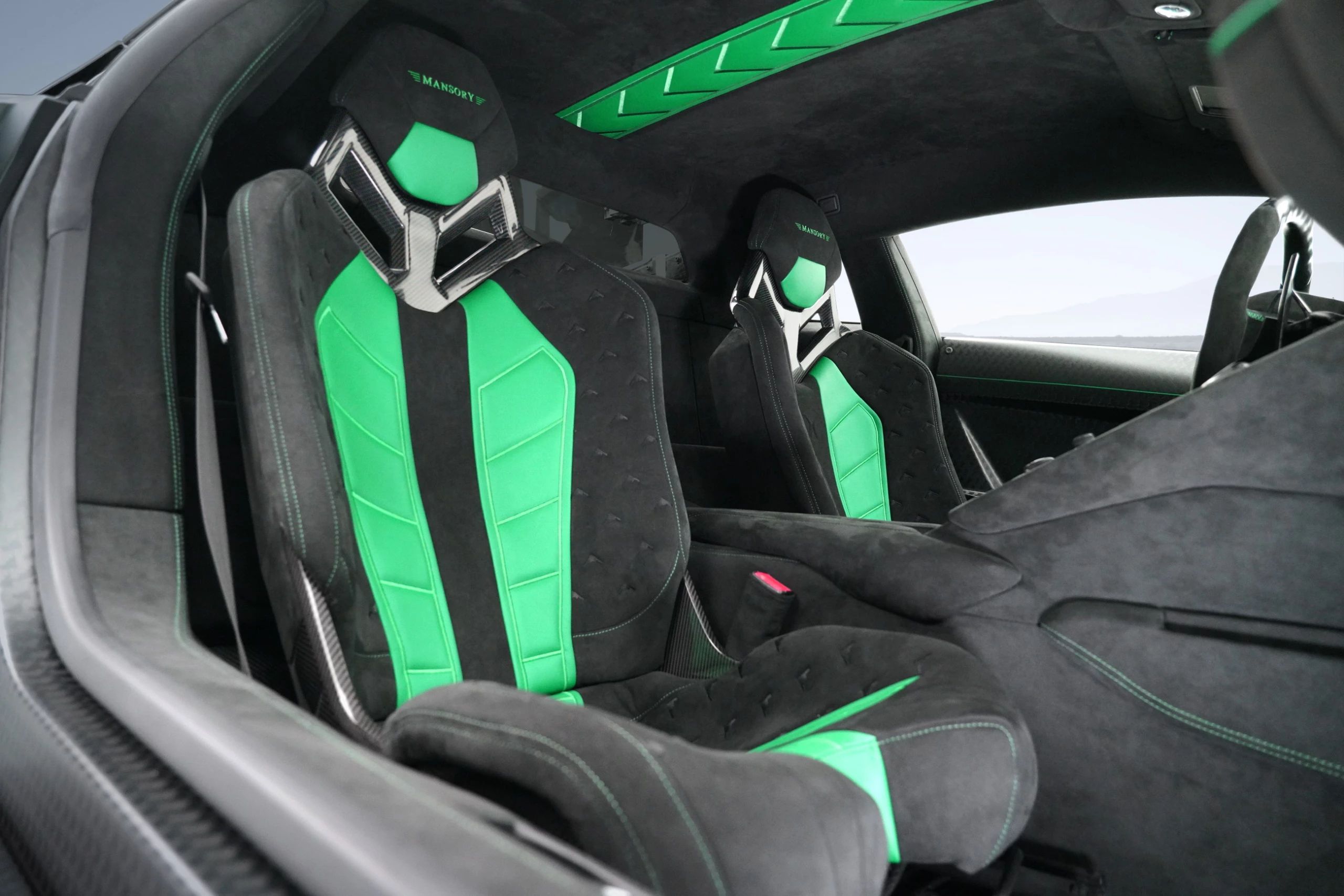
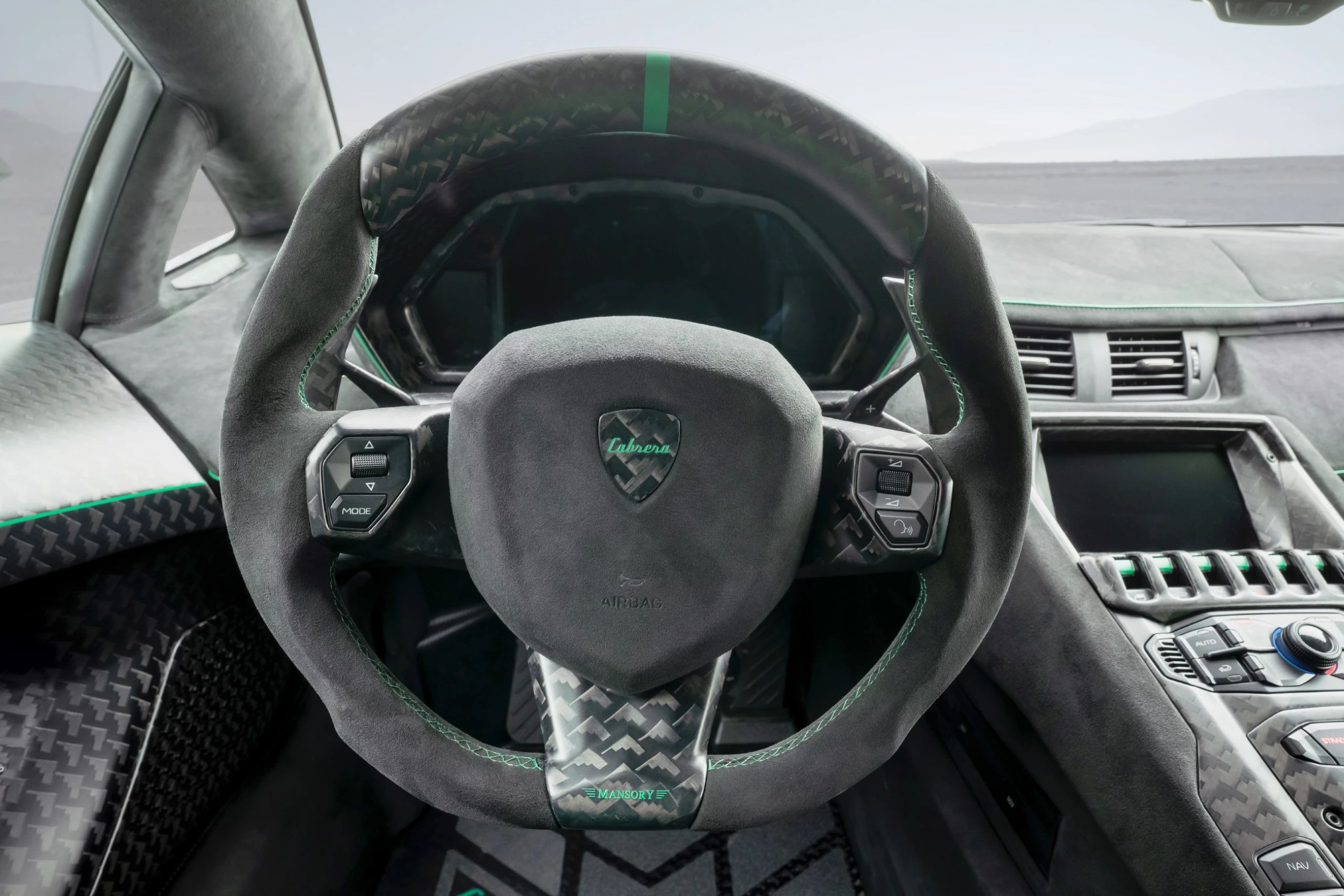
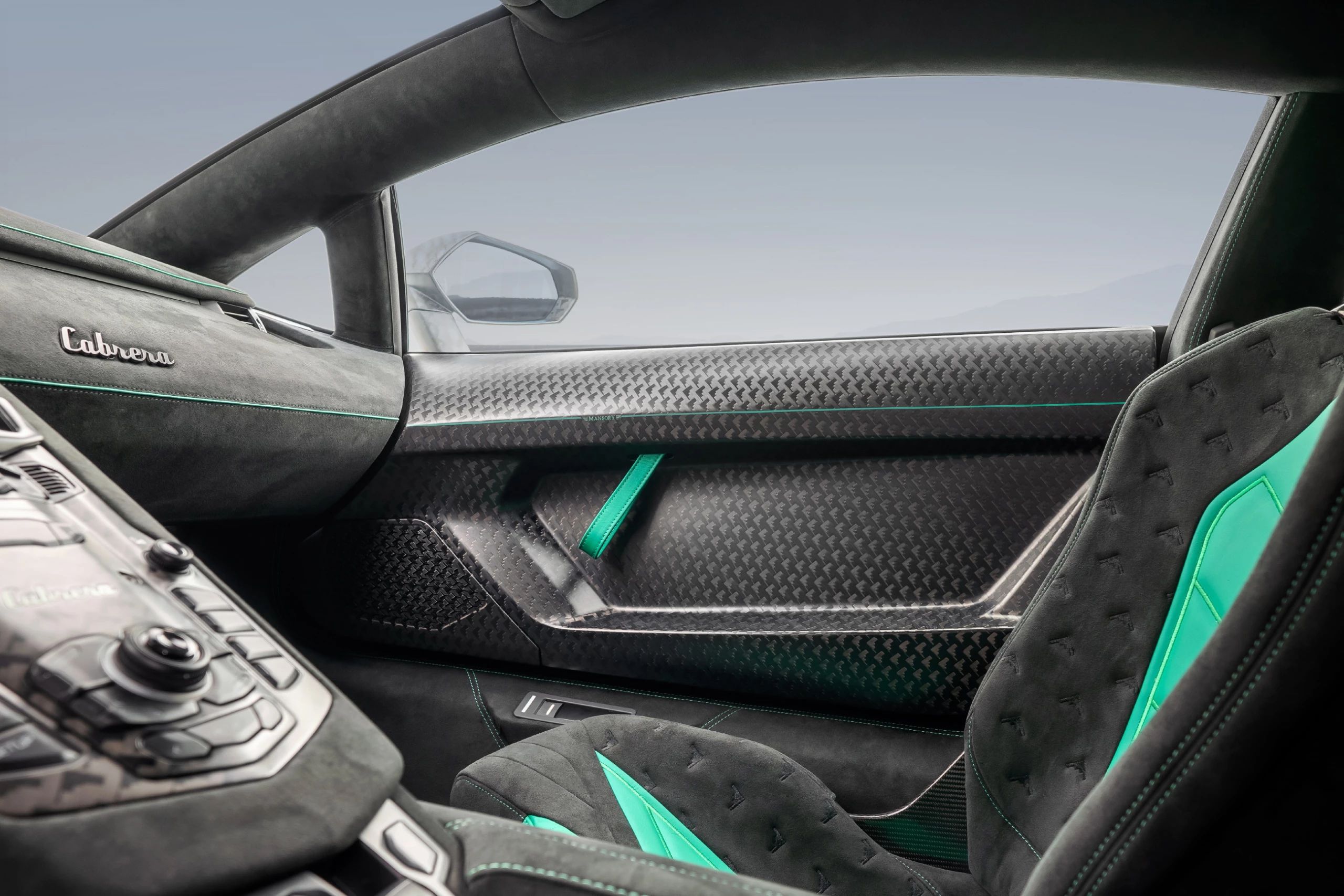
Mansory Carbon Fiber Body kit set for Lamborghini Aventador SVJ Cabrera


MANSORY CABRERA — Carbon Fiber Body-Kit Programme Reserved for the LAMBORGHINI AVENTADOR SVJ (LP770-4), the Nürburgring-Record V12 That Closed the Naturally Aspirated Era
Cabrera is Mansory's SVJ-only programme. It is not a carry-over from the 2011-2017 LP700-4 Carbonado family and it cannot be retrofitted to a pre-2018 Aventador. The reason is mechanical, not aesthetic: the Aventador SVJ — launched 2018 as the top trim of the carbon-tub V12 flagship, 770 hp from the L539 6.5 L naturally aspirated V12, and holder of the production-car Nürburgring lap record at 6:44.97 at the time of its debut — introduced ALA 2.0 (Aerodinamica Lamborghini Attiva), a system of electronically actuated aero flaps in the front splitter and rear wing that vector airflow per wheel for cornering stability. Those flaps demand kinematic clearance the LP700-4 body never had. Cabrera is the carbon kit engineered around that envelope.
Why Cabrera is harder than Carbonado — the engineering brief
On paper the two programmes look adjacent: carbon bumpers, fenders, rocker panels, hood, rear wing. In reality Cabrera is substantially more constrained. The LP700-4 Aventador had a static front splitter and a passive rear wing — Mansory's Carbonado designers worked a near-clean aerodynamic slate. On the SVJ, the front splitter contains the ALA front flap, which opens to stall the underfloor-rake balance during hard braking, and the rear wing contains two ALA flaps that open asymmetrically for aero-vectoring (left-wing flap stays closed in a right-hand corner to load the outside tyre). Cabrera's carbon front bumper must clear the front-flap actuation arc and preserve the duct geometry feeding it. The replacement rear wing must house the original ALA actuation mechanism or be designed with equivalent kinematics so the SVJ's aero-vectoring ECU logic still maps to reality. That is the hardest brief Mansory has executed on an Aventador body — harder than Carbonado's 700 hp wide-body, harder than Carbonado Apertos's open-top detailing. Collectors who understand SVJ engineering recognise the distinction.
ALA system retention — Mansory's adaptation
Cabrera retains ALA 2.0 fully functional. Concretely this means: the front-splitter air channel that feeds the front flap is preserved in cross-section; the front-flap actuator mounts unchanged on the carbon replacement splitter; the rear-wing replacement integrates the original Lamborghini ALA actuator assembly, or ships with a Mansory-fabricated equivalent wing with actuator pre-mounted. The ALA control ECU is factory-unchanged; flap actuation timing, speed thresholds and cornering-G triggers remain per Lamborghini calibration. The homologation consequence is meaningful: a Cabrera-converted SVJ retains the aero-vectoring behaviour that gave the platform its Nürburgring record, which is not true of aftermarket SVJ wings that bolt over the ALA mechanism and disable it. If ALA disable is specifically requested — some circuit-focused collectors prefer a locked-static configuration — Mansory ships a non-ALA replacement wing as an alternative; default is ALA-retained.
Carbon component inventory
Cabrera schedule for SVJ: carbon front bumper engineered around the ALA front-flap actuation envelope, with deepened splitter lip and reshaped air-curtain intakes; carbon front bonnet with revised heat-extraction apertures; carbon front-fender replacements with louvred vent detail matching SVJ factory venting; carbon rear-fender panels widening the rear track for the 21" fitment; carbon side skirts that pick up factory mounting hardpoints without disturbing the underfloor venturi geometry; carbon engine-cover louvre panel exposing the L539 V12 through functional cooling slats; replacement carbon rear wing — two variants, ALA-retained (default) and static high-downforce (on request) — matched to the SVJ's tall-wing geometry, not the low-profile LP700-4 wing; carbon rear bumper with repositioned diffuser strakes and dual-exit Mansory exhaust bezels compatible with the SVJ's high-mounted twin-pipe; carbon mirror housings; carbon engine-intake snorkels; carbon interior trim set. Roadster-specific: carbon targa-panel trim matched to SVJ Roadster's removable roof panels; factory panel-storage location in the front boot is preserved.
L539 6.5 L V12 NA — last of its kind before electrification
The SVJ's L539 6.5 L 60-degree naturally aspirated V12 is the final evolution of the Aventador's NA V12 before hybridisation. Output: 770 hp at 8500 rpm / 720 Nm at 6750 rpm. Redline: 8700 rpm. Transmission: ISR 7-speed single-clutch automated manual — Lamborghini's signature percussive-shift gearbox, not a dual-clutch. Drivetrain: Haldex-generation AWD with rear-bias torque split. Chassis: carbon-fibre monocoque + aluminium front and rear subframes — the Aventador is one of the few road cars built around a full carbon tub. 0-100 km/h: 2.8 s. 0-200 km/h: 8.6 s. Top speed: 350+ km/h. Dimensions: 4943 × 2098 × 1136 mm, wheelbase 2700 mm. Production: 900 Coupe + 800 Roadster + 63 SVJ 63 special edition (one-of-63 celebrating Lamborghini's 1963 founding). Succession: L539 retired 2022 with the Ultimae coda; the Revuelto replaced the NA V12 with a 6.5 L hybrid V12 + three electric motors. Cabrera therefore preserves a car that is, by factory intent, the last unassisted twelve-cylinder Lamborghini road platform.
Wheels — center-lock 20" / 21" forged
SVJ factory fitment is center-lock single-nut, not 5-bolt — a motorsport-derived hub Lamborghini adopted from the Aventador SV generation. Mansory Cabrera wheel specification is FM.8 center-lock forged, 20" front / 21" rear, tyre 255/30 R20 front and 355/25 R21 rear. Alternative patterns available on the same center-lock hub: S.14 split-seven, FD.14 dual-spoke. Finishes: matte-black, raw-forged, satin-bronze, glossy-black with diamond-cut detail. Note: aftermarket 5-bolt-conversion kits exist for the Aventador platform but Mansory does not supply them; the programme is built to retain the factory center-lock hub for homologation and suspension-geometry reasons. Catalogue: https://hodoor.world/collection/forgedwheels.
Where SVJ Cabreras emerge
The SVJ client base is global by definition — Monaco, Switzerland, the Gulf and Asia absorb the majority of Cabrera commissions, but the hyper-collector market is not tied to geography and we have shipped Cabrera kits to owners whose SVJs live between four garages on three continents. More context on Hodoor's workshop partners and the commission process: +44 7488 818747 (WhatsApp).
Commission
Cabrera commission requires: SVJ VIN, body variant (Coupe LP770-4 / Roadster LP770-4 / SVJ 63 Coupe / SVJ 63 Roadster), current paint and interior codes, carbon scope (full kit vs selected components), rear-wing variant (ALA-retained default / static on request), wheel pattern and finish, interior-retrim option, destination country. Indicative lead time: 14-16 weeks for carbon (Aventador tooling is now legacy inventory since end-of-production in 2022, so timelines run longer than current-production Lamborghini programmes); +3 weeks interior retrim; installation approximately 2 weeks at a Lamborghini-experienced workshop. Total commission to road: circa 4-5 months. Contact: [email protected] or +44 7488 818747 (WhatsApp).
Mansory cross-references for cross-shoppers
Closest in DNA — the configurator analogues to this programme are Carbon Body Kit for Lamborghini Aventador Competition and Lamborghini Aventador SV J.S.1 Edition.
One step further out, clients also weigh Lamborghini Aventador Carbonado.
Country-by-country order pattern — Mansory Lamborghini Aventador SVJ Cabrera
The Mansory Lamborghini Aventador SVJ Cabrera programme leans on a stable map of repeat-order regions. Mediterranean demand — Cyprus, Turkey — clusters around coastal collector communities. In Western Europe, the Netherlands and Austria take the largest share, with several builds also crating to Monaco. Asia-Pacific volume runs through mainland China and Japan, where forged-wheel sets are usually configured alongside the body kit. Insured shipping with full customs paperwork is included on every Lamborghini Aventador SVJ Cabrera order, regardless of destination.
FAQ — Cabrera programme
Does Mansory disable ALA (Aerodinamica Lamborghini Attiva)? No — ALA-retained is the default. The replacement rear wing integrates the factory actuator and the ALA ECU, thresholds and G-triggers remain on Lamborghini calibration. A static non-ALA wing is available on request for circuit-focused owners who prefer a fixed-downforce configuration; that is the exception, not the rule.
Does Cabrera fit the SVJ Roadster (LP770-4) and the Coupe (LP770-4) equally? Yes — the programme covers both. Roadster-specific carbon trim for the removable targa-panel surrounds ships as standard for Roadster commissions; the panel-storage location in the front boot is unaffected. Bumpers, fenders, skirts, hood, engine cover and rear wing interchange between the two bodies.
Will Cabrera work on the one-of-63 SVJ 63 special edition? Yes. The SVJ 63 is mechanically identical to the standard SVJ — the edition consists of unique paint, carbon livery detailing and numbered plaquette. A Cabrera commission on a 63-series car is supported and we will preserve the SVJ 63 badging and numbered-plaque locations during installation. Discuss the programme implications of modifying a 63-series car with your collection advisor before commissioning.
What are the warranty implications given the Aventador is out of production? The Aventador ceased production in September 2022 with the Ultimae. Lamborghini factory warranty on a new SVJ has in most cases expired by calendar; where regional extended-warranty coverage still applies, we advise discussing scope with your Lamborghini dealer before installation. Mansory's own warranty on Cabrera carbon components is the standard programme warranty and is unaffected by the Aventador production status. Insurance-valuation impact of a Cabrera conversion is generally positive for collector-grade cars; we can provide documentation to support a revaluation.
Lead time for ageing-tooling Aventador parts? Longer than current-production programmes. Aventador carbon tooling at Mansory dates from the LP700-4 / Carbonado era for some components and from the 2018 SVJ launch for the Cabrera-specific parts. Since Aventador is no longer in production, parts are produced against order rather than against ongoing-platform schedules. Indicative lead time: 14-16 weeks for the full carbon set, versus 12 weeks for an in-production Lamborghini platform. Wheel lead time is unaffected — forged production runs on standing schedules regardless of vehicle production status.