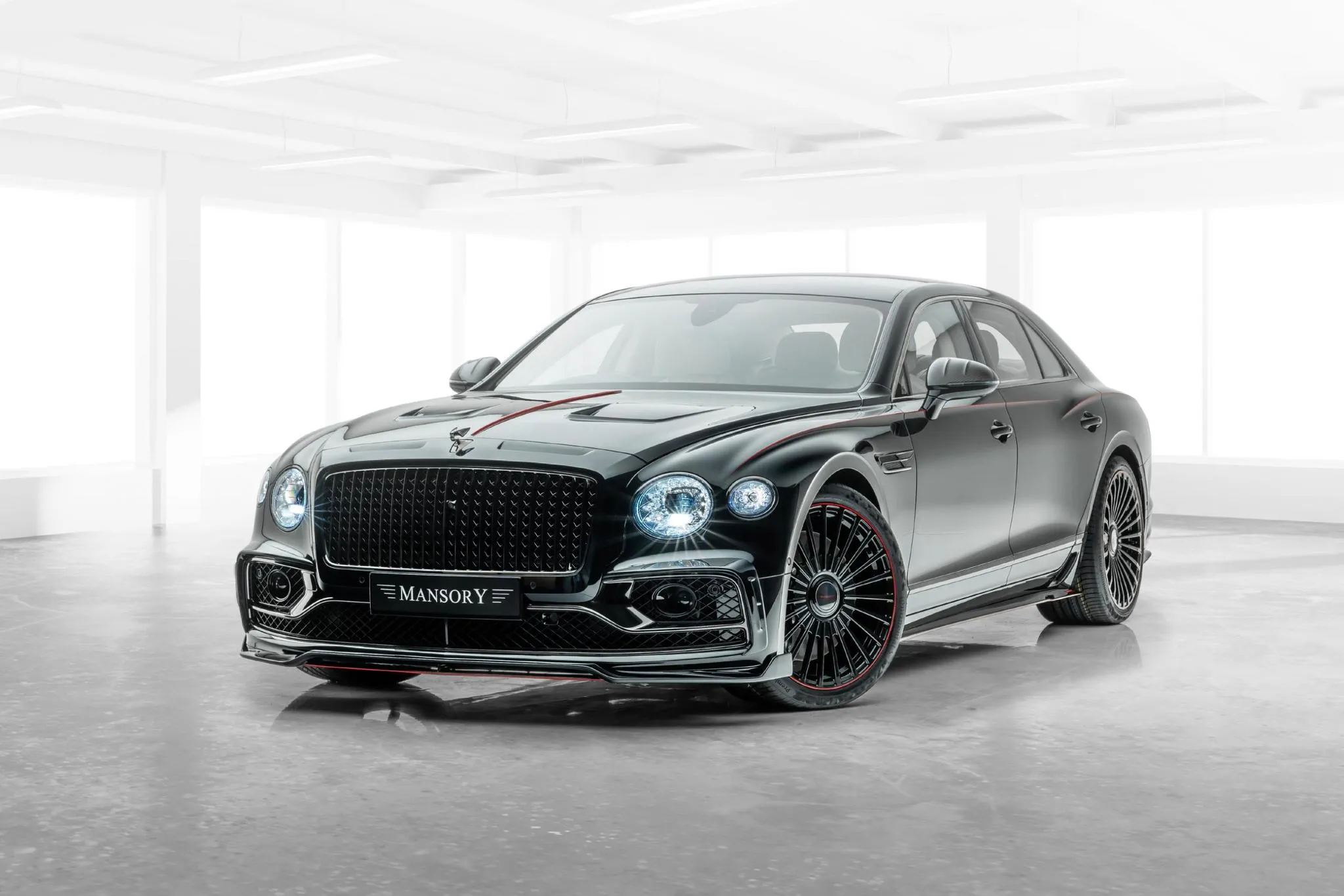
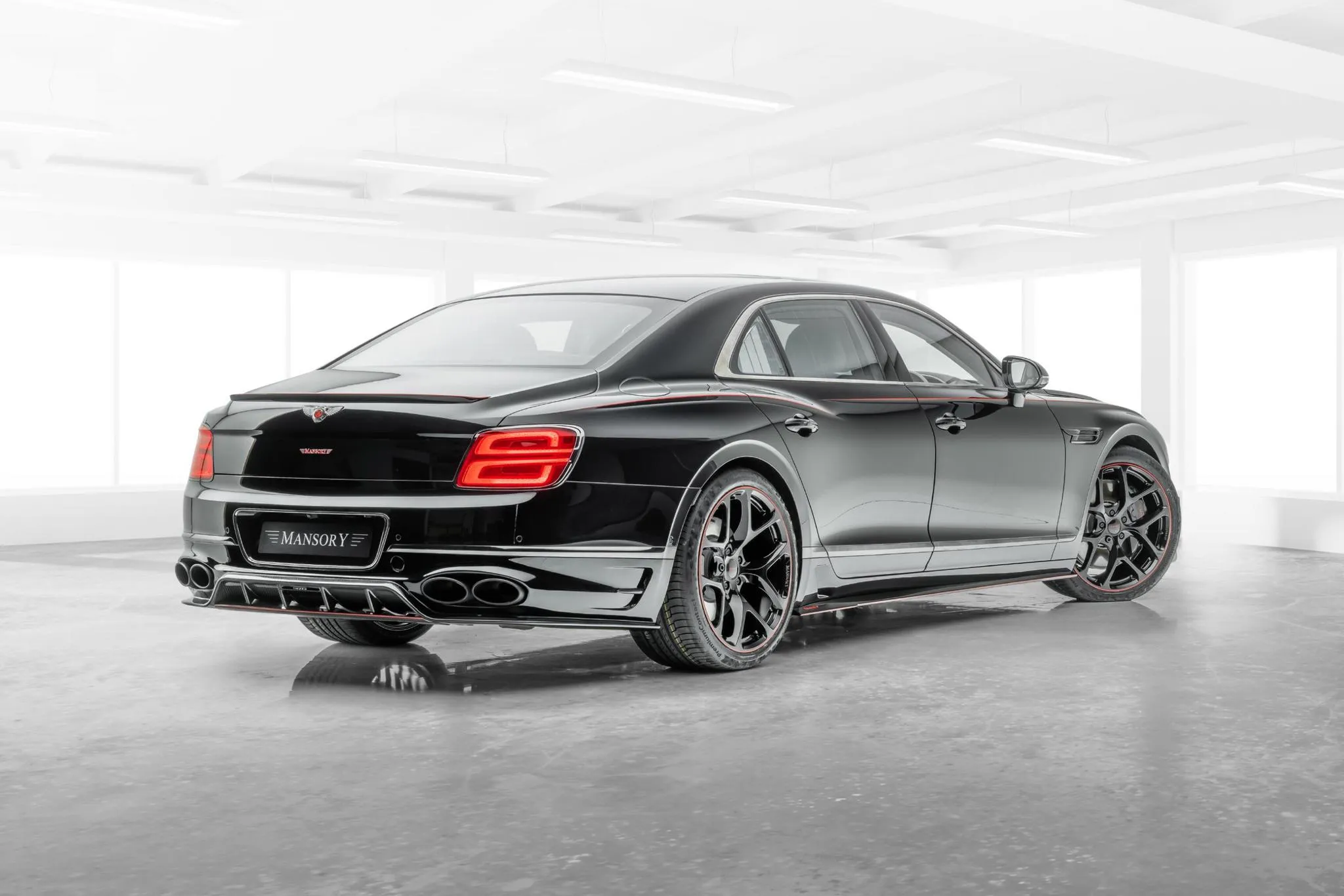
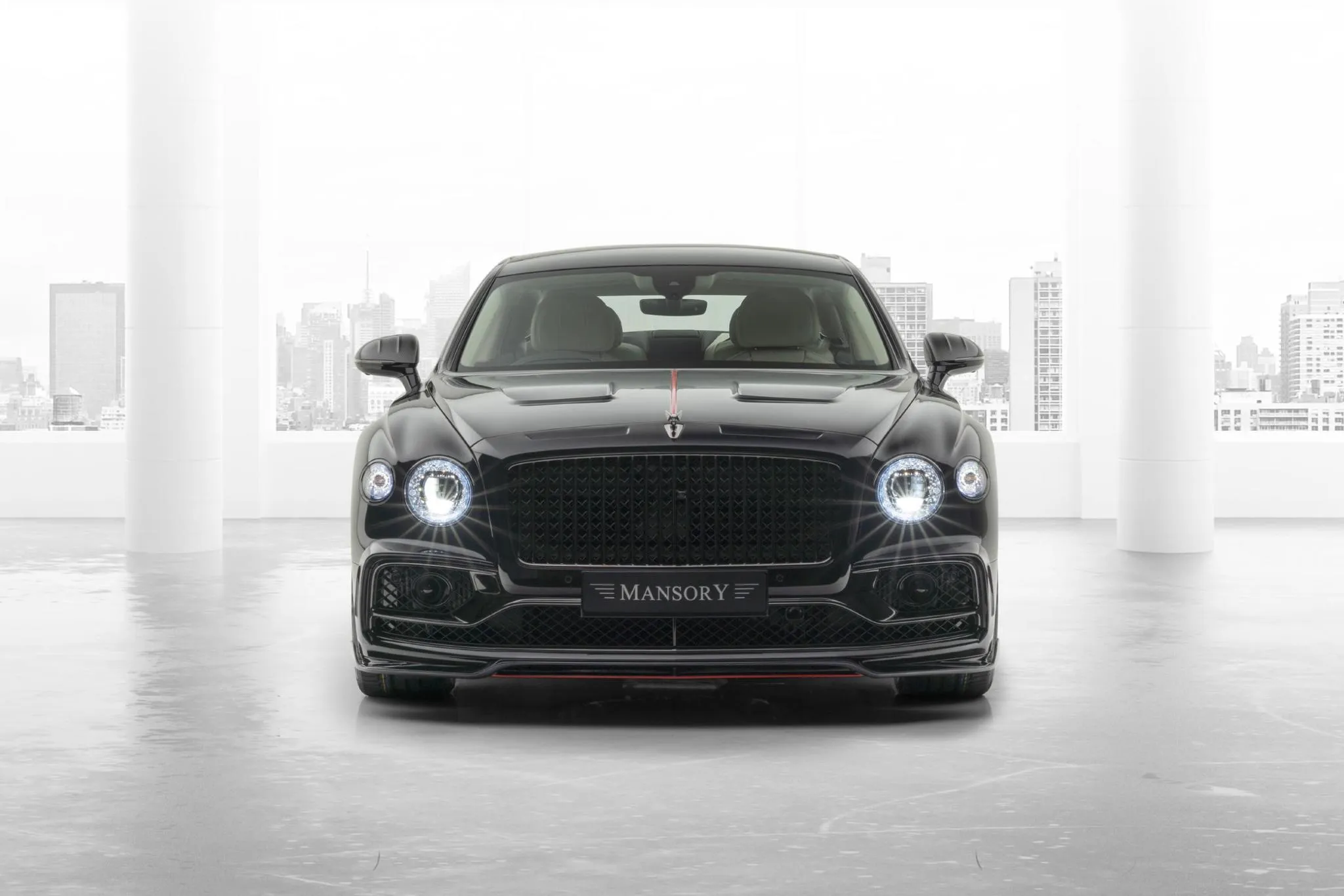
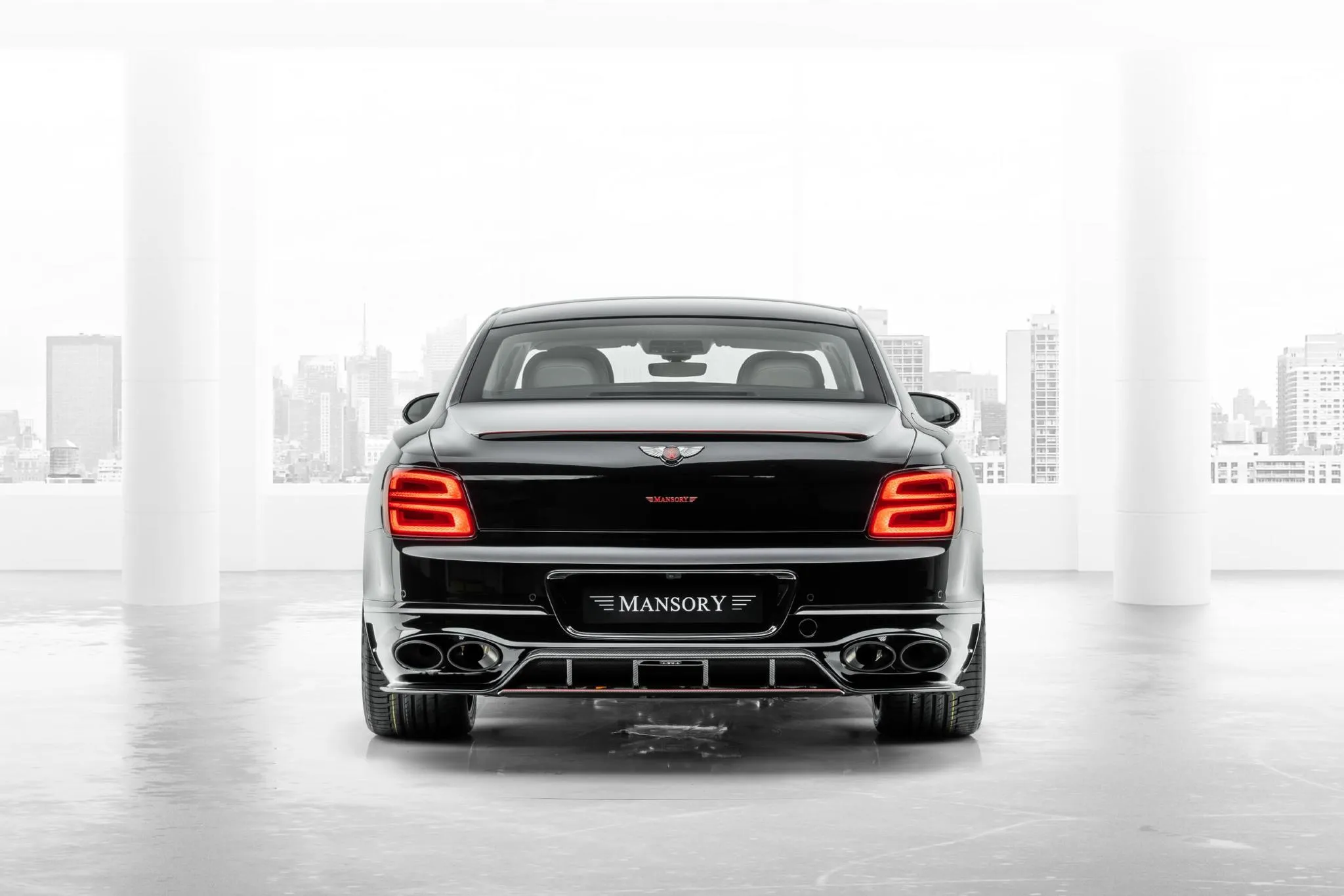
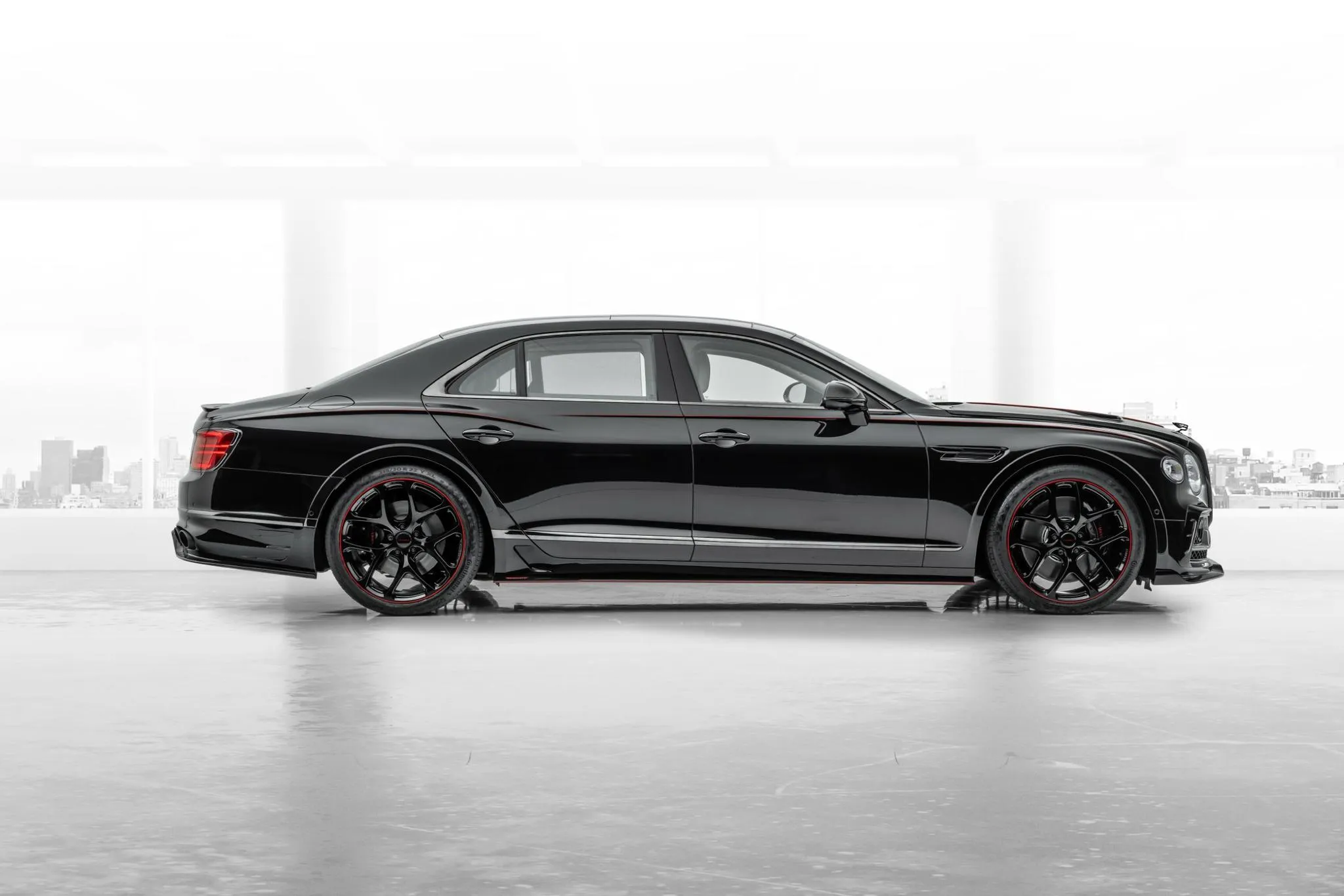
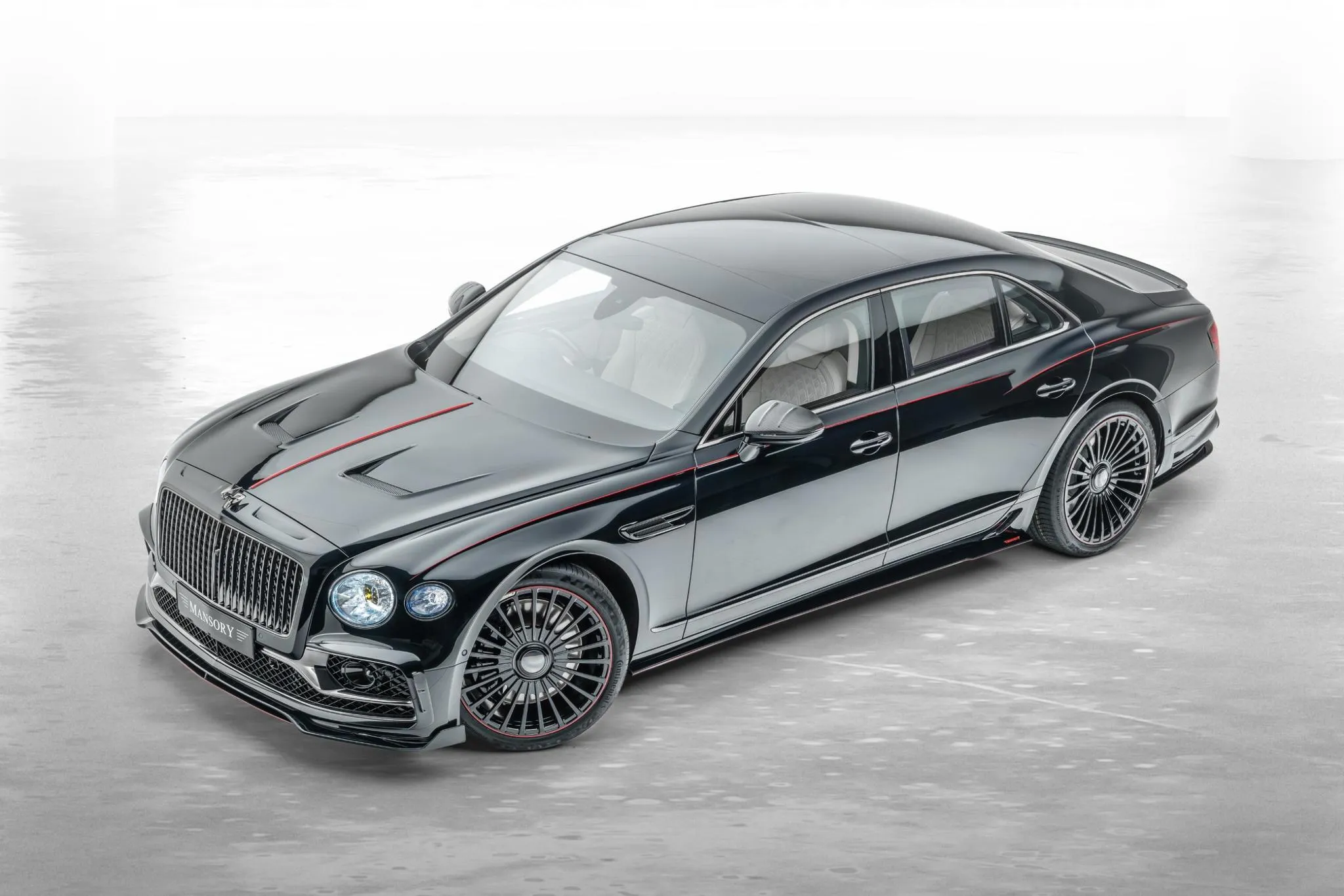
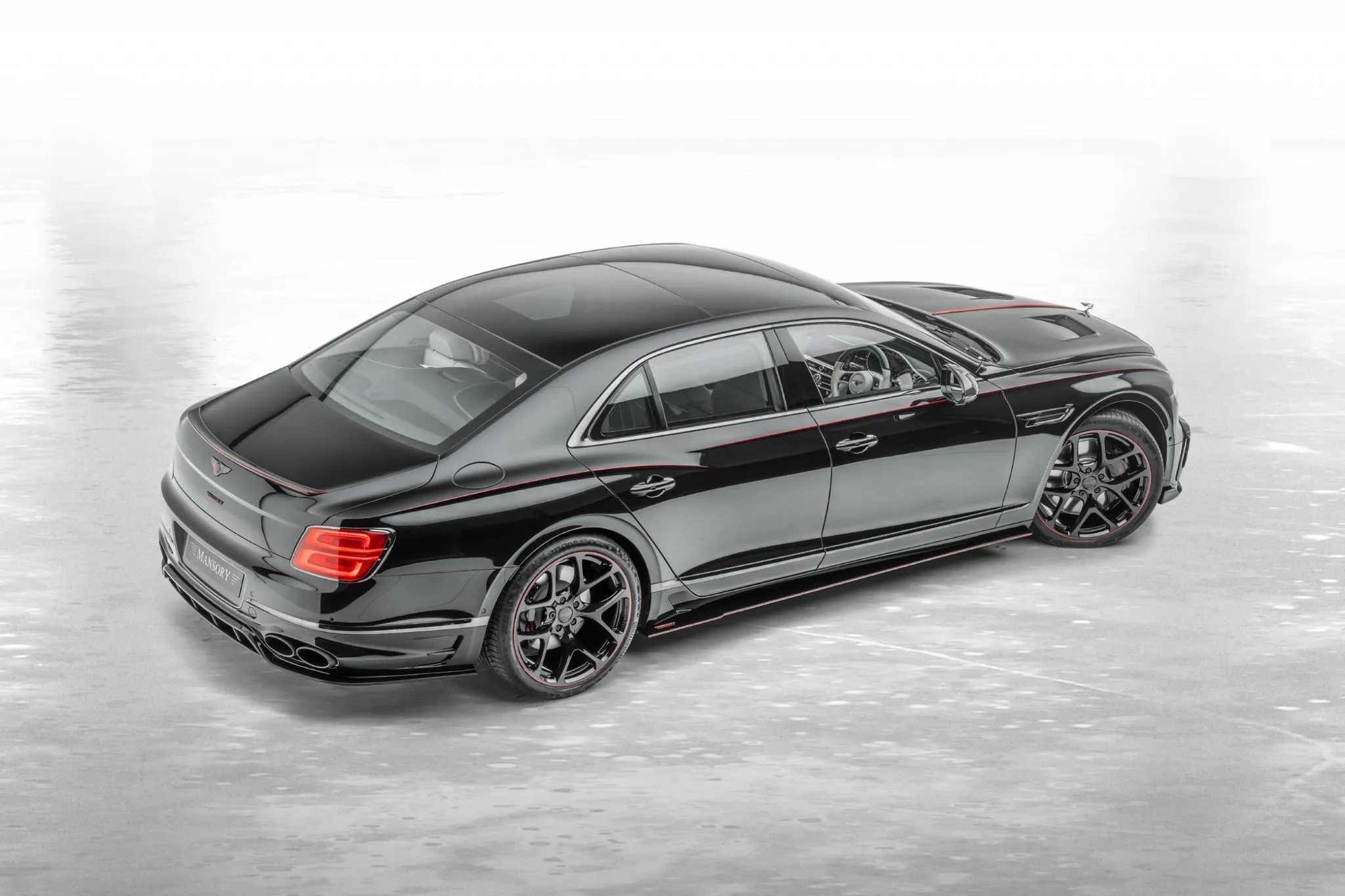
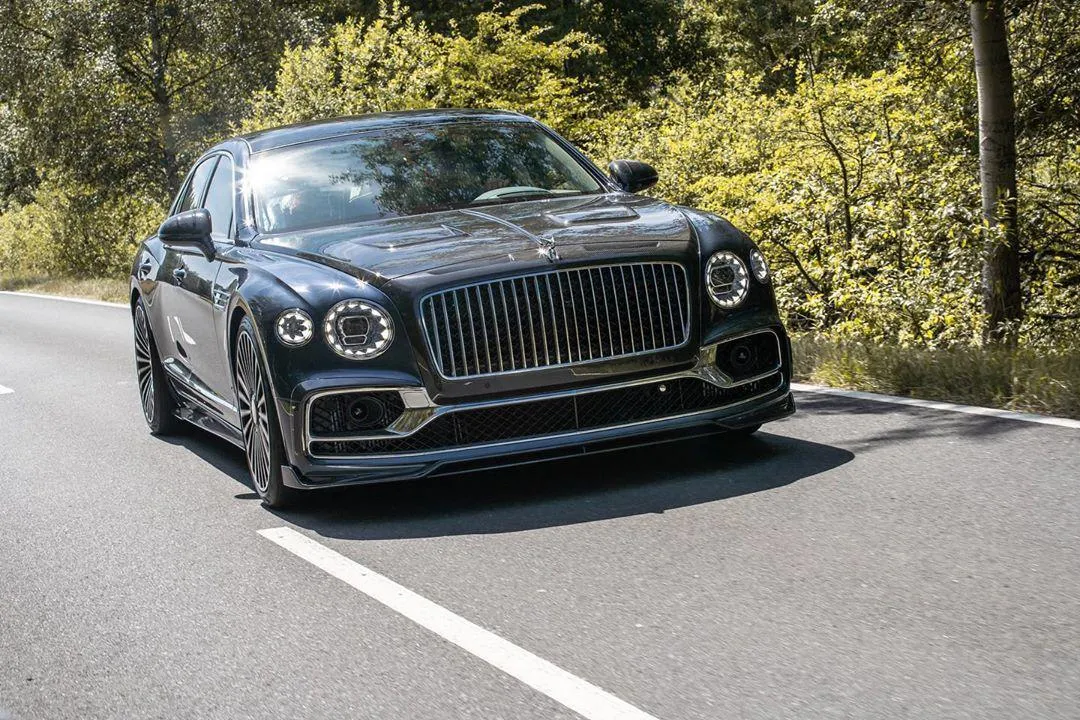
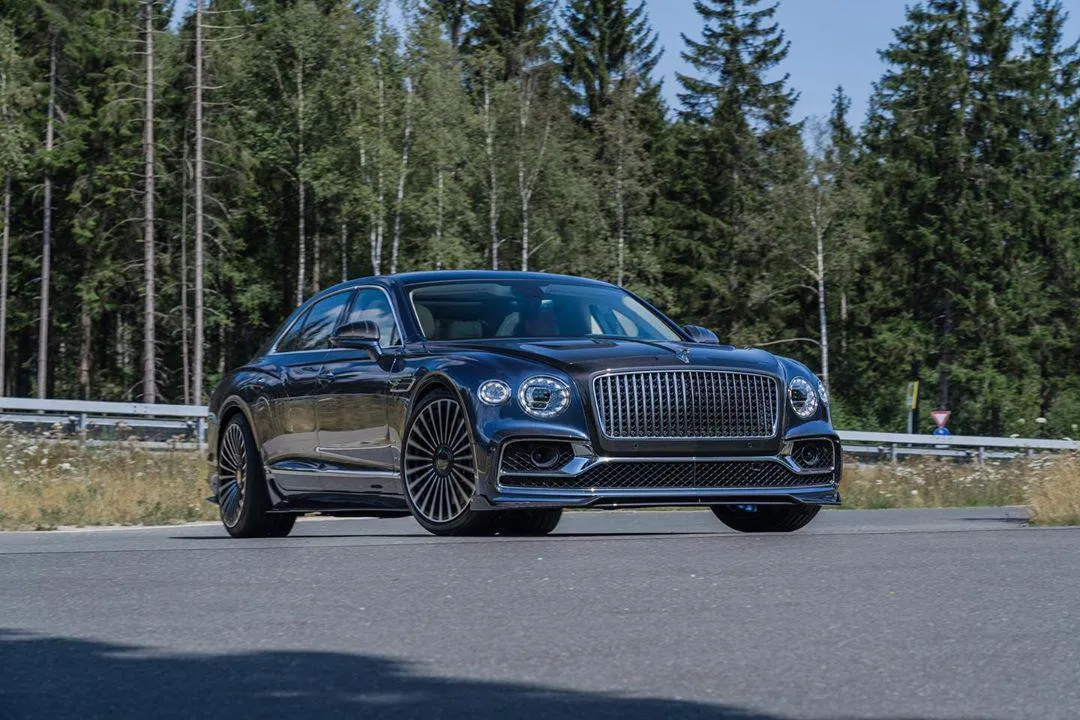
Mansory Carbon Fiber Body kit set for Bentley New Flying Spur


MANSORY for the Bentley Flying Spur — the carbon programme on Bentley's MSB-platform grand-touring saloon
The third-generation Bentley Flying Spur (2019–present) is Bentley's four-door saloon flagship beneath the ceremonial Mulsanne limousine that ended production in 2020, and it now stands as Bentley's largest saloon in the current catalogue. The third-generation Flying Spur sits on the VW Group MSB platform — sharing chassis with the Continental GT / GTC and the Porsche Panamera 971 — but the Flying Spur carries a longer wheelbase than either sister and a saloon-specific body shell that gives the car its particular four-door grand-tourer-limousine hybrid positioning. The Mansory Flying Spur kit is dimensioned against the Flying Spur body shell specifically, sharing no body panels with Continental or Panamera Mansory kits despite the shared platform.
The Flying Spur's position — grand-tourer saloon vs chauffeured limousine
Bentley discontinued the Mulsanne in 2020 and has not replaced the ceremonial-limousine slot at the top of the Bentley line. The Flying Spur inherited Bentley's flagship-saloon position without being a ceremonial limousine — it is a driver-oriented grand-tourer with four doors and a functional rear seat rather than a chauffeured car with a rear-cabin-oriented layout. That distinguishes the Flying Spur commission book sharply from the Rolls-Royce Ghost (owner-driver / chauffeur-hybrid) and from the Mercedes-Benz Maybach S-Class (rear-cabin-oriented). Flying Spur Mansory commissions lean heavily toward owner-driven spec — aggressive front spoiler, lowering module, 22" forged, stage-1 V8 tune on V8 donors. Commissioned rear-passenger-preserving restrained specs are rare on the Flying Spur because the car's buyer profile chose a Flying Spur over a Maybach or a Ghost specifically for owner-driver use.
Donor coverage — V8, W12 Speed, Hybrid PHEV, Mulliner
- Flying Spur V8 (4.0 twin-turbo, 550 hp / 770 Nm) — the volume V8 donor, shared engine with Continental GT V8 and Porsche Panamera Turbo V8
- Flying Spur Speed (6.0 twin-turbo W12, 626 hp / 900 Nm) — the last-generation W12 Bentley, carrying the same engine-discontinuation narrative as the Continental GT Speed (Bentley ended W12 production in 2024)
- Flying Spur Hybrid PHEV (2.9 V6 + electric motor, 544 hp combined) — 40 km WLTP pure-electric range, the V6-hybrid variant positioned against the Panamera E-Hybrid
- Flying Spur Mulliner — Bentley's in-house personalisation atelier trim, available across V8 / W12 / PHEV donors; Mulliner-specific factory trim details are preserved in Mansory commissions
The 2022 facelift revised the front grille (larger chrome mesh) and the rear-taillight treatment — the Mansory kit ships pre-facelift (2019–2021) and facelift (2022+) as two separate front-bumper SKUs. Rear bumper, rear diffuser, side skirts and boot-lid spoiler are common across both production phases.
Body conversion — kit parts list
- Front spoiler — carbon-composite lower-lip replacement below the factory front bumper edge, with integrated splitter
- Radiator grille frame trim — carbon overlay (pre-facelift and facelift SKUs differ)
- Dry-carbon engine bonnet (optional) — preserves factory Flying B-ornament mounting on ornament-equipped donors
- Carbon front-fender vent trim — surround for factory side-outtake vents
- Carbon side skirts with downforce flow blade, dimensioned to Flying Spur rocker-panel length (longer than Continental GT skirt dimensioning)
- Carbon mirror housings
- Outer door-handle inserts — carbon trim (optional; rarely commissioned on restrained-spec Flying Spurs)
- Rear bumper with integrated carbon diffuser (accommodates V8 quad-exhaust, W12 quad-exhaust and PHEV-specific aperture routing)
- Boot-lid spoiler — dry-carbon lip
- Rear-window carbon trim frame (optional)
Material: dry carbon on the bonnet, mirror housings, rear-window trim and boot-lid spoiler; PU-RIM composite with visible carbon on the front spoiler, side skirts and rear diffuser (full-dry-carbon upgrade available). Install three to four shop days. Factory 48-volt active anti-roll stabilisation (Dynamic Ride on Flying Spur Speed / Mulliner trims) and factory rear-wheel-steering (standard on Speed, optional on V8 and Hybrid) are preserved at factory function.
V8 vs W12 vs PHEV — the three-powertrain kit-compatibility map
All three Flying Spur powertrains take the same Mansory body shell parts — the body is common across V8, W12 and PHEV donors. Where the variants diverge is in the rear-bumper aperture geometry (V8 / W12 quad-exhaust vs PHEV V6-specific exhaust routing) and in powertrain-specific add-on SKUs. Mansory offers:
- V8 stage-1 tune — pushes the 4.0 twin-turbo V8 from 550 hp / 770 Nm to approximately 640 hp / 880 Nm. Commission take-rate ~40% on V8 Flying Spurs.
- W12 sport exhaust — no stage tune on W12 (the W12 is at practical output envelope and is in end-of-life retention spec). Sport exhaust alters voicing without touching engine calibration.
- PHEV — no tune, PHEV-compatible sport exhaust only — the hybrid-control calibration is Bentley-proprietary and no aftermarket remap path exists. Body parts and the sport exhaust are PHEV-compatible.
Factory Bentley Adaptive Chassis Control (48V air suspension) is preserved across all trims. The Mansory lowering module interfaces with the air-suspension target-height controller and is commissioned on approximately 55% of Flying Spur programmes — higher than the Ghost (40%) and lower than the Panamera (75%), reflecting the Flying Spur's owner-driver / comfort-balance positioning.
Wheels — 22" forged on the Bentley 5×112 PCD
Factory Flying Spur ships on 21" wheels standard and 22" as factory option on Speed and Mulliner trims. Mansory's wheel offering for the Flying Spur is 22" on the Bentley 5×112 PCD — shared PCD with the Continental GT / GTC and the Panamera 971, though the wheel designs differ between donors. The 22" fitment is the near-universal Mansory Flying Spur commission spec. Tyre compound: Pirelli P Zero or Continental SportContact 7. A 23" option is available on commission for aggressive-spec W12 Speed donors but ride-quality loss makes it a minority selection. Full forged range at Hodoor forged wheels.
Geography — the MSB grand-tourer-saloon order book
The Flying Spur's Mansory order book is smaller than the Continental GT programme's but carries a distinct geographic profile because the Flying Spur's buyer runs a different use pattern from the Continental GT's — saloon-daily vs GT-driven-for-pleasure. Four clusters dominate:
Middle East (Gulf flagship-saloon cluster). UAE, Saudi Arabia, Qatar, Bahrain, Kuwait, Oman. Gulf Flying Spur commissions weight heavily toward W12 Speed donors at the full-aggressive spec (front spoiler, dry-carbon bonnet, lowering module, 22" forged, Mansory sport exhaust). W12 commission share has risen since 2024 as Bentley's W12 end-of-life narrative drives collector-trajectory demand in the Gulf market. Approximately 35% of Mansory Flying Spur commissions ship into Gulf markets.
UK home market and Continental Europe. UK commissions cluster in London (Mayfair / Knightsbridge / Chelsea), the Home Counties, and Manchester / Leeds. UK commissions lean restrained — dry-carbon bonnet, factory paint, 22" forged, typically no lowering module. Switzerland (Geneva / Zurich), Germany (Munich / Düsseldorf / Hamburg), Italy (Milan / Rome / Monaco-adjacent), and the Netherlands all carry steady commission flows. Swiss and German commissions run restrained; Italian / Monaco commissions run aggressive with the V8 stage-1 tune.
Russia / CIS (the Tsar corridor). Russia / CIS orders route through the Tsar programme. CIS Flying Spur commissions weight toward W12 Speed and V8 donors at full-aggressive spec with stage-1 tune (V8) or sport exhaust only (W12), 22" forged, lowering module. Moscow and St. Petersburg are the primary commission cities; Baku and Almaty carry secondary flow. The Flying Spur PHEV's CIS market is thin — CIS buyers lean toward ICE variants.
US Northeast and South Florida. US Flying Spur commissions cluster in the Northeast (Greenwich, NYC, Boston, Washington D.C.) and in South Florida (Miami, Palm Beach). Commissions weight toward V8 donors with stage-1 tune; W12 commissions exist but are secondary in the US book. The US Flying Spur PHEV commission flow is growing since 2023 as PHEV tax-credit structures favour the Hybrid variant.
Asia-Pacific. China Flying Spur commissions run restrained on W12 Speed donors; Hong Kong and Singapore ship RHD commissions. Japan runs a thin but steady Flying Spur commission flow on V8 and W12 donors.
Sister Mansory Bentley and MSB-platform builds
The Flying Spur programme sits within the Mansory Bentley stack alongside the Continental GT / GTC (MSB-platform sister), the Bentayga (SUV flagship), the Mulsanne (discontinued ceremonial flagship), the Le Mansory Continental GT (extreme-tier Continental), and the Continental GT V8 dedicated kit. Matched-commission households running Flying Spur + Continental GT pair or Flying Spur + Bentayga pair specify matched paint and matched carbon weave across both SKUs. The MSB-platform wider family includes the Panamera 971 and the Lamborghini Urus as chassis-related but body-distinct sisters.
Ordering & lead time
Full Flying Spur body set: four to five weeks from the workshop. Bumper SKU is production-phase-specific (pre-facelift 2019–2021 / facelift 2022+) — declare model year at commission. Dry-carbon bonnet (optional): ships with the kit. Mansory V8 stage-1 tune (V8 donors only, not W12 or PHEV): two weeks for remap. Mansory sport exhaust (V8 / W12 / PHEV-compatible variants): three weeks. 22" forged wheel set: four weeks. Email [email protected] or WhatsApp +44 7488 818747 with your VIN, the production year, the donor trim (V8 / W12 Speed / Hybrid PHEV / Mulliner), the drive side (LHD / RHD), the tune preference, the exhaust preference, and the OEM Bentley paint code. For interior commissioning coordinated with a Mulliner-spec factory interior, the workshop coordinates with Bentley Mulliner through the workshop's bespoke service.
FAQ
Does the Flying Spur kit share parts with the Continental GT / GTC kit or the Panamera 971 kit?
No at the body-panel level. The three cars share the MSB chassis but the body shells differ completely — the Continental is a GT coupé / convertible, the Panamera is a fastback four-door, and the Flying Spur is a saloon four-door. Design vocabulary is deliberately matched across all three Mansory programmes so matched-commission households read consistently, but panels are not interchangeable between the three SKUs.
Does the Flying Spur Hybrid PHEV accept a Mansory tune?
No. The PHEV's combined powertrain runs on a Bentley-proprietary ECU with no aftermarket remap path available. Body parts and the sport exhaust are PHEV-compatible; the exhaust aperture routing preserves the electric-motor packaging behind the front axle. Factory 40 km WLTP pure-electric range is preserved after Mansory conversion.
Does the carbon bonnet affect the W12's cooling or intake pressure on Speed trims?
No. The Mansory bonnet preserves factory bonnet-vent geometry and the factory W12 intake-manifold clearance requirement is met by the bonnet's internal contour, which was dimensioned specifically against the Flying Spur's W12 packaging. Factory W12 cooling performance is preserved.
Is the Flying B ornament on ornament-equipped donors retained with the Mansory bonnet?
Yes. The Mansory dry-carbon bonnet is dimensioned to preserve the factory Flying B mounting point. On ornament-equipped donors the Flying B continues to retract and extend at factory function. Mansory does not replace the ornament itself.
Does the factory rear-wheel-steering (standard on Speed, optional elsewhere) continue after Mansory install?
Yes. Rear-wheel steering runs through rear-subframe actuators and is not affected by an exterior body programme. Factory RWS torque-vectoring and rear-axle steering-angle calibration are preserved.
With W12 production ended in 2024 — is the Mansory W12 Speed kit still supplied?
Yes. Mansory parts for the Flying Spur are common across V8, W12 and PHEV powertrains at the body shell level. The W12 sport exhaust specifically continues to be supplied on commission for existing W12 Speed owners entering the secondary collector market. W12 kit supply is not constrained by Bentley's factory W12 production end.
Parts