

Jaguar I-Pace Tuning Guide 2026 — Body Kits, Wheels & EV Upgrades


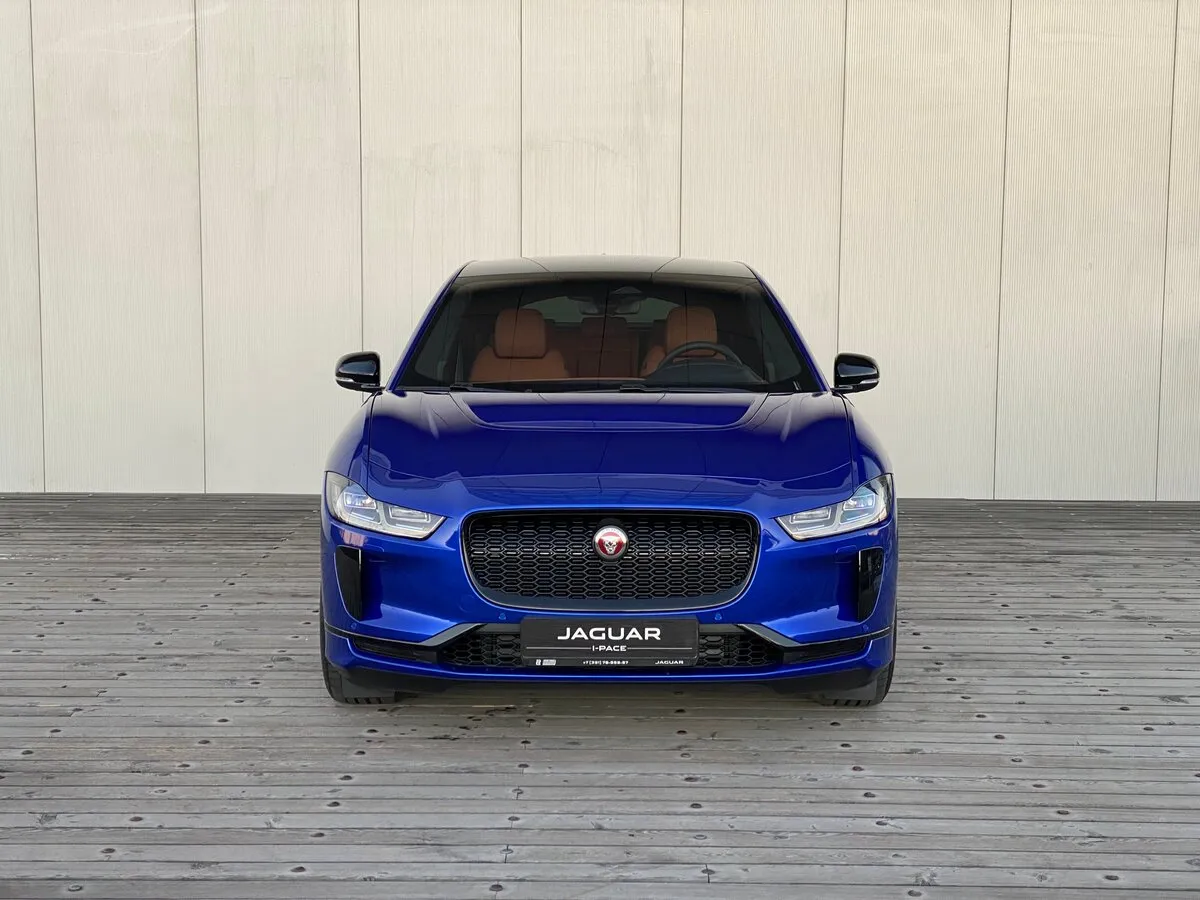
The Jaguar I-Pace arrived in 2018 and rewrote what a performance SUV could be. Not a rebadged combustion platform, not an afterthought — the I-Pace was Jaguar's purpose-built electric statement, sitting on the company's own JPla EV architecture with a 90kWh battery pack, dual electric motors producing 400 hp and a near-instant 696 Nm of torque, and a 0–100 km/h sprint of 4.8 seconds. WLTP range lands at 470 km. It is British engineering through and through: taught suspension geometry, a low-slung centre of gravity from the underfloor battery, and a cab-forward silhouette that looks like nothing else on the road.
That distinctiveness is exactly why the I-Pace has attracted a devoted tuning community. The car already commands attention, but with the right exterior work, wheel upgrade, and interior refinement it moves from striking to genuinely unforgettable. This guide covers every credible tuning avenue for the I-Pace in 2026 — who makes what, what fits, what actually changes, and what remains off-limits given the sealed EV platform.
Jaguar I-Pace — Key Specifications
| Parameter | Value |
|---|---|
| Platform | JPla (purpose-built EV) |
| Drivetrain | Dual motor AWD |
| Power output | 400 hp / 294 kW |
| Torque | 696 Nm |
| 0–100 km/h | 4.8 seconds |
| WLTP range | 470 km |
| Battery | 90 kWh lithium-ion |
| Production | 2018 – present |
| Body style | 5-door electric SUV |
| Wheel bolt pattern | 5×10⁸ |
Body Kits for the Jaguar I-Pace
Exterior tuning is where I-Pace owners have the most creative freedom — and where the results are most visible. Three names dominate the credible aftermarket.
Kahn Design I-Pace Widebody
Project Kahn — the Bradford-based British design house with decades of premium SUV transformation behind it — has produced arguably the most dramatic I-Pace modification to date: a full widebody conversion. The Kahn I-Pace programme adds flared carbon-fibre arches to all four corners, extending the car's track width visually and physically accommodating significantly wider wheels and tyres. Front fascia modifications include a revised lower splitter and new intake surrounds; the rear gains a matching diffuser element and boot-lid spoiler. The result reads as a road-legal racing variant of the production car. Kahn works directly with clients through their Chelsea Truck Company channel, meaning fitment and paint can be specified to order. Pricing is bespoke but typically ranges from £15,000–£25,000 for the full conversion.
Urban Automotion Front Lip and Diffuser Set
Urban Automotion approach the I-Pace with more surgical precision. Their aero package focuses on a carbon-fibre front splitter lip that slots cleanly under the OEM bumper geometry, paired with a rear diffuser panel that replaces the factory lower trim. Side sill extensions complete the kit. The effect is a noticeably lower and more aggressive stance without the commitment — or cost — of a full widebody. Urban Automotion components are available for DIY fitment and ship in gloss or matte carbon, with painted finishes available through approved bodyshops.
Larte Design Interest and Bespoke Projects
Larte Design, known for their comprehensive packages on Mercedes-Benz and BMW models, have shown active interest in the I-Pace market. While a full production kit has not been officially released at the time of writing, Larte have completed bespoke commissions on the I-Pace — primarily bonnet vents, side vents, and rear spoiler modifications finished in prepreg carbon. If you are commissioning a full custom build, Larte is worth a conversation. TopCar Design have also been involved in I-Pace styling consultations, predominantly in the Russian and Scandinavian premium markets.
Ready to transform your Jaguar I-Pace?
Browse our curated catalogue of I-Pace body kits, wheels, and premium accessories. Worldwide shipping. Expert fitment advice.
Shop I-Pace Parts →Wheels for the Jaguar I-Pace
The I-Pace runs a 5×10⁸ PCD — the same Jaguar Land Rover bolt pattern found across the wider JLR family. This gives tuners good access to the aftermarket, but there is a critical consideration that separates I-Pace wheel shopping from conventional SUV fitment: weight.
The I-Pace weighs approximately 2,208 kg at the kerb — about 400 kg more than a comparable combustion SUV of similar dimensions. That extra mass (mostly battery) increases unsprung weight sensitivity dramatically. Every extra kilogram in a wheel-and-tyre assembly is felt more acutely in the I-Pace than in a lighter platform. This is why the I-Pace tuning community has been gravitating sharply toward forged rather than cast wheels — the weight saving of 3–5 kg per corner on a quality monoblock forging translates to measurably better ride quality, more accurate steering response, and marginally improved WLTP efficiency figures (less rotating mass to accelerate and brake).
Recommended Sizes and Fitment
The factory I-Pace ships with 18-inch or 20-inch wheels depending on trim. The sweet spot for tuned cars is 21–22 inches: large enough to change the car's visual character completely, not so large that ride comfort suffers on real-world road surfaces. Common fitment specs at 22 inches: 9.5J×22 ET45 front, 10J×22 ET45 rear, with 265/35 R22 rubber all-round. This fills the arch cleanly and pairs well with a 25–30 mm drop on coilover suspension.
Forged Wheel Brands Worth Considering
For the I-Pace specifically, Vossen Forged (HF series), HRE Wheels (P200 and S200 families), and Brixton Forged (CM8 and M52) consistently produce designs that suit the I-Pace's elongated proportion. Mansory produce bespoke forged sets for EV SUVs that have been fitted to I-Pace builds. Urban Automotion also commission their own branded forged sets sized specifically for the I-Pace's 5×10⁸ pattern. Budget from €3,500–€8,000 per set for quality forged fitment in 22 inches.
Performance Tuning — What's Actually Possible on an EV
This is where I-Pace tuning diverges from a conventional petrol or diesel platform. The I-Pace uses proprietary Jaguar motor control software with a sealed CAN bus architecture — the same closed-loop approach Jaguar Land Rover uses across their EV line. What that means in practice: there is no established reputable ECU remap available from mainstream tuners (Revo, APR, GIAC, and others have no I-Pace product). Power outputs are fixed at 400 hp and 696 Nm unless Jaguar themselves issue OTA updates — which they have done several times, incrementally improving performance.
Suspension — Where Real Performance Gains Live
Coilover suspension is the single most impactful performance modification available for the I-Pace. Eibach and KW Suspensions both produce I-Pace-specific kits. A KW Variant 3 coilover install drops the car 20–40 mm depending on preference, dramatically reduces body roll, sharpens turn-in response, and simply makes the car look correct — especially under 21-inch or 22-inch forged wheels. Eibach Pro-Kit springs offer a gentler 20–25 mm drop on the original dampers for owners who want improvement without full coilover commitment.
Brakes
The I-Pace's regenerative braking system means the friction brakes see lighter use than on a combustion equivalent — they tend to stay cleaner. But for track use or aggressive alpine driving, AP Racing and Brembo produce I-Pace-compatible big brake kits: 6-piston front callipers with 380–400 mm rotors. Aesthetic caliper painting in contrasting colours (often green or orange to complement EV branding choices) is also popular and straightforward.
Software Unlock Potential
A small number of specialist shops — primarily in the UK and Germany — claim limited software access to I-Pace throttle response mapping and regen braking calibration. These are not mainstream products and warranties are a real concern. Some owners have experimented with throttle controller add-ons (Pedal Commander, Sprint Booster) for sharper throttle response at low speeds, which is a reversible and low-risk modification. Watch this space: as third-party EV tuning tools mature, the I-Pace platform is likely to open gradually.
Interior Upgrades for the Jaguar I-Pace
The I-Pace's interior is already a cut above most competitors — Jaguar's Touch Pro Duo twin-screen system, available panoramic roof, and optional Windsor leather upholstery set a high baseline. But for owners who want something truly individual, the aftermarket has answers.
Vegan Leather and Sustainable Upholstery
EV buyers frequently have strong preferences about materials — and the I-Pace ownership profile skews toward environmentally conscious premium buyers. This has driven real demand for vegan leather re-trimming. Companies including Bridge of Weir Leather (Scotland) produce plant-based alternatives used by some Jaguar-approved suppliers; independent trimming houses in the UK and Scandinavia offer full Dinamica Alcantara-equivalent synthetic suede headliners and seat re-trims that are premium in feel without using animal products. Quality companies such as RS Detailing (UK) and AB-Motorveredlung (Germany) handle complete vegan trim packages for the I-Pace.
Ambient Lighting and Tech Upgrades
The I-Pace's interior lighting system accepts third-party RGBW ambient lighting controllers that integrate with the door card panels and footwell zones. Burmester sound system installations (or similar Focal/Dynaudio upgrades) have been completed on the I-Pace by specialist audio workshops. Dashboard carbon-fibre trim inserts — replacing the factory wood or aluminium elements — are available from interior specialists and can be retrofitted without structural modification.
Steering Wheel and Pedal Set
A flat-bottom steering wheel retrim — often in Alcantara with contrast stitching — takes roughly two working days at a trim specialist and changes the cockpit feel significantly. Aftermarket aluminium sport pedal sets compatible with the I-Pace footwell geometry are available from brands including TechArt (their universal range) and OEM+ suppliers for Jaguar Land Rover platforms.
What Actually Changes
Let's be straight about this. You spend £20,000–£35,000 on a proper I-Pace transformation — Kahn widebody arches, 22-inch Vossen Forged wheels, KW coilovers, interior re-trim — and walk back to the car the next morning. What do you actually notice?
The first thing is the colour. A well-chosen wrap or respray on the wide arches makes the car look like a different animal. Not "slightly different" — genuinely different. People approach it in car parks. This is not marketing language: if you've driven the stock I-Pace, you know it's already a head-turner. In widebody form with a dark chrome wrap or a deep Midnight Blue over the arches, other road users slow down to look.
Second is the wheel stance. The jump from the factory 18-inch or 20-inch wheels to forged 22s with a 25mm drop on coilovers changes the car's visual weight dramatically. From the side, the I-Pace stops looking tall and starts looking planted — the arches full, the gaps minimal, the proportion suddenly correct in a way that even Jaguar's designers didn't quite achieve from the factory.
Inside the car, the ride is firmer — noticeably so on broken urban surfaces. Not uncomfortable, but you feel the road more. Most owners accept this trade immediately once they've driven it for a week.
What other EV drivers notice: the Kahn widebody in particular reads as a serious statement in Taycan and EQS company. At a charging station in London or Oslo, a widebody I-Pace commands a room in a way the stock car — for all its charm — simply doesn't. There is a genuine community reaction: other EV enthusiasts stop, ask questions, photograph it.
What doesn't change: performance numbers. The I-Pace is still 4.8 seconds to 100. The motor output is unchanged. The range takes a small hit — expect 30–40 km less on real-world WLTP figures with 22-inch rubber versus factory 18s, primarily due to tyre rolling resistance and weight. This is real and worth knowing before you commit. You're buying a visual transformation and a driving feel upgrade. The performance is already there.
Frequently Asked Questions
Can you tune an electric Jaguar I-Pace for more power?
Not through conventional means. The I-Pace uses a sealed, proprietary Jaguar EV software architecture. There is no remap available from mainstream tuners — no ECU flash product exists for this platform from established providers. Power output (400 hp, 696 Nm) is fixed by the factory software. Jaguar has issued OTA updates that have tweaked performance characteristics incrementally, but owner-accessible power tuning does not currently exist. Performance improvements come from suspension work, tyre upgrades, and weight reduction — not from software.
Which wheels fit the Jaguar I-Pace?
The I-Pace uses a 5×10⁸ PCD, the standard JLR bolt pattern. Wheel widths of 8.5J–10.5J in diameters from 20–22 inches are the practical range for modified fitment. Given the car's 2,208 kg kerb weight, forged construction is strongly recommended — the weight saving per corner directly improves ride quality and steering feel. Confirm offset (ET45 is standard) with your wheel supplier before ordering, and budget for a professional laser alignment after fitment.
Does Kahn Design make a widebody kit for the I-Pace?
Yes. Project Kahn (operating through Chelsea Truck Company) produces a full widebody conversion for the Jaguar I-Pace, featuring flared composite arches front and rear, revised front fascia elements, rear diffuser, and boot spoiler. It is a bespoke, client-specified commission rather than an off-the-shelf kit — pricing is negotiated directly with Kahn and typically falls in the £15,000–£25,000 range for the body conversion before paint and fitment costs.
Does lowering the I-Pace affect its range or charging?
Suspension lowering itself has no effect on battery charging or electrical systems. A 20–30 mm drop on quality coilovers (KW Variant 3, Eibach Pro-Kit) does not interfere with any EV-specific component. The main range consideration comes from wheel and tyre choices: moving from factory 18-inch to aftermarket 22-inch typically costs 30–40 km of real-world WLTP range, primarily due to increased rolling resistance and slight weight increase. Suspension geometry should be recalibrated by an alignment specialist after any lowering work to preserve tyre wear and steering accuracy.
Transform Your Jaguar I-Pace
Forged wheels, widebody kits, coilovers, interior upgrades — all I-Pace parts with worldwide delivery. Our specialists have handled I-Pace builds across the UK, Germany, and Scandinavia.
Get Your Build Quote →