

Jaguar F-Pace SVR (X761) Tuning Guide 2026 — Body Kits, Wheels & Performance


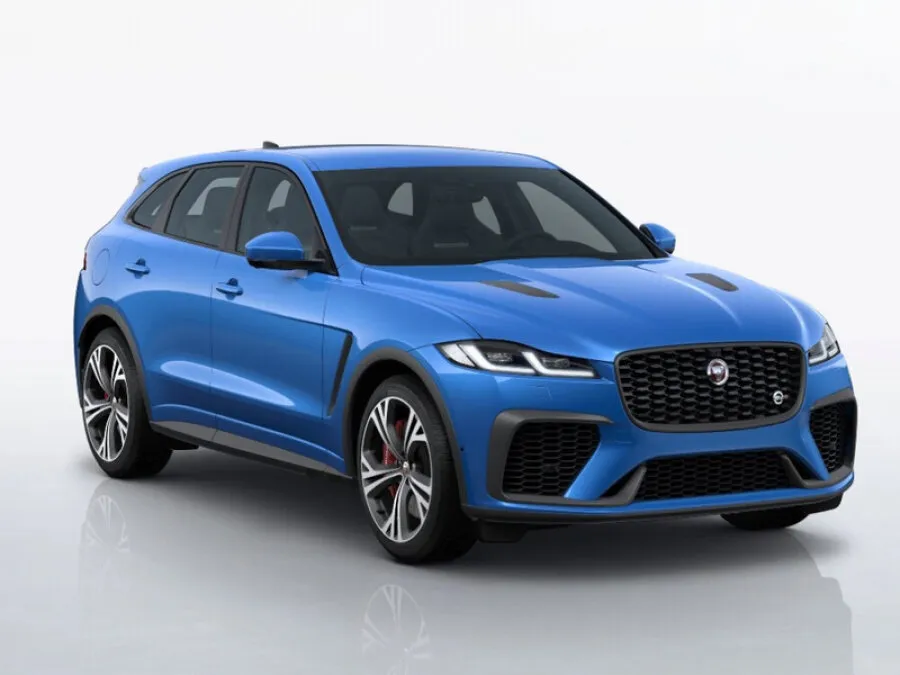
The Jaguar F-Pace SVR (chassis code X761) is Jaguar Land Rover's Special Vehicle Operations halo SUV — a 542-horsepower, supercharged V8 performance machine built in the shadow of the Porsche Cayenne Turbo and Mercedes-AMG GLC 63 S but with a fundamentally different character. Where the German rivals are computer-controlled, ice-cold and clinically fast, the F-Pace SVR is loud, hot-blooded and unapologetically British in its supercharged soundtrack and rear-biased chassis tuning. Launched in 2018 and updated with a significant 2020 model-year facelift, the SVR rides on Jaguar's iQ-Al D7a aluminium-intensive monocoque shared with the Range Rover Velar, XE and XF, and uses the legendary AJ-V8 Gen III 5.0L supercharged V8 from the same engine family as the Range Rover Sport SVR. This guide covers every meaningful upgrade available for the F-Pace SVR — body kits from Project Kahn, Startech, Lumma Design, Arden and Hamann, forged wheels in 22 inches, VIP Design 600+ hp performance builds, interior retrims, and a detailed future-proofing analysis — and explains why 2026 may be the last practical window to build one.
Jaguar F-Pace SVR (X761) — Key Specifications
Platform Overview — iQ-Al D7a and the SVO DNA
The F-Pace SVR is built on Jaguar Land Rover's iQ-Al D7a (Premium Lightweight Architecture), an aluminium-intensive monocoque shared with the Range Rover Velar, Jaguar XE and Jaguar XF. The aluminium construction is the platform's defining advantage — the SVR weighs in at roughly 2,070 kg, materially lighter than a comparable Porsche Cayenne Turbo at 2,175 kg or an AMG GLC 63 S at 2,120 kg. That weight saving pays off in every dimension of performance: braking distances, lateral grip, tyre life and response time. The SVR designation itself — Special Vehicle Operations — means the car was hand-developed at the SVO technical centre in Ryton, UK, with bespoke chassis calibration, a unique front-end aero treatment (vented front fenders, enlarged front intakes), and the supercharged 5.0 V8 swapped in from the Range Rover Sport SVR platform. The 2020 model-year facelift refreshed the interior, installed the new Pivi Pro infotainment, upgraded the 12.3-inch driver display, and added subtle exterior tweaks. The post-2020 SVR retains the full 542 hp but with a revised quad-tip SVR exhaust that is slightly quieter at city speeds to meet EU7-friendly sound regulations, while preserving the full supercharger whine under load. The F-Pace SVR ended production with the 2024 model year — Jaguar's V8 era is over, making the existing used stock a finite and appreciating asset.
Body Kits — Kahn, Startech, Lumma CLR F, Arden AJ 23, Hamann
Project Kahn / Chelsea Truck Company. British tuner Afzal Kahn's team is the default choice for F-Pace SVR aesthetic personalisation — appropriate given Kahn's long-standing Jaguar and Land Rover heritage. The F-Pace Kahn programme includes carbon front-splitter extensions, replacement grille with gloss-black mesh, wheel-arch moulding accents, side-skirt extensions with integrated LED courtesy lighting, rear carbon diffuser and valance, and Kahn-branded quad exhaust tips. A signature "1948 Edition" plaque and Kahn embroidery package is commonly specified. Typical turnkey install at the Bradford atelier runs £8,500–14,000 depending on carbon specification. Kahn also supplies matching Monza-style or RS-X forged wheels in 22" and a full "Kahn Chelsea Truck Company" interior retrim option.
Startech (Brabus Group) widebody programme. Startech is the Jaguar/Land Rover division of the Brabus Group and offers the most comprehensive F-Pace SVR kit — a full widebody conversion with flared carbon fender extensions adding roughly 40 mm per side, a reshaped carbon front apron with enlarged intakes, a vented carbon bonnet, carbon side-skirt extensions, and a pronounced carbon rear diffuser housing a custom Startech quad exhaust. The widebody is TÜV-certified for EU road use. The kit permits 22" or 23" wheel fitments that simply do not fit under factory arches. Full Startech widebody specification on an SVR donor lands at £28,000–42,000 installed depending on carbon content and paint colour. A more restrained non-widebody "Styling Pack" is available at £12,000–18,000.
Lumma Design CLR F. Swiss-based Lumma Design's CLR F programme is one of the most recognisable aftermarket looks for the F-Pace — a full carbon-widebody conversion with aggressively flared fenders, a reshaped carbon front bumper with vertical canards, bonnet vents, sculpted side skirts, and a dramatic rear diffuser. Lumma's CLR F signature is the heavily contoured fender design that integrates side-gill vent slats reminiscent of their Range Rover CLR programmes. Turnkey install runs £22,000–34,000. Paired with Lumma's own forged 22" or 23" wheels it is one of the most photographed F-Pace builds globally, popular in Dubai, Zurich and Moscow markets.
Arden AJ 23. Germany-based Arden is Jaguar's oldest continuous specialist tuner (trading since 1976) and its F-Pace "AJ 23" programme is the restrained, traditionalist option. Rather than widebody, Arden's approach is a hand-finished front-spoiler lip, a subtle roof-spoiler extension, side-sill lower extensions and a matching rear valance — plus Arden's signature "Sportline" 22" forged wheels. Arden's programmes are TÜV-certified and include the option of an Arden stainless-steel sports exhaust and a 30 mm lowering kit. Typical turnkey programme: £10,000–15,000. Suitable for the owner who wants "faster-looking" without the Startech or Lumma widebody drama.
Hamann Motorsport (limited F-Pace programme). Hamann's F-Pace programme is smaller in scope than their BMW or Range Rover lines but includes a carbon front splitter, side-skirt accents, a subtle carbon rear diffuser and the Hamann "Anniversary" 22" forged wheel. Priced at £8,500–13,000 for the full aesthetic pack. A cleaner option for owners who prefer German styling philosophy over British coachwork aesthetics. Note: the F-Pace SVR tuner ecosystem is genuinely smaller than comparable German-platform SUVs (Cayenne, GLC, Macan), which is why bodykit sourcing sometimes requires 10–14 week lead times — we carry direct relationships with all five tuners above.
Wheels — 22" Forged, Kahn RS-X, Vossen HF-5, HRE P101
Factory SVR wheels are a 21" or 22" cast alloy in staggered fitment depending on year. For any tuned SVR we strongly recommend moving to genuine forged 22" construction — the 700 Nm of supercharged torque combined with the SUV's 2,070 kg kerb weight puts considerable stress on cast wheels, and a pothole-strike crack is a well-documented failure mode on the factory rims.
Kahn RS-X / Monza forged 22". The default UK choice — 22 × 9.5J ET38 front and 22 × 10.5J ET45 rear with 265/40 R22 front and 295/35 R22 rear Michelin Pilot Sport 4S tyres. Available in satin black, gloss black, silver, bronze and bespoke two-tone diamond-cut finishes. Kahn forged wheels are made in the UK and carry a lifetime structural warranty. £5,500–7,500 per set of four.
Vossen HF-5 hybrid-forged. Flow-form hybrid-forged construction — not true billet-forged but significantly stronger than cast and at roughly half the price of full forged. 22 × 9.5J and 22 × 10.5J in satin black, gloss black or custom colours. Suitable for factory-power or Stage 1 (~580 hp) SVR builds; not recommended above 650 hp where we specify true forged. £3,800–4,800 for a set.
HRE P101 / P104 forged. American multi-piece forged construction with unlimited colour and finish customisation — centre, lip and hardware can all be specified independently in any PPG colour. 22" in 9.5J and 10.5J widths. Typical lead time 8–10 weeks. The choice for owners who want a finish outside the Kahn or Vossen catalogue — commonly specified in brushed titanium, polished gold or bespoke pearlescent finishes. £10,000–14,000 for a set.
Startech Monostar M forged 22" / 23". Designed specifically to fit under the Startech widebody extensions in 23 × 10.0J front and 23 × 11.5J rear — the combination is one of the most visually dominant F-Pace configurations. Priced at £8,500–11,000 and only makes sense paired with the Startech or Lumma widebody. Whichever pattern is selected, specify 22" minimum in genuine forged construction — those two rules protect both car and wheel on a torque-rich platform.
Performance — VIP Design 600+ hp, Supercharger Pulley, Quicksilver Exhaust
VIP Design Stage 1 (542 → 600 hp). UK-based VIP Design is the leading AJ-V8 supercharged specialist and its Stage 1 programme on the F-Pace SVR is the single highest-value performance upgrade on this platform. The package combines an ECU remap, a smaller-diameter upper supercharger pulley (reducing supercharger drive ratio and increasing boost), and a high-flow carbon cold-air intake. The result is a reliable 600 hp / 775 Nm on 98 RON pump fuel, retaining the factory supercharger unit, intercooler and exhaust. Approximately £4,500–5,500 turnkey installed. Fully reversible before a JLR dealer service visit, which preserves resale value. A well-documented and community-respected setup.
VIP Design Stage 2 (542 → 650+ hp). Stage 1 hardware plus high-flow 200-cell sport-catalyst downpipes, an upgraded intercooler, and a revised water-methanol or chargecooler pump upgrade to control intake charge temperatures under sustained high-load running. Around 650–680 hp at the flywheel. Approximately £9,500–13,000 all-in. At this point the factory ZF 8HP transmission requires either a valve-body TCU recalibration or — for regular track use — the uprated ZF converter stall assembly.
Paramount Performance / Kahn ECU stage. Paramount Performance in Leicestershire offers an alternative ECU-only calibration at approximately £1,400 that lifts the SVR from 542 hp to a claimed 580 hp with no hardware changes — the cheapest entry-point performance upgrade. Worth considering for owners who want a taste of more output without committing to the supercharger pulley swap.
Exhausts. The Quicksilver Sport stainless-steel catback is the UK owner's default upgrade — preserves the supercharger's distinctive whine while adding a deeper, more menacing V8 timbre and a substantial weight reduction over factory. Typical install £3,800–5,200. Milltek Sport produces a valved non-resonated catback at a slightly lower price point (£2,900–3,800) with wireless remote valve control for variable volume — quiet for city driving, full-shout on demand. Akrapovic is the premium option at £7,500–9,500 with full titanium construction and carbon tips. All three retain factory rear-bumper aperture positions and are cleanly reversible before resale.
Intake and chargecooler. An Eventuri carbon intake is the gold-standard aftermarket option — full sealed carbon airbox genuinely increasing intake volume and reducing charge temperatures. Approximately £1,800. For Stage 2 builds a VIP Design uprated chargecooler pump and twin-pass chargecooler heat exchanger together cost around £2,400 and are essential for sustained high-load running in warm climates or on track.
Brakes. Factory SVR brakes — 395 mm front vented, Brembo 6-piston fixed callipers — are adequate through Stage 1 (600 hp) territory. Beyond Stage 2 we recommend the PowerBrake GT 440 mm 8-piston kit or the Alcon SVR Upgrade at approximately £6,500–9,000 for a set, both of which also reduce unsprung mass and deliver sharper pedal feel. JLR carbon-ceramic brakes were never a factory option on the F-Pace SVR; full retrofit using Range Rover Sport SVR components is technically possible but rarely economical at £18,000+.
Interior — Kahn, Carlex Design, Alcantara Headliner, Carbon Trim
The factory SVR cabin features 16-way heated/cooled sports seats in Windsor leather with diamond-quilted centre sections — already a strong base. Project Kahn's Chelsea Truck Company interior programme offers full re-trim in any colour combination with diamond-stitched seats, custom embroidery, alcantara headliner, A-pillars and sun-visors, and a machined-aluminium "Chelsea Truck Company" plaque — typically £12,000–18,000. Carlex Design in Poland offers comparable craftsmanship at roughly 40% less cost and is the standard choice for UK, German and GCC owner builds. Carbon-fibre trim panels on dashboard, centre console, steering wheel and door inserts are the typical subtle personalisation route.
Why Tune Now — Future-Proofing an F-Pace SVR in 2026
If you own or are considering an F-Pace SVR, 2026 is a genuinely important year and the argument for committing to a build now — rather than in 2028 — is substantive. First, Jaguar has formally ended F-Pace SVR production at the 2024 model year and confirmed the next-generation Jaguar range will be all-electric. No future F-Pace will ever have a supercharged V8 again. The existing stock of 2018–2024 F-Pace SVRs is therefore a finite and closed pool, currently running at roughly 18,000 units globally — a rarer halo SUV than a Porsche Cayenne Turbo (roughly 140,000 units in the same period). That scarcity is already reflected in residual values: clean 2021–2023 SVRs with under 40,000 km are currently trading at 72–78% of original MSRP, a remarkably firm residual for a three-to-five-year-old performance SUV. Second, the regulatory environment for supercharged V8s is hardening rapidly. From EU7 compliance dates in 2030 onwards, several major EU and UK markets are tightening low-emission-zone and ULEZ rules in ways that will materially complicate daily use of high-displacement petrol engines in urban centres. Insurance underwriters have already begun repricing supercharged V8 performance SUVs at 15–25% premiums year-on-year in the UK. Third, parts availability is at peak right now — OEM SVR components, all five major tuner programmes (Kahn, Startech, Lumma, Arden, Hamann) and VIP Design's supercharger pulley and chargecooler kits are all in active production and stock. Within 3–5 years some of these programmes will wind down as the SVR ages out of the aftermarket's profitable window. The practical conclusion: a thoughtfully-specced SVR build now — VIP Design Stage 1 to 600 hp, 22" forged Kahn wheels, a Quicksilver exhaust, a subtle Arden styling pack, and an optional Carlex interior retrim — represents a £15–25k investment on top of the donor vehicle that will age well, retain residual value against the tide of an all-electric Jaguar future, and arrive in an insurance and registration environment that becomes marginally harder every year thereafter. The window is finite.
Frequently Asked Questions
Pre-facelift (2018–2020) vs facelift (2020–2024) SVR — which makes the better tuning donor?
Both are genuinely capable donors and the mechanical upgrade path (VIP Design Stage 1, Quicksilver exhaust, 22" forged wheels) is identical on either. The differences are interior and infotainment. The 2020-on facelift added the Pivi Pro infotainment with a sharply larger 11.4-inch curved centre display, a 12.3-inch configurable digital driver display, improved cabin materials and refined HVAC controls. It also introduced a mildly revised front-end (restyled grille, new LED signatures). For any build that prioritises usability and resale value, target a facelift (late 2020 onwards) donor — the interior delta is significant and residuals hold more firmly on the facelift cars. For pure performance builds where cabin trim is secondary, pre-facelift cars trade £6,000–12,000 cheaper and the 542 hp V8 is functionally identical. Body kits (Kahn, Startech, Lumma, Arden) require correct year specification — always confirm pre-facelift or facelift before ordering a front bumper.
Is 600+ hp reliable on the factory AJ-V8 and ZF 8HP transmission long-term?
Yes, with caveats. The Jaguar AJ-V8 Gen III is one of the most reliable modern supercharged V8s — the same engine family that powers the Range Rover Sport SVR (up to 575 hp factory) and F-Type SVR (575 hp), and a number of owners run these cars at 650 hp for years on stock internals. VIP Design's Stage 1 600 hp programme uses a smaller supercharger pulley and an ECU flash — no internal engine work — and is community-documented as reliable through 80,000+ km of normal use. The practical requirements: (a) oil-change intervals tightened to 8,000 km from the factory 16,000 km, (b) 98 RON pump fuel exclusively (not 95 RON), (c) chargecooler coolant flush every 40,000 km rather than at the factory interval. The ZF 8HP gearbox is extremely robust and handles 700+ Nm without modification. For Stage 2 (650+ hp) and sustained track use, we recommend adding the VIP Design uprated chargecooler pump and a gearbox TCU calibration — both modest-cost additions that add meaningful long-term reliability margin.
What will the F-Pace SVR be worth in 2030?
Forecasting with precision is impossible, but the structural case for value retention is strong. The SVR is the last naturally-aspirated-V8-family Jaguar SUV (noting the 5.0 is supercharged rather than NA, but the engine character is comparable), production is ended, the 2018–2024 global production volume is around 18,000 units across all markets, and Jaguar's own brand strategy has pivoted fully to electrification. Comparable already-discontinued V8 performance SUVs — the Range Rover Sport SVR (2015–2022), the BMW X5 M (F85) — currently trade at 60–75% residuals at the six-to-eight year mark versus a typical 40–50% for non-halo performance SUVs. We expect clean, well-maintained, appropriately-tuned F-Pace SVRs to hold 55–65% of original MSRP at the 2030 six-year mark. The key moderators: (a) mileage under 60,000 km, (b) full JLR dealer service history, (c) tasteful, reversible modifications only (Kahn or Arden styling, VIP Stage 1, forged wheels, Quicksilver exhaust — avoid full Startech or Lumma widebody unless sold with the kit in-place to a specific buyer who values it).
F-Pace SVR vs Range Rover Sport SVR — which is the better tuning base?
They share the same 5.0 supercharged AJ-V8 engine (542–575 hp depending on year and spec), the same ZF 8HP gearbox, and overlapping tuning hardware — a VIP Design Stage 1 kit on one works substantially unchanged on the other. The F-Pace SVR sits on the smaller, lighter iQ-Al D7a platform (~2,070 kg) versus the Range Rover Sport's heavier L494/L461 ladder-on-monocoque hybrid (~2,310 kg). That 240 kg delta makes the F-Pace the faster accelerating and more agile car by a noticeable margin — 4.0 s to 100 km/h versus 4.3 s. The Range Rover Sport SVR is the more premium product: taller seating position, larger rear seats, more luxurious interior materials, stronger presence. For tuning economics the F-Pace SVR is the better value — used prices are consistently £15–25,000 below a comparable Sport SVR and the lighter kerb weight responds better to Stage 1 / Stage 2 power increases. For the owner who prioritises the faster, sportier car: F-Pace SVR. For the owner who prioritises the more prestigious, longer-distance GT: Range Rover Sport SVR.