Maserati Levante Diesel (M161) Tuning Guide 2026 — Body Kits, Wheels & Performance


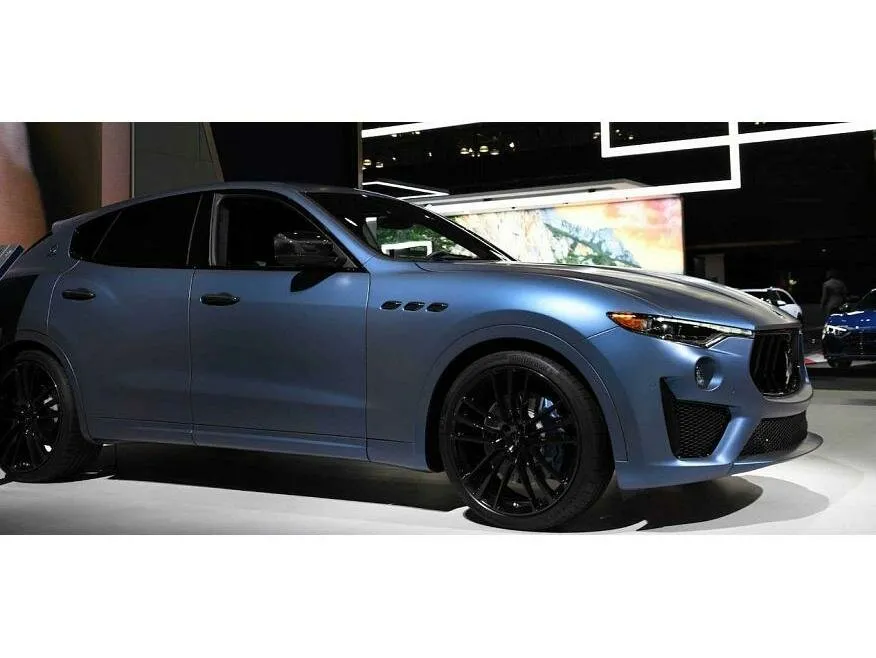
The Maserati Levante Diesel (M161, 2016–2020) is one of the most misunderstood luxury SUVs of the last decade. It shares its platform with the Quattroporte VI and Ghibli, carries a 3.0-litre VM Motori turbodiesel V6 producing 275hp and 600Nm, routes power through a ZF 8-speed automatic to an intelligent Q4 all-wheel-drive system, and still manages a Maserati soundtrack thanks to a bespoke exhaust tuning. It is also the last diesel Maserati will ever build — killed off by Euro 6d emissions regulations — which makes every remaining example a quiet collector piece. This guide covers every meaningful upgrade available for the Levante Diesel: body kits, wheels, ECU and exhaust, interior, and what actually changes when you commit to a full build.
Maserati Levante Diesel — Key Specifications
Body Kits — Real Tuner Programmes
Novitec Tridente & Esteso
Novitec is the recognised world authority on modified Maseratis. Their Levante programme sits under the Novitec Tridente label and is anchored by the Esteso wide-body conversion — a fully integrated widening of the front and rear fenders by 32 mm and 48 mm respectively, with matched bumpers, side skirts, bonnet vents, a three-piece rear spoiler and a rear diffuser that accepts quad tailpipes. The Esteso is built from CFRP and hand-fitted in Stetten, Germany. Beyond aero, Novitec offers its own hydraulic lift system for the Levante (useful for the lowered suspension), sport springs dropping ride height by 30 mm, and their signature NF series of forged multi-piece wheels in 22 and 23 inch diameters. For the Diesel specifically they also publish a conservative ECU map raising output to 305 hp and 650 Nm without altering service intervals.
Mansory Levante
Mansory's Levante programme is the most visually extreme on the market. Every panel on the car is replaced with visible-weave forged carbon: a ventilated front bumper with integrated LED DRL strips, a wider carbon bonnet with pronounced power-domes, flared fenders, new side skirts with splitters, a reshaped rear bumper with a carbon diffuser sized to match a quad-outlet Mansory exhaust, and a carbon roof wing. Inside, Mansory re-trims the cabin in two-tone diamond-quilted leather with carbon inserts replacing every piece of wood. Their forged wheel options run 22 to 24 inches. Mansory's own engine programme for the petrol V6/V8 is well known; for the Diesel they offer a styling-only package that is typically paired with Novitec's ECU remap for the performance side of the build.
Larte Design Shtorm
Russian-designed, Italian-built, Larte's Shtorm body kit for the Levante is the most popular bolt-on upgrade for owners who want a more aggressive look without committing to a full widebody. The Shtorm kit adds a carbon front splitter with integrated fins, new side skirts, wheel-arch extensions, a rear diffuser with carbon blades and a subtle boot-lip spoiler. Every component is produced in CFRP with matte or gloss finish options. Larte also supplies a lightweight titanium exhaust system with active valves and their own forged 22-inch wheels in black or bronze. Pricing sits well below Mansory and Novitec, which is why the Shtorm has become the default choice for Levante Diesel owners building a tasteful but clearly modified car.
Pogea Racing
Pogea Racing, based in Friedrichshafen, Germany, has built its name on limited-run tuning of Italian exotics. For the Levante they offer a more understated programme: a front lip spoiler in exposed carbon, rear diffuser, a stainless steel exhaust with remote-controlled valves that transforms the diesel's soundtrack, and a mechanical package focused on ECU and gearbox software. For the V6 Diesel, Pogea's Stage 1 calibration extracts 325 hp and 700 Nm from the stock turbocharger while preserving long-term reliability. Pogea will also fit upgraded brake pads and braided lines if the owner is planning track days, although the Levante is fundamentally a road car.
Write us at [email protected] — we'll put together a full quote within 24 hours including body kit, wheels, exhaust and worldwide shipping.
Wheels
The Levante Diesel leaves the factory on 19-inch or 20-inch wheels; most owners consider 22 inches the sweet spot for aesthetics without destroying ride quality. Our recommended specification for the M161 platform is 22x9.5 J ET45 front / 22x10.5 J ET40 rear, running 265/40 R22 front and 295/35 R22 rear tyres. This sizing clears the six-piston Brembo calipers, maintains correct speedometer calibration and leaves enough sidewall for European roads. Forged wheels are strongly recommended: cast 22-inch wheels on a 2,200 kg SUV are a pothole away from disaster. Novitec NF8 and NF10 in tri-colour finishes, Mansory M10 forged, ADV.1 ADV10 M.V2 and Vossen Forged S17-01 all fit without spacers. If you want 23 inches it is possible, but plan for a 20–30 mm suspension drop and aftermarket air-suspension links to keep the geometry correct.
Performance — ECU & Exhaust
The VM Motori 3.0 V6 diesel has substantial headroom. Stage 1 remaps by Novitec or Pogea Racing raise output to 320–330 hp and 700–720 Nm, taking 0–100 km/h down from 6.9 to 6.1 seconds. These calibrations run on stock hardware and require no supporting modifications. Stage 2 adds a decat downpipe and a larger intercooler, pushing numbers to roughly 360 hp and 750 Nm — at which point the gearbox software must be re-tuned to handle the torque load and the differentials should be serviced with synthetic fluid. On the exhaust side, Novitec's stainless system with electronic valves is the refined choice; Larte's titanium cat-back saves 18 kg over stock and is the loudest legal option; Pogea's remote-controlled valve system sits between them. We do not recommend full straight-through systems — the Levante's character depends on a controlled, mid-range diesel rumble, not a noisy drone.
Interior
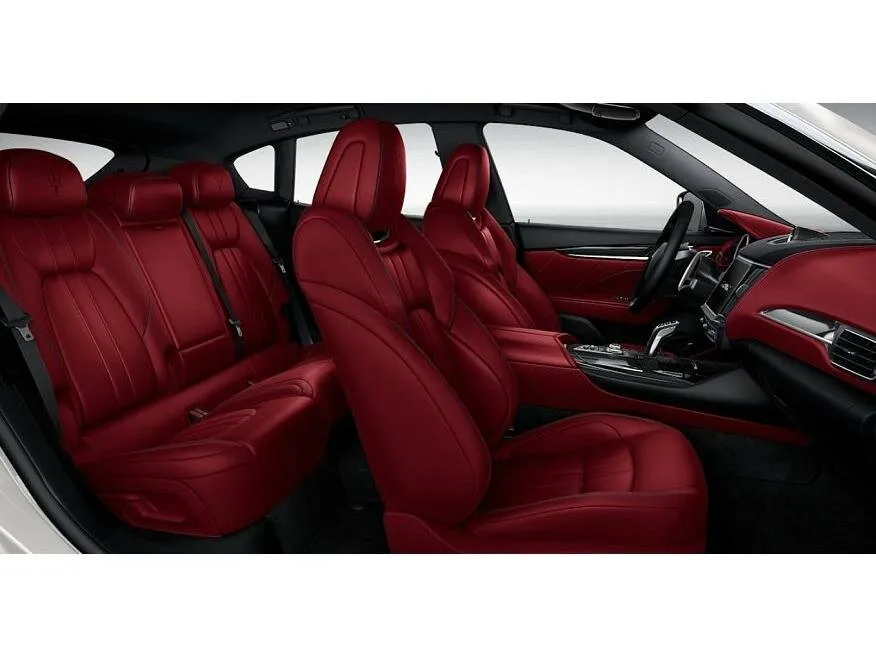
Maserati's factory interior on the Levante GranLusso is already very well finished, so interior tuning tends to be additive rather than transformative. The most common upgrades are full Alcantara headlining (by Neidfaktor or Vilner), diamond-quilted Nappa re-trim of the seats and door cards, carbon fibre dashboard and centre-console trim replacing the standard wood, and programmable ambient LED lighting. Carplay retrofits for early 2016–2017 cars are also popular.
Before & After: A Real Levante Diesel Build
The owner arrived with a 2018 Levante Diesel GranLusso in Blu Emozione metallic, 52,000 km, completely factory: 275 hp, 600 Nm, 21-inch factory Anteo wheels, beige Pieno Fiore leather, stock dual-exhaust. A capable, comfortable, very quiet luxury SUV that disappeared in traffic and — according to the owner — felt slightly under-endowed for what it cost. He wanted it to look and feel like the car the Maserati badge implied.
The build took eleven weeks. We fitted the Larte Shtorm carbon body kit (front splitter, side skirts, rear diffuser, boot spoiler) finished in matte black to contrast the blue paint. A Novitec ECU remap took output to 360 hp and 720 Nm — a Stage 2 calibration running with a decat downpipe. We swapped the factory 21s for a set of 22-inch forged ADV.1 ADV10 M.V2 in matte bronze, wrapped in Michelin Pilot Sport 4 SUV tyres. The exhaust was replaced with an Inconel Novitec system featuring electronic valves, and the suspension was lowered 25 mm on H&R springs. Interior received Alcantara headlining and carbon trim replacing the wood.
The car came back transformed. First week, the owner reported the obvious things: it looks like a Maserati should, people stop him in petrol stations, valets park it out front instead of in the back. But the changes he hadn't expected were the important ones. The diesel now sounds — at low revs, with the valves closed — like a distant V8, a deep authoritative rumble rather than the faint tractor note it had before. The Stage 2 tune makes the car feel 800 kg lighter from 2,000 rpm upwards; it pulls hard enough that 100 km/h on a motorway on-ramp is over in a heartbeat. The 22-inch forged wheels transmit more road surface but the lowered springs control body roll so effectively that the car corners flat. The whole experience feels intentional now — like the car Maserati would have built if the accountants hadn't been in the room.
Frequently Asked Questions
How long does a full Levante Diesel build take?
A typical build — body kit, wheels, exhaust, ECU, suspension and minor interior work — takes 8 to 12 weeks from order confirmation. Carbon widebody kits like the Novitec Esteso add 4 to 6 weeks because each panel is hand-built and test-fitted. We keep the client informed with photos at every major stage and can expedite the wheel and ECU portion if the car needs to return to service sooner.
Will a Stage 2 tune affect the warranty or reliability?
Out-of-warranty cars (the newest Levante Diesel is 2020, so most are now outside Maserati's factory coverage) see no reliability impact from a properly developed Stage 1 or Stage 2 map. Pogea and Novitec calibrations have been in the field for six or more years with no trend of premature turbo or injector failure. We recommend shortening oil service intervals to 10,000 km on tuned cars and using the manufacturer-specified low-SAPS diesel oil.
Can I keep the factory air suspension with 22 or 23-inch wheels?
Yes — the Levante Diesel's Skyhook-governed air suspension handles 22-inch wheels without any modification to the ride-height sensors. For 23-inch wheels we fit extended air-line brackets and recalibrate the normal ride height upwards by 5 mm to prevent fender contact over large compressions. The air system itself is robust and unaffected.
Do you ship internationally, and what about customs?
Yes — Hodoor ships worldwide from our EU logistics hub. For body kits and wheels we handle export documentation, CMR and commercial invoicing. In most destinations customs duty on automotive aftermarket parts ranges from 3 to 10 percent depending on HS code and country. We quote both DAP (duties not included) and DDP (fully landed) pricing so you can choose the arrangement that suits you. ECU remapping is carried out remotely via secure bootloader for most clients, avoiding any need to ship the car itself.
Email [email protected] with your VIN, current mileage and the spec you have in mind. We reply within 24 hours with a full itemised quote, lead times and shipping options to your country.