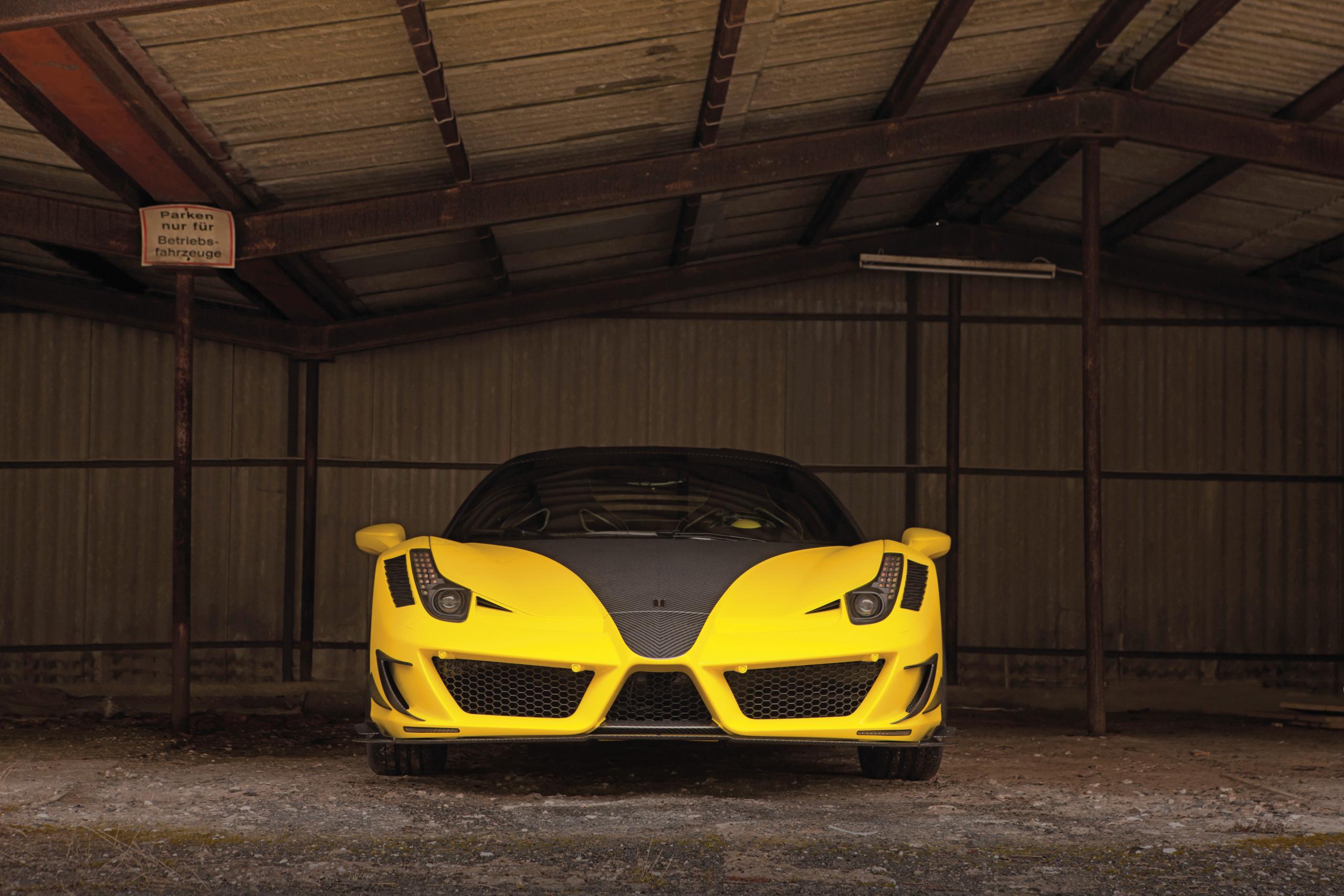
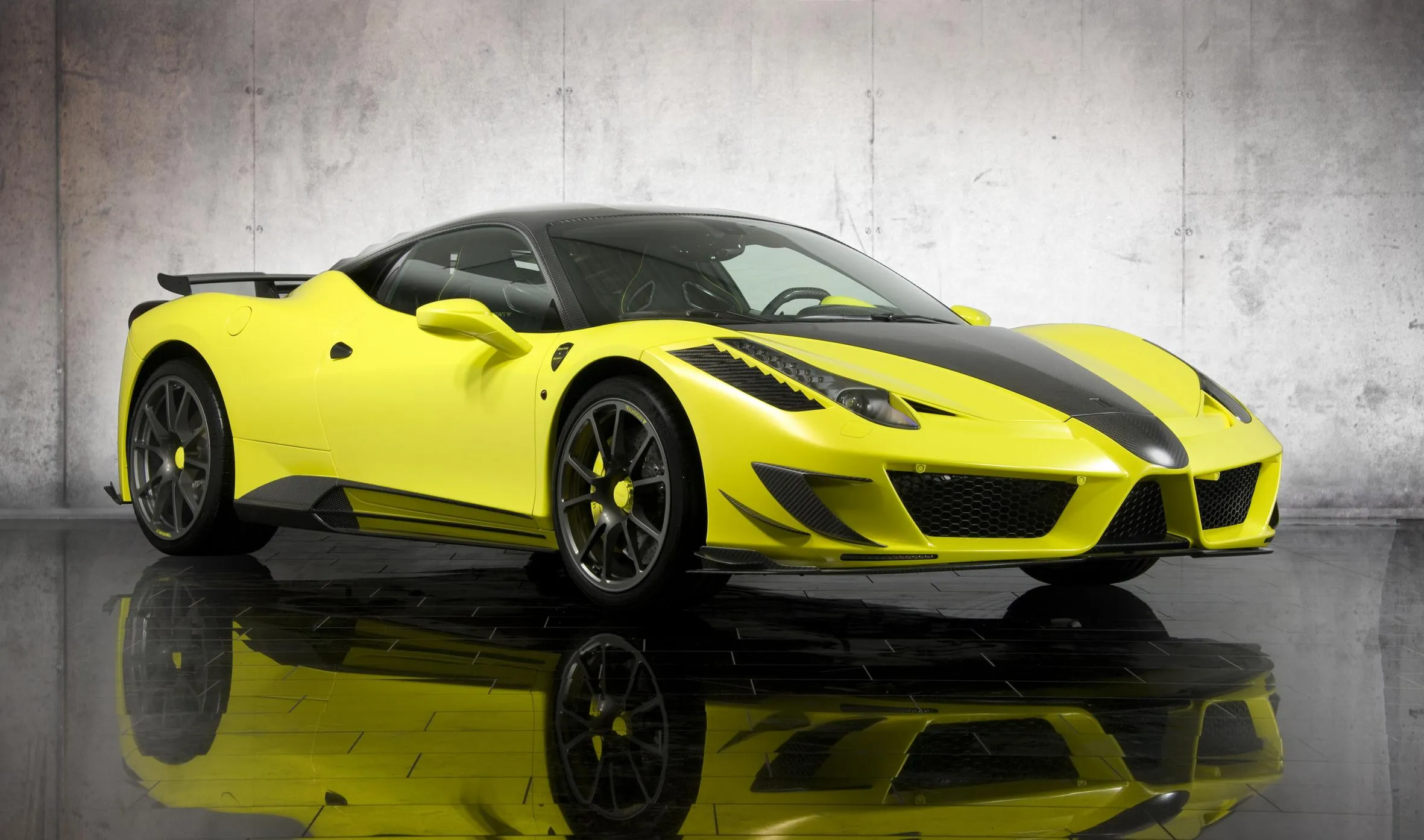
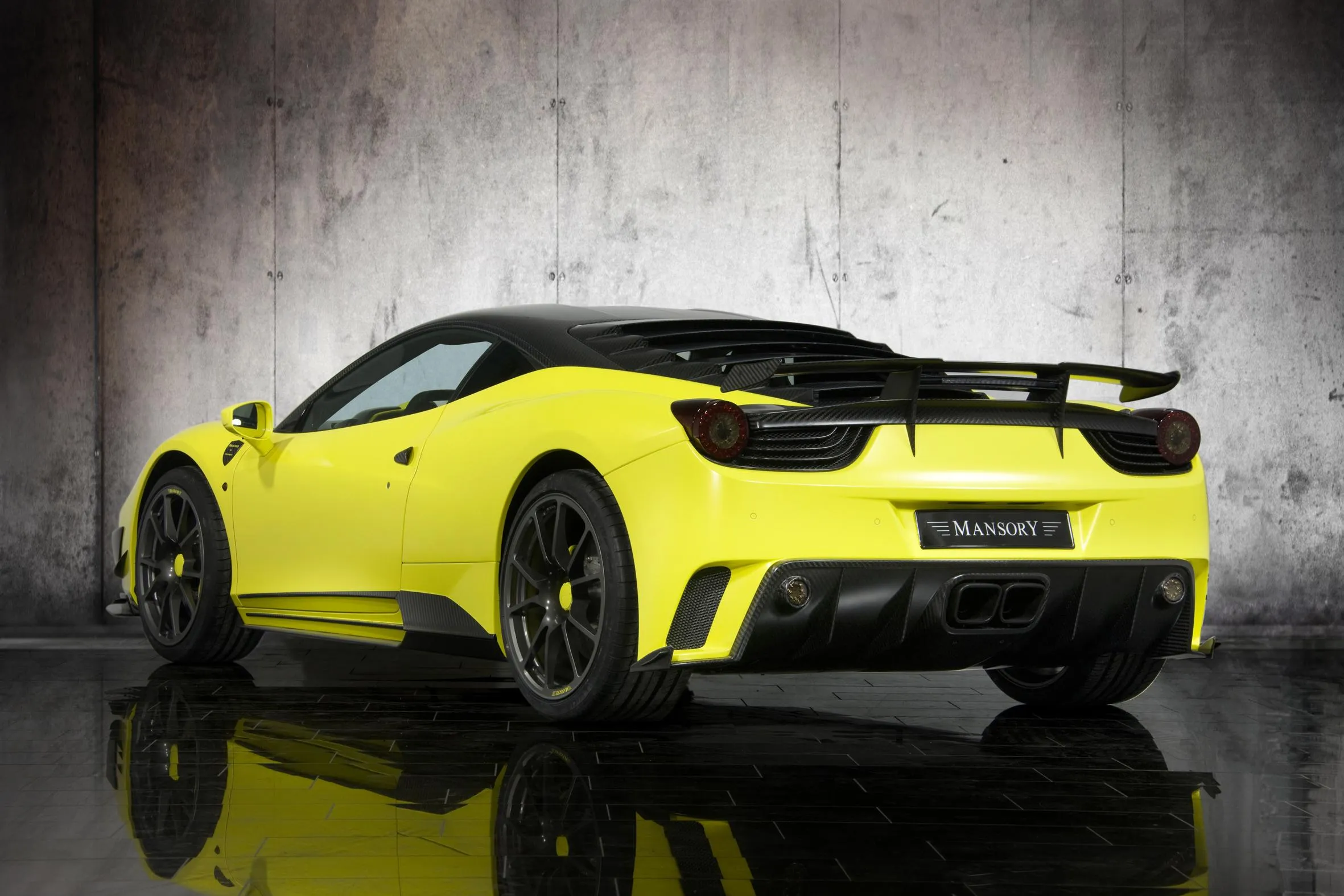
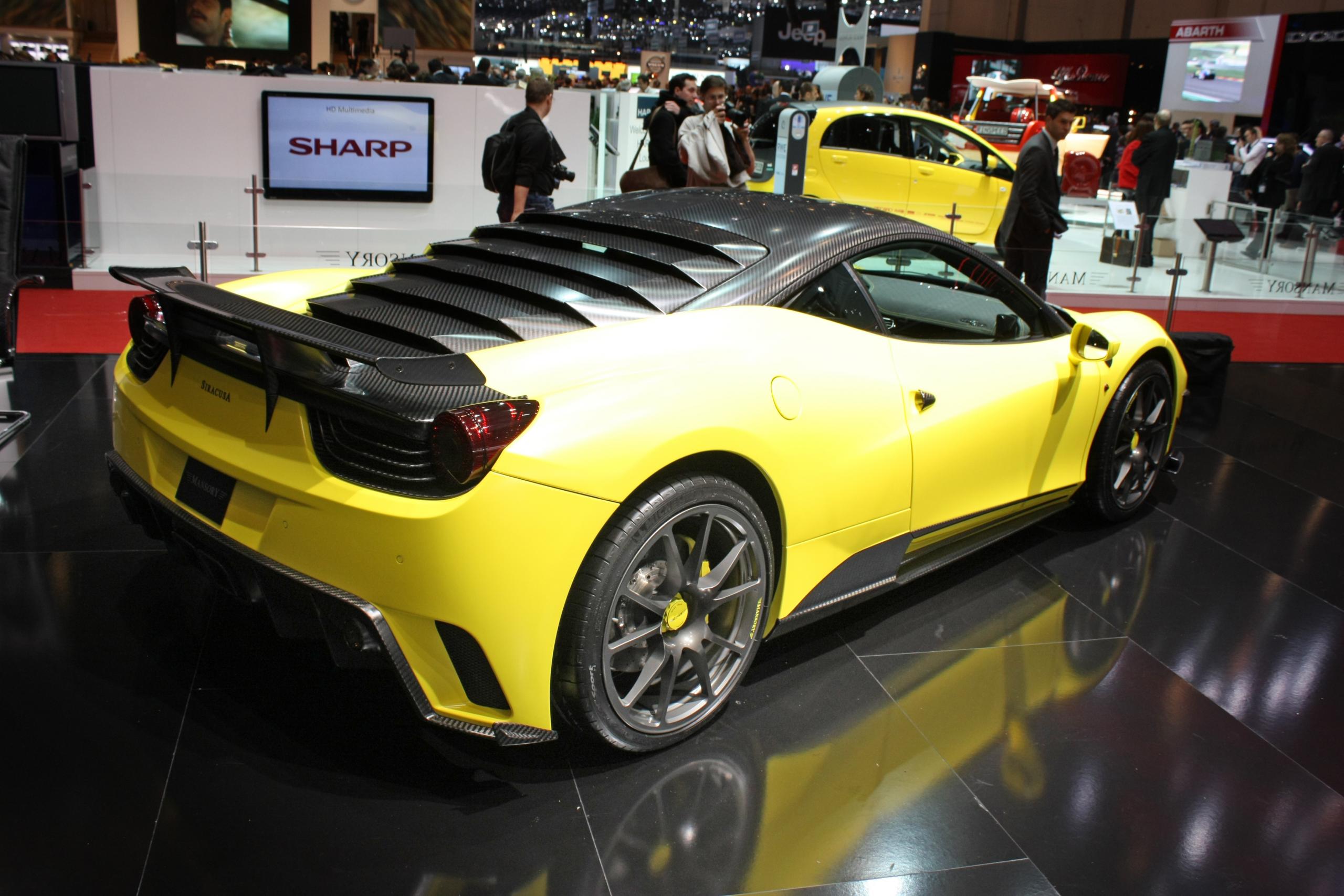
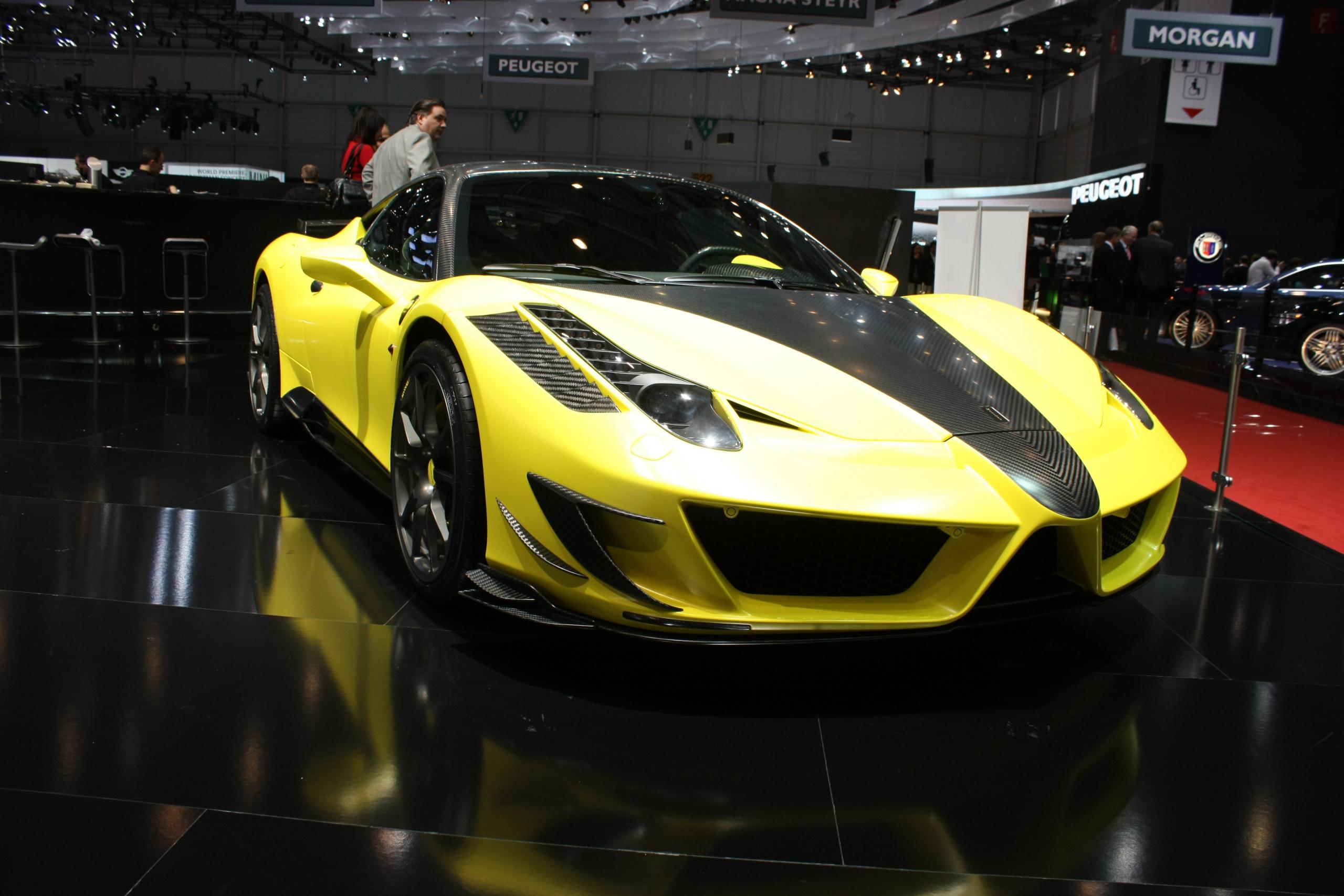
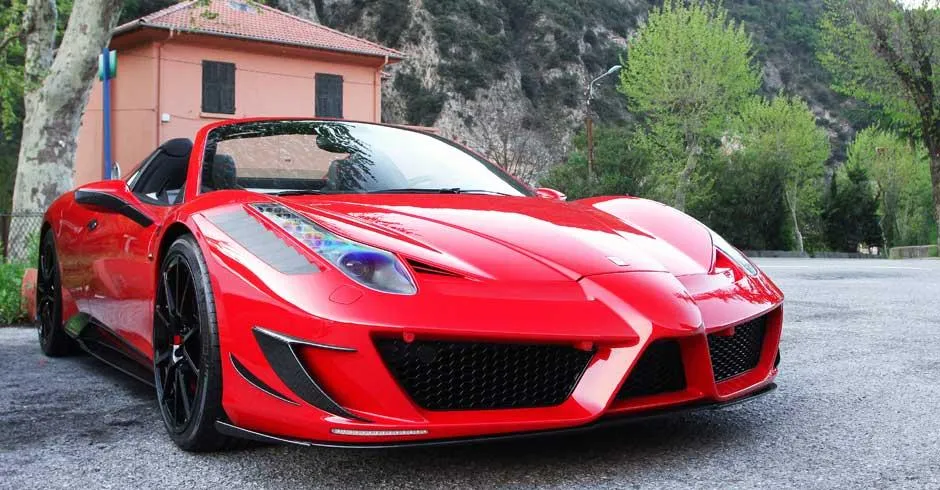
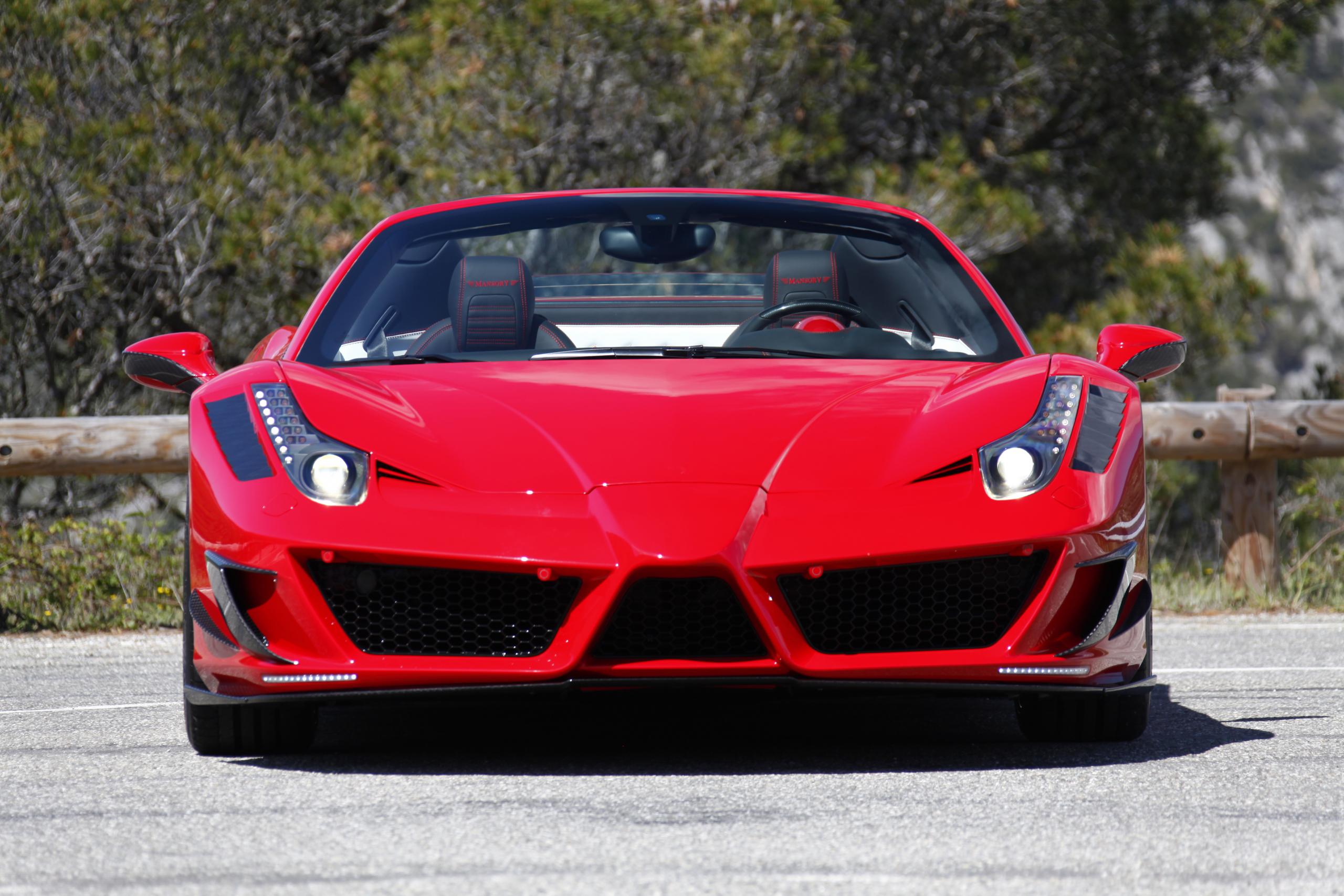
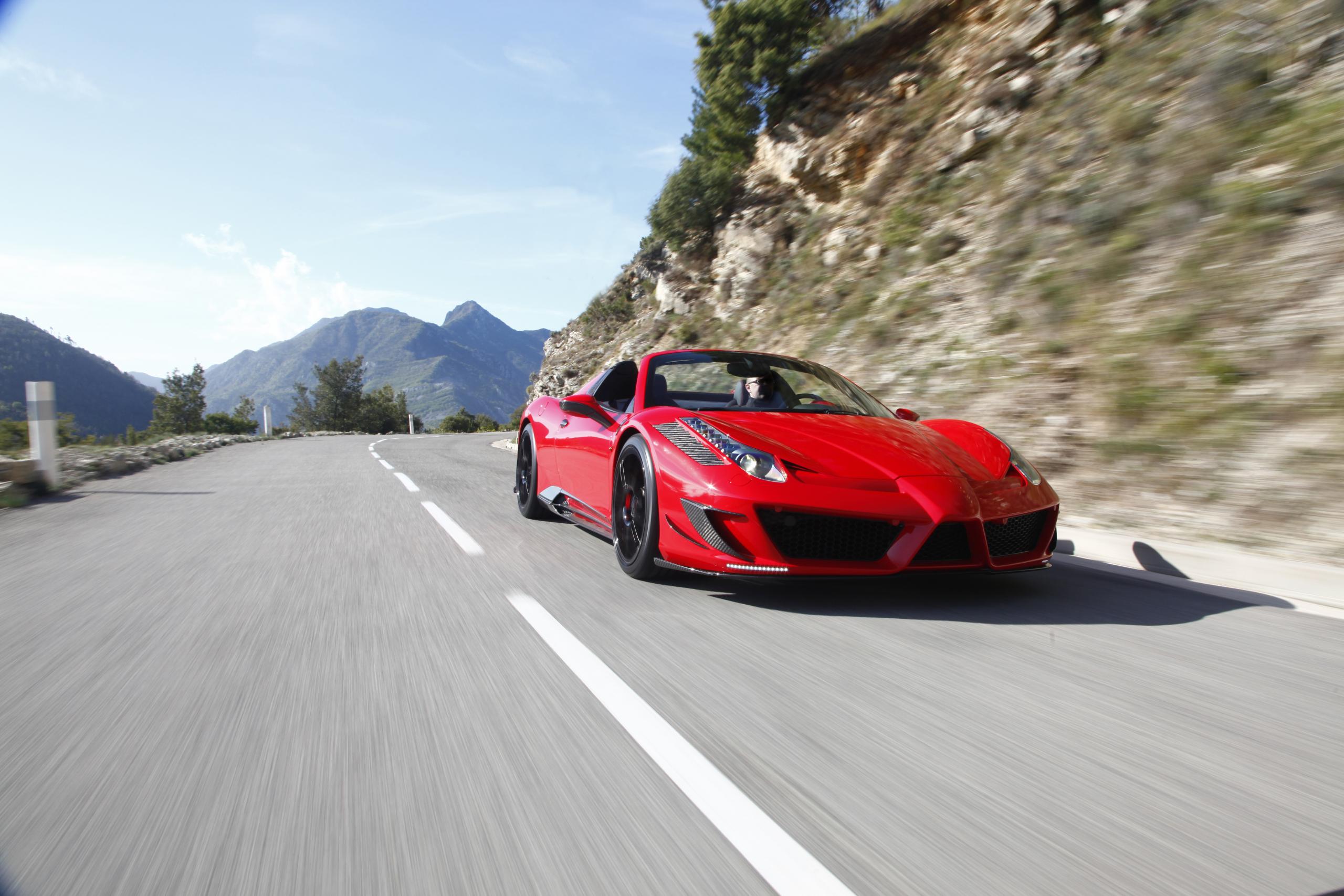
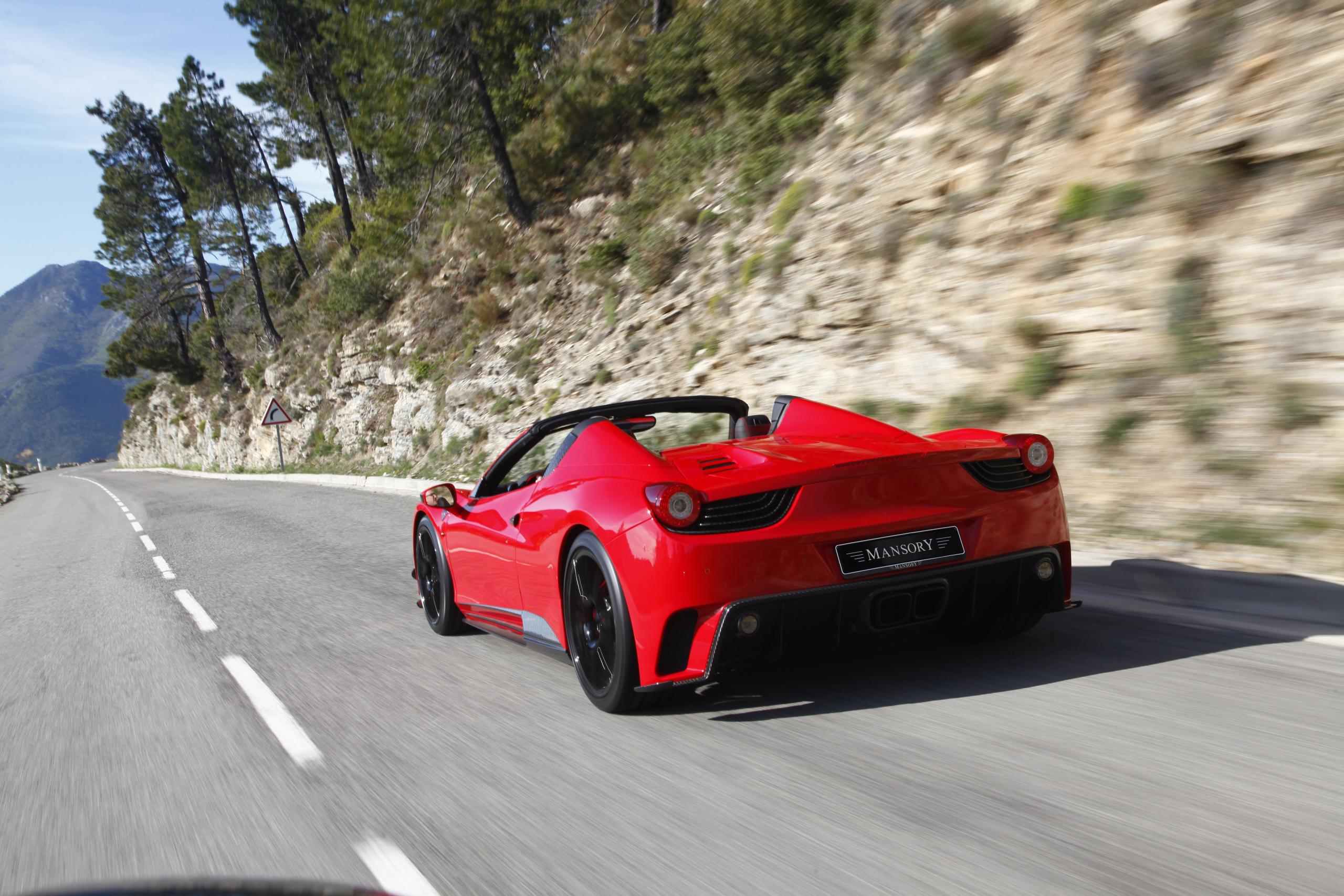
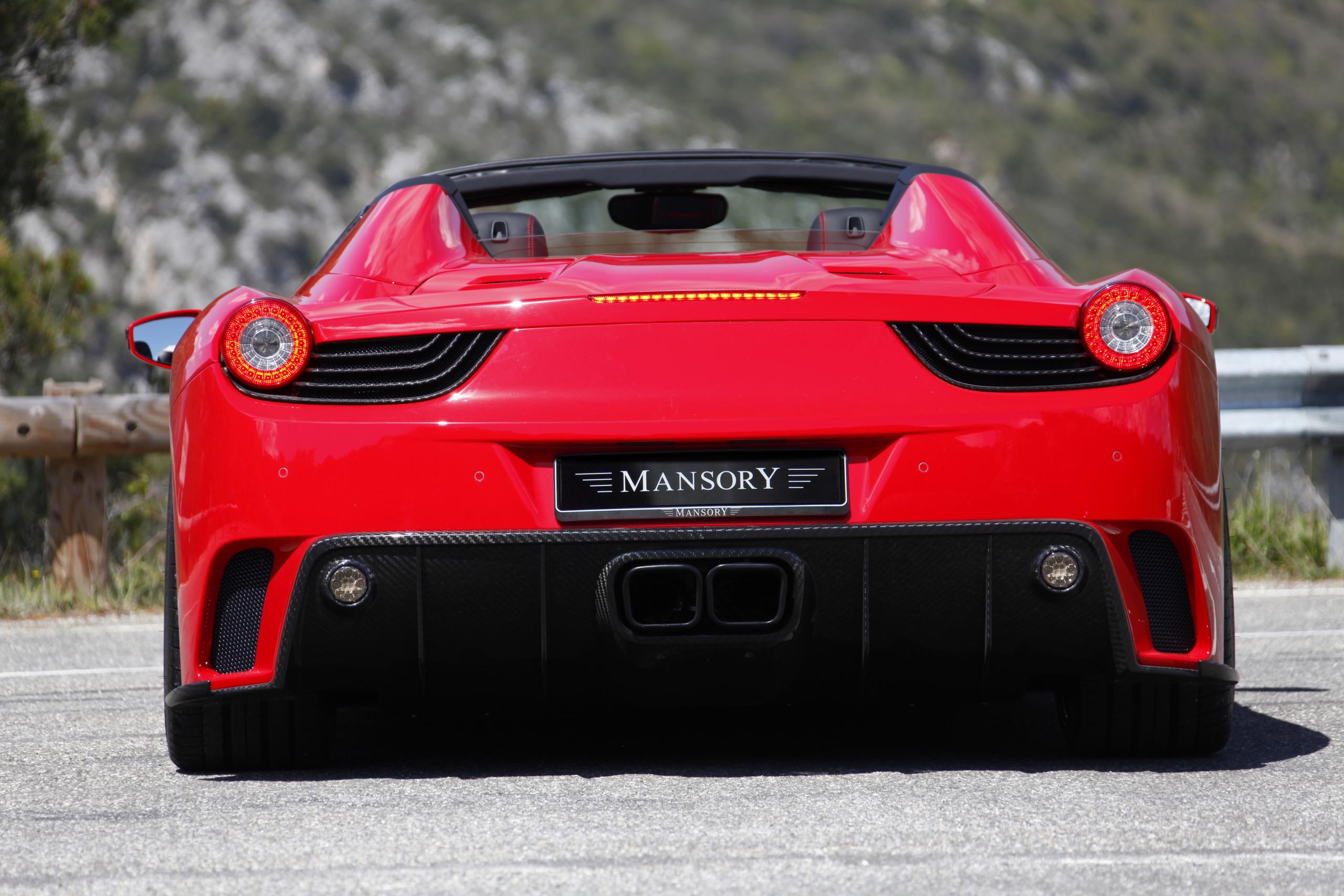
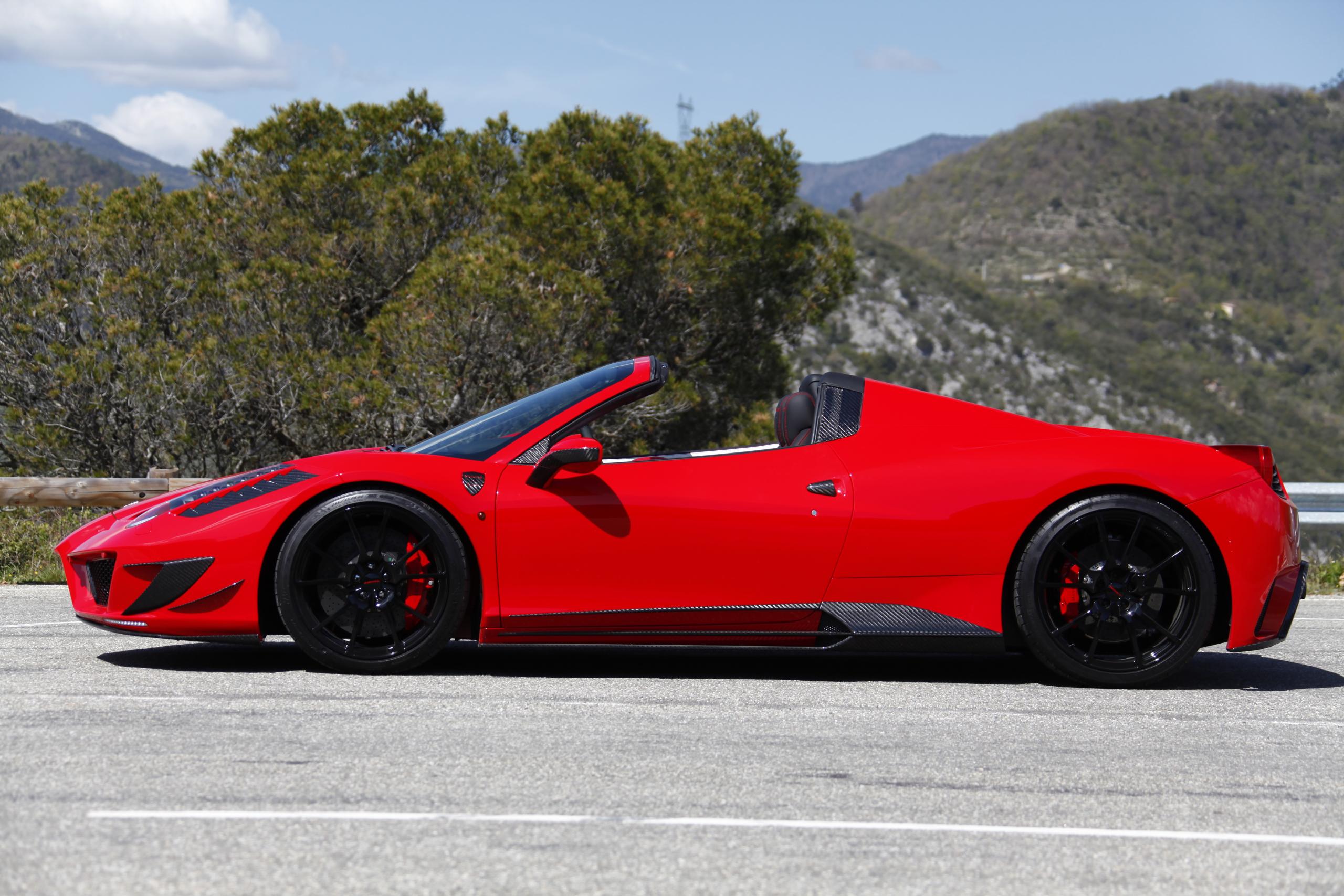
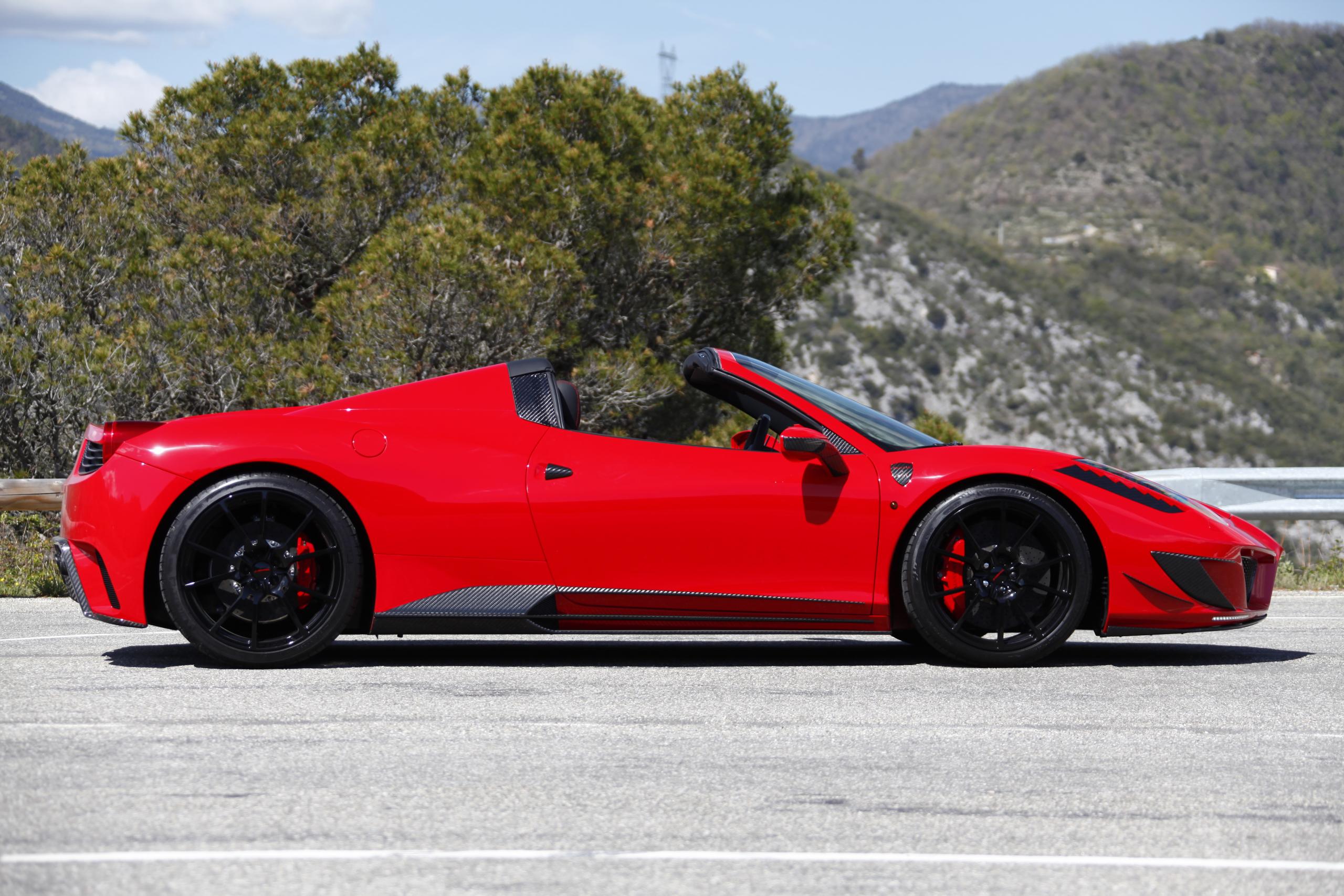
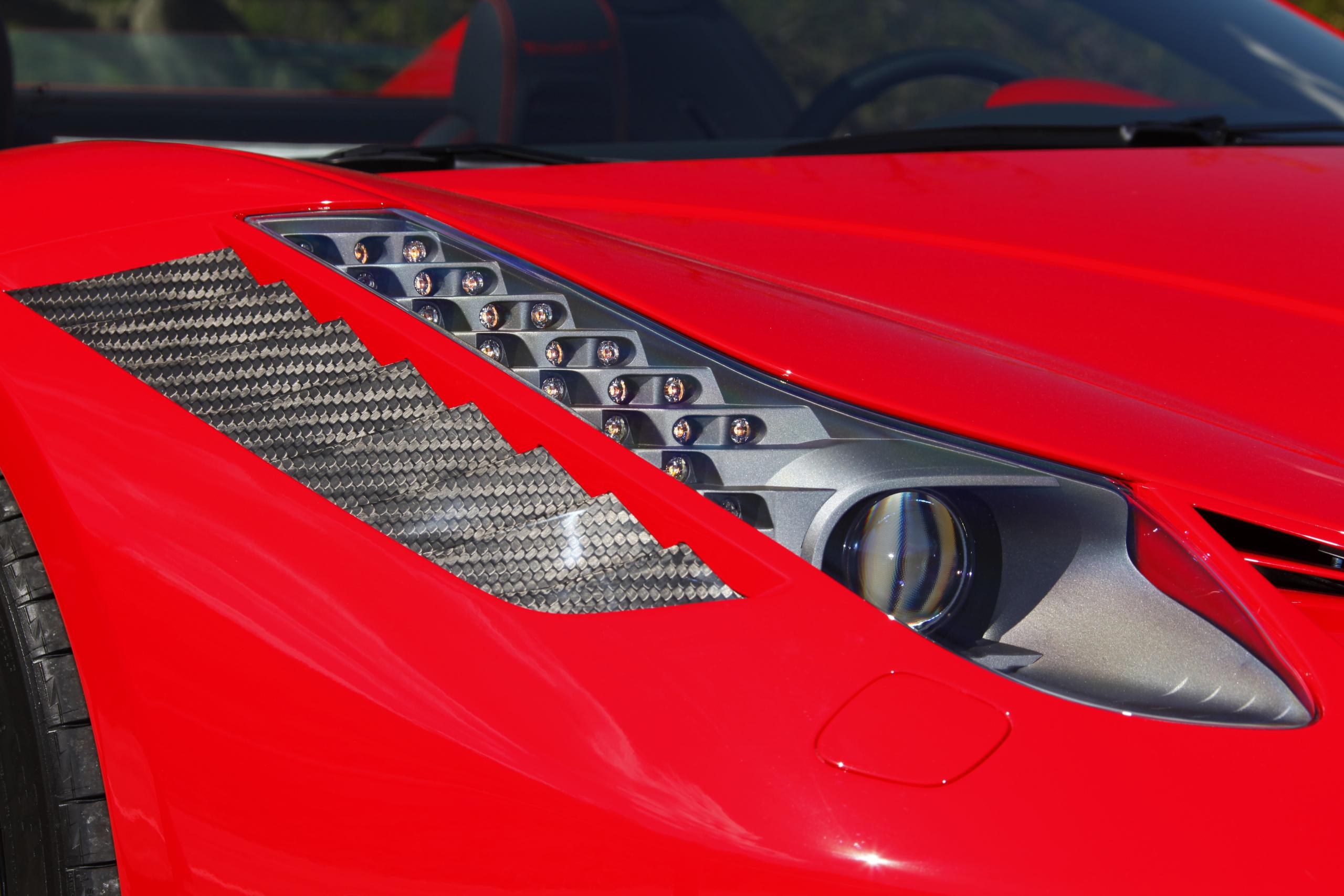
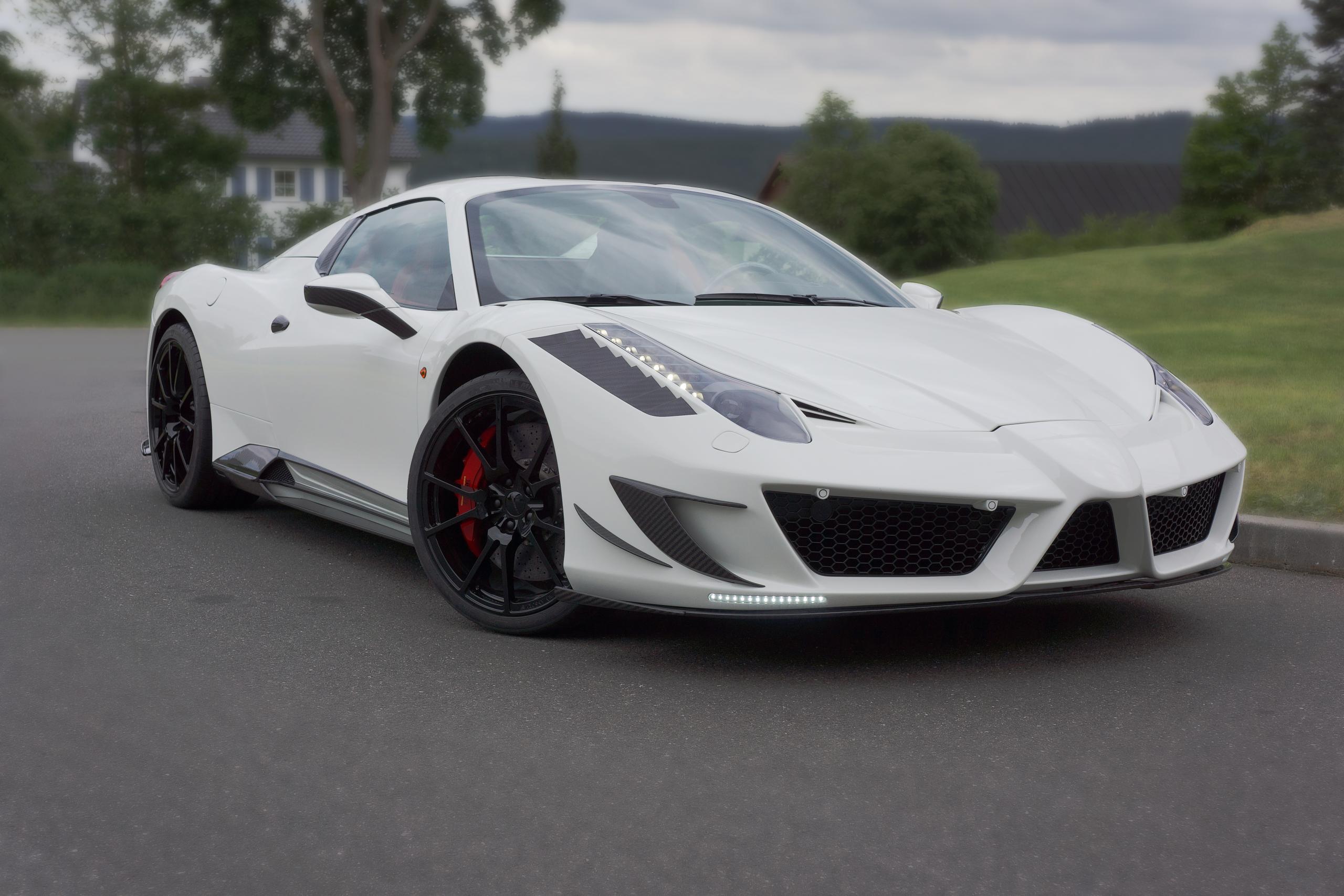
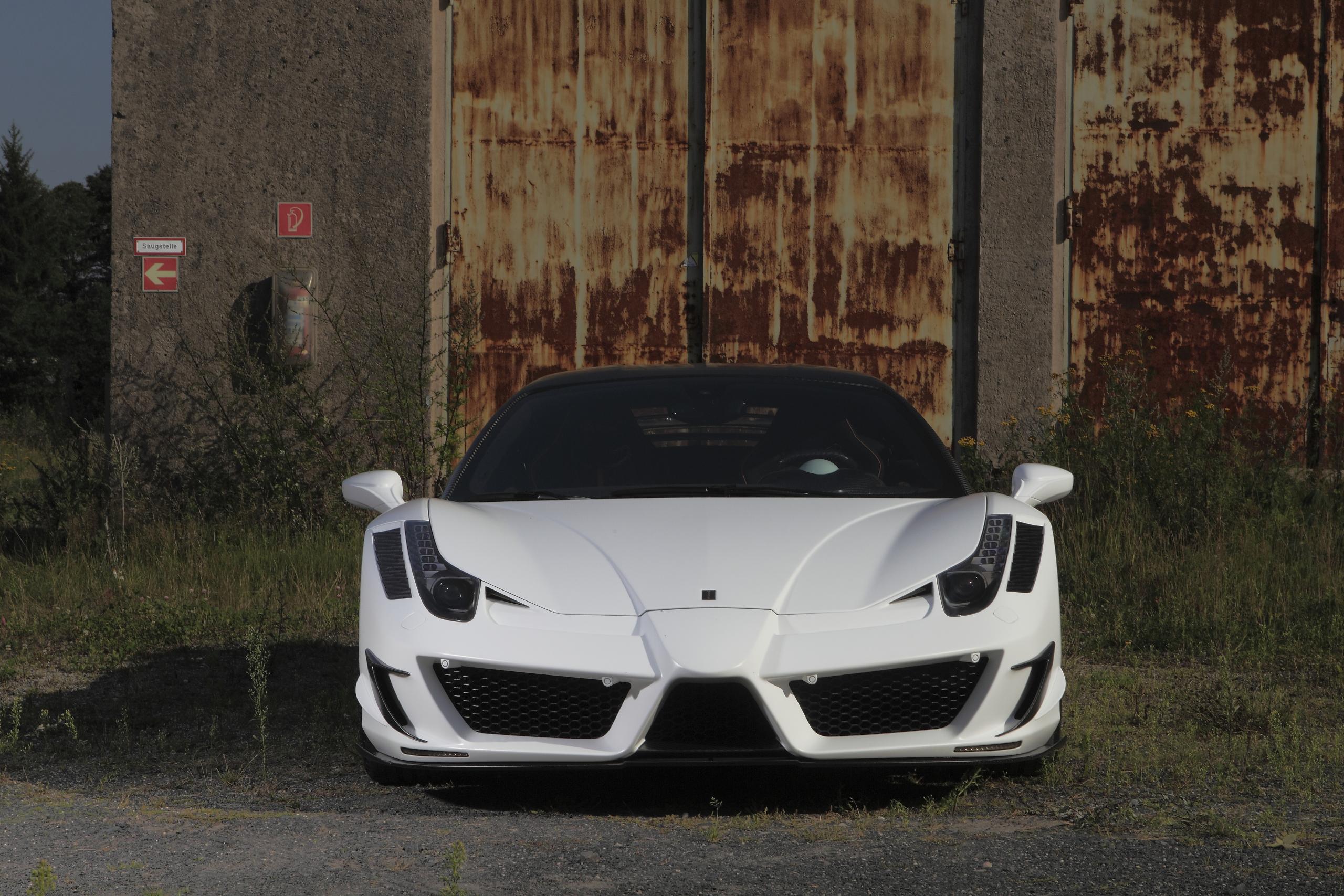
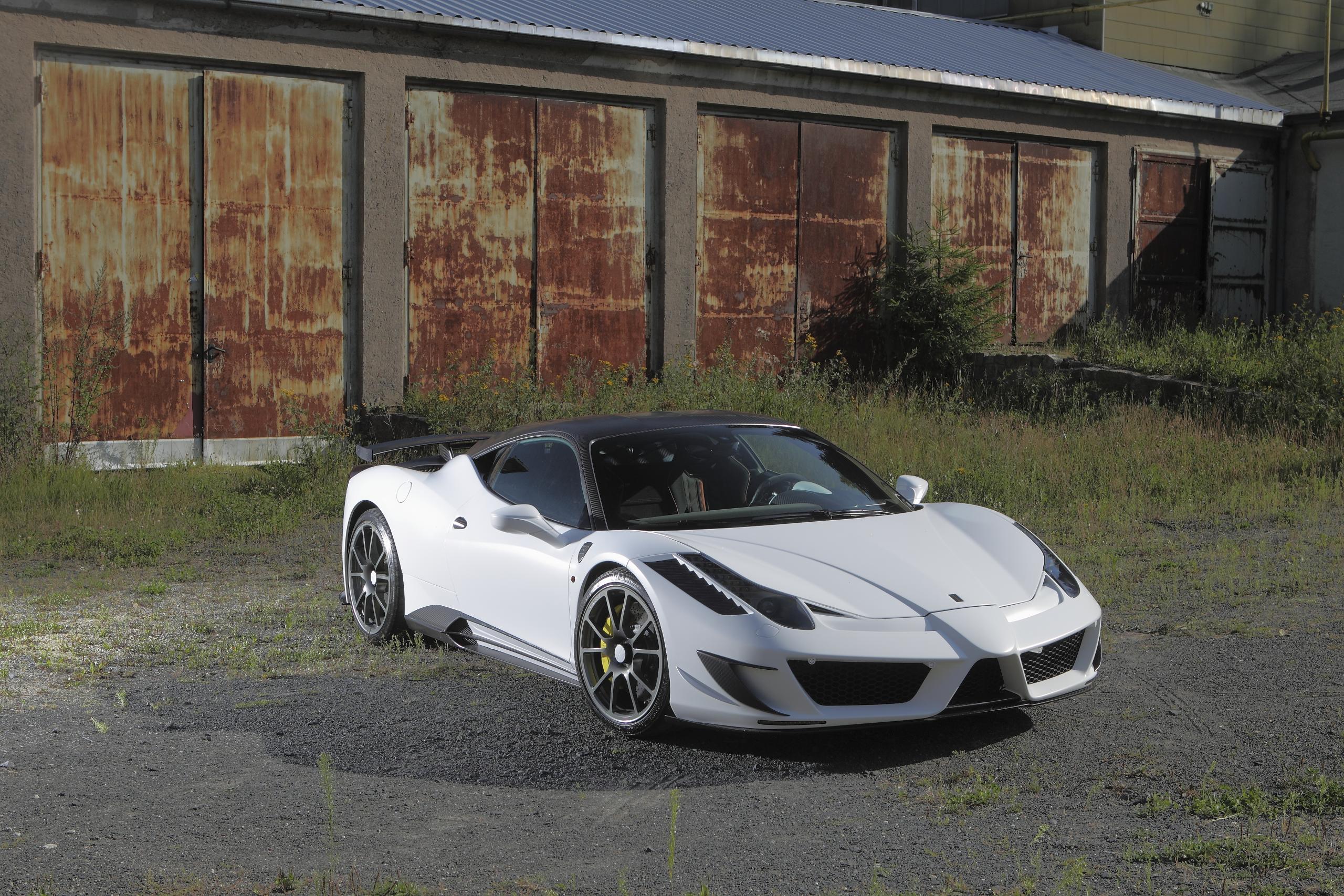
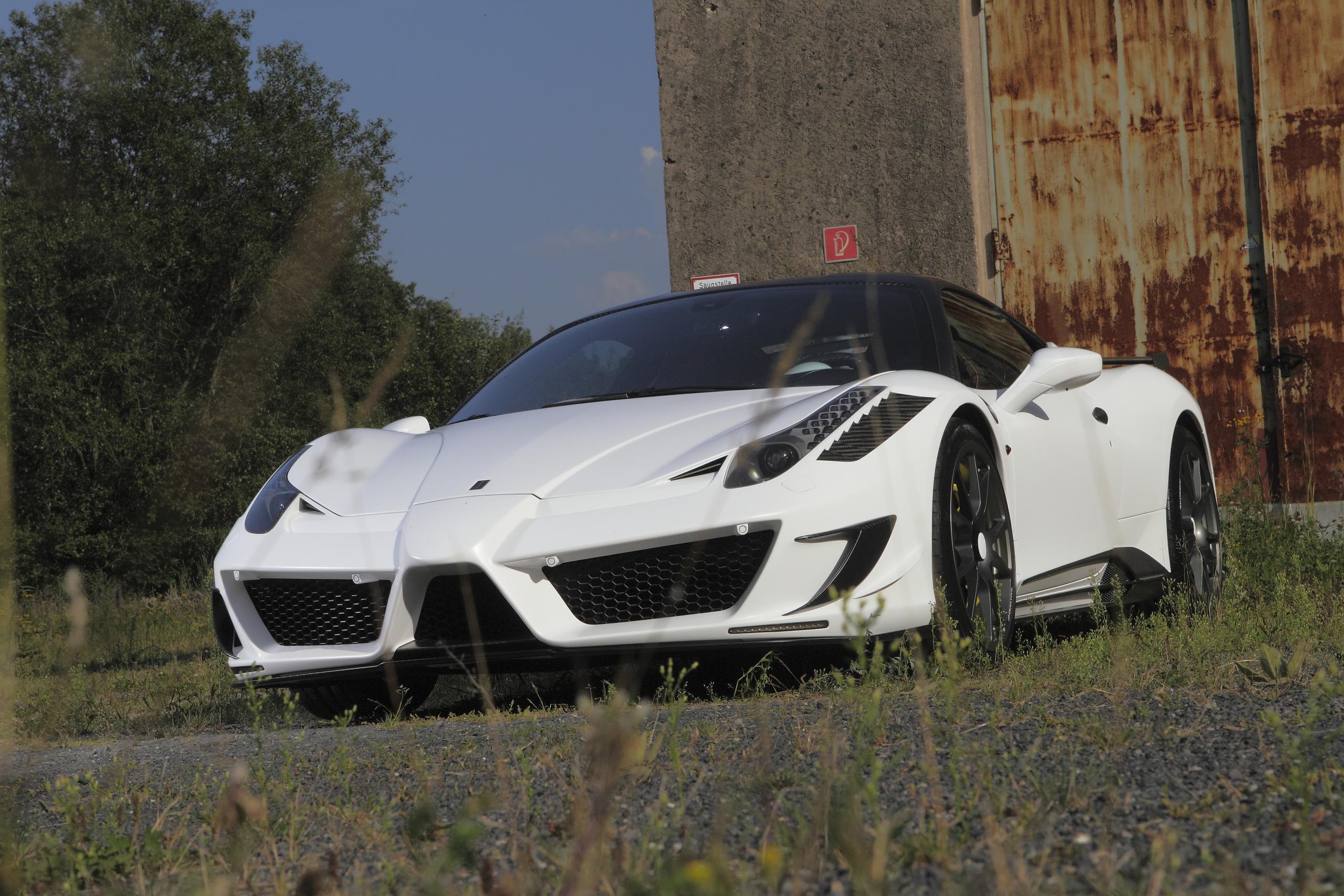
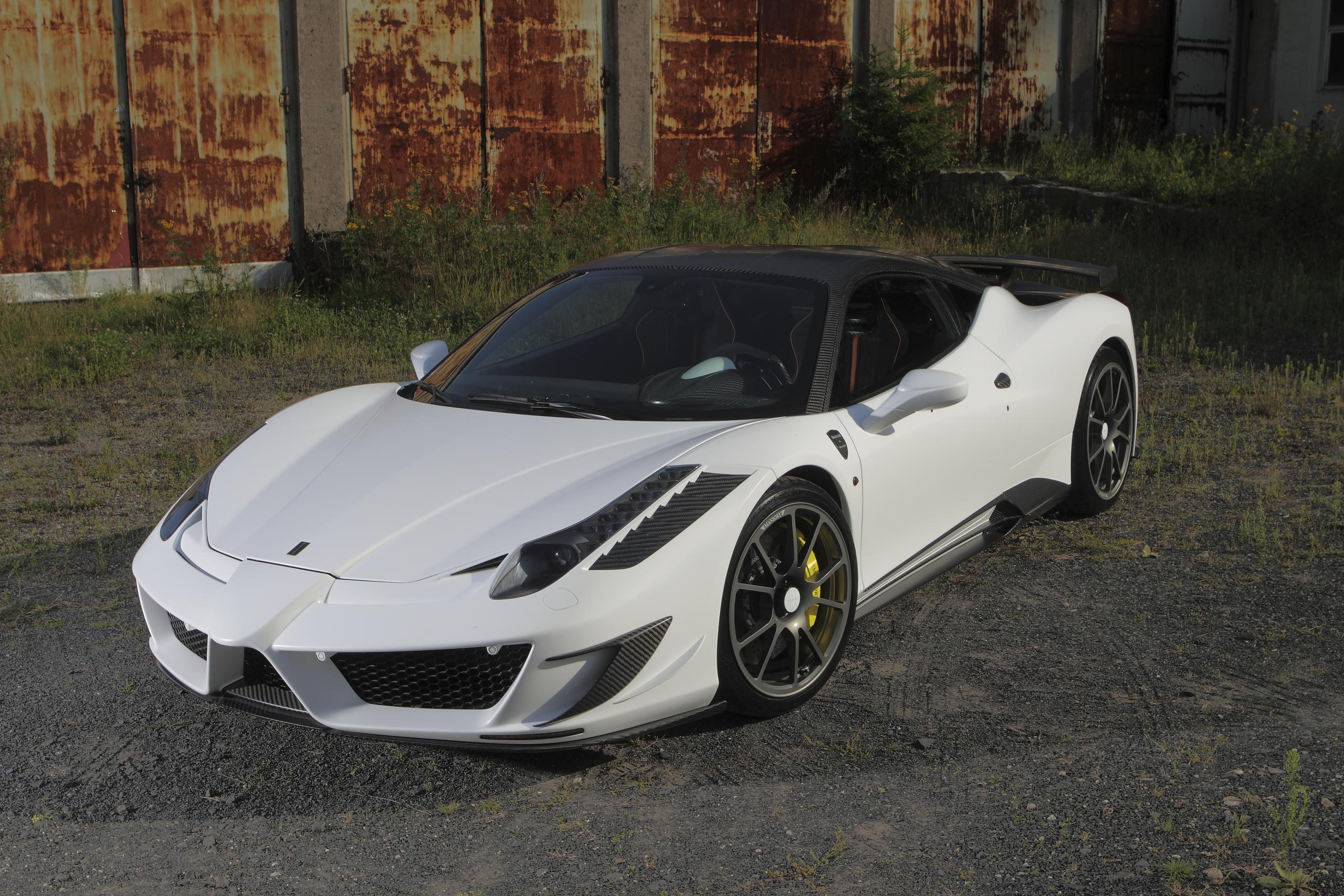
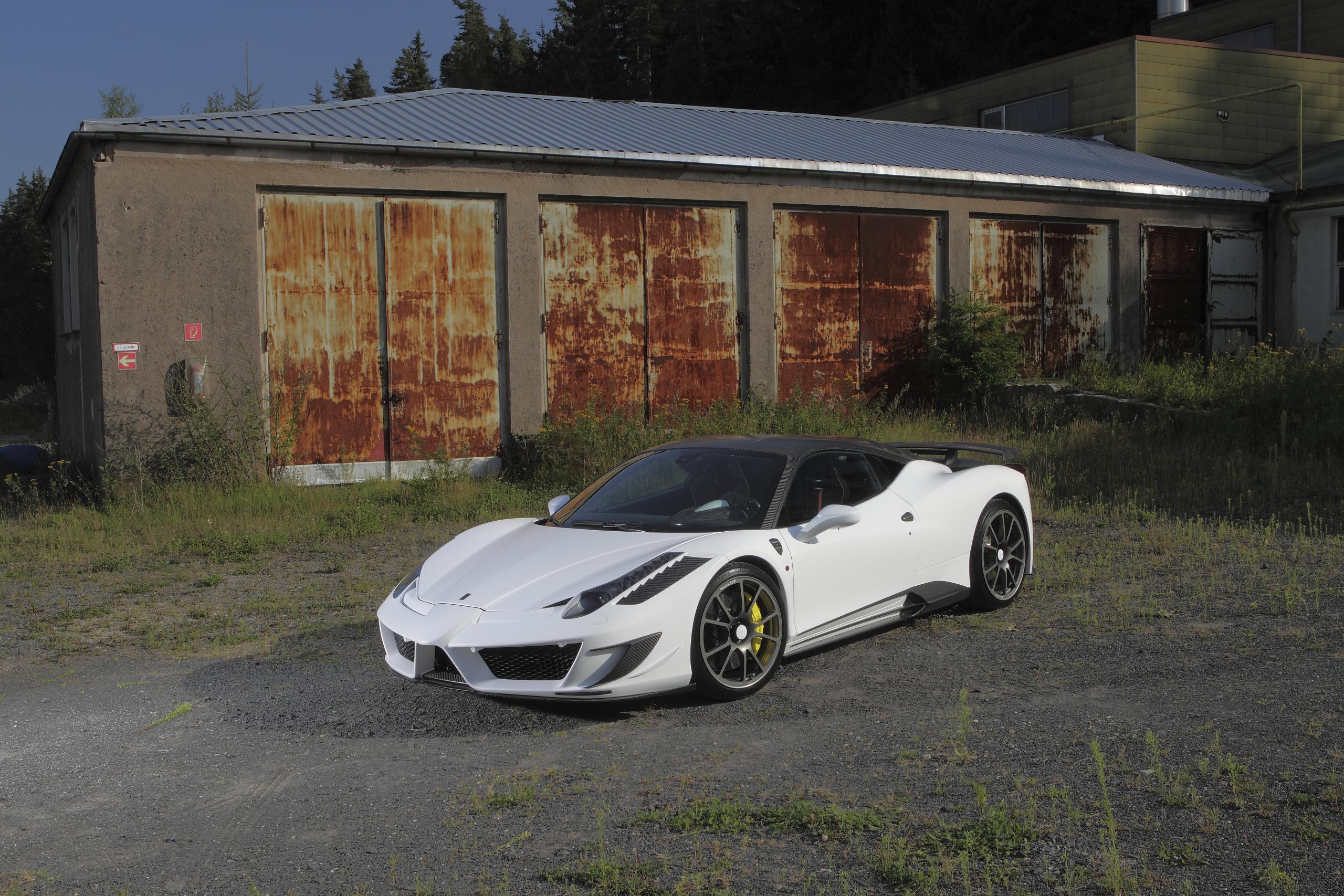
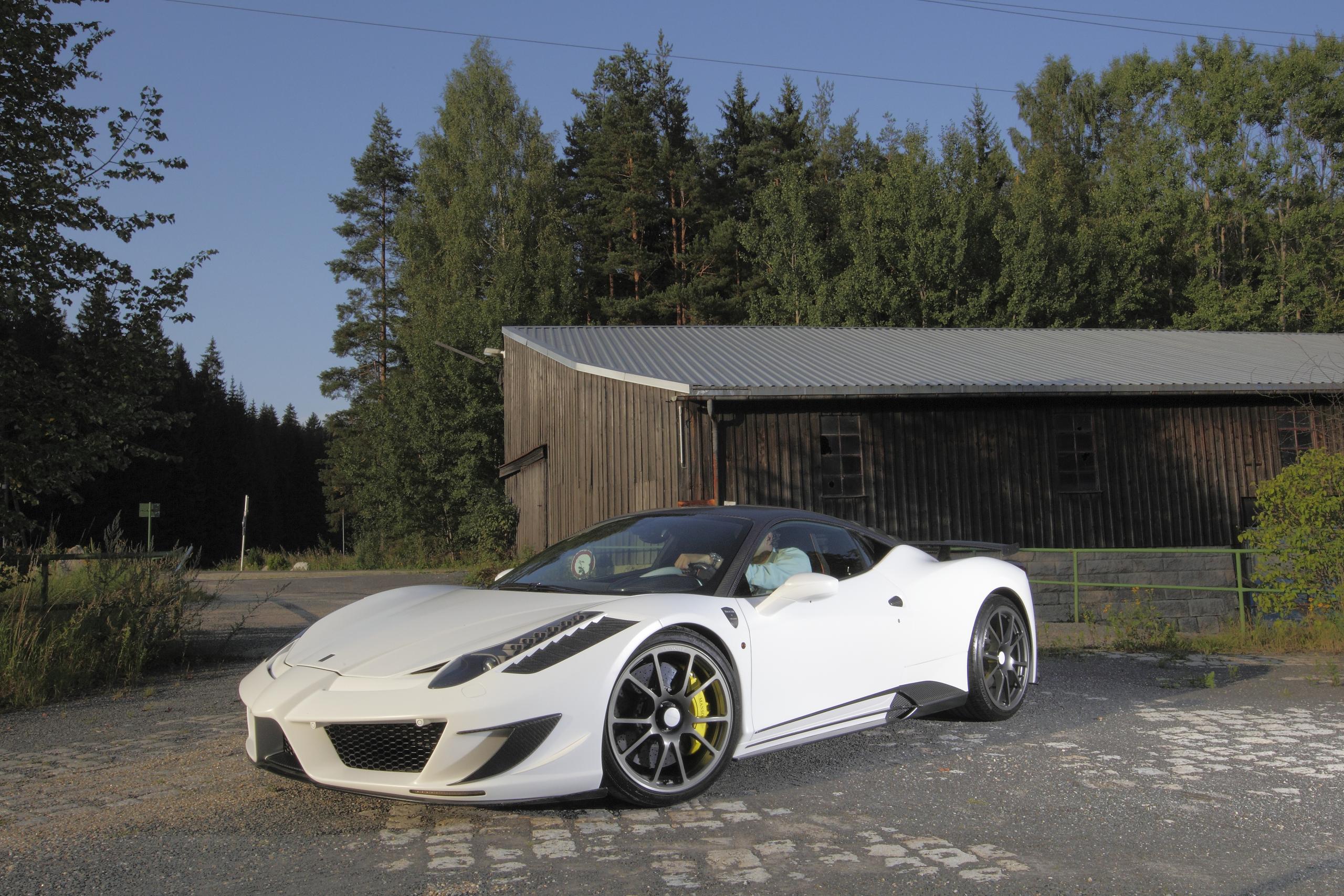
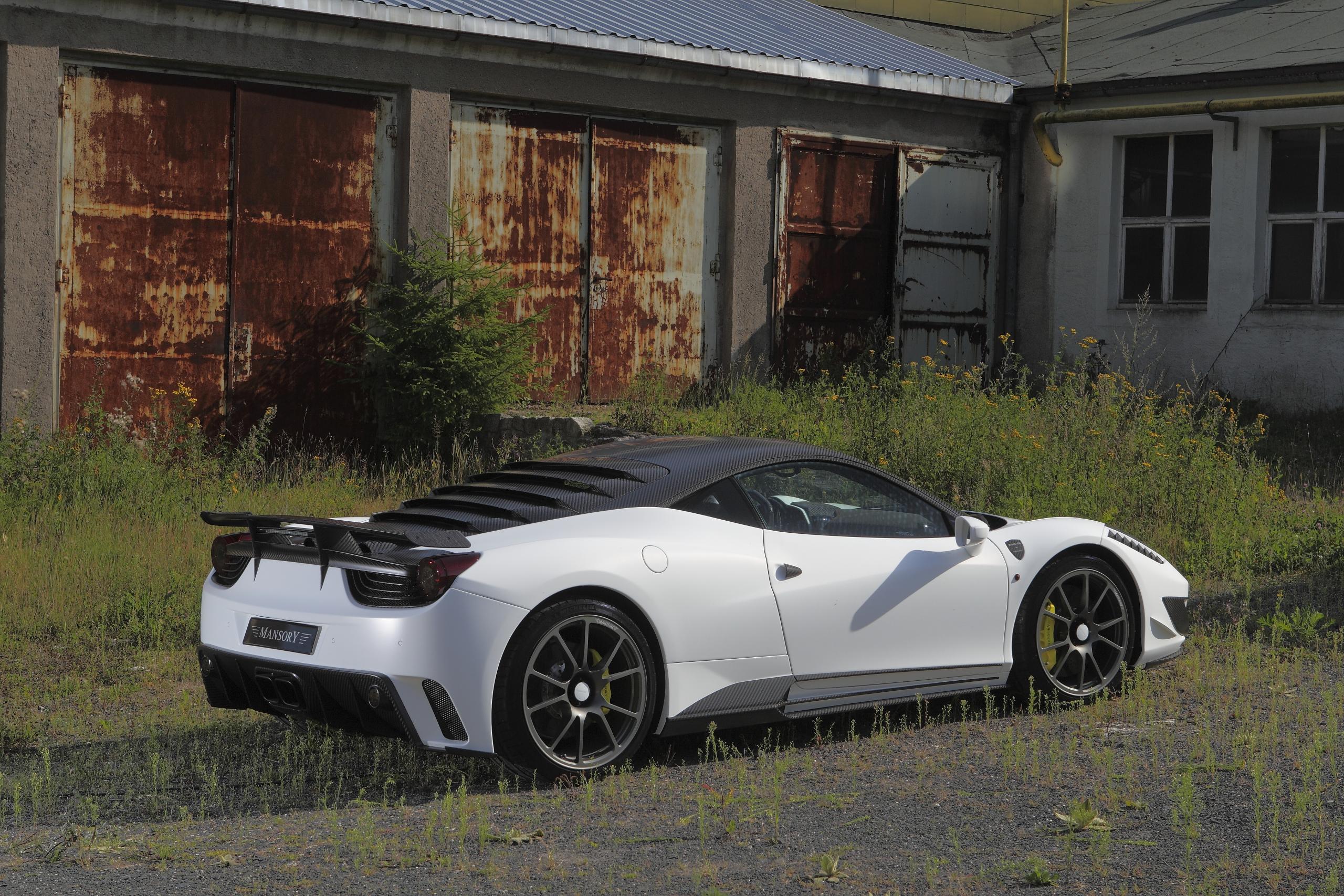
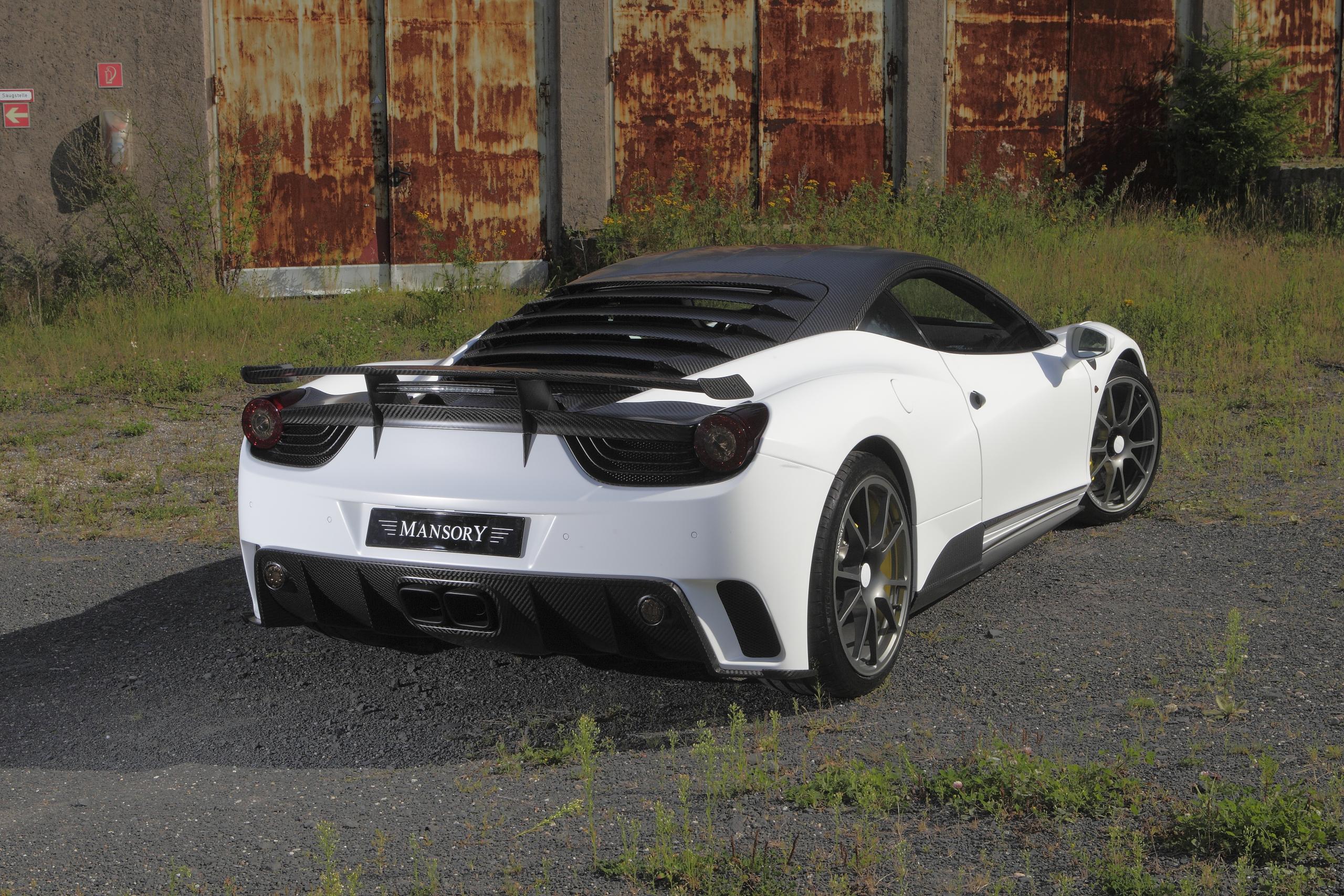
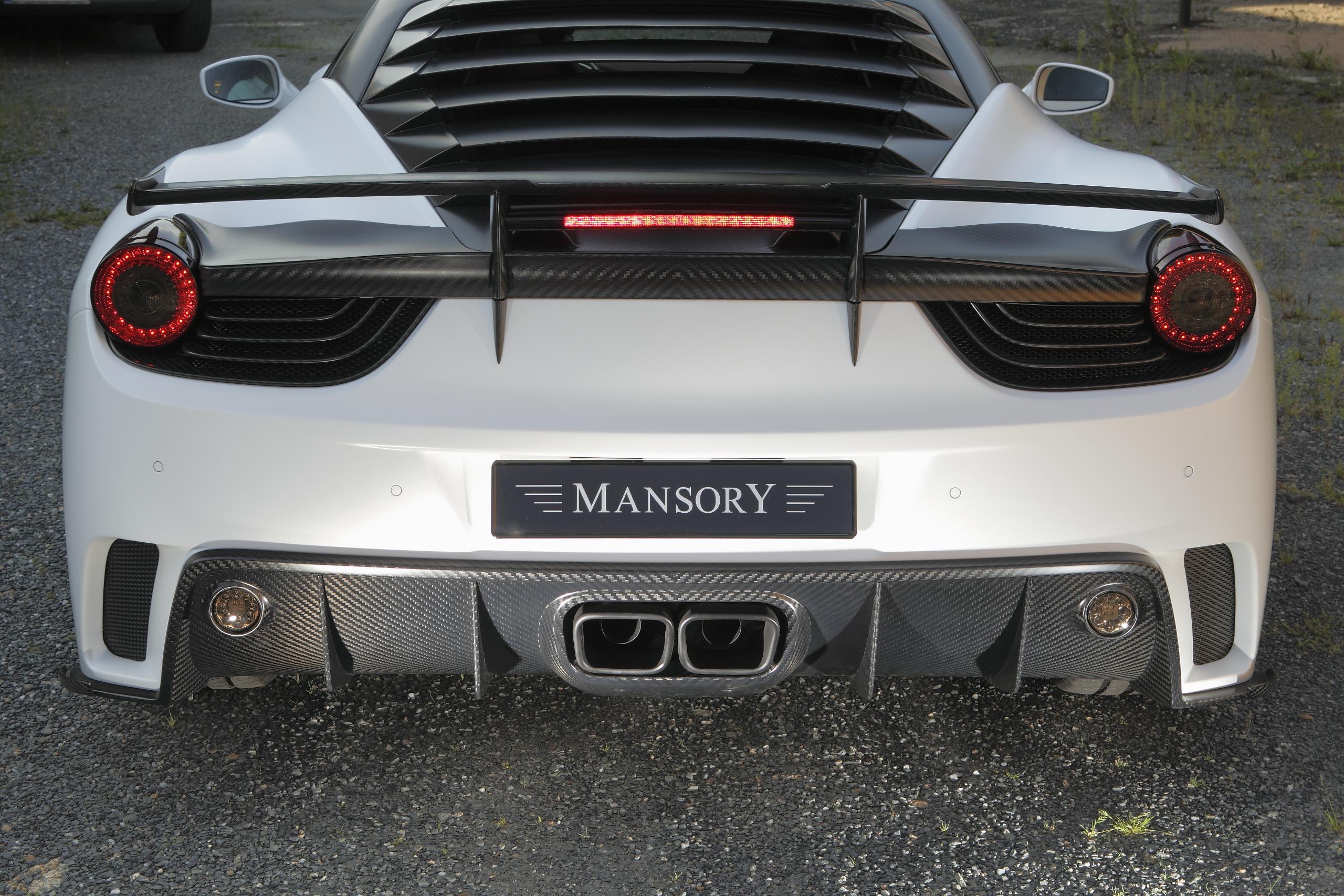
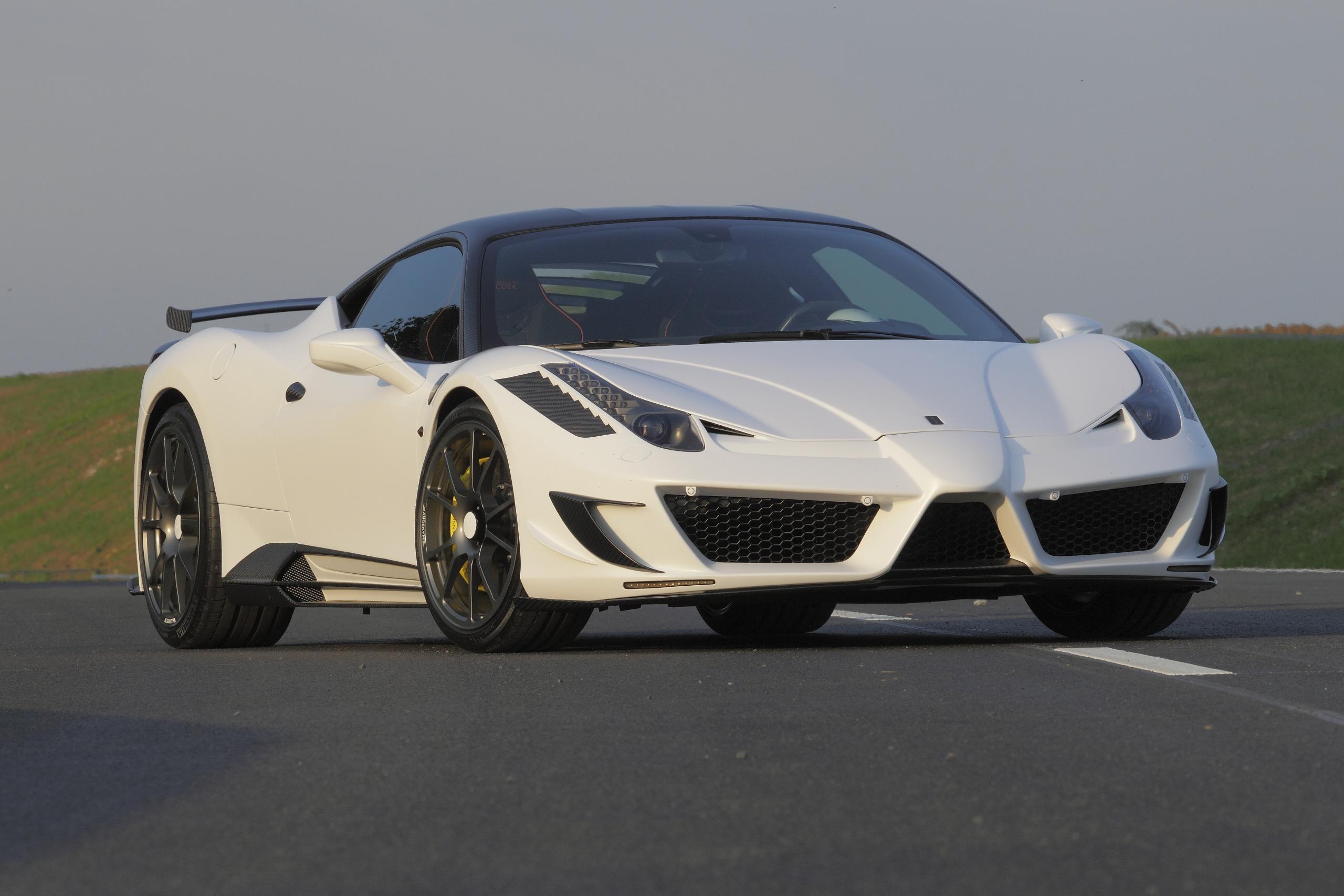
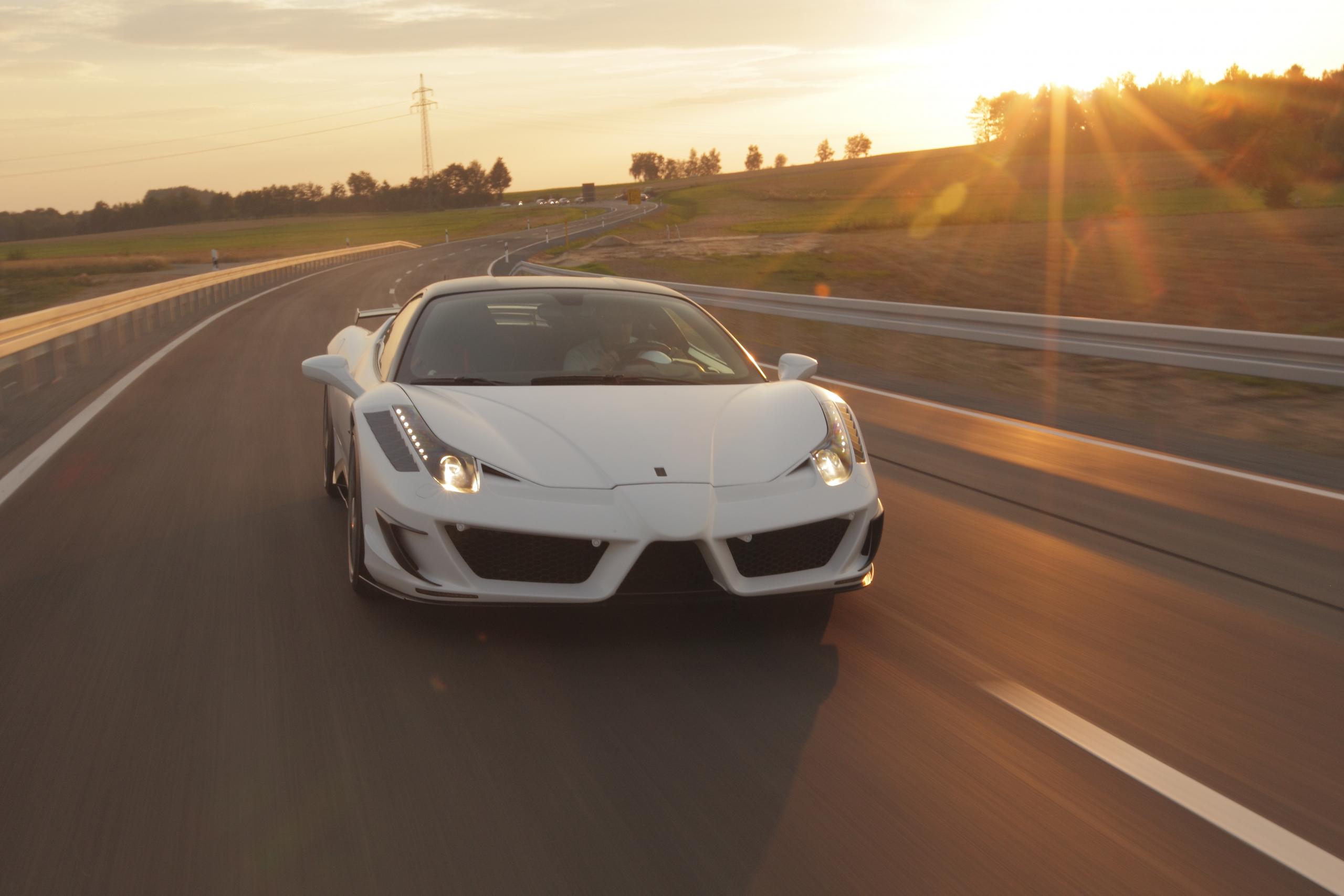
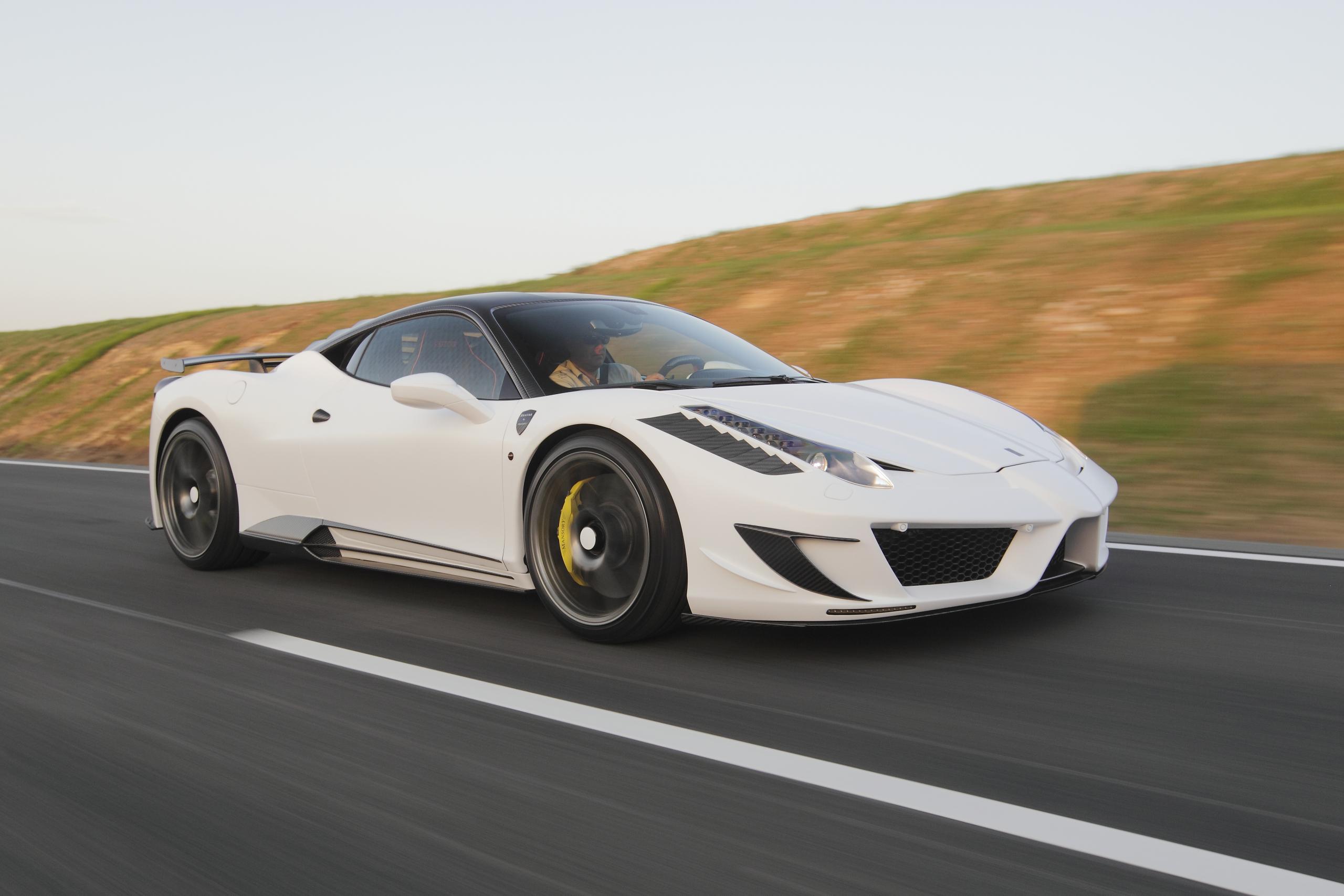
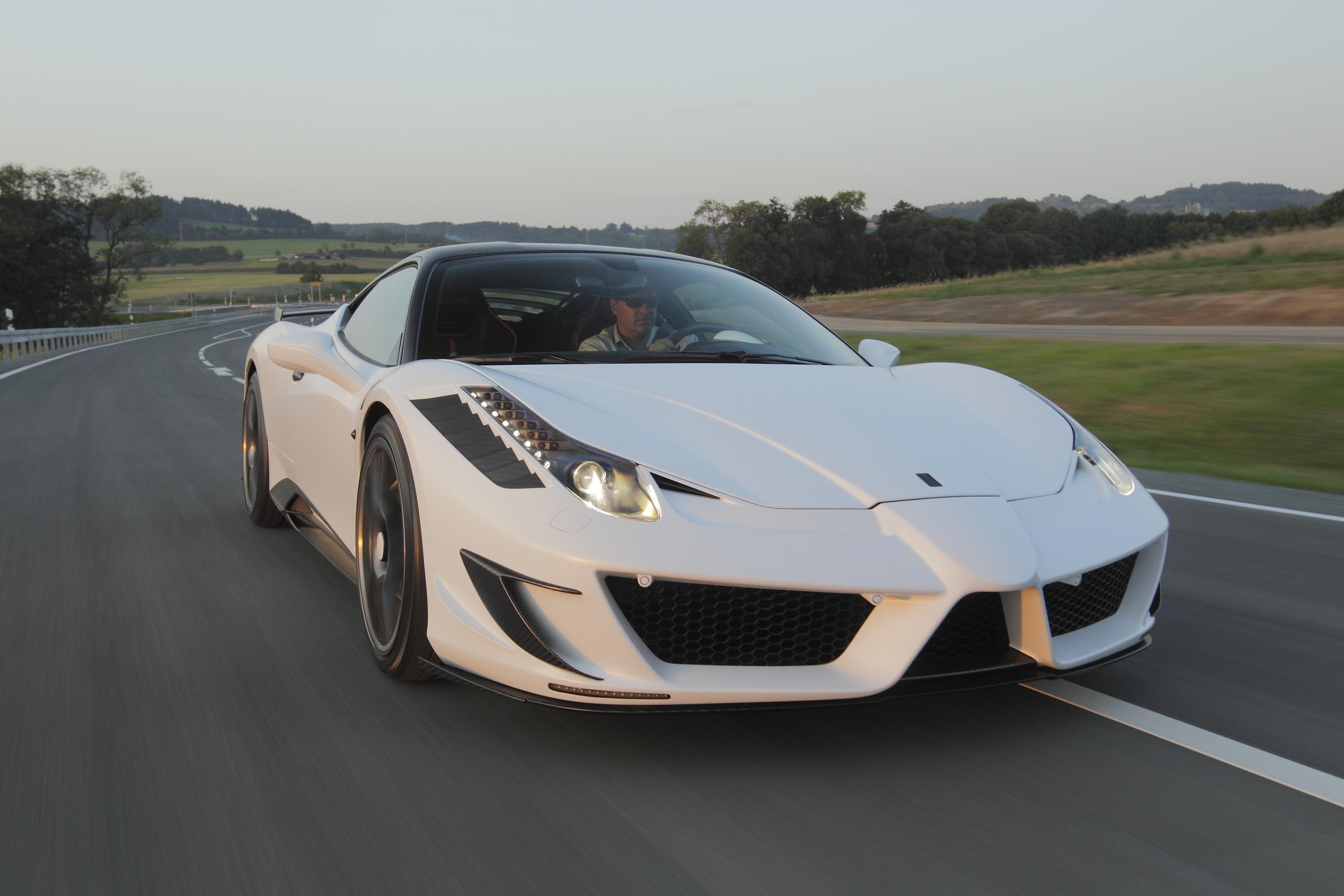
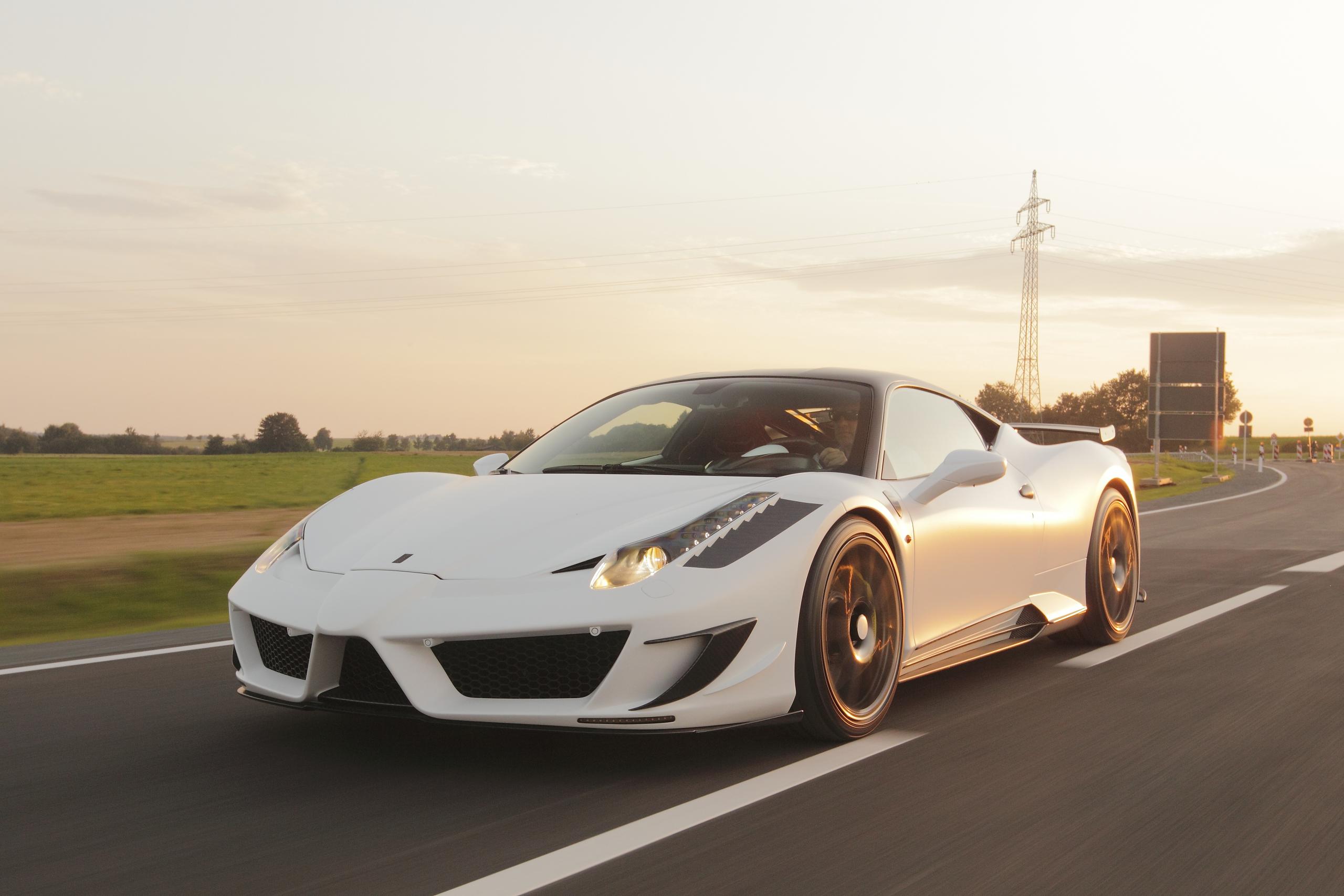
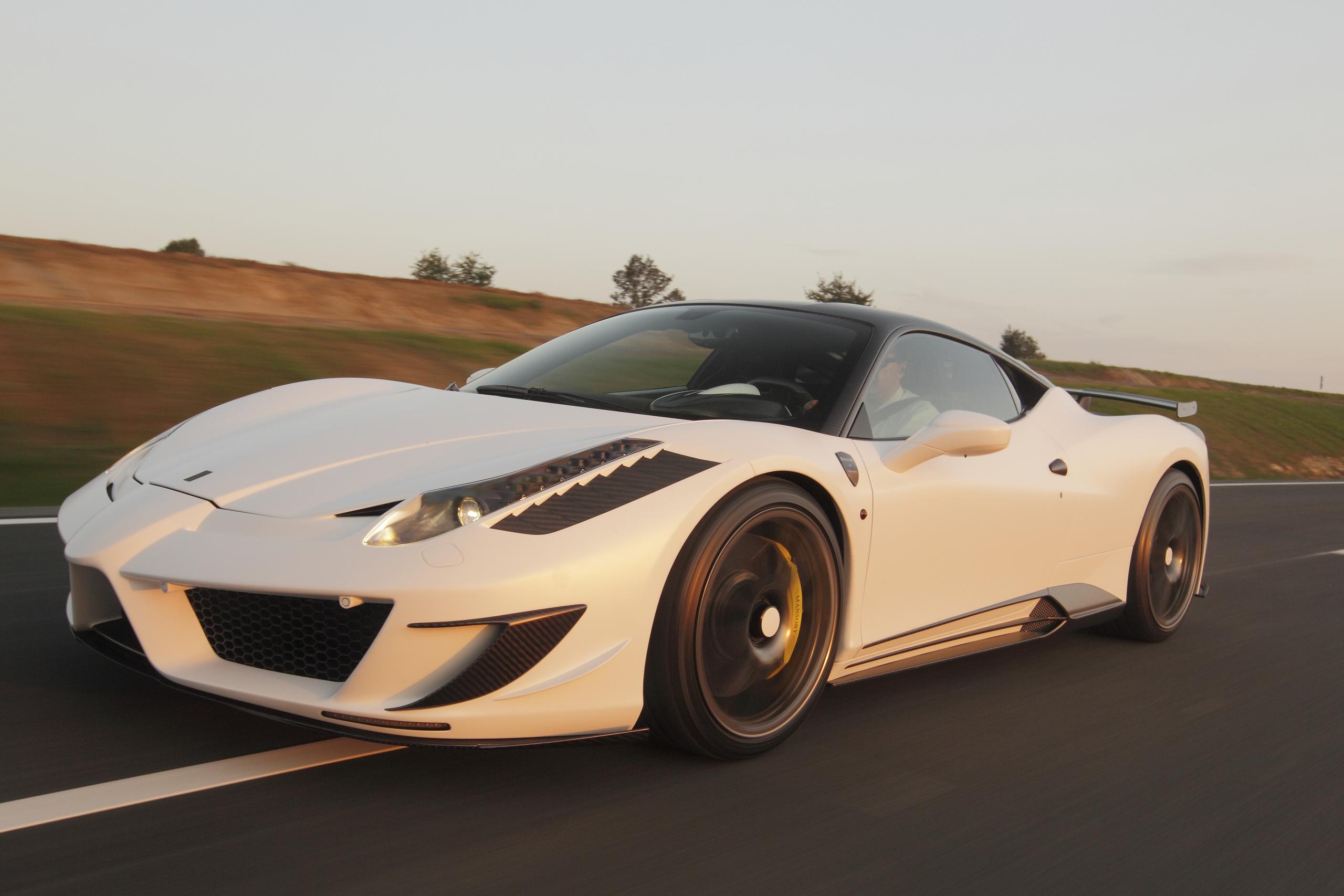
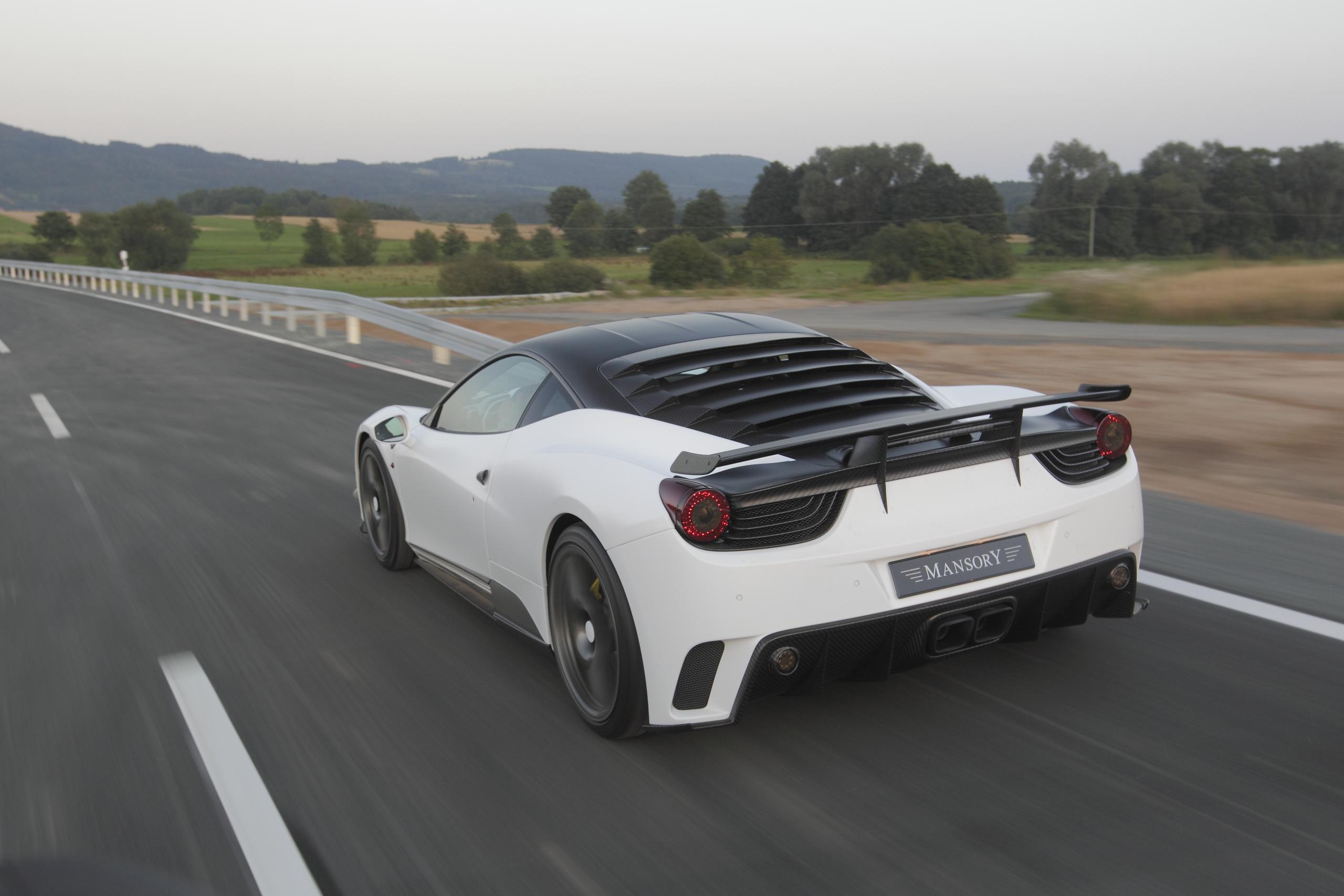
Mansory Carbon Fiber Body kit set for Ferrafi 458 Siracusa


MANSORY Siracusa — the umbrella programme for the Ferrari 458 family
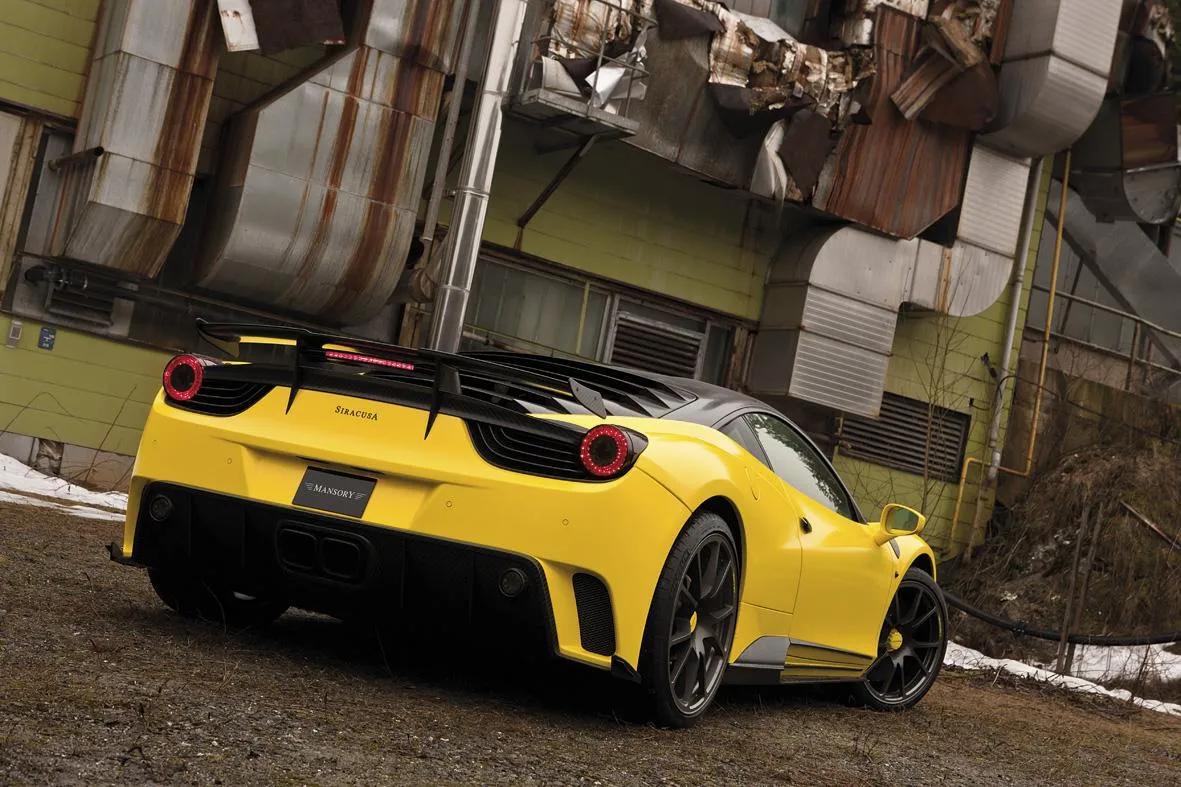
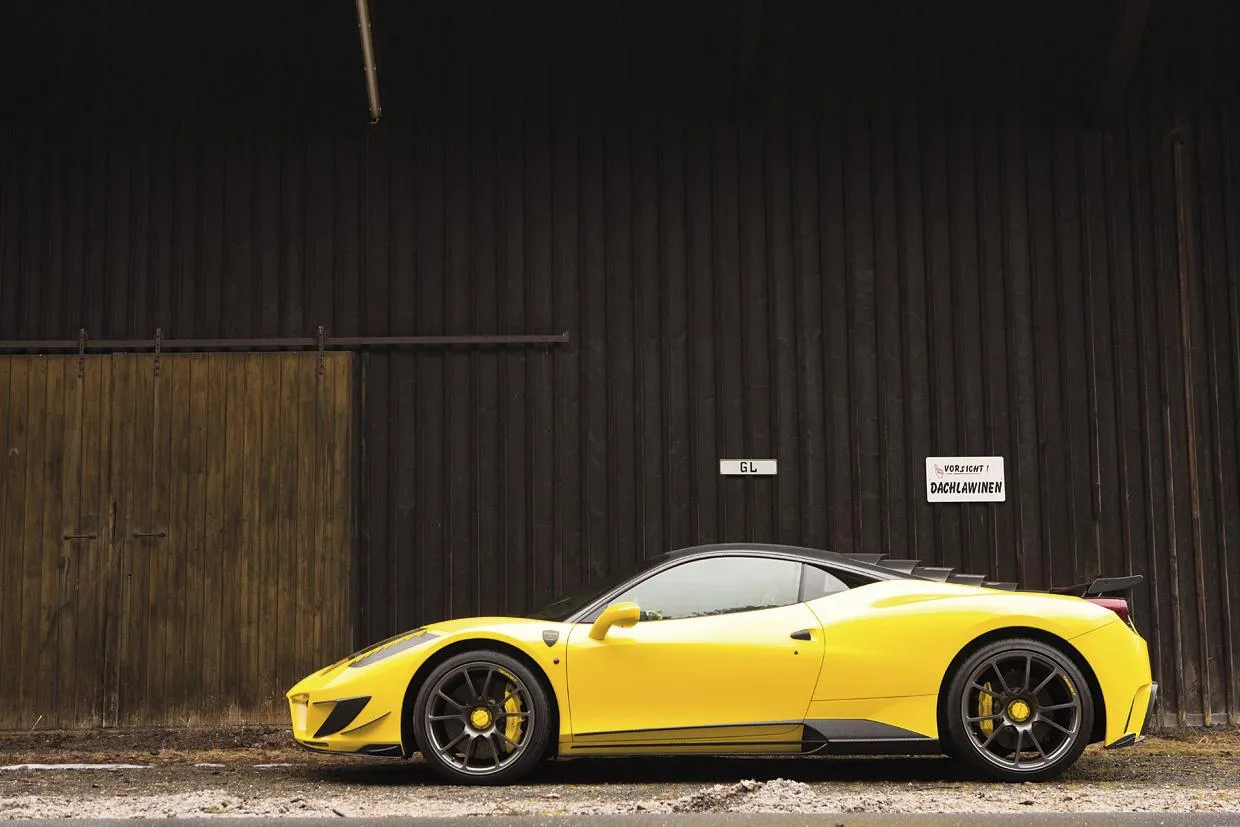
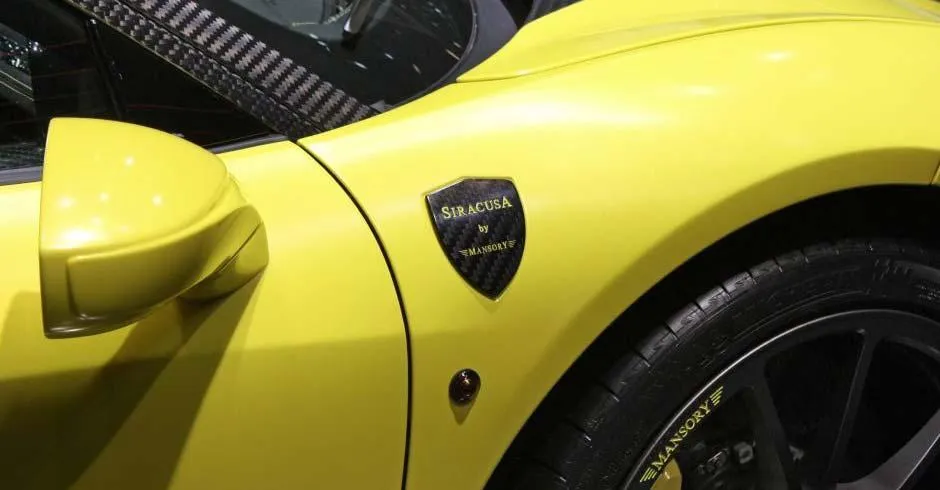
Siracusa is the name Mansory gave to the carbon body programme that ran across the entire Ferrari 458 generation between its 2011 release and the closing of the F142 production line in 2015. The programme has lived on Hodoor in donor-specific catalogue entries — the Italia Siracusa and the Speciale Mansory — but the underlying programme is one continuous body of work. This URL is the programme-level heritage overview: what Siracusa is across the three principal 458 donors, where the SKUs split between them, why the F136 versus F136FL distinction matters when commissioning panels, and how the M9 / M-series forged wheel families pair with the kit.
The 458 sits a step removed from the current Maranello brief — the last mid-engine V8 to breathe through nothing but a throttle butterfly, the last to redline at 9 000 rpm, the last to wear the silhouette Pininfarina drew before electrification reshaped the format. The Siracusa programme reads in 2026 as a heritage build on a future-classic donor.
The three donors that the Siracusa programme covers
The 458 family ran across three principal road-going variants, all on the F142 platform code, all carrying a flat-plane V8 mounted amidships with a seven-speed dual-clutch transaxle.
- 458 Italia (2009-2015) — the founding berlinetta, F136 4.5-litre V8 NA at 570 PS / 540 Nm at 6 000 rpm, dry weight 1 380 kg, 0-100 km/h in 3.4 seconds, 325 km/h. Wheelbase: 2 650 mm. Length: 4 527 mm. OEM Brembo CCM2 carbon-ceramic discs (398 mm front, 6-piston callipers). The original Siracusa schedule was drawn against this body
- 458 Spider (2011-2015) — folding aluminium hardtop variant of the Italia. Same F136 V8, same DCT, same wheelbase. Front bumper, bonnet, side skirts and mirror caps transfer cleanly from the Italia; the rear engine cover and rear wing change because the Spider deck panel houses the folding-hardtop kinematic stack instead of the Italia's glass engine cover
- 458 Speciale (2013-2015) and Speciale A (2014-2015, 499 units) — F142 evolution, F136FL evolved engine at 605 PS at 9 000 rpm and 540 Nm, dry weight 1 290 kg, 0-100 km/h in 3.0 seconds. Active-aero front flaps and active-aero rear-diffuser flap. The Speciale's body geometry diverges meaningfully from the Italia — the Siracusa kit splits at this donor; the dedicated Speciale Mansory page covers the active-aero compatible panel set
Programme history — how Siracusa evolved
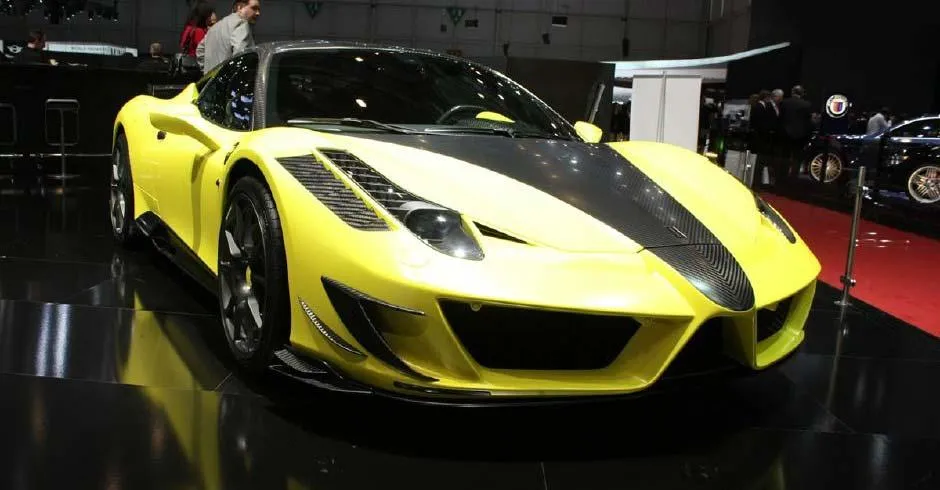
Mansory unveiled Siracusa at the 2011 Geneva Motor Show against a matte-black Italia donor. The early-build kit was simpler than the later schedule — front bumper, vented bonnet, fixed rear wing, side skirts, mirror caps. The catalogue grew across the generation: Spider-specific rear deck panel in 2012, a deeper diffuser revision in 2013, dive-plane canards in late 2013, and a Speciale-compatible active-aero-cleared revision in 2014 alongside the F136FL launch. The schedule stayed in the catalogue as a bespoke order after the 488 GTB took over the V8 mid-engine slot. Today the surface library is broader than in period — matte clear, body-colour paint, paint-to-Ferrari-tipo and forged-flake finishes all on the 2026 finish menu.
Where the carbon parts split between Italia, Spider and Speciale
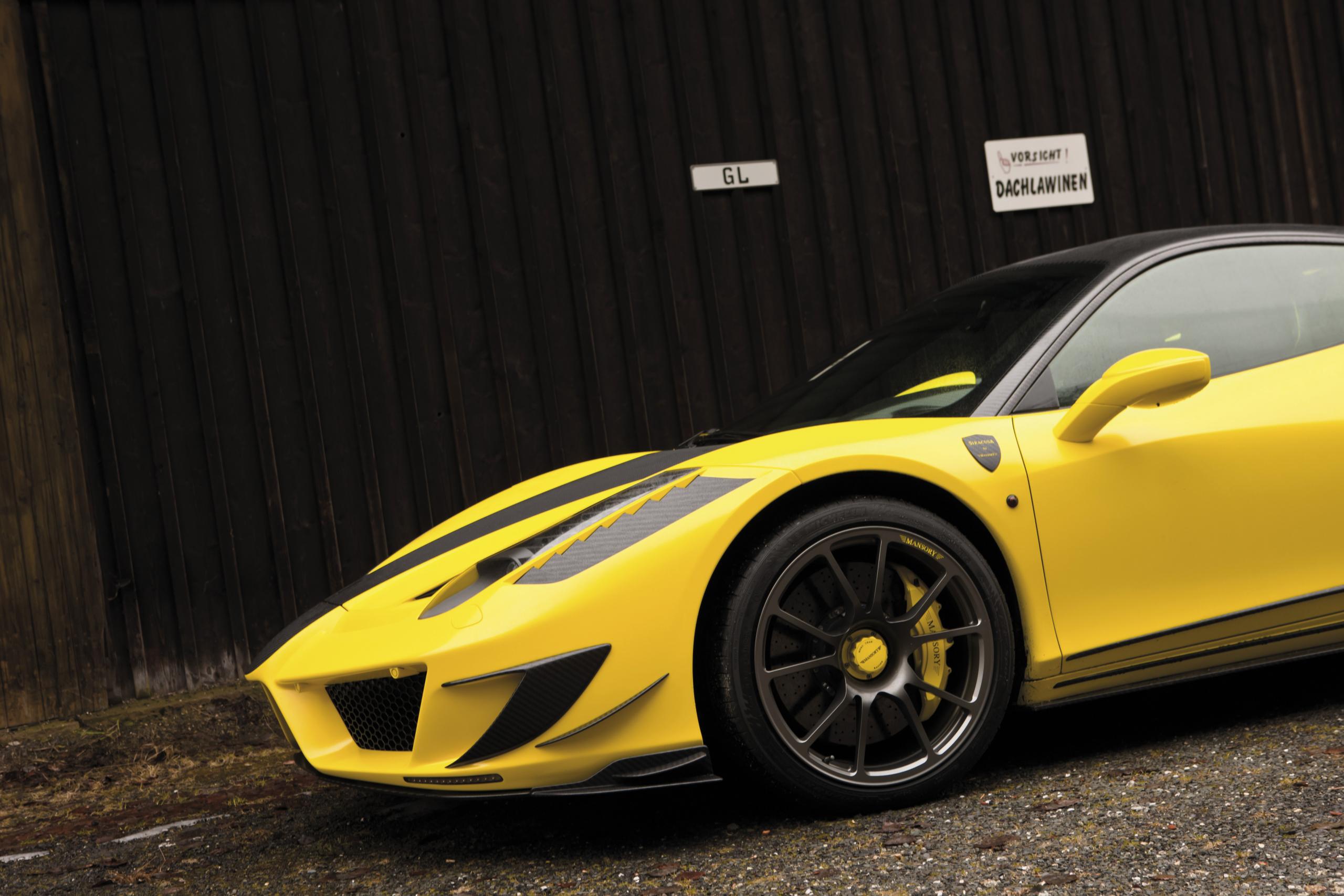
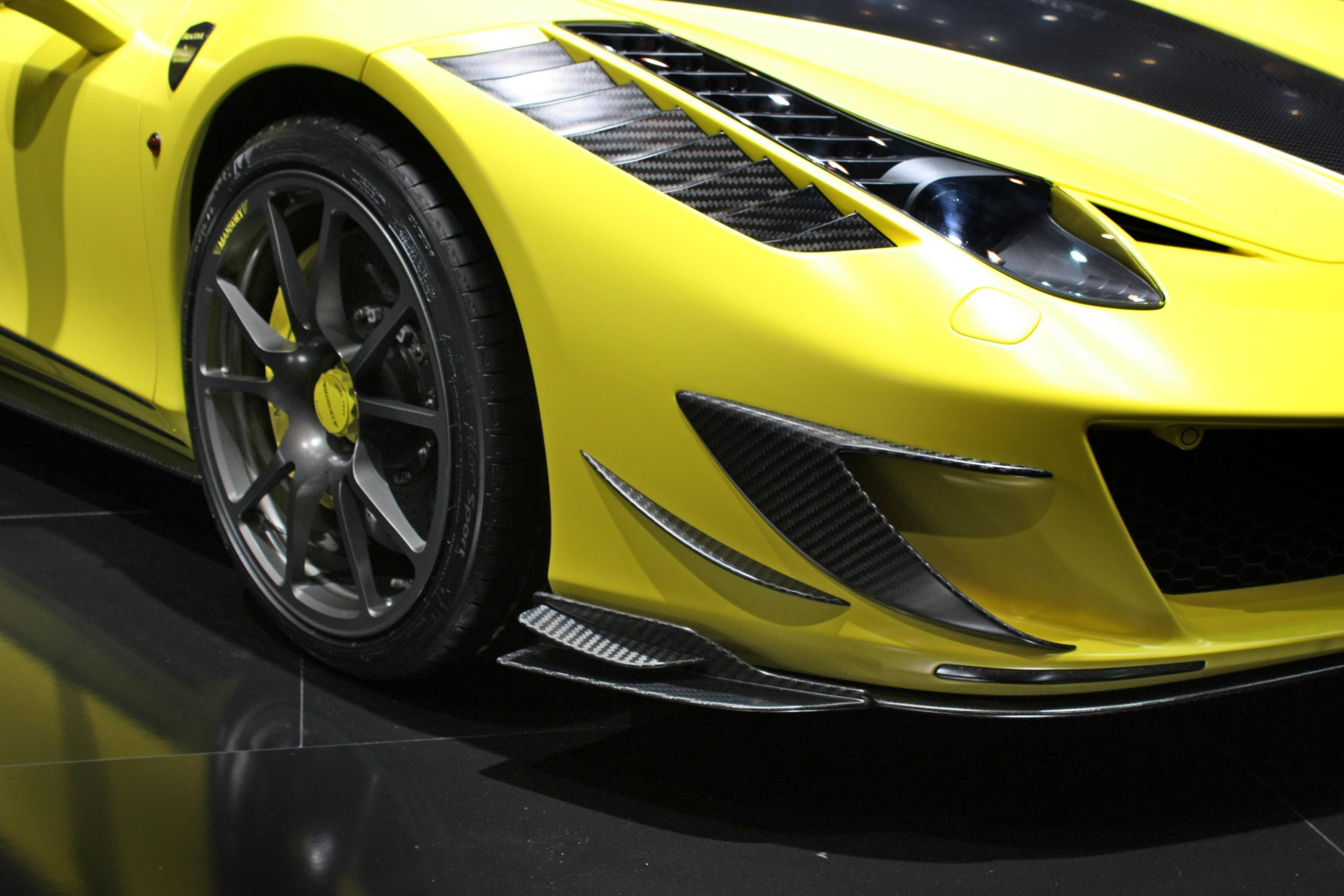
- Front bumper assembly — common at the geometric envelope; the Speciale-compatible front bumper carries an active-aero flap-clearance cut that the Italia / Spider bumper does not
- Vented bonnet — common SKU for Italia / Spider; Speciale carries a separate SKU with enlarged vent apertures (see F136FL note below)
- Side skirts, mirror caps, front splitter detail and side air-intake inserts — common SKUs across all three donors
- Rear bumper / rear apron — Italia and Spider share an SKU; the Speciale runs a separate SKU because its OEM rear apron carries the active-aero diffuser flap
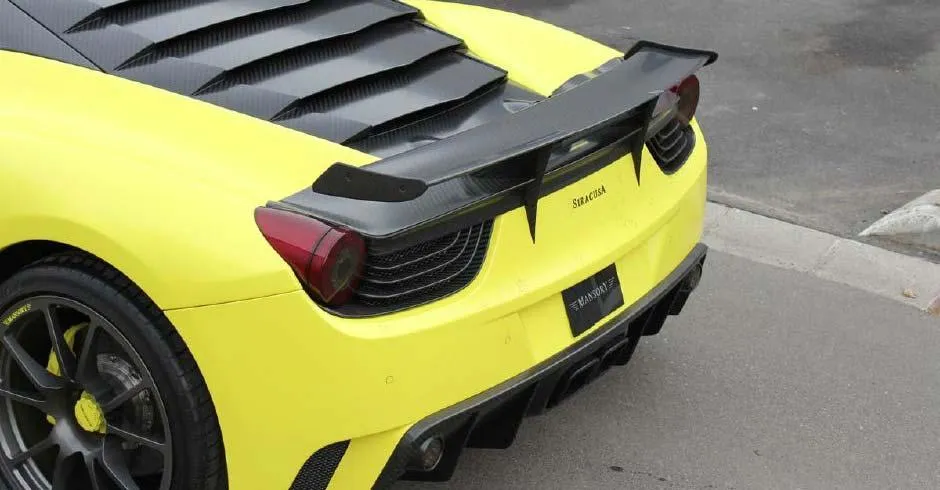
- Rear engine cover — donor-specific. Italia: glass engine cover overlay. Spider: folding-hardtop stack cover. Speciale: vented dry-carbon engine cover with revised heat-extraction louvres
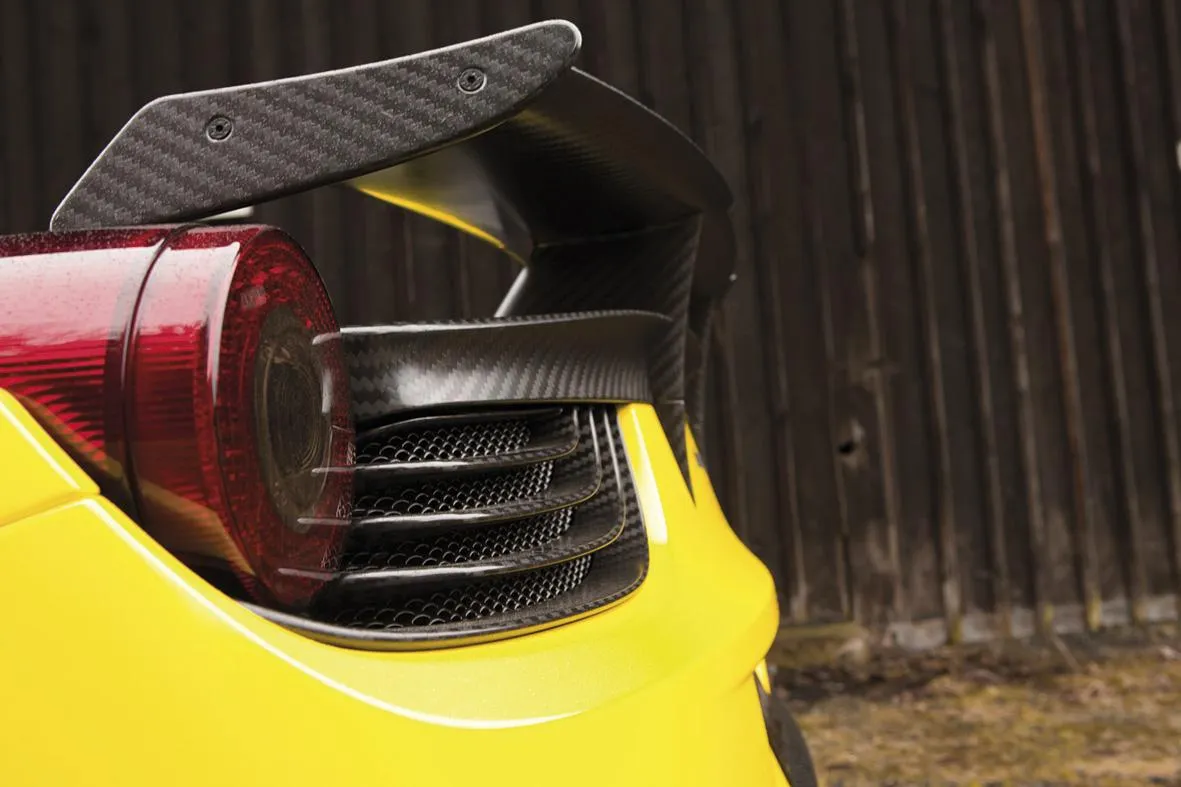
- Rear wing — donor-specific. Italia: fixed-mount aerofoil tuned to high-speed lift profile. Spider: lower-profile rear-deck spoiler respecting folding-roof clearance. Speciale: fixed carbon wing on adjustable end-plates replacing the OEM lip-spoiler stack
A single-source Siracusa commission can be fitted to any 458 chassis without re-tooling the carbon programme, but the donor variant must be declared at order so the workshop ships the correct rear-half SKUs. Cross-donor swaps (an Italia panel set onto a Speciale, or vice versa) do not align and are not supported by the workshop's fitment-guarantee terms.
F136 vs F136FL — why the engine designation matters
Siracusa is body-and-wheels only; no Mansory part touches the powertrain. But the F136 vs F136FL distinction affects bonnet specification because the vent geometry is dimensioned around the heat envelope of each engine variant. The original F136 (Italia and Spider, 12.5:1 compression, 570 PS) carries vents specified for that thermal load; the F136FL (Speciale and Speciale A, 14:1 compression, redrawn intake runners, lighter pistons, titanium connecting rods, 605 PS) carries enlarged vent apertures and a deeper heat-extraction stack. Owners commissioning Siracusa for an Italia / Spider should not specify the Speciale bonnet (vent positions do not align with the F136 ducting); owners commissioning for a Speciale should not specify the Italia bonnet (the F136FL's exhaust-side heat overwhelms the standard vent capacity).
M9 and M-series 21" forged — the wheel set that defines Siracusa
The Siracusa programme was originally specified around the Mansory M9 21-inch forged wheel in multi-spoke radial geometry with hub-centred mounting at the OEM Ferrari hub centre. Front fitment: 9.0J x 21" with 245/35 ZR21. Rear fitment: 11.5J x 21" with 305/30 ZR21. The 21" diameter is one inch up from the OEM 20" cast wheel; the rim's forged construction sits lighter than the OEM cast item even at the larger diameter. The M9 has been joined by the M-series family — broader pattern library, narrower-spoke options for the Speciale's track-trim brief, optional Mansory-monogram centre cap. Patterns: M9 classic multi-spoke, M.7 dual-spoke concave, FD.16 dual-spoke split. Finishes: gloss black, satin black, polished silver with diamond-cut spoke detail, matte gunmetal, paint-to-Ferrari-tipo. The full catalogue lives at Hodoor's forged wheels collection; the M9 is heritage-correct for an Italia or Spider, the M-series narrow-spoke for a Speciale. Load ratings against the worst-case Spider kerb weight of 1 530 kg are documented and supplied with each set on shipping.
Where Siracusa commissions cluster geographically
The 458 ownership map has settled into a clear collector-corridor pattern. The Siracusa commission book follows it:
- Monaco — principality-based 458 collectors keep cars in climate-controlled garages and want the Siracusa work executed without the donor leaving the principality; two body shops on the Roquebrune side handle full-discretion installs
- UAE — Dubai owners who moved past a 488 Pista or F8 Tributo back to a 458 precisely because of how the F136 V8 sounds at high RPM; Gulf-summer paint-prep handling is built into the workshop's UAE shipping process
- United Kingdom — particularly strong on Speciale donors used for trackdays; London-belt and Surrey installers handle Speciale active-aero clearance work without compromising the OEM Brembo CCM3 ceramic brakes
- Isle of Man — small island flag-of-domicile cluster keeping low-mileage Speciale and Speciale A units in Manx-plated long-hold
- Japan — Tokyo-Yokohama collector cluster preferring the Spider donor with folding hardtop, often specifying Siracusa in matte clear over OEM Rosso Corsa rather than re-painting
Commission workflow & documentation
A Siracusa commission opens with the donor VIN, the variant declaration (Italia / Spider / Speciale / Speciale A), the build year, the OEM Ferrari paint code with any Tailor-Made or Atelier programme deviations, the destination country, and any factory-option notes that affect kerb weight (carbon racing seats, alcantara cabin pack, optional CCM3 brakes). The workshop returns within 48 hours with a panel schedule, finish proposal, M9 or M-series wheel quote, and a landed price. Build time at the workshop runs 10 to 14 working days for an Italia or Spider commission and 14 to 18 working days for a Speciale (the Speciale active-aero clearance check adds calendar time). The kit ships pre-fitted and trial-assembled, so the body shop's role at the destination is alignment and final mounting rather than primary fitment trial. Reach the workshop at [email protected] with the VIN and current condition photographs; WhatsApp +44 7488 818747 handles fastest turnaround on landed-quote calculations. Hodoor coordinates door-to-door freight to every corridor above.
FAQ
Why is there a separate page for the 458 Italia Siracusa and a separate page for the 458 Speciale Mansory if the programme is unified?
Because the carbon panel SKUs split meaningfully at the donor variant. This URL is the umbrella heritage entry covering programme history, the cross-donor decision tree and the wheel-fitment context. The donor-specific pages (Italia, Speciale) carry the actual order-intake details and donor-specific commission timelines.
Will a Siracusa build affect the 458's collector-trajectory value?
Reversibility is the central argument. The kit bolts on without permanent body modifications, and the original Ferrari aluminium and composite panels can be retained, stored and reinstalled before any future sale. Most 458 collectors keep both sets together with the car so they pass on as a documented pair. A Siracusa-bodied 458 with a documented stock drivetrain, full Maranello service history, and the OEM panel set retained reads as a more interesting build to a 2026-era collector than the same car without coordinated carbon work.
Are Mansory wheel and panel parts available individually rather than as a full kit?
Yes. The front bumper, bonnet, rear wing, side skirts, mirror caps and rear engine cover are all available as standalone SKUs on every 458 donor. Many owners start with the bonnet and rear wing, see how the donor reads with those changes, and complete the programme over the following months. The M9 and M-series wheels can also be ordered independently of the body kit.
Will the kit interfere with the 458 Speciale's active-aero front flaps and rear-diffuser flap?
Not on the Speciale-compatible panel set. The Speciale-spec front bumper is dimensioned to clear the OEM front-flap travel envelope and the Speciale-spec rear apron is cut around the OEM diffuser-flap actuator. The OEM positional sensors and active-aero ECU map continue to operate; no calibration changes are required. The Italia-spec panel set is not compatible with the Speciale's active-aero hardware and must not be specified for a Speciale donor.