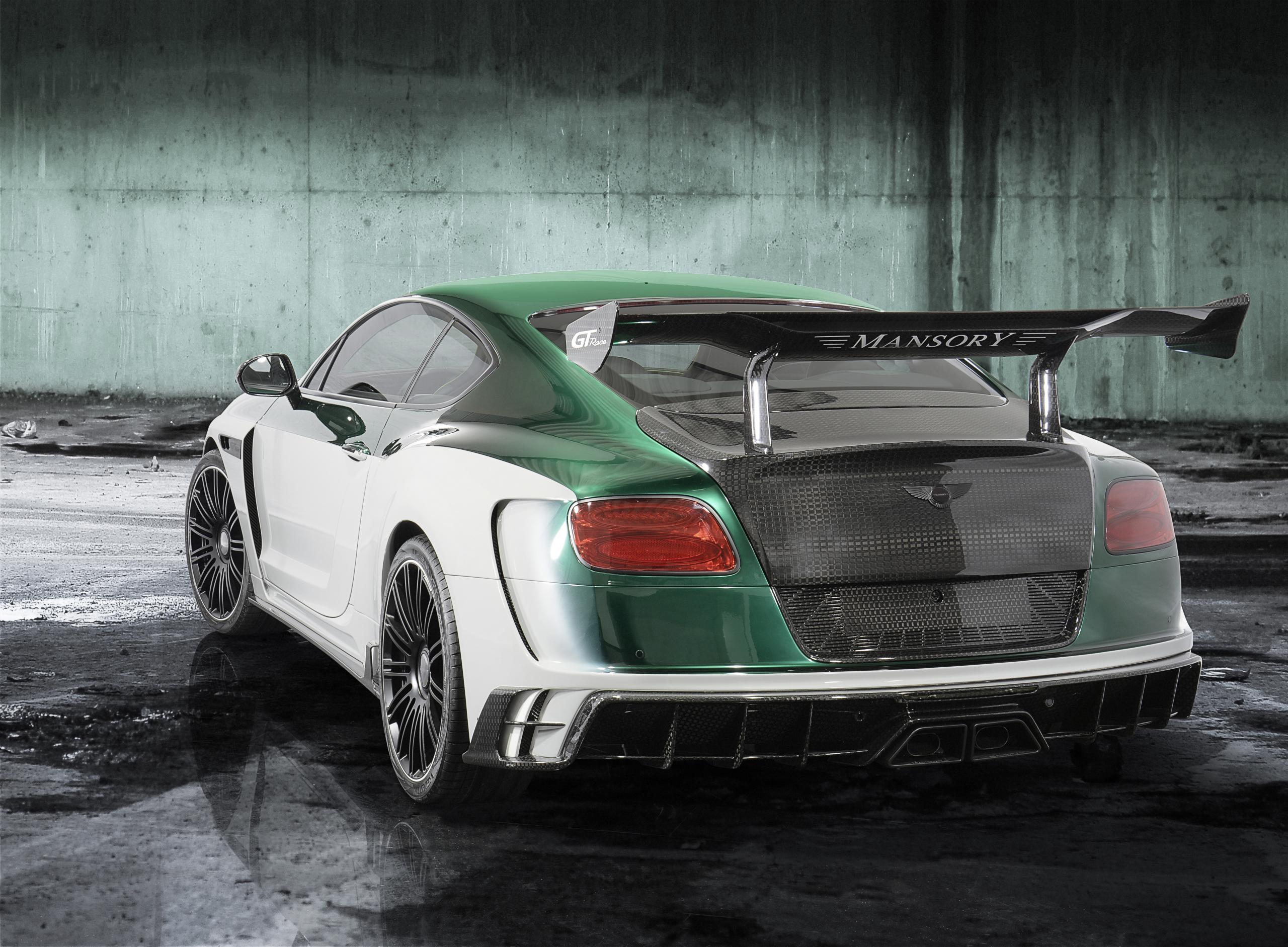
Mansory Carbon Fiber Body kit set for Bentley Continental GT Race


Mansory GT Race — Bentley Continental GT (3SK platform, 2018+)
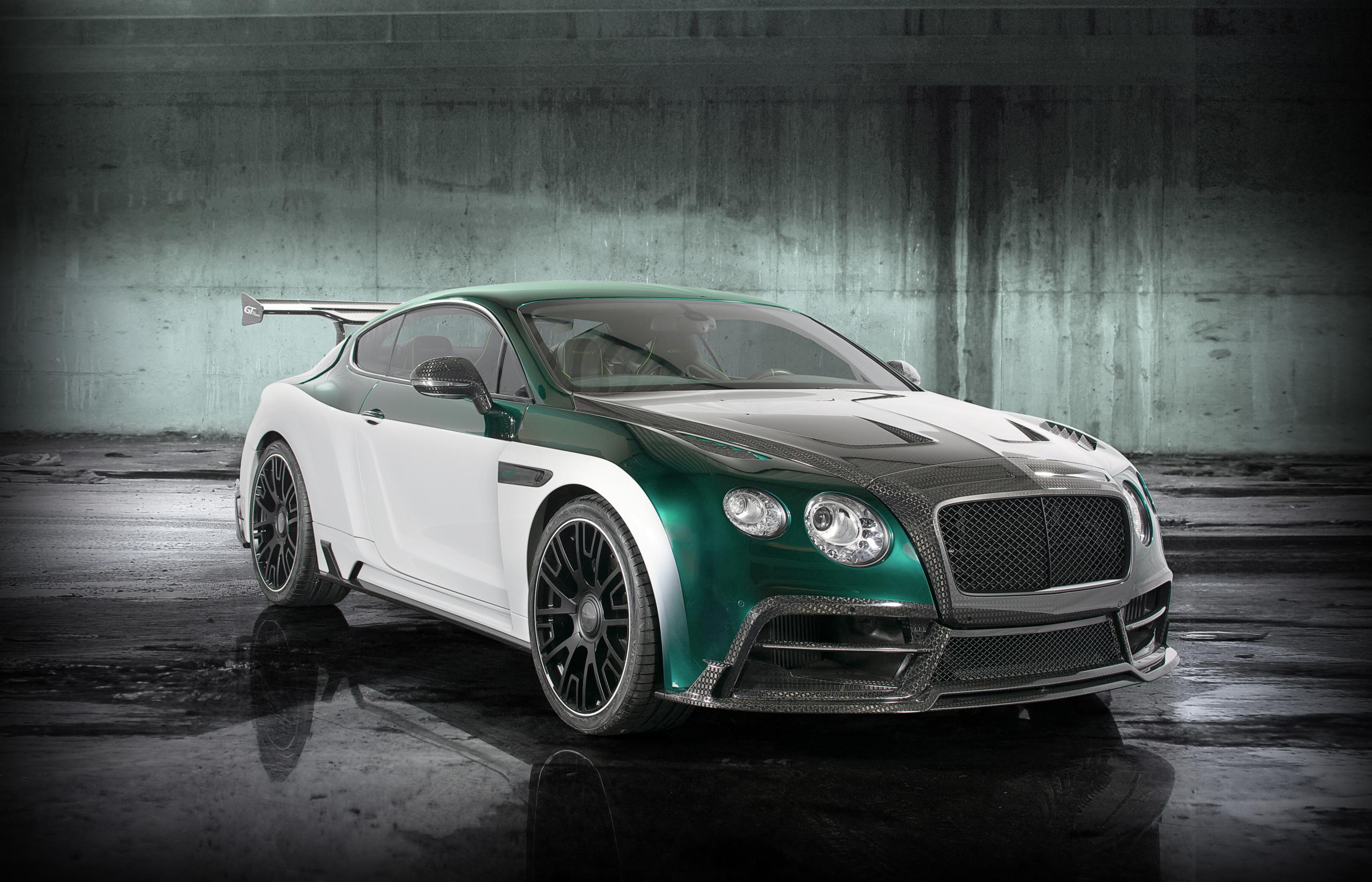
The Mansory GT Race is the track-language wide programme for the Bentley Continental GT on the 3SK platform — Bentley's third-generation Continental GT, on sale from 2018 onwards on the MSB platform shared with the Porsche Panamera. The donor sits in two engine variants: the W12 6.0 twin-turbo (635 PS in early production, 659 PS post-2021 facelift) and the V8 4.0 biturbo (550 PS / 568 PS depending on production year). Mansory's GT Race brief reads the Continental GT as a luxury-coupé donor that can absorb a track-leaning visual transformation — fixed wing, deep splitter, prominent diffuser, racing-spec wheels. The result is recognisably still a Continental GT at the silhouette, but with the body language pushed toward Le Mans rather than the corniche.
Owners who want the same chassis with a road-luxury visual register run that conversation through the standard Mansory Continental GT catalogue — the GT Race is the higher-spec, track-leaning variant. The convertible Continental GTC has its own page at the GTC programme; the GT Race body parts overlap with the GTC up to the windowline but the rear deck and the fixed wing geometry are coupé-only.
The donor — what 3SK Continental GT brings
The 3SK Continental GT is a thoroughly modernised platform compared with the 2003–2018 first- and second-generation cars (1SK / 2SK on the Volkswagen Phaeton derivative). The 3SK shares the MSB rear-engined platform architecture with the Porsche Panamera — Bentley reworks the upper body, the cabin and the W12 powertrain installation, but the underbody, the suspension hardpoints and the front-axle architecture are MSB-derived. For the Mansory GT Race build the relevant chassis facts are: 4,850 mm overall length, 1,966 mm width over OEM mirrors, 2,250 kg curb (W12) or 2,165 kg curb (V8), and OEM brake hardware sized to a 320 km/h top speed.
Why GT Race exists alongside the catalogue Continental GT
Bentley's own marketing positions the Continental GT as a long-distance grand-tourer — soft seats, quilted hide, refined ride. Mansory's catalogue Continental GT body programme stays inside that brief: bumper additions, side strakes, no fixed wing, no aggressive diffuser. GT Race is the explicit departure. Mansory wanted a Continental GT spec for buyers who track the cars or who want the visual register to read aggressively rather than refinedly. The build is not a circuit-spec race car — it is a road-legal Continental GT with the body language of a GT3 racer. That distinction matters because the suspension, the brake hardware and the engine cooling stay road-luxury OEM rather than circuit-spec.
Carbon parts — every Mansory piece on the body
GT Race is a comprehensive carbon body conversion. Bumpers replace, bonnet replaces, fenders cut back and flared. The fixed rear wing is the most visible delta from the catalogue Continental GT.
- Front bumper assembly — full carbon replacement with deep splitter, dive planes flanking the splitter, integrated brake-cooling cuts; OEM headlight pass-through retained
- Vented bonnet — full carbon bonnet replacement with two functional NACA cuts and a centre power-bulge for the W12 / V8 cooling demands; lacquered visible-weave finish standard
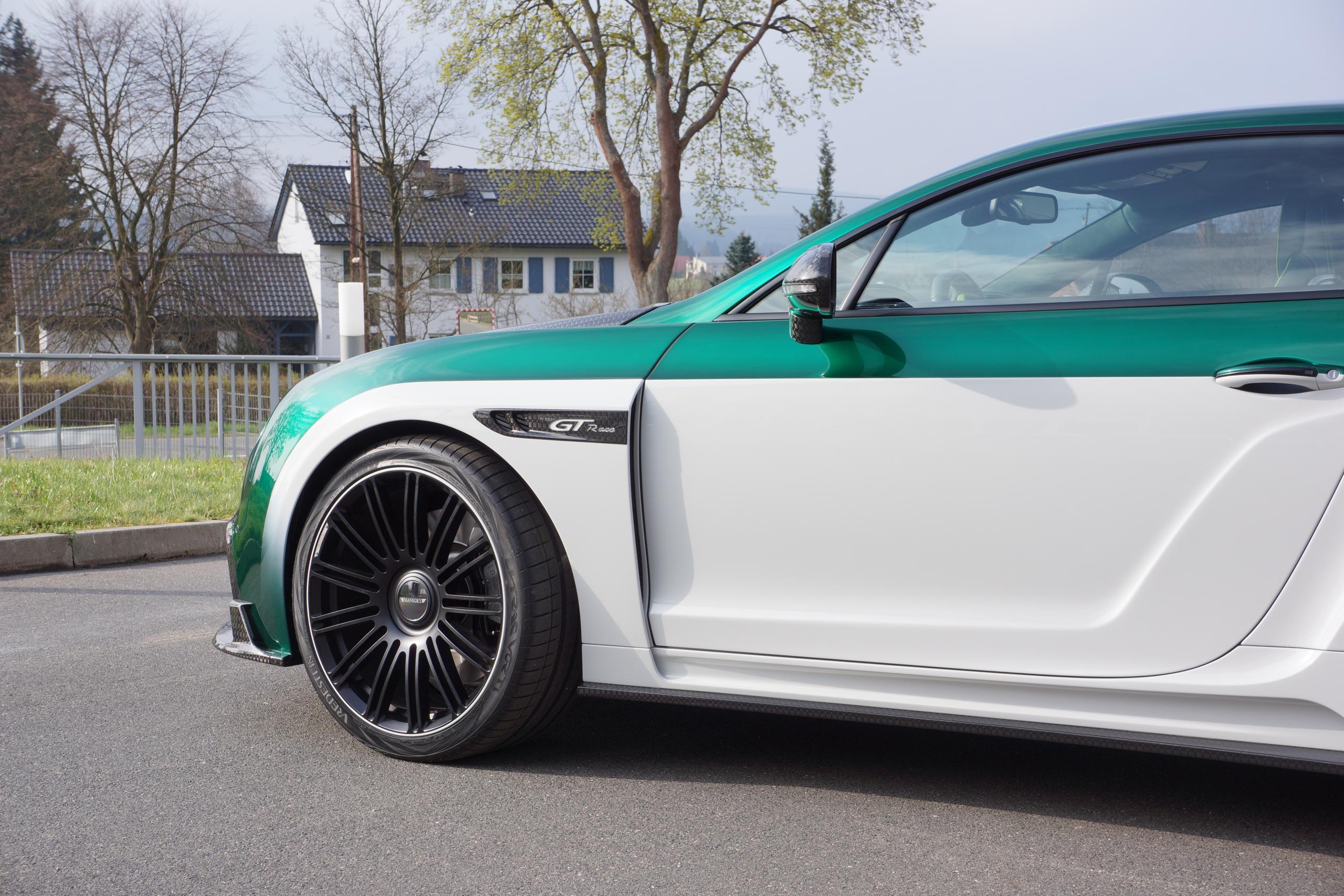
- Bonded fender flares — front and rear, +30 mm per side at the front axle and +35 mm per side at the rear, dimensioned to clear the matched 22" forged stagger
- Side strakes and side skirts — carbon shoulder pieces bridging the front and rear flares, integrated lower side skirt with a leading-edge lip for kerb scrape protection
- Rear bumper assembly — full carbon replacement with deep diffuser, four large diffuser strakes, exhaust cutouts sized to the donor variant (quad-tip on W12, quad-tip on V8 with a different tip diameter)
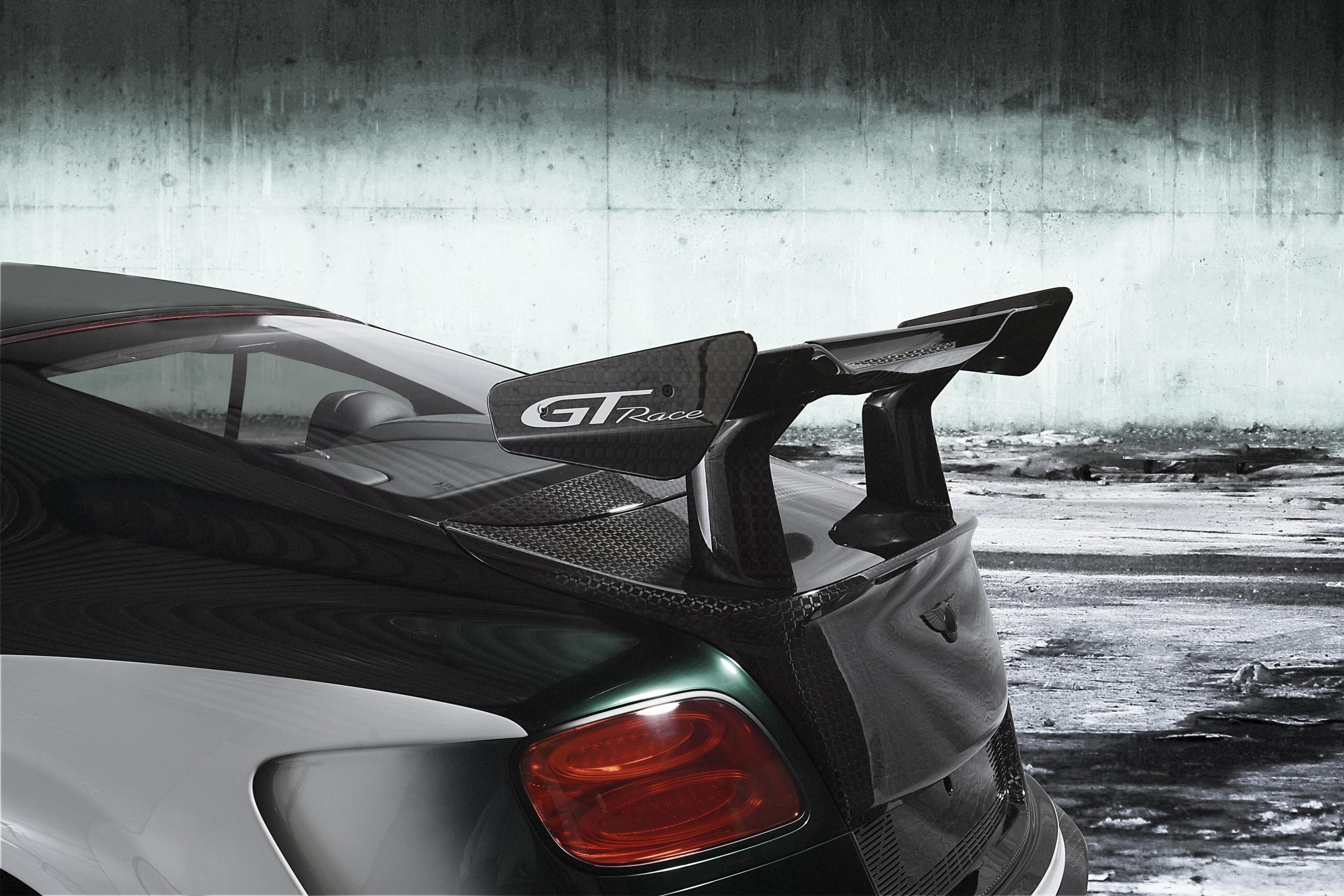
- Fixed carbon rear wing — fixed-position dual-element rear wing on the boot lid, mounted on carbon end-plates that pass through the OEM rear deck. The OEM Bentley active rear spoiler is removed in the GT Race build (this is one of the rare permanent OEM-removal points in the kit)
- Mirror caps and door handle covers — visible weave detail trim
Build time at a Mansory-experienced body shop runs 14 to 18 days for a GT Race spec. The fixed wing installation is the most workshop-intensive step because of the OEM rear-deck modification — the OEM active wing motor is removed and the deck is reshaped to accommodate the carbon end-plates.
Powertrain — Powerbox on V8 only
The Mansory Powerbox is offered on the V8 4.0 biturbo donor only. The V8 with the Powerbox lifts from a stock 550 PS to roughly 620 PS, with the optional sport exhaust adding a valved-muffler change at the rear. The W12 6.0 is not catalogued for a Mansory Powerbox — Bentley's W12 sits in an engine family where the factory tuning headroom is small and the cost-benefit of a piggyback module does not translate well. W12 owners who want power gains run that conversation through specialist Bentley tuners (Brabus, Mulgari) rather than through Mansory.
Wheels — M-series forged 22" stagger
The matched fitment is the Mansory M-series fully forged 22" wheel in a stagger — both axles 22" in different widths, optimised for the Continental GT's rear-biased dynamic balance. Diamond black, polished silver, gun metal are the catalogue finishes; the GT Race spec adds a satin-bronze accent ring as an option. The forging clears the OEM Bentley brake package (steel or carbon-ceramic) without spacers. The wheel range lives at the forged wheel collection.
Interior — narrow scope
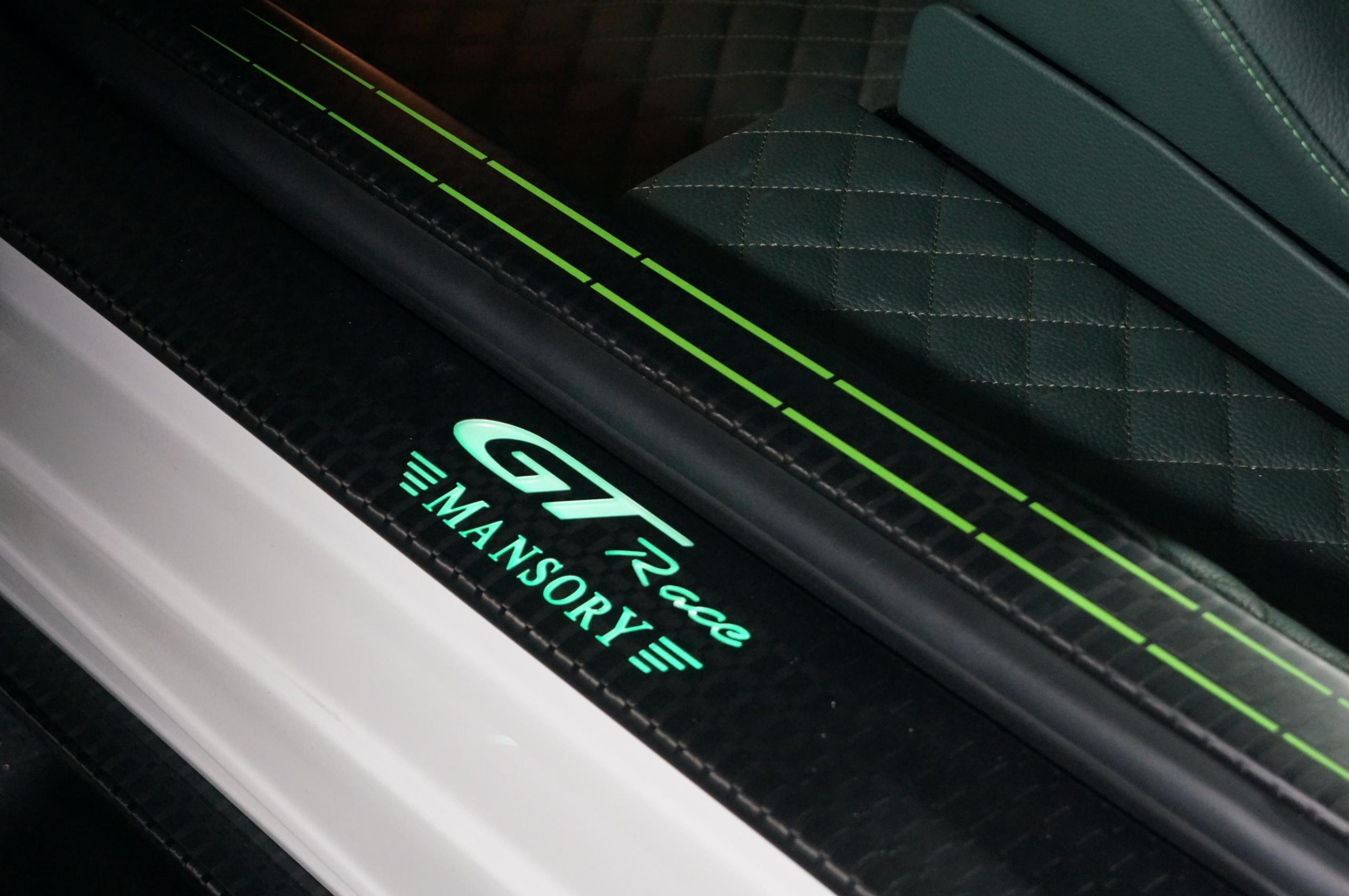
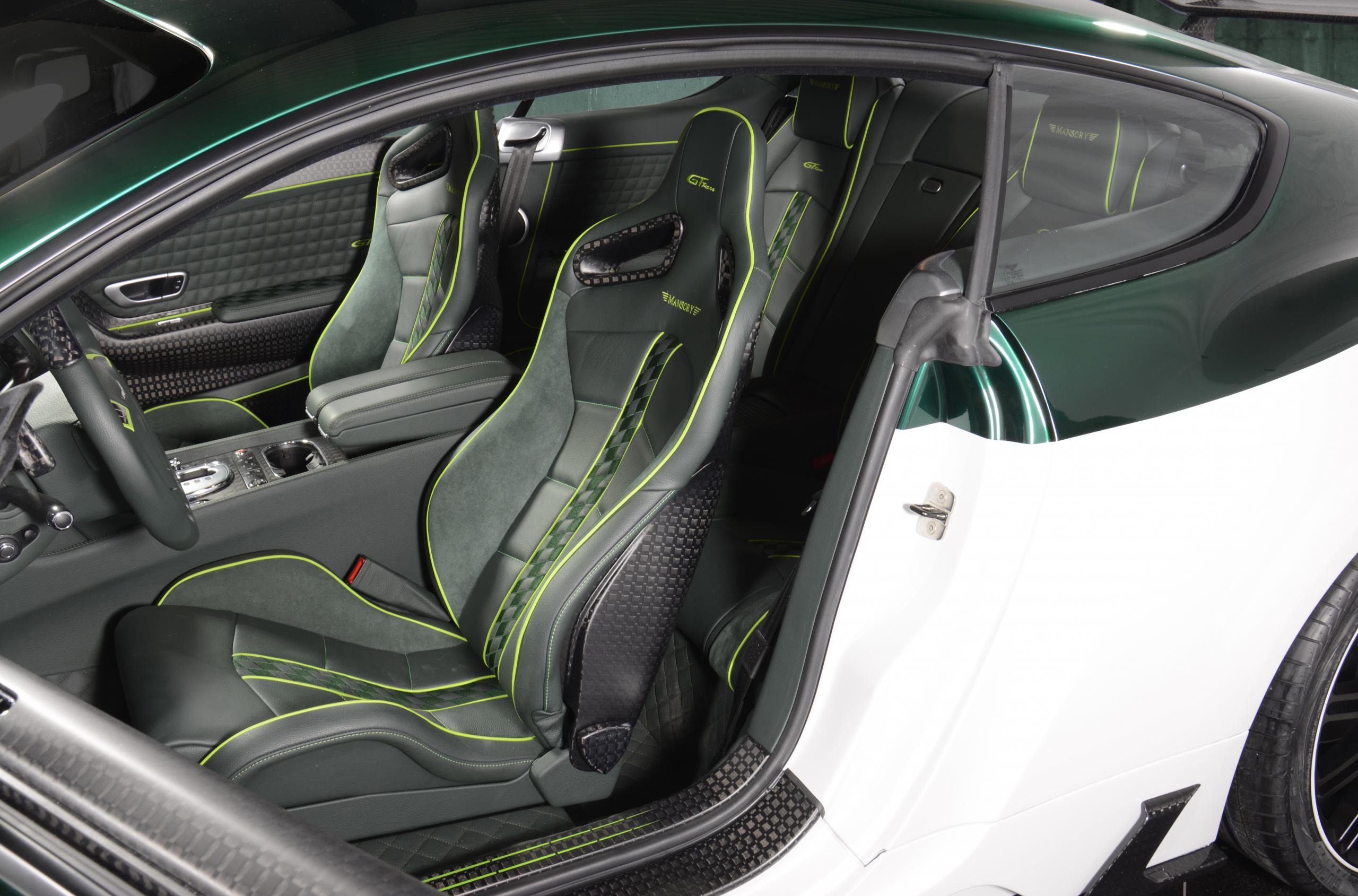
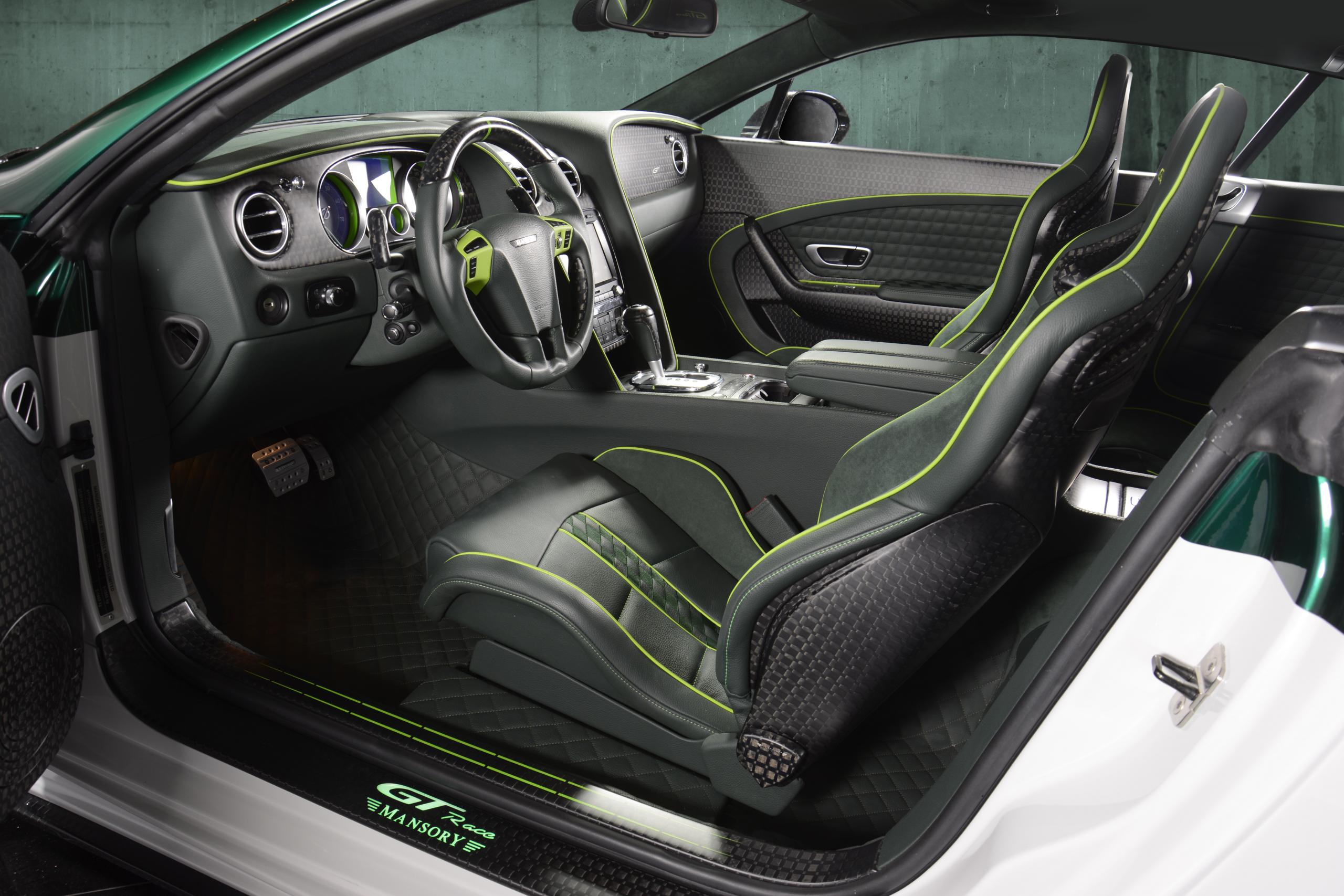
The Mansory cabin set on GT Race is intentionally narrow despite the aggressive exterior brief — sport steering wheel with carbon spoke-back and Alcantara rim (the Alcantara rim is a GT Race-specific spec), metal pedals, carbon inlays for the centre stack and door pulls. Seats, headlining, door cards stay OEM Bentley Mulliner. Owners who want a fully retrimmed cabin run that through Bentley's own Mulliner Bespoke department first, then add the Mansory carbon trim parts on top. The OEM Bentley COMAND multimedia and the digital cluster stay factory.
Donor scope — 3SK only
The kit fits the 2018+ Bentley Continental GT on the 3SK platform — both pre-facelift (2018–2021) and post-facelift (2021+) cars, both W12 and V8 donor engines. It does not fit:
- The 1SK Continental GT (2003–2011) — covered by the first-generation programme
- The 2SK Continental GT (2011–2018) — covered by the second-generation programme
- The Continental GTC (3SK convertible) — body parts overlap up to the windowline but the rear deck is coupé-only; GTC builds use the separate Mansory GTC catalogue
- The Bentley Flying Spur sedan (4SK) — different rear-deck silhouette, different Mansory programme
Material and care notes for the lacquered carbon parts are documented in the carbon fibre care guide; general background on Mansory's Bentley programmes sits in the complete body kit guide.
Worldwide shipping & quoting
Continental GT GT Race buyers concentrate in track-active markets and luxury-collector geographies — Switzerland, the Gulf, Hong Kong, Monaco, the German home market. Hodoor World ships pre-assembled crates with paint-pattern documentation and rear-deck modification specifications to Switzerland, the UAE, Hong Kong, Monaco and Germany via DHL or DSV freight forwarding. Pricing on request via [email protected] or WhatsApp +44 7488 818747; quotes specify donor engine variant so the correct exhaust ships with the kit.
FAQ
Is GT Race actually track-capable, or is it body-language only?
Body-language. The OEM Bentley brake hardware, the OEM cooling architecture and the OEM suspension stay road-luxury spec — Mansory does not modify the running gear or add a circuit-cooling package. Owners who track the car will find the OEM hardware adequate for occasional trackdays but not for sustained circuit lapping. A genuine track conversion (race seats, harness, fire suppression, brake upgrade) is a separate workflow and not part of GT Race.
Can I revert the rear deck to OEM if I sell the car?
The fixed wing installation modifies the OEM rear deck shape to accommodate the carbon end-plates. Reverting to OEM presentation requires sourcing a new factory rear deck or having a body shop reshape and refinish the existing one — possible but expensive and time-consuming. Most GT Race owners keep the wing on resale and price the car accordingly.
Will GT Race fit a pre-facelift 2018 Continental GT?
Yes. Bentley's 2021 facelift updated the front grille slats, the headlight signature and some interior details, but the bumper architecture and the fender geometry are unchanged. GT Race fits both pre- and post-facelift 3SK cars without modification.
Is the Powerbox available on the W12?
No. Mansory does not catalogue a Powerbox on Bentley's W12 6.0. The engine's factory tuning headroom is small and the gain from a piggyback module is not commensurate with the risk to engine longevity. Owners who want W12 power gains run that conversation through specialist Bentley tuners.
How does GT Race compare with the Brabus GT800 conversion of the Continental GT?
The two programmes target the same chassis with different briefs. Brabus GT800 emphasises engine output (V8 tuned to 800 PS) with a comparatively conservative body programme. GT Race emphasises body language and visual transformation with a more conservative power upgrade. Cross-shopping the two is straightforward — buyers who weight performance numbers go Brabus; buyers who weight visual register go GT Race.